
Review · RAMEN TASTING TRIPS
Professional Ramen & Gyoza with Ramen Chef in a restaurant!
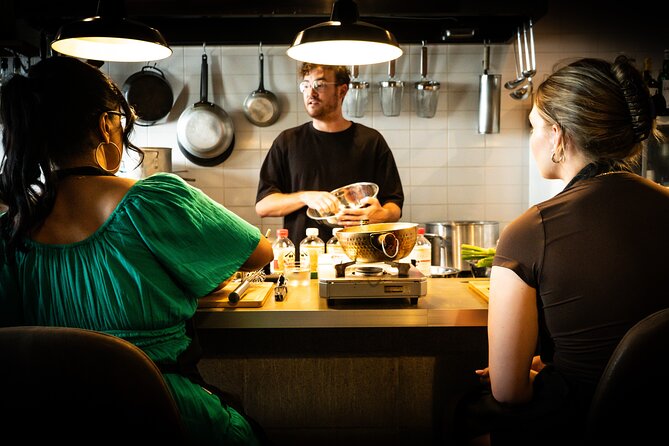
Watching dough turn into noodles is weirdly satisfying. This 4-hour Tokyo ramen class at Baba Ramen Cooking Meguro is hands-on and actually happens in a restaurant kitchen, not a home setup. It is small too, max 6 people, so you get feedback while you work.
I really like the kitchen-grade equipment and the way the chefs keep the class interactive. You make ramen noodles from scratch, shape and cook gyoza, and choose between two broth options so the end result feels tailored. You also take home a cooking e-book, which matters because you can recreate the meal later.
One thing to consider: this is not a sit-and-snack class. You will be busy with hot work and noodle technique, and the price is steep enough that you should be sure you want ramen-making as a skill, not just a meal.
In This Review
- Key Points at a Glance
- Baba Ramen Cooking Meguro: The Meeting Point That Sets the Tone
- What You Do in 4 Hours: A Ramen Workshop That Keeps Moving
- Making Ramen Noodles from Scratch: Where the Real Skill Shows Up
- Broth Options and Flavor Building: Choosing Your Bowl’s Personality
- Gyoza Time: From Dough and Wrapping to Pan Results
- Restaurant-Style Workflow: Why This Class Feels Different
- The Instructor Team: How Bilingual Coaching Makes It Easier
- Dietary Needs: How to Get a Good Result With Real Options
- What You Eat at the End: Not Just a Sample, a Full Payoff
- Price and Value: Is $159.18 Worth It?
- Who Should Book This Tokyo Ramen Workshop
- Practical Tips Before You Go (So You Enjoy It More)
- Quick FAQ for Your Planning
- FAQ
- How long is the ramen and gyoza cooking experience?
- What time does the class start?
- Where do I meet for the class?
- Is this class in a restaurant or a home setting?
- How big is the group?
- Do I get to choose broth options?
- Are vegetarian, vegan, or pork-free options available?
- Are there gluten-free options?
- What do I take home after the class?
- What if weather is bad or the class does not meet the minimum?
- Should You Book Baba Ramen Cooking Meguro?
Key Points at a Glance
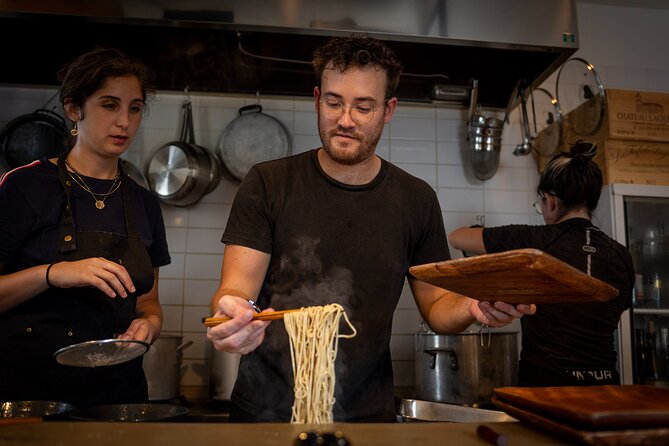
- Restaurant kitchen experience: You cook in a real Tokyo ramen setting, with pro tools and food workflow.
- Small group, real feedback: Max 6 travelers means the chefs can correct your technique.
- Hands-on ramen noodles: You make noodles from scratch, not just prep toppings.
- Two broth choices: Pick the style that matches your taste before you cook.
- Gyoza is part of the core plan: You learn dough, shaping, and pan results.
- Take-home e-book: You leave with a recipe guide, not just a memory.
Baba Ramen Cooking Meguro: The Meeting Point That Sets the Tone
The experience starts at Baba Ramen Cooking Meguro101, in Meguro City. It is a practical location with near public transportation, so you do not have to plan your whole morning around taxis. Start at 9:00 am, which is a nice rhythm for Tokyo food days, because you get your cooking done early and still have time left for strolling afterward.
What I like about this setup is how it positions you. You are not wandering Tokyo to “find the class.” You show up, get into the kitchen workflow, and the staff gets you cooking right away. That matters because ramen is timing heavy, and the chefs need you mentally ready before the heat and rhythm begin.
More Dining Experiences in Tokyo
- Tokyo Bar Hopping Tour in Shinjuku (All-You-Can-Drink + Dinner)
★ 5.0 · 3,587 reviews - Tokyo: Sumo Show and Dining Experience
★ 4.8 · 2,742 reviews - Tokyo: Samurai Restaurant Show Ticket with 2 Drinks
★ 4.5 · 1,307 reviews
What You Do in 4 Hours: A Ramen Workshop That Keeps Moving
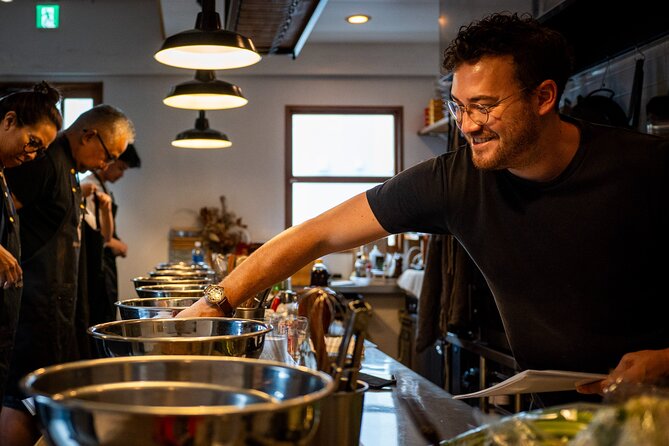
This class is about one thing: creating restaurant-quality ramen and gyoza with your own hands. The full session runs about 4 hours, and it moves through a clear sequence: noodle making, broth building or flavor prep, gyoza preparation, then cooking and eating.
The biggest takeaway is that ramen is not just one dish. You are learning layers of work. From the reviews, the chefs also explain etiquette and the cultural background behind each step, so you know why you do things a certain way, not just what buttons to press.
You will also be working in a commercial setup. Multiple reviews mention hot pans and oils, plus tasks like ingredient prep, and that is exactly the point. The restaurant environment lets you focus on technique and process instead of improvising your way through a home kitchen.
Making Ramen Noodles from Scratch: Where the Real Skill Shows Up
Here is the heart of the class: you make ramen noodles from scratch. That means you get your hands in the dough, learn how to shape it, and practice the kind of consistency that affects everything later, from chew to soup cling.
What you will appreciate, especially if you usually eat ramen and move on, is that noodle making teaches patience. Reviews repeatedly mention that the class is hands-on and that you stay busy almost the whole time. That is not a bad thing. In fact, it is the difference between learning ramen as a concept and learning it as a repeatable process.
Also, you are in a restaurant kitchen with kitchen-grade tools. That is huge for value. At home, you might lack the right equipment or end up with inconsistent thickness and texture. In this class, you can focus on technique because the environment is designed for food production.
Broth Options and Flavor Building: Choosing Your Bowl’s Personality
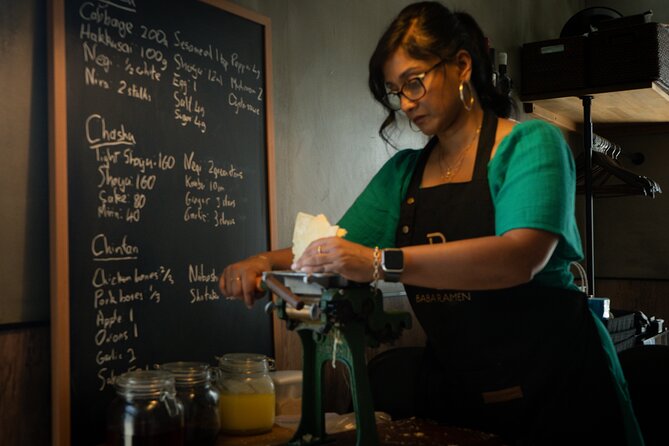
Ramen can be confusing because there are many paths to a good bowl. This experience keeps it manageable by offering two broth options. You choose the option that matches your taste, and the chefs guide you through getting the base flavor in place.
Even without the technical name list in the info provided, the class clearly teaches you the logic behind ramen seasoning and broth flavor. Reviews mention learning about making components like shoyu-tare at home, and they also mention a focus on fresh ingredients and the time involved. That is the practical truth behind restaurant ramen: flavor comes from building, not from shortcuts.
If you are a fan of shoyu-style ramen, you will likely love the way the chefs talk about seasoning balance. If you prefer a different direction, the second broth option gives you a way to steer your bowl before you cook.
More Ramen Trips in Tokyo
- Eat and Drink Like a Local: Tokyo Ueno Food Tour-Taverns&Ramen
★ 5.0 · 957 reviews - Ramen & Gyoza Cooking Class in Tokyo with Local Supermarket Visit
★ 5.0 · 823 reviews - Tokyo: Mount Fuji and Hakone Full Day Tour with Ramen Making
★ 4.5 · 476 reviews - Tokyo: Ramen Tasting Tour with 6 Mini Bowls of Ramen
★ 4.9 · 432 reviews
Gyoza Time: From Dough and Wrapping to Pan Results
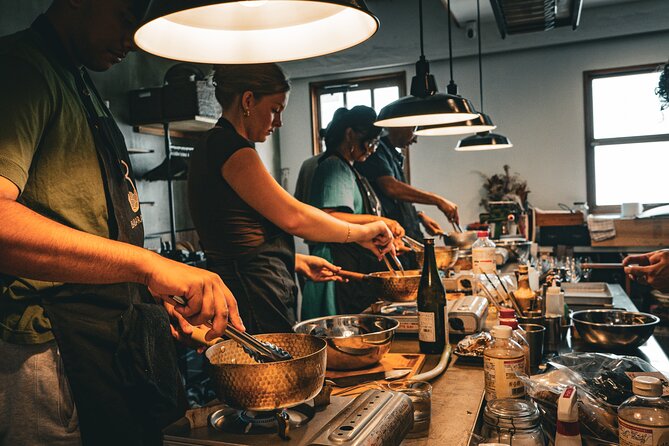
After you are knee-deep in ramen, you also make gyoza. This is not an “on the side” task. It is a full lesson that includes dough work and forming the dumplings, then cooking them so you get that classic pan texture.
What makes gyoza valuable in a ramen class is that it teaches complementary technique. Ramen is broth and noodles, while gyoza is heat management and dough discipline. When you learn both, you leave with a more rounded sense of how Japanese comfort food is built.
In the reviews, people highlight that the experience is highly interactive and that instructors keep everyone involved at every stage. That aligns with how gyoza should be taught. If you try to wrap alone at home after watching a video once, it is frustrating. In a chef-led class, you can get correction while you are doing it, not after you have ruined a batch.
Restaurant-Style Workflow: Why This Class Feels Different
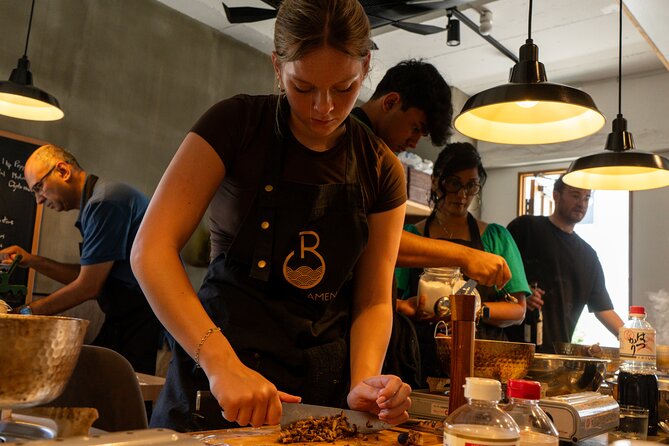
Plenty of cooking classes in Tokyo are fun, but they can feel like a classroom. This one is set up like a real kitchen, which changes your experience quickly.
The benefits are practical:
- You cook with restaurant-quality equipment.
- The chefs can teach timing because your tasks are sequenced.
- You get feedback because the staff sees what your hands are doing, not just what you finished.
You also get the social element without the chaos. Max 6 travelers means you are not fighting for counter space, and you are not waiting for long stretches while someone else cooks. You should expect to work hard, and that is part of the fun. Several reviews even point out that the chefs keep the whole group busy from start to finish.
The Instructor Team: How Bilingual Coaching Makes It Easier
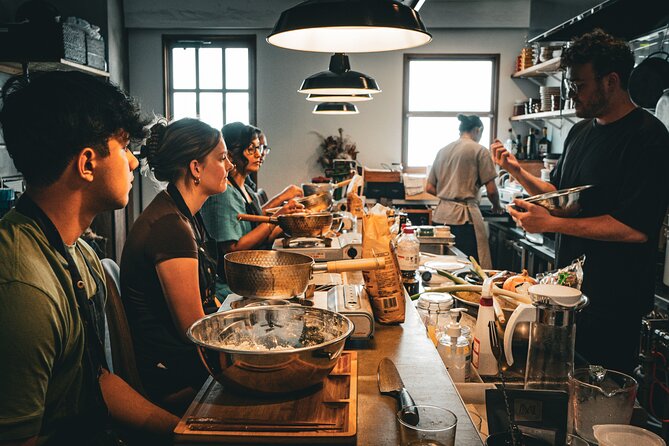
The chefs are bilingual, both English and Japanese. That matters more than people think. Food technique has lots of little cues, and bilingual staff can translate those cues clearly, not just generally.
Reviews mention a team that includes Andrew and chefs such as Eric, Jae, and Leo. I cannot promise the exact roster on your date, but it does tell you the staffing style. The instructors are used to teaching international visitors, and they seem comfortable giving hands-on coaching while keeping the mood friendly.
If you are the type who gets nervous about cooking mistakes, this is a good fit. When someone can explain what to change in clear language, you recover fast.
Dietary Needs: How to Get a Good Result With Real Options
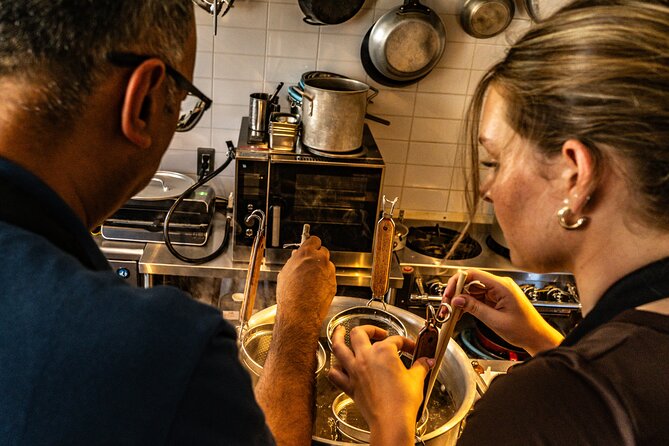
The class supports vegetarian and vegan options, gluten free options, and pork-free options. You need to comment in your request ahead of time, subject to availability. They also note that service animals are allowed.
This is a real quality signal. Many cooking experiences advertise “options,” but the kitchen reality can be tricky. Here, the presence of multiple diet paths suggests the restaurant and chefs can handle substitutions without turning your meal into a compromise.
My advice: when you book, be specific about what you avoid. Even if gluten-free and pork-free sound straightforward, ramen has cross-contact issues and flavor components can involve unexpected ingredients. Clear requests help the chefs plan.
What You Eat at the End: Not Just a Sample, a Full Payoff
Your work ends with a meal: the ramen and gyoza you helped make. Reviews repeatedly mention lots of food and a satisfying finish, basically enough that you feel like you earned lunch or brunch.
This is where the value shows up. You are not paying to watch. You pay because you get a restaurant-style outcome plus the skills to re-create it. The take-home e-book reinforces that, because you can move from memory to practice.
If you love ramen, you will probably feel better about the price once you sit down and taste what you made. It is harder to compare this to a regular restaurant bill, because you also paid for technique coaching and tools.
Price and Value: Is $159.18 Worth It?
At $159.18 per person for about 4 hours, it is not a bargain. But cooking classes in Tokyo often cost like this because you are paying for more than food.
You are buying four types of value:
- Labor and instruction: chefs guide you through each stage, and max 6 keeps attention focused.
- Equipment: you use professional kitchen-grade tools.
- Ingredients and outcome: you eat ramen and gyoza that you helped produce.
- Take-home learning: the cooking e-book helps you repeat the process later.
If you want a single bowl of ramen, you can do cheaper. If you want to actually learn ramen noodles, ramen building, and gyoza technique in a restaurant kitchen, then the pricing starts to make sense.
Also, consider timing. This is a morning class, starting at 9:00 am. If it replaces a casual meal and adds a skill you keep, the value equation improves.
Who Should Book This Tokyo Ramen Workshop
This fits best if you:
- Love ramen and want to understand why it tastes right.
- Enjoy hands-on cooking more than just eating.
- Want a small-group experience with feedback, not a big crowd in a studio.
- Care about dietary accommodations and want a chef-led solution.
It may be less ideal if you:
- Want a low-effort activity.
- Are hoping for a passive tour, photo stops, and light tasting only.
- Have limited comfort working with hot pans and active kitchen steps.
Practical Tips Before You Go (So You Enjoy It More)
Plan to show up ready to work. Even if you are comfortable cooking at home, ramen technique is physical. Expect to handle dough, follow timing cues, and keep your attention on what the chef says.
You should also think about your day logistics. Start at 9:00 am, and the class is about 4 hours, so you will want an easy plan afterward. You will be fed, and you will likely want time to walk off the calories around Meguro.
Finally, if you have dietary needs, send your request clearly in advance. The class mentions vegetarian, vegan, gluten free, and pork-free options, but availability depends on requests.
Quick FAQ for Your Planning
FAQ
How long is the ramen and gyoza cooking experience?
It runs about 4 hours.
What time does the class start?
The start time is 9:00 am.
Where do I meet for the class?
You meet at Baba Ramen Cooking Meguro101, 3-chōme-7-32 Shimomeguro, Meguro City, Tokyo 153-0064, Japan.
Is this class in a restaurant or a home setting?
It takes place in a restaurant, using kitchen-grade equipment.
How big is the group?
The class has a maximum of 6 travelers.
Do I get to choose broth options?
Yes. You can choose from two broth options.
Are vegetarian, vegan, or pork-free options available?
Yes, vegetarian and vegan options are available if you request in advance, subject to availability. Pork-free options are also available with advance notice.
Are there gluten-free options?
Gluten-free options are available if you request in advance, subject to availability.
What do I take home after the class?
You receive a cooking e-book so you can recreate the recipe at home.
What if weather is bad or the class does not meet the minimum?
The experience requires good weather. If canceled due to poor weather, you will be offered another date or a full refund. It also requires a minimum number of travelers, and if that minimum is not met you will be offered a different date or a full refund.
Should You Book Baba Ramen Cooking Meguro?
If you want more than another meal in Tokyo, yes, book it. This experience is built around hands-on ramen noodles, gyoza skills, and a restaurant kitchen setup with real equipment, plus a take-home e-book so your learning does not end when the soup is gone.
I would skip it only if you want a totally low-effort activity or if the idea of active cooking with hot kitchen work does not appeal to you. Otherwise, for ramen lovers, it is one of the most direct ways to take Tokyo flavor home with actual technique.
If you tell me your dietary needs (if any) and what style of ramen you usually order, I can help you decide which broth direction to pick.
Newly listed around Tokyo
- Tokyo private transfer for Yokohama Port★ 4.5 · 63 reviews
- Luxury Kimono Photoshoot at Ginza Tokyo★ 5.0 · 7 reviews
- Tokyo Allstar Food Tour★ 4.5 · 206 reviews
- Tokyo Art Aquarium Museum E-Ticket with optional Tokyo Metro Pass★ 5.0 · 17 reviews
- Tokyo: Best Ginza Food Tour at 3 Local Eateries★ 5.0 · 83 reviews
- Private One Day Nikko Tour with Bilingual driver★ 3.5 · 11 reviews
- PRIVATE tour in 180SX to Daikoku+++++★ 5.0 · 6 reviews
- Kabuki Talk★ 5.0 · 10 reviews
Ramen Tasting Trips, compared.

Ramen Cooking Class at Ramen Factory in Kyoto
Read our review →
Eat and Drink Like a Local: Tokyo Ueno Food Tour-Taverns&Ramen
Read our review →
Ramen & Gyoza Cooking Class in Tokyo with Local Supermarket Visit
Read our review →
Ramen Cooking Class at a Ramen Factory with Souvenir
Read our review →
Mount Fuji and Hakone Full Day Tour with Ramen Making
Read our review →

Five Must-See Highlights Walking Tour & Ramen Lunch
Read our review →Browse the lists this tour appears in