
Review · WALKING TOURS
Sakai – Knife Factory and Craft Walking Tour
Knives have a whole new meaning in Sakai. This half-day walk pairs Sakai food tradition with genuine hands-on knife craft access in a family-run setting that dates back over a century.
I especially like how the tour builds in moments you cannot easily DIY. You start with a 400-years-old mochi origin story at 八百源来弘堂本店, then you move straight into the sharpening station where professionals work.
One thing to plan for is timing and language limits. There are specific date windows when only the blacksmith is available, the crafts museum can potentially close on the 3rd Tuesday, and French for shared tours is not guaranteed.
In This Review
- Why This Sakai Knife Tour Feels More Like a Workshop
- Stop 1: 400-Year Cinnamon Mochi at 八百源来弘堂本店
- Stop 2: Inside a Real Knife Factory and the Sharpening Station
- The Sharpening Lesson: Where You Actually Learn Something
- Custom Knife Ordering: Watching Craft Become Yours
- Stop 3: Sakai Traditional Crafts Museum and Knife Shop
- Price, Duration, and What Makes the $66.05 Feel Worth It
- Schedule Notes That Can Affect Your Day
- Blacksmith availability window
- The 3rd Tuesday museum closure possibility
- French language is not guaranteed
- What This Tour Is Best For
- Who Might Be Disappointed, and How to Manage Expectations
- Should You Book the Sakai Knife Factory and Craft Walking Tour?
- FAQ
- What time does the tour start?
- How long is the experience?
- How much does the tour cost?
- Where is the meeting point?
- What’s included in the tour?
- Is there shopping on the tour?
- Is the ticket mobile?
- What happens on the 3rd Tuesday if the museum is closed?
- Can I request a francophone guide?
- What if I’m a solo traveler?
Why This Sakai Knife Tour Feels More Like a Workshop
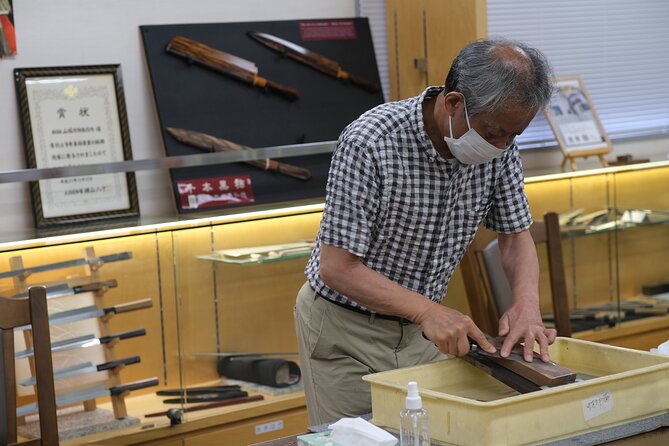
This is not a museum-only experience. It is a walk through Sakai City that ends with you seeing how cooking knives are shaped, then practicing the sharpening basics as part of the day. The group stays small, up to 10 people, which matters when you want questions answered and time at the station.
The included sweet snack is a nice warm-up too. You get one sweet per guest at the mochi stop, and it is the kind of local bite that makes the craft theme feel grounded in everyday life.
Finally, the format helps you connect the dots. Sakai’s knife identity is not just branding, it is tied to makers, tools, and shop routines that you can actually observe in action.
Stop 1: 400-Year Cinnamon Mochi at 八百源来弘堂本店
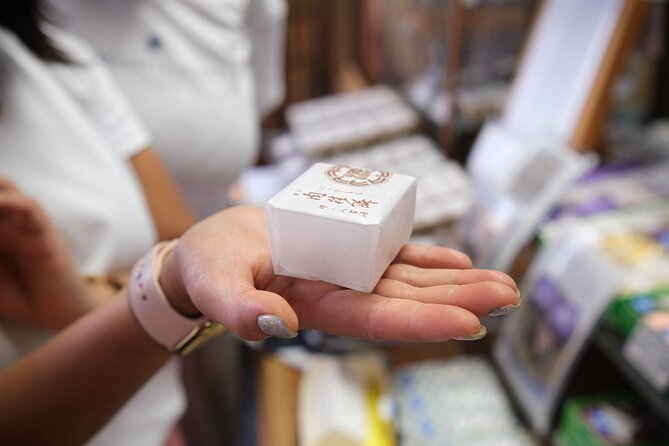
Your day opens with a quick stop that feels like a local welcome. At 八百源来弘堂本店, you learn about the mochi story, described as having a 400-years-old origin behind traditional Japanese cinnamon mochi. You also receive one mochi as a present, plus you have time to buy more if you want.
This is a short 15-minute visit, so it is not a huge detour. Instead, it sets the tone, craft by craft, so when you later step into the factory world, you already understand the theme of pride in technique.
Practical tip: if you know you have a big appetite, consider buying extra mochi now. The tour includes snacks, but it does not include extra meals, so spacing matters later in the day.
More Walking Tours in Osaka
- Osaka: Hotspots & Hidden Gems Walking Tour Private or Group
★ 4.9 · 1,300 reviews - Osaka Backstreet Nightlife & Street Food Walking Tour
★ 5.0 · 1,011 reviews - Osaka Local Foodie Walking Tour in Dotonbori and Shinsekai
★ 5.0 · 985 reviews
Stop 2: Inside a Real Knife Factory and the Sharpening Station
The main event is the knife factory visit at 1-chōme-2-21 Shukuyachōnishi. This stop is about entering a working environment linked to 100+ years of family history and watching how raw blades become proper handmade cooking knives.
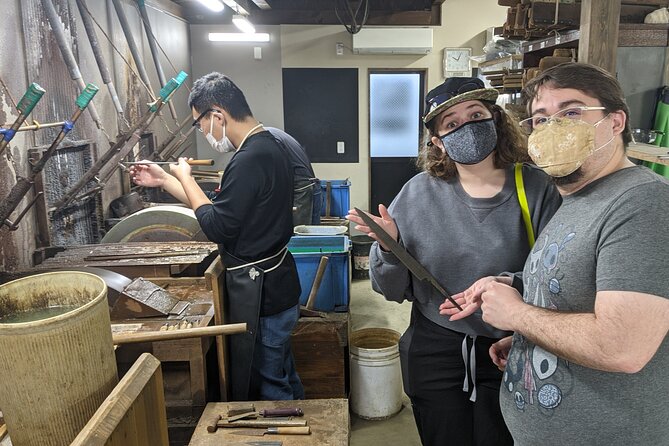
You are guided through key areas, including the sharpening station and the main office. You also get to observe the workflow, including blades arriving directly from the blacksmith, then being turned into knives. The value here is access. In many places, you see finished products behind glass. Here, you see the process.
What you should expect on this portion:
- You spend about 1 hour focused on the factory floor and stations.
- You watch professional work as part of the tour flow.
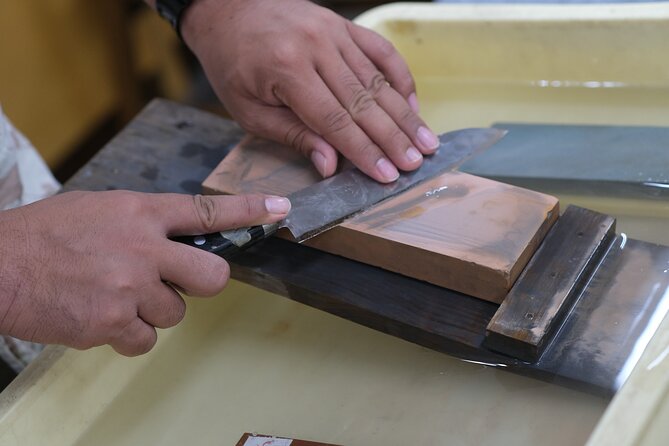
- You get the chance to participate in the sharpening session rather than only observing.
About the guide: the experience tends to hinge on the person leading you. On previous tours, guides like Scott, Rémi, and Jean-yves were specifically praised for making history clear and turning the technical parts into something you can follow. If you are someone who likes conversation and context, this small-group format helps a lot.
The Sharpening Lesson: Where You Actually Learn Something
The included knife sharpening lesson is the part that makes this tour more than a sightseeing walk. You learn and practice traditional sharpening techniques with a professional, and you get hands-on time, not just a lecture.
This is useful even if you never plan to become a knife person. A lot of home cooks have decent knives that simply lost their edge over time. A basic understanding of sharpening angles and technique helps you judge when your knife needs attention and when it is worth getting a proper resharpening.
There is also a psychological payoff. You get to handle the topic with respect. After seeing how much precision and care goes into the edge, your own kitchen knives start to feel less like disposable tools and more like something you care for.
One more angle: this lesson also explains why Sakai knives have a reputation. The focus on technique shows that the edge is not an accident, it is work.
Custom Knife Ordering: Watching Craft Become Yours
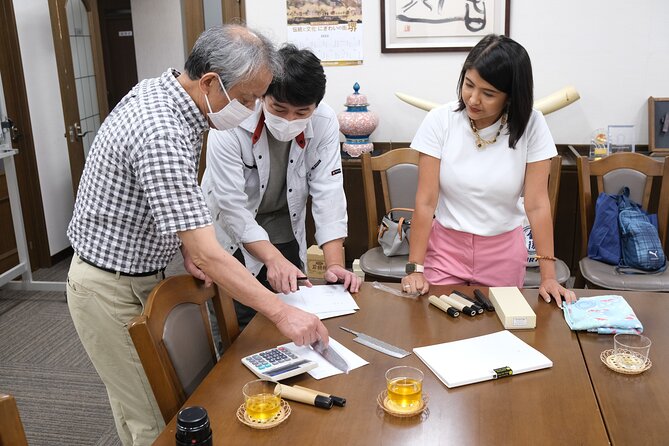
A major highlight is the chance to order a customizable knife while watching it being made in front of you. This is not just a showroom pitch. The tour experience is structured so you can connect the ordering idea to what is happening at the station.
If buying a knife is on your mind, treat this like a planning moment, not a surprise impulse. Think about your typical cooking style, how you use your current knives, and what you want improved. People often leave thinking that their everyday knives do not do justice to the care they just saw.
If you do not plan to buy, you can still enjoy the experience. Even in that case, watching the making process helps you understand the craftsmanship behind the final product.
A few more Osaka days to weigh up
- Osaka Bar Hopping Night Walking Tour in Namba (3 bars, 6 tastes)
★ 5.0 · 958 reviews - Osaka: Deep Backstreets Walking Tour with Dinner Option
★ 4.9 · 902 reviews - Ultimate Osaka Walking Tour: Castle, Dotonbori & Hidden Gems
★ 5.0 · 862 reviews - Osaka: Main Sights and Hidden Spots Guided Walking Tour
★ 4.9 · 702 reviews
Stop 3: Sakai Traditional Crafts Museum and Knife Shop
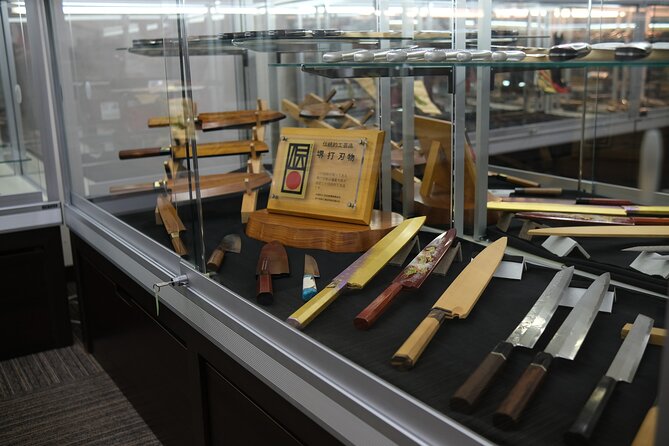
After the factory, you head to the Sakai Traditional Crafts Museum and Knife Shop for about 30 minutes. This stop is designed to broaden your view of what makes Sakai special, not only knives.
You will learn about local crafts and local industry. The museum also points to bicycles, with the brand Shimano noted as first created in Sakai. It includes local products as well, which helps you see Sakai as a manufacturing city, not just a single-craft destination.
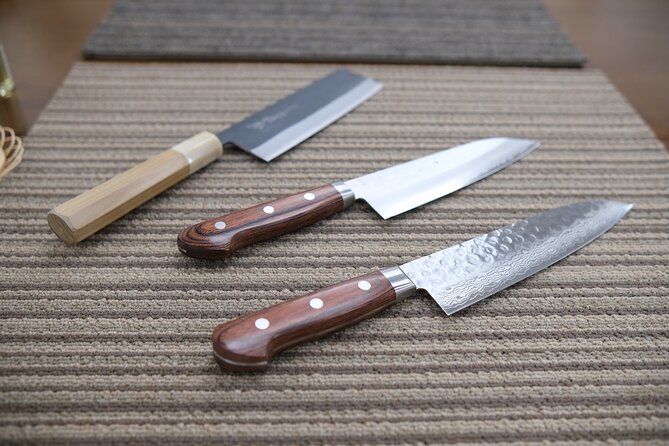
Then you finish with the knife shop component. This is where the tour’s craft story becomes practical. If you have been thinking about a purchase all morning, this is your final window before the walk ends back at the meeting point.
A small caution: the museum stop is shorter than the factory portion. If you love museum-style reading and slow wandering, plan to spend a bit of extra time nearby on your own afterward.
Price, Duration, and What Makes the $66.05 Feel Worth It
At $66.05 per person, this tour sits in the mid-range. The price makes sense when you break it into components.
You are paying for:
- Entry to a knife factory experience focused on real access to the sharpening station.
- A hands-on knife sharpening lesson with a professional.
- A small-group walking format that keeps the experience manageable.
- A sweet snack included through the mochi stop.
- Guide support, including bilingual help.
It also helps that the duration is tight. Expect about 3 to 4 hours total, starting at 9:00 am. That is long enough to feel like a real day of craft, but short enough that you can still build lunch into the rest of your schedule.
The biggest value driver is participation. If this were only a factory photo session, it would not be close to the same. The sharpening practice is where you learn, and it tends to be the part people remember.
Schedule Notes That Can Affect Your Day
There are a few timing notes you should keep in mind before you book.
Blacksmith availability window
Between 2026 March 6 and April 6, there is a note that during that period the blacksmith is only available on Tuesdays, Wednesdays, and Thursdays. If your dates fall outside those days, your experience may follow a different access pattern inside the craft process.
The 3rd Tuesday museum closure possibility
Every 3rd Tuesday of the month, the museum has an inventory and might close without notice. If that happens, the guide will take you directly to the craftsman location.
This is important because it keeps the tour moving, but it can change which stop you see exactly. If you strongly care about the museum portion specifically, check your calendar when choosing a date.
French language is not guaranteed
For francophone requests, it is clearly stated that French cannot be guaranteed on a shared tour. If French is critical for you, plan to confirm expectations with the operator before you settle on a date.
What This Tour Is Best For
This works well if you fit one of these profiles:
- You like hands-on experiences more than passive museum time.
- You are curious about why certain regions become known for a tool or craft.
- You want a shopping opportunity that is connected to a process, not just a random sales stop.
- You enjoy conversation with guides who can explain craft history and technique, such as Scott, Rémi, and Jean-yves.
It can also fit a casual traveler, as long as you are comfortable with a 3 to 4 hour day that mixes walking with a focused workshop. The pacing is generally straightforward, and it is designed for most travelers to participate.
Who Might Be Disappointed, and How to Manage Expectations
There is one fair consideration to handle upfront: the balance of history framing and knife detail can vary depending on the guide and your preferences. Some people felt the Sakai history perspective was too Western-centered, and others simply cared more about access to buying knives and less about broader storytelling.
My practical advice: if you want deep cultural context, come prepared to ask questions. The workshop format rewards curiosity. If you care most about buying and seeing the craft, the factory access and ordering window tend to deliver.
Also, remember that the tour is limited. Maximum group size is 10, but single travelers might face a minimum of two guests for the session to run. If you are traveling solo, booking early helps.
Should You Book the Sakai Knife Factory and Craft Walking Tour?
I think this is a strong pick if your idea of a great travel experience is practical skill, real access, and a short walk that connects food, craft, and tools. The sharpening lesson plus the chance to watch ordering and making is the kind of value that is hard to recreate on your own.
Book it if you want:
- Factory access to the sharpening station and process.
- A real hands-on sharpening lesson, not just sightseeing.
- A small-group morning with local mochi included.
- A guided path through Sakai’s craft identity, including the museum stop.
Skip it only if you know you are sensitive to specific language needs on shared tours, or if you prefer long museum time over a workshop rhythm.
If you are flexible on date and you go in curious, you will leave with a better sense of how precision becomes a daily tool, and why Sakai has earned its place in Japan’s craft world.
FAQ
What time does the tour start?
The start time is 9:00 am.
How long is the experience?
It runs about 3 to 4 hours.
How much does the tour cost?
The price is $66.05 per person.
Where is the meeting point?
The meeting point is 3-chōme-22 Ebisujimachō, Sakai Ward, Sakai, Osaka 590-0985, Japan.
What’s included in the tour?
It includes one sweet snack per guest, all fees and taxes, a bilingual guide, a visit to the knife factory, and a knife sharpening lesson.
Is there shopping on the tour?
You can visit the knife shop and you may have the chance to order a customizable knife, but extra food and souvenirs are not included.
Is the ticket mobile?
Yes, the tour uses a mobile ticket.
What happens on the 3rd Tuesday if the museum is closed?
If the museum closes without notice on the 3rd Tuesday, your guide will take you directly to the craftsman location.
Can I request a francophone guide?
French is requested, but French cannot be guaranteed for a shared tour.
What if I’m a solo traveler?
There is a 2 guests minimum rule. If the minimum is not met for a single guest, the session might be cancelled and you will be notified with a reschedule option or a full refund.
Newly listed around Osaka
- 2 Hours of Bar Hopping in Osaka Style★ 5.0 · 22 reviews
- Same-Day Osaka Food Crawl with local food and Hidden gems★ 5.0 · 114 reviews
- Osaka Authentic Local Izakaya Hopping Experience: Food & Drinks★ 5.0 · 99 reviews
- Well-balanced BENTO (lunch box) Cooking Class★ 5.0 · 35 reviews
- Anime Cosplay Photshoot-50 Digital Photos Provided★ 5.0 · 8 reviews
- OSAKA:Feel the Power! Learn Taiko Drum from Professionals★ 5.0 · 28 reviews
- Three Types of Ramen Cooking Class in Osaka★ 5.0 · 119 reviews
- Urban Canvas: Osaka Street Art Bike Tour★ 5.0 · 47 reviews
Walking Tours, compared.

Kyoto Geisha Walking Tour: Gion District & Hidden Gems
Read our review →
Tokyo Tsukiji Fish Market Food and Culture Walking Tour
Read our review →
Gion Geisha District Walking Tour – Stories of Geisha
Read our review →

Shinjuku Local Bar and Izakaya Guided Walking Tour
Read our review →

Asakusa Walking Tour with Sensoji Temple Visit
Read our review →
Kyoto Gion Geisha District Walking Tour – The Stories of Geisha
Read our review →Browse the lists this tour appears in