
Review · SAMURAI SWORD & NINJA TRAINING
Samurai Experience – Learn Bushido through Kendo, in Tokyo
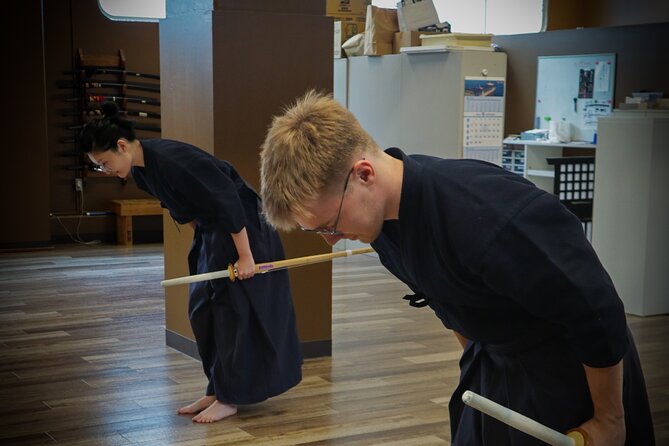
Forget sword selfies, learn real discipline. This Kendo Spirit class teaches Bushido through Kendo step by step, from bowing and breathing to a controlled sparring moment that feels a lot more real than a demo. I like that it starts with respect and meaning, not just swinging a shinai. You also get a small group format, so the instructors can correct your feet and posture while keeping things safe and encouraging.
What I especially like is how the lesson breaks kendo into clear parts: Ki (spirit intent), Tai (grounded body work), Ken (the sword basics), then brings them together as Ki-Ken-Tai-Itchi. After that foundation, you practice, you match, and you watch the instructors do it with real power and control. One consideration: it can get warm once you add the gear, so plan for a sweaty workout and take the provided breaks seriously.
If you’ve been to Japan and only collected photos, this is a better use of your time. This is Japan you feel in your stance and your bow, and it’s taught in English without dumbing anything down. The day ends with closing etiquette, so you leave with the same respect you started with.
In This Review
- Key things to know before you go
- Where Bushido shows up in modern Tokyo
- The 2-hour flow: rei, basics, armor, then a match
- 1) Calm mind, bow, and set the mindset
- 2) Ki: learn presence and focused intent
- 3) Tai: grounded footwork that keeps you ready
- 4) Ken: hold and swing the shinai with correct movement
- 5) Ki-Ken-Tai-Itchi: spirit, sword, body become one strike
- 6) Match time: controlled sparring with instructor-level guidance
- 7) Demonstration: watch two instructors go hard with control
- Ki, Tai, Ken: the lesson’s simple framework that helps you remember
- The dojo reality: armor, etiquette, and safety for beginners
- Meet the instructors: Daichi-san and Makoto’s teaching style
- Price and value: is $103 worth 2 hours of real kendo?
- Who should book this kendo class, and who should skip it
- Practical tips before your Tokyo Station area dojo visit
- Should you book Samurai Experience – Learn Bushido through Kendo in Tokyo?
- FAQ
- Can I book a private session?
- Will I receive photos or videos from the experience?
- Is the dojo far from central Tokyo?
- Is English available if I do not speak Japanese?
- Do I need to bring anything?
- I’m not athletic. Can I still join?
- What is the duration of the experience?
- Can I arrange a session if the dates don’t work for me?
- Can large groups participate?
Key things to know before you go
- Starts with etiquette and breathing so you learn the why before the how
- Ki, Tai, Ken give you a simple map to remember during training
- Real match pressure, adjusted for beginners so you learn without getting overwhelmed
- Armor time happens after fundamentals, not before, so it makes sense
- Daichi-san and Makoto lead instruction in a patient, structured way
- Photos, videos, and sometimes a certificate help you take the lesson home
Where Bushido shows up in modern Tokyo
Japan can feel like a movie set if you only chase the obvious sights. Kendo is different. It’s a living tradition, still practiced because the spirit still matters, not because it looks good for visitors.
This experience frames kendo as more than a pastime. Kendo is presented as something shaped by the need to survive, then preserved as Bushido, passed down through the body over generations. That matters because you’re not asked to cosplay history. You’re asked to practice it, in small, physical steps.
And the tone of the class fits that idea. The lesson themes repeat: calm your mind, respect others, and focus your intent. That’s why the opening and closing bows are not treated like a ritual you rush through. They are treated like training.
You also avoid the common “tourist martial arts” trap of doing random swings and calling it culture. Here you learn a sequence. You get the logic behind each movement.
More Samurai & Ninja Sessions in Tokyo
- Tokyo: Samurai Restaurant Show Ticket with 2 Drinks
★ 4.5 · 1,307 reviews - Tokyo: Samurai Ninja Museum Guided tour and Experience
★ 4.6 · 1,010 reviews - Tokyo: Samurai Sword & Archery Class from Samurai Descendant
★ 5.0 · 603 reviews
The 2-hour flow: rei, basics, armor, then a match
The class is two hours, paced for people with zero kendo background. You don’t start by grabbing a sword and hoping for the best. You start by understanding where kendo comes from and why the discipline of Japan shows up through it.
Here’s how the session typically moves:
1) Calm mind, bow, and set the mindset
Before any gear, you practice etiquette and respect. You’ll do a calm-in-your-body reset, then bow before training. In kendo, bowing is not just formality. It’s a way to face your partner with respect and attention.
This is one of the most praised parts of the experience. People often say it feels authentic, not like a staged photo moment. That’s because the instructors treat the etiquette as a core skill, not a warm-up decoration.
2) Ki: learn presence and focused intent
Then you work on Ki. In plain terms, this is learning to show up with intention instead of anger. You practice presence as something controlled and directed, not something loud.
For first-timers, this is useful because it gives you a mental handle. When you later put on armor and do sparring, you’re not just reacting. You’re applying the mindset you practiced earlier.
More Samurai and Ninja sessions in Tokyo:
- Ninja+Kabuki Tokyo
★ 4.5 · 512 reviews - Skip the lines Basic Ticket at SAMURAI NINJA MUSEUM TOKYO
★ 5.0 · 470 reviews - Best Samurai Experience in Tokyo
★ 5.0 · 458 reviews - Tokyo: Legend Samurai Entertainment Night in Kanda Shrine
★ 4.6 · 367 reviews
3) Tai: grounded footwork that keeps you ready
Next comes Tai, body and balance. You practice traditional footwork so you stay grounded, stable, and ready to move. The goal is simple: good balance lets your technique work. Without balance, everything becomes a swing, not a strike.
If you’ve ever felt awkward in a training environment, you’ll like this part. Footwork is where beginners can improve fast, even if they’re not athletic.
4) Ken: hold and swing the shinai with correct movement
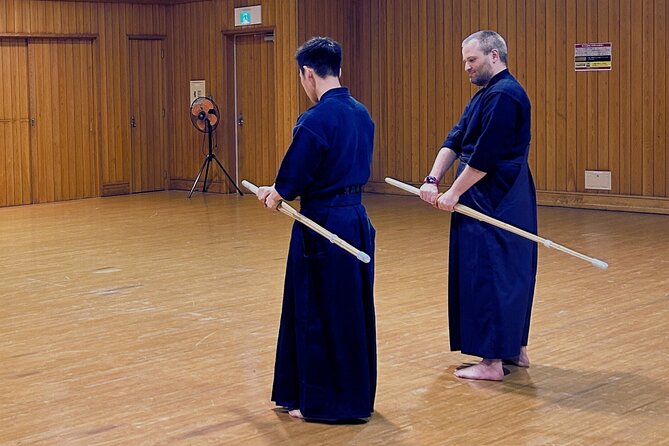
Only after the earlier fundamentals do you move into Ken, the sword basics. You learn how to hold the shinai, how to swing it, and how to move with it. This sequencing is practical.
It also explains why the session feels structured. You’re not “randomly hitting.” You’re learning a technique system, then applying it.
5) Ki-Ken-Tai-Itchi: spirit, sword, body become one strike
The lesson name for this integration is Ki-Ken-Tai-Itchi. It’s basically the idea that spirit, sword, and body should line up as one action.
When this clicks, you’ll feel it. Your strike stops being only arm motion. It becomes something you generate from your feet and intent.
6) Match time: controlled sparring with instructor-level guidance
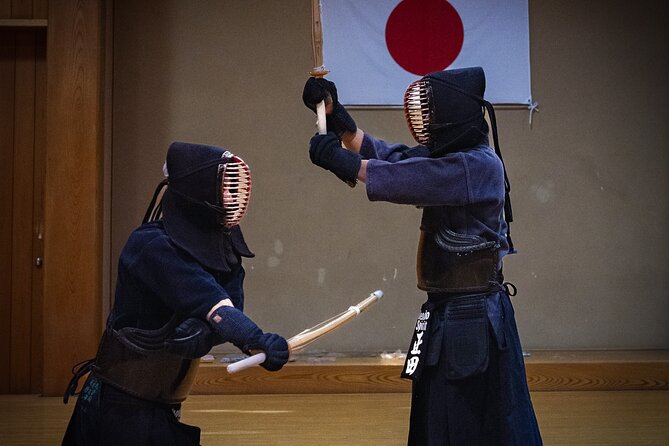
Then you put everything into practice with a real kendo match format. Expect pressure, especially when the instructor points at you or squares up close. Some people describe freezing for a second, and that’s actually part of the lesson. You’re learning awareness under intensity.
The class is paced so beginners can participate comfortably. Many participants say the instructors go easy while still giving you the real feeling of kendo.
7) Demonstration: watch two instructors go hard with control
After your practice and sparring, you watch a demonstration match between instructors. Review highlights mention powerful control, not showy chaos. You can see the difference between doing techniques and understanding them.
This also helps you read the movement you just practiced. Suddenly, the earlier etiquette and footwork aren’t random rules. They connect to how the match works.
Ki, Tai, Ken: the lesson’s simple framework that helps you remember
A lot of cultural experiences give you facts. This one gives you a usable framework.
Here’s the way to think about the three pillars:
- Ki (spirit) is your intent. It’s where calm focus comes from.
- Tai (body) is your stability. It’s how you stay balanced when pressure increases.
- Ken (sword) is the mechanics. It’s how you hold, swing, and move with the shinai.
Then Ki-Ken-Tai-Itchi ties it together, so you’re not treating mind and body like separate worlds.
I like this teaching approach because it’s easy to remember in the moment. When you’re nervous, your brain usually forgets everything. This structure gives you a fallback.
Also, this framework makes it easier to keep training afterward. If you want to find a local kendo dojo back home, you now know what to ask about. You can describe what you learned, instead of saying you just waved a stick in armor.
The dojo reality: armor, etiquette, and safety for beginners
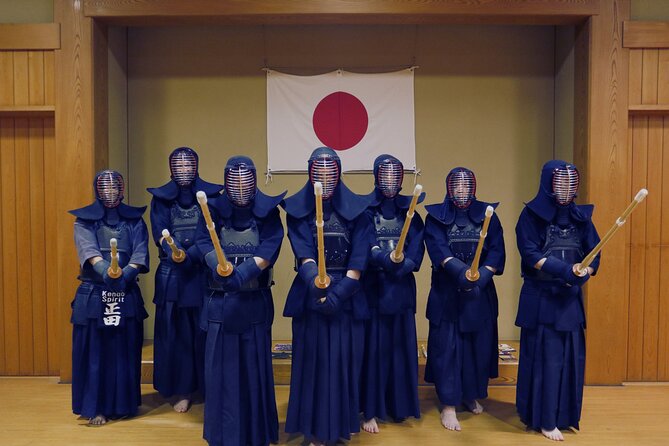
You get kendo attire and protective gear for the match portion. You’ll also use a bamboo sword (shinai). The class provides everything, including drinks, and you don’t need to bring equipment.
This is important. Martial arts training often scares people off because they assume you need gear, experience, and confidence. Here, the kit is handled.
The other big safety factor is training order. You practice etiquette, footwork, and controlled sword basics before you do sparring in full gear. That reduces the panic factor.
One practical consideration that came up in feedback is heat. Once you’re suited up, it can get warm. Plan for that. Hydration matters, and the class includes drinks and rest periods, so you’re not left to suffer.
Also, alcohol and drugs are not allowed. That’s a simple rule, but it reinforces the serious training atmosphere.
Even though this is beginner-friendly, some moments still feel intense. When the match begins, you may feel the moment go quiet inside your head. That’s not failure. That’s the mental discipline part.
Meet the instructors: Daichi-san and Makoto’s teaching style
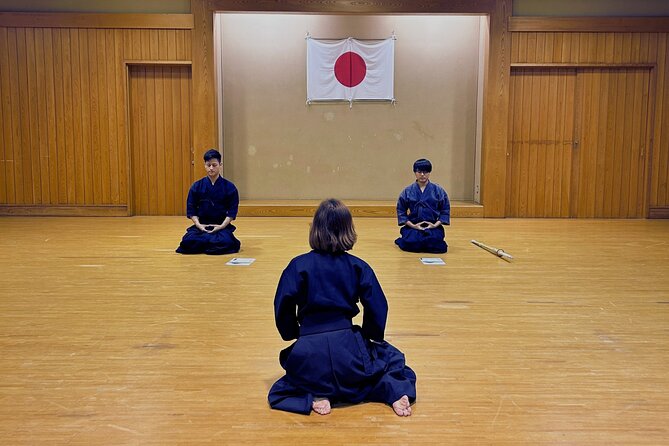
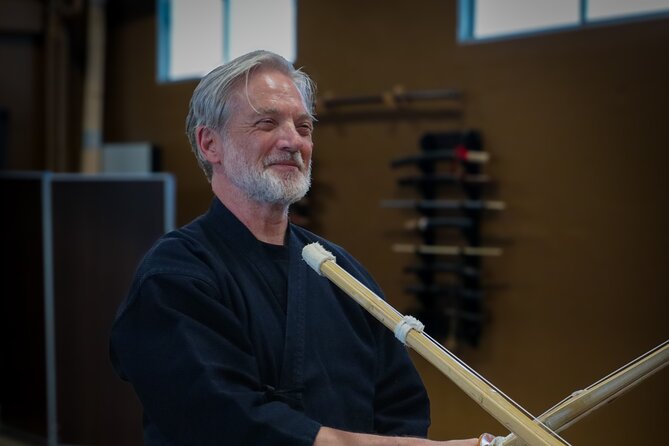
The experience is led by instructors who teach in English and Japanese. In multiple accounts, Daichi-san and Makoto are named as key teachers.
What stands out is the mix of structure and patience. People consistently describe clear explanation, step-by-step practice, and a welcoming atmosphere. That combination is exactly what first-timers need.
In a good dojo, corrections should feel like coaching, not criticism. This class aims for that. Corrections on stance and timing are part of the training, but the tone stays supportive.
You also get a demonstration duel at the end between instructors. That gives you a real reference point for what controlled kendo looks like, not only what it sounds like.
Price and value: is $103 worth 2 hours of real kendo?
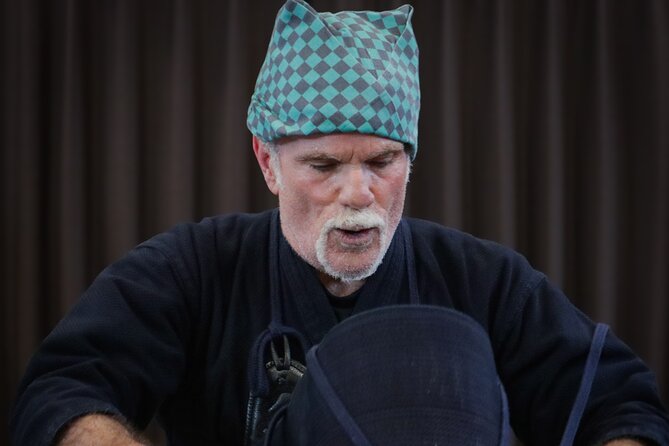
At $103 per person for 2 hours, the price lands in the category of a focused activity, not a cheap gimmick. So the question is value: what do you actually walk away with?
Here’s what’s included:
- A full 2-hour kendo experience
- Kendo attire and protective gear for training
- A shinai (bamboo sword)
- Drinks
- Souvenirs
- Photos and videos sent by email afterward
And the format is small group, limited to 8 participants. That detail matters for two reasons. First, your time for coaching improves. Second, the class can manage energy safely, especially when you reach match time.
You’re also close to central Tokyo, with the dojo located within about 15 minutes of Tokyo Station. That reduces wasted travel time, which is part of value you feel immediately on a busy itinerary.
If you’re choosing between another short cultural stop and an activity that gives you body-based learning, this one is the stronger pick. You leave with muscle memory, not only a memory.
Who should book this kendo class, and who should skip it
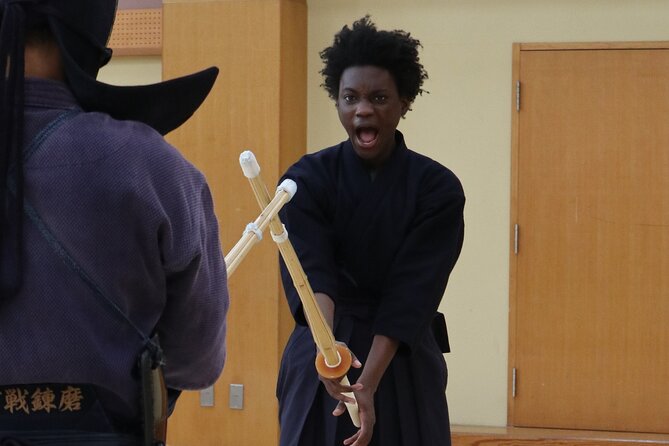
This experience is for people who want Japan beyond the surface. It’s also a good fit if you care about discipline, respect, and meaning more than entertainment.
You don’t need kendo experience. You do need an open mind and a willingness to face yourself in a new way. Kendo is honest. Your posture and intent show up right away.
It suits:
- First-timers who like structured teaching
- People who want a workout that also feels like cultural practice
- Visitors who enjoy learning etiquette as something practical
It may not suit:
- Pregnant women
- Babies under 1 year
- People over 95 years
Also, it can be physically demanding once you’re suited up and matching, so if you have mobility limits or medical concerns, consider whether you can comfortably participate.
If you want a low-effort souvenir photo, this isn’t that. If you want a real, short training block with respect at the center, it’s an excellent choice.
Practical tips before your Tokyo Station area dojo visit
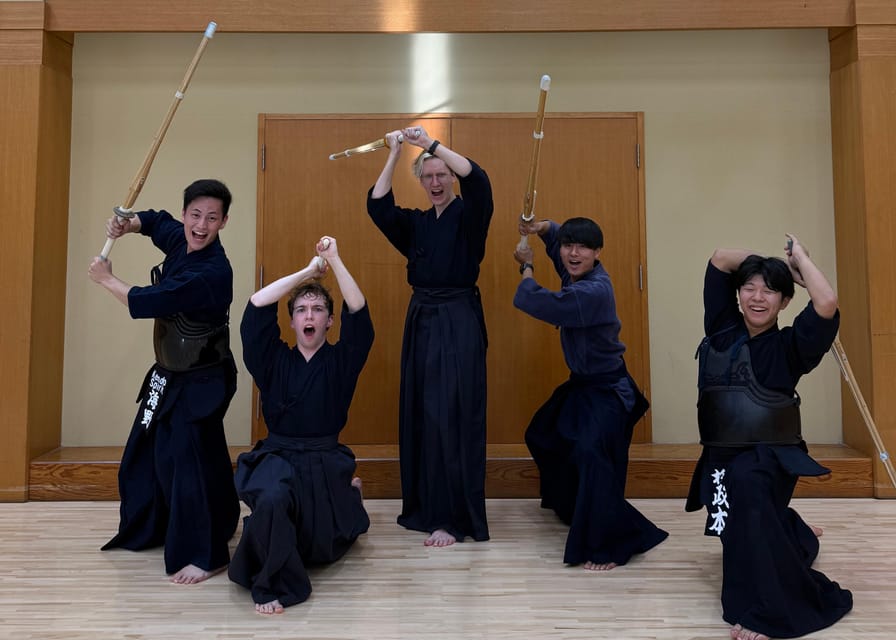
A few small choices will make your session smoother:
- Dress for warmth. The training can feel hot once you’re in gear.
- Plan to follow instructions closely on timing and spacing. Kendo is disciplined because everyone’s safety depends on it.
- Bring your curiosity, not expectations. The class teaches the why first, so let it guide you.
- Expect match intensity. The instructor-level sparring moments are controlled, but they feel real.
Also, since photos and videos are provided by the team afterward, you don’t need to rush into taking shots during training. Your job is to learn.
Should you book Samurai Experience – Learn Bushido through Kendo in Tokyo?
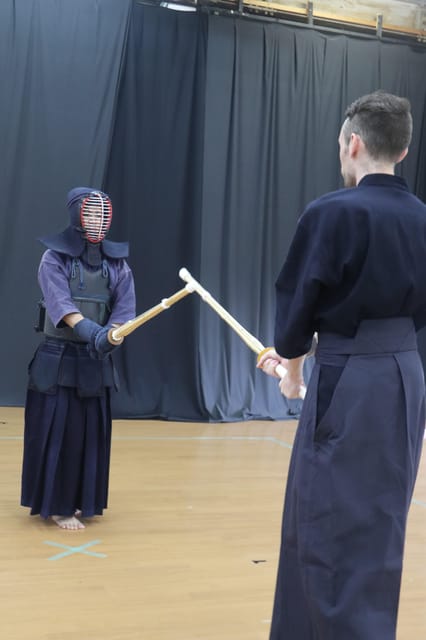
Yes, if you want an authentic, respectful way to experience Japanese discipline in just two hours. The class is built for beginners, with a structured progression from etiquette and mindset to footwork and sword basics, then into a real match moment.
It’s especially worth it if you care about meaning, not just novelty. The small group format and the clear Ki-Tai-Ken framework make the lesson stick. And because the session is near Tokyo Station, it slots into your day without stealing half your itinerary.
Skip it if you’re looking for a casual sightseeing stop, or if physical training in gear is a challenge for your body. But if you’re ready to work, bow, focus, and learn, this is one of the better Japan experiences you can choose on purpose.
FAQ
Can I book a private session?
Yes. Before payment, add Exclusive Private Session as an add-on (one add-on per group). Private sessions are only available on dates that still show 8 available spots.
Will I receive photos or videos from the experience?
Yes. The team takes photos and videos during the experience, and the data is sent to you by email afterward.
Is the dojo far from central Tokyo?
No. The dojo is located within approximately 15 minutes of Tokyo Station.
Is English available if I do not speak Japanese?
Absolutely. The experience is conducted in English, and you can always ask questions during the session.
Do I need to bring anything?
No. Nothing is required from you. The class provides kendo attire and equipment.
I’m not athletic. Can I still join?
Yes. Most participants are beginners with no prior martial arts experience. Instruction is paced carefully, and the group size is kept small.
What is the duration of the experience?
The experience lasts 2 hours.
Can I arrange a session if the dates don’t work for me?
Possibly. If the schedule does not fit, you may be able to arrange a session outside the listed dates by contacting the provider.
Can large groups participate?
Yes. Large group sessions can be arranged. You should contact the provider in advance.
Newly listed around Tokyo
- Tokyo private transfer for Yokohama Port★ 4.5 · 63 reviews
- Luxury Kimono Photoshoot at Ginza Tokyo★ 5.0 · 7 reviews
- Tokyo Allstar Food Tour★ 4.5 · 206 reviews
- Tokyo Art Aquarium Museum E-Ticket with optional Tokyo Metro Pass★ 5.0 · 17 reviews
- Tokyo: Best Ginza Food Tour at 3 Local Eateries★ 5.0 · 83 reviews
- Private One Day Nikko Tour with Bilingual driver★ 3.5 · 11 reviews
- PRIVATE tour in 180SX to Daikoku+++++★ 5.0 · 6 reviews
- Kabuki Talk★ 5.0 · 10 reviews
Samurai Sword & Ninja Training, compared.

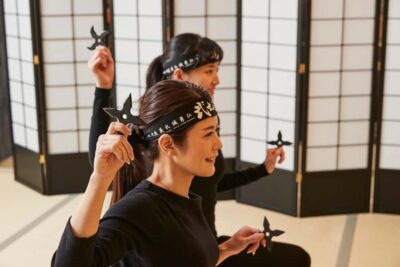
Samurai Ninja Museum Guided tour and Experience
Read our review →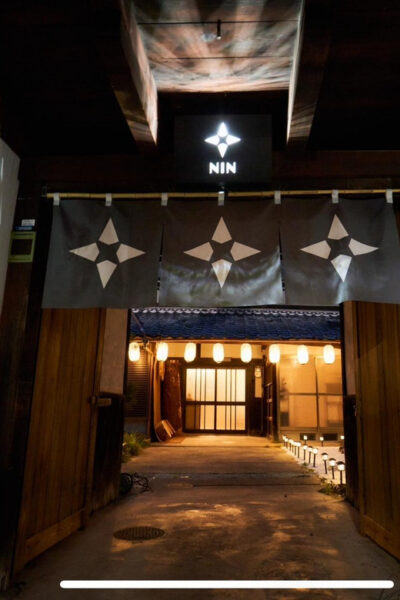
Kendo and Samurai Experience with Uniform and Gear
Read our review →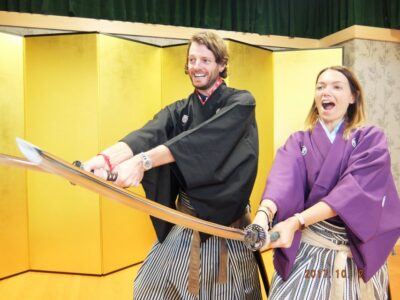
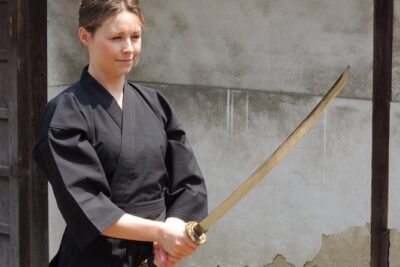
Samurai Sword Class by Experts in Traditional Arts
Read our review →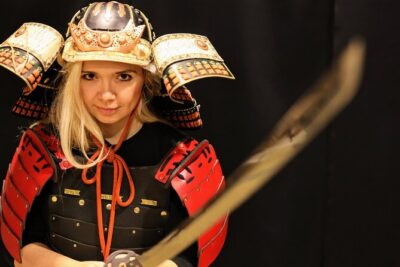
Skip the lines Basic Ticket at SAMURAI NINJA MUSEUM KYOTO
Read our review →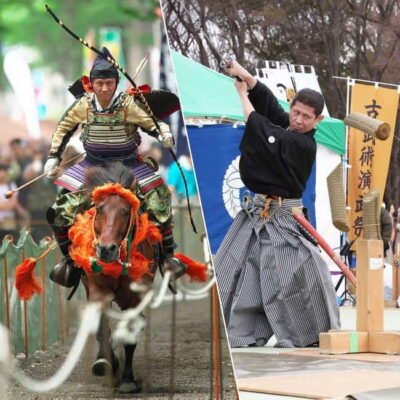
Samurai Sword & Archery Class from Samurai Descendant
Read our review →
Browse the lists this tour appears in