
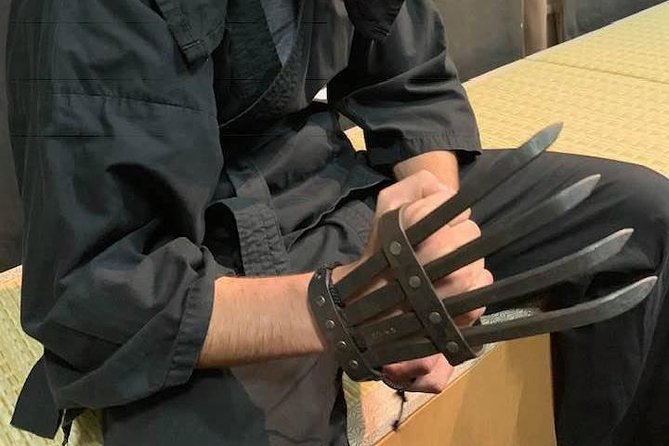
Review · SAMURAI SWORD & NINJA TRAINING
Samurai Experience Tokyo : Samurai Signature (90 min)
Sword practice in Tokyo with real rules.
This 90-minute Samurai Signature class at the Musashi Ninja Clan Honjin Dojo mixes training etiquette, costume moments, and a hands-on weapons lesson. I like how the session is framed as lived tradition, not cosplay, and I also like the built-in meditation start that helps you settle before you move. One thing to consider: the dojo has standards, and if you are inattentive you may be asked to leave.
What really makes it click is the instructor. Suzak Shibata, 19th-generation head of the Musashi Ninja Clan, leads the workshop with instruction drawn from a living lineage, and an online interpreter helps keep the lesson clear.
You’ll get bokken sword work plus shuriken practice, and the pace feels structured for beginners without feeling watered down.
In This Review
- Key Things to Know Before You Go
- A Dojo Workshop Rooted in Musashi Ninja Clan Tradition
- Costume Change, Meditation, and Training Etiquette
- The Flow of Your 90 Minutes: Demo, Then You Practice
- Bokken Sword Training: Stances and Moves in a Controlled Setting
- Shuriken Throwing Practice: Fun Mechanics, Real Discipline
- Live Demonstration and Clan Stories You Can Actually Use
- Photo Time, Spectator Fees, and How to Plan the Day
- Price and Value: Is $122.15 Worth It?
- Who Should Book This Workshop (And Who Might Not Love It)
- Should You Book Samurai Experience Tokyo: Samurai Signature?
- FAQ
- How long is the Samurai Signature experience?
- What is included in the price?
- Are food and drinks included?
- Is there a fee for spectators?
- Is there an age requirement for children?
- How many people are in a group?
- What is the cancellation policy?
Key Things to Know Before You Go
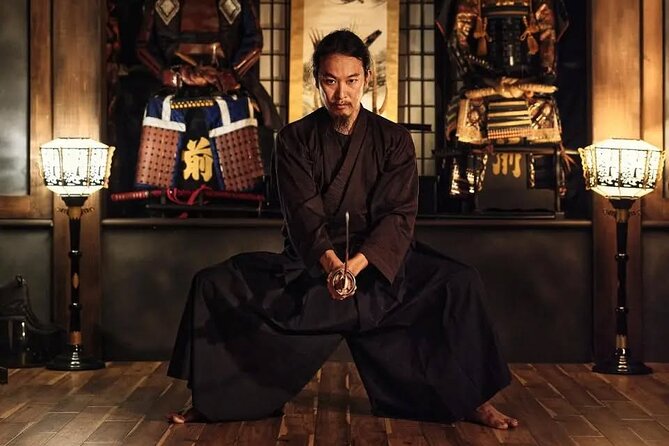
- 19th-generation lineage lead: Suzak Shibata teaches the format and the why behind the movements.
- Costume rental is part of the flow: you change into dogi, then learn how to train properly in that mindset.
- Meditation, demo, practice: the session starts calm, shows techniques live, then gets physical.
- Bokken and shuriken are included: you train with rented wooden sword and shuriken.
- Small group size: maximum 6 travelers means more attention and better control during throwing and drills.
- Photo time is scheduled: you get a brief 5-minute window for photos.
A Dojo Workshop Rooted in Musashi Ninja Clan Tradition
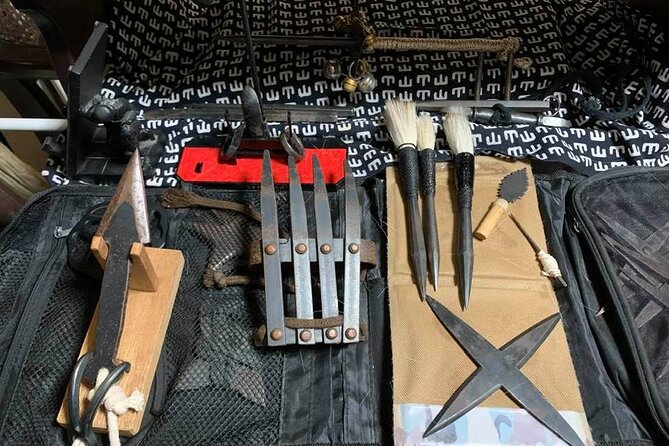
Tokyo has no shortage of entertainment that looks like martial arts. This experience is different because it is built around training rituals and etiquette in a real dojo setting, not just a performance. The workshop is led by Suzak Shibata, identified as the 19th-generation head of the Musashi Ninja Clan, and the session is presented as part of a living lineage.
They also frame the clan story with specifics. The Musashi Ninja Clan says it served the Tokugawa Shogunate for 246 years, while preserving its training traditions and secrets. They further describe themselves as one of the only remaining clans carrying that work forward into the modern era. Whether you take every historical claim as literally as written, the practical takeaway is clear: the class tries to teach you how training is done, not just how it looks.
You’ll appreciate that approach if you like experiences with structure. The lesson has a clear rhythm, and it keeps returning to discipline, posture, and respectful behavior inside the training space.
More Samurai & Ninja Sessions in Tokyo
- Tokyo: Samurai Restaurant Show Ticket with 2 Drinks
★ 4.5 · 1,307 reviews - Tokyo: Samurai Ninja Museum Guided tour and Experience
★ 4.6 · 1,010 reviews - Tokyo: Samurai Sword & Archery Class from Samurai Descendant
★ 5.0 · 603 reviews
Costume Change, Meditation, and Training Etiquette
The experience starts with a mental reset. Before any weapons come out, you begin with meditation and a short etiquette focus. This matters more than it sounds. In a dojo setting, the first goal is to get everyone moving in the same mindset: quiet enough to learn, attentive enough to stay safe, and respectful enough to handle the tools properly once you do.
After that, you change into the provided outfit. The workshop includes dogi rental, and the session uses traditional samurai or ninja clothing as part of the theme. The effect is more than visual. It signals that you are entering a training environment with rules, not just doing a casual activity.
A key detail for families and first-timers: they offer the option to share early teachings described as the first kuden, specifically the Sansai Teaching, for participants aged seven and older, based on request. That means the class can include a deeper educational layer for people who are curious about the fundamentals and not just the physical part.
The Flow of Your 90 Minutes: Demo, Then You Practice
This is not a long class. It’s about 90 minutes, so everything is compact. The format looks like this:
- Change into attire and start with meditation
- Live demonstration of techniques
- Historical insights into warrior training traditions
- Sword practice using a wooden bokken
- Shuriken throwing practice
- Photo time for about 5 minutes
- Time for questions throughout
That structure is one of the best reasons to choose it. You aren’t left guessing what you’re doing. You see a technique demonstrated, then you try it. You also get some context along the way, so the moves connect to something larger than muscle memory.
An important practical plus: there is an online interpreter included, which helps when you want to understand the meanings behind rituals and movements. If you are traveling with a limited Japanese ability, that makes the whole session feel less like silent mimicry.
Bokken Sword Training: Stances and Moves in a Controlled Setting
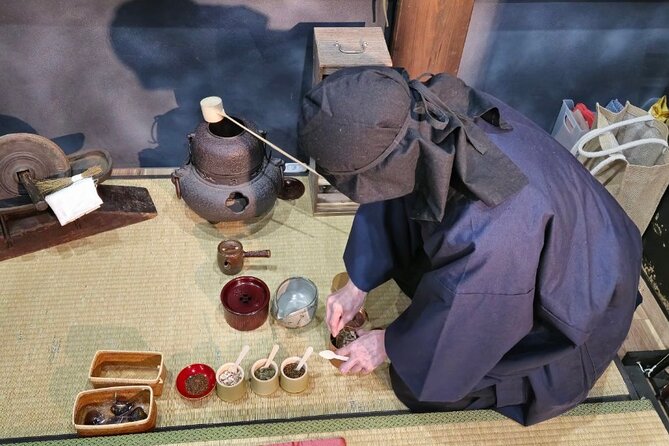
The center of the workshop is your bokken practice. They provide a wooden sword rental, and you learn typical stances and moves while the instructor watches. This is a good match for complete beginners, because wooden swords remove the stress of sharp edges while still forcing correct handling.
Here’s what tends to make these bokken sessions enjoyable, even if you know nothing about martial arts:
- You learn basic posture. Your feet, hips, and shoulders have roles.
- You practice repeatable moves. Training with a bokken usually gives quick feedback.
- You get instructor corrections. Even brief adjustments help you understand what they want you to do.
Also, because this is a dojo environment with etiquette built in, you’re more likely to feel guided rather than rushed. The class is small, with a maximum of 6 travelers, so your instructor and interpreter can keep an eye on what you are doing.
If you’re sensitive to crowds or chaos, the small group size is a real value factor. It makes it easier to focus on your own practice and less likely that you will lose the thread mid-lesson.
More Samurai and Ninja sessions in Tokyo:
- Ninja+Kabuki Tokyo
★ 4.5 · 512 reviews - Skip the lines Basic Ticket at SAMURAI NINJA MUSEUM TOKYO
★ 5.0 · 470 reviews - Best Samurai Experience in Tokyo
★ 5.0 · 458 reviews - Tokyo: Legend Samurai Entertainment Night in Kanda Shrine
★ 4.6 · 367 reviews
Shuriken Throwing Practice: Fun Mechanics, Real Discipline
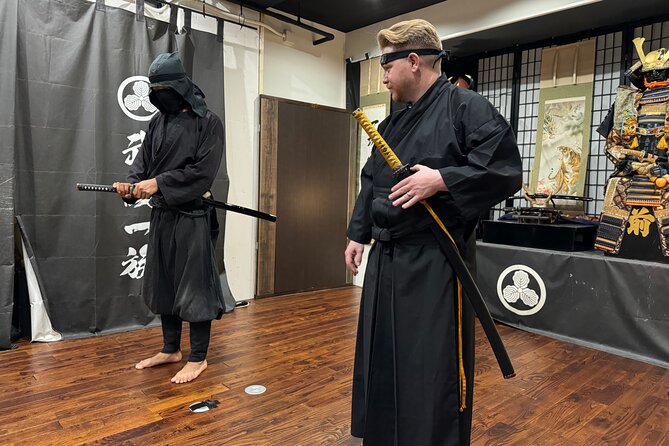
Yes, you can throw ninja stars here. The workshop includes shuriken rental, and you get practice in shuriken throwing under the watchful eye of the instructor.
Two things to keep in mind. First, this is throwing practice inside a structured lesson, so expect rules and coaching around safe handling. Second, shuriken throwing is not just a party trick. It requires stance, timing, and controlled wrist and arm movement, which ties right back to the etiquette and discipline they teach at the start.
From a value perspective, shuriken practice is often the highlight people remember because it feels different from sword work. But the best way to enjoy it is to treat it like a skill lesson, not a target contest. If you go in curious and willing to slow down, you’ll likely get more out of the corrections.
If you are bringing kids, this portion can be especially engaging. The class is described as a fun way to get active while learning ancient Japanese culture, and throwing stars is a fast route to that excitement.
Live Demonstration and Clan Stories You Can Actually Use
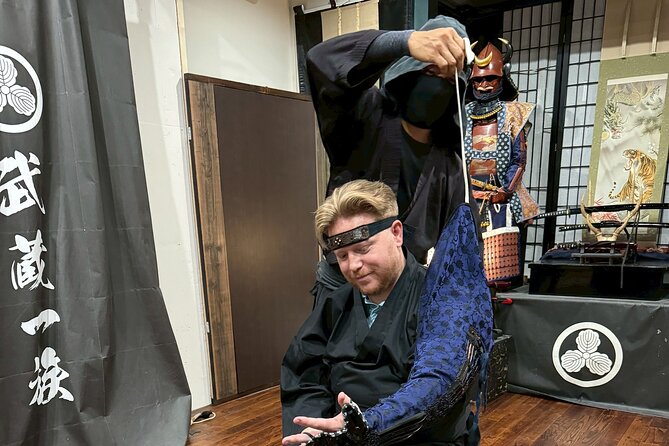
You won’t just do drills in silence. The class includes a live demonstration of ancient techniques plus historical insights into the warrior traditions of Japan.
This is where the experience shifts from physical activity to cultural understanding. You start recognizing why certain movements are taught in specific ways, and you also get a sense of how training traditions were preserved across generations.
The instructor-led lineage framing adds extra weight. The workshop is presented as training passed down through a living lineage, with Suzak Shibata teaching in that context. They also describe preserving the Ninshi tradition, which is why the session feels like it has a purpose beyond entertainment.
And because you are in a small group, you have a better chance to ask questions than in large performances. The workshop explicitly welcomes questions during the session.
Photo Time, Spectator Fees, and How to Plan the Day
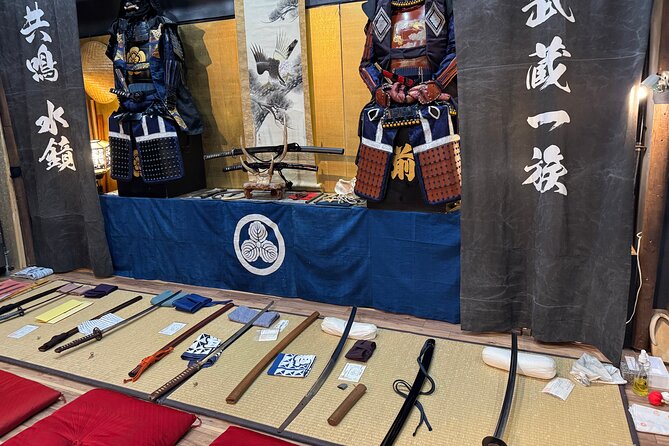
Toward the end, there is a scheduled photo time of about 5 minutes. That’s enough for a few good shots without turning the session into a photo line.
If you plan to bring someone to watch, there is a spectator fee. The dojo asks for 4,400 JPY per person, paid upon arrival. If you are traveling with a partner who won’t participate, factor that into your budget.
Also note this practical detail: service animals are allowed. If you have a specific accommodation need, it’s worth communicating in advance so the dojo can prepare.
For meeting place, you’ll start and finish at the dojo location: Musashi Ninja Clan Shinobi Samurai Honjin Dojo, 111-0036 Tokyo, Taito City, Matsugaya, 3-chōme 1-13 Mets 八番館 3階. When you arrive, keep the address handy in your phone and give yourself a little buffer so you don’t rush once you get there.
Price and Value: Is $122.15 Worth It?
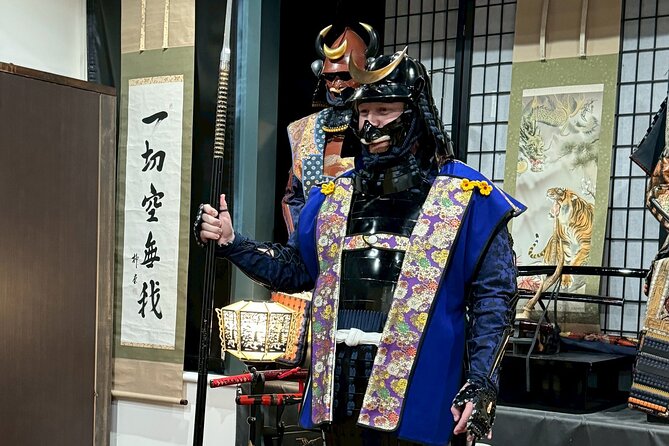
At $122.15 per person for about 1 hour 30 minutes, the price is not the budget end of Tokyo activities. But it can still be good value because of what is included and how small the class is.
Here’s what you get that you would otherwise pay for separately:
- Instructor guidance
- Online interpreter support
- Dogi rental
- Bokken rental
- Shuriken rental
You’re also paying for a structured, guided experience in a dojo setting with a lineage-based teaching approach and a maximum group size of 6. That makes the instruction more direct than many larger attraction-style workshops.
Two other value signals:
- Group discounts are mentioned, so if you can book with friends or family, your per-person cost may improve.
- The session includes both sword and shuriken practice, plus etiquette and a cultural explanation, so you aren’t choosing between only one activity type.
What’s not included is food and drinks. That’s normal for a short workshop, but plan to eat before or after nearby. The class is short enough that you likely won’t want to wait around hungry.
If you are the type of traveler who wants a hands-on cultural activity rather than another guided walk, this price can make sense. If you only care about a quick photo or a short demo, you may feel it is too much for what you personally want.
Who Should Book This Workshop (And Who Might Not Love It)
This experience is a strong fit for:
- Families with kids age 7 and up, since the class mentions the option to share the Sansai Teaching for participants aged seven and older when requested.
- Teens and adults who want structured physical learning with cultural context.
- People who enjoy rules. The dojo expects attention, and the experience is designed around that discipline.
- Anyone who likes a small group format with enough instructor attention to correct posture.
It may be less ideal if you:
- Prefer purely casual activities with no training etiquette.
- Don’t want any bowing, standing, or structured drills.
- Are bringing a group member who struggles to follow basic instructions, since inattentive participants may be asked to leave.
Children under 12 must be accompanied by a participating adult. If you are traveling with young kids, that matters for planning who will participate and how your group is set up.
Should You Book Samurai Experience Tokyo: Samurai Signature?
If you want a Tokyo activity where you actively train rather than just watch, I’d say yes, book it. The combination of bokken sword practice, shuriken throwing, meditation, and etiquette gives you a complete experience in about 90 minutes. The small group size and included interpreter support also make it more accessible than many niche skill workshops.
Skip it only if your goal is purely entertainment, or if you are not comfortable with a dojo-style environment that expects focus and respectful behavior.
If you do book, come with curiosity. Treat it like a skill class with cultural context, not a random stunt session. You’ll get more out of the corrections, and the lineage teaching will feel less like a story and more like a framework for how to move.
FAQ
How long is the Samurai Signature experience?
It runs for about 1 hour 30 minutes.
What is included in the price?
The price includes the instructor, an online interpreter, dogi (outfit) rental, bokken (wooden sword) rental, and shuriken rental.
Are food and drinks included?
No, food and drinks are not included.
Is there a fee for spectators?
Yes. A spectator fee of 4,400 JPY per person is payable upon arrival.
Is there an age requirement for children?
Children under 12 must be accompanied by a participating adult. The first kuden teaching called Sansai Teaching can be shared with dedicated participants aged seven and older during the session, upon request.
How many people are in a group?
The maximum group size is 6 travelers.
What is the cancellation policy?
You can cancel for a full refund up to 24 hours before the experience starts. If you cancel less than 24 hours before, the amount paid is not refunded.
Newly listed around Tokyo
- Private Tokyo Food Tour – A Journey Through Time Through Food★ 5.0 · 36 reviews
- Private Tokyo Tour with Licensed Guide & Vehicle (Max 15 persons)★ 5.0 · 107 reviews
- Private Tokyo Custom Full-Day Tour by Chartered Vehicle★ 5.0 · 16 reviews
- Private Tokyo Custom Half-Day Tour by Chartered Vehicle★ 4.5 · 13 reviews
- Private Outstanding Nikko Tour with English Speaking Driver★ 4.0 · 11 reviews
- Private Sightseeing to Mt Fuji and Hakone with English Driver★ 5.0 · 51 reviews
- Private Snow Monkeys park Day Trip From Tokyo or Nagano★ 4.5 · 26 reviews
- 4 Day Tour – Mount. Fuji, Tokyo, Hakone, Kamakura and Yokohama★ 5.0 · 19 reviews
Samurai Sword & Ninja Training, compared.
Samurai Ninja Museum Guided tour and Experience
Read our review →
Kendo and Samurai Experience with Uniform and Gear
Read our review →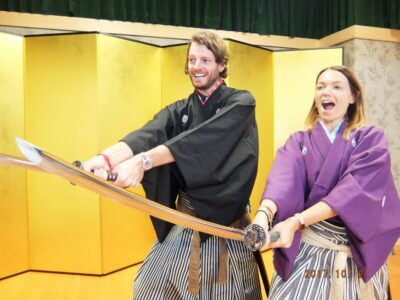
Samurai Sword Class by Experts in Traditional Arts
Read our review →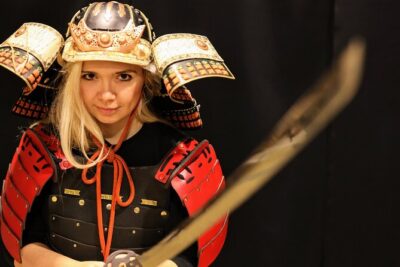
Skip the lines Basic Ticket at SAMURAI NINJA MUSEUM KYOTO
Read our review →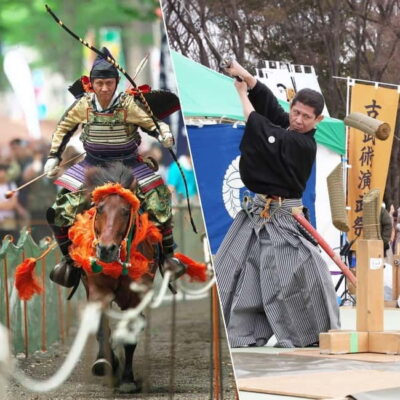
Samurai Sword & Archery Class from Samurai Descendant
Read our review →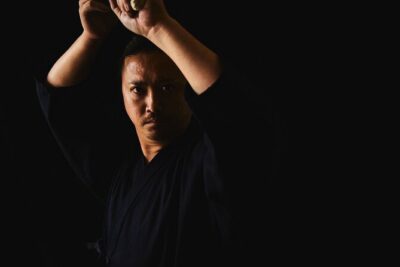
Browse the lists this tour appears in