Review · SUSHI COOKING WORKSHOPS
Sushi Cooking Class: AKEMI’s SUSHiKiTCHEN in Tokyo
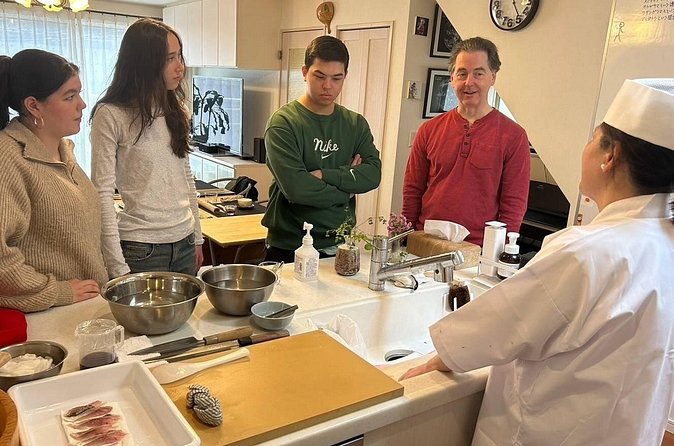
Sushi class in a real Tokyo home. That is the charm here, and it also means you get hands-on guidance on how sushi is built, not just watched from afar.
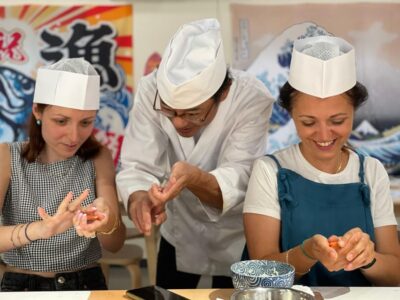
You will make four types of sushi while your chef host, Akemi, teaches the techniques and the why behind them. I especially liked how the lesson covers food culture, sushi terminology, and eating etiquette, so it clicks as a whole experience, not only a cooking demo.
Two things I love: the small-group limit (max five students) and the quality-driven sourcing of the rice and fish. One consideration: you are in a quiet residential neighborhood, so you’ll want to plan your timing and transit calmly before you head to the meeting point in Shibuya.
In This Review
- Key highlights worth your attention
- Inside AKEMI’s home: Shibuya setup and why small-group matters
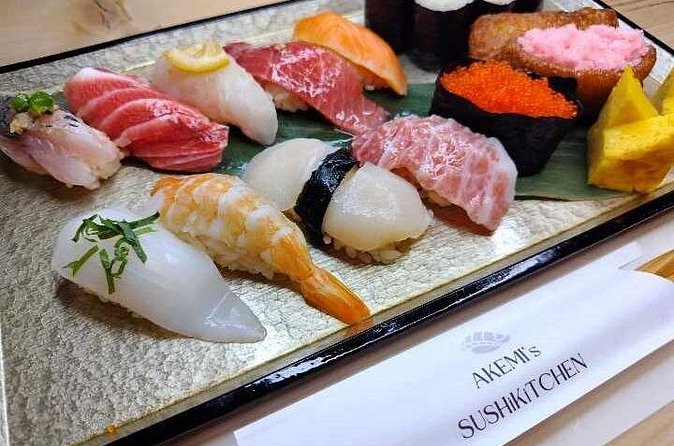
- What you make in 2.5 hours: four sushi types, one focused flow
- AKEMI and the Edomae method: why training shows up in the details
- Rice and fish are the lesson: Hachidaime Gihey and Toyosu-Tsukiji neta
- Blended sushi rice from Kyoto
- Fresh neta from major markets
- Terminology and etiquette: learning how to eat sushi correctly
- Price and value: is $105.68 fair for this Tokyo experience?
- Who should book this sushi cooking class?
- Quick practical tips before you go
- Should you book AKEMI’s Sushi Kitchen in Tokyo?
- FAQ
- Where is the meeting point for this sushi cooking class?
- How long is the class?
- How many people are in each class?
- What will I learn and cook?
- Is the chef’s instruction available in English?
- What makes the ingredients special?
- What kind of ticket do I get?
- Is it near public transportation?
- Can I cancel for a full refund?
- Are service animals allowed?
Key highlights worth your attention
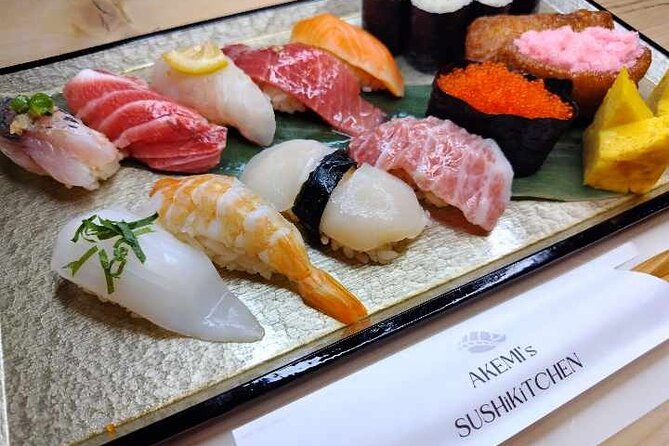
- Cook four types of sushi in a 2.5-hour, hands-on lesson and finish with the meal you make
- Edomae technique training from Akemi, who completed the Edomae Sushi Technique Acquisition Course at the Tokyo Sushi School
- Real ingredients, not shortcuts, including blended rice ordered from Hachidaime Gihey in Kyoto
- Fresh fish sourced from Toyosu and Tsukiji markets, served as neta for what you build
- English guidance with personalized coaching in a home setting
- Etiquette and terminology included, so you learn how to eat sushi correctly too
Inside AKEMI’s home: Shibuya setup and why small-group matters
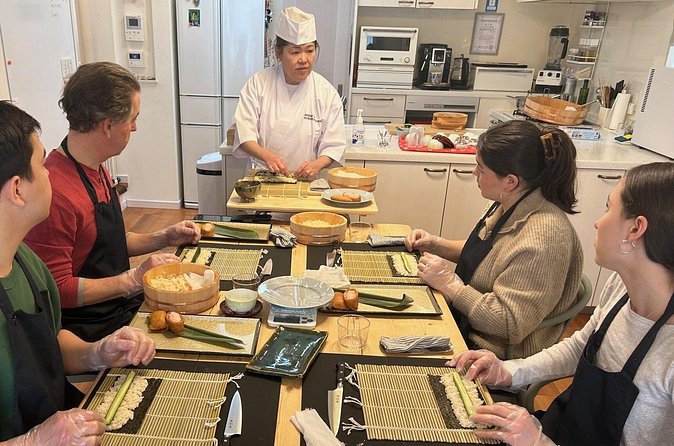
This class feels like you are stepping into the kitchen of a friendly, serious home cook, in Tokyo’s Shibuya area. The meeting point is Tamanosato Sasazukaten, 1-chōme-56-18 Sasazuka, Shibuya. It is near public transportation, but because it is in a residential part of town, arriving a little early helps you keep things relaxed.
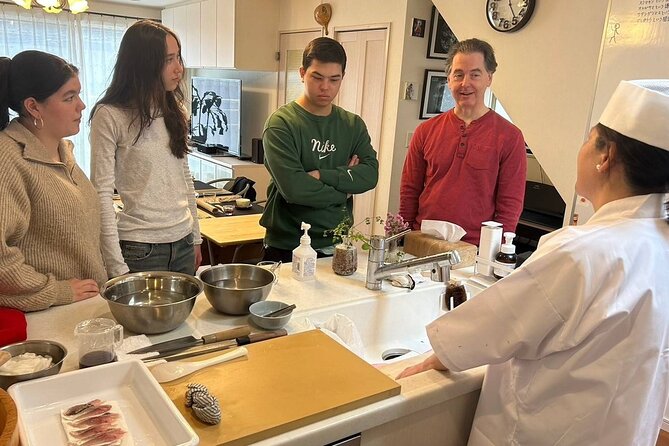
What makes this setup valuable is the group size. The lesson is limited to a maximum of five students (and the overall activity caps at six travelers). That matters because sushi is detail work. You need time for your rice, your hands, your cutting technique, and your plating to actually be corrected. In a bigger group, those corrections tend to come slowly or only to the most advanced cooks. Here, you get more direct feedback, which speeds up learning even if you are new.
I also like that it is hosted in a home environment, described as quiet and residential. It changes the vibe from restaurant hustle to focused practice. You can hear instructions, ask questions, and not feel rushed while you figure out how sushi pieces should look and feel.
More Cooking Classes in Tokyo
- Ramen & Gyoza Cooking Class in Tokyo with Local Supermarket Visit
★ 5.0 · 823 reviews - Tokyo: Easy Ramen Cooking Experience in Kabukicho, Shinjuku
★ 4.6 · 321 reviews - Ramen and Sushi Cooking Class with Sake Pairing Set in Tokyo
★ 5.0 · 291 reviews
What you make in 2.5 hours: four sushi types, one focused flow
The lesson runs about 2 hours 30 minutes, and it is structured around making four types of sushi. The exact four varieties are not listed in the info I have, but the overall progression is clear: you learn core sushi building steps, you practice with hands-on guidance, and the class culminates in a meal.
That “culminates in a meal” part is not just a nice extra. Sushi classes can sometimes end with a tray you mostly admire. Here, you actually eat what you made. That closes the loop. You get to taste your own rice balance, your portion size, and your sauce or topping choices immediately, while the techniques are still fresh in your head.
If you are brand-new to sushi, this format is still a smart fit. You are not required to have knife skills or rice experience. You get personalized coaching, and the atmosphere is meant to be educational without feeling intimidating. The key is to show up with patience and a willingness to do things the sushi way, not the “I’ll improvise” way.
AKEMI and the Edomae method: why training shows up in the details
Akemi is not just a home cook who likes sushi. She has 7 years of restaurant experience in Japan, and she has completed the Edomae Sushi Technique Acquisition Course at the Tokyo Sushi School. Those credentials matter because Edomae-style sushi is about craft and repeatable technique, not just flavor.
You can usually tell when a teacher has practiced the same method under real standards. The class includes sushi terminology and how to talk about what you are making, which helps you follow instructions more accurately. It also includes Japanese food culture insights, so you learn why certain choices exist, rather than memorizing steps.
English instruction is a big advantage. Akemi applies her culinary skills and proficiency in English to run the lesson as something you can understand fully. Even if you can read some Japanese food terms, learning them in context is what makes the information stick.
Also, the experience is hosted in partnership with Dan, who comes across as friendly and part of the welcoming atmosphere. That kind of host energy matters in a small class. It reduces that awkward, I do not want to ask a question feeling, so you ask more and learn faster.
Rice and fish are the lesson: Hachidaime Gihey and Toyosu-Tsukiji neta
For sushi, ingredients are not background. They are the lesson. This class is built around ingredient quality that is specifically called out in the available details.
More Cooking Workshops in Tokyo
- Tokyo: Wagyu and 7 Japanese Dishes Cooking Class
★ 4.9 · 273 reviews - Tokyo Washoku 4-hour Cooking Class: From Market to Table
★ 5.0 · 253 reviews - Tokyo: Tsukiji Market Walking Tour & Sushi Cooking Class
★ 4.6 · 122 reviews - Tokyo: Sushi and Ramen Cooking Class with Sake Pairing Set
★ 5.0 · 81 reviews
Blended sushi rice from Kyoto
The rice is described as blended rice specially ordered from Hachidaime Gihey in Kyoto (est. 1787). That is a meaningful detail because sushi rice is about texture and structure. When your rice is right, everything else gets easier: rolling feels more controlled, pieces hold together, and the bite tastes balanced rather than sticky or loose.
Fresh neta from major markets
For the fish, Akemi sources neta directly from fish markets in Toyosu and Tsukiji. That matters because fish quality is the heart of many sushi styles. Even with good rice, sushi can fall flat if the fish is not fresh or properly handled. Here, you are working with fish that is sourced from markets used for high-turnover, quality selection.
If you value eating what locals treat as important ingredients, this class aligns with that mindset. It is also a way to taste the difference between “sushi-like food” and actual sushi quality, right in the learning moment.
Terminology and etiquette: learning how to eat sushi correctly
One of the best parts of this class is that it does not stop at cooking. You learn sushi history, the terminology people use around sushi, and traditional Japanese eating etiquette.
I like etiquette lessons because they prevent the most common new-sushi mistakes. The point is not rules for rules’ sake. It helps you appreciate flavors in the right order and avoid drowning out the fish you just made. Even if you already think you know sushi etiquette, learning the reasoning makes it simpler when you order next time.
The class also includes “how to talk sushi.” Knowing terms helps you understand instructions during the class and helps you recognize what you are ordering later. It is especially useful if you travel around Japan and see variations in rice texture, cuts, and presentation.
One more practical angle: etiquette is taught alongside technique. That pairing helps you remember. You cook, you learn the name of what you just built, then you learn how to eat it. That sequence is how the info sticks.
Price and value: is $105.68 fair for this Tokyo experience?
At $105.68 per person, this is not a bargain-basement activity. But it also is not priced like a generic “make sushi” tourist demo. You are paying for several things that are hard to replicate at home:
- Personal guidance in a max five-student setup
- A trained chef with Edomae technique credentials
- Notable ingredient specificity, including Hachidaime Gihey rice and fish sourced from Toyosu and Tsukiji
- A lesson that includes culture, terminology, and etiquette
- The final payoff, you get a meal you made yourself
If you love food learning, especially in a small group, this price is easier to justify. If your only goal is a quick snack, a classroom might feel like overkill. But sushi is hands-on craft, and the structure here is built for learning, not just tasting.
Timing also affects value. The info shows it is commonly booked around 49 days in advance on average. If you want a spot, waiting for last-minute availability could cost you the chance.
Who should book this sushi cooking class?
This class is a great fit if you:
- Want to learn sushi technique step-by-step, not just eat at a restaurant
- Prefer small groups and direct coaching
- Like learning Japanese food culture, terminology, and table manners
- Care about ingredient quality, especially rice and fresh fish
You might hesitate if you:
- Prefer restaurant-style experiences where everything is served and you watch rather than cook
- Want a very flexible schedule, since the session is fixed for the day’s lesson length (about 2 hours 30 minutes)
Quick practical tips before you go
- Plan to arrive near the meeting point in Sasazuka, Shibuya with a bit of buffer time, since it is a quiet residential area.
- Wear comfortable clothes. Sushi making is active, and you will be working with your hands.
- Come with a beginner mindset if you are new. This class is described as enjoyable and educational even if you have never tried sushi before.
Should you book AKEMI’s Sushi Kitchen in Tokyo?
Yes, if your idea of a great Tokyo meal includes learning how it is built. The combination of small-group attention, Edomae-trained instruction, and ingredient details like Hachidaime Gihey rice plus Toyosu and Tsukiji neta makes this more than a fun souvenir activity.
I would book it sooner rather than later if your schedule allows, since it is commonly reserved well in advance. And if you like food that comes with context, etiquette, and proper terminology, this is the kind of class that turns into real value on future sushi nights.
FAQ
Where is the meeting point for this sushi cooking class?
You meet at Tamanosato Sasazukaten, 1-chōme-56-18 Sasazuka, Shibuya, Tokyo 151-0073, Japan. The activity ends back at the meeting point.
How long is the class?
The duration is about 2 hours 30 minutes.
How many people are in each class?
Lessons are limited to a maximum of five students, and the overall activity has a maximum of 6 travelers.
What will I learn and cook?
You will learn how to make sushi with guidance from the chef, including learning about sushi history, terminology, and eating etiquette. The lesson has you make four types of sushi and then eat what you created.
Is the chef’s instruction available in English?
Yes. The chef provides an English sushi cooking lesson.
What makes the ingredients special?
The class uses blended sushi rice that is specially ordered from Hachidaime Gihey in Kyoto, and fresh fish neta sourced directly from fish markets in Toyosu and Tsukiji.
What kind of ticket do I get?
You receive a mobile ticket.
Is it near public transportation?
Yes, it is near public transportation.
Can I cancel for a full refund?
Free cancellation is available. You must cancel at least 24 hours in advance of the experience’s start time for a full refund.
Are service animals allowed?
Yes, service animals are allowed.
More Sushi Workshops in Tokyo
- Sushi Making Tokyo Roll and Authentic Japanese Sushi Class
★ 5.0 · 3,971 reviews - Tokyo: Roll and Authentic Sushi Making Class in Asakusa
★ 4.9 · 1,957 reviews - Tokyo: Sushi Making Class in a Happi Coat near a Famous Spot
★ 4.9 · 1,377 reviews - Sushi Making Tokyo! Popular Maki Sushi & Japanese Sushi(+Recipe!)
★ 5.0 · 1,314 reviews
Newly listed around Tokyo
- Akihabara Flavors and Anime Fun Private Guided Tour for All Ages★ 5.0 · 15 reviews
- Tokyo Locals & Traveller can come alone Party experience Shibuya★ 5.0 · 103 reviews
- Akihabara Tailor-made Private Tour for Anime Fans★ 5.0 · 142 reviews
- Airport Shuttle Arrival Transfer : from Haneda Airport to Tokyo City★ 4.5 · 27 reviews
- Akihabara – Discover the Otaku Culture & Experience the Maid Cafe★ 4.0 · 7 reviews
- Private Day Tour In Tokyo with a Native English Speaker★ 5.0 · 18 reviews
- Unique Afternoon Live Sumo training tour in Tokyo★ 5.0 · 6 reviews
- Tokyo VIP Hidden Food & Bar Night – Private Local Experience★ 5.0 · 57 reviews
Sushi Cooking Workshops, compared.
Sushi Making Tokyo Roll and Authentic Japanese Sushi Class
Read our review →
Roll and Authentic Sushi Making Class in Asakusa
Read our review →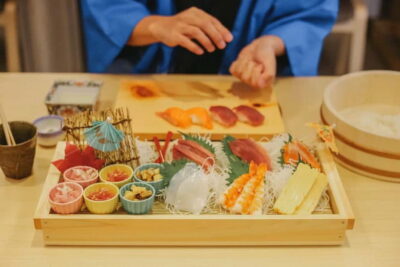
Sushi Making Class in a Happi Coat near a Famous Spot
Read our review →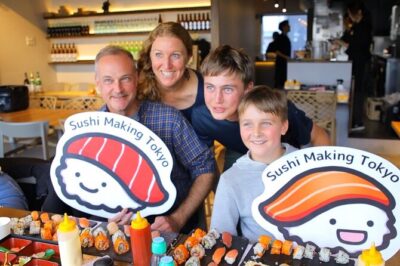
Sushi Making Tokyo! Popular Maki Sushi & Japanese Sushi(+Recipe!)
Read our review →
Tokyo Sushi Making Class in Tsukiji with Professional Chef
Read our review →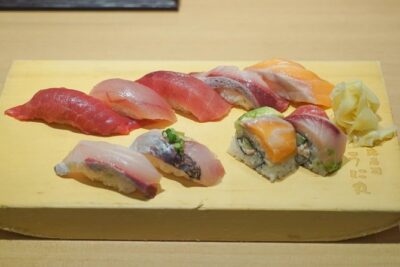
Tokyo Night Foodie Tour in Shinjuku – Seasonal Sushi, Wagyu Beef
Read our review →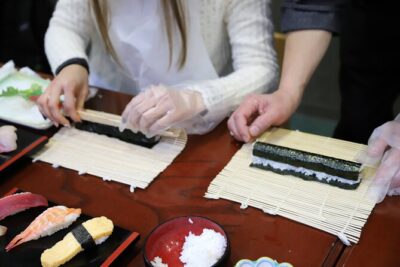
Tsukiji Fish Market Guided Tour and Sushi Making with Pro Chef
Read our review →