
Review · CITY TOURS
Tokyo City Attractive One Day Tour
Tokyo can feel huge. This private day tour keeps it manageable with a tight set of major sights you can actually enjoy. I like that you get hotel transfers and a comfortable ride, so you spend less energy figuring out trains and more energy seeing real Tokyo.
The one thing to plan around is time and extra costs. Skytree and Tokyo Tower are optional, and their observation decks have separate entry fees, so lines and ticket timing can affect how relaxed the skyline stops feel.
In This Review
- Key reasons this one-day plan works
- Private highlights, without the Tokyo overload
- Getting picked up from Tokyo Station and staying comfortable
- Stop-by-stop: how the day unfolds and what to expect
- Asakusa and Sensoji: Tokyo’s oldest temple vibe plus Nakamise snacks
- Tokyo’s skyline: Skytree first, then Tokyo Tower (or the other way around)
- Tsukiji Outer Market: Food Town energy, fast bites, and modern trends
- Shinjuku Gyoen National Garden: a calm reset near Shinjuku Station
- Meiji Jingu Shrine: the forested stop that slows your pace
- Shibuya Scramble and Hachiko: the photo moments with real meaning
- Harajuku and Takeshita Street: youth culture on a hill
- What the private format really buys you
- Price and value: is $500 per group reasonable?
- Who should book this tour?
- Should you book this Tokyo City Attractive One Day Tour?
- FAQ
- How long is the Tokyo City Attractive One Day Tour?
- What is the price and group size limit?
- Is pickup and round-trip hotel transfer included?
- Where does the tour start and end?
- Are entry tickets for Tokyo Skytree and Tokyo Tower included?
- Which stops have free admission?
- Is there a mobile ticket and will I get confirmation?
- Can I bring a service animal, and what about cancellation?
Key reasons this one-day plan works
- Private, customizable route built for first-timers and tight schedules
- Air-conditioned vehicle plus round-trip hotel transfers for less hassle
- A smart mix of old Tokyo and modern Tokyo (Sensoji, shrines, plus Shibuya and Harajuku)
- Mostly free attractions so your day is lighter on ticket costs
- Skyline choices at Skytree or Tokyo Tower, depending on what you want more
- On-the-go guidance with a driver who also acts as your guide
Private highlights, without the Tokyo overload
Tokyo has a way of making you feel behind, even when you’re doing everything “right.” This is designed to prevent that. You get a full day structure that hits iconic spots, but with enough flexibility that you can adjust based on your interests and your energy.
What you’ll like most is the balance. The day mixes landmark viewpoints and neon energy with quiet, reflective stops like Meiji Jingu Shrine and the garden calm of Shinjuku Gyoen. That rhythm matters in a city where it’s easy to burn out by lunch.
Since this is a private tour, it’s not about watching a group shuffle from one photo stop to the next. It’s about getting around efficiently in a comfortable air-conditioned vehicle and having a guide who can steer you toward what makes each place worth your time.
A few more Tokyo days to weigh up
- Mt Fuji and Hakone 1-Day Bus Tour Return by Bullet Train
★ 5.0 · 26,383 reviews - 1-Day Tokyo Bus Tour
★ 5.0 · 14,250 reviews - Tokyo: TOKYO SKYTREE® Admission ticket
★ 4.5 · 11,192 reviews
Getting picked up from Tokyo Station and staying comfortable
The tour starts at the Tokyo Station Hotel (Marunouchi). From there, you’ll have round-trip hotel transfers and return back to the meeting point at the end.
That matters because Tokyo’s “best” route can depend on the day’s crowds, weather, and where you are relative to each neighborhood. Having your transport sorted means you avoid the worst kind of travel anxiety: the kind where you’re constantly asking yourself, Am I late to the next stop?
Also, there’s a hotspot on board, which is a small but real win. You can keep maps and messaging easy while you’re moving between districts.
Stop-by-stop: how the day unfolds and what to expect
This tour runs about 9 hours, with roughly an hour at several key stops and shorter visits at the quick-hit photo moments. Many of the locations are free to enter, so you’re not buying tickets every time you turn a corner.
One practical note: with so many areas packed into one day, the order can make a difference. If you’re traveling during seasonal crowd spikes like spring cherry blossoms, ask your guide to shape the day around the conditions you care about most. That’s often the difference between seeing everything and feeling rushed.
Asakusa and Sensoji: Tokyo’s oldest temple vibe plus Nakamise snacks
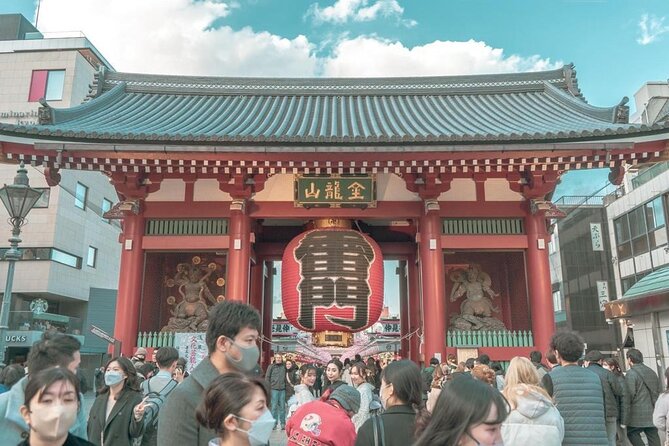
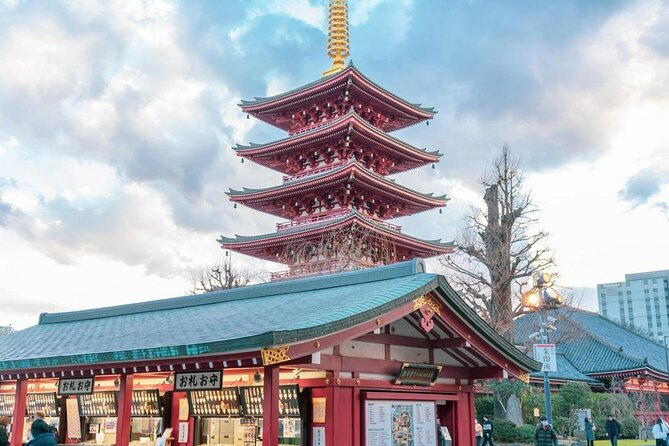
Asakusa is one of the places that makes Tokyo feel like Tokyo, not just a city of skyscrapers. Your first stop is Sensoji, also known as Asakusa Kannon Temple. The temple is tied to a legend from the year 628, when brothers fished a statue of Kannon out of the Sumida River and it reportedly returned again and again. That story is part of why the temple became such a major pilgrimage site.
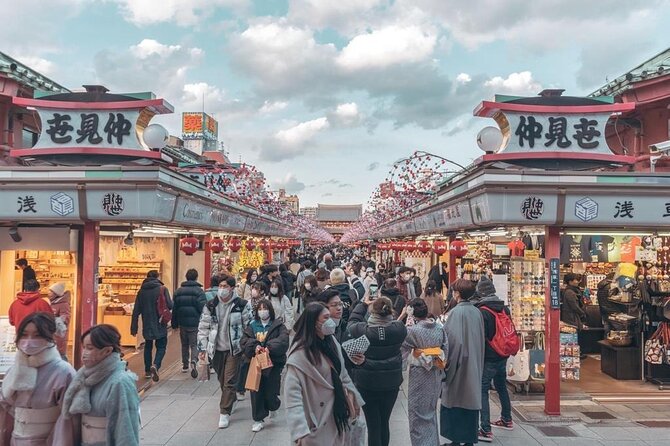
Sensoji itself is famously colorful, and it’s also noted as Tokyo’s oldest temple, completed in 645. From there, you’ll walk through Nakamise, a shopping street over 200 meters long, leading from the outer gate to the second gate, the Hozomon.
What to watch for here: this is where you can accidentally spend too much time browsing food and souvenirs. I love giving myself a rule, like try one snack, then move on, so I don’t run out of energy for the rest of the day.
A different sort of day in Japan:
- Tokyo: teamLab Planets TOKYO Digital Art Museum Entry Ticket
★ 4.6 · 9,779 reviews - Mt Fuji & Hakone Cruise, Drum Show Bullet Train 1 Day from Tokyo
★ 4.0 · 7,413 reviews - Tokyo: Sumo Show Experience with Chicken Hot Pot and a Photo
★ 4.8 · 6,678 reviews - Tokyo: Shinjuku Food Tour (13 Dishes at 4 Local Eateries)
★ 5.0 · 6,603 reviews
Tokyo’s skyline: Skytree first, then Tokyo Tower (or the other way around)
This is where the day turns into height and views. You’ll have time for both the Tokyo Skytree and Tokyo Tower in the itinerary, but the observation-deck entry fees are not included, so plan for that added cost if you go up.
Tokyo Skytree is the world’s tallest free-standing broadcast tower at 634 meters. It has two observation decks at 350 meters and 450 meters. It’s part of Skytree Town, including Solamachi, which groups restaurants and shops in one big complex.
Solamachi also gives you a lot to do at ground level, even if you decide not to ride up immediately. For example, there’s an exhibition space tied to the Chiba Institute of Technology with robot technology, an aquarium area with a large penguin colony, and a Postal Museum.
Tokyo Tower is different in personality. At 333 meters tall, it’s a major post-war symbol and served as Japan’s tallest structure from 1958 until Skytree took over in 2012. It’s also used as a broadcast antenna.
A practical heads-up from real-world experience: observation towers can run long lines. If you care about going up, it’s worth thinking about ticket timing before you arrive, so you don’t lose half your hour waiting while the rest of the day compresses.
Tsukiji Outer Market: Food Town energy, fast bites, and modern trends
Tsukiji Outer Market is one of the best places in Tokyo to snack like a local without needing a reservation. Your stop here focuses on the Outer Market, which is sometimes described as Japan’s Food Town.
This area mixes wholesale and retail shops, plus plenty of places to eat. It’s also where new culinary trends show up alongside long-standing favorites.
The interesting context is that Tsukiji originally served mostly professionals. That’s why some items were historically too large for a typical small household. Over time, more shops have moved toward visitor-friendly retail, including ready-to-eat sushi in smaller sizes. Even bite-sized items like an egg roll are possible if you want to taste rather than commit to a big meal.
If you want value here, go for variety instead of one huge purchase. A few small tastes will usually beat a single “big” meal for getting a sense of the market’s range.
Shinjuku Gyoen National Garden: a calm reset near Shinjuku Station
After the city buzz, Shinjuku Gyoen feels like a breather. It’s one of Tokyo’s largest and most popular parks, located a short walk from Shinjuku Station.
You’ll find spacious lawns and meandering walking paths, plus tranquil scenery that helps you step out of the urban rush for a while. It’s also free to enter, which is a nice bonus for a day with optional paid tickets elsewhere.
Spring is a big deal here because Shinjuku Gyoen becomes one of the best places in Tokyo to see cherry blossoms. Even if you’re not there in bloom season, the walking paths and greenery give you a mental break that makes the rest of the day feel easier.
Meiji Jingu Shrine: the forested stop that slows your pace
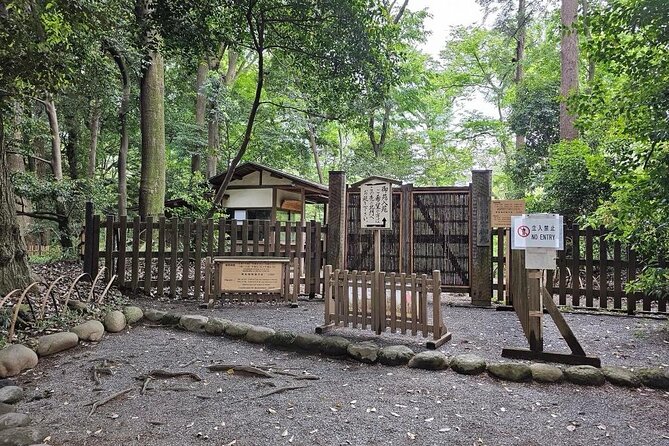
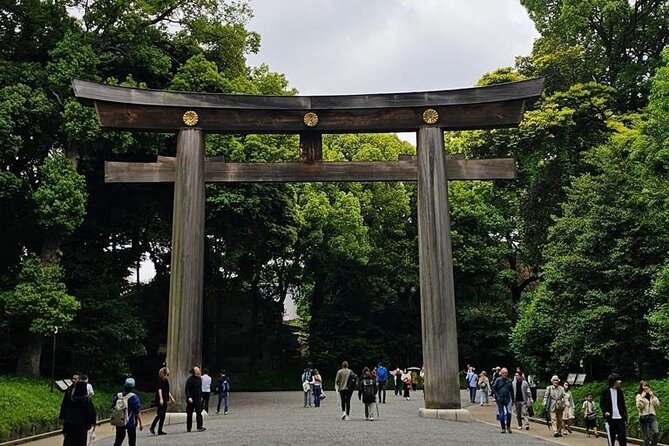
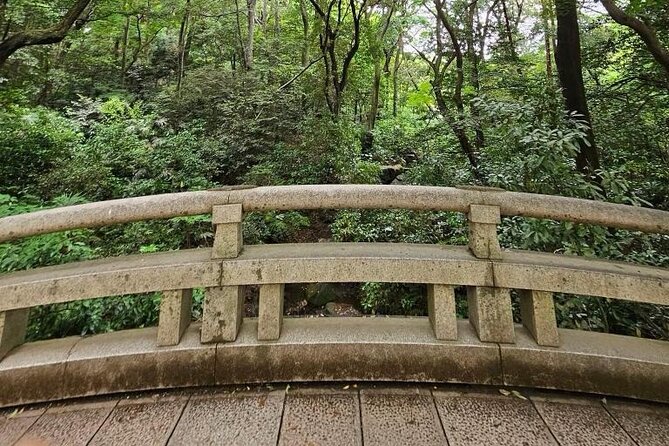
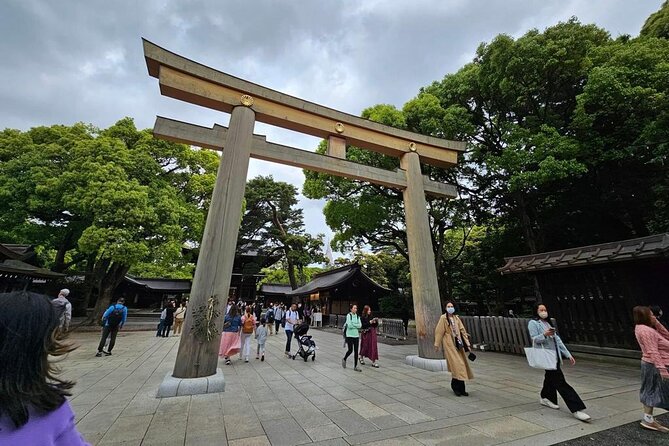
Meiji Jingu Shrine is the kind of place where the noise seems to thin. The shrine was completed and dedicated in 1920, for Emperor Meiji and Empress Shoken. Like many major Tokyo landmarks, it went through destruction during the war, then was rebuilt shortly afterward.
The shrine is tied to the Meiji Period, when Japan modernized and moved away from the feudal era. Emperor Meiji was born in 1852, ascended to the throne in 1867, and passed away in 1912. Those key dates matter because they explain why this shrine sits at the emotional center of modern Japanese history.
What I like about this stop on a one-day itinerary is that it gives you contrast. After Asakusa’s street energy and Tsukiji’s food chaos, Meiji Jingu is the reset button that helps the day feel less frantic.
Shibuya Scramble and Hachiko: the photo moments with real meaning
Shibuya is fast, bright, and famously chaotic in the best way. Your stop at Shibuya Scramble Square is built around the crossing itself.
Here, multiple traffic lanes and major crosswalks intersect in the center of the action, and the surrounding buildings give it that Times Square-style feeling. The crossing is also used for large seasonal celebrations like New Year’s Eve countdown events and it’s a focal point for Halloween festivities.
Next is Hachiko, the loyal dog statue at Shibuya Station. The story is simple and powerful: Hachiko was adopted by university professor Hidesaburo Ueno in Shibuya, then returned daily to wait for Ueno’s return from work even after Ueno’s death in 1925. Hachiko died in 1935.
This stop is quick, but it’s worth treating it as more than a photo. It’s one of the easiest ways to connect to Tokyo’s public storytelling, where popular culture and civic memory overlap.
Harajuku and Takeshita Street: youth culture on a hill
Harajuku gives Tokyo its fashion personality. You’ll stop near Harajuku Station, where the area is closely linked with youth culture and wild fashion trends.
Takeshita Street sits on a hill and tends to draw a crowd, especially on weekends and holidays. It’s known for clothing shops, cafes, dessert shops, and quirky memorabilia stores.
A useful detail for shopping in your head is that accessory stores are common here, and you can often find trend-driven items at reasonable prices. One example mentioned for early in the walk is Paris Kids, a spot that tends to serve as a first taste of the area’s style range.
If you want value without getting overwhelmed, set a time limit before you enter the street. Browse for 15 to 20 minutes, then pick one small item or one snack to bring your day together. It’s easy to lose track of time otherwise.
What the private format really buys you
The private nature of this tour is more than “no other people in the van.” It’s that you can tailor the order and attention based on your priorities.
If you love architecture and city views, you’ll likely push more time at the skyline stops. If you care more about temples and calm, you’ll keep Shinjuku Gyoen and Meiji Jingu higher on your list. And if you want photos, your guide can time you around the busiest windows as best as possible.
Also, the tour includes a private transportation setup with an air-conditioned vehicle. In summer heat, that’s not a luxury, it’s the difference between enjoying the day and feeling drained by the movement time.
One more real-world point: in this format, the driver is also the guide. That means you’re not dealing with a separate person for driving versus explaining. It can feel more direct and efficient, especially when you have questions on the fly.
Price and value: is $500 per group reasonable?
The price is $500 per group, up to 5 people. That structure can be a very good deal if you’re traveling with friends or a small family and you actually fill the seats.
If you do reach the maximum group size, it works out to about $100 per person for the day. Even if you have fewer people, you’re still paying for a private vehicle, round-trip hotel transfers, and guided storytelling across multiple neighborhoods.
A key value factor is admissions. Many stops are free to enter, including Sensoji, Tsukiji Outer Market, Shinjuku Gyoen, Meiji Jingu, Shibuya Scramble Square, Hachiko, and the Harajuku area experience. The two places where you should expect extra spending are the observation decks:
- Tokyo Skytree entry fee is listed at $12 USD
- Tokyo Tower entry fee is listed at $7 USD
So your total day cost can stay close to the base price if you choose not to go up. If you do go up, you’re adding roughly $19 USD per person on top, based on the posted fees.
Finally, the tour is booked an average of 38 days in advance. That’s a clue to not procrastinate, especially if you’re traveling in peak seasons or want the skyline time you prefer.
Who should book this tour?
This one-day plan fits best if:
- You’re on a first trip to Tokyo and want the big names without researching every transfer
- You have limited time and still want both historic and modern Tokyo
- You’re traveling with up to 5 people and you want better per-person value in a group
- You prefer a guide-led route that helps you avoid wasted time
It’s also a strong choice for travelers who don’t want to juggle a long list of tickets. Since most stops are free, your day is mainly about walking, viewing, and eating smart.
If you’re the type who wants total control of every hour down to the minute, you might find that a pre-set route feels slightly structured. The best fix is to customize and communicate your priorities early.
Should you book this Tokyo City Attractive One Day Tour?
I’d book it if you want an efficient, private overview with a plan that touches Tokyo’s most recognizable districts in one day. The big win is the mix, old Tokyo temples plus modern city energy, with free entry points that keep your budget in check.
I would book it with one strategy: decide in advance whether you want the observation decks, and if yes, ask your guide about timing so Skytree and Tokyo Tower don’t turn into line marathons. If you do that, you’ll get the skyline payoff without sacrificing the quieter, more memorable stops.
FAQ
How long is the Tokyo City Attractive One Day Tour?
It runs for about 9 hours.
What is the price and group size limit?
The price is $500.00 per group, with a maximum of up to 5 people.
Is pickup and round-trip hotel transfer included?
Yes. Pickup is offered, and round-trip hotel transfers are included.
Where does the tour start and end?
It starts at the Tokyo Station Hotel, and the activity ends back at the meeting point.
Are entry tickets for Tokyo Skytree and Tokyo Tower included?
No. Entry tickets for Tokyo Skytree and Tokyo Tower are not included, and the listed entry fees are $12 USD for Skytree and $7 USD for Tokyo Tower.
Which stops have free admission?
Sensoji, Tsukiji Fish Market (Outer Market), Shinjuku Gyoen National Garden, Meiji Jingu Shrine, Shibuya Scramble Square, Hachiko, and Harajuku Station area are listed as free.
Is there a mobile ticket and will I get confirmation?
Yes. The tour uses a mobile ticket, and confirmation is received at the time of booking.
Can I bring a service animal, and what about cancellation?
Service animals are allowed. Cancellation is free if you cancel at least 24 hours before the experience start time for a full refund.
Newly listed around Tokyo
- Discover Japan Tour: 15-day Small Group★ 5.0 · 16 reviews
- 【NEW】Matcha Making Experience and Matcha Comparison in Tokyo★ 5.0 · 7 reviews
- Customized 10-Day Golden Route of Japan Family Tour★ 5.0 · 13 reviews
- Tokyo Private SightSeeing Day Tour With Guide★ 5.0 · 16 reviews
- Mt.Fuji view Hakone Private tour with English speaking driver★ 5.0 · 33 reviews
- Tokyo to Kyoto 1-Full Day Private Guided Tour★ 4.5 · 41 reviews
- Tokyo 6hr Private Guided Tour & Japanese Sweets Making Experience★ 5.0 · 7 reviews
- Kyoto Uncovered: One Full-Day Private Experience for First-Timers★ 4.5 · 7 reviews
City Tours, compared.
Private City Highlights Tour with Local Guide
Read our review →
Asakusa, Skytree & Akhihabara Go-Kart City Experience
Read our review →
Hiroshima City 4hr Private Walking Tour with Licensed Guide
Read our review →

Private Haneda Airport (HND) to Central Tokyo City Transfer
Read our review →
3-hour Guided E-Bike Tour of the City’s Hidden Gems
Read our review →
Shibuya City: Daikoku PA GT-R R35, R34, R33 or R32 Tour
Read our review →Browse the lists this tour appears in