

Review · WALKING TOURS
Tokyo: Imperial Palace and Shogun Walking Tour
Stone walls, koi ponds, and real power. This Imperial Palace East Gardens walk is interesting because it helps you read the site like a map of how the Tokugawa shogunate controlled people and movement. I love how the Ninomaru Garden slows everything down with koi-filled ponds, and I love how the stone walls and gates make Edo Castle feel tangible, not textbook. One possible drawback: this is mainly an outdoor route focused on gates, foundations, guard areas, and gardens, so don’t expect palace-room interiors.
You start at Starbucks Kokyo Gaien (Wadakura Fountain Park), then move through the East Gardens with an English-speaking guide who stays on pace. Guides like Tony, Izzy, Blake, and Jim Allen stand out in the feedback for keeping the story clear, answering questions directly, and connecting the feudal power game to modern Tokyo streets and habits.
With a price around $16 per person for a full 2-hour guided walk, this feels like strong value for first-time visitors who want context fast. If you hate group tours or you’re only in Tokyo for one quick stop, you might prefer a shorter self-guided plan for maximum flexibility.
In This Review
- Key highlights you will actually notice
- Meeting at Kokyo Gaien: Finding the tour without stress
- Ote-Mon Gate to the East Gardens: Reading power like architecture
- Hyakunin Bansho Guardhouse: The “who goes where” story
- Fujimi-yagura and the fortified logic of the grounds
- East Gardens walk: moats, ruins, and the calm you came for
- Ninomaru Garden: koi ponds and seasonal beauty with context
- Why this tour is worth around $16
- Who should book this Imperial Palace East Gardens tour
- Practical tips to get the most from the 2-hour pace
- Should you book this tour?
- FAQ
- Where is the meeting point for the Tokyo Imperial Palace East Gardens tour?
- How long is the tour?
- What’s included in the ticket price?
- What will we see on the tour?
- Is the tour wheelchair accessible?
- Can I cancel if my plans change?
Key highlights you will actually notice
- Ninomaru Garden koi ponds: quiet water, reflections, and seasonal beauty
- Ote-Mon Gate focus: the kind of entrance where power signals matter
- Edo Castle remains and tower base areas: you see “where” not just “what”
- Hyakunin Bansho Guardhouse area: a military-style checkpoint explained in plain terms
- Fujimi-yagura viewpoint zone: fortified architecture that helps you understand the layout
- Guides who answer questions and shape your next moves: many guides share food and weekend ideas afterward
Meeting at Kokyo Gaien: Finding the tour without stress

The meeting point is right in the open, in front of Starbucks at Kokyo Gaien (Wadakura Fountain Park). Using a big, easy-to-spot landmark like this is a small thing that saves real time when you are in Tokyo for the first day or two. You will also be walking into the Imperial Palace grounds from the East side, which matters because the tour is built around the East Gardens.
Timing is compact. You spend about 10 minutes at the first gate orientation, then you move in guided bursts through each key structure or garden section. That rhythm is one reason the tour works well even if your Japan trip is still in planning mode.
Accessibility is also addressed. The tour is listed as wheelchair accessible, which is helpful to know if your route needs to be predictable.
More Walking Tours in Tokyo
- Tokyo Tsukiji Fish Market Food and Culture Walking Tour
★ 5.0 · 3,184 reviews - Tokyo: Shinjuku Local Bar and Izakaya Guided Walking Tour
★ 4.9 · 1,794 reviews - Tokyo: Tsukiji Fish Market Food and Walking tour
★ 5.0 · 1,724 reviews
Ote-Mon Gate to the East Gardens: Reading power like architecture
You start with the Ote-Mon Gate, and even that short stop is more than a photo break. This is one of those places where the guide’s job is to turn the look of the structure into a reason. Edo Castle and the Tokugawa administration were obsessed with control, and the gates and chokepoints were part of that system.
After that, you move to the Tokyo Imperial Palace area for a guided segment. The goal here is to give you a framework for what you are about to see in the East Gardens. You get stories about samurai-era rule, how the shogunate operated, and what changed as Japan transitioned into modern governance. The tour isn’t written like a lecture, so the historical context arrives exactly when you are staring at the shapes and layouts.
What I like about this part is that it helps you stop walking like a tourist. You start walking like a reader. Once you know why an entrance, wall line, or guarded space exists, your brain automatically starts noticing the logic of the site.
Possible drawback to keep in mind: because the focus is grounds and exteriors, you may feel the pace is lighter if you expected a museum-like, indoor-heavy experience. The upside is you’re out in the open where the garden and moat setting does the storytelling.
Hyakunin Bansho Guardhouse: The “who goes where” story
Next up is the Hyakunin Bansho Guardhouse stop. You’ll spend about 10 minutes here with a guided explanation and sightseeing time. Even if you don’t speak Japanese, the meaning comes through because this is the kind of place where function is visible. Guard points are where authority gets enforced, and the tour uses that idea to explain what people were protecting, why they were protecting it, and how the system worked day to day.
This segment is especially valuable if you want more than general Edo-era vibes. You are not just learning that samurai existed. You learn how authority moved, how boundaries were enforced, and why the palace grounds were not just pretty or symbolic, they were operational.
Guides also tend to handle questions well here. In the feedback, several guides, including Tony and Blake, were singled out for answering everything clearly without turning the tour into a stiff monologue. That matters because guardhouses and gates can feel abstract until you ask the right question.
Fujimi-yagura and the fortified logic of the grounds
After the guardhouse area, the tour includes a stop at Fujimi-yagura. You get about 15 minutes there for sightseeing with the guide. This is where the tour starts to feel like a “decode the site” mission. Tower and fortification areas help you see the Imperial Palace East Gardens as a defensive layout, not just a serene park.
Look around and you’ll start to notice the “line of sight” idea. Even without climbing or special access, the guide’s explanations help you understand why these structures were placed where they were. It is the difference between seeing a wall as decoration and seeing it as strategy.
If you are sensitive to crowds, this part of Tokyo can still feel busy depending on the day and time. The good news is the tour format gives you a clear path and keeps you moving with purpose instead of wandering and losing time.
A few more Tokyo days to weigh up
- Tokyo: Asakusa Walking Tour with Sensoji Temple Visit
★ 4.8 · 1,583 reviews - Tokyo: Tsukiji Fish Market Guided Walking Tour
★ 4.9 · 1,397 reviews - Tokyo Castle & Imperial PalaceーShogun Walking Tour
★ 4.7 · 1,068 reviews - Tokyo: Imperial Palace Japanese History Walking Tour
★ 4.9 · 987 reviews
East Gardens walk: moats, ruins, and the calm you came for
Then you move into the Imperial Palace East Gardens segment, about 30 minutes guided. This is often the heart of why people book the tour in the first place. The East Gardens are where the site’s tone shifts from power and control to peace and reflection.
The tour highlights include remnants and stone foundations, plus the idea of moats and protective boundaries that once guarded the seat of the Tokugawa shogunate. What you get from the guide’s storytelling is the ability to connect those protective features with today’s quiet walking experience.
This is also where the koi and ponds start to matter. Even before you reach Ninomaru Garden, you can sense the garden design is doing more than beautifying. It shapes how you feel as you move, and it gives you a reason to slow down. In the feedback, many people pointed to the tranquility here as a favorite moment. If you want a break from Tokyo’s constant motion, this stop is where it happens.
Practical note: bring comfortable shoes. The route is short, but it is still a walking tour inside a big, historic complex.
Ninomaru Garden: koi ponds and seasonal beauty with context
The tour’s final major stop is Ninomaru Garden, also about 30 minutes with guided time. This is the highlight section for most people, and it makes sense. Ninomaru is where you get the garden’s signature calm, with ponds where koi swim and water reflects the grounds.
The best part is how the guide frames it. You’re not only looking at pretty water. You are learning how the palace system used landscaped spaces to create order and to express status. That combination makes the garden feel like part of the same political story as the gates and guardhouse areas, just in a softer, slower register.
This is also a great moment for questions. Guides like Izzy, Embla, Miguel, and Tony were repeatedly praised for staying approachable and for keeping the pace comfortable, which helps when you want the tour to answer something specific you noticed while walking.
If you’re visiting in a season when the gardens look their best, this stop will feel extra satisfying. If the weather is less cooperative, you can still enjoy the structure and ponds, but you may want to keep expectations flexible and dress for comfort.
Why this tour is worth around $16

Price can be tricky for walking tours in Tokyo. Some options feel like you pay extra just for someone to hold a map. This one tends to feel different because the guide work is the product.
At about $16 per person for a 2-hour guided route, you are paying for:
- A clear, English explanation of how the Tokugawa era and the Edo Castle layout connect to what you see in the East Gardens
- Stop-by-stop context so the place doesn’t just blur together as you walk
- Q&A time that many people appreciated, including guides who answered questions patiently and stayed friendly (Tony, Blake, Jim Allen, Miguel, Embla were repeatedly mentioned)
- Practical ideas afterward, since some guides shared recommendations for where to eat nearby and what else to do on the weekend
I also like that the tour keeps the group moving without rushing you into five-minute photo stops. The time at each highlight is long enough to actually look and understand, not just pass by.
Who should book this Imperial Palace East Gardens tour
This tour is a strong match if:
- You are a first-time Tokyo visitor and want clear historical context without needing to research for hours
- You like walking tours that make you notice details in walls, gates, and garden design
- You want a calm, mid-trip reset that still teaches you something meaningful
- You want an English-speaking guide who will answer questions and keep the pace comfortable
It might not be ideal if:
- You are looking only for palace interior access and want rooms rather than gardens, gates, and foundations
- You dislike guided structure and prefer full self-guided exploration
- You have only a few hours total and you’d rather pick one neighborhood and go deep there
Practical tips to get the most from the 2-hour pace
- Wear shoes you can walk in comfortably for a couple of hours.
- If you take photos, do it during the guided pauses so you still hear the explanation.
- Bring a water bottle if you tend to get thirsty, since it’s an active walk.
- Use the questions time. If something confuses you, ask. The guides mentioned in the feedback were good at handling questions in a straightforward way.
- If you want extra value, decide your next step before you leave. Some guides shared food and nearby activities afterward, which helps you turn the tour into a plan instead of a standalone event.
Should you book this tour?
If you want a guided introduction that turns Imperial Palace East Gardens into an easy-to-understand story, I think you should book it. The value is in the combination: Ninomaru Garden koi calm paired with explanations of how Edo-era power shaped the site’s layout. At $16 per person for a focused 2-hour walk, it’s the kind of activity that gives you confidence for the rest of your Tokyo stay.
One more reason to consider it: it’s listed as wheelchair accessible, and it offers free cancellation up to 24 hours in advance along with reserve-and-pay-later options if you like flexibility. If you are planning multiple Tokyo days and you want a low-risk way to get solid context, this is a sensible choice.
FAQ
Where is the meeting point for the Tokyo Imperial Palace East Gardens tour?
You meet in front of Starbucks Kokyo Gaien (Wadakura Fountain Park). The listed coordinates are 35.6830391, 139.7614181.
How long is the tour?
The tour runs for 2 hours total.
What’s included in the ticket price?
You get an English-speaking guide and a guided walking tour of the Imperial Palace East Gardens.
What will we see on the tour?
You’ll visit the Ote-Mon Gate area, the Imperial Palace East Gardens, and the Ninomaru Garden, plus stops that include the Hyakunin Bansho Guardhouse and Fujimi-yagura.
Is the tour wheelchair accessible?
Yes, the tour is listed as wheelchair accessible.
Can I cancel if my plans change?
Yes. Free cancellation is available up to 24 hours in advance for a full refund.
Newly listed around Tokyo
- Tokyo private transfer for Yokohama Port★ 4.5 · 63 reviews
- Luxury Kimono Photoshoot at Ginza Tokyo★ 5.0 · 7 reviews
- Tokyo Allstar Food Tour★ 4.5 · 206 reviews
- Tokyo Art Aquarium Museum E-Ticket with optional Tokyo Metro Pass★ 5.0 · 17 reviews
- Tokyo: Best Ginza Food Tour at 3 Local Eateries★ 5.0 · 83 reviews
- Private One Day Nikko Tour with Bilingual driver★ 3.5 · 11 reviews
- PRIVATE tour in 180SX to Daikoku+++++★ 5.0 · 6 reviews
- Kabuki Talk★ 5.0 · 10 reviews
Walking Tours, compared.

Kyoto Geisha Walking Tour: Gion District & Hidden Gems
Read our review →
Tokyo Tsukiji Fish Market Food and Culture Walking Tour
Read our review →
Gion Geisha District Walking Tour – Stories of Geisha
Read our review →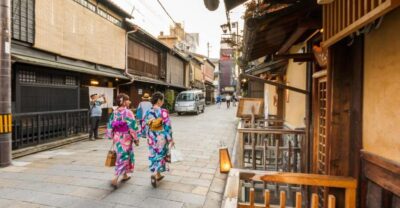
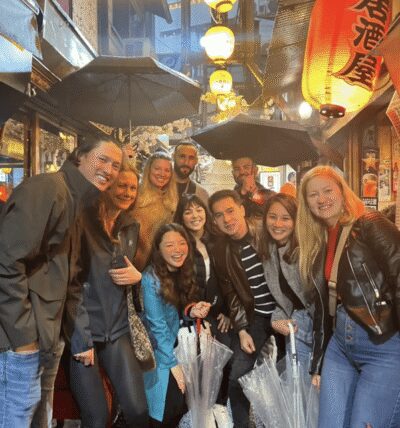
Shinjuku Local Bar and Izakaya Guided Walking Tour
Read our review →
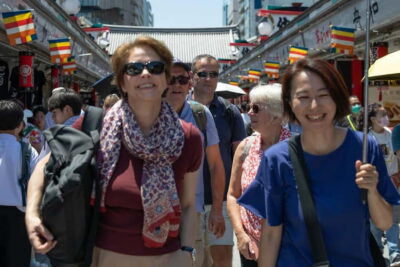
Asakusa Walking Tour with Sensoji Temple Visit
Read our review →
Kyoto Gion Geisha District Walking Tour – The Stories of Geisha
Read our review →Browse the lists this tour appears in