
Review · SUMO STABLE VISITS
Tokyo: Sumo Practice Tour with Ring-Side Seat and Photoshoot
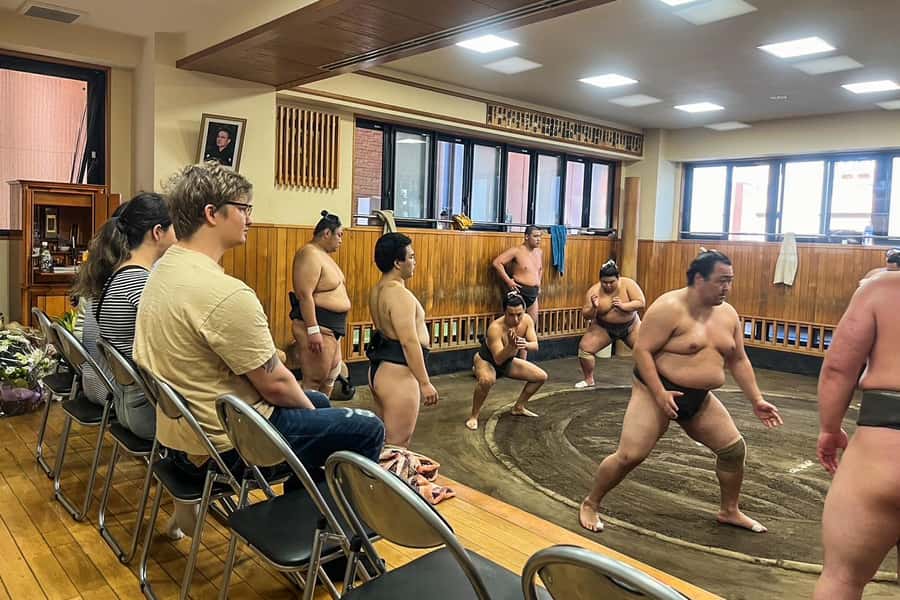
Sumo training looks different from up close. You get a ringside seat for real morning drills, plus an English guide who helps you understand what you’re seeing before the intensity ramps up. I also like the photoshoot at the end, with the wrestlers deciding who gets a picture. One thing to plan for, the seating is often tight, and you may spend much of the 2 hours on tatami.
This is a small-group experience limited to 10 people, timed as an actual training session, not a performance. You’ll meet at Kiyosumi Shirakawa Station (A1 exit) and find your guide holding a red/orange sign that says MagicalTrip. Kids under 12 are not allowed inside the stable, so this is best for older teens and adults.
In This Review
- Key highlights to know before you go
- Tokyo Morning Sumo Practice, Ringside Not a Tournament
- Meeting at Kiyosumi Shirakawa and Getting to the Stable
- Inside the Sumo Stable: Rituals, Discipline, and Real Intensity
- Two Hours of Training: What You Will Watch
- Your English Guide and the Sumo Primer You Actually Need
- Tatami Time, Chairs, and How to Stay Comfortable
- Photoshoot at the End: Wrestler Discretion Is Part of the Charm
- Price and Value: What $96 Gets You in Practice Access
- Who This Sumo Practice Tour Fits Best
- Should You Book This Sumo Practice Tour?
- FAQ
- How long is the sumo practice tour?
- Where do I meet the guide?
- What is the group size?
- Is food included?
- What age can join?
- Are strollers or wheelchair users allowed?
- Is a photoshoot included?
- What is the cancellation policy?
Key highlights to know before you go
- Ringside viewing of a live morning practice inside a Tokyo stable, not a staged demo
- English guide explanations that turn random movements into something you can follow
- Close-range intensity, including the sense that you can hear the effort
- Photoshoot at the end, depending on wrestler discretion
- Small group of up to 10 for better Q and A time
- Tatami seating reality, with chairs only in some stables
Tokyo Morning Sumo Practice, Ringside Not a Tournament
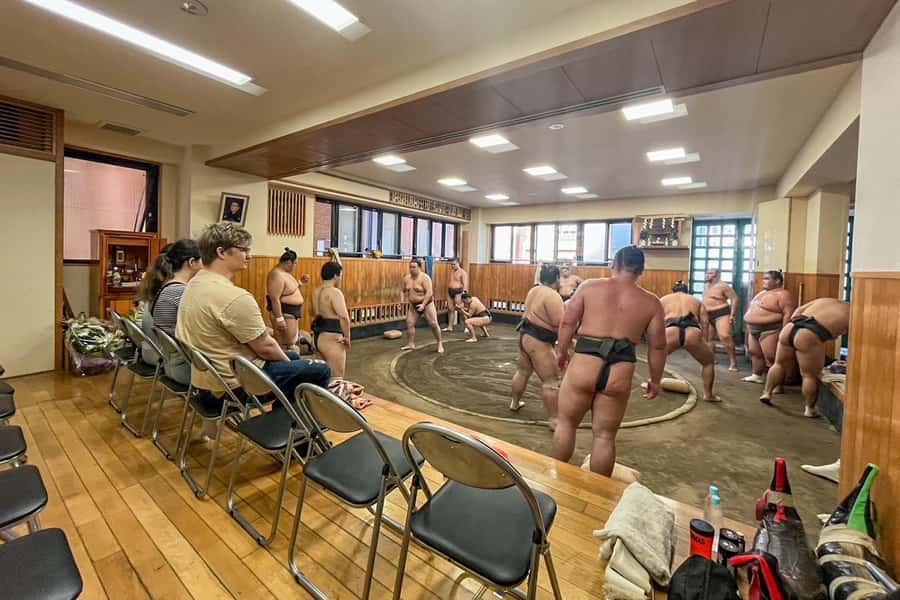
If you only know sumo from TV bouts, this tour changes the way you think about it. A tournament match is just one slice. Here, you’re watching the work that builds it, step by step, rep after rep, with the wrestlers training like their bodies and habits are the point.
I like that you’re getting that morning rhythm, the kind of quiet-to-intense progression that’s hard to replicate anywhere else. It also helps that your guide brings context, so the practice doesn’t stay mysterious the whole time. And yes, it can feel more physical than you expect, because the training is serious, not theatrical.
More Photo Sessions in Tokyo
- Tokyo Ryogoku Sumo Morning Practice + Photo Shoot with Wrestlers
★ 4.5 · 277 reviews - Tokyo Sumo Morning Practice Tour w/ Ring-Side Seat + Photo Shoot
★ 5.0 · 93 reviews - Tour with Pro Tokyo Photographer and take Edgy Unique Portraits
★ 5.0 · 80 reviews
Meeting at Kiyosumi Shirakawa and Getting to the Stable
Your check-in is simple: meet at the A1 exit of Kiyosumi Shirakawa Station, and look for your guide holding a red/orange MagicalTrip sign. From there, you follow the guide into the stable area for the practice.
This is one of those tours where being on time matters. The session starts promptly, and late arrivals may not be able to join. I recommend arriving a few minutes early so you can find the group without rushing, and so you can relax your legs for the sitting part.
Inside the Sumo Stable: Rituals, Discipline, and Real Intensity
The big value here is access. Sumo stables are not open like a museum. You’re entering a working training environment and expected to follow stable rules. That means quiet attention, no disrupting, and staying within allowed areas.
What you’ll feel quickly is discipline. Multiple reviews highlight how structured the practice is, with a serious tone and coaching from the master. One person described the practice as systematic and intense, and another noted the sense of focus and respect inside the stable. This is not a casual hangout, and that seriousness is part of what makes the experience feel real.
Also, keep your expectations grounded: you are seeing a training session, so the experience is not built around constant crowd-pleasing moments. The payoff is in watching how the wrestlers work their techniques over time.
Two Hours of Training: What You Will Watch
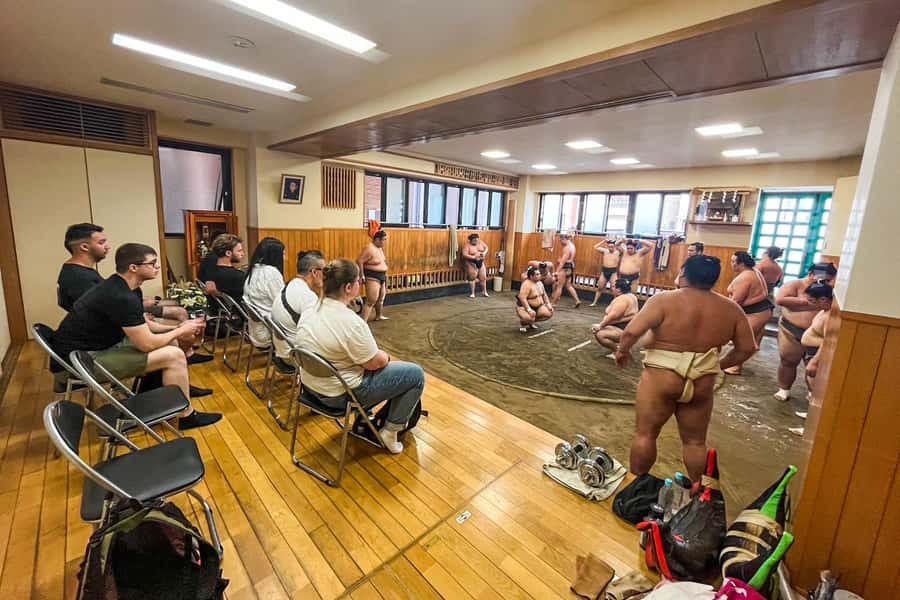
You’re booked for 2 hours, and it tends to move fast once the session gets going. The practice includes a run-through of routines, then goes into more intense bouts and technical work as the session progresses.
Even when you think you understand sumo from a distance, training changes the story. You’ll likely notice the athletes repeating movements, adjusting footwork, and pushing into contact to refine their timing. One review even mentioned how much you can hear the wrestlers up close, which is a good reminder that the sound and effort are part of the experience.
One practical note: the itinerary is built around being in the stable area for the main session time. You’ll start at the station, then visit the stable location(s) during the practice window, and finish by returning to the station.
More Photo Tours in Tokyo
- Tokyo: Kimono Dressing, Walking, and Photography Session
★ 4.9 · 427 reviews - Best Go Kart Experience in Shibuya Crossing with Iconic Photos
★ 5.0 · 348 reviews - Tokyo Go-Karting Experience: Shibuya Crossing with Photos
★ 4.8 · 190 reviews - Tokyo: Exclusive Access to Sumo Morning Practice with Photos
★ 4.8 · 107 reviews
Your English Guide and the Sumo Primer You Actually Need
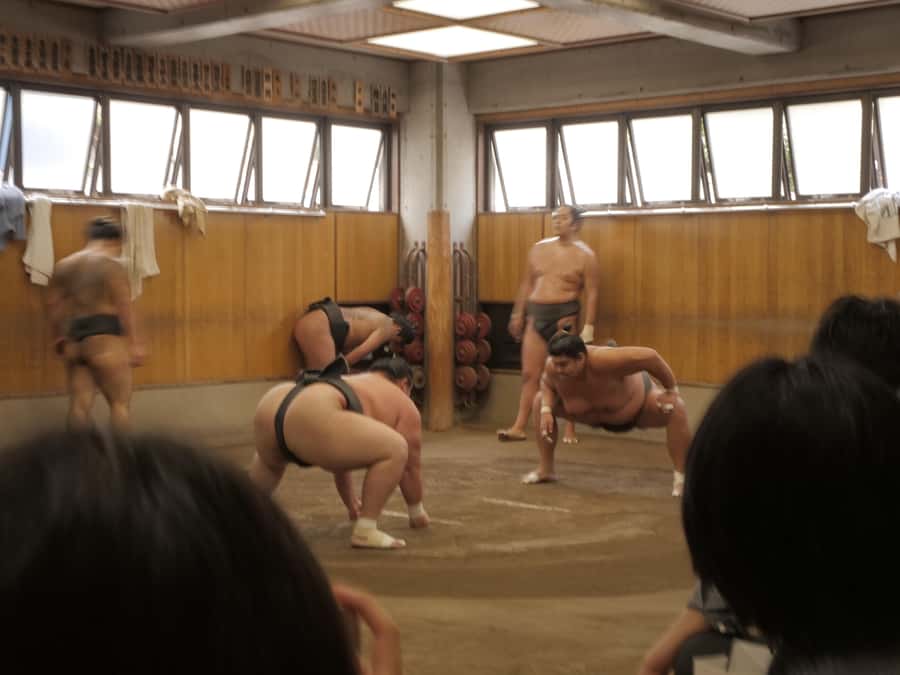
This tour lives or dies by the guide, and that’s a clear strength here. Many people praised their guides by name, especially Marie, who was described as passionate and very informative. Others mentioned Sho, who did a great job explaining the rules of sumo and the ranking system before entering the stable.
Why this matters for you: without context, sumo practice can look like repetitive grappling. With context, you start noticing patterns, intent, and how the wrestlers are building skills for competition. Your guide is there to answer questions too, and reviews mention a helpful, patient tone.
You’ll also get a small support piece: the MagicalTrip Original Sumo Guidebook, described as a concise, easy-to-read sheet. That’s useful if you want to refresh the basics later, or if you’re trying to match names and rules to what you see in the ring area.
Tatami Time, Chairs, and How to Stay Comfortable
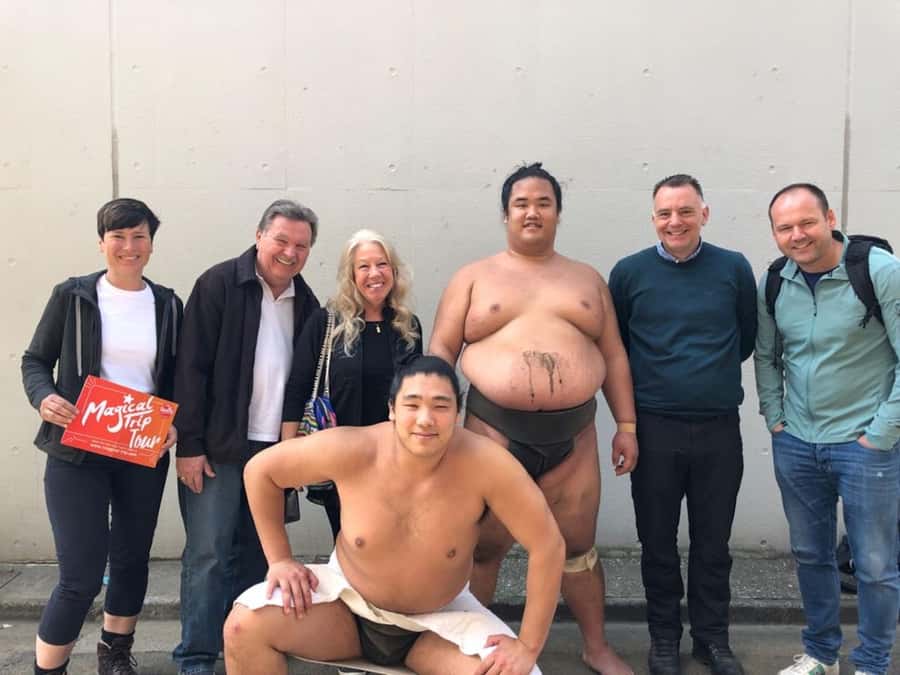
Let’s talk comfort, because this tour includes a lot of sitting (and sometimes standing). The tour information says most stables do not provide chairs, and you should expect tatami seating. At the same time, real reviews suggest chairs can appear in some stables, often in a limited number of rows.
Here’s how to plan:
- Assume you’ll be on tatami for at least part of the time.
- If chairs are available, they may be in a few rows, so don’t count on being first choice.
- If you have knee or back issues, think carefully. The experience can be worth it, but comfort will affect how much you enjoy it.
One review called out that chairs were welcome for tired feet, and another described that there were multiple rows of seating and different comfort levels depending on where you ended up. Translation for you: pack your expectations like this is a theater seat, not a stadium.
Also remember the stable access limits. Only tatami areas are accessible, and other areas are off-limits. Follow what the guide and stable staff ask, even if it feels strict. This is how you protect the access for future groups.
Photoshoot at the End: Wrestler Discretion Is Part of the Charm
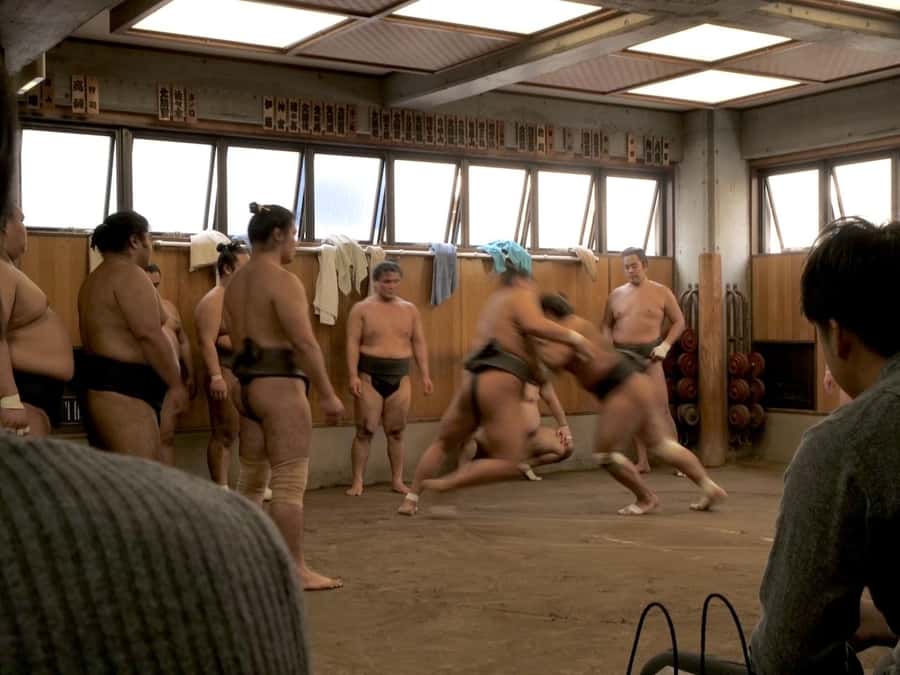
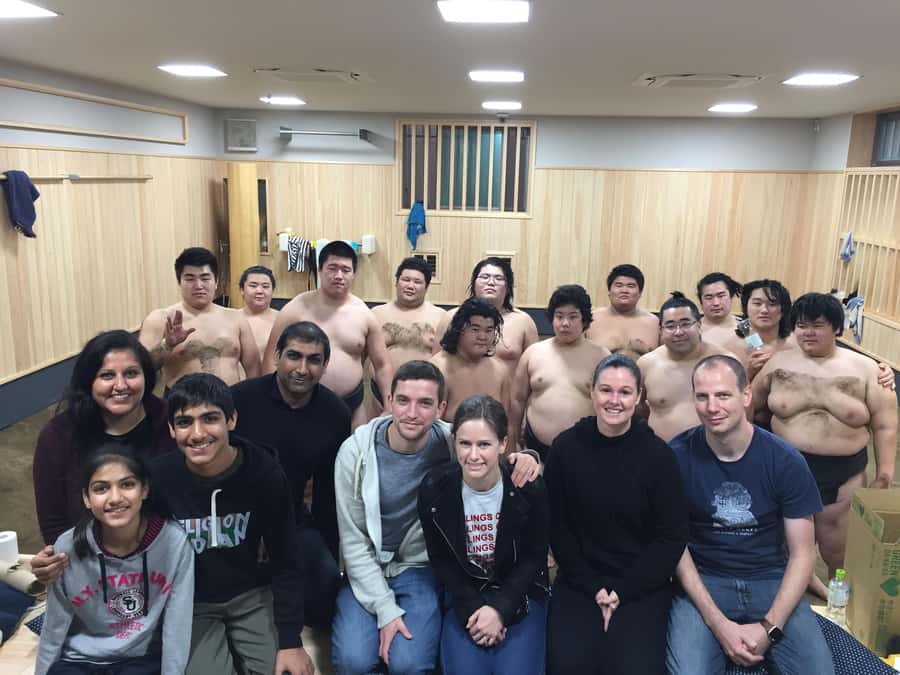
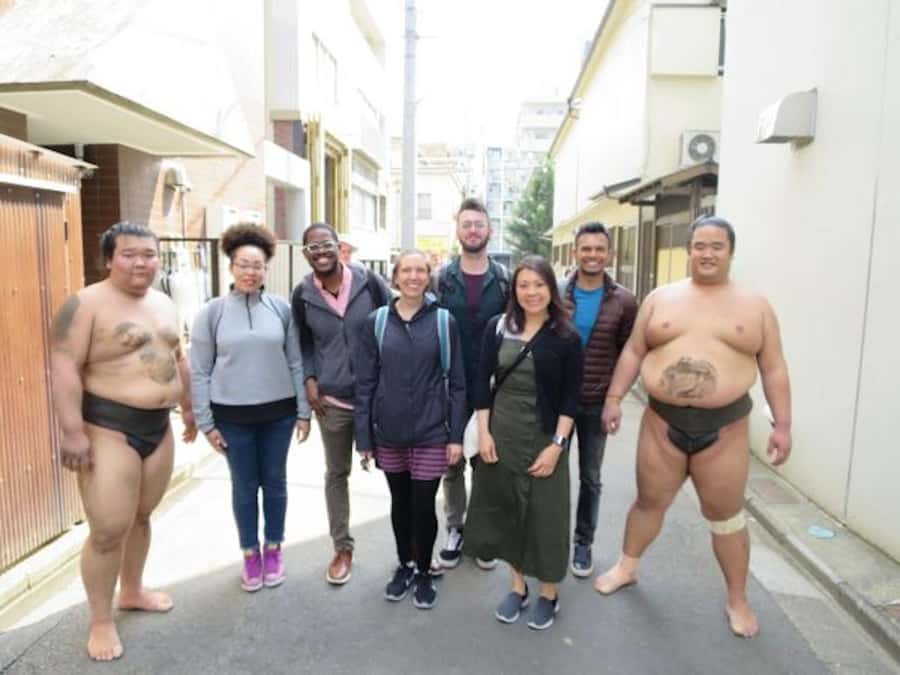
The end-of-practice photoshoot is included, but there’s an important detail: a personal photo with a sumo wrestler is at the wrestler’s discretion. So think of it as a bonus, not a guarantee.
Even with that uncertainty, the “meet at the end” moment is a memorable payoff. Several reviews mention being able to meet or interact briefly after practice, and at least one described a group photo and time for questions at the end.
If you get the chance for a picture, keep it respectful and quick. You’re in a working environment, so the best photos tend to be calm and orderly.
Price and Value: What $96 Gets You in Practice Access
At $96 per person for 2 hours, you’re paying for more than a view. You’re paying for access to a normally closed training environment, an English-speaking guide, and the included materials that help you understand what you’re seeing.
A tournament ticket can get you official bouts, but it doesn’t give you the same behind-the-scenes training context. Here, the goal is understanding and atmosphere, plus hands-on learning through explanations. You also get attraction entry and the guidebook sheet, which helps turn a cool moment into a trip memory you can actually interpret.
The main cost trade-off is what you do not get: food and drinks are not included, so plan for that outside the tour window.
Who This Sumo Practice Tour Fits Best
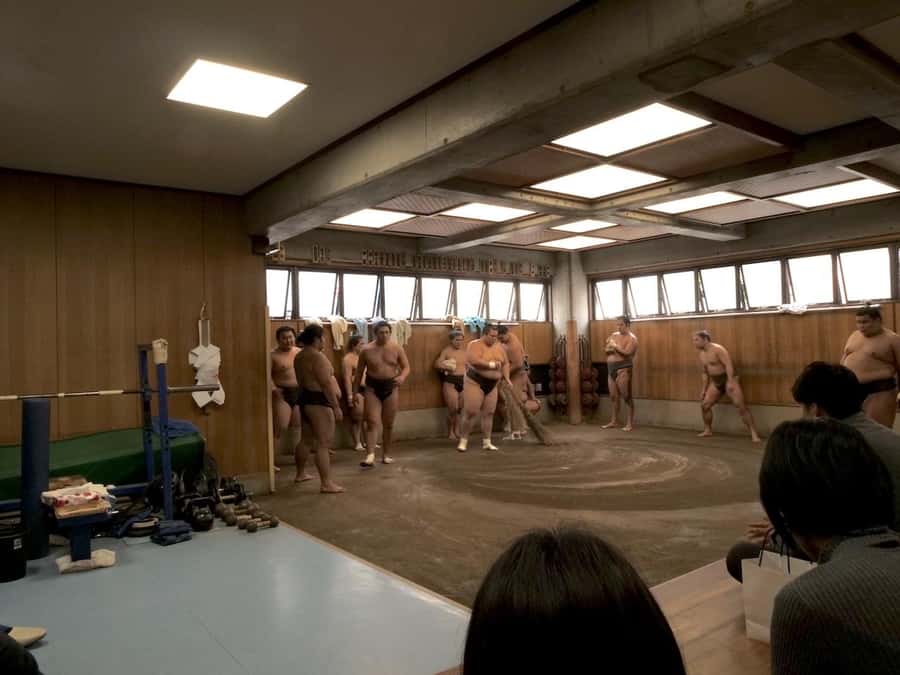
This is ideal if you like cultural experiences with real rules and real work behind them. If you’re a sumo fan, it’s a strong intro to how training actually looks. If you’re brand new, the guide support helps you avoid the common problem of watching something without knowing how to read it.
It’s also a good fit for:
- People who enjoy morning activities and are okay with a serious, structured environment
- Those who want a small group experience with time for questions
- Anyone who wants more than just photos, and prefers understanding the why behind the movement
It may be a poor fit if:
- You cannot sit on tatami or you strongly dislike floor seating
- You need wheelchair access, since wheelchair users are not suitable for this tour
- You’re traveling with small children, because children under 12 are not allowed inside the stable
Should You Book This Sumo Practice Tour?
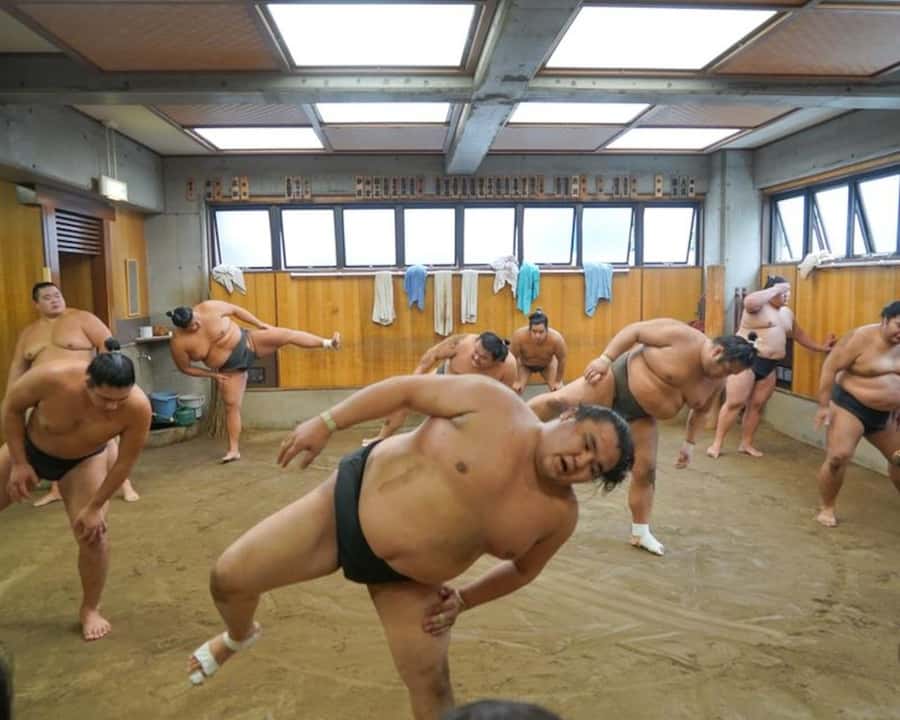
Book it if you want the real rhythm of sumo, the training discipline, and explanations that make the practice feel understandable instead of random. The guide quality is a repeated theme, including named guides like Marie, Sho, and Masao Hiramatsu, and that kind of interpretation is exactly what makes this tour worth your time.
Skip it if comfort and access needs will be hard for you, because this tour is built around tatami seating and strict stable rules. Also, if you need guaranteed chair comfort, you should treat chairs as a possibility, not a promise.
Bottom line: for the right person, this is one of those Tokyo experiences that feels rare because it’s not trying to be a show. You’re watching work, close up, and you leave with a better sense of what sumo is actually made of.
FAQ
How long is the sumo practice tour?
The tour lasts 2 hours.
Where do I meet the guide?
Meet at the A1 exit of Kiyosumi Shirakawa Station, and look for your guide holding a red/orange sign saying MagicalTrip.
What is the group size?
This is a small group limited to 10 participants.
Is food included?
No. Food and drinks are not included.
What age can join?
The tour is for guests aged 12 and over. Children under 12 are not allowed inside the sumo stable.
Are strollers or wheelchair users allowed?
Baby strollers are not allowed, and the tour is not suitable for wheelchair users.
Is a photoshoot included?
Yes. A photoshoot with the sumo wrestlers is included at the end, and a photo with a wrestler is at the wrestler’s discretion.
What is the cancellation policy?
You can cancel up to 24 hours in advance for a full refund.
More Photography Sessions in Tokyo
- Tokyo: Evening Photography Tour
★ 4.8 · 61 reviews - Tokyo Asakusa: Miu Kimono Rental and Optional Photoshoot
★ 4.9 · 54 reviews - Tokyo: Photo Shoot with a Private Vacation Photographer
★ 5.0 · 53 reviews - Tokyo Photoshoot Tour with a Local Photographer
★ 5.0 · 37 reviews
Popular Sumo Stable Visits in Tokyo
- Tokyo: Sumo Show Experience with Chicken Hot Pot and a Photo
★ 4.8 · 6,678 reviews - Tokyo: Sumo Show and Dining Experience
★ 4.8 · 2,742 reviews - the SUMO show
★ 5.0 · 1,960 reviews - Tokyo Sumo Entertainment Show with Chicken Hot Pot and Photo
★ 5.0 · 1,205 reviews
Newly listed around Tokyo
- Tokyo private transfer for Yokohama Port★ 4.5 · 63 reviews
- Luxury Kimono Photoshoot at Ginza Tokyo★ 5.0 · 7 reviews
- Tokyo Allstar Food Tour★ 4.5 · 206 reviews
- Tokyo Art Aquarium Museum E-Ticket with optional Tokyo Metro Pass★ 5.0 · 17 reviews
- Tokyo: Best Ginza Food Tour at 3 Local Eateries★ 5.0 · 83 reviews
- Private One Day Nikko Tour with Bilingual driver★ 3.5 · 11 reviews
- PRIVATE tour in 180SX to Daikoku+++++★ 5.0 · 6 reviews
- Kabuki Talk★ 5.0 · 10 reviews
Sumo Stable Visits, compared.
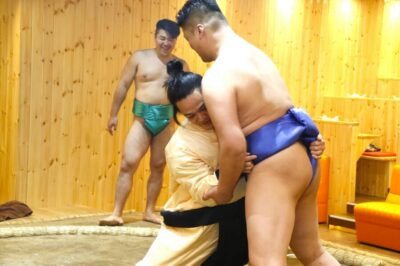
Sumo Show Experience with Chicken Hot Pot and a Photo
Read our review →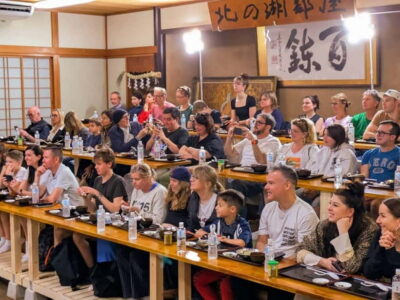
Tokyo Sumo Entertainment Show with Chicken Hot Pot and Photo
Read our review →
Tokyo Grand Sumo Tournament Viewing Tour with Tickets
Read our review →
Sumo Show & Experience w/ Optional Kimono & Hot Pot
Read our review →Browse the lists this tour appears in