Review · SUSHI COOKING WORKSHOPS
Tokyo Sushi Making Experience & Japanese Cooking Class
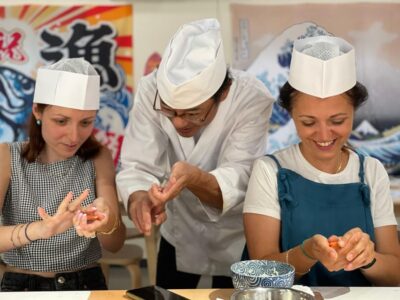
Sushi lessons, minus the intimidation. In Tokyo’s hands-on class, you’ll learn sushi history and culture, plus the etiquette behind each bite, while making maki, temari, and nigiri with fresh ingredients. For me, the best part is the clear, instructor-led pace, and the fact that it is designed so you actually leave knowing what to do at home.
One thing to plan for: snacks are included, but bottled water, juice, and any alcohol are not. If you choose sake or shochu, remember Japan’s legal drinking age is 20, so bring valid ID.
In This Review
- Key highlights you will feel right away
- Where You Start: Shinbashi Meeting Point and Easy Transit
- Small-Group Sushi Training in About 1.5 Hours
- Sushi History and Etiquette: What You Hear Before Rolling
- Maki Rolls: Tuna, Salmon, and Flying Fish Roe Skills
- Temari Sushi: Hand-Shaping That Feels Surprisingly Teachable
- Nigiri Practice: Building the Top, Getting the Balance
- Eating Together, Optional Sake or Shochu, and the ID Check
- What’s Included, What’s Not, and Why It Affects Your Budget
- Take-Home Photos and How to Recreate What You Learned
- Price and Value: Is This Worth $59.46 in Tokyo?
- Who This Tokyo Sushi Making Class Fits Best
- Should You Book This Tokyo Sushi Experience?
- FAQ
- How long is the Tokyo sushi making experience?
- What is the price per person?
- How many people are in the group?
- What sushi types will I learn to make?
- What ingredients are used?
- Are snacks, bottled water, and drinks included?
- Can I add sake or shochu, and is there an age requirement?
- Where do I meet for the class?
- What is the cancellation policy?
Key highlights you will feel right away
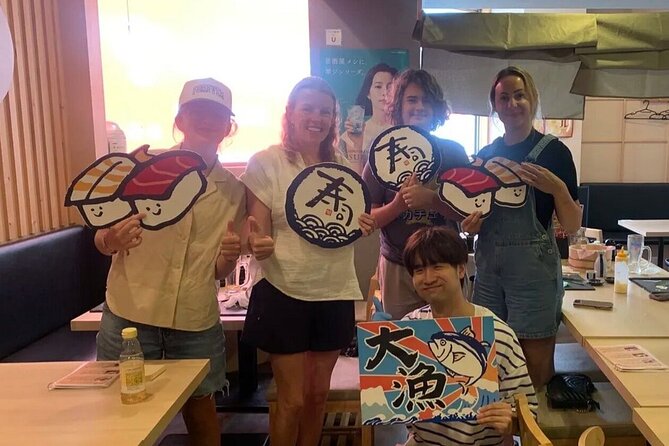
- Small group, up to 15 people for hands-on guidance instead of watching from the sidelines
- Maki, temari, and nigiri in about 90 minutes, so you get variety fast
- Fresh ingredients like tuna, salmon, squid, and flying fish roe
- English-speaking instruction (also Traditional and Simplified Chinese support) for easy understanding
- Optional sake or shochu, with an ID requirement for alcohol
- Commemorative photos to keep the experience memorable
Where You Start: Shinbashi Meeting Point and Easy Transit
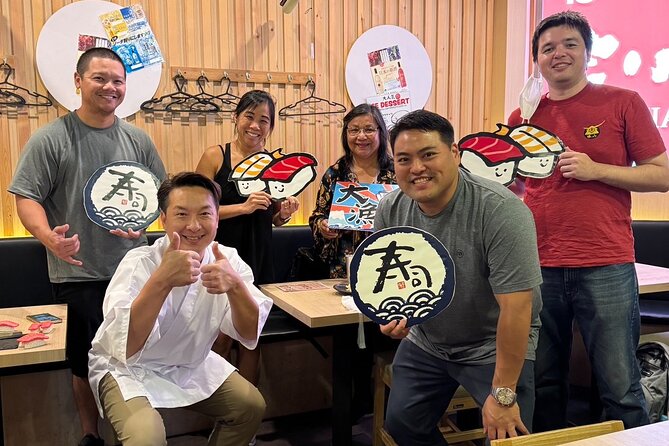
Your class begins at S-PLAZA YaYoi II in Shinbashi, Minato City (2-chōme, 15-10). The good news is it is near public transportation, so you should be able to plug it into your Tokyo routes without major detours.
The activity ends back at the same meeting point. That matters because it keeps the whole plan simple, especially if you are juggling dinner plans afterward.
If you are using a phone plan, load the meeting address before you go. Tokyo station areas can look close on a map, but walking time can surprise you once you account for crossings.
More Cooking Classes in Tokyo
- Ramen & Gyoza Cooking Class in Tokyo with Local Supermarket Visit
★ 5.0 · 823 reviews - Tokyo: Easy Ramen Cooking Experience in Kabukicho, Shinjuku
★ 4.6 · 321 reviews - Ramen and Sushi Cooking Class with Sake Pairing Set in Tokyo
★ 5.0 · 291 reviews
Small-Group Sushi Training in About 1.5 Hours
This is a 1 hour 30 minutes experience with a maximum group size of 15. That time is short on purpose. The format pushes you to focus on the key moves that make sushi work, rather than turning it into a multi-day project.
You also get a small-group setting with personalized help. That is a big deal for first-timers because sushi has a few tricky basics, rice handling included. If your fingers feel awkward at the start, you will have support to get past that quick.
It is also age-friendly, with participants age 4 and above. If you are traveling with kids, this is one of those activities that can actually work as an experience, not just a long snack stop.
Sushi History and Etiquette: What You Hear Before Rolling
You do not just get ingredients and a mat. You also get the story and the rules that make sushi more than finger food.
Expect to learn sushi history and culture from English-speaking instructors, and hear about the art and etiquette behind what you are making. That might sound formal, but it is practical. When you understand the why, the technique makes more sense, and you stop feeling like you are copying random steps.
This is also where the class helps you avoid common mistakes. Sushi has an attitude: it is about respect for ingredients and careful handling. Even in a short class, etiquette cues like how you present pieces and how you taste them help you end up with something that looks and feels right.
Maki Rolls: Tuna, Salmon, and Flying Fish Roe Skills
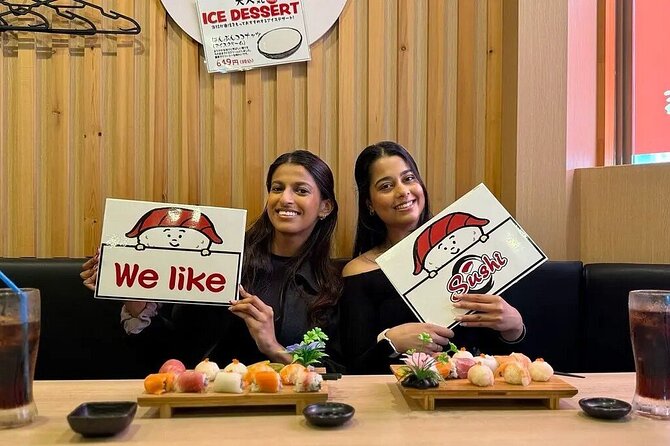
Maki is the classic roll, and it is usually where people feel the most “I can do this” momentum once they get rolling.
You will learn how to make maki sushi and work with fresh ingredients such as tuna, salmon, and flying fish roe. From a value standpoint, this is smart. Those are recognizable flavors, and they are common at sushi counters, so your results feel relevant, not random.
For you as a home cook, maki is also the most transferable skill. Once you can manage a roll and slice it cleanly, you can repeat the method later with ingredients you can find locally.
Tip for your expectations: do not aim for restaurant-perfect photo styling. Aim for consistent technique and good balance. The class is designed around learning outcomes, not speed contests.
More Cooking Workshops in Tokyo
- Tokyo: Wagyu and 7 Japanese Dishes Cooking Class
★ 4.9 · 273 reviews - Tokyo Washoku 4-hour Cooking Class: From Market to Table
★ 5.0 · 253 reviews - Small-Group Wagyu Beef and 7 Japanese Dishes Tokyo Cooking Class
★ 5.0 · 190 reviews - Unique Private Cooking Class with a Tokyo Local Emi
★ 5.0 · 131 reviews
Temari Sushi: Hand-Shaping That Feels Surprisingly Teachable
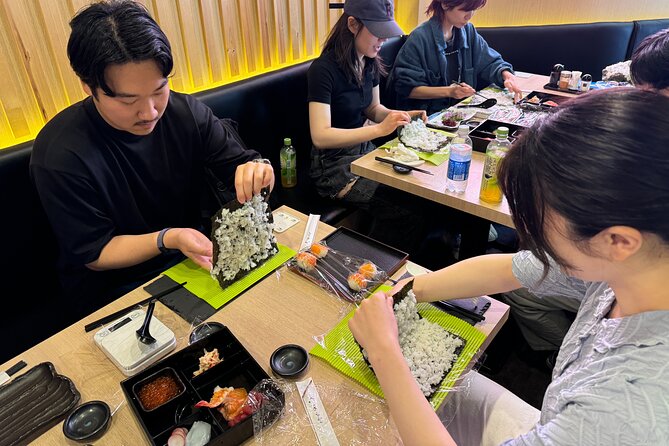
Temari sushi is compact, hand-shaped, and a great contrast to the rolling you do with maki.
The experience includes temari sushi snacks with options such as tuna, salmon, and squid. That tells you the class is not only about theory. You get to work with recognizable seafood profiles and then eat what you made.
Temari is also a confidence builder. Rolling can feel mechanical, but hand-shaping lets you feel the texture and adjust. In a short class, that hands-on feedback loop is where learning clicks.
If you are traveling with kids, temari often plays nicely. It is simple to explain and can be done with careful guidance. Even when hands get busy, the instructor support matters.
Nigiri Practice: Building the Top, Getting the Balance
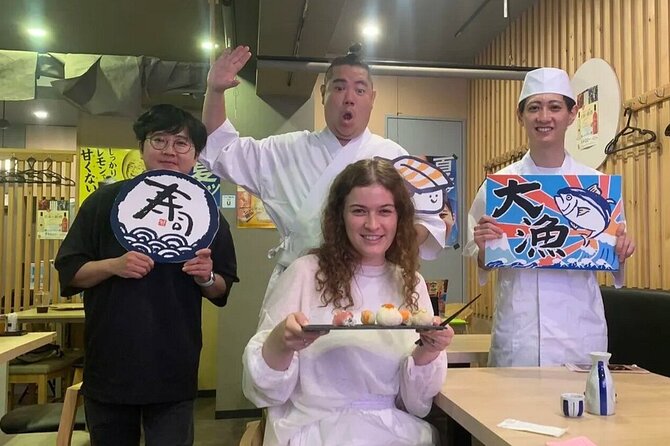
Nigiri is where sushi looks most effortless on a plate, but it is rarely effortless in real life.
You will learn how to make nigiri sushi as part of the class, along with the maki and temari instruction. Nigiri is a useful skill because it teaches balance. You learn how the topping sits on rice and how portion size affects the whole bite.
This part is especially helpful if you like the elegance of sushi. It is also practical if you want to impress friends at home. Even if your toppings are different later, the idea of pairing rice and topping proportions is the takeaway you can reuse.
One consideration: because the experience is 90 minutes, you are learning the fundamentals, not perfecting a lifetime of nigiri craft. Still, you leave with steps you can repeat.
Eating Together, Optional Sake or Shochu, and the ID Check
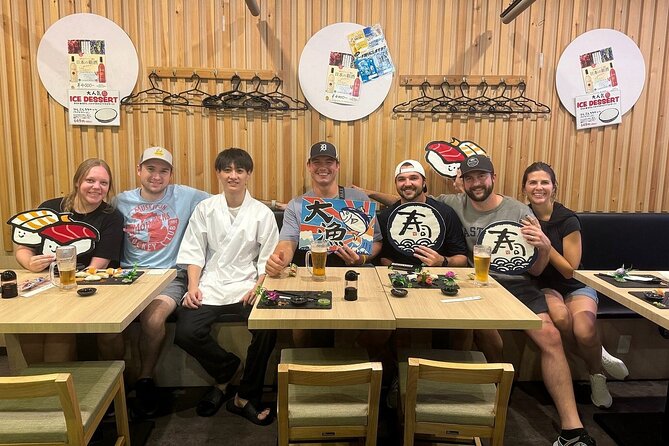
After the prep and shaping comes the fun part: savoring what you made. The class is designed so you can eat your creations alongside the group.
You can also add sake or shochu for a more authentic Japanese experience. Just know bottled water, juice, and alcoholic beverages need to be ordered separately. So if you plan to drink, it is smart to budget for add-ons.
Also, Japan’s legal drinking age is 20. The experience guidance says you should bring a valid form of identification that proves your age. That means if you are close to the legal age, bring ID anyway. It is not worth the stress.
And if you are not drinking, do not worry. The core of the experience is the sushi-making, and snacks are part of the class.
What’s Included, What’s Not, and Why It Affects Your Budget
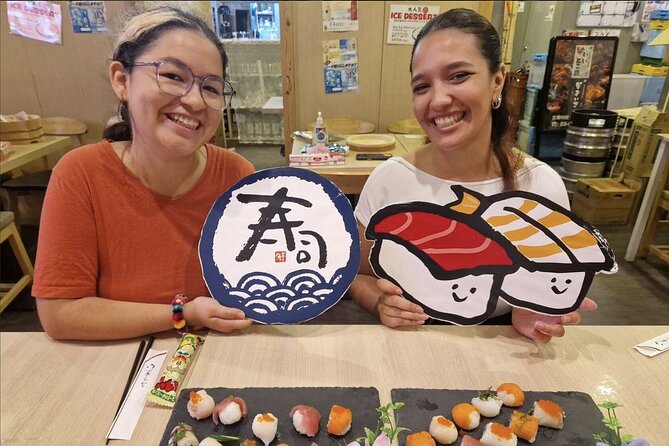
Here is the straightforward breakdown of what the class gives you.
Included:
- Snacks made from what you produce, including maki sushi and temari sushi (with tuna, salmon, squid, etc.)
- A guide who supports English and also Traditional Chinese and Simplified Chinese
Not included:
- Bottled water
- Juice and alcoholic beverages, which you must order separately
Now the value question. At $59.46 per person, you are paying for a guided, hands-on cooking session with ingredients and a structured learning format. You are not paying for a grocery shopping trip or a full-day experience. Drinks are extra, but that is normal for classes like this.
If you want to keep costs predictable, plan to skip alcohol or only add one optional drink. If you are already budgeting for Tokyo drinks, you can treat the class as a fixed-cost activity and then decide on extras in the moment.
Take-Home Photos and How to Recreate What You Learned
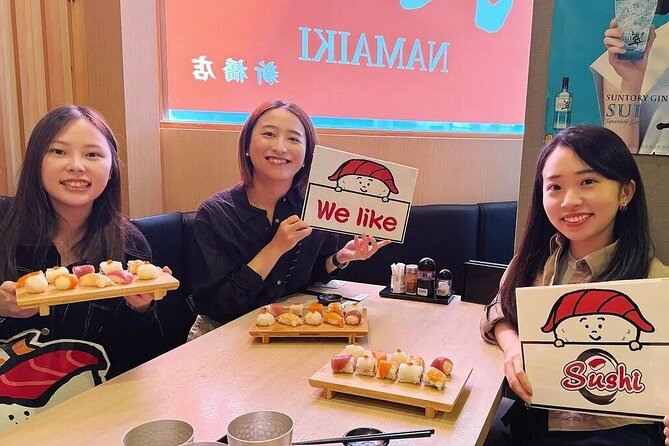
A small detail that matters: you take away commemorative photos from the experience. That turns the class into a real memory, not just a meal you ate and forgot the next day.
The photos also help you review what you made, especially for maki and temari, where presentation is part of the charm. When you look back later, you will remember the sequence of steps and the look you were aiming for.
For recreating at home, your main advantage is having practiced the forms: maki rolling, temari shaping, and nigiri assembly. Even if your ingredients change later, you still have the muscle memory from learning the core technique.
Price and Value: Is This Worth $59.46 in Tokyo?
For Tokyo, this price lands in a practical sweet spot. You get:
- a structured 90-minute lesson,
- a small group format with hands-on instruction,
- included sushi snacks,
- and commemorative photos.
What you give up is scope. This is not a multi-stop market tour, and it is not a full-day cooking program. But that is not a flaw if you have limited time. For many visitors, it is the right size: learn the key moves, eat them, and move on with your trip.
Another plus is timing. The average booking window is 54 days in advance, which suggests it is popular. If you want a specific day, booking earlier helps, especially during busy seasons.
Who This Tokyo Sushi Making Class Fits Best
This class is a good match if you:
- want a hands-on food experience without needing special prep before you arrive
- like learning both technique and the cultural context, including sushi etiquette
- prefer small groups, since the maximum is 15 people
- are traveling with kids age 4 and up, and want a guided activity with patient support
It may be less ideal if you:
- want alcohol included in the price, since sake or shochu are optional and drinks are not included
- need a longer deep-training session, because the experience is only about 1.5 hours
And if you are traveling with a group, note that this is designed to be personal. You will get more out of it if you are ready to participate, not just observe.
Should You Book This Tokyo Sushi Experience?
I would book it if you want a fun, focused Tokyo food skill you can repeat at home. The combination of English-speaking instruction, small-group guidance, and learning three sushi styles in one session makes it efficient and satisfying.
If you are cautious about costs, just plan for the fact that bottled water, juice, and alcohol are extra. Bring ID if you think you will drink sake or shochu, because Japan requires it at age 20.
Overall, this is the kind of activity that fits neatly into a travel schedule. You leave with sushi skills, a full sense of what you just made, and photos to prove it.
FAQ
How long is the Tokyo sushi making experience?
It lasts about 1 hour 30 minutes.
What is the price per person?
The price is $59.46 per person.
How many people are in the group?
The class has a maximum of 15 travelers.
What sushi types will I learn to make?
You will learn how to make maki, temari, and nigiri.
What ingredients are used?
The class uses fresh ingredients such as tuna, salmon, squid, and flying fish roe.
Are snacks, bottled water, and drinks included?
Snacks (maki and temari sushi) are included. Bottled water is not included, and juice and alcoholic beverages need to be ordered separately.
Can I add sake or shochu, and is there an age requirement?
You can add sake or shochu for an authentic experience. Japan’s legal drinking age is 20, so you must bring valid ID if you plan to drink.
Where do I meet for the class?
Meet at Japan, 105-0004 Tokyo, Minato City, Shinbashi, 2-chōme1510 S-PLAZA弥生Ⅱ. The activity ends back at the meeting point.
What is the cancellation policy?
You can cancel for a full refund up to 24 hours in advance. The experience requires good weather, and if it is canceled due to poor weather, you will be offered a different date or a full refund. It can also be canceled if the minimum number of travelers is not met, with a different date or a full refund offered.
More Sushi Workshops in Tokyo
- Sushi Making Tokyo Roll and Authentic Japanese Sushi Class
★ 5.0 · 3,971 reviews - Tokyo: Roll and Authentic Sushi Making Class in Asakusa
★ 4.9 · 1,957 reviews - Tokyo: Sushi Making Class in a Happi Coat near a Famous Spot
★ 4.9 · 1,377 reviews - Sushi Making Tokyo! Popular Maki Sushi & Japanese Sushi(+Recipe!)
★ 5.0 · 1,314 reviews
Newly listed around Tokyo
- Tokyo private transfer from/to Tokyo Ports★ 4.5 · 26 reviews
- Yanaka and Asakusa Walk around DOWNTOWN TOKYO like a local★ 5.0 · 36 reviews
- Yokohama Private Arrival Transfer : Tokyo Hotels to Yokohama Port or Hotels★ 4.5 · 12 reviews
- Yanaka Historical Walking Tour in Tokyo’s Old Town★ 5.0 · 182 reviews
- Official Japan Go-Kart Through Shibuya / Shinjuku (IDP Required)★ 5.0 · 92 reviews
- Private homevisit for whole cultual experience, 20min from Tokyo★ 5.0 · 20 reviews
- Exclusive Sumo Morning Practice in Tokyo with Photo Opportunity★ 5.0 · 68 reviews
- 3-Hour Tokyo Pub Crawl Nightlife Welcome Guided Tour in Shibuya★ 5.0 · 209 reviews
Sushi Cooking Workshops, compared.
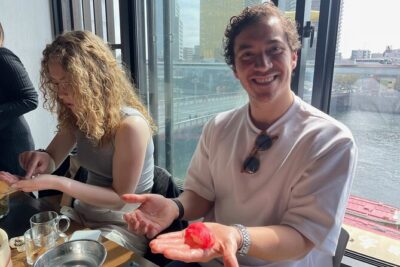
Sushi Making Tokyo Roll and Authentic Japanese Sushi Class
Read our review →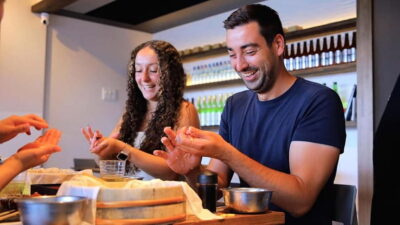
Roll and Authentic Sushi Making Class in Asakusa
Read our review →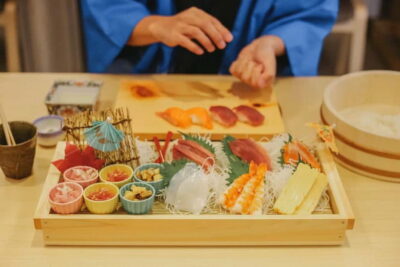
Sushi Making Class in a Happi Coat near a Famous Spot
Read our review →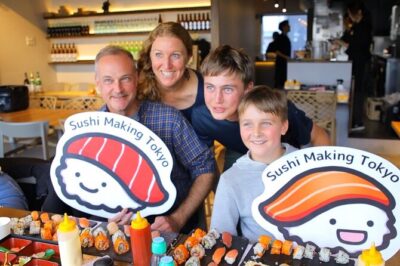
Sushi Making Tokyo! Popular Maki Sushi & Japanese Sushi(+Recipe!)
Read our review →
Tokyo Sushi Making Class in Tsukiji with Professional Chef
Read our review →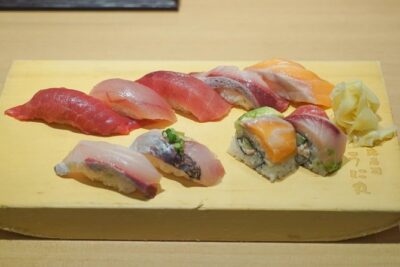
Tokyo Night Foodie Tour in Shinjuku – Seasonal Sushi, Wagyu Beef
Read our review →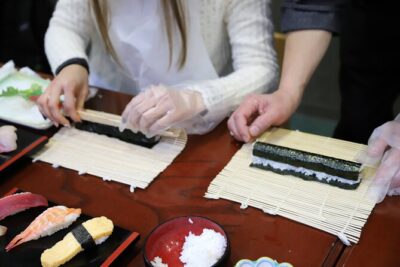
Tsukiji Fish Market Guided Tour and Sushi Making with Pro Chef
Read our review →