
Review · TRADITIONAL MUSIC & DANCE SHOWS
Tokyo’s Authentic and Finest Taiko Drumming Experience
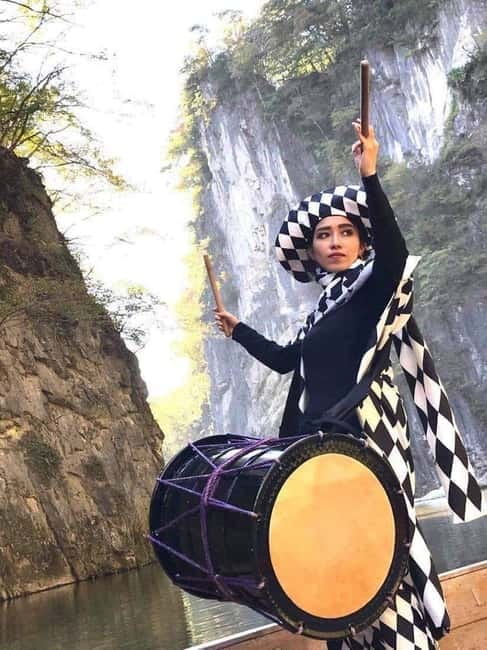
Feel your heartbeat in one lesson. In central Tokyo, you jump into taiko drumming right away with Eva, a serious artist-teacher who explains the why behind every strike.
I love that this is proper training, not a performance you just watch. I also love the built-in payoff, you learn a traditional and contemporary taiko piece and then leave with a personalized video to practice at home. The one drawback is physical, it can feel like a workout, and the room can run warm, so wear comfortable clothes and be ready to sweat.
In This Review
- Key Highlights I’d Prioritize
- Why This Feels Like Real Taiko Training
- Meet Eva, a Drummer Who Teaches Like an Artist
- Getting There and Settling In Near Shibuya
- Foundation Training: How You Hold the Sticks and Stay Balanced
- Rhythm Training: The Part That Turns Noise Into Music
- Learning the Piece: Traditional Taiko Plus a Contemporary Touch
- Eva’s Demonstration Performance, So You Know What You’re Aiming For
- Your Take-Home Memory: The Personalized Video
- What to Wear, What to Bring, and How to Prepare
- Price and Value: Is $120 Fair for 90 Minutes?
- Who This Workshop Fits Best
- Groups, Language, and Private Options
- Should You Book This Taiko Workshop With Eva?
Key Highlights I’d Prioritize
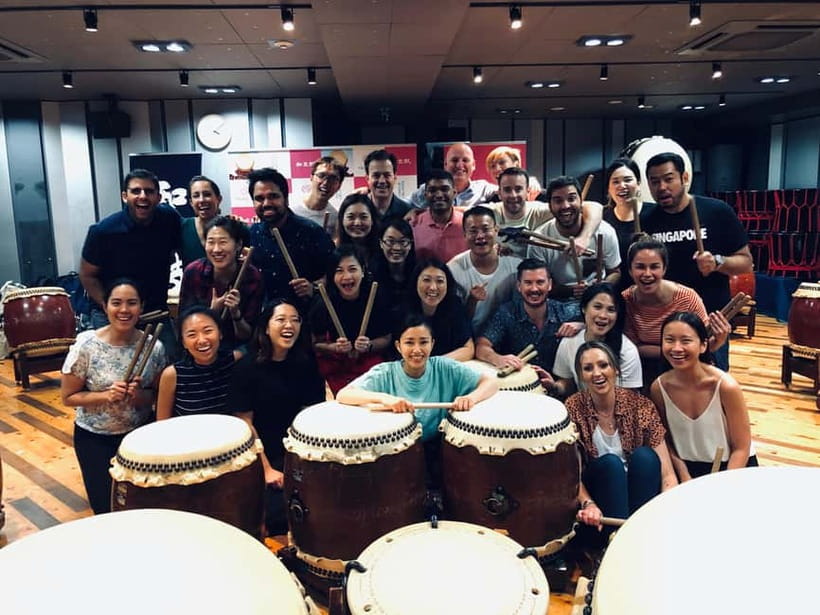
- Eva teaches in English (and Japanese), with clear instruction even if you start from zero
- Foundation and rhythm training so you learn technique, not random noise
- You play a real composition, often with regional history explained in plain terms
- Demonstration performance by Eva, so you understand how the part fits the whole
- Personalized practice video to take home and replay your form
- 90 minutes with drums provided, no experience needed, just show up ready to move
Why This Feels Like Real Taiko Training
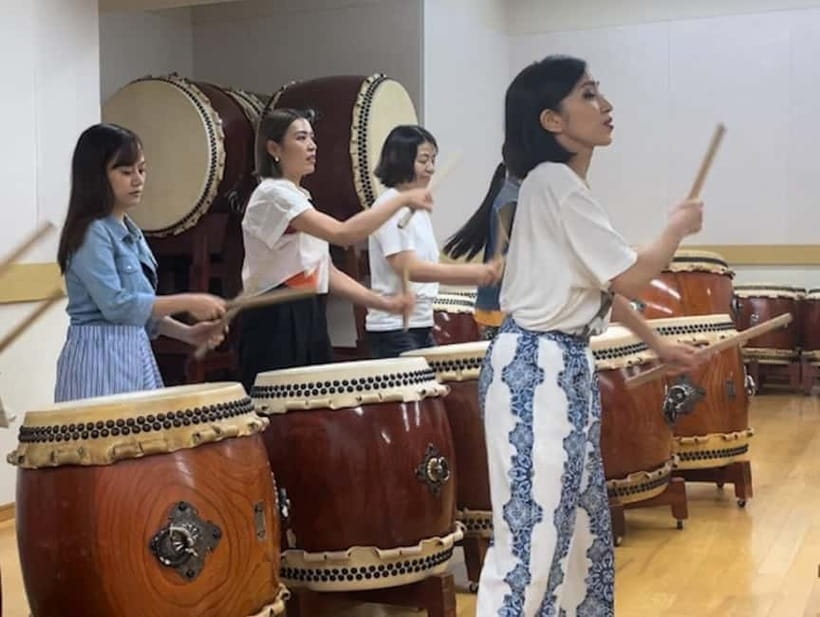
Taiko can look simple from the outside, hit drum, repeat, crowd goes wow. In this workshop, the focus is different. You start learning how to hold the sticks, how to set your stance, and how rhythm actually works in taiko. That makes the session feel honest and structured, and it’s why people keep rating it so highly.
The other big reason it lands is the mix of skill and context. You don’t just learn a pattern, you get a brief history of taiko and how it connects to Japanese culture and regional traditions. Even with no prior experience, you walk away with a better sense of what you’re doing and why it matters.
Compare these Traditional Music and Dance shows in Tokyo:
- Ninja+Kabuki Tokyo
★ 4.5 · 512 reviews - Tokyo: Ninja Kabuki Performance
★ 4.2 · 330 reviews - Tokyo: KABUKI Show at Kabukiza Theatre Admission Ticket
★ 4.8 · 152 reviews
Meet Eva, a Drummer Who Teaches Like an Artist
Your instructor is Eva Kestner, a professional taiko drummer with impressive credentials. She founded and was the first musical director of Cornell University’s taiko drumming group, and she has received an excellency award from the Tokyo University of Arts New Artists Competition. Her original music has also been published by Harper Collins and Cambridge International Curriculum.
In practice, those credits show up in the teaching. Eva has that rare mix, high energy and clear explanations. You feel the passion in her performance, and you also feel how intentionally she’s walking you through technique. That matters, because taiko is physical, and if you only copy movements without understanding form, you can end up tired fast and sloppy.
Getting There and Settling In Near Shibuya
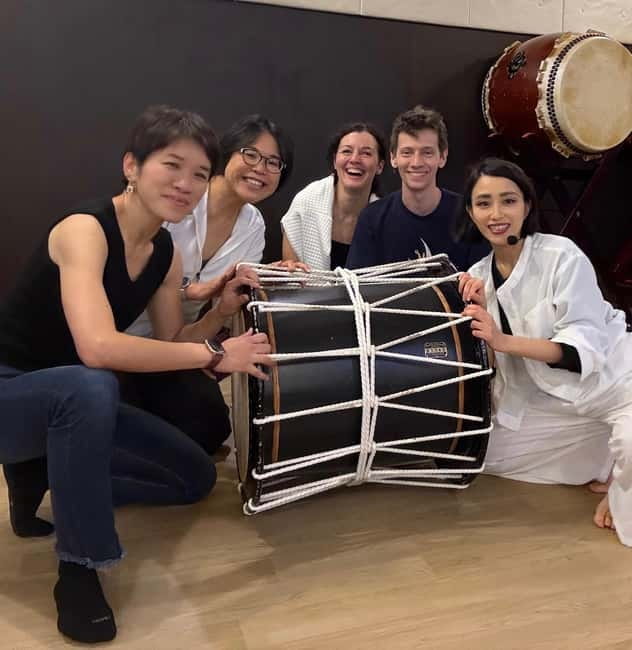
The workshop happens in a studio setting about 20 minutes from Shibuya by train for larger groups. The exact meeting point can vary by the option you book, so read your confirmation carefully and plan a little buffer time.
Once you arrive, the pace is active. You’re not sitting through lectures. You’re meeting the instructor, getting the basics, and then moving into rhythm work. If you’re the type who gets restless in classes, this format helps, because you’re always doing something, even early on.
Also, you’ll want to dress for motion. The workshop recommends comfortable clothes and you should bring a water bottle. Based on the experience reports, the room can get warm, so lighter layers can be a smart call.
Foundation Training: How You Hold the Sticks and Stay Balanced
This is where beginners get a real advantage. You learn the basics of how to hold taiko sticks and how to position your body. That might sound like small stuff, but it’s the difference between a frustrating session and one where it starts clicking.
You also do foundation work that builds control. Expect to repeat movements until they feel stable, then you transition into rhythm. This is the part that helps you keep form even when your arms start to fatigue. More than one person has finished with sore arms, which is a good clue that you’re using real technique, not just flailing for entertainment.
A few more Tokyo days to weigh up
- Mt Fuji and Hakone 1-Day Bus Tour Return by Bullet Train
★ 5.0 · 26,383 reviews - 1-Day Tokyo Bus Tour
★ 5.0 · 14,250 reviews - Tokyo: TOKYO SKYTREE® Admission ticket
★ 4.5 · 11,192 reviews - Tokyo: teamLab Planets TOKYO Digital Art Museum Entry Ticket
★ 4.6 · 9,779 reviews
Rhythm Training: The Part That Turns Noise Into Music
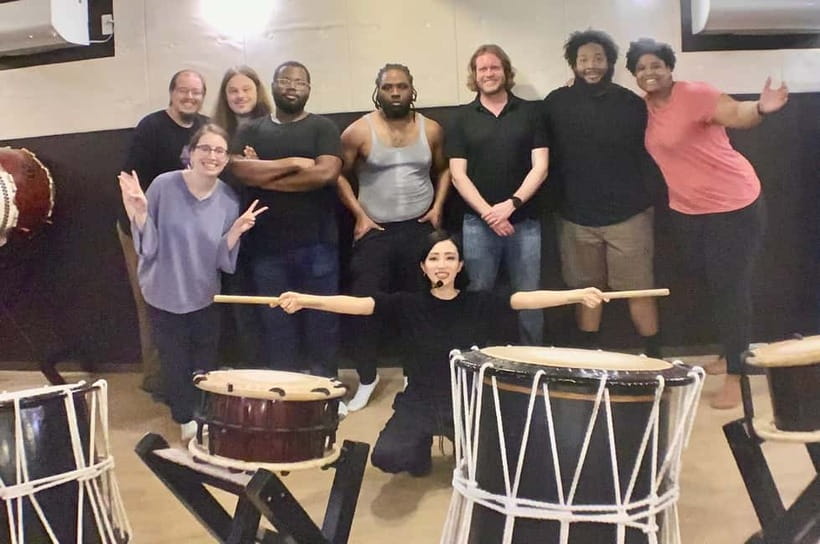
After the foundational setup, the class shifts to rhythm training. You’ll practice different beat patterns and drills that teach timing and coordination. This is also the section where taiko begins to feel like a language.
You might notice something important as you go. The rhythm work is not only about hitting on the right beat. It’s about matching the energy of the motion to the rhythm, keeping a consistent posture, and learning how pauses and accents land. Once you start getting it, the patterns sound more intentional, and the whole session starts to feel like progression, not random exercises.
Learning the Piece: Traditional Taiko Plus a Contemporary Touch
The heart of the workshop is learning to play a taiko composition during your 90 minutes. You work on both traditional and contemporary material, with the class structured so you can actually reach a performance-ready section.
One of the most specific details from experience reports is the inclusion of a historical, regional piece. In some sessions, that has been linked to a composition connected with Miyake, an island area near Tokyo. You also may work with two different types of drums in the same workshop flow, which helps you understand how sound and response can change depending on the instrument setup.
You’ll likely do it in phases. First you build the key rhythms, then you start combining them into a longer phrase. Toward the end, the instructor guides you through a more complete performance segment. That’s also where you may see how traditional pieces begin to resemble real taiko stage structure, complete with cues for when to strike, when to move, and when to hit with more presence.
Eva’s Demonstration Performance, So You Know What You’re Aiming For
About midway or toward the end, you get a demonstration performance by Eva. This isn’t just a flashy moment, it’s a teaching tool. Watching her play helps you connect the drills you just did to how taiko is shaped as a performance.
You also get a brief taiko history explanation. It’s not heavy academic stuff. It’s practical context that makes the rhythms feel less like a fitness game and more like a cultural art form with regional roots and purpose.
This part matters if you care about doing things with understanding. It also helps you settle into the final practice section because you have a clear picture of what success sounds like.
Your Take-Home Memory: The Personalized Video
Here’s a standout feature, you receive a personalized video of you playing the taiko drums after the workshop. That gives you something most classes do not, a clear reference point for what your form looked like and where you were landing in the rhythm.
Some participants noted that it came as a private online video link they could return to. Either way, the effect is the same. You can rewatch, notice what your body did, and practice the parts that were hardest. It turns the session from one fun afternoon into a skill you can keep.
What to Wear, What to Bring, and How to Prepare
You don’t need prior experience. You do need to show up ready to move. Based on the class style and participant notes, here’s what I’d do to avoid turning it into a day of regret.
- Wear comfortable clothing that lets you squat, rotate, and swing your arms
- Bring a water bottle, you’ll want it
- Expect a workout feel, your arms can get tired and your body heats up in the studio
- If you’re sensitive to getting warm, dress in breathable layers
You’re learning a technique-heavy art, so you’ll do better if you can focus on form instead of wrestling with your outfit.
Price and Value: Is $120 Fair for 90 Minutes?
At $120 per person for 90 minutes, this sits in the higher end for single-activity experiences in Tokyo. But the value case is strong because the workshop includes several things that are usually extra.
You get:
- Drums and sticks provided
- Foundation and rhythm training, so you’re not just copying
- A learned traditional and contemporary taiko piece
- A demonstration performance
- A brief history explanation
- A personalized video to take home
Most importantly, you’re paying for a high-level instructor. Eva’s background and teaching approach show in the structure, and that helps you learn something real in a short session. If your goal is a meaningful cultural activity, not just a souvenir photo, this feels like a fair use of time and money.
If your goal is a low-effort, sit-and-watch activity, then taiko training may not be your best fit.
Who This Workshop Fits Best
This is ideal if you want hands-on Tokyo culture with real instruction. It’s also great for people who learn best by doing.
You’ll likely enjoy it if:
- You want an energetic class with clear guidance
- You care about technique and rhythm, not just a one-time photo moment
- You’d like a take-home practice reference via the personalized video
- You like structured, progressive learning even when you’re a beginner
It may be less ideal if:
- You hate physical activity or have shoulder or arm limitations
- You want a quiet activity where you can stay still
- You dislike warm indoor spaces during movement-heavy classes
In other words, treat it like a workout you also get to learn from.
Groups, Language, and Private Options
The workshop is taught in English and Japanese, so communication is set up for mixed visitors. It also offers private group availability.
For groups larger than 20 people, you’re asked to contact the provider directly to coordinate at [email protected]. If you’re traveling with a big group, that’s a useful detail because it suggests the experience can be organized, but you’ll need to plan ahead.
Should You Book This Taiko Workshop With Eva?
If you’re choosing between a quick tourist activity and something hands-on, I’d book this. You’re paying for expert instruction, real rhythm training, and a final learned piece that feels like you actually accomplished something in 90 minutes. The personalized video alone is a smart value add, because it lets you practice and remember accurately.
Just be honest with yourself about the effort. Taiko drumming here is active, and you should expect to sweat and feel it in your arms. If that doesn’t sound fun, pick something gentler. If it does, this is one of the most rewarding ways to experience taiko in central Tokyo.
Newly listed around Tokyo
- Tokyo: Sumo Morning Practice Tour in Ryogoku and Photo Shoot★ 4.7 · 47 reviews
- Tokyo Sumo Morning Practice: Witness the Life of a Wrestler★ 4.8 · 56 reviews
- Tokyo Sumo Morning Practice: Viewing & Exclusive Interaction★ 4.9 · 74 reviews
- Tokyo: Sumo Morning Practice with journalists. Not fake show★ 4.9 · 121 reviews
- Tokyo: Morning Sumo Practice Viewing★ 4.8 · 136 reviews
- Tokyo: Sumo Morning Practice Viewing Tour at a Real Stable★ 4.9 · 32 reviews
- Tokyo: Snow Monkey Park and Zenkoji Temple Private Day Tour★ 4.7 · 127 reviews
- Tokyo: Skytree and Tokyo Tower Helicopter Tour★ 5.0 · 8 reviews
Traditional Music & Dance Shows, compared.

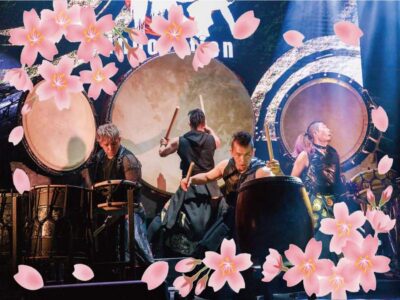
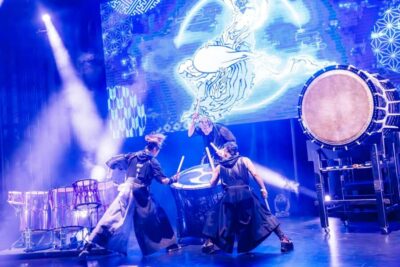
OSAKA NIGHT FUSION Japanese Taiko Kabuki Samurai Dance Show
Read our review →
KABUKI Show at Kabukiza Theatre Admission Ticket
Read our review →
KABUKI, BUNRAKU, etc. presented by National Theatre
Read our review →

SUMO BEATS SHOWCASE: Taiko Drum and Wagyu burger!
Read our review →Browse the lists this tour appears in