
Review · JAPANESE COOKING WORKSHOPS
3-Hour Guided Musubi Japanese Home Cooking Class
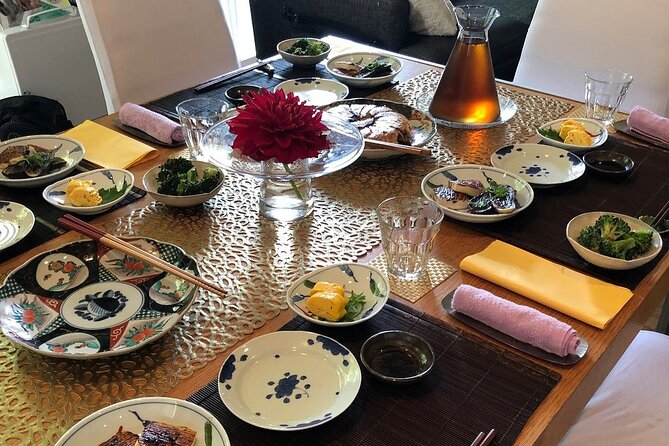
A meal that starts with your hands. This Tokyo Japanese home cooking class takes place in the instructor’s own home, so you learn techniques and everyday kitchen habits, not just recipes. I especially liked the small-group feel, and I really value that you make the meal yourself from scratch, including dashi/umami and a full lunch.
One thing to consider is that this experience is in a residential neighborhood. You will meet at Musashi-Koganei Station and you handle your own way there, so give yourself extra time.
In This Review
- Key things I’d focus on before you book
- Why a Tokyo home kitchen class feels different than a studio workshop
- Choosing your menu: one main dish plus two sides and a full lunch
- Making dashi and umami, the flavor foundation you’ll reuse at home
- The hands-on part: what you actually do in the kitchen
- Lunch in a cozy Tokyo home: taste, chat, and decompress
- The apartment visit bonus: seeing midtown Tokyo living
- Price and value: what $85 includes, and why it can be fair
- Logistics that matter: meeting point, timing, and what to bring
- Who should book this class, and who might prefer something else
- Should you book Musubi’s Japanese home cooking class?
- FAQ
- How long is the Japanese home cooking class?
- Where do we meet for the class in Tokyo?
- Is lunch included?
- What do I cook during the class?
- Do you teach dashi or umami?
- Is the class a small group?
- Are instructors able to teach in English?
- Is transportation included from the meeting point?
- Can the menu be adjusted for dietary needs?
Key things I’d focus on before you book
- Instructor’s home setting: you cook and eat in a real Tokyo apartment, not a storefront.
- Hands-on menu building: one main dish plus two sides, with miso soup and rice.
- Dashi and umami lessons: you learn how the flavor base is made, not just when to add it.
- Take-home recipe copy: you can recreate what you made after your trip.
- English-friendly teaching: instructors speak fluent English, with plenty of back-and-forth during cooking.
- Small group size: maximum 6 people, which makes it easier to get help while you cook.
Why a Tokyo home kitchen class feels different than a studio workshop
Tokyo has a lot of cooking experiences, but there is a big difference between learning in a dedicated class space and learning in someone’s home kitchen. Here, the lesson is built around how Japanese people actually cook day to day. You are not just trying to finish a dish for a photo, you are learning the rhythm: how ingredients get prepped, how flavors get balanced, and how the kitchen stays organized while multiple dishes are moving at once.
That matters because cooking in real home conditions helps you understand why certain steps are done the way they are. For example, Japanese home cooking often feels simple once you see it in context: heat control, tasting, and seasoning happen in the moment. The class also includes an apartment visit as part of the experience, so the setting itself helps you picture where these meals fit into everyday life.
And the teaching style is practical. You get a clear plan for the meal, and then you work through it step by step with an instructor who can explain what is happening and why. One highlight from classes like this is that hosts like Akiko have been described as generous and communicative, with excellent English and a friendly, low-pressure vibe.
More Cooking Classes in Tokyo
- Ramen & Gyoza Cooking Class in Tokyo with Local Supermarket Visit
★ 5.0 · 823 reviews - Tokyo: Easy Ramen Cooking Experience in Kabukicho, Shinjuku
★ 4.6 · 321 reviews - Ramen and Sushi Cooking Class with Sake Pairing Set in Tokyo
★ 5.0 · 291 reviews
Choosing your menu: one main dish plus two sides and a full lunch
The class centers on a complete home meal. You will cook one main dish, two side dishes, and you will also have miso soup with rice as part of lunch. The menu selection is designed to let you practice core skills without overwhelming you.
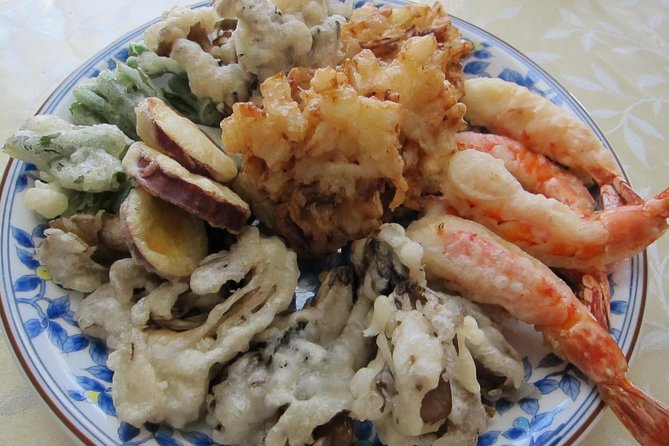
In the past, main-dish options have included deep-fried chicken and seaweed-wrapped sushi rolls. Sides vary by what is being cooked, but you can expect classic combinations that teach you how Japanese meals balance flavors and textures. The key is not just that you will eat a nice lunch, it is that you will understand how the meal works as a unit.
You will also get time to taste your work together at the end. That is a simple detail, but it is a big deal. When you can taste right after learning, you connect technique to result. If you slightly miss a step during cooking, you usually still get a satisfying meal, and you get an instructor’s guidance for what to adjust next time.
If you have any dietary requirements or preferences, the class asks you to advise them at booking. That is exactly what you want to do for a home-cooking experience, because menu adjustments are best handled ahead of time.
Making dashi and umami, the flavor foundation you’ll reuse at home
One of the most valuable parts is the lesson on umami/dashi, the soup stock that supports a lot of Japanese cooking. Many people think Japanese food is complicated because they only see the finished restaurant dishes. In reality, the magic is often in a few foundational ingredients and a few repeatable steps.
In this class, you learn how the flavor base is made, which helps you stop relying on packaged shortcuts when you cook at home. Even if you do not cook Japanese food regularly, dashi teaches you how to think about seasoning layers. Instead of trying to cover a dish with heavy sauces, you build depth from the start.
You will also get a recipe copy to take home. That matters because the dashi process is easier the second time when you can reference your own notes. After the class, you will know what you did and why it tasted the way it did, not just what order the steps happened in.
The hands-on part: what you actually do in the kitchen
This is not a passive tasting lesson. You are in the kitchen, using tools, and cooking as you learn. The class includes use of an apron and cooking utensils, plus all ingredients and taxes are covered. In other words, you show up and focus on cooking, not shopping or figuring out what equipment you need.
The cooking plan is designed for a group of up to 6. That size is important. With more people, hands-on cooking can turn into waiting your turn. Here, the pace is more personal, so you can get help while you are mid-step, like when you are trying to fold wrappers or nail timing for frying.
The lesson also includes “from scratch” home-cooking technique. That means you are not just assembling components. You will learn how to prep, cook, and finish dishes in a way that matches how a Japanese home meal is actually served: multiple items working together on the table.
And because instructors speak fluent English, you can ask questions without guessing what the instructor means. That reduces the frustration factor and makes it more likely you will remember key steps later.
More Cooking Workshops in Tokyo
- Tokyo: Wagyu and 7 Japanese Dishes Cooking Class
★ 4.9 · 273 reviews - Tokyo Washoku 4-hour Cooking Class: From Market to Table
★ 5.0 · 253 reviews - Tokyo Cute Bento Cooking Class – Make a Kawaii Character Lunchbox
★ 5.0 · 126 reviews - Tokyo: Tsukiji Market Walking Tour & Sushi Cooking Class
★ 4.6 · 122 reviews
Lunch in a cozy Tokyo home: taste, chat, and decompress
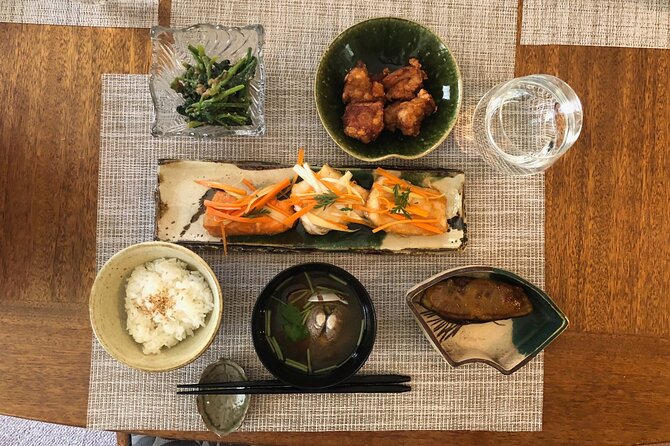
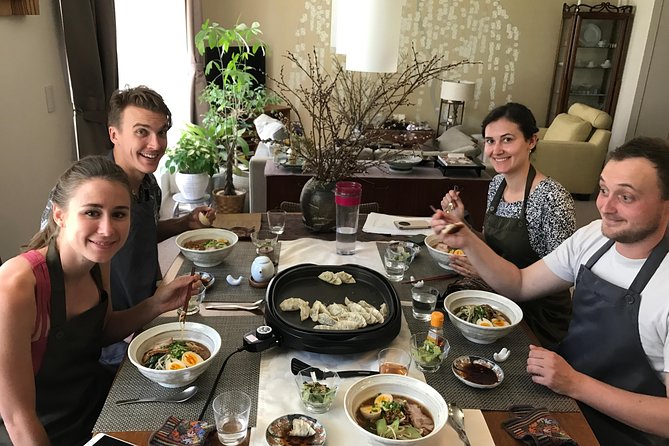
Lunch is included, and it is served in the comfortable home setting where you cooked. This is one of those experiences where the social side is not an add-on, it is part of the point. Cooking in a quiet studio can feel technical. Cooking in a home often feels more human, relaxed, and welcoming.
Many hosts for these classes are known for being warm and generous, and conversation often comes naturally. In other words, you get more than instructions. You get small cultural moments like how dishes are discussed at home, what people consider everyday staples, and what makes certain flavor combinations work.
You will also drink coffee and/or tea, which keeps the meal feeling complete. For a lot of people, that is what turns the class from a chore into a highlight: you end with a real meal and a comfortable break, not a rushed check-out.
The apartment visit bonus: seeing midtown Tokyo living
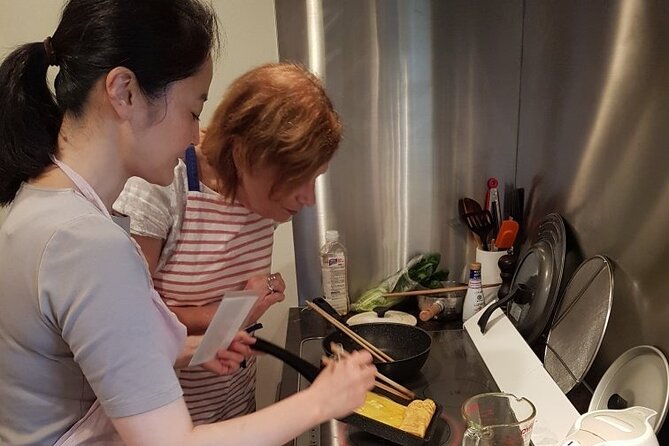
The class includes an apartment visit as part of the experience. You might not get a deep tour of Tokyo architecture here, but you do get something more useful for most travelers: context. Seeing a midtown Tokyo home helps you understand why storage, prep space, and kitchen routines are built the way they are.
This is especially helpful if you love the idea of cooking at home but you worry you do not have space. Japanese kitchens are often compact, but the workflow is efficient. Watching how ingredients are handled and how the instructor keeps steps organized can help you adapt ideas to your own kitchen, even if your setup looks different.
It is also just a cultural experience that feels respectful. You are invited into someone’s home, and the whole session revolves around that trust. That makes it feel memorable, not like a theme activity.
Price and value: what $85 includes, and why it can be fair
At $85, this class sits in the middle of Tokyo food experiences. The value comes from what is included, not the cooking alone.
Here is what you are getting in the price:
- A small group format with hands-on instruction
- A Japanese home-cooking lesson that includes one main dish, two sides, and miso soup with rice
- Dashi/umami instruction
- Instructor’s home apartment visit
- Apron, cooking utensils, and all ingredients
- Recipe copy to take home
- Lunch plus coffee and/or tea
- Local taxes
- A mobile ticket
What is not included is transportation to and from the meeting point. But once you factor in lunch, ingredients, utensils, and a personal teaching setup, the price starts to make sense.
If you compare this to paying for dinner plus a cooking class ticket, you are often not far off. The biggest difference is that you leave with the ability to recreate the meal, because you cook it and get the recipe in written form.
Also, the group cap of 6 protects the experience. When teaching time is individualized, the value improves. You are more likely to get help while you cook, which is what actually makes a cooking lesson worth it.
Logistics that matter: meeting point, timing, and what to bring
The class is listed as 3-hour, but the duration is about 2 hours 30 minutes. Either way, plan for a focused block of time.
You will meet at Musashi-Koganei Station and the activity ends back at the meeting point. Since transportation is not included, you will want to plan your train route in advance. This is a residential area, so do not count on a quick walk from a major tourism hub.
What you should bring is simple:
- Wear comfortable clothes you can cook in
- Bring any dietary notes you want followed, and share them at booking
- If you have food allergies, make sure you communicate them clearly during booking
You do not need to worry about language barriers. Instructors speak fluent English, so you can ask what you want to know while you cook.
As for changes, the provided cancellation terms say you can cancel for a full refund if you cancel at least 24 hours before the start time, while shorter notice depends on the policy window. If you are booking close to your dates, double-check the latest policy terms shown at checkout.
Who should book this class, and who might prefer something else
This is a great fit if you want practical skills you can use later. You will learn how a Japanese home meal is built: main plus sides, with flavor foundations like dashi/umami. It is also ideal if you like home-cooked experiences where conversation and hospitality are part of the package.
It is especially good for people who:
- Enjoy hands-on food activities more than demonstrations
- Want a calmer, smaller group experience
- Prefer English-guided teaching
- Want lunch included without searching for a restaurant afterward
A consideration: if you are looking for a high-energy, sightseeing-focused tour, this is not that. The point is the home kitchen and the cooking process, not moving around town.
Also, the class has a maximum of 6 people and the operator notes that a group only of male participants is not allowed. If you are booking as part of a group, make sure your booking plan fits the stated group rules.
Children under 9 are free, which can make it appealing for family travel, assuming you are comfortable with a hands-on class format.
Should you book Musubi’s Japanese home cooking class?
If you want a memorable Tokyo food experience that goes beyond eating, I think you should book it. The best reasons are simple: you cook a complete meal, you learn dashi/umami basics you can reuse, and you do it in an instructor’s home setting with a small group. It feels personal in the best way, and you leave with food plus skills plus a recipe.
I would hesitate only if getting to a residential meeting point is hard for you, or if you prefer cooking lessons that take place in more standard public venues. Otherwise, this class is one of the most straightforward ways to get real Japanese home-cooking technique without a steep learning curve.
FAQ
How long is the Japanese home cooking class?
The class is listed as about 2 hours 30 minutes.
Where do we meet for the class in Tokyo?
The meeting point is at Musashi-Koganei Station, with the address listed as 6 Chome-14 Honcho, Koganei, Tokyo 184-0004, Japan.
Is lunch included?
Yes. Lunch is included, and it includes miso soup with rice along with what you cook.
What do I cook during the class?
You cook one main dish plus two side dishes, along with miso soup with rice.
Do you teach dashi or umami?
Yes. The class includes learning how to make umami/dashi.
Is the class a small group?
Yes. It is a small group, with a maximum of 6 people per booking.
Are instructors able to teach in English?
Yes. The instructors speak fluent English.
Is transportation included from the meeting point?
No. Transportation to and from the meeting points is not included.
Can the menu be adjusted for dietary needs?
You should advise any specific dietary requirements and preferences at the time of booking so the menu can be adjusted if possible.
Newly listed around Tokyo
- Private Tokyo Food Tour – A Journey Through Time Through Food★ 5.0 · 36 reviews
- Private Tokyo Tour with Licensed Guide & Vehicle (Max 15 persons)★ 5.0 · 107 reviews
- Private Tokyo Custom Full-Day Tour by Chartered Vehicle★ 5.0 · 16 reviews
- Private Tokyo Custom Half-Day Tour by Chartered Vehicle★ 4.5 · 13 reviews
- Private Outstanding Nikko Tour with English Speaking Driver★ 4.0 · 11 reviews
- Private Sightseeing to Mt Fuji and Hakone with English Driver★ 5.0 · 51 reviews
- Private Snow Monkeys park Day Trip From Tokyo or Nagano★ 4.5 · 26 reviews
- 4 Day Tour – Mount. Fuji, Tokyo, Hakone, Kamakura and Yokohama★ 5.0 · 19 reviews
Japanese Cooking Workshops, compared.
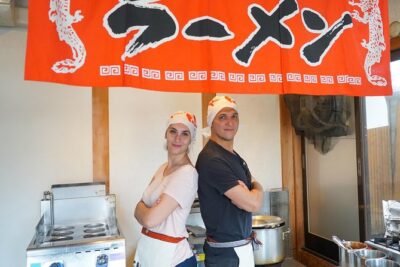
Ramen Cooking Class at Ramen Factory in Kyoto
Read our review →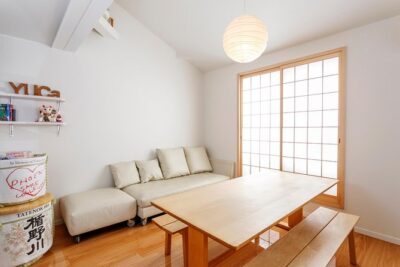
Ramen & Gyoza Cooking Class in Tokyo with Local Supermarket Visit
Read our review →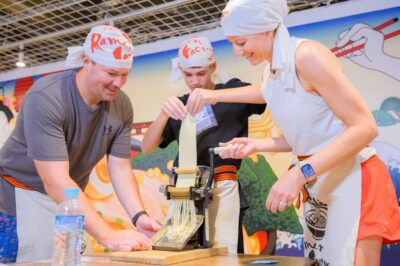
Ramen Cooking Class at a Ramen Factory with Souvenir
Read our review →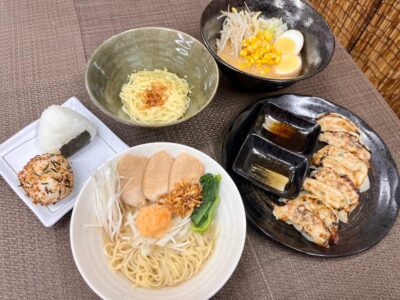
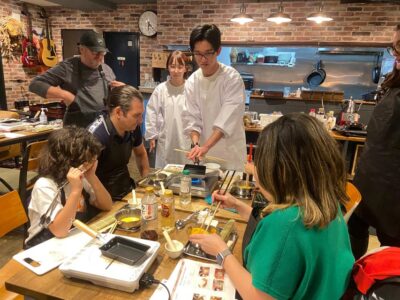
Japanese Washoku Bento Small Group Cooking Class
Read our review →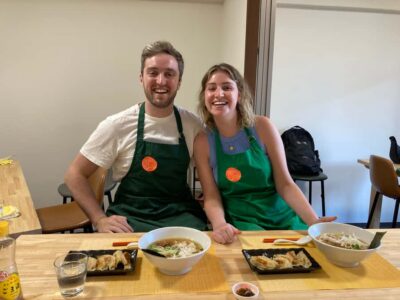
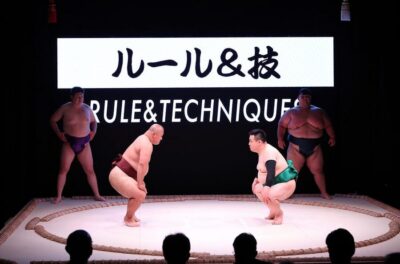
Sumo Stage Show with Bento or Snack + Fight & Photo
Read our review →
Ramen and Sushi Cooking Class with Sake Pairing Set in Tokyo
Read our review →Browse the lists this tour appears in