
Review · HISTORICAL TOURS
Edo Tokyo Small-Group Tour: History, Culture & Local Experiences
Edo Tokyo can feel real fast. In a 4-hour small-group tour (max 7 people), you move from an Edo-era temple fire ritual to Edo-life street scenes, with Shinto shrine stops and a sweets break along the way. I especially love the way the guide connects places to everyday life in the Edo period, and the mix of lively sights with a quiet garden reset. One possible drawback: the schedule is tight, so if you want long pauses for photos, you might wish it ran a bit longer.
You start at Monzen-nakacho Station and end at Kiyosumi Gardens, with a mobile ticket for a smooth check-in. Expect a history-first route through Koto City that still feels local and human.
In This Review
- Key highlights you should not miss
- Edo Tokyo in 4 Hours, Small-Group Style
- Price and What You Really Get for $48.99
- The 10:00am Route Between Monzen-nakacho and Kiyosumi Gardens
- Stop 1: Fukagawa Fudodo and an Edo-Period Fire Display
- Stop 2: Tomioka Hachimangu Shrine and Sumo Memorial Stones
- Stop 3: Fukagawa Edo Museum Streetscapes for Everyday Edo Life
- Stop 4: Koto Old-Fashioned Sweet Shop, a Real Taste of Tradition
- Stop 5: Kiyosumi Teien Garden, Tea House, and Pond
- What the Best Guides Like Sandra Add to the Experience
- Who This Tour Fits Best
- Practical Booking Advice Before You Go
- Should You Book This Edo Tokyo Small-Group Tour?
- FAQ
- How long is the Edo Tokyo small-group tour?
- What is the group size limit?
- Where do I meet the tour?
- What time does the tour start?
- Where does the tour end?
- What is the price per person?
- Is lunch included?
- What is included in the price?
- Is a mobile ticket used?
- What happens if the weather is poor, or if I need to cancel?
Key highlights you should not miss
- Max 7-person group for a more personal pace and better questions
- Edo-style fire ceremony at Fukagawa Fudodo, temple atmosphere included
- Tomioka Hachimangu Shrine with sumo commemorative memorial stones
- Fukagawa Edo Museum life-sized streetscapes, easy to picture how people lived
- Old-fashioned sweet shop stop for a real taste of tradition
- Kiyosumi Teien garden tea house and pond, a calm ending to a busy morning
Edo Tokyo in 4 Hours, Small-Group Style
This tour is built for people who want Edo Tokyo without losing half a day to transit. The group stays small, up to 7 people, which matters in a city as big as Tokyo. You get more room to hear your guide, and you are not stuck waiting for a big pack.
I also like the structure. You do not just hop between random sights. You see a temple ritual, a Shinto shrine, museum street recreations, a traditional sweet shop, then a classic garden with a tea house and pond. That flow helps you understand Edo life as a whole, not as separate facts.
More History Tours in Tokyo
- Tokyo: Imperial Palace Japanese History Walking Tour
★ 4.9 · 987 reviews - Yanaka Walking Tour: Historic and Traditional District of Tokyo
★ 5.0 · 530 reviews - Tokyo: Shinjuku Historical Walking Tour & Secret Backstreets
★ 5.0 · 530 reviews
Price and What You Really Get for $48.99
At $48.99 per person for about 4 hours, this does not feel like a bargain deal where they cut corners. It feels like a focused experience where they pay attention to the stops. “All fees and taxes” are included, which reduces the usual mental math you do when you see a headline price.
Admissions are handled smartly across the route. You will have admission included at Fukagawa Fudodo and Tomioka Hachimangu, while the museum and the remaining stops are listed as free or free admission. Even though you still should plan for your own snacks or lunch time on the side, the core costs of entry are mostly covered by the tour.
One more value point: the tour includes a mix of lively and calm moments. Not every history tour finishes with a garden. Ending at Kiyosumi Teien gives you a chance to exhale and make the day’s ideas stick.
The 10:00am Route Between Monzen-nakacho and Kiyosumi Gardens
The tour starts at 10:00 am near Monzen-nakacho Station, then finishes at Kiyosumi Gardens. That end point is not random, it is a tidy way to close the loop. You start in the city, work through cultural sites, then land in a garden setting where you can slow down.
You will also move through Koto City neighborhoods that feel more lived-in than the most famous central tourist zones. That matters because Edo Tokyo life was not only about grand landmarks. It was about temples, shrines, daily shopping, public rituals, and the kind of calm space people made time for.
If you rely on transit, this helps. The meeting area is near public transportation, and the tour uses a mobile ticket, so you are not juggling paper confirmations at the station.
Stop 1: Fukagawa Fudodo and an Edo-Period Fire Display
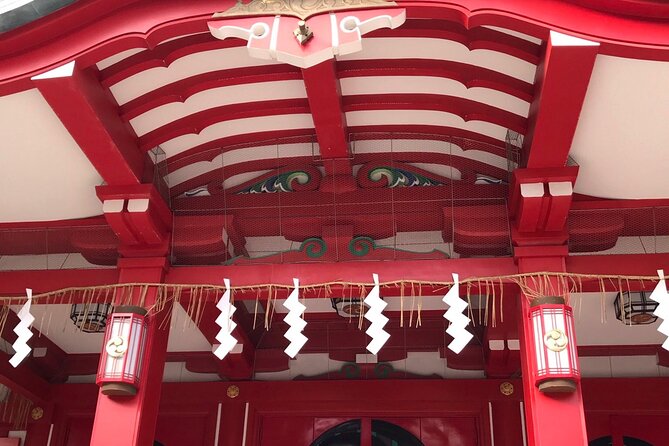
Fukagawa Fudodo kicks things off with a temple setting and an Edo-era fire display. The tour gives you about 1 hour 20 minutes here, which is a good sign. Fire rituals do not come with a quick, surface-only explanation. They are better when you have time to settle into the mood and hear what the ritual is about.
Look at this as more than a show. Rituals like this are part of how communities handled spiritual concerns in daily life. When your guide explains the Edo period through what you are seeing right now, it becomes easier to connect the temple, the people, and the purpose of the event.
A practical tip: if you are sensitive to heat or crowds, this is the stop to watch your comfort level. Fire displays can be intense in close quarters. Go at a relaxed pace and keep some space around you rather than rushing for the best angle.
A few more Tokyo days to weigh up
- Mt. Fuji Heritage Tour: Traditional Villages, Lakes & Shrine
★ 4.5 · 509 reviews - From Tokyo: Nikko World Heritage Site Private Full-Day Trip
★ 4.9 · 243 reviews - Tokyo: The Best of Izakaya in Shinjuku Food & Cultural Tour
★ 4.9 · 221 reviews - Asakusa: 1400-year history exploration
★ 5.0 · 155 reviews
Stop 2: Tomioka Hachimangu Shrine and Sumo Memorial Stones
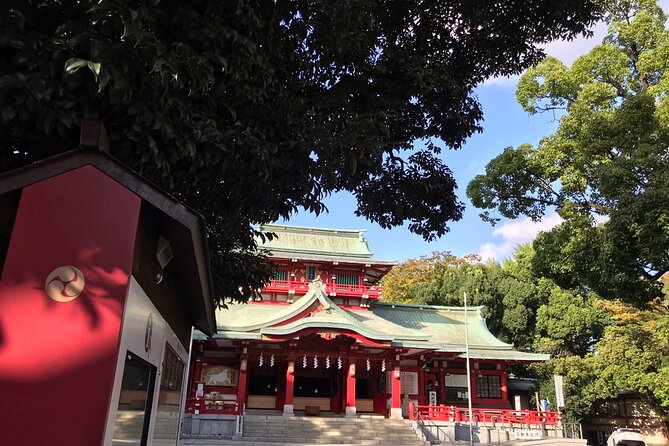
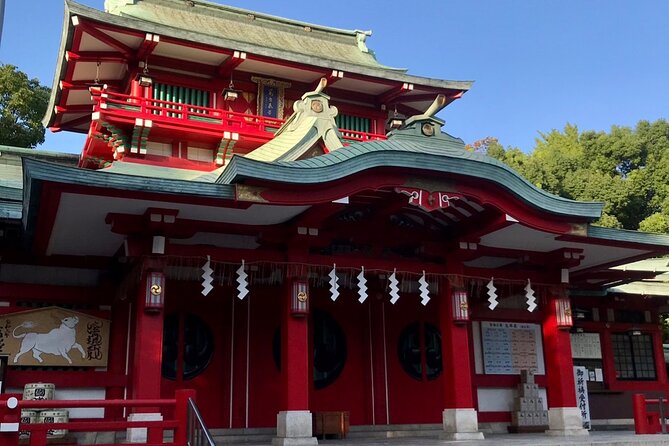
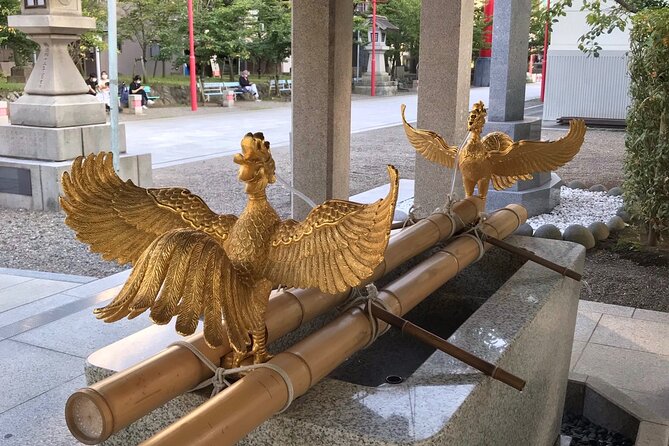
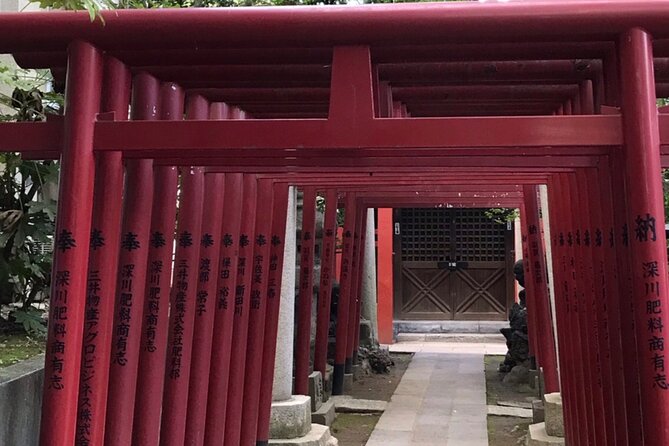
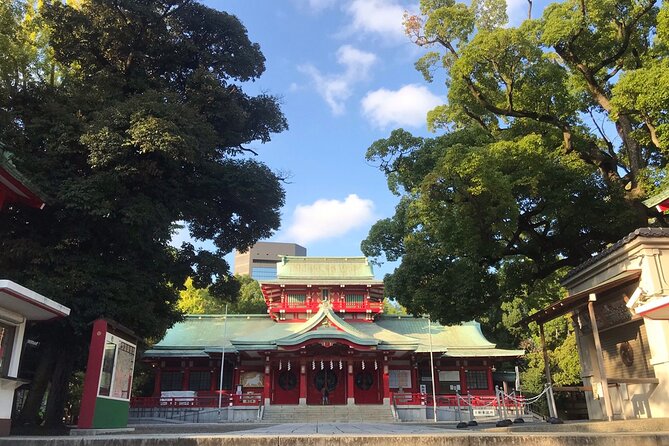
Next up is Tomioka Hachimangu, a Shinto shrine established in 1627. You get about 30 minutes here, which is just enough time to take in the shrine atmosphere and understand why it matters historically.
The standout detail is the sumo commemorative memorial stones. Even if you are not a sumo fan, this kind of memorial tells you how Edo society linked sport, identity, and community pride. In other words, you learn that Edo culture was not only art and architecture. It included traditions of competition and public celebration too.
Because the stop is shorter, treat it like a focused visit. Look around first for the layout and symbolism, then let your guide’s explanation fill in the meaning. If you try to multitask, you will miss the best part: how they connect a specific feature, like the memorial stones, to a wider social story.
Stop 3: Fukagawa Edo Museum Streetscapes for Everyday Edo Life
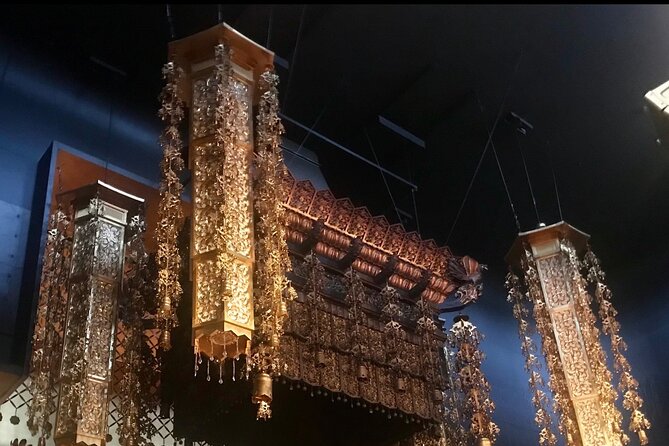
This is where the day gets tangible. At the Fukagawa Edo Museum, you get about 1 hour inside the Edo-life setting with life-sized streetscapes. The point is to help you picture what daily Tokyo life looked like in the Edo period, not just what it looked like from the outside.
This is also a stop that tends to land well with families and different ages. One reason: the museum scenery is made for people who want to look and imagine. You are not stuck reading text for an hour. You can see street-scale recreations and connect them to what you learned at the temple and shrine stops.
A good mindset here is to look for everyday details. How spaces are arranged. How streets function as social space. How work and errands might have fit into the rhythm of the day. When you do that, the earlier history references become clearer.
Stop 4: Koto Old-Fashioned Sweet Shop, a Real Taste of Tradition
Then you get a break that feels local rather than gimmicky. In the Koto area, you visit an old-fashioned sweet shop for traditional sweets. The time here is about 20 minutes.
This is a simple stop, but it supports the theme of the tour. Edo culture was shaped by what people ate, bought, and shared. Food is one of the most direct ways to make history feel human.
If you have dietary limits, this is the stop to ask questions, since the tour description does not spell out specific ingredients or options. If you can handle small bites, treat it like a sampling moment. Take one or two tastes, then move on so you do not end up with a sugar-focused rest of the morning.
Stop 5: Kiyosumi Teien Garden, Tea House, and Pond
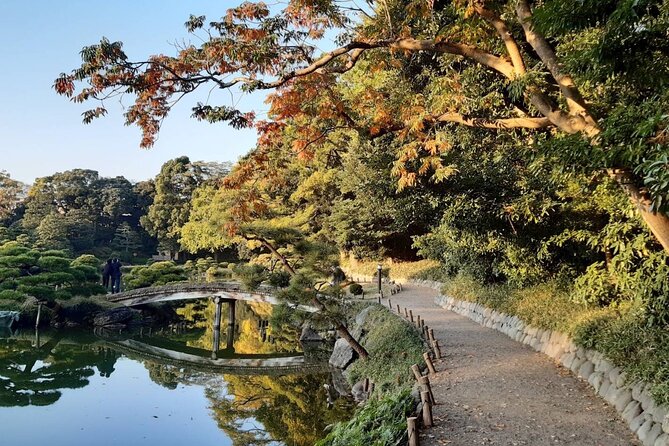
Kiyosumi Teien is a classic finish. You spend about 45 minutes in a serene Japanese garden that includes a tea house and pond. After temples, shrines, and museum streetscapes, this stop gives you contrast, and that contrast helps your brain organize what you saw.
This is also where the Edo idea of balance shows up. Public ritual and everyday commerce happen in the earlier parts of the day. Here, you see how gardens offered calm and refined leisure.
How you should spend this time: slow down. Walk at a normal pace, find a spot where you can look across the pond, and let the garden shapes do the talking. If you rush, you miss the best value of this stop, which is mental reset.
What the Best Guides Like Sandra Add to the Experience
A strong guide can turn a list of landmarks into a story you understand. In the tour experience, the standout guide quality is how well the guide explains Edo life in a way that stays engaging. Sandra, in particular, is praised for making the tour fun and holding kids’ attention without steamrolling adult curiosity.
That matters because Edo Tokyo is not only about dates. It is about routines, beliefs, public spaces, and how people used the city. When your guide can connect those dots while keeping the mood lively, you end up remembering the day, not just taking photos.
If you are traveling with kids, this is one of the few history tours that seems to work across ages. The stops change often enough to keep attention, and the explanations are tied to what you are looking at right then.
Who This Tour Fits Best
This is a great match if you:
- Want Edo Tokyo through real places, not only museum exhibits
- Like a structured route with a clear story arc
- Prefer a small group, max 7 people, over a large walking crowd
- Enjoy a mix of spiritual sites, cultural learning, food tasting, and a calm garden stop
It is also a smart pick for history fans who want Tokyo context that goes beyond modern neighborhoods. You are not just learning about the Edo period. You are seeing how Edo culture still echoes through sites in Koto City.
If you want long, slow sightseeing with lots of free time, you might find the pace a bit tight. The tour is about 4 hours, so you need to treat it as a guided orientation with enough depth to learn the main ideas, not a full day of wandering.
Practical Booking Advice Before You Go
This experience runs best with decent weather, since outdoor walking and garden time are part of the route. If the weather is bad, the operator says you will be offered a different date or a full refund.
Also note that lunch is not included. That is not a problem if you plan ahead. You can treat this as a morning or late-morning history hit, then eat afterward. If you like planning, check what you want to eat once you finish near Kiyosumi Gardens.
One more practical point: use the mobile ticket. It keeps the check-in process simple, which helps when you are meeting near a busy station.
Should You Book This Edo Tokyo Small-Group Tour?
Yes, you should book this if you want an Edo Tokyo experience that feels organized, human-paced, and story-driven. The biggest strengths are the small-group format, the fire ritual and shrine stops that anchor the history in real cultural spaces, and the Fukagawa Edo Museum streetscapes that help you visualize everyday life. Then you get the kind of ending that many tours skip, a garden with a tea house and pond where you can actually absorb what you learned.
I would skip it only if you strongly prefer unstructured wandering, or if you need more than 4 hours to fully soak in each stop. Otherwise, this is a solid use of time, with pricing that includes key fees and taxes, plus a schedule that mixes energy and calm in a way that makes Edo Tokyo feel close.
FAQ
How long is the Edo Tokyo small-group tour?
The tour is about 4 hours.
What is the group size limit?
The tour has a maximum of 7 people.
Where do I meet the tour?
You meet at Monzen-nakacho Station, located at 2 Chome-4 Monzennakacho, Koto City, Tokyo 135-0048, Japan.
What time does the tour start?
The start time is 10:00 am.
Where does the tour end?
The tour ends at Kiyosumi Gardens, 3-chōme-3-9 Kiyosumi, Koto City, Tokyo 135-0024, Japan.
What is the price per person?
The price is $48.99 per person.
Is lunch included?
No, lunch is not included.
What is included in the price?
The tour includes all fees and taxes.
Is a mobile ticket used?
Yes, the tour uses a mobile ticket.
What happens if the weather is poor, or if I need to cancel?
The experience requires good weather. If it is canceled due to poor weather, you will be offered a different date or a full refund. You can also cancel up to 24 hours before the start time for a full refund.
Newly listed around Tokyo
- Private Tokyo Food Tour – A Journey Through Time Through Food★ 5.0 · 36 reviews
- Private Tokyo Tour with Licensed Guide & Vehicle (Max 15 persons)★ 5.0 · 107 reviews
- Private Tokyo Custom Full-Day Tour by Chartered Vehicle★ 5.0 · 16 reviews
- Private Tokyo Custom Half-Day Tour by Chartered Vehicle★ 4.5 · 13 reviews
- Private Outstanding Nikko Tour with English Speaking Driver★ 4.0 · 11 reviews
- Private Sightseeing to Mt Fuji and Hakone with English Driver★ 5.0 · 51 reviews
- Private Snow Monkeys park Day Trip From Tokyo or Nagano★ 4.5 · 26 reviews
- 4 Day Tour – Mount. Fuji, Tokyo, Hakone, Kamakura and Yokohama★ 5.0 · 19 reviews
Historical Tours, compared.
World Heritage Shirakawa-go and Experience Tours from Kanazawa
Read our review →
World Heritage Kyoto & Nara Uji Authentic Matcha Experience
Read our review →
World Heritage Shirakawa-go Morning Guided Tour
Read our review →
Hiroshima Historical Walking Tour – Why A-Bomb was Dropped
Read our review →
Hiroshima Peace (Heiwa) Walking Tour at World Heritage Sites
Read our review →
Yanaka Walking Tour: Historic and Traditional District of Tokyo
Read our review →
Shinjuku Historical Walking Tour & Secret Backstreets
Read our review →Browse the lists this tour appears in