
Review · JAPANESE COOKING WORKSHOPS
Japanese Cooking class in Tokyo
Cooking in Tokyo is nice. Cooking in a real home is better.
At Morimi’s Home Kitchen, I love how the class starts with dashi, then hands you real technique for building Japanese flavors, not just following steps. I also like the use of traditional tools like the suribachi, because it turns cooking into something you can feel, not just watch. The only drawback to note is that your time is tightly focused on one pre-set course, so you need to choose Tofu, Sushi, or Curry before you arrive.
You get a certified chef-led, hands-on meal in about 3 hours, with lunch included and recipes you can actually use later.
In This Review
- Key Takeaways You’ll Care About
- A Tokyo Home Kitchen Where Cooking Feels Personal
- Courses and Pricing: What $71 Gets You
- Choosing Your Course: Tofu, Sushi, or Curry
- Tofu Course
- Sushi Course
- Curry Course
- Entering the Kitchen Routine: Dashi and Rice You Can Repeat
- Tofu Course Breakdown: From Dashi to Rice Balls
- Sushi Course Breakdown: Temari Sushi and Pressed Oshizushi
- Curry Course Breakdown: Tonkatsu, Ebi Fry, and Japanese Roux Curry
- Tools That Make You Cook Like a Cook
- Lunch, Drinks, and Optional Sake That Doesn’t Hijack the Class
- Logistics in Setagaya: Where to Go and What to Expect
- Who This Class Is Best For
- Should You Book This Japanese Cooking Class?
- FAQ
- How long is the Japanese cooking class in Tokyo?
- What time does it start?
- Where is the meeting point?
- Is pickup offered?
- What courses can I choose from?
- Can the class accommodate vegetarian, vegan, or gluten-free diets?
- What’s included in the price?
Key Takeaways You’ll Care About
- Pick your course up front, because each option teaches different dishes and skills.
- Start with dashi and rice basics, even if you choose sushi or curry.
- Learn the tools, including a suribachi and an oshizushiki mold for pressed sushi.
- Eat what you make, with a lunch-style tasting of your final dishes.
- Dietary needs are handled best on the Tofu course, with gluten-free options also available there.
- English recipes come home with you, so this is more than a one-off show.
A Tokyo Home Kitchen Where Cooking Feels Personal
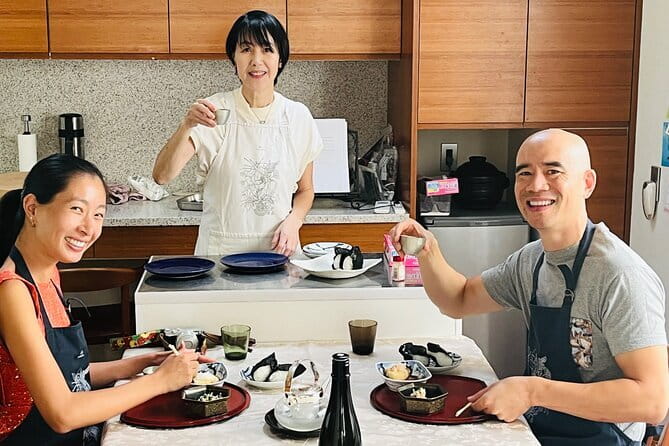
This isn’t a giant, scripted cooking show. You’re in a small studio set up for real instruction, and it runs like a friendly class in a real kitchen. The vibe matters, because Japanese home cooking often depends on small technique choices, like how you handle broth, how you season rice, and how you work with tools.
The best part is that you’re not memorizing an English translation of a recipe. You’re learning the logic behind dishes, starting with dashi, the essential foundation of Japanese cuisine. Once you understand that base, a lot of flavors start making sense, even when you’re looking at a new ingredient.
You also get a practical payoff: you cook, you eat, and you leave with English recipes meant for recreating the dishes back home. That turns the session from a fun memory into a skill you can actually repeat.
The class is led by a certified local chef, and that shows in the pace. In the course descriptions, you’ll see you go beyond one step. You learn rice using a regular pot, you learn dashi stock, and you use traditional tools. That is the kind of structure that helps your brain stick with the process.
More Cooking Classes in Tokyo
- Ramen & Gyoza Cooking Class in Tokyo with Local Supermarket Visit
★ 5.0 · 823 reviews - Tokyo: Easy Ramen Cooking Experience in Kabukicho, Shinjuku
★ 4.6 · 321 reviews - Ramen and Sushi Cooking Class with Sake Pairing Set in Tokyo
★ 5.0 · 291 reviews
Courses and Pricing: What $71 Gets You
The price is $71.00 per person, and the session is about 3 hours. At this price point, the value comes from what’s included, not from a long list of extras. You get lunch built from what you cook, unlimited green tea and mineral water (with herbal tea also available), plus the English recipes to take home. There’s also a small souvenir at the end.
Optional add-ons are where you can personalize the experience. During the tasting session, Japanese sake and wagashi are available as optional additions. The fact that these are optional is good, because you can keep it focused on cooking and eating, or make it more of a tasting moment.
One more value point: this is a private tour/activity, meaning only your group participates. You’ll get more attention and fewer distractions than you would in a big group class.
The other practical thing is that the tour includes pickup offered. At the same time, the listing says private transportation is not included, so you’ll want to confirm how pickup works for your exact location and whether there are any limits. Still, having pickup as an option is a real help in Tokyo.
Choosing Your Course: Tofu, Sushi, or Curry
You’ll choose your course at reservation, and each one teaches a different set of skills and foods.
Tofu Course
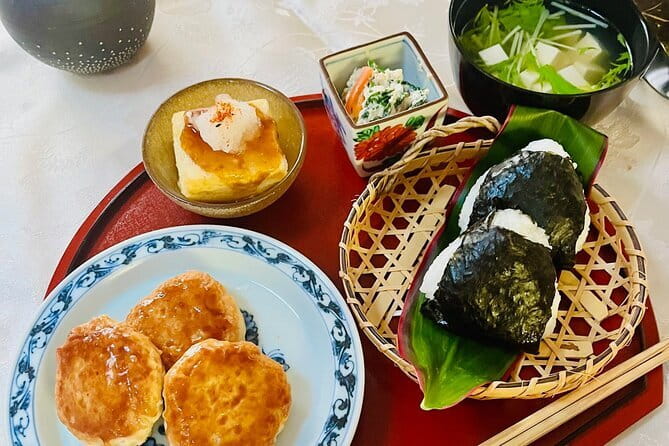
This is the most flexible choice for dietary needs. The Tofu course can accommodate vegetarian, vegan, and gluten-free diets. You’ll make several tofu-centered dishes, plus rice. Expect to work through:
- Tofu hamburgers
- Agadashi tofu (deep-fried tofu)
- Shiraae (tofu salad)
- Tofu soup
- Rice balls
You also learn to prepare dashi stock and cook Japanese rice using a regular pot. If you want the broadest training in home-style Japanese fundamentals, this option makes a lot of sense.
More Cooking Workshops in Tokyo
- Tokyo: Wagyu and 7 Japanese Dishes Cooking Class
★ 4.9 · 273 reviews - Tokyo Washoku 4-hour Cooking Class: From Market to Table
★ 5.0 · 253 reviews - Tokyo Cute Bento Cooking Class – Make a Kawaii Character Lunchbox
★ 5.0 · 126 reviews - Tokyo: Tsukiji Market Walking Tour & Sushi Cooking Class
★ 4.6 · 122 reviews
Sushi Course
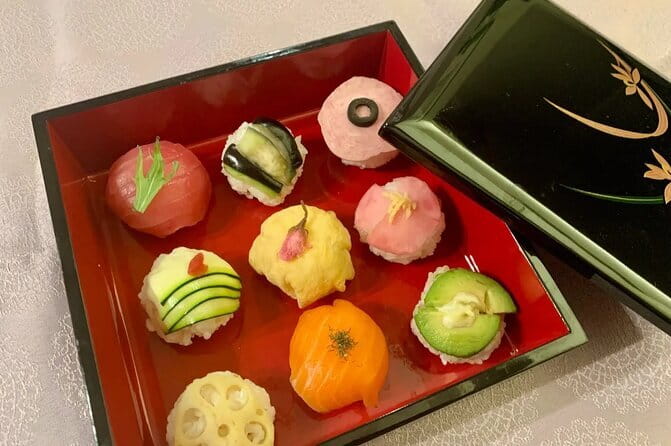
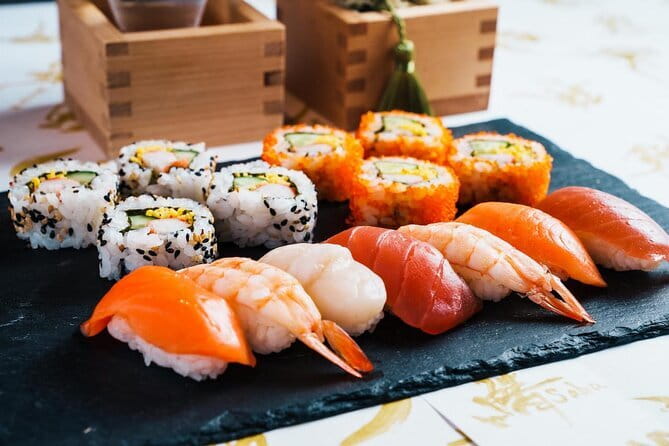
This course focuses on sushi technique and shape. You’ll start with making sushi rice. Then you choose from sashimi and vegetables to create six types of temari sushi of your choice. Everyone also makes one roll of oshizushi (pressed sushi) using shrimp and smoked salmon, using the traditional mold.
Gluten-free options are available, which is good to know if you can’t do wheat-based ingredients. Still, this course is more ingredient-forward, since it includes sashimi and seafood, so it’s not the default fit for vegan diets.
Curry Course
If your idea of comfort food means Japanese-style curry, this is the course. You’ll prepare curry using roux and Japanese dashi, plus sides that complete the plate:
- Tonkatsu (pork cutlet)
- Ebi fry (fried shrimp)
- Japanese-style potato salad
- Grilled veggie
- Rice
It’s a straightforward, satisfying meal with techniques that are useful at home, especially if you like frying and plating.
Entering the Kitchen Routine: Dashi and Rice You Can Repeat
No matter which course you choose, the foundation matters. You’re taught how to make dashi, and you’ll learn ingredients and the basic building logic behind it. Dashi is what gives many Japanese dishes their savory depth, and once you know the pattern, you’ll start recognizing it in soups, simmered foods, and curry.
You also learn how to cook Japanese rice using a regular pot. That detail is underrated. Many people travel with rice tools on their mind, but not in their kitchen at home. Learning with a regular pot helps you recreate the meal later without needing special equipment.
You’ll also be introduced to traditional cooking tools, and you actually use them. In Japanese cooking, the right tool can make a big difference in texture and consistency. It’s not about being “authentic” for show. It’s about getting a predictable result.
Tofu Course Breakdown: From Dashi to Rice Balls
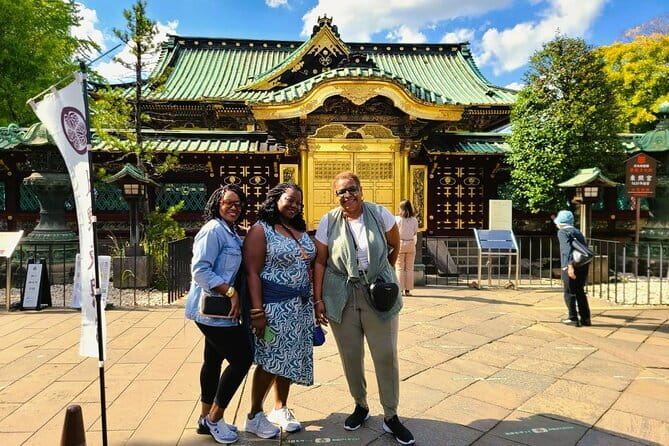
The Tofu course is where you get the most variety of techniques while staying plant-based or gluten-free, depending on your needs.
First, you’ll build dashi stock, then move into rice. That combination matters because tofu dishes often rely on broth flavor and gentle seasoning. When you’re already comfortable with dashi and rice, the tofu steps make more sense.
Then the fun part: you cook several very different tofu styles:
- Tofu hamburgers teach you how to shape and handle tofu-based mixtures so they hold together.
- Agadashi tofu adds the contrast of crispy outside plus soft inside. The deep-fried step is a classic Japanese texture pairing.
- Shiraae (tofu salad) gives you a cooler, creamy element that balances the warm dishes.
- Tofu soup ties the flavor back to dashi, making it feel cohesive.
- You finish with rice balls, which give you an easy takeaway form for rice you can build on later.
From the way people describe the class, this course also feels like comfort cooking. It’s not fussy, but it’s precise. That’s why it’s a great choice for a birthday-style activity too, because you’re learning real food skills while making a complete lunch you can be proud of.
One consideration: if you want seafood or meat-based dishes, this course won’t deliver that. But if you want a lot of recipe variety and a strong tofu skill set, it’s an excellent bet.
Sushi Course Breakdown: Temari Sushi and Pressed Oshizushi
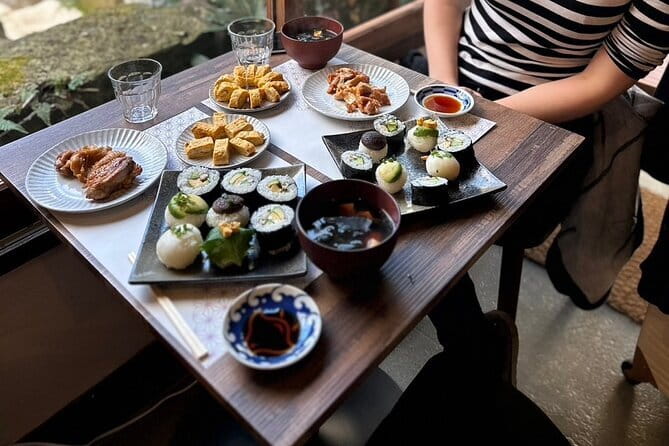
The Sushi course is for people who want to go beyond basic rolls and learn the shapes and textures that make Japanese sushi fun.
You start with making sushi rice, which is a key skill. If your sushi rice is right, the toppings and fillings feel better. The course then moves into choosing ingredients for six types of temari sushi.
Temari sushi is great for beginners because it’s creative without being overwhelming. You’re selecting sashimi and vegetables and shaping small, colorful bites. It’s also a crowd-friendly style, since you can mix and match flavors.
Then comes the signature tool experience: you make oshizushi, pressed sushi, using an oshizushiki mold. In this class, the course includes shrimp and smoked salmon for the pressed roll. You’ll learn how the mold changes the final structure, and you’ll experience the satisfying moment of lifting the pressed shape out.
One practical note: gluten-free options exist, but sushi ingredients can still vary. If gluten matters for you, tell the organizers when booking so the right version is prepared.
Curry Course Breakdown: Tonkatsu, Ebi Fry, and Japanese Roux Curry
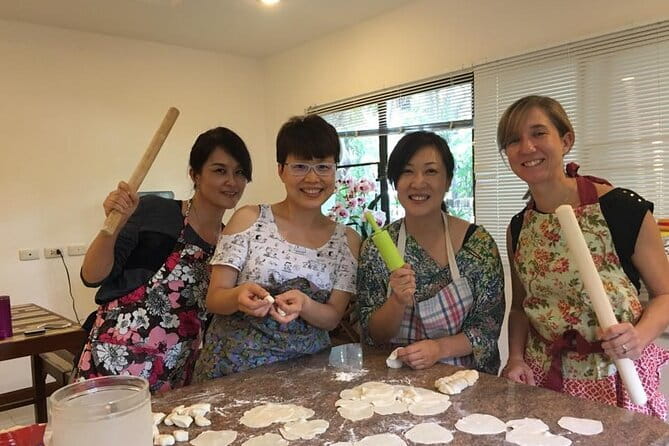
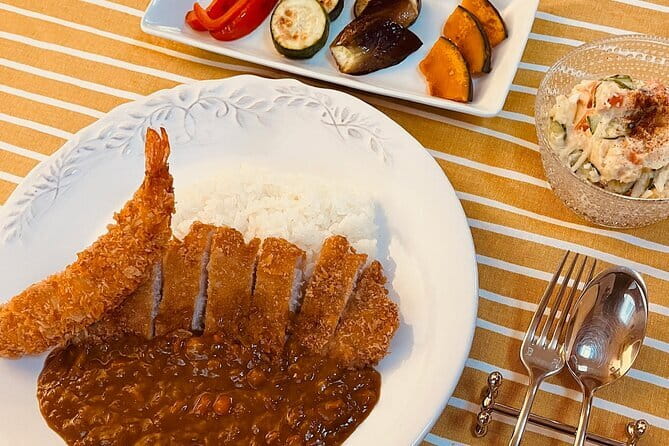
If you like curry with structure and crunch, the Curry course hits the spot.
You’ll prepare Japanese-style curry using roux, and it’s based on dashi. That combination gives it a flavor profile that many people notice is different from typical Indian-style curry. The course is designed so you don’t just taste curry. You learn how the elements come together into one meal.
Then you build the classic plate:
- Tonkatsu delivers the crispy cutlet element.
- Ebi fry brings in shrimp and another crunchy bite.
- Japanese potato salad balances richness with a slightly sweet, tangy feel.
- Grilled veggie adds freshness, so the curry doesn’t feel heavy.
You also get rice, and the meal is designed to be eaten as you cook it. This matters because curry is one of those dishes where timing affects everything, especially when you’re juggling fried items and sauce.
If you’re hoping for a super spicy curry that’s heavy on heat, Japanese curry is usually more about savory comfort than fiery heat. The upside is that it’s beginner-friendly and great for learning technique you can repeat.
Tools That Make You Cook Like a Cook
Two tools in particular are a big part of why this class feels special: the suribachi and the oshizushiki.
A suribachi is a Japanese mortar and pestle. People often think it’s just for grinding. In practice, it helps control texture, and it can make seasoning and ingredient handling feel different from Western kitchen tools.
The oshizushiki mold is about consistency. Pressed sushi requires a light hand and a steady approach. Once you use the mold and see how it holds the shape, you’ll understand why this style exists and why it’s so satisfying to make.
There are also general technique lessons you’ll feel immediately, like how to manage rice and how to approach dashi without overcomplicating it. That’s the kind of practical training you rarely get in a restaurant meal, even a great one.
Lunch, Drinks, and Optional Sake That Doesn’t Hijack the Class
The included meal is a lunch-style tasting built from what you cook in your selected course. Depending on the course, you’ll end up with:
- multiple dishes for the Tofu course
- temari sushi and pressed sushi for the Sushi course
- curry and fried sides plus potato salad for the Curry course
You also get coffee and/or tea, plus green tea and mineral water unlimited, and herbal tea is available. That means you can stay hydrated while you work, which is a real comfort in Tokyo.
During tasting, sake and wagashi are available as optional additions. I like that this is optional, since not everyone wants alcohol as part of a cooking lesson. If you do choose it, it adds a distinctly Japanese finishing touch to your meal.
At the end, there’s a souvenir. It’s small, but it’s a nice signal that you’re done with the hands-on portion and can linger to eat and reflect.
Logistics in Setagaya: Where to Go and What to Expect
The class starts at 10:30 am and runs for about 3 hours. You meet at Morimi’s Home Kitchen, 3-chōme-19-5 Matsubara, Setagaya City, Tokyo 156-0043. The activity ends back at the meeting point.
It’s near public transportation, which matters because Tokyo timing can get tricky. A class that starts at a fixed time needs you to be there with enough buffer, and being near transit helps.
Pickup is offered, but since private transportation is not listed as included, treat pickup as an option that may depend on your exact address. If you want pickup, confirm details when you book.
Dress comfort matters too. You’ll be working with food and tools, so wear something you can move in. Tight sleeves and slippery shoes can turn a calm class into a mild annoyance.
Who This Class Is Best For
This experience is a great fit if you want:
- real cooking skills, especially dashi and rice
- hands-on instruction with traditional tools like suribachi and the oshizushiki mold
- an included lunch that comes from your own work
- an activity that fits well into a day without needing a full-day commitment
It’s also a strong choice if you have dietary constraints. The Tofu course can accommodate vegetarian, vegan, and gluten-free diets, which is not always easy in Tokyo experiences.
If you love meat and seafood cooking, the Sushi and Curry courses are more exciting. Just remember those courses may not match every dietary need, since only gluten-free options are explicitly stated for Sushi, and the curry course ingredient list includes pork and shrimp.
Should You Book This Japanese Cooking Class?
Book it if you want a Tokyo cooking class that teaches fundamentals you can use again: dashi, Japanese rice, and the way tools shape results. The included lunch, unlimited tea and water, and the take-home English recipes make it good value at $71 for about 3 hours.
Don’t book it if you want a wide buffet-style tasting of lots of unrelated Japanese foods. This is about depth in one course. You pick Tofu, Sushi, or Curry and you work that lane.
Finally, if this is your first Japanese cooking class, the Tofu course is often the easiest way to learn broad technique while also fitting many dietary needs.
FAQ
How long is the Japanese cooking class in Tokyo?
It’s about 3 hours.
What time does it start?
The start time is 10:30 am.
Where is the meeting point?
You’ll meet at Morimi’s Home Kitchen, 3-chōme-19-5 Matsubara, Setagaya City, Tokyo 156-0043, Japan.
Is pickup offered?
Yes, pickup is offered. Private transportation is listed as not included, so it’s best to confirm how pickup works for your location.
What courses can I choose from?
You can choose one of three courses: Tofu, Sushi, or Curry.
Can the class accommodate vegetarian, vegan, or gluten-free diets?
Yes. For vegetarian or vegan guests, the Tofu course can be arranged. Gluten-free options are also available with the Tofu course or Sushi course.
What’s included in the price?
Each course includes lunch made from what you cook, plus coffee and/or tea. Green tea and mineral water are unlimited (herbal tea is also available). Optional sake and wagashi are available during the tasting session, and you receive a souvenir at the end.
Newly listed around Tokyo
- Private Tokyo Food Tour – A Journey Through Time Through Food★ 5.0 · 36 reviews
- Private Tokyo Tour with Licensed Guide & Vehicle (Max 15 persons)★ 5.0 · 107 reviews
- Private Tokyo Custom Full-Day Tour by Chartered Vehicle★ 5.0 · 16 reviews
- Private Tokyo Custom Half-Day Tour by Chartered Vehicle★ 4.5 · 13 reviews
- Private Outstanding Nikko Tour with English Speaking Driver★ 4.0 · 11 reviews
- Private Sightseeing to Mt Fuji and Hakone with English Driver★ 5.0 · 51 reviews
- Private Snow Monkeys park Day Trip From Tokyo or Nagano★ 4.5 · 26 reviews
- 4 Day Tour – Mount. Fuji, Tokyo, Hakone, Kamakura and Yokohama★ 5.0 · 19 reviews
Japanese Cooking Workshops, compared.
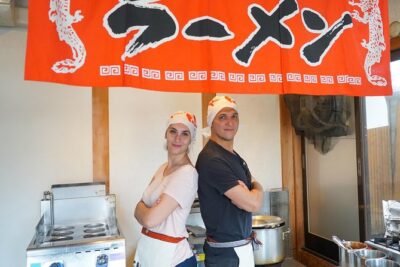
Ramen Cooking Class at Ramen Factory in Kyoto
Read our review →
Ramen & Gyoza Cooking Class in Tokyo with Local Supermarket Visit
Read our review →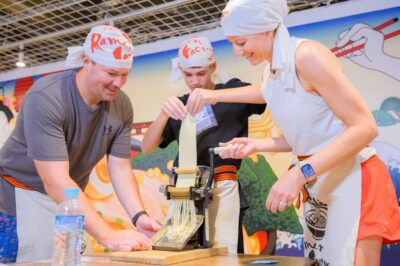
Ramen Cooking Class at a Ramen Factory with Souvenir
Read our review →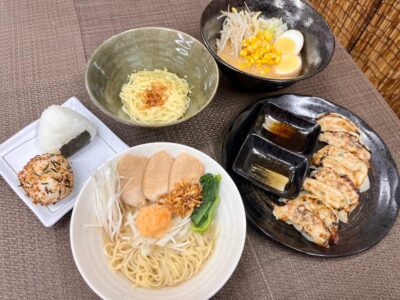
Japanese Washoku Bento Small Group Cooking Class
Read our review →
Sumo Stage Show with Bento or Snack + Fight & Photo
Read our review →
Ramen and Sushi Cooking Class with Sake Pairing Set in Tokyo
Read our review →Browse the lists this tour appears in