
Review · JAPANESE CRAFT WORKSHOPS
Japanese Pottery Class in Tokyo
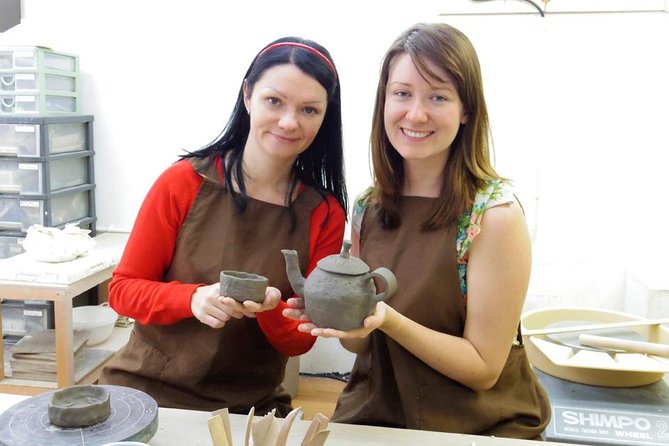
Clay turns into calm in Tokyo. This Japanese pottery class near Shiba lets you work with a sensei in a small-group setting, and you create a take-home souvenir plan you actually choose. One catch to budget for: firing and shipping cost extra, and your finished pieces take about a month to be ready.
I also love the fact that the session is metro-close and run in a compact, friendly studio format, with a mobile ticket and an English-support vibe noted by many past participants. You’ll spend the hour making clay forms, then deciding which 2-3 works you want fired and which colors to use, followed by cleaning and payment.
In This Review
- Key Things That Make This Pottery Class Worth It
- Tokyo Clay Therapy: What You Do During the 1-Hour Session
- The first steps, before you touch the clay
- Making pottery forms in real time
- Choosing what becomes your souvenir
- Cleaning and payment
- Where to Go in Shiba: Meeting Point and Getting There Fast
- Learning the Basics Without Feeling Rushed
- What the instruction actually helps with
- English support is a big plus
- Firing Fee, Timeline, and the One Month Reality
- What the class price covers
- What’s not included
- The timeline after you make
- Shipping Your Pieces and What the Brazil Note Means
- Price and Value: Is $26.73 a Deal?
- You’re paying for the creation time
- Your total value depends on choices
- The best value scenario
- Small-Group Size: Why the Cap Matters for Beginners
- Who This Fits Best in Tokyo
- Should You Book This Japanese Pottery Class in Tokyo?
- FAQ
- How long is the Japanese pottery class in Tokyo?
- How many pottery works will I make?
- Is the firing fee included in the price?
- How long does it take to get finished pieces?
- Will my class-made pottery be shipped?
- Where is the meeting point?
- Is this a small-group experience?
- Can I cancel and get a refund?
Key Things That Make This Pottery Class Worth It
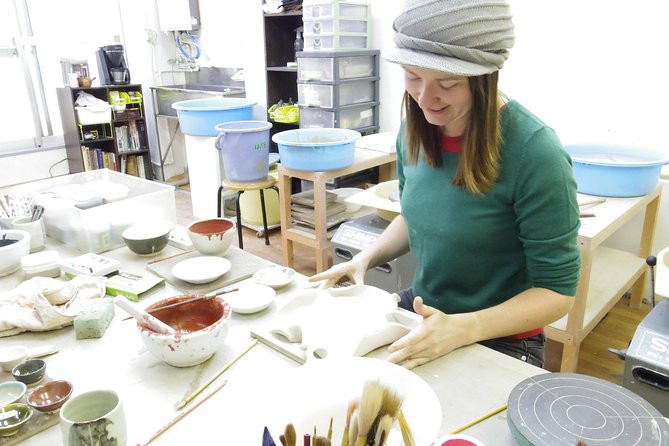
- You make about 2-3 pieces in 1 hour, so you’re not stuck making one tiny thing.
- Your choices matter twice: pick which works get kept for firing, then select the colors.
- Small-group instruction helps you get attention while you learn the basics and shape your forms.
- Central Shiba location keeps the activity convenient, close to public transportation.
- Your finished pottery arrives after firing, with a roughly one-month preparation timeline.
Tokyo Clay Therapy: What You Do During the 1-Hour Session
This isn’t a quick paint-and-leave workshop. The pace is designed around getting your hands on the process, learning the basics, and then producing several workable forms within the time limit.
The class flows in a pretty structured way. You start with an application form, then the instructor makes a sample so you can see what the final shape goals look like. After that, you get to work.
More Craft Workshops in Tokyo
- Chopstick Making Workshop in Ginza
★ 4.8 · 1,366 reviews - Tokyo: Samurai Sword & Archery Class from Samurai Descendant
★ 5.0 · 603 reviews - Tokyo: Shinjuku Chopstick Making Class
★ 4.9 · 440 reviews
The first steps, before you touch the clay
You’ll spend the opening moments on paperwork: writing the application form and getting the lesson context. It sounds administrative, but it also sets you up for the creative part. When you understand what happens after you finish (especially firing), your decisions during the session feel less random.
Then the instructor demonstrates the method. This matters because pottery can look simple until you’re actually shaping it. A quick demo gives your hands a starting point and helps you avoid common mistakes early.
Making pottery forms in real time
Inside about one hour, you make approximately 2-3 works. That range is big enough to let you experiment a little, yet small enough that you can still get feedback if you need it.
What I like here is the “iteration” feeling. If one shape turns out thicker or thinner than you expected, you can still salvage the next one. Many people leave the class surprised by how much they managed to accomplish in one sitting.
Choosing what becomes your souvenir
At the end of the making phase, you don’t just walk away with raw clay. You choose the works you would like to keep for firing. That decision point is important because it turns your hour of practice into an actual take-home outcome.
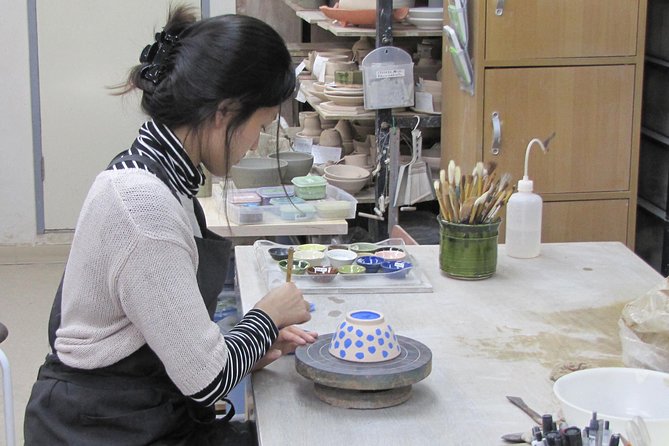
You also choose the colors you want applied. That means you’re not only learning how to form pottery, you’re designing what it will look like after finishing. For many first-timers, this is the most satisfying part because it makes the piece feel personal.
A different sort of day in Japan:
- Mt Fuji and Hakone 1-Day Bus Tour Return by Bullet Train
★ 5.0 · 26,383 reviews - 1-Day Tokyo Bus Tour
★ 5.0 · 14,250 reviews - Tokyo: TOKYO SKYTREE® Admission ticket
★ 4.5 · 11,192 reviews - Tokyo: teamLab Planets TOKYO Digital Art Museum Entry Ticket
★ 4.6 · 9,779 reviews
Cleaning and payment
After shaping, there’s cleaning, then you pay. This closing segment is one of those behind-the-scenes moments you might forget about until later, but it’s what keeps the studio running and helps ensure your selected works move forward properly for firing.
Where to Go in Shiba: Meeting Point and Getting There Fast
The meeting point is in Minato City, Shiba: 3-chōme 29-11 清水ハウス (Shimizu House). The activity starts there and ends back at the same place, which keeps logistics simple after a busy day in central Tokyo.
Two convenience notes matter for real travel planning. First, the class is described as being near public transportation, and in practice that usually means you can fold it into a day without a long commute. Second, you have a mobile ticket, so you don’t need to print anything.
If you like arriving a few minutes early, do it here. You’ll have an easier time settling in, finding the right entrance, and starting with zero stress.
Learning the Basics Without Feeling Rushed
Pottery in Japan is often tied to tradition and technique, but you’re not expected to show up as a “real potter.” Most people are there to learn the fundamentals and make something meaningful enough to keep.
The class format is built to prevent the two classic workshop problems: not enough instruction and too little time. You get a sensei-led sample first, then hands-on making, then guidance when you need it.
What the instruction actually helps with
Even without formal technical jargon, the demo and guidance help you figure out:
- how to form a usable shape within the time limits
- how to follow the studio workflow until the end
- what to do differently when you want the piece to look a certain way
And the studio atmosphere can be part of the value. People describe the environment as peaceful and relaxing, the kind of place where you can hear yourself think while you shape clay.
English support is a big plus
Several instructors and staff members are described as speaking English well, with some also using Japanese. That’s a practical advantage, because it reduces confusion when you’re asked to choose which works to keep and what colors you want.
If you’re worried about language barriers, you can feel more confident here than at many art workshops.
Firing Fee, Timeline, and the One Month Reality
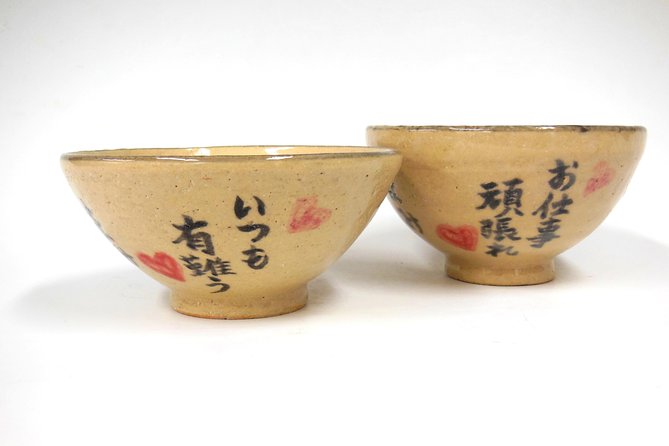
Here’s the key detail that changes how you think about the price: your hour is the trial-making session. The pottery you select for firing then gets finished later.
What the class price covers
Included in the base fee is the pottery trial class itself. In other words, you’re paying for instruction and the making time during the session.
What’s not included
You should plan for firing fees for each selected work. The studio also notes that the EMS shipping fee is optional. That means your total cost can rise after you decide which pieces you want to become finished pottery and how you want to receive them.
The timeline after you make
Once you make and select the pieces, it takes about one month to prepare the works after making. That’s a normal pottery timeline because firing and finishing take time, and it’s also why you’re not taking finished items home immediately.
This matters because you’re essentially buying an experience with a future reward. If you want a souvenir you can hold today, this isn’t that style. If you like the idea of a later delivery, it’s a good fit.
Shipping Your Pieces and What the Brazil Note Means
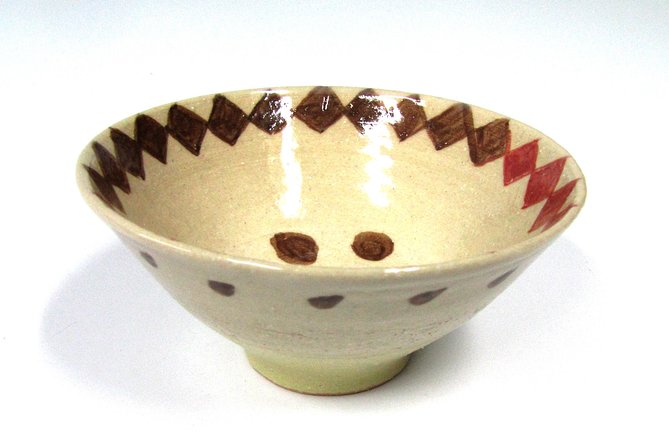
Shipping is where planning gets real, because you’re choosing how you’ll receive your fired pieces.
The tour info gives one specific heads-up: there’s an updated shipping notice for Brazil. Due to strict customs in Brazil, sending class-made pieces there has become challenging. If you’re located in Brazil, the guidance is to contact the operator before booking so you can discuss alternative ways to receive your work.
Even if you’re not in Brazil, this note is useful because it signals a broader truth: international shipping rules can vary by country. Your best move is to confirm what shipping options are available for your destination before you finalize selections and colors.
Price and Value: Is $26.73 a Deal?
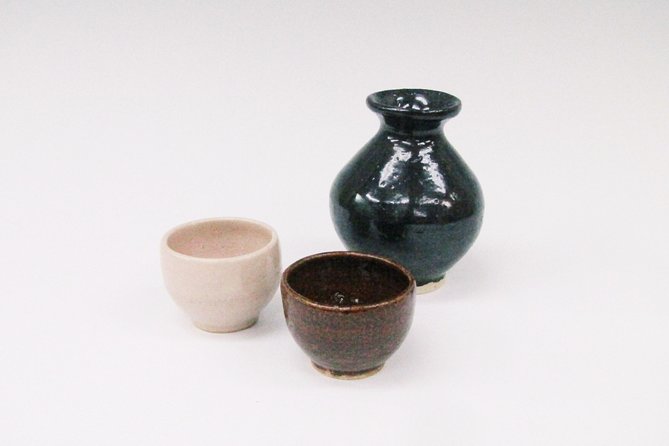
On paper, $26.73 per person sounds like a low-cost art activity. And in the context of central Tokyo, it is. But the real question is what you’re actually buying.
You’re paying for the creation time
You’re not paying for fired, finished, shipped pottery in that base fee. You’re paying for the class itself, plus the chance to make multiple forms during the hour.
Your total value depends on choices
Because firing fees are charged per selected work, your final cost depends on how many pieces you choose to keep. The class lets you make about 2-3 works, so you can decide whether you want one keepsake or multiple.
And if you want it shipped, you may add an optional EMS shipping fee. That means your “true” price range becomes a function of how many pieces you want finished and where you’re receiving them.
The best value scenario
This class is strongest value when:
- you’re aiming to create a souvenir that feels genuinely handmade
- you’re okay waiting about a month for firing preparation
- you’re willing to pay the extra finishing and shipping costs for what you select
Small-Group Size: Why the Cap Matters for Beginners
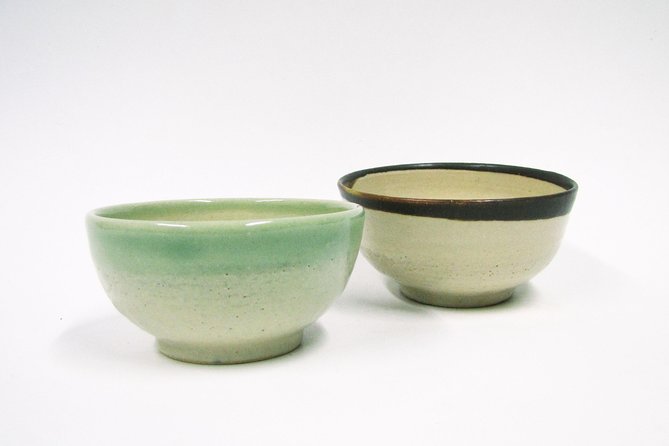
The experience is marketed as a small-group tour, with a maximum noted of 15. There’s also a stated maximum of 25 travelers for the activity overall. Either way, the idea is similar: you want a size where an instructor can actually see what you’re doing.
For first-timers, that visibility makes a difference. Pottery is physical and hands-on. If the group is too large, you end up copying shapes without getting feedback.
Here, the structure seems designed to keep you supported while you work through the basics, choose the keepsakes, and finish cleaning and payment properly.
Who This Fits Best in Tokyo
This is a great choice if you want something creative that still feels rooted in Japanese craft culture. It’s also ideal if you like peaceful, hands-on activities that break up the pace of sightseeing.
You’ll likely enjoy it most if:
- you want a personal souvenir and not just a photo stop
- you like guided practice, not solo wandering
- you’re traveling with family or friends and want a shared activity
It’s also described as suitable for most travelers, which usually means they can accommodate a range of experience levels. And from the instructor variety named in past classes, you can tell they keep the experience friendly and teach-focused.
Should You Book This Japanese Pottery Class in Tokyo?
Book it if you want an authentic craft session that gives you multiple chances to make something meaningful in one hour, plus the satisfaction of choosing what gets fired and what colors you want.
Skip it or plan differently if you need a finished souvenir the same day, because the process runs on firing and takes about a month after making. Also budget extra for firing fees per selected work, and decide whether you want shipping via optional EMS based on your destination.
If you’re the kind of traveler who loves learning a skill for a short time and then turning it into a real object, this is a very strong fit.
FAQ
How long is the Japanese pottery class in Tokyo?
The class is approximately 1 hour.
How many pottery works will I make?
You make about 2-3 works within the 1-hour session.
Is the firing fee included in the price?
No. The firing fee for each selected work is not included in the basic fee.
How long does it take to get finished pieces?
It takes about one month to prepare the works after making.
Will my class-made pottery be shipped?
You can choose works for firing, and EMS shipping is optional. Shipping options may vary by country.
Where is the meeting point?
Meet at Japan, 105-0014 Tokyo, Minato City, Shiba, 3-chōme 2911 清水ハウス. The activity ends back at the meeting point.
Is this a small-group experience?
It’s described as a small-group tour with a maximum of 15, and the activity also has a maximum stated for travelers.
Can I cancel and get a refund?
Yes. You can cancel for free up to 24 hours in advance for a full refund. If you cancel less than 24 hours before the experience starts, the amount paid is not refunded.
Newly listed around Tokyo
- Private Tokyo Food Tour – A Journey Through Time Through Food★ 5.0 · 36 reviews
- Private Tokyo Tour with Licensed Guide & Vehicle (Max 15 persons)★ 5.0 · 107 reviews
- Private Tokyo Custom Full-Day Tour by Chartered Vehicle★ 5.0 · 16 reviews
- Private Tokyo Custom Half-Day Tour by Chartered Vehicle★ 4.5 · 13 reviews
- Private Outstanding Nikko Tour with English Speaking Driver★ 4.0 · 11 reviews
- Private Sightseeing to Mt Fuji and Hakone with English Driver★ 5.0 · 51 reviews
- Private Snow Monkeys park Day Trip From Tokyo or Nagano★ 4.5 · 26 reviews
- 4 Day Tour – Mount. Fuji, Tokyo, Hakone, Kamakura and Yokohama★ 5.0 · 19 reviews
Japanese Craft Workshops, compared.
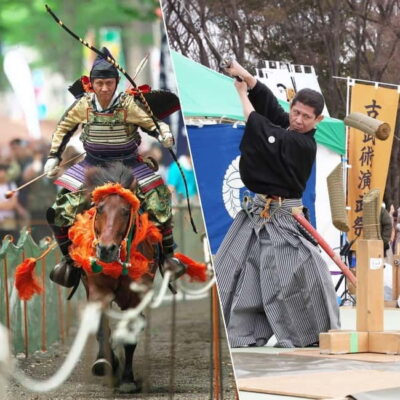
Samurai Sword & Archery Class from Samurai Descendant
Read our review →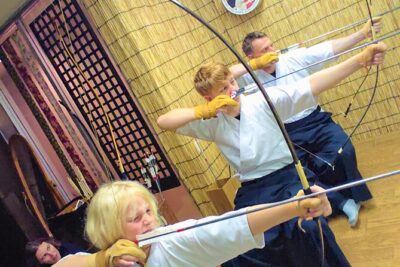
Japanesel Archery Experience HIROSHIMA CASTLE SHARAKU
Read our review →
Authentic knife making experience at a blacksmith in Kyoto
Read our review →
Browse the lists this tour appears in