
Review · GEISHA DISTRICT WALKS
Kanazawa: Samurai, Matcha, Gardens and Geisha Full-Day Tour
Kanazawa is a time machine, but on foot. This full-day guided walk ties together samurai neighborhoods, a castle setting, and two of Kanazawa’s most famous tea districts, with a proper matcha stop you’ll actually remember.
Two big wins for me: the chance to step inside preserved samurai homes in Nagamachi, and the garden pacing at Kenroku-en, where your guide explains what you are seeing instead of just pointing. One thing to consider up front is the day is long and outdoors, so wear footwear that can handle hours on the sidewalk, rain, and maybe winter slickness.
In This Review
- Key Highlights At A Glance
- Meeting Kanazawa at 9 AM, Then Letting the Streets Do the Work
- Nagamachi Samurai District: Low-Rank Warrior Life, Not Just Postcards
- Tsuzumi-Mon to Oyama Shrine: Western-Era Japan in a Single Stained-Glass Moment
- Gyokusen-an Matcha Tea House: How to Taste the Moment, Not Just Sip It
- Kenroku-en Garden: A 200-Year Design Lesson You Can Actually Walk
- Higashi-chaya Tea District: The Red-Front Streets of Kanazawa
- Shima Geisha House: Classic Architecture and a Real Heritage Stop
- The Kazue-machi Return Walk Back to Kanazawa Station
- Price, Value, and What You’re Really Paying For
- Who Should Book This Tour, and Who Might Skip It
- Quick FAQ
- FAQ
- What time does the tour start, and where do I meet?
- How long is the tour?
- Is lunch included?
- What’s included in the matcha experience?
- Do I get to visit Kenroku-en and Geisha House Shima?
- Is the tour guided in English?
- How much walking should I expect?
- What should I wear for weather like rain or cold winters?
- Can I cancel for a refund?
- Should You Book This Kanazawa Samurai, Matcha, Gardens, and Geisha Tour?
Key Highlights At A Glance
- Nagamachi Samurai District home interiors, including modest, low-ranking samurai life
- Oyama Shrine’s Japanese-Western mix, with a stained-glass look you won’t see in most shrines
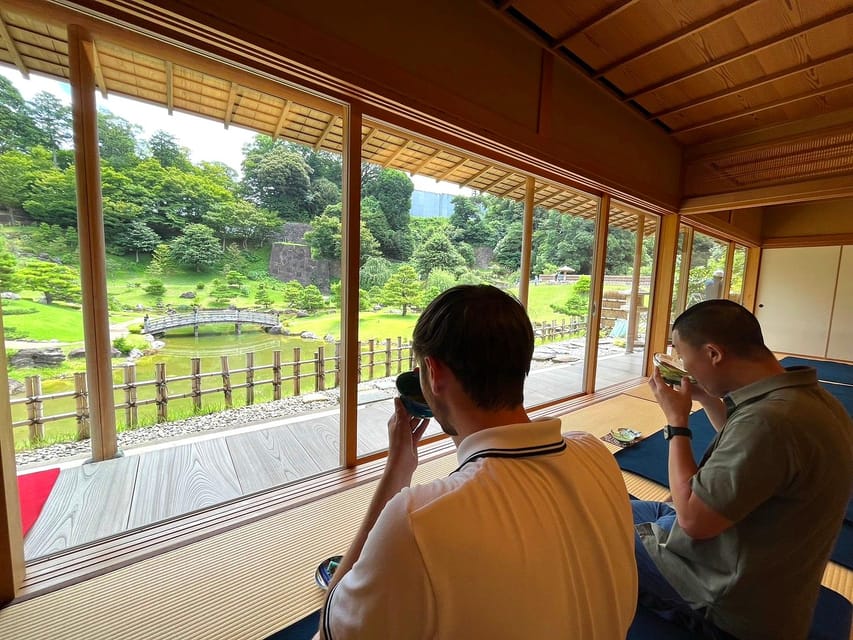
- Gyokusen-an matcha tasting, with wagashi and views over the castle garden setting
- Kenroku-en guided route, built to make sense of a garden that took more than 200 years
- Higashi-chaya and Geisha House Shima, for tea house architecture and a heritage site stop
- Time to wander plus shopping, especially in Higashi-chaya and Nagamachi
Meeting Kanazawa at 9 AM, Then Letting the Streets Do the Work
Your day starts at Kanazawa Station at 9:00 AM. Meet outside the Shinkansen ticket gates, in front of the information center. If you are facing the exits, look forward and to the right, near the four large sumo wrestlers. If you are coming from outside the station, you’ll find those sumo wrestlers right inside the East Entrance. Your guide will be wearing a Snow Monkey Resorts tour tag.
Why this matters: Kanazawa is laid out so walking gets you more texture. You’ll see the city’s mix of old streets and newer touches right away, including the Tsuzumi-mon gate, a modern take on traditional style and a real Kanazawa landmark you spot soon after leaving the station.
Also, expect a tour rhythm that uses slow sightseeing plus small bursts of free time. You’ll get breaks to buy local crafts and snack as you go, instead of being herded from one photo stop to another.
More Samurai & Ninja Sessions in Kanazawa
- Kanazawa: Samurai Residence Remains Nomura Family admission
★ 4.4 · 111 reviews - Full-Day Tour from Kanazawa: Samurai, Matcha, Gardens and Geisha
★ 5.0 · 68 reviews - Kanazawa Private Tour: Highlights of an Old Samurai Town
★ 5.0 · 46 reviews
Nagamachi Samurai District: Low-Rank Warrior Life, Not Just Postcards
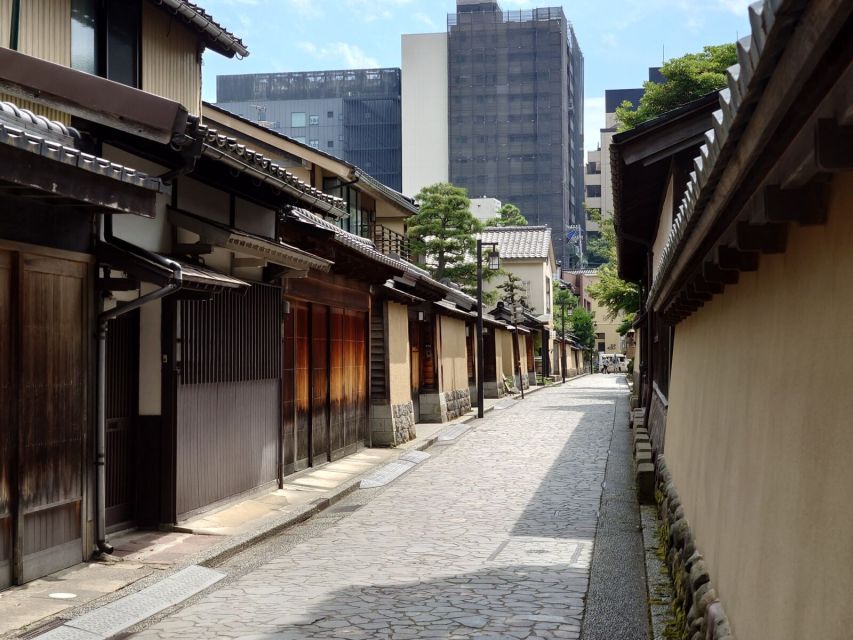
The first major stop is the Nagamachi Samurai District, reached on foot through side streets lined with local residences and occasional wooden temples. This is where you get the feel of neighborhoods that were built for people living their daily routines, not staged for tourists.
In the small neighborhood portion, you may enter homes that once belonged to low-ranking samurai. That detail is important. A lot of samurai tourism focuses on the big names and the grand castles. Here, you see how modest means could still come with discipline, status, and very particular living spaces.
Once you enter the district proper, you’ll follow the crooked main street layout with your guide. Then you get free time to explore at your own pace. This is the moment to slow down. Nagamachi is the place where small lanes, old wood, and household scale make the story click. If you want to bring home Kanazawa crafts, this is one of your best windows to browse.
Practical drawback: this part of the day includes both guided walking and some uneven neighborhood paths. Comfortable shoes are not optional.
Tsuzumi-Mon to Oyama Shrine: Western-Era Japan in a Single Stained-Glass Moment
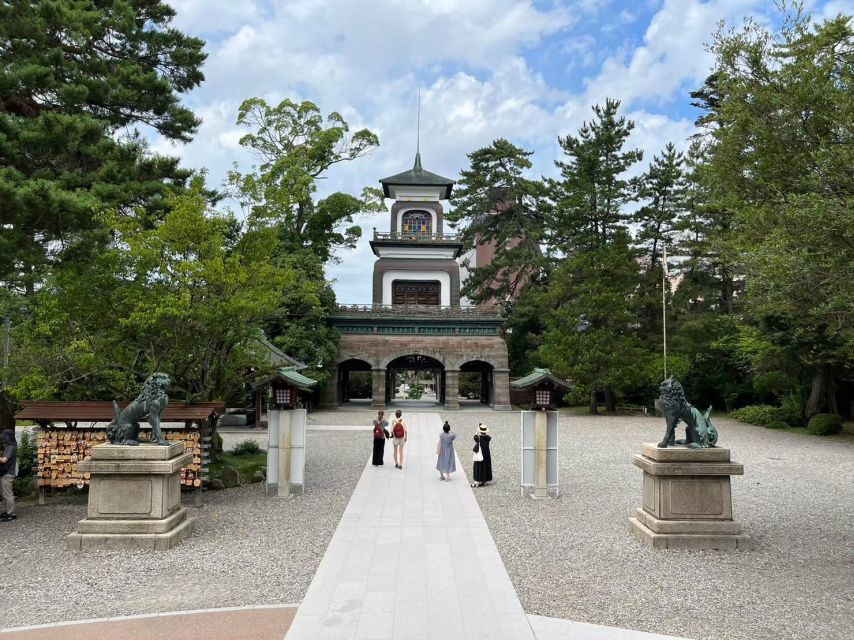
After Nagamachi, the tour heads to Oyama Shrine for a guided visit. What makes Oyama different is the blend of Japanese and Western influences, tied to the 19th century. One of the standout visuals is the shrine’s look with stained glass.
You’ll also step behind the shrine to see a small koi pond, a garden corner, and a path that leads to a larger wooden bridge. Crossing that bridge before you move into the main grounds helps the stop feel like a mini stroll, not just a quick look at a building.
Why I like this stop for you: it adds a layer to the day. So far, the focus has been samurai-era order and Edo-era streets. Oyama shows how Kanazawa was not frozen in time, it absorbed outside influence as Japan changed.
The only consideration is time. Oyama is short on the schedule, so keep your questions ready and don’t plan on doing a long, independent wander here.
Gyokusen-an Matcha Tea House: How to Taste the Moment, Not Just Sip It
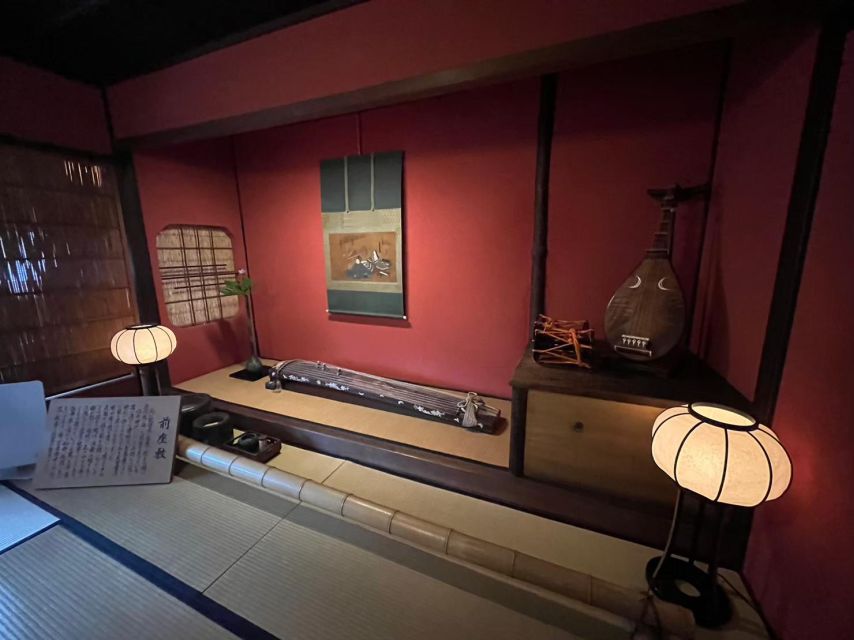
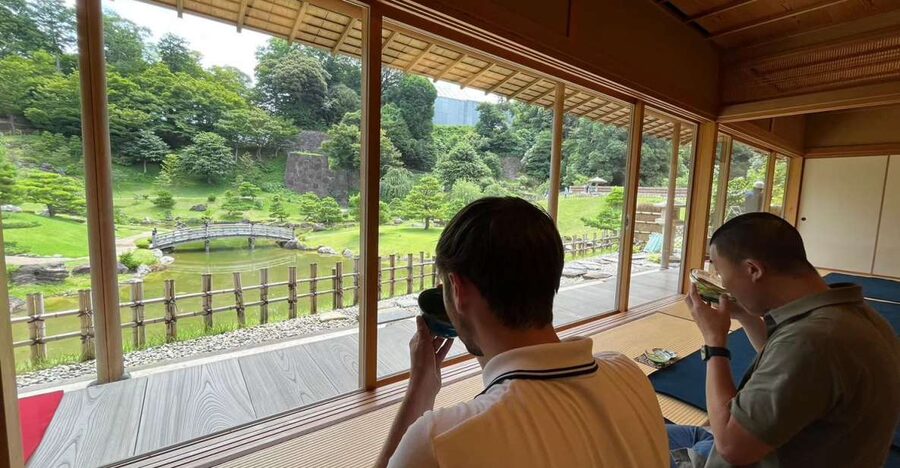
Next comes one of the most sensory stops: Gyokusen-an tea house at the castle area. You’ll take a guided break with views over a garden setting below the enormous stone walls of Kanazawa Castle grounds.
The matcha experience happens here and is led with a guide explaining the proper way to drink matcha. You’ll also get matcha served with artistic wagashi sweets, and the staff wear kimono.
Two practical notes based on the tour details:
- Occasionally, special events at Gyokusen-an can change where matcha is served, so the tasting location may shift.
- This stop is a breather. It gives your legs a real break while your brain catches up.
Why this works on a full-day tour: matcha and sweets here are not just a “nice add-on.” The setting is tied to the castle garden atmosphere, so your tea feels like part of the Kanazawa story instead of a detour.
If you’re thinking, I’m not a tea person, that’s fine. The point is learning how matcha is served and what to notice in taste and texture, with a calm pause in the day’s walking pace.
More Tea ceremonies in Kanazawa:
- Kanazawa: Kenrokuen Tea Ceremony Experience
★ 4.8 · 1,139 reviews - Kanazawa: Tea Ceremony Experience at Kenrokuen
★ 4.2 · 7 reviews - Kyoto: Tea Ceremony in a Traditional Tea House in Kiyomizu
★ 4.9 · 3,519 reviews - Kyoto: Tea Ceremony Ju-An at Jotokuji Temple
★ 4.9 · 3,207 reviews
Kenroku-en Garden: A 200-Year Design Lesson You Can Actually Walk
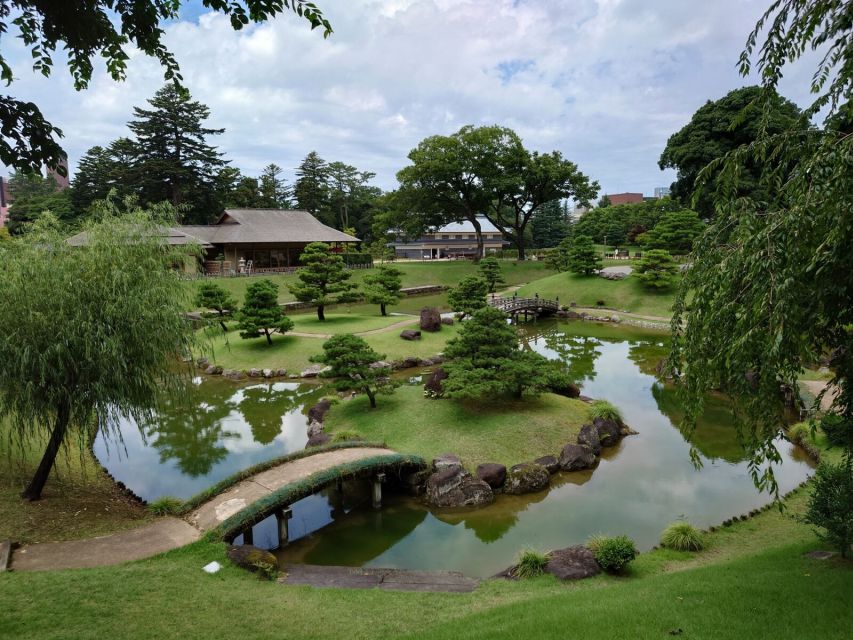
Then it’s time for Kenroku-en, often listed among Japan’s top gardens. You’ll enter with your guide for about one and a half hours. This is the garden where the route your guide chooses can make a big difference.
Your guide explains how the garden was designed over more than 200 years, under the order of the Lord of Kanazawa Castle. Instead of treating it like a photo garden, you’ll learn to look at how paths, water, stones, and viewing points create a changing experience as you move.
What I love is that gardens like Kenroku-en work best when someone helps you understand intent. Without guidance, you can appreciate the beauty, but it’s easy to miss why a curve exists, why a particular vista is framed, or why you’re walking in a certain direction.
A drawback worth flagging: Kenroku-en is still outdoors. Even on a good day, plan for walking on garden paths and keep an eye on weather. If it’s raining or cold, the ground can be slippery, so use careful footing.
Higashi-chaya Tea District: The Red-Front Streets of Kanazawa
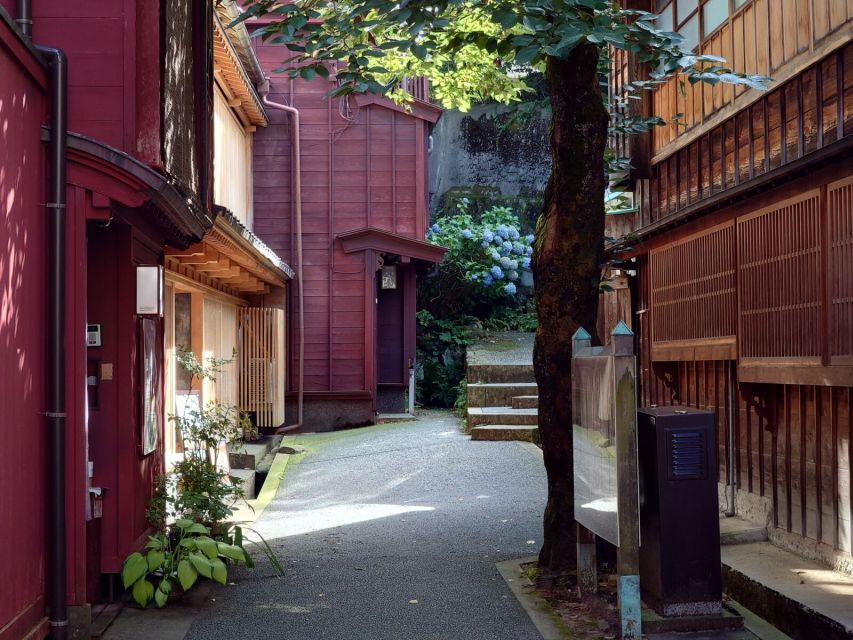
After the castle garden stop, you’ll head to Higashi-chaya, one of Kanazawa’s most famous tea districts. This area is known for its tall, two-story wooden tea houses, including some painted red, a distinctive design feature linked to Kanazawa.
Your guide gives you a guided walk first, then you get free time to stroll, shop, and explore at your own pace. This is a good place to slow down and do the “look up” habit. The architecture details up high are part of what makes the district feel old while still lived in and cared for.
Then the day continues into the geisha house experience with Geisha House Shima.
Shima Geisha House: Classic Architecture and a Real Heritage Stop
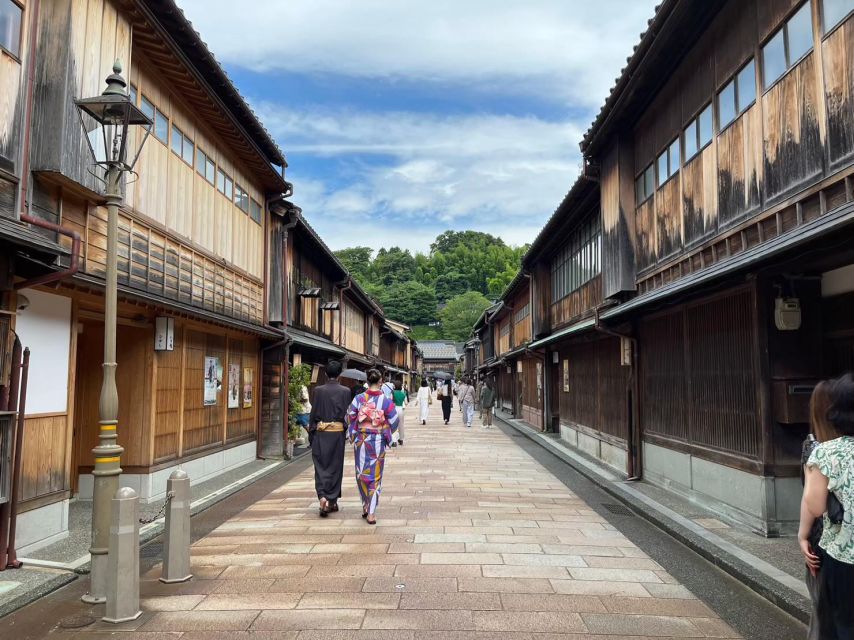
At Geisha House Shima, you’ll visit with a guided explanation. This is one of the heritage sites included in the tour, and the stop includes an entry fee.
For me, this part of the day is valuable because it turns the tea district from a street photo into a place with structure and meaning. Your guide’s framing helps you connect what you see on the street to how tea houses functioned and what this architecture was built to support.
Also, note that Shima is paired with the tour’s matcha day flow. So you are not bouncing between unrelated attractions. The tea house visits reinforce each other, from matcha at the castle area to the heritage tea house setting in Higashi-chaya.
Consideration: you’ll likely feel the day’s walking weight by the time you reach this point. If you need breaks, use the free time in Higashi-chaya to sit down, then return when you’re ready.
The Kazue-machi Return Walk Back to Kanazawa Station
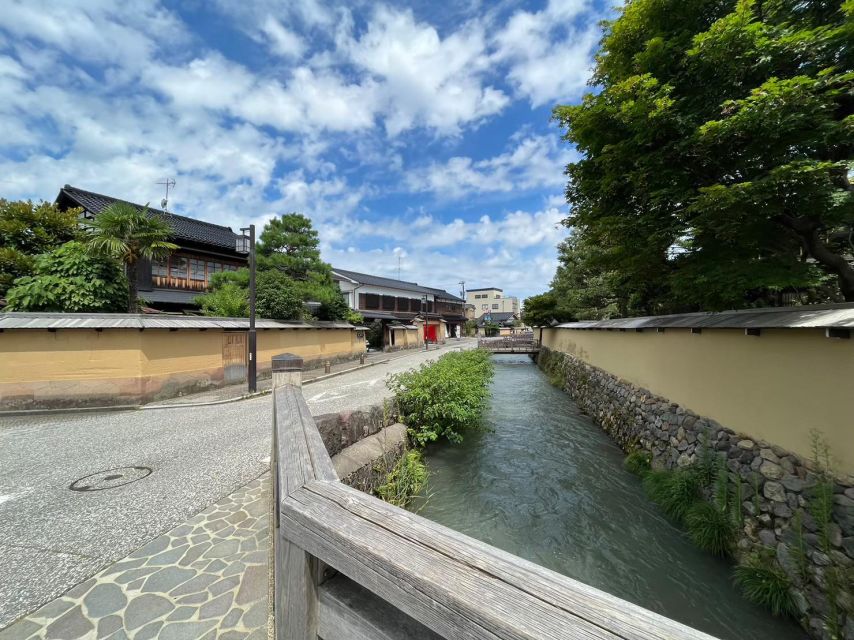
When you leave Higashi-chaya, you’ll head back toward Kanazawa Station. The return route includes walking through backstreets in the Kazue-machi area, which can feel like a maze if you’re not paying attention.
This is a fun way to end the day because you get a last look at everyday Kanazawa life rather than exiting by the quickest route. It also helps digest what you learned during the major stops.
The tour ends back at the station meeting point.
Price, Value, and What You’re Really Paying For
The tour price is $156 per person for a full day. On paper, that’s not cheap. In practice, a lot of the value is baked in:
What’s included:
- A live English guide
- Matcha experience
- Kenroku-en entry fee
- Shima (Geisha House) entry fee
What’s not included:
- Lunch
Here’s how to think about value. If you tried to self-plan this day, you’d still need to figure out meeting points, translate or read signage, and piece together timed entry for the garden and heritage tea house stops. A guide compresses that effort into one day with context at each site.
You’re also paying for pacing that includes some free time. Several stops offer room to wander, browse crafts, and grab food. That flexibility is part of why guided tours like this can feel less stressful than doing it solo.
For lunch, ask your guide for recommendations and pick a spot near the markets you pass through. Omicho Market is a frequent lunch highlight for people who take this route, and it’s a smart choice if you want something simple and local.
Who Should Book This Tour, and Who Might Skip It
This is a strong fit if you want:
- Samurai atmosphere plus actual context, not just a list of sights
- A guided walk that explains places as you move through them
- Tea house experiences, including matcha and wagashi
- A garden stop where you learn what you’re looking at
It’s not the best fit if:
- You hate walking for several hours outdoors
- You want a fully relaxed, minimal-footprint day with lots of sit-down time
- You need a strict schedule with no chance of matcha location adjustments due to special events
If you’re traveling with kids, older relatives, or anyone with limited stamina, you’ll want to plan breaks carefully and bring sturdy shoes. The route is designed around moving through neighborhoods and districts, not hopping by taxi between stops.
Quick FAQ
FAQ
What time does the tour start, and where do I meet?
The tour starts at 9:00 AM. Meet outside the Shinkansen ticket gates in front of the information center, near the four large sumo wrestlers. If you are arriving from outside the station, you can find the sumo wrestlers immediately inside the East Entrance.
How long is the tour?
It’s listed as a full day, about 1 day. The exact starting times depend on availability, but the tour itself runs from the station meeting point and returns to the same meeting point.
Is lunch included?
No. Lunch is not included. The tour includes time for you to explore and grab a bite along the way, so ask your guide for lunch recommendations.
What’s included in the matcha experience?
You get a matcha experience that includes matcha tea tasting and wagashi sweets. Kimono-clad staff serve it, and your guide shows you the proper way to drink matcha. In some cases, matcha tasting location may change if special events are held at Gyokusen-an.
Do I get to visit Kenroku-en and Geisha House Shima?
Yes. Entry fees for Kenroku-en and Shima (Geisha House) are included, and you’ll visit with your guide.
Is the tour guided in English?
Yes. The live tour guide is English-speaking.
How much walking should I expect?
Expect several hours of outdoor walking. Some guests report getting around 12 km or about 27,000 steps during the day.
What should I wear for weather like rain or cold winters?
Wear comfortable shoes with good grip. Bring warm clothing, socks, and warm shoes for winter conditions, plus an umbrella and rain gear. In colder months, there may be snow and ice, so non-slippery footwear matters.
Can I cancel for a refund?
You can cancel up to 24 hours in advance for a full refund.
Should You Book This Kanazawa Samurai, Matcha, Gardens, and Geisha Tour?
I’d book it if your priority is a single day that covers Kanazawa’s big layers: samurai neighborhoods, a castle-area garden mood, and tea district architecture with matcha at the center. The guide component matters here because each stop has cultural context you’ll miss if you just walk through on your own.
Skip it only if you know you cannot handle hours outdoors on foot. Otherwise, pack good shoes, check the weather, and treat this as your fast but meaningful way to understand Kanazawa beyond the headline attractions.
Popular Geisha District Walks in Kanazawa
- Kanazawa: Half-Day Private Tour – Garden, Castle, Geisha
★ 5.0 · 10 reviews - Kyoto Geisha Walking Tour: Gion District & Hidden Gems
★ 4.7 · 3,273 reviews - Kyoto: Gion Geisha District Walking Tour – Stories of Geisha
★ 4.7 · 2,187 reviews - Best of Kyoto: Gion, Geisha, Pagodas & Cobblestones
★ 4.9 · 2,058 reviews
Newly listed around Kanazawa
- Shirakawa-go, Gokayama & Takayama Private Tour From Kanazawa★ 4.7 · 21 reviews
- From Kanazawa/Toyama: Shirakawago and Takayama Day Tour★ 4.7 · 82 reviews
- Kanazawa:Traditional Experience -kimono rent at wargo★ 4.7 · 30 reviews
- Kanazawa: Sushi Making Experience at Oumicho Market★ 5.0 · 7 reviews
- Kanazawa: Authentic Japanese Cooking and Sushi-Making Lesson★ 5.0 · 93 reviews
- Kanazawa: Tea Ceremony Experience at Kenrokuen★ 4.2 · 7 reviews
- Kanazawa: Private Tour with Local Guide★ 4.9 · 70 reviews
- Kanazawa: Private Custom Tour with Local Guide★ 4.9 · 20 reviews
Geisha District Walks, compared.

Kyoto Geisha Walking Tour: Gion District & Hidden Gems
Read our review →
Gion Geisha District Walking Tour – Stories of Geisha
Read our review →
Best of Kyoto: Gion, Geisha, Pagodas & Cobblestones
Read our review →
Kyoto Night Foodie Tour in Gion (9+ dishes + 6 Sake tastings)
Read our review →
Kyoto Gion Geisha District Walking Tour – The Stories of Geisha
Read our review →
Gion Magical Night Walking Tour with Geisha Insights
Read our review →
Kyoto Gion Night Walk & Geisha District Guided Tour
Read our review →Browse the lists this tour appears in