
Review · LICENSED GUIDES & PRIVATE DRIVERS
Kappabashi Knife Shopping Tour with Government-Licensed Guide
Tokyo has a knife shopping trail. This half day strings together Tsukiji Outer Market, Kappabashi Dogu Street, and Asakusa so you get more than just buying. You also get a government-licensed English guide to explain how Japanese kitchens think about tools, not just where to shop.
I especially like how the tour starts in Tsukiji, where you see the market vibe that drives Japan’s everyday cooking standards. I also like that Kappabashi is set up for practical browsing, from food and drink industry suppliers to reasonable pricing, plus fun stopovers like the plastic display food shops you see in restaurants across Japan.
One thing to consider: this is a walking and moving-focused experience, and the tour includes time on foot and short local transit. If your legs are easy to fatigue or you hate crowded markets, plan your pace and bring comfortable shoes.
In This Review
- Key moments I think matter most
- Knife Shopping and Tokyo Sights, Without the Guesswork
- Meeting Up and How the 4 Hours Usually Move
- Tsukiji Outer Market: Where the Day Starts for Serious Cooking
- Kappabashi Dogu Street: Real Knife Shopping in a Tool-Supplier Zone
- Asakusa and the Optional SkyTree Finish
- Price and Value: What $107.50 Really Covers
- What You Can Buy, and How to Shop Without Regret
- Who This Tour Fits Best
- Should You Book This Kappabashi Knife Shopping Tour?
Key moments I think matter most
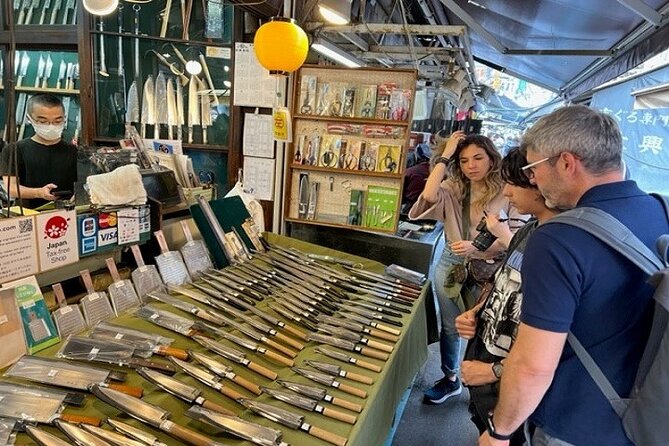
- Tsukiji Outer Market: dense wholesale lanes, where chefs shop daily for fresh ingredients and knife culture.
- Kappabashi Dogu Street: a focused lane built for kitchen tools, with lots to compare in one area.
- Knife basics with a licensed guide: you learn how knife types map to cooking tasks, so shopping feels smarter.
- Plastic display food shops: goofy, useful visuals that connect what you buy to what you eat in Japan.
- Asakusa + a classic Tokyo add-on: you finish with scenery and the option to keep going toward Tokyo Skytree.
Knife Shopping and Tokyo Sights, Without the Guesswork
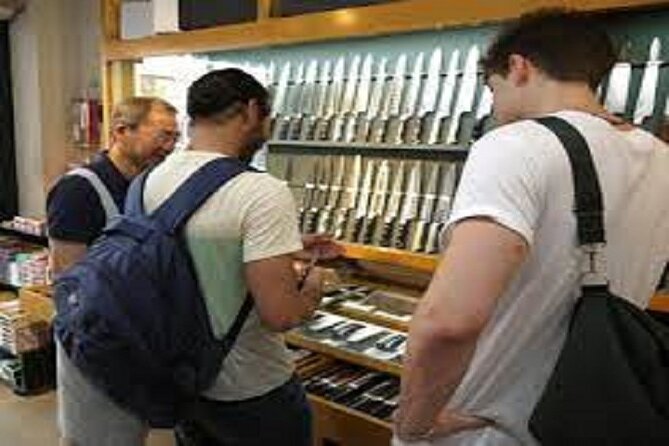
This tour works because it treats knife shopping like part of Tokyo culture, not a side quest. You move through three areas that connect in real life: where food starts (Tsukiji), where tools are supplied (Kappabashi), and where you can reset with old-school Tokyo streets (Asakusa).
You’re not handed a map and sent off. You get a licensed local English-speaking guide, so you can ask questions as you browse. That matters in Japan, especially when you’re trying to understand differences in knife styles, sharpening needs, and what each tool is for in everyday cooking.
Also, the pacing is designed for a half day. At around 4 hours, you get real shopping time without burning your whole day or losing yourself in store after store with no plan.
More Private Guides in Tokyo
- Tokyo 6hr Private Tour with Government-Licensed Guide
★ 5.0 · 3,902 reviews - Tokyo 4hr Private Tour with Government-Licensed Guide
★ 5.0 · 1,394 reviews - Tokyo Private Sightseeing Tour by Car- English speaking chauffeur
★ 5.0 · 1,004 reviews
Meeting Up and How the 4 Hours Usually Move
The tour offers pickup, but it’s not a full door-to-door private car style. You meet your guide on foot within a designated area of Tokyo, then you go from there. In practice, that’s a good thing, because it keeps you from wasting time on transfers before you even start looking.
Expect a walking-first route. The tour is described as a walking experience, and it also involves short local moving time coordinated by your guide. That combo is ideal if you want to see neighborhoods up close, and it’s especially helpful if you’re not fluent in the station-to-street rhythm of Tokyo.
You’ll also use a mobile ticket, which makes check-in less of a hassle. Since the core stops are areas that are free to enter, you’re not constantly dealing with gates and admissions in the middle of your shopping flow.
Tsukiji Outer Market: Where the Day Starts for Serious Cooking
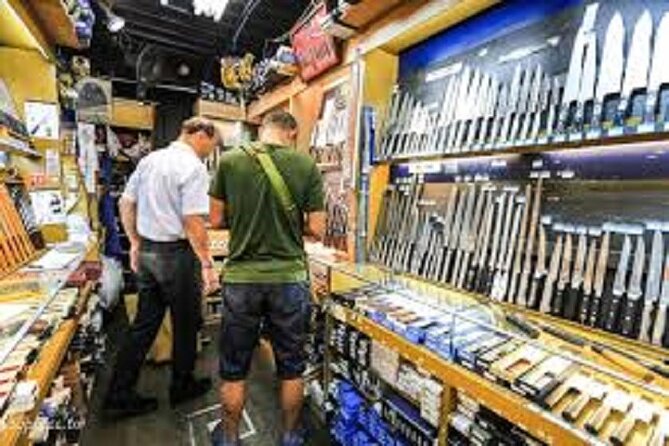
Tsukiji Outer Market is one of those places that feels like it has its own weather system. It is a wholesale market that mainly serves retailers, restaurants, and other buyers, so the energy is more practical than touristy. Think tight lanes, quick decisions, and the sense that people come here for real supply.
You’ll spend about an hour in the Outer Market area. The scale is intense, with a very large number of shops packed into a small zone, so it’s easy to lose track unless you have guidance. What I like here is that your guide helps you connect the dots between ingredients and the tools used to handle them.
Even if you do not plan to buy ingredients, Tsukiji gives you context. Japanese kitchen knives are not random accessories. In a market like this, the logic of good cutting and prep shows up fast, because chefs and buyers come here repeatedly, day after day, for quality.
A consideration: Tsukiji can feel crowded and fast-moving. If you hate hustle, treat this first stop as a “see and orient” hour. You do not need to buy anything to benefit, and you can save your energy for the knife-focused streets afterward.
Kappabashi Dogu Street: Real Knife Shopping in a Tool-Supplier Zone
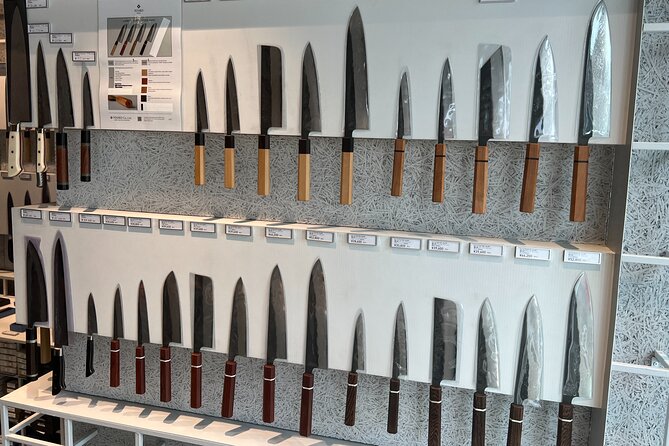
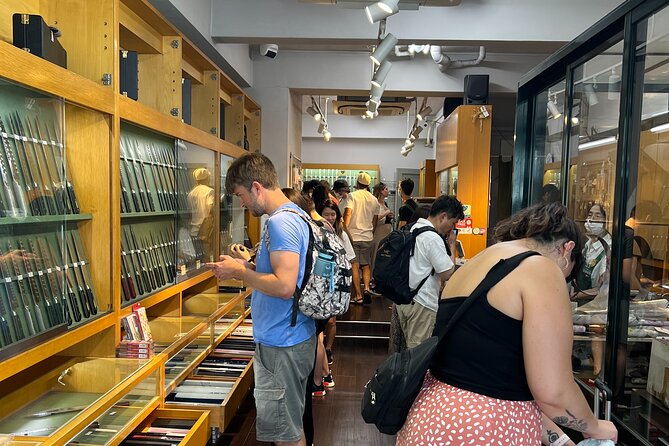
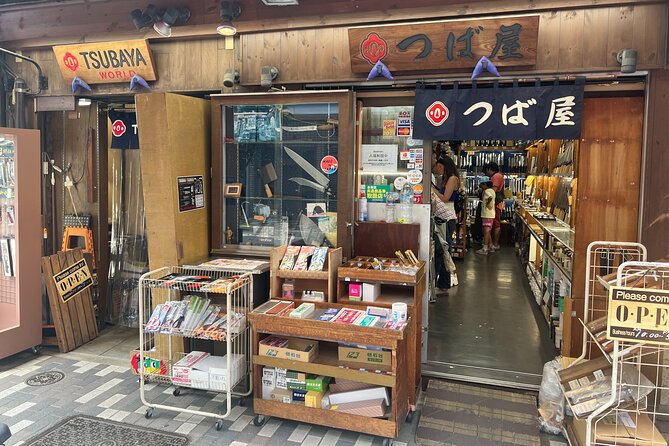
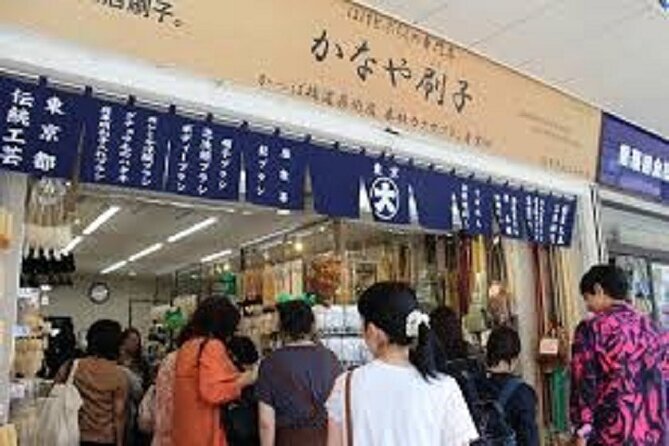
Kappabashi is the reason this tour exists. This street has long supported the food and beverage industry, so you’re not just browsing random souvenirs. You’re shopping in an area built for kitchen gear, which makes comparisons easier and decisions less intimidating.
You’ll have about an hour here, which is a sweet spot. It is enough time to scan styles, check basic differences, and get a feel for what pricing looks like across shops. It is not so long that you burn out before you find something you truly want.
Your guide also helps with the learning part. The tour is designed to teach you about different types of knives used in Japanese cooking, not just point you at displays. That knowledge is practical when you are standing in front of a wall of products that look similar at first glance.
Here’s a tip that makes a difference: when you’re comparing knives, focus on the way you cook at home. Think about what you chop most, whether you slice more than you mince, and what kind of tasks you want the knife to handle comfortably. The guide’s explanations can help you match knife style to those real needs.
And don’t skip the side sights. The tour specifically calls out the plastic display food shops. They are quirky, but they also teach you how Japanese restaurants visualize dishes, which is fun and useful when you later order in a restaurant and recognize what you’re seeing.
Possible drawback: Kappabashi can be a little overwhelming if you enter with zero idea what you want. If you’re aiming to buy a knife, wear patience, ask questions early, and decide on your top priority, like comfort, intended cutting tasks, or overall value.
More Shopping Tours in Tokyo
- Tokyo Tsukiji Fish Market Food and Culture Walking Tour
★ 5.0 · 3,184 reviews - Tokyo: Tsukiji Fish Market Food and Walking tour
★ 5.0 · 1,724 reviews - Tokyo: Tsukiji Fish Market Guided Walking Tour
★ 4.9 · 1,397 reviews - Tsukiji Fish Market Guided Tour and Sushi Making with Pro Chef
★ 5.0 · 775 reviews
Asakusa and the Optional SkyTree Finish
Asakusa is a nice contrast after the shopping intensity. You’ll spend about an hour here, walking through the area around Nakamise-dori, which leads from Kaminarimon Gate to Senso-ji Temple. That connection matters because Asakusa feels like a living hallway to a major Tokyo landmark, not just a neighborhood for quick photos.
This stop also gives you something many shopping tours forget: decompression. You can reset your attention, grab a snack if you want one on your own, and take in the street energy while your brain recovers from comparing blade after blade.
The experience also offers an optional finish toward Tokyo SkyTree. The tour notes that you can finish near SkyTree, but entry fees for SkyTree for both guide and guest are not covered. So if you want the view, plan to buy your own ticket later, since the tour is essentially a launch point rather than an all-in admission package.
A consideration: if you plan to go all the way to SkyTree after the tour, budget time and keep an eye on how tired you are. By the time you hit Asakusa, you will already have walked a lot, and adding SkyTree can turn your half day into a long one.
Price and Value: What $107.50 Really Covers
At $107.50 per person, this is not a bargain-bin shopping stroll. You are paying for organization, a licensed local English guide, and a route that combines market and tool shopping with structured time in each area.
What makes it good value is that you are not just buying access to stores. You’re buying context and translation. Knife shopping gets expensive fast if you guess wrong about what a tool is for or what type suits your cooking habits. Having a guide to explain knife types used in Japanese cooking can prevent regret purchases.
Also, some practical costs are already kept low. The stops like Tsukiji Outer Market, Kappabashi Street, and the Asakusa area have free admission. So your money goes toward the guided experience rather than stacking entrance fees on top.
Pickup is offered, and the tour also mentions group discounts. If you have friends and can book together, that’s a real way to stretch the value. Just keep in mind the tour is a private activity for your group and can’t be combined with multiple tour groups.
What you should plan to pay separately: transportation to reach the starting area, lunch, and personal expenses. Knife purchases are obviously on you too, but at least you get guidance on what to look for before you hand over your cash.
What You Can Buy, and How to Shop Without Regret
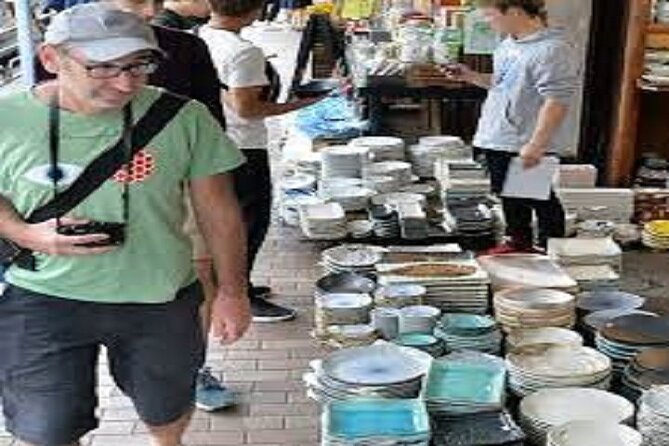
You will find high-quality Japanese kitchen ware and knives at reasonable prices on Kappabashi Street. The word reasonable matters here because knife stores can range from serious splurge to sensible everyday upgrades, and a guide can help you navigate that spectrum.
Think in “stages” while you shop:
1) Walk in and observe.
2) Ask what each knife type is best for.
3) Confirm your own use case.
4) Only then compare price and decide.
If you want something more than just browsing, consider setting a goal before you reach the shops. For example, you might decide on the main knife you want first, then add a second tool only if it matches your cooking routine.
Also, remember that this is a half day. If you overspend time reading every sign and watching every display, your shopping window gets eaten fast. Use your hour in Kappabashi to make choices, not just admire.
Who This Tour Fits Best
This tour is a strong match if you:
- want a structured way to shop for knives without getting lost
- like pairing shopping with real Tokyo neighborhoods
- want a guide to explain knife types used in Japanese cooking
- enjoy markets and street shopping more than museum-style sightseeing
It may not be ideal if you:
- want a relaxed, slow-paced tour with lots of sitting time
- dislike crowded market areas or heavy foot travel
- only care about one store and nothing else
That said, the route is balanced. You get Tsukiji context, tool-focused Kappabashi shopping, and the Asakusa streets to round it out.
Should You Book This Kappabashi Knife Shopping Tour?
If your dream trip includes buying or even just seriously learning about Japanese kitchen knives, I think this is an efficient way to do it. The best part is the mix: you see why cooking standards start in places like Tsukiji, then you shop in Kappabashi where those tools are supplied, and you finish in Asakusa to keep the day from turning into pure retail fatigue.
Book it if you want real guidance, especially if you’re unsure what knife type fits your cooking. It’s also a good fit if you like having a guide handle the flow, because following instructions in Tokyo is easier when someone local keeps the timing sensible.
Skip it only if you want total flexibility with no structured stops, or if you expect a mostly car-based, low-walking day. This is a walking-focused experience, and comfortable shoes are not optional.
If you’re ready to shop with a plan, this tour gives you that plan in a way that feels practical, not forced.
Newly listed around Tokyo
- Classic Tsukiji Food Tour★ 5.0 · 119 reviews
- Tokyo Tsukiji Market Small Group Tasting Tour★ 5.0 · 8 reviews
- Sushi-Making Experience at ’Activity Maison Kissako’★ 5.0 · 197 reviews
- Travel Tokyo with Your Own Personal Photographer★ 5.0 · 43 reviews
- Tokyo Tsukiji Fish Market Food Tour: 15 Stops & Walk Local Street★ 5.0 · 139 reviews
- Tokyo History: Sensoji Temple & Asakusa District Private Tour★ 5.0 · 28 reviews
- Tsukiji Fish Market Culture Walking and Food Tour★ 5.0 · 36 reviews
- Tokyo Japanese Calligraphy Experience with a Master Artist★ 5.0 · 35 reviews
Licensed Guides & Private Drivers, compared.
Tokyo 6hr Private Tour with Government-Licensed Guide
Read our review →
Kyoto Early Morning Tour with English-Speaking Guide
Read our review →
Tokyo 4hr Private Tour with Government-Licensed Guide
Read our review →
Kyoto 6hr Private Tour with Government-Licensed Guide
Read our review →
Hiroshima / Miyajima Full-day Private Tour with Government Licensed Guide
Read our review →Early Morning Tour with English-Speaking Guide
Read our review →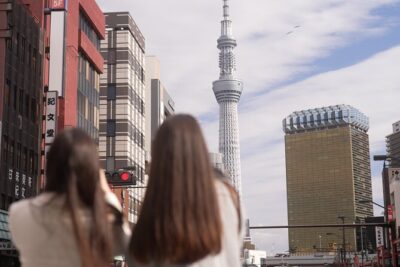
Tokyo Private Sightseeing Tour by Car- English speaking chauffeur
Read our review →
Mt Fuji Private Tour with English Speaking Driver
Read our review →Browse the lists this tour appears in