
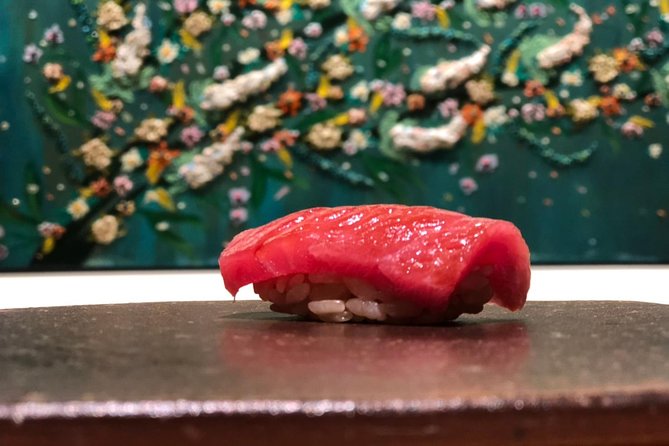
Review · SUSHI COOKING WORKSHOPS
Sushi-Making Experience at ’Activity Maison Kissako’
Sushi lessons start before the first bite. This half-day class takes you through Toyosu wholesale streets, then into a chef-led workshop where you learn the steps behind classic sushi. I love the market access and the hands-on sushi making that results in 10 to 12 pieces. The main thing to watch is the early 7:00 am start and a brisk walking pace in the professional market area.
You also get a guided route through key ingredient shops, including places associated with the high-end restaurant world. After the market time, you head toward the original fish market area in Tsukiji, then finish with a meal that is based on what you shaped yourself, along with included beverages. With a max group size of 10, it feels focused, not crowded.
In This Review
- Key highlights to know before you go
- Toyosu at 7:00 am, and why the morning is the point
- Getting into wholesale Toyosu, including the stores that matter
- The ingredient route: green tea, wasabi, knives, and tools
- Heading toward Tsukiji, and keeping the story straight
- The 7th block sushi workshop: nigiri and gunkan, piece by piece
- Market breakfast and the sushi lunch feel, with beverages included
- Price, what $283.11 really buys, and where the value comes from
- Who this tour fits best, and how to prepare
- Should you book this Tokyo sushi class at Toyosu and Kissako?
- FAQ
- What time does the tour start?
- How long is the sushi-making experience?
- Is hotel pickup included?
- How many people are in the group?
- What sushi will I make during the class?
- Do you visit only Toyosu, or also Tsukiji?
- Can you handle vegetarian, vegan, kosher, halal, or allergy requests?
- Is there an age limit for drinking?
- If I cancel, will I get a refund?
- What happens if the tour cannot run due to weather or minimum travelers?
Key highlights to know before you go
- Toyosu wholesale-area shopping that is usually off-limits, with a route through 5 to 7 well-known stores
- Ingredient sourcing guided by specialists, including a tea shop tied to Sukiyabashi Jiro and a wasabi shop known from Jiro Dreams of Sushi
- A true beginner-friendly sushi workshop, aimed at making nigiri and gunkan without requiring prior skill
- Chef-led fish handling, including opening and filleting during the class portion
- Small group pacing, max 10 travelers, with enough attention for questions
- A market meal built around your results, so you get to eat what you made, not just watch
Toyosu at 7:00 am, and why the morning is the point
Tokyo sushi is not a slow, leisurely hobby. It is built on timing, freshness, and the ability to handle ingredients correctly before the day gets busy. Starting at 7:00 am matters because the market workflow is already underway, and your tour focuses on the work side of seafood, not souvenir browsing.
This experience runs about 4 hours, and it is structured so you go from shopping to cooking without losing that early-morning momentum. If you are the type who likes to learn by doing, you will like how the class is anchored in what you bought and handled earlier. If you prefer a relaxed pace, plan your energy for a brisk morning.
One practical tip: wear shoes you can sprint in, or at least walk quickly in. The professional market sections can move faster than normal sightseeing, and the tour pace follows the market.
More Sushi Workshops in Tokyo
- Sushi Making Tokyo Roll and Authentic Japanese Sushi Class
★ 5.0 · 3,971 reviews - Tokyo: Roll and Authentic Sushi Making Class in Asakusa
★ 4.9 · 1,957 reviews - Tokyo: Sushi Making Class in a Happi Coat near a Famous Spot
★ 4.9 · 1,377 reviews
Getting into wholesale Toyosu, including the stores that matter
The strongest reason to book is the access you get to the wholesale area of Toyosu. Your tour goes into sections that are generally off-limits to tourists, which changes the feel from a generic food stroll into something closer to a working day at the market.
You will visit multiple renowned shops, typically around 5 to 7 stops. One named example is Yamayuki, which is known in the market circles and is associated with seafood used by Michelin-star restaurants. Instead of just looking, you talk with insiders, and you get context for why certain ingredients are chosen for specific types of sushi.
As you move through the stores, focus on the logic behind selections: what a shop looks for in fish, what makes a product suitable for sushi, and how different ingredients connect to flavor and texture later in the class. Even if you do not know anything about sushi now, you start building a mental map fast.
A small note from the experience vibe: you might not catch every headline moment people expect, like a tuna auction. Even when that is not part of what you see, you still get plenty of real market activity and the sense of how daily operations work.
The ingredient route: green tea, wasabi, knives, and tools
One of the best parts is that the tour does not treat ingredients as one big mystery box. You actually walk into specialty shops and see how ingredient suppliers think.
The route includes a tea shop where green tea is sourced by Sukiyabashi Jiro, along with other high-end restaurants. That matters because tea in a sushi meal is not just a drink. It is part of how you reset your palate between bites, especially when you are eating fish flavors that can feel rich.
You also stop at a greengrocer linked to a wasabi master known from Jiro Dreams of Sushi. Wasabi is easy to misunderstand if all you have ever had is a tube. In Japan, it is often handled differently, and sourcing is tied to how you want it to taste in a bite of nigiri.
Add in a handmade kitchenware shop and a historic knife shop dating back to the Tsukiji era, and you start to see the tools side of sushi making. A good knife is not a brand flex. It is how you control texture and clean cuts, which affects the way sushi holds together.
If you want to use this tour as a long-term learning tool, take mental notes. When you later shape nigiri, you will understand why the chef emphasizes certain textures and why the knife and the fish handling make a difference.
Heading toward Tsukiji, and keeping the story straight
After the Toyosu market section, the tour shifts toward the original fish market area in Tsukiji. Even if you do not get deep historical lectures, the timing and the geography help you connect today’s market workflow to where the sushi culture grew.
This is a useful step for two reasons. First, it places what you are doing in a bigger picture, sushi is not just a restaurant dish, it is built on supply chains and market traditions. Second, it keeps the morning from turning into pure cooking without context.
You should expect the Tsukiji portion to support the experience rather than overwhelm it. The main draw is still the market access and the class, so treat Tsukiji as an “anchor point” that helps you understand the food you are making.
A different sort of day in Japan:
- Mt Fuji and Hakone 1-Day Bus Tour Return by Bullet Train
★ 5.0 · 26,383 reviews - 1-Day Tokyo Bus Tour
★ 5.0 · 14,250 reviews - Tokyo: TOKYO SKYTREE® Admission ticket
★ 4.5 · 11,192 reviews - Tokyo: teamLab Planets TOKYO Digital Art Museum Entry Ticket
★ 4.6 · 9,779 reviews
The 7th block sushi workshop: nigiri and gunkan, piece by piece
The class part happens at a sushi restaurant in the 7th block of the market, run by a Toyosu fish wholesaler. That is a key detail because it connects cooking skills to what wholesalers do every day. You learn sushi from people who deal with ingredients at their source.
You will craft 10 to 12 pieces of sushi, including nigiri and gunkan. For beginners, this is the perfect scope. You get variety without feeling like you must master the entire sushi universe. The goal is skill through repetition, not cooking-show perfection.
You can also expect fish handling instruction, including opening and filleting with an experienced sushi chef. Even if you never become a home fish butcher, learning the basic steps helps you understand why the chef watches texture and cleanliness so closely. In sushi, small details change everything.
During the workshop, keep your attention on three practical areas:
- How rice is handled, because it sets the structure for every bite
- How the fish is portioned and oriented, because it affects bite balance
- How seasoning or small touches are used, because sushi flavor is subtle and precise
The chef guidance is the real value here. A good beginner class teaches you what to focus on, and this one is built around making you succeed with manageable techniques.
Market breakfast and the sushi lunch feel, with beverages included
You finish by eating your creations, so you get immediate feedback from taste. Since the tour starts early, it naturally feels like breakfast that turns into a market lunch, but the core point is simple: your sushi is your meal, not just an activity.
Beverages are included, and the food is positioned as a premium market meal. If you have ever wondered what “quality” means in sushi beyond hype, this is where you find out. You can compare your hand-made bites with what you order in restaurants and start to understand why certain textures and flavors are prized.
One more practical angle: because you are eating what you make, pace yourself. Your first few pieces might feel slightly “learning curve” shaped. That is normal. After that, the later bites usually come out better because the chef keeps adjusting your technique in real time.
If your plan includes drinking, note that Japan has a minimum drinking age of 20. Even though beverages are included, you should plan around what your group is comfortable with.
Price, what $283.11 really buys, and where the value comes from
$283.11 per person is not cheap, especially for a half-day. But this price makes more sense when you break down what is included: market access, an in-market specialist guide, the cooking class, ingredients, and a full meal built around what you make, plus beverages and transport by air-conditioned vehicle.
Most sushi classes focus on the hands-on part and leave you outside the ingredient pipeline. Here, you start in Toyosu wholesale streets. That ingredient sourcing time is where the “why” of sushi comes from, and it also explains why beginners can actually learn. You are not just memorizing steps, you are connecting ingredients to technique.
Small group size also supports the value. With a max of 10 travelers, you are more likely to get corrections that help you improve quickly. In a bigger group, the class can become a spectator sport. This one is structured to prevent that.
If you are a foodie who likes authentic process more than restaurant theater, this is a strong use of money. If you already feel confident making sushi at home, the class might feel less novel. But for first-timers, it is built to give you real skills and a genuinely Tokyo market context.
Who this tour fits best, and how to prepare
This works best for beginners who want to learn a real, classic format: nigiri and gunkan. It is also a good match if you enjoy markets and want guidance from someone who understands the fish side and the cooking side.
You should also be comfortable with some walking. The market section can involve a slightly quick pace, and you will move through narrow lanes and shop fronts. Bring patience for early mornings and take the pace in stride.
Preparation is simple:
- Wear closed-toe, grippy shoes
- Plan for an appetite, because you will eat what you make
- If you have allergies or dietary needs, contact the provider ahead of time, because vegetarian, vegan, kosher, halal, and allergy arrangements are available
The experience says most travelers can participate, but comfort matters. If you have mobility limits, you should think carefully about your ability to walk quickly in the professional market area.
Should you book this Tokyo sushi class at Toyosu and Kissako?
Book it if you want sushi skills with market context. I like how the experience does not separate shopping from cooking. You learn how ingredients are sourced, you handle fish-related steps with the chef, and then you eat your own nigiri and gunkan as a real market meal.
Skip it only if you hate early starts or you cannot handle quick walking in active market zones. Also consider your expectations around market highlights. You might not see a tuna auction moment, but you will still get a close look at wholesale work and ingredient choices.
If you are spending time in Tokyo and want one activity that feels both educational and deeply practical, this is one of the better bets.
FAQ
What time does the tour start?
The tour starts at 7:00 am.
How long is the sushi-making experience?
It lasts about 4 hours.
Is hotel pickup included?
Yes. Hotel pickup is offered, and you should tell your hotel when you book. Hotel drop off is not included.
How many people are in the group?
The tour has a maximum of 10 travelers.
What sushi will I make during the class?
You will make 10 to 12 pieces of sushi, including nigiri and gunkan. You also eat what you make.
Do you visit only Toyosu, or also Tsukiji?
The tour includes a visit to the Toyosu Fish Market and then heads to the site of the original fish market in Tsukiji.
Can you handle vegetarian, vegan, kosher, halal, or allergy requests?
Yes. Vegetarian, vegan, kosher, halal, and allergy arrangements are available. Contact the provider for arrangements.
Is there an age limit for drinking?
Japan has a minimum drinking age of 20 years old.
If I cancel, will I get a refund?
No. This experience is non-refundable and cannot be changed for any reason.
What happens if the tour cannot run due to weather or minimum travelers?
The experience requires good weather. If it is canceled due to poor weather, you will be offered a different date or a full refund. It also has a minimum number of travelers, and if that minimum is not met you will be offered a different experience or a full refund.
Newly listed around Tokyo
- Classic Tsukiji Food Tour★ 5.0 · 119 reviews
- Tokyo Tsukiji Market Small Group Tasting Tour★ 5.0 · 8 reviews
- Kappabashi Knife Shopping Tour with Government-Licensed Guide★ 5.0 · 10 reviews
- Travel Tokyo with Your Own Personal Photographer★ 5.0 · 43 reviews
- Tokyo Tsukiji Fish Market Food Tour: 15 Stops & Walk Local Street★ 5.0 · 139 reviews
- Tokyo History: Sensoji Temple & Asakusa District Private Tour★ 5.0 · 28 reviews
- Tsukiji Fish Market Culture Walking and Food Tour★ 5.0 · 36 reviews
- Tokyo Japanese Calligraphy Experience with a Master Artist★ 5.0 · 35 reviews
Sushi Cooking Workshops, compared.
Sushi Making Tokyo Roll and Authentic Japanese Sushi Class
Read our review →
Roll and Authentic Sushi Making Class in Asakusa
Read our review →
Sushi Making Class in a Happi Coat near a Famous Spot
Read our review →
Sushi Making Tokyo! Popular Maki Sushi & Japanese Sushi(+Recipe!)
Read our review →
Tokyo Sushi Making Class in Tsukiji with Professional Chef
Read our review →
Tokyo Night Foodie Tour in Shinjuku – Seasonal Sushi, Wagyu Beef
Read our review →
Tsukiji Fish Market Guided Tour and Sushi Making with Pro Chef
Read our review →
Tsukiji Fish Market Sushi Making Class with Pro Chef
Read our review →Browse the lists this tour appears in