
Review · SHRINE & TEMPLE VISITS
Tokyo History: Sensoji Temple & Asakusa District Private Tour
Asakusa tells Tokyo’s story in footsteps. This private tour mixes major landmarks like Senso-ji with real neighborhood shopping streets, plus small breaks to taste what locals go for. It is designed around a local host, so the route feels like a guided walk through culture, not just a photo stop list.
I particularly love the private guide setup, because you get real-time answers and can move at your pace. I also like that the tour includes a temple offering at Senso-ji, so you can follow the moment respectfully without guessing what to do.
One thing to consider is logistics: there is no hotel pick-up, and the tour ends back at the meeting point, so you will want to plan how you get there and return.
In This Review
- Key things you will notice on this tour
- Why Asakusa and Senso-ji feel like Tokyo’s original downtown
- The private guide advantage (and why it shows up in the results)
- Price and value: paying for guide time, not ticket hassles
- Stop-by-stop: how each part of the Asakusa walk pays off
- Kaminarimon and Nakamise Shopping Street
- Hozomon and the age manju moment
- Senso-ji Temple: incense, oldest-temple context, and the offering
- Asakusa Hanayashiki and the shift from sacred to playful
- Edo Taito Traditional Crafts Center: Tokyo made by hands
- Kappabashi Street (Kappabashi Dogugai): why food models matter
- What to expect from the pacing and walking
- How this tour works for different kinds of travelers
- Should you book this Asakusa history tour?
- FAQ
- How long is the Tokyo History: Sensoji Temple & Asakusa District Private Tour?
- Is this tour private or shared with other people?
- How much does the tour cost per person?
- What’s included in the tour?
- What is not included?
- Where does the tour start and where does it end?
- Do I get a mobile ticket?
- Can I cancel for a full refund?
Key things you will notice on this tour
- A guide-led, customizable private walk through Asakusa, not a fixed group script
- Senso-ji ritual time with incense atmosphere and an included offering
- Nakamise Street for sweets and shopping history, right at the Kaminarimon gate
- Hozomon snack stop with time to try age manju in a flavor you pick
- Kappabashi Street for kitchen prop culture, including food model workshops
- Craft-focused detours at the Edo Taito Traditional Crafts Center, with weekend chances to watch making in person
Why Asakusa and Senso-ji feel like Tokyo’s original downtown
If you want Tokyo’s story in one area, Asakusa is a smart place to start. You get the kind of layered scene Japan does well, old temple grounds next to street commerce, traditions next to everyday habits. And because this is a private guided walk, the history lands in context, not as disconnected facts.
Senso-ji is the anchor. The tour frames it as Tokyo’s oldest temple, dating to 628, and you get time at the grounds to take in the incense atmosphere before you go deeper into the experience. This matters, because temple visits can feel rushed if you treat them like sightseeing only. Here, you are given room to slow down at the right moment.
Asakusa also gives you contrast. You begin with lanterns and souvenir energy on Nakamise Street, then you shift into temple gates and incense, and later you swing into craft and kitchen-tool culture around Kappabashi. That change of pace helps you understand Tokyo as a working city, not a museum.
More History Tours in Tokyo
- Tokyo: Imperial Palace Japanese History Walking Tour
★ 4.9 · 987 reviews - Yanaka Walking Tour: Historic and Traditional District of Tokyo
★ 5.0 · 530 reviews - Tokyo: Shinjuku Historical Walking Tour & Secret Backstreets
★ 5.0 · 530 reviews
The private guide advantage (and why it shows up in the results)
This is a true private tour, meaning it is only you and your local guide. That is more than a comfort perk. It changes what you can do with your time.
For one, your guide can answer questions as they come up. In the feedback, guides such as Abu, Shelina, Gulay, Carlos, William, and RamKy come up repeatedly as people who were flexible, caring about needs, and able to connect history to daily customs. You should expect an approach that blends storytelling with practical explanations, like how to read what you are seeing at gates and shops.
It is also customizable. The listing calls it a customizable private tour, and the tour style in the feedback leans into adjusting pace and focus. Want more time shopping for small items on Nakamise? Want extra time understanding what Kappabashi sells and why it matters to restaurants? You can usually shape the rhythm, within reason.
Finally, the tour uses a mobile ticket. That reduces friction. You are not juggling paper, and it can make the whole experience feel smoother, especially when you are hopping between crowded streets.
Price and value: paying for guide time, not ticket hassles
At $139.63 per person for about 3 hours, the price may look steep until you break down what is actually included. Here is the key value point: most stops are listed as admission ticket free, and the tour includes a temple offering. So you are mainly paying for local guidance, the route flow, and the context that turns a walk into understanding.
This makes sense if you are the type of traveler who likes to know what you are looking at while you are looking at it. In Asakusa, that helps a lot. The area has temple etiquette, shop traditions, and cultural patterns that are easy to miss if you just walk on autopilot.
If you are traveling solo or as a couple who prefers private time over joining a group, this can be good value. And if you are the kind of group that wants one person to ask questions, a private guide usually saves time and energy.
One practical consideration: food and beverages are not listed as inclusions. You may see snack opportunities along the route, and you get time at Hozomon to try age manju, but you should plan to pay for things you order or eat beyond what is explicitly included.
Stop-by-stop: how each part of the Asakusa walk pays off
More Shrine & Temple Visits in Tokyo
- Tokyo: Meiji Shrine, Asakusa, Skytree Bus Tour and Cruise
★ 4.7 · 1,986 reviews - Tokyo: Asakusa Walking Tour with Sensoji Temple Visit
★ 4.8 · 1,583 reviews - Nikko: Kegon Falls, Lake Chuzenji & Toshogu Temple
★ 4.6 · 1,577 reviews - Tokyo: Nikko Toshogu Shrine and Kegon Waterfall Tour
★ 4.5 · 1,266 reviews
Kaminarimon and Nakamise Shopping Street
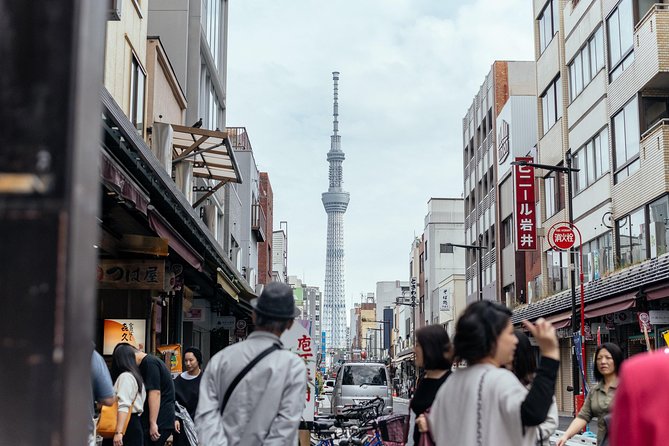
You begin at Kaminarimon, stepping into Nakamise Shopping Street with those classic lantern vibes and the feeling of a long-running commercial lane. The tour frames Nakamise as a street where locals have shopped since the 18th century. Even if you do not buy anything, that context helps you understand why the street is still alive with energy.
You get about 20 minutes here, enough time to browse without losing the rest of your route. This is also where you can do light snacking if you want. The street is known for souvenirs and street food, so it is a good start because you can set your preferences early, sweet tooth first or keep it simple and save calories for later.
Potential drawback: Nakamise is a popular shopping corridor, so you might feel the usual crowd pressure around the gate. If you dislike shoulder-to-shoulder movement, go slower, keep your hands free, and focus on one or two stalls instead of trying to see everything.
Hozomon and the age manju moment
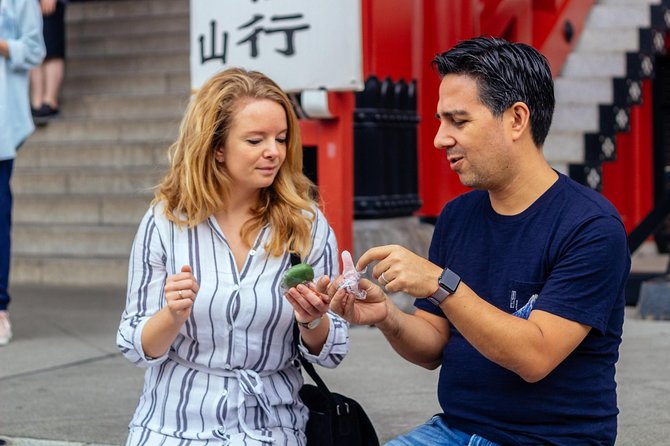
Next comes Hozomon, where you stop near a store to try age manju in a flavor of your choice. You get around 20 minutes at this stage. That snack break is not just about eating, it is about connecting with how people experience Senso-ji day-to-day.
Age manju is typically something you taste fresh, and it is a nice way to warm up your senses before you move fully into the temple atmosphere. This also gives you an easy, friendly activity that is low-pressure. Even if you are not the biggest foodie, it is a memorable cultural moment that is tied to the location.
Consideration: the tour includes time to try it, but food is not listed as included. So budget a bit of extra cash for whatever you pick.
Senso-ji Temple: incense, oldest-temple context, and the offering
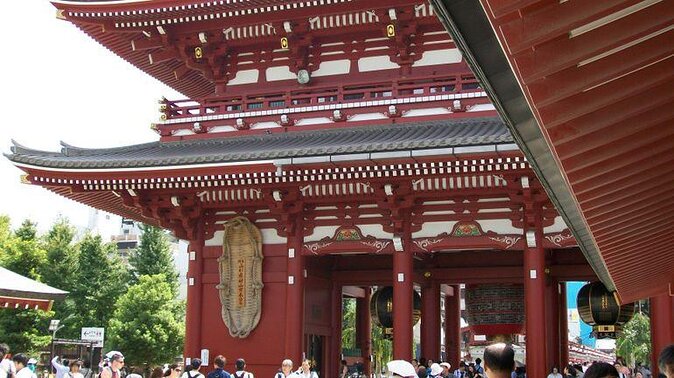
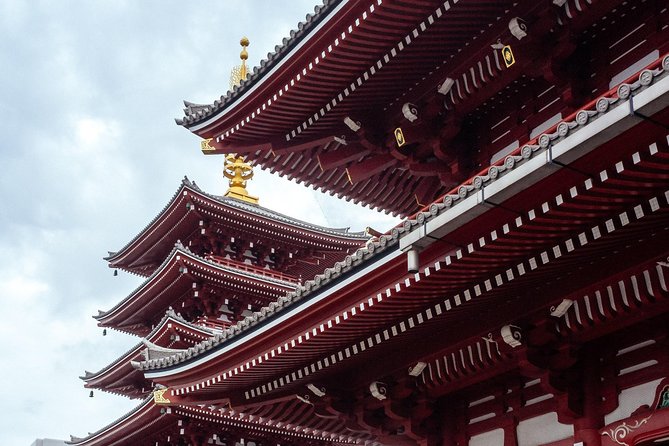
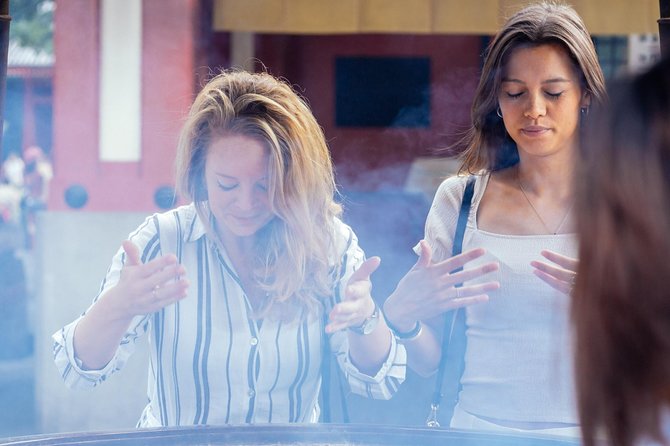
This is the heart of the tour. Senso-ji is presented as dating back to 628, and you are given time to take in the incense smoke before entering deeper. That incense moment can feel dramatic in the best way, because it adds atmosphere fast. You are not just reading about a temple, you are experiencing how it feels when people are there.
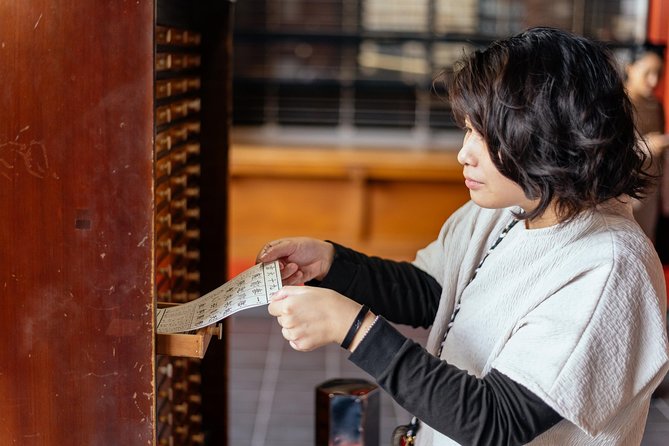
The tour also includes a small offering at Senso-ji. That is a big practical win. Without guidance, it can be confusing to figure out what to do, where to go, and what etiquette matters. An included offering means you can participate respectfully and confidently, rather than standing around unsure while others move.
You get about 20 minutes at the temple stop. That is a realistic amount for getting the lay of the land, seeing the key areas, and learning how the space connects to Japanese religious culture and practice.
One note: temple grounds include steps and uneven surfaces. Keep comfy shoes on your packing list, and take your time through the incense and gate zones.
Asakusa Hanayashiki and the shift from sacred to playful
After Senso-ji, the route threads through narrow streets toward Asakusa Hanayashiki, a place known for freshly made melon pan bread. You get about 15 minutes here.
This stop is valuable because it shows another side of Asakusa. The area is not only about worship and tradition. It is also about daily life and local treats. A quick pause for melon pan style bread keeps the tour from feeling like one long temple lesson.
If you love street snacks and small local food culture, this part will likely hit for you. If you prefer only major sightseeing, you might treat it as a break rather than a must-see, but the bread stop is short enough that it usually does not derail your day.
Edo Taito Traditional Crafts Center: Tokyo made by hands
Next is the Edo Taito Traditional Crafts Center, also referred to as the Edo Shitamachi Traditional Crafts Museum. You get around 15 minutes.
This is one of those stops that changes your mental picture of Tokyo. Instead of seeing the city only through buildings and transit lines, you see work that reflects local traditions and creative skills. The tour notes that on weekends, you may even see someone performing the craft in front of you. Even if you do not catch live making, browsing artisan items gives you a grounded sense of how heritage can look today.
In the feedback, people often praise guides for connecting what they see in shops to culture and customs. A crafts stop is where that connection becomes visible, because you can ask about what you are looking at, and you can match the story to an object in your hands.
Kappabashi Street (Kappabashi Dogugai): why food models matter
Then you head to Kappabashi Street, specifically the Kappabashi Dogugai area. The tour includes two separate segments here, each around 15 minutes. Yes, it repeats, and that is not a mistake. It gives you more than a quick glance and lets you notice details.
Kappabashi is famous for restaurant supplies, including those food models used in storefronts. The tour highlights the idea of models that show dishes, made for restaurants, which helps explain how Japanese businesses attract customers through visual cues.
I like this stop because it is hands-on in a way. Even if you do not buy anything, it is a practical cultural window. You learn that the street is not only for souvenirs, it supports an industry that restaurants rely on.
Practical tip: if you like small collectible items, this is the kind of place where you might find something you will use or at least enjoy owning, like miniature dishware or kitchen-style pieces. The route gives you time to look without rushing.
What to expect from the pacing and walking
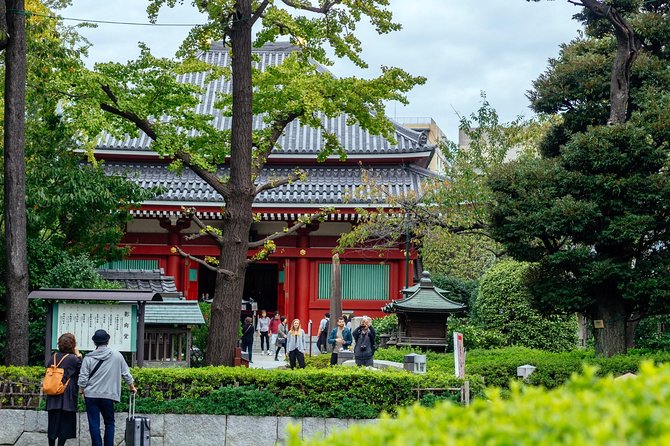
This is a 3-hour walk with no hotel pick-up, and it ends back at the meeting point. The meeting point is listed as 2-chōme-16-11 Kaminarimon, Taito City, Tokyo 111-0034, Japan.
Because the tour includes temple steps, narrow streets, and browsing in multiple shop zones, you will want a moderate fitness level. You do not need to be an athlete, but you should plan for steady walking and a bit of standing time.
The pacing is also helped by the private format. If you need a short break, or if someone in your group wants to linger over a specific shop window, your guide can usually adjust on the fly. That flexibility is a major reason people rate the experience so highly.
How this tour works for different kinds of travelers
This tour is a strong fit if you want Tokyo history without turning the day into a lecture. You get landmark time, snack moments, craft browsing, and shopping street atmosphere. It is structured enough to feel efficient, but private enough to stay personal.
It also works well for:
- First-time visitors to Tokyo who want a focused neighborhood experience around Asakusa and Senso-ji
- Couples who like walking together and asking questions without feeling like a crowd
- Parents and teens, because the route includes food snacks and hands-on craft viewing, not only temples
- Travelers who care about etiquette, because the included offering at Senso-ji helps you participate correctly
If you hate walking, or if you only want the largest sites with minimal time in shops, you might find parts of the route feel like shopping street culture. You can still enjoy it, but you may want to treat Nakamise and Kappabashi as guided browsing rather than expecting a single big wow moment at each turn.
Should you book this Asakusa history tour?
I think this is an easy yes if you want a guided, local-feeling Asakusa afternoon with temple context and practical cultural stops. At $139.63 per person, you are paying for a private guide, free-entry sightseeing time, and an included Senso-ji offering. That mix adds up, especially if you would otherwise spend your time wandering without understanding the why.
I would book it sooner rather than later. This experience is commonly booked about 48 days in advance, and it has an excellent track record with a 5 rating and 28 reviews plus a 100% recommendation rate.
Skip it only if you strongly prefer self-guided travel with no structure, or if you want meals included and do not want to budget for snacks. Otherwise, this is the kind of tour that helps Asakusa click, from lantern-lit shopping streets to the incense and craft details you are most likely to remember.
FAQ
How long is the Tokyo History: Sensoji Temple & Asakusa District Private Tour?
It runs about 3 hours.
Is this tour private or shared with other people?
It is private, with only you and your local guide.
How much does the tour cost per person?
The price is $139.63 per person.
What’s included in the tour?
A private guide is included, along with a CO2-neutral approach (emissions are offset), and an offering at Sensoji Temple is included.
What is not included?
Hotel pick-up and drop-off are not included. Food and beverages are not listed as inclusions.
Where does the tour start and where does it end?
The tour starts at 2-chōme-16-11 Kaminarimon, Taito City, Tokyo 111-0034, Japan, and it ends back at the same meeting point.
Do I get a mobile ticket?
Yes, the tour includes a mobile ticket.
Can I cancel for a full refund?
Yes. You can cancel for a full refund up to 24 hours before the experience starts. If you cancel within 24 hours, the amount paid is not refunded.
More Historical Tours in Tokyo
- Mt. Fuji Heritage Tour: Traditional Villages, Lakes & Shrine
★ 4.5 · 509 reviews - From Tokyo: Nikko World Heritage Site Private Full-Day Trip
★ 4.9 · 243 reviews - Tokyo: The Best of Izakaya in Shinjuku Food & Cultural Tour
★ 4.9 · 221 reviews - Asakusa: 1400-year history exploration
★ 5.0 · 155 reviews
Newly listed around Tokyo
- Classic Tsukiji Food Tour★ 5.0 · 119 reviews
- Tokyo Tsukiji Market Small Group Tasting Tour★ 5.0 · 8 reviews
- Sushi-Making Experience at ’Activity Maison Kissako’★ 5.0 · 197 reviews
- Kappabashi Knife Shopping Tour with Government-Licensed Guide★ 5.0 · 10 reviews
- Travel Tokyo with Your Own Personal Photographer★ 5.0 · 43 reviews
- Tokyo Tsukiji Fish Market Food Tour: 15 Stops & Walk Local Street★ 5.0 · 139 reviews
- Tsukiji Fish Market Culture Walking and Food Tour★ 5.0 · 36 reviews
- Tokyo Japanese Calligraphy Experience with a Master Artist★ 5.0 · 35 reviews
Shrine & Temple Visits, compared.
Fushimi Inari, Kinkakuji, Bamboo Grove 1 Day Bus Tour
Read our review →
Meiji Shrine, Asakusa, Skytree Bus Tour and Cruise
Read our review →
Fushimi Inari Hidden Hiking Tour (Private Option Available)
Read our review →
Osaka/Kyoto:Kinkakuji,Arashiyama,FushimiInariShrine,NaraPark
Read our review →
Asakusa Walking Tour with Sensoji Temple Visit
Read our review →
Nikko: Kegon Falls, Lake Chuzenji & Toshogu Temple
Read our review →
Kamakura & Enoshima Day Trip including Temple Tickets
Read our review →Browse the lists this tour appears in