
Review · JAPANESE CRAFT WORKSHOPS
Tokyo Japanese Calligraphy Experience with a Master Artist
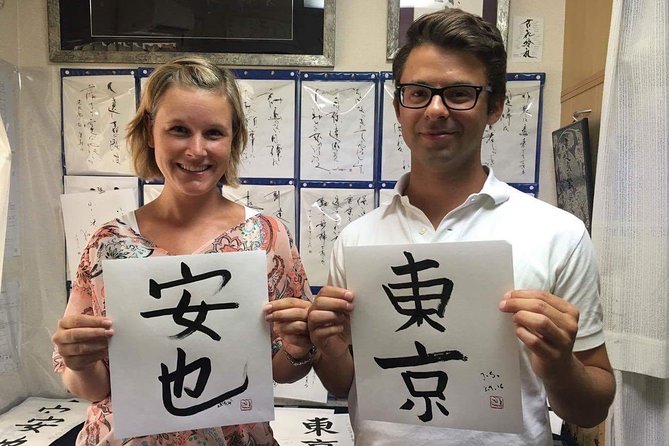
Ink, silence, and a master at work. In Tokyo, this hands-on shodo class turns a famous cultural tradition into a focused 90-minute skill session, not a rushed demo. You practice brush strokes on paper while you learn how shodo fits both traditional life and modern Japanese culture, guided by a master calligrapher in a quiet studio.
What I love most is the hands-on pace, you get actual brush time, not just watching. I also like that the instruction is paired with English guidance, so you are not stuck guessing what good strokes should feel like.
The main thing to consider is the format is short and structured, so this is best for learning a taste of shodo and building a few strong characters, not for long, deep practice sessions.
In This Review
- Key things to know before you go
- Shodo in Tokyo: a break from photo stops
- Getting to 球鶴書道教室 from Umeyashiki Station
- Your master instructor: Eizuru Matsumura and why his background matters
- 90 minutes of brushwork: ink, paper, and Japanese character practice
- English support and the station-to-studio handoff
- What you take home from shodo class
- Price and logistics: is $92.24 good value?
- Who should book this shodo experience in Tokyo
- Should you book this Tokyo shodo class?
- FAQ
- How long is the shodo calligraphy experience?
- What is the price per person?
- Where does the experience take place?
- How do I get there from Umeyashiki Station?
- What is included in the price?
- What is not included?
- Is hotel pickup available?
- What languages do you have support for?
- What is the minimum age and are kids allowed?
- What is the cancellation and refund window?
Key things to know before you go
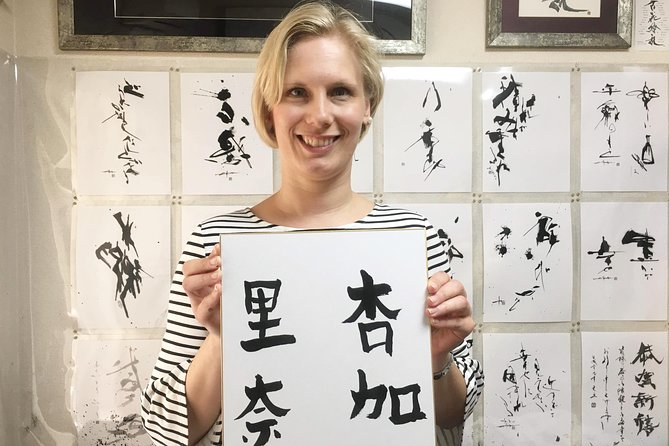
- A master-led studio lesson: instruction is led by calligrapher Eizuru Matsumura at 球鶴書道教室.
- Small group size: up to 10 travelers, which helps you get attention during practice.
- Tools are provided: brushes, ink, and paper are included, so you can focus on the learning.
- English support is built in: you get an English guide, plus on-the-ground interpretation in practice.
- You create a take-home souvenir: your written work is something you can keep.
- It is designed for calm focus: reviews mention a quiet room and gentle music, the right vibe for concentration.
Shodo in Tokyo: a break from photo stops
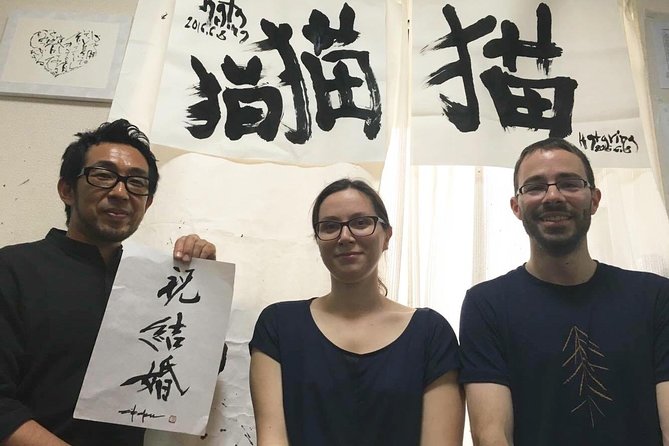
Tokyo does a lot of things loudly. This experience is the opposite. Instead of sprinting between sights, you slow down in a studio where the goal is simple, control your brush, watch the ink bloom, and produce a clean stroke you can be proud of.
I like that shodo is treated as a skill, not a performance. You practice using brush strokes on paper, which is where the real learning happens. The master’s role is to guide your technique while you learn about the cultural meaning behind the art, including how shodo connects to traditional Japanese culture and also shows up in contemporary life.
One review compared the experience to yoga and music. I get that. The process has a rhythm. You repeat strokes, you correct, you try again. When it clicks, your mind feels less cluttered, even if you are not trying to be zen about it.
And because it is only about 1.5 hours, you get a meaningful cultural activity without blowing half a day. That matters if you are also trying to see shrines, neighborhoods, and food spots.
More Craft Workshops in Tokyo
- Chopstick Making Workshop in Ginza
★ 4.8 · 1,366 reviews - Tokyo: Samurai Sword & Archery Class from Samurai Descendant
★ 5.0 · 603 reviews - Tokyo: Shinjuku Chopstick Making Class
★ 4.9 · 440 reviews
Getting to 球鶴書道教室 from Umeyashiki Station
You meet around Umeyashiki Station, and the studio is close. The school is about a five-minute walk from Umeyashiki Station on the Keikyu Line. That is a big deal in Tokyo, because station-to-studio transfers can quietly eat time.
Your day is built around an easy back-and-forth. The activity begins at Umeyashiki Station and ends back at the meeting point. If you are staying nearby, it is smooth. If you are coming from farther away, plan to arrive with enough cushion so you are not stressed before the first brush stroke.
If you want hotel pickup, that is available but it costs extra. The extra fee listed is 6000 yen for hotel pickup, and it notes you would otherwise handle transportation.
Practical tip: if you are the type who likes to arrive early to breathe and get oriented, show up a few minutes before start time. The studio vibe is part of the value, so you want your brain in calm mode before instruction begins.
Your master instructor: Eizuru Matsumura and why his background matters
This class is led by calligrapher Eizuru Matsumura. He is not only a teacher, he is also an artist and a lecturer who has participated in workshops, events, and TV programs. He has practiced calligraphy since he was 31 years old, so you are not getting someone who is “teaching a hobby,” you are meeting a working professional.
There is also a fun detail that makes him feel grounded in the wider Japanese creative world. He created the official logo for the Kyokushin Karate World Tournament pamphlet. That signals something important: calligraphy in Japan is not stuck in a museum. It travels across culture, events, and branding.
What I like about a master-led lesson is the feedback quality. With shodo, small changes matter. A brush stroke can look correct in theory and still feel wrong on paper. Having someone who can shape your technique in real time is the difference between making a cute souvenir and creating something you understand.
The school itself offers instruction from basic to creative calligraphy. That helps if you have no background, and it gives you a pathway to make your result look more intentional as the lesson goes on.
90 minutes of brushwork: ink, paper, and Japanese character practice
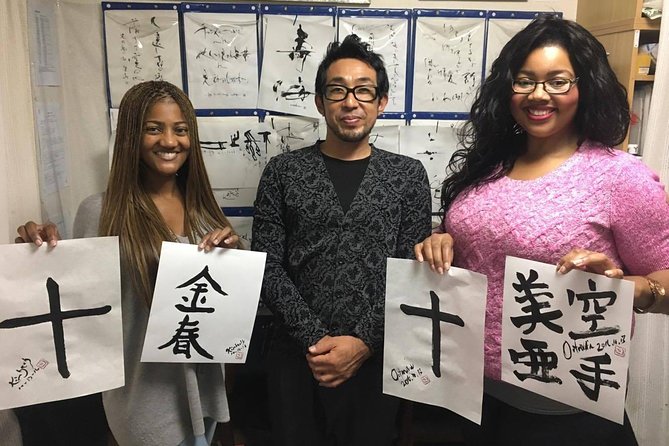
This is a structured lesson with a quiet studio focus. You start by learning the tools and how to handle them. The experience includes all necessary equipment, so you are not scrambling for materials. Expect brush, ink, and paper at the right place and time.
Then comes the core learning: you practice brush strokes on paper to form Japanese characters in an artistic style. The lesson connects shodo to its historical role, once indispensable to nobles and samurai. You also learn about traditional and contemporary Japanese culture, so the class feels meaningful even if you are only writing for 90 minutes.
Here is what makes this kind of practice valuable. You are training your hand to slow down. That is not just for aesthetics. It changes how you think about writing, because you stop treating it like typing and start treating it like movement.
One practical takeaway from the reviews is how calming the environment feels during instruction. People described the small space and gentle music, and that combination matters. When the room is quiet and the pace is steady, it is easier to focus on the brush rather than the fear of doing it wrong.
Possible drawback to keep in mind: 90 minutes goes fast. You will likely work on a limited set of strokes and characters rather than building a long series. If you are hoping for a marathon practice session or advanced calligraphy coursework, this may feel like a strong introduction rather than a complete training program.
A different sort of day in Japan:
- Mt Fuji and Hakone 1-Day Bus Tour Return by Bullet Train
★ 5.0 · 26,383 reviews - 1-Day Tokyo Bus Tour
★ 5.0 · 14,250 reviews - Tokyo: TOKYO SKYTREE® Admission ticket
★ 4.5 · 11,192 reviews - Tokyo: teamLab Planets TOKYO Digital Art Museum Entry Ticket
★ 4.6 · 9,779 reviews
English support and the station-to-studio handoff
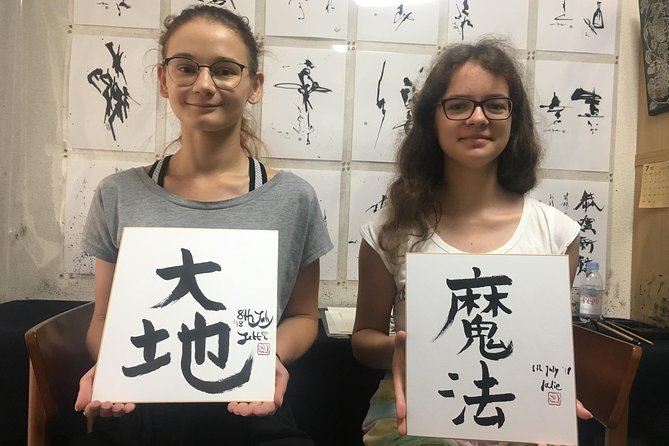
You get an English guide included with the experience. That helps you understand instructions, ask questions, and correct technique without guessing.
In reviews, translators made a clear difference. People mention support from interpreters like Michiko San and Yoko, including help getting to the nearest station and guiding you from there to the master’s studio. That is exactly the kind of help that turns a potentially confusing Tokyo start into a smooth arrival.
Reviews also point out how helpful and prepared the translators were. That shows up in real ways: getting you oriented, making sure you understand what comes next, and helping you communicate with the master during practice.
And yes, the tone is friendly. One review mentioned the instructor being patient and kind, with humor in the lesson. Another shared that the studio experience was personally memorable, with the master acknowledging a birthday, singing happy birthday, and presenting a gift. That is not guaranteed for everyone, but it does speak to the human side of the instruction.
Practical tip: even if you know only a few Japanese phrases, you do not need much for this class. The English guide and translator support the learning. Your job is mostly to watch carefully, copy the stroke shape, and keep trying.
What you take home from shodo class
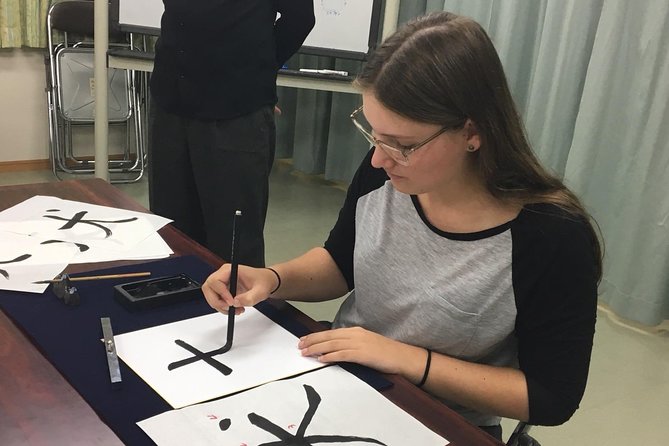
A big part of the value is what you leave with. One review notes that you can keep your work, which makes the class feel like more than an activity you did. You get a tangible souvenir created with your own brush strokes.
That changes the way you remember it. Photos fade. A finished calligraphy piece sits on a desk, and every time you look at it, you recall the calm focus of the studio.
Also, because you practice on real materials, you get a better sense of how ink behaves and how brush pressure changes the line. Even if you later try writing at home, you will remember the feel of correct stroke control.
If you want to display your work, plan to bring it home carefully. The experience includes the equipment during class, but you should still handle the finished piece gently as you travel back to your hotel.
If you are buying gifts anyway, this is a more personal option. A calligraphy result has meaning, especially when the instruction includes cultural context about shodo’s role in Japanese life.
Price and logistics: is $92.24 good value?
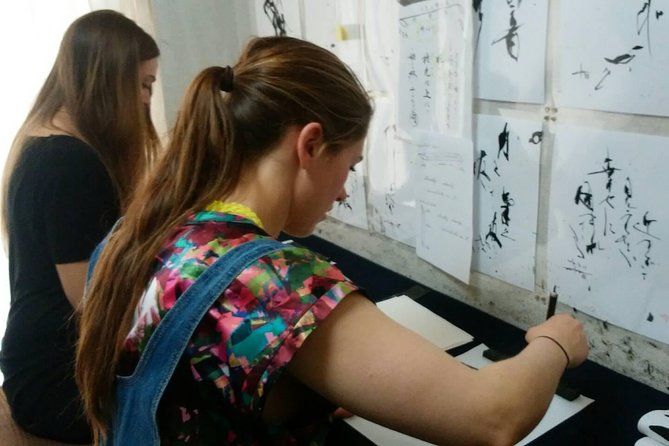
At $92.24 per person for about 1.5 hours, this is priced like a small-group cultural workshop with a master artist, English support, and materials included. In other words, you are paying for more than a door entry. You are paying for guided technique and the tools that make the learning possible.
What helps the value:
- Equipment is included, so you do not have to buy anything before you arrive.
- An English guide is included, which makes the learning usable, not just symbolic.
- Maximum group size is 10, so you are not stuck in a crowd with zero attention.
- A master calligrapher leads the lesson, and his background includes professional creative work.
What can change the total cost:
- Food and drinks are not included, so budget for a snack or meal before or after.
- Hotel pickup is extra at 6000 yen if you request it.
- Private transportation is not included, so you will likely use public transit.
One more value signal: the experience has a high satisfaction level, with a rating of 4.9 out of 5 and 97% recommending it. That lines up with what the class is designed to deliver, calm, focused instruction, and a positive, patient teaching style.
If you compare this to half-day tours that are mostly transit and photos, this is a good use of time. You get a cultural skill, you leave with something real, and you can fit it near other Tokyo highlights without wrecking your schedule.
Who should book this shodo experience in Tokyo
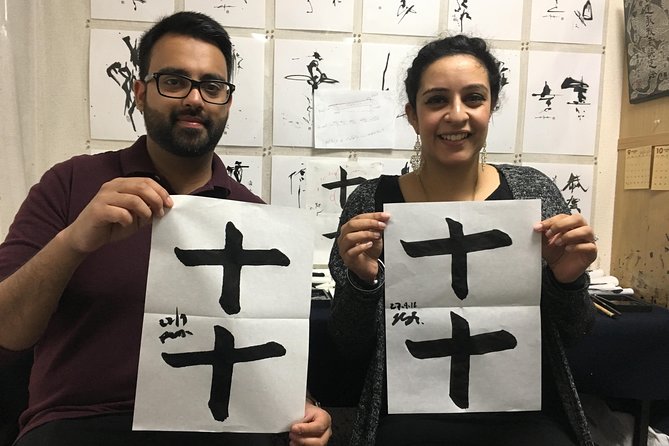
This is a great match if you want something different from the standard sightseeing circuit. It is also ideal if you like structured hands-on activities with clear guidance.
It suits:
- Beginners who want to learn shodo with step-by-step help.
- People who enjoy quiet, focused activities and want a break from crowd energy.
- Families with children age 7 and up, as long as the child is accompanied by an adult.
- Anyone who appreciates cultural context, because you learn about traditional and contemporary Japanese culture, not just how to copy a symbol.
You should think twice if:
- You need a very flexible, slow-paced course. This is short and structured.
- You expect multiple hours of calligraphy practice. This experience is about 1 hour 30 minutes, so you will build a base rather than master a full curriculum.
Group size matters too. Because it can be up to 10 travelers, it remains intimate but still social enough that you can ask questions and observe others’ progress.
Should you book this Tokyo shodo class?
Yes, I think you should book it if you want a calm, meaningful Tokyo moment that goes beyond photos. The combination of a master instructor, English support, and provided materials makes it easy to do well even if you have zero calligraphy background.
Book it especially if you like experiences where you can slow down and create something with your own hands. The studio setting, the gentle music described in reviews, and the patience from the instructor and interpreters all point to a lesson designed for focus, not intimidation.
If you are traveling with a child 7 or older, this can be a memorable family activity. And if you are celebrating a special occasion, there is a chance for a thoughtful extra touch, based on past experiences.
One last practical suggestion: plan your day so you are not rushing across Tokyo right afterward. After working with ink and concentrating, you will probably want an easy next step, like a nearby coffee stop or a relaxed dinner.
FAQ
How long is the shodo calligraphy experience?
It lasts about 1 hour 30 minutes.
What is the price per person?
The price is $92.24 per person.
Where does the experience take place?
It takes place at 球鶴書道教室 near Umeyashiki Station in Ota City, Tokyo.
How do I get there from Umeyashiki Station?
The school is about a five-minute walk from Umeyashiki Station on the Keikyu Line.
What is included in the price?
Included are a professional guide, all necessary equipment, and an English guide.
What is not included?
Food and drinks are not included. Hotel pickup is also not included, and private transportation is not included.
Is hotel pickup available?
Hotel pickup is available for an additional 6000 yen, as noted in the tour details.
What languages do you have support for?
An English guide is included.
What is the minimum age and are kids allowed?
The minimum age is 7, and children must be accompanied by an adult.
What is the cancellation and refund window?
You can cancel for a full refund if you cancel at least 24 hours before the experience starts. Free cancellation is offered up to 24 hours in advance.
Newly listed around Tokyo
- Classic Tsukiji Food Tour★ 5.0 · 119 reviews
- Tokyo Tsukiji Market Small Group Tasting Tour★ 5.0 · 8 reviews
- Sushi-Making Experience at ’Activity Maison Kissako’★ 5.0 · 197 reviews
- Travel Tokyo with Your Own Personal Photographer★ 5.0 · 43 reviews
- Tokyo Tsukiji Fish Market Food Tour: 15 Stops & Walk Local Street★ 5.0 · 139 reviews
- Kappabashi Knife Shopping Tour with Government-Licensed Guide★ 5.0 · 10 reviews
- Tokyo History: Sensoji Temple & Asakusa District Private Tour★ 5.0 · 28 reviews
- Tsukiji Fish Market Culture Walking and Food Tour★ 5.0 · 36 reviews
Japanese Craft Workshops, compared.
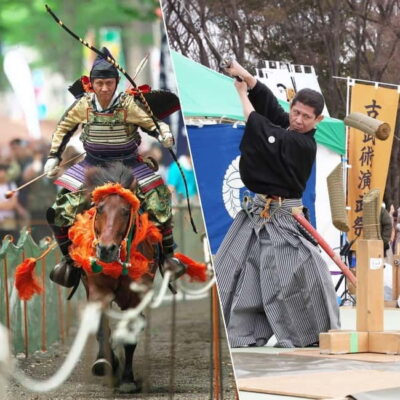
Samurai Sword & Archery Class from Samurai Descendant
Read our review →
Japanesel Archery Experience HIROSHIMA CASTLE SHARAKU
Read our review →
Authentic knife making experience at a blacksmith in Kyoto
Read our review →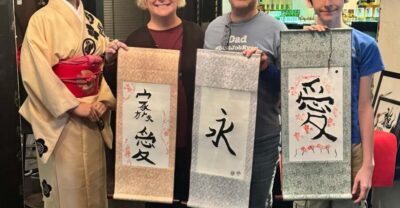
Browse the lists this tour appears in