
Review · WORKSHOPS
Kintsugi gold repair workshop
Gold makes broken bowls feel meaningful. In this hands-on Tokyo class, you learn kintsugi, the Japanese craft of repairing pottery with gold, and you get step-by-step guidance on how to do it yourself. I love that the tools and materials are included, so you can focus on the process instead of shopping for supplies.
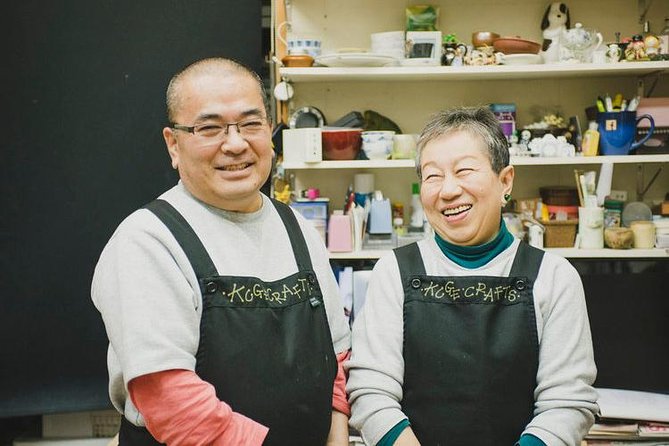
The best part, for me, is the payoff: you finish with a real, repaired piece you can keep and use. The instruction is led with clear English support from Ms Yoshiko, and you also see technique work demonstrated by Mr Yoshiichiro. One thing to consider is timing and weather, because the experience requires good weather and you cannot get a refund if you cancel for any other reason.
In This Review
- Key things that make this kintsugi workshop worth your time
- Why kintsugi repairs feel like Japanese culture, not just crafts
- Getting started in Taito City, with a small group and a clear timeframe
- The 10-minute host introduction that sets you up to succeed
- The mini lecture on kintsugi techniques, plus bowl choice
- Picking your bowl from the selection: make a souvenir you will actually want
- The main workshop: filling, repairing, and adding gold or silver powder
- Why the hands-on part is so satisfying
- Drying and packaging: turning your work into a keepable souvenir
- Tea and cake during the workshop break: a simple, pleasant reset
- Price and value: what $699 buys you in Tokyo
- Who this kintsugi workshop fits best
- Practical tips so your bowl looks its best
- Final thoughts: should you book this kintsugi repair class in Tokyo?
- FAQ
- How long is the kintsugi repair workshop in Tokyo?
- Where does the experience start and end?
- How many people are in a group?
- What is included in the class?
- Do I take my repaired bowl home?
- What happens if I need to cancel or if the weather is poor?
Key things that make this kintsugi workshop worth your time
Small group size (max 4 travelers) keeps the attention on your piece.
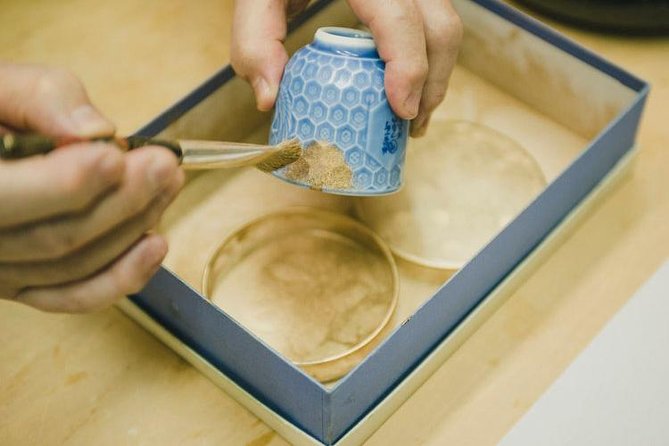
Gold or silver powder lets you choose the look of your repair.
Tools, materials, and filled-in technique are part of the session, not add-ons.
You take your repaired bowl home, packaged after drying.
Tea and cake are included, a nice break during a calm, careful craft.
You learn more than steps, including ideas for how to think about the repair.
Why kintsugi repairs feel like Japanese culture, not just crafts
Kintsugi is one of those Japanese arts that you instantly get, even if you have never touched a glue-like material in your life. The idea is simple and powerful: when something breaks, you do not hide it. You repair it in a way that makes the break part of the object’s story, often with gold that catches light.
In this Tokyo workshop, that philosophy translates into something practical. You are not just watching a demo, you are doing the actual repair steps on a bowl you choose from the options provided. That matters for your trip because you leave with a souvenir that has meaning, not just a printed certificate.
Also, the class is short enough to fit into a busy day in Tokyo. At about 2 hours, it works well if you want one focused cultural activity without turning your schedule into a spreadsheet.
A few more Asakusa days to weigh up
- Tokyo Sumo Entertainment Show with Chicken Hot Pot and Photo
★ 5.0 · 1,205 reviews - Mt Fuji Private Day Trip from Tokyo with English speaking driver
★ 5.0 · 846 reviews - Kimono Tea Ceremony at Tokyo, Asakusa Maikoya
★ 5.0 · 638 reviews
Getting started in Taito City, with a small group and a clear timeframe
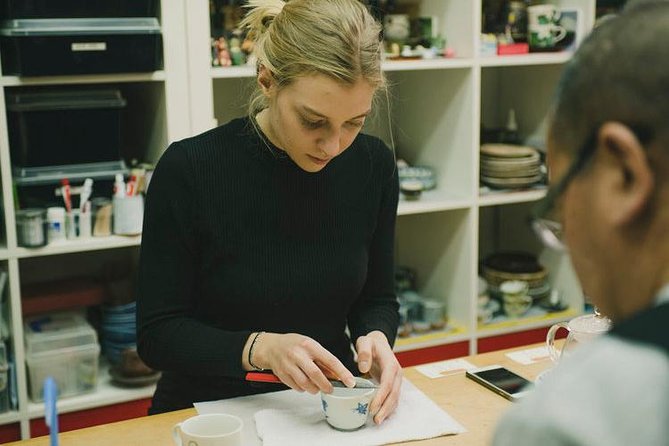
The experience begins in Taito City, Tokyo, and it ends back at the meeting point. You will be in a group of up to 4, which is a big deal for a hands-on craft. In a tiny group, you do not spend your time waiting for someone to catch up, and your host can correct details while they are still easy to fix.
You will also want to plan for the full session time. The format is structured:
a short host introduction
a technique lecture and bowl selection
a long hands-on workshop block
That pacing keeps you from feeling lost. You get the why first, then you get the how, and then you get time to actually make a mess, fix it, and turn the result into something you want to live with.
Finally, you will have a mobile ticket, so have your phone ready. Since the meeting point is noted as being near public transportation, you can keep it simple and rely on transit instead of adding a taxi line to your day.
The 10-minute host introduction that sets you up to succeed
The class starts with a quick introduction and overview, about 10 minutes. In real life, that kind of early briefing is underrated. When you are working with repair materials, the biggest problem is usually not the technique, it is not knowing what comes next.
This start helps because it frames the flow of the session right away. You hear how the repair process works and what decisions you will make during the class, especially around selecting your bowl and applying the repair material.
It is also the moment when the host can set expectations for pace. Kintsugi is not rushed. When you understand that up front, you spend less energy worrying and more energy paying attention.
The mini lecture on kintsugi techniques, plus bowl choice
Next comes the lecture section, around 10 minutes, covering kintsugi techniques and helping you choose your bowl. You will be picking from a set of chipped or cracked bowls.
That choice step sounds small, but it is a major part of getting a satisfying result. You want to think like this:
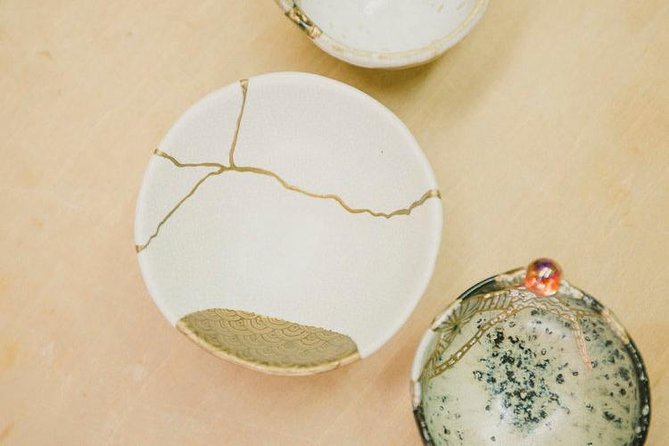
If your bowl has larger cracks, you get a more dramatic gold line effect.
If the damage is smaller, the repair can look more subtle and refined.
If you care about using the bowl after, you might lean toward a shape that feels comfortable to you.
During the session, you also learn about two approaches to technique: there is an explanation of different methods, and you can observe a technique demonstrated by Mr Yoshiichiro. The session description specifically mentions hands-on work for the filling-in technique and observing the piecing-together technique.
Even if you do not memorize every term, you are absorbing the idea that kintsugi is both craft and design thinking.
A different sort of day in Japan:
- Asakusa Senso-ji Temple and Old Tokyo Walking Tour
★ 5.0 · 560 reviews - Skip the lines Basic Ticket at SAMURAI NINJA MUSEUM TOKYO
★ 5.0 · 470 reviews - Official Street Go-Kart Tour in Asakusa
★ 5.0 · 461 reviews - Private Craft Your Own Ring Handmade Experience in Asakusa, Tokyo
★ 5.0 · 358 reviews
Picking your bowl from the selection: make a souvenir you will actually want
When the host sets out the cracked pieces, treat it like choosing your canvas. You are not just selecting an object. You are selecting how the final repair line will look, where attention will go, and how the repaired bowl will feel in your hands later.
I like that the bowls are already prepared for repair. That means you are not dealing with the stress of bringing a damaged family item that might not be compatible with the workshop materials. Instead, you choose from what the host provides, then you create your own version of the finished repair.
One practical tip: pick the bowl that you can picture using or displaying. The workshop ends with you taking it home, so you will want to love it long after the gold powder has dried.
The main workshop: filling, repairing, and adding gold or silver powder
Now you get to the heart of the experience: the 100-minute hands-on workshop block. This is where your time turns into a skill.
The basic flow is:
1) Under guidance, you fill the damaged areas.
2) You sprinkle gold or silver powder over the repair area for the finished look.
3) You let everything dry.
4) The host packages your completed bowl for you to take home.
This is where the class shines for most people. The host provides the step-by-step direction, but you still do the actual work. That balance is ideal when you want the meditative, careful vibe of kintsugi without feeling like you are trying to figure it out from scratch.
Why the hands-on part is so satisfying
The repair process gives you quick feedback. You can see where the powder lands and how the repaired line changes the look of the bowl. You also learn that kintsugi is not only about covering damage. It is about shaping attention. The gold or silver creates a visual rhythm across the break.
In the workshop, you will also hear conceptual discussion, not only technique. That is useful if you want to keep practicing at home later, because the materials are only half the story. The other half is understanding how to treat the repaired area as part of the object.
Drying and packaging: turning your work into a keepable souvenir
After the repair is done, there is drying time built into the session. Drying is not a flashy part, but it is crucial. If you try to rush it, the finish can be messy and you lose the crisp definition of the repaired line.
When your bowl is ready, the host packages it so you can take it home. This small detail is a big value point. You do not have to figure out safe transport for a recently repaired piece. You also do not have to worry about how to pack fragile pottery on public transit.
This is one reason this class feels like more than a one-time activity. Your final bowl is a physical reminder of the craft, plus a conversation piece for home.
Tea and cake during the workshop break: a simple, pleasant reset
You get tea and cake provided as part of the session. This is not just a snack. It gives your hands and your brain a rest during a detailed craft.
Kintsugi work is slow and fine-motor. A break with tea keeps the experience from turning tense. It also helps if you are traveling across Tokyo all day and you arrive with a little fatigue. You get to settle in, slow down, and then get back to repairing.
Price and value: what $699 buys you in Tokyo
At $699 for about 2 hours, this is not a cheap activity. But it also is not overpriced in the way many craft classes can be. Here is what you are paying for, in plain terms:
You keep the finished repaired bowl. That is not a class project that disappears into a studio.
Tools and materials are included, including the gold or silver powder for your piece.
The group is small, max 4, which adds real instructor time.
You get tea and cake, which makes the session feel complete.
If your goal is a souvenir that is personal and meaningful, this price can make sense. If your goal is only to try a craft for fun, you might prefer a cheaper option. But if you like practical arts and you want a piece that you can use or display for years, the value comes from the take-home result plus the guided learning.
Think of it like this: you are paying to learn a skill and to get the end product safely packed, all in one sitting.
Who this kintsugi workshop fits best
This workshop is a great match if you:
enjoy hands-on making more than passive sightseeing
want a Japanese craft souvenir you can live with at home
like small group activities with instruction you can actually use later
want a cultural experience with calm focus, not noise
It is also noted that most travelers can participate, which helps if you are not sure where your comfort level is with crafts.
If you hate waiting for drying time, or you need a break every few minutes, this might feel a bit slow. But if you are the kind of person who likes careful work, it is a strong fit.
Practical tips so your bowl looks its best
You will want to approach this like a craft day, not like a sightseeing day.
Wear or bring something comfortable, since you will be working carefully and handling materials.
Keep expectations realistic. The bowl you repair will reflect the damage you started with, and that is part of kintsugi’s beauty.
If you care about a particular look, pay attention during bowl selection and choose the one that fits your taste.
Bring your phone for the mobile ticket, and plan transit time to arrive without rushing.
And one more reality check: because the experience requires good weather, plan your Tokyo days with some flexibility. If weather cancels the class, you will be offered a different date or a full refund, but you should still build your schedule with that in mind.
Final thoughts: should you book this kintsugi repair class in Tokyo?
I think this is worth booking if you want one meaningful Tokyo activity that gives you something tangible. The hands-on structure, the small group size, and the fact that you take the repaired bowl home make it feel complete. Add tea and cake, plus guided conceptual talk from Ms Yoshiko, and you end up with more than a craft, you get a practice you can understand.
Skip it only if $699 is hard to justify for you, or if you are traveling on a schedule that cannot absorb a possible weather change.
If you love practical arts, want a gold-sparked souvenir, and like learning by doing, this kintsugi workshop is the kind of class you will remember every time you see the repaired line.
FAQ
How long is the kintsugi repair workshop in Tokyo?
The workshop is approximately 2 hours.
Where does the experience start and end?
It starts in Taito City, Tokyo, Japan, and ends back at the same meeting point.
How many people are in a group?
The experience has a maximum of 4 travelers.
What is included in the class?
Tools and materials are included, and tea and cake are provided.
Do I take my repaired bowl home?
Yes. After the repair and drying, the host packages your completed bowl so you can take it home.
What happens if I need to cancel or if the weather is poor?
The experience is non-refundable and cannot be changed for any reason. If it is canceled due to poor weather, you will be offered a different date or a full refund. Confirmation is received within 48 hours of booking, subject to availability.
Newly listed around Asakusa
- From Asakusa: Old Tokyo, Temples, Gardens and Pop Culture★ 5.0 · 47 reviews
- [30 minutes] Rickshaw tour around Asakusa [History, sightseeing, Tokyo Skytree]★ 5.0 · 38 reviews
- Private sake pairing@ancient underground★ 5.0 · 27 reviews
- From Tokyo: Nagano Snow Monkey Park Private Tour★ 4.5 · 15 reviews
- Japanese Matcha Tea Ceremony and Kimono Experience in Hanayaka★ 5.0 · 26 reviews
- “Mt. Fuji 1-Day Private Tour with English Speaking Driver-Guide”★ 5.0 · 46 reviews
- Kimono rental in Asakusa Tokyo★ 5.0 · 17 reviews
- Japanese Papier-Mâché Painting Experience in Taito★ 5.0 · 7 reviews
Workshops, compared.
Sushi Making Tokyo Roll and Authentic Japanese Sushi Class
Read our review →
Roll and Authentic Sushi Making Class in Asakusa
Read our review →
Ramen Cooking Class at Ramen Factory in Kyoto
Read our review →
Sushi Making Class in a Happi Coat near a Famous Spot
Read our review →

Tokyo Sushi Making Class in Tsukiji with Professional Chef
Read our review →
Ramen & Gyoza Cooking Class in Tokyo with Local Supermarket Visit
Read our review →Browse the lists this tour appears in