
Review · GEISHA DISTRICT WALKS
Kyoto: Gion Magical Night Walking Tour
Gion looks different after sunset. This Kyoto night walking tour takes you into lantern-lit streets before the day crowds fully show up, with stories about geisha culture, plus a route that skips the most obvious lines. I love the timing, you get that calmer, softer Gion feeling. I also love the intimate group size, so you can actually ask questions and keep up with the guide’s pacing.
The only real drawback is physical. There are slopes and stairs, and the walking can add up, even though it is only about 1 hour 40 minutes. Wear shoes you trust, and if uphill walking makes you nervous, consider a more level option.
In This Review
- Key Highlights I Think You Will Care About
- Why a Gion Night Walk Works Better Than Daytime Sightseeing
- Meeting at Minamiza Theater and How the Route Feels
- Stop-by-Stop: Gionmachi Minamigawa, Shrines, and Quiet Lanes
- Stop 1: Gionmachi Minamigawa, Where You Might Spot Maiko or Geiko
- Stop 2: Yasui-Konpiragu, A Shrine Linked to Love and Better Relationships
- Stop 3: Sannenzaka Ninenzaka and the Kiyomizu-dera Area Townscape
- A WWII Memorial Stop With a Large Kannon Statue (Lantern-Lit and Meaningful)
- A 400-Year-Old Mourning Story, Tea Ceremony House, and Bamboo Grove
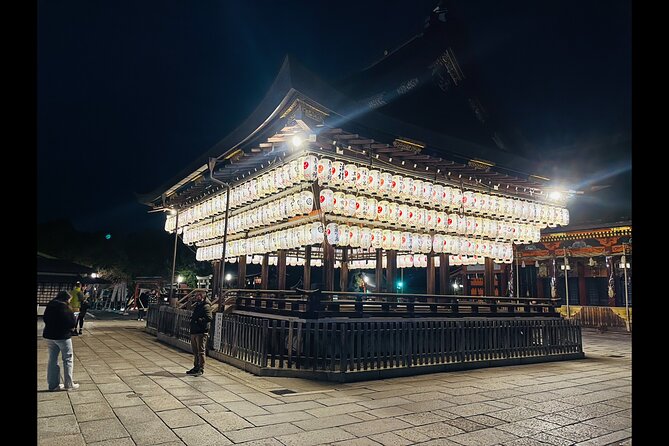
- Stop 4: Yasaka Shrine, Also Known as Gion-san
- The Geisha Culture Part You Can Use in Real Life
- Lantern-Lit Photo Time Without Feeling Rushed
- Walking Time, Value, and What $29.60 Really Buys
- Guides: What Makes the Best Versions of This Tour Tick
- Who Should Book This Gion Magical Night Walking Tour
- Should You Book It? My Practical Verdict
- FAQ
- How long is the Gion Magical Night Walking Tour?
- Where do I meet, and where does the tour end?
- How big is the group?
- Are there admission fees for the stops?
- What should I wear or plan for?
- Is this tour good if I want to see Maiko or Geiko?
- What happens if the weather is bad?
Key Highlights I Think You Will Care About
- Gion before the crowds means quieter streets and better photo light
- Max small-group format keeps the guide interaction personal, not performative
- Geiko and Maiko etiquette taught in a practical, respectful way
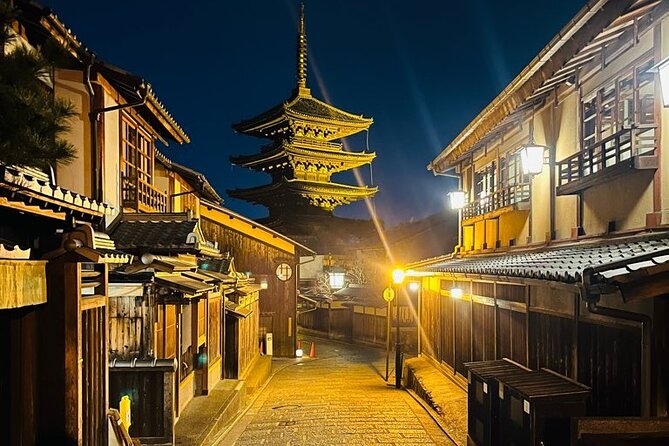
- Shrines and pagoda views at night for a Kyoto atmosphere you do not get in daytime rush
- A route with practical meaning that turns street names into culture and context
Why a Gion Night Walk Works Better Than Daytime Sightseeing
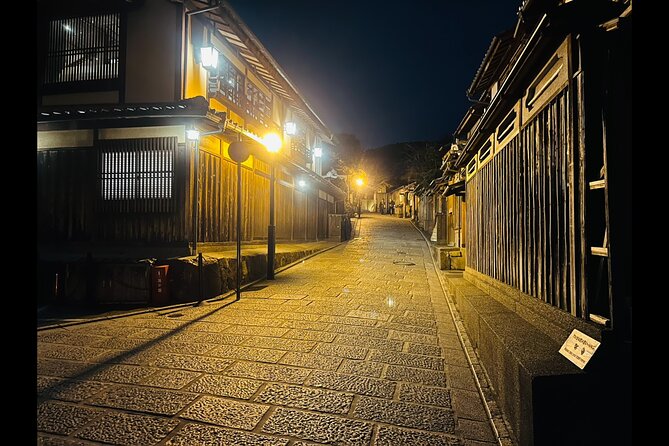
Kyoto can be loud in the daytime, and Gion is no exception. This tour is built around the idea that evening changes the whole vibe. Streetlights glow on wooden facades, lanterns soften the edges, and you spend more time looking at places than dodging foot traffic.
I also like that it is not only about postcard views. You get cultural context along the way, especially around geisha life and etiquette. That matters because Gion looks simple, but the traditions behind it are layered and easy to miss if you are just sightseeing on your own.
More Evening Tours in Kyoto
- Night Walk in Gion: Kyoto’s Geisha District
★ 4.5 · 2,003 reviews - Kyoto Night Foodie Tour in Gion (9+ dishes + 6 Sake tastings)
★ 5.0 · 1,762 reviews - Kyoto: Gion Magical Night Walking Tour with Geisha Insights
★ 4.9 · 1,286 reviews
Meeting at Minamiza Theater and How the Route Feels
You start at Minamiza Theater, on the Nakanochō area near the Four-Bridge end of Shijo-dori, and you end back in Gion near Gionmachi Kitagawa. The tour uses a mobile ticket, and you are close to public transportation, which makes it easier to fit into a busy day.
The group size is small. The description emphasizes a cap of eight, and the additional info lists a maximum of 10 travelers, so either way, you should expect a tight group. That has a real effect on your experience. You are not stuck waiting while a large group negotiates corners, and you get more chances to hear details clearly.
Still, keep your expectations realistic. This is a walking tour. A review even mentions it can feel like closer to two hours once you factor in stops and photos, so plan to move with the group.
Stop-by-Stop: Gionmachi Minamigawa, Shrines, and Quiet Lanes
The route is designed to mix famous spots with streets that feel more lived-in at night. Here is what you can expect, stop by stop.
Stop 1: Gionmachi Minamigawa, Where You Might Spot Maiko or Geiko
You begin on Gionmachi Minamigawa, one of Gion’s best-known streets. The guide may point out where Maiko or Geiko can appear, and you have a chance to see them if you are lucky.
You are also taught a simple, respectful greeting. If you do spot a Maiko or Geiko, greet them with a smile and say Konnichiwa. It is small, but it is the kind of etiquette tip that turns a random moment into a respectful interaction.
One practical note: this is a famous lane, so even at night, the atmosphere can still be busy in pockets. The tour timing helps, but you should still expect a few other pedestrians.
More Walking Tours in Kyoto
- Kyoto Geisha Walking Tour: Gion District & Hidden Gems
★ 4.7 · 3,273 reviews - Kyoto: Gion Geisha District Walking Tour – Stories of Geisha
★ 4.7 · 2,187 reviews - Kyoto Gion Geisha District Walking Tour – The Stories of Geisha
★ 5.0 · 1,441 reviews - Nishiki Market Brunch Walking Tour (7 Tastings + Brunch)
★ 5.0 · 1,355 reviews
Stop 2: Yasui-Konpiragu, A Shrine Linked to Love and Better Relationships
Next up is Yasui-Konpiragu. The focus here is matchmaking and relationship luck, with the idea that it helps both men and women meet and cut off bad relationships. If you are traveling as a couple or just enjoy shrine stories, this stop is easy to understand and fun to listen to.
The guide also shares that for married couples, the bond is believed to be stronger. Even if you do not take fortunes literally, it is useful cultural context on how people talk about relationships through religion.
Stop 3: Sannenzaka Ninenzaka and the Kiyomizu-dera Area Townscape
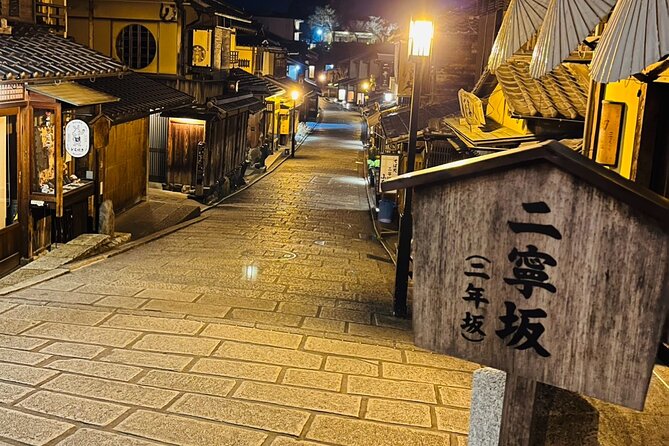
You then move into Sannenzaka Ninenzaka, the classic approach streets toward the Kiyomizu-dera area. This is one of the most beautiful traditional townscapes in Kyoto, and at night it feels calmer and more intimate.
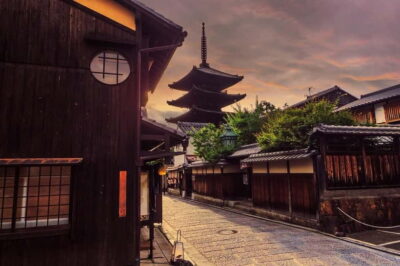
Yasaka-no-to is especially popular around here, and the tour gives you time to look and take photos. A big benefit for photographers is that evening light helps the stone and wood textures look softer, not harsh.
The main consideration here is pacing and footing. These streets are uneven and can have slopes. If you are sensitive to walking on old street surfaces, take it slow.
A WWII Memorial Stop With a Large Kannon Statue (Lantern-Lit and Meaningful)
One segment of the walk visits a memorial built in 1955 to pray for the repose of the souls of World War II victims. You will see a very large statue of Kannon.
This stop adds weight to the evening. Gion is often treated like pure aesthetics, but Kyoto also carries remembrance and spiritual purpose in the same streets where tourists photograph pagodas.
A 400-Year-Old Mourning Story, Tea Ceremony House, and Bamboo Grove
Another highlight is a quieter, garden-focused stop connected to mourning. It was built about 400 years ago by the wife of a shogun to mourn her husband’s death.
You can enjoy the garden, a 400-year-old tea ceremony house, and a bamboo grove. This is the kind of place where the night atmosphere actually helps. The air feels more still, and the tea-house detail gives you something to focus on beyond the street scene.
Stop 4: Yasaka Shrine, Also Known as Gion-san
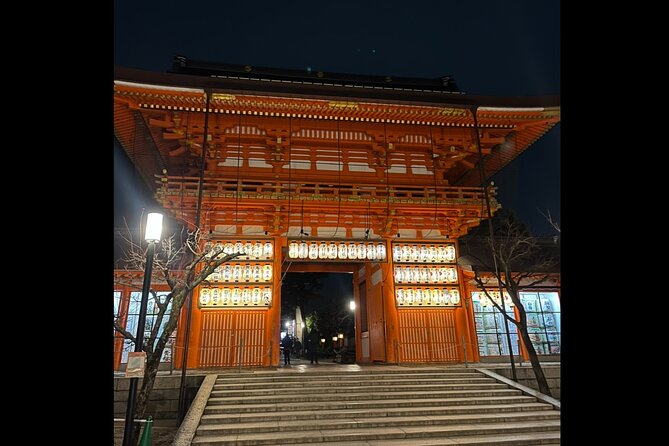
You finish at Yasaka Shrine. It is the head shrine for roughly 2,300 related shrines across Japan, and it has a strong association with Gion.
You will hear it called Gion-san, tied to blessings such as warding off bad luck, bringing good luck, and promoting beauty. That last one, beauty, is a very Gion-related theme, and it helps connect the shrine world with what you learn about the geisha district.
Yasaka Shrine at night has that “slower than you expected” feel. It is a good ending point because it gives you a sense of place, not just a list of sights.
The Geisha Culture Part You Can Use in Real Life
This tour is not vague. You get specific background on geisha history, culture, and etiquette. That is the core reason the tour feels worth doing even if you have already seen photos of Gion.
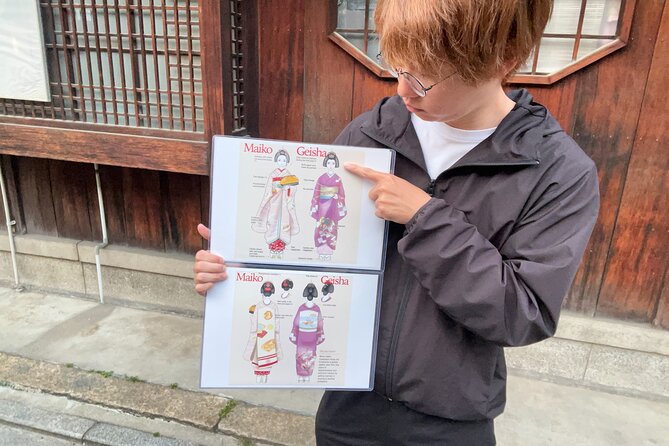
A recurring praise in people’s write-ups is that guides explain the Meiko and Geiko world clearly, including how it connects to Kyoto society past and present. You also hear practical etiquette, like how to greet if you spot someone in traditional roles.
I also liked the personal angle some guides bring. One guide shared she has a great great grandmother who was a geisha and even showed pictures. That kind of family connection does not replace history, but it makes the stories feel grounded and human.
There is one language consideration to keep in mind. At least one review noted the guide was enthusiastic but still developing English skills, so if you want a deep back-and-forth conversation, keep questions simple and be patient.
Lantern-Lit Photo Time Without Feeling Rushed
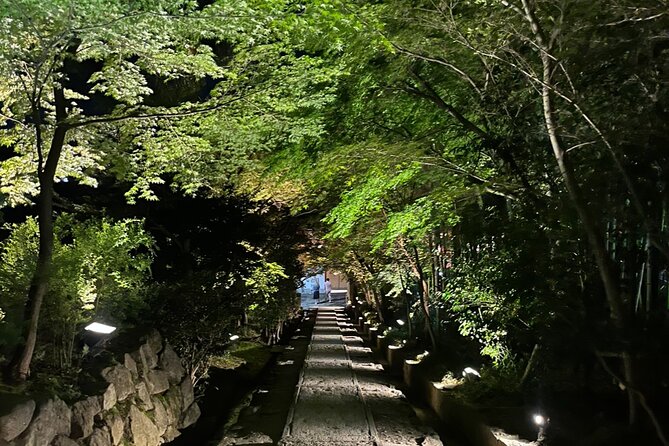
A lot of the “magic” here is visual, and the timing helps. You get photo opportunities at several stops, and the group tends to move at a comfortable pace with time to stop.
The nighttime lighting does more than make pictures pretty. It also makes details easier to see. Lantern glow highlights wood grain, stone steps look less stark, and shrine features feel more respectful and less like props.
If you care about photos, bring a steady grip and consider using burst mode for lantern scenes. You are walking, so you will want a way to capture without constantly fiddling with settings.
Walking Time, Value, and What $29.60 Really Buys
The price is $29.60 per person, and for what you get, it can be good value. You are paying for three main things: a guided story, a route selection that avoids the biggest daytime crowd pressure, and cultural context you would have to work hard to piece together on your own.
Duration is listed at about 1 hour 40 minutes. Reviews also mention a bit of variance depending on pace, questions, and photography, so think in the range of roughly 1.5 to 2 hours.
Is it cheap? Not exactly budget. But it competes well with a lot of city tours because it focuses on a specific neighborhood you want to understand. Gion is easy to wander through blindly. This gives you a framework so your walk feels smarter.
Guides: What Makes the Best Versions of This Tour Tick
Guide quality is consistently a major part of the praise. Names that show up in people’s experiences include Karen, Ricky, Hina, Pam, and Sho. Across these accounts, the best guides share the same traits.
They tell stories at each stop, keep the group moving smoothly, and answer questions in a way that makes the streets feel like a living place. Some guides are also funny, or at least warm and engaging, which matters because night walking can get repetitive if the narration is thin.
If you end up with a strong guide, you will likely feel that the route “comes alive.” You will recognize why a street matters, why a shrine is there, and how Gion’s identity connects to the cultural details you learn.
Who Should Book This Gion Magical Night Walking Tour
This tour is a good match for you if:
- you want Gion culture with context, not just sightseeing
- you like smaller groups where you can ask questions
- you enjoy shrines, pagodas, and traditional streets in the evening
- you are interested in geisha history and etiquette, and want it explained clearly
It may be less ideal if:
- you have trouble with slopes and stairs
- you need zero walking on uneven surfaces
- you expect a fast, strictly timed sprint with no photo and story stops
The start and end points are convenient enough to connect with other Kyoto plans. The walk also works well as an evening cooldown after a busy day.
Should You Book It? My Practical Verdict
I would book this tour if you care about Gion beyond the obvious photos. The early evening timing plus the small-group feel is exactly the combo that improves the experience. You get quiet streets, lantern-lit stops, and real cultural explanations, including etiquette tips like Konnichiwa when you encounter Maiko or Geiko.
I would also check your footwear first. If you are comfortable walking on Kyoto’s slopes and stairy bits, you will enjoy this a lot. If not, you might still like Gion, but you may want a less hilly option for your energy level.
FAQ
How long is the Gion Magical Night Walking Tour?
The tour is about 1 hour 40 minutes (approx.).
Where do I meet, and where does the tour end?
You meet at Minamiza Theater in Kyoto and end at Gionmachi Kitagawa in the Higashiyama Ward area.
How big is the group?
It is a small group. The description mentions a maximum of eight, and the additional info lists a maximum of 10 travelers.
Are there admission fees for the stops?
Admission is listed as free for the stops shown.
What should I wear or plan for?
The tour includes slopes and stairs, so comfortable shoes are important. It is not recommended if you are not comfortable with walking on uneven ground.
Is this tour good if I want to see Maiko or Geiko?
You may see a Maiko or Geiko if you are lucky, especially at Gionmachi Minamigawa, and you will get etiquette guidance on how to greet respectfully.
What happens if the weather is bad?
The tour requires good weather. If it is canceled due to poor weather, you will be offered a different date or a full refund.
More Evening Experiences in Kyoto
- Kyoto Ghost Tour: Dark Tales, Urban Legends, Bamboo Forest Night
★ 5.0 · 625 reviews - Kyoto Bar Hopping Night Tour
★ 5.0 · 613 reviews - Gion Walking Tour by Night
★ 4.5 · 429 reviews - Kyoto Foodie Night Tour
★ 5.0 · 376 reviews
Popular Geisha District Walks in Kyoto
- Best of Kyoto: Gion, Geisha, Pagodas & Cobblestones
★ 4.9 · 2,058 reviews - Kyoto Gion Night Walk & Geisha District Guided Tour
★ 5.0 · 786 reviews - Kyoto Night All-Inclusive Eats and Streets, Gion and Beyond
★ 4.7 · 601 reviews - Kyoto Gion Cultural Walk & Geisha Show with Dining Options
★ 5.0 · 483 reviews
Newly listed around Kyoto
- Kyoto Samurai Discovery Samurai Sword Test Cutting Training★ 5.0 · 132 reviews
- Kyoto Sake Brewery Tour with Lunch★ 4.5 · 12 reviews
- Private Food & Sake Tour in Central Kyoto with Sake Sommelier★ 5.0 · 24 reviews
- Kyoto Sagano Insider: Rickshaw and Walking Tour★ 5.0 · 15 reviews
- Ramen Gyoza Onigiri Japanese Cooking Class in Kyoto★ 5.0 · 44 reviews
- Kyoto Rickshaw Tour★ 5.0 · 210 reviews
- Kyoto Ramen Tour★ 5.0 · 22 reviews
- Kyoto Portrait Tour with Kimono★ 5.0 · 48 reviews
Geisha District Walks, compared.
Kyoto Geisha Walking Tour: Gion District & Hidden Gems
Read our review →
Gion Geisha District Walking Tour – Stories of Geisha
Read our review →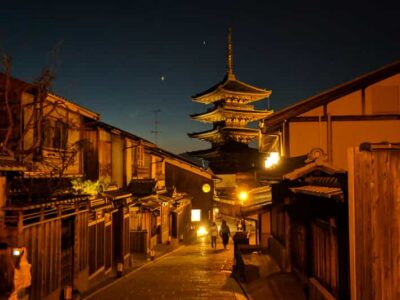
Best of Kyoto: Gion, Geisha, Pagodas & Cobblestones
Read our review →

Kyoto Night Foodie Tour in Gion (9+ dishes + 6 Sake tastings)
Read our review →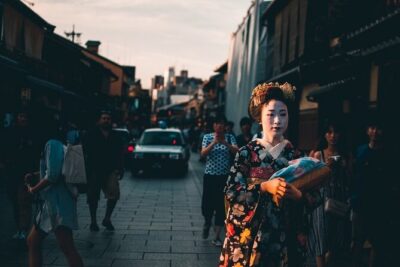
Kyoto Gion Geisha District Walking Tour – The Stories of Geisha
Read our review →
Gion Magical Night Walking Tour with Geisha Insights
Read our review →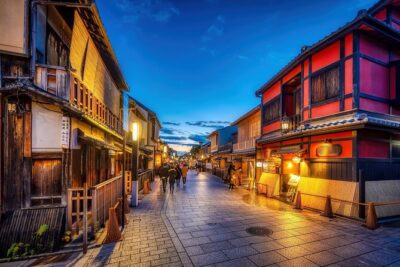
Kyoto Gion Night Walk & Geisha District Guided Tour
Read our review →Browse the lists this tour appears in