
Review · HISTORIC CASTLE VISITS
Kyoto Imperial Palace and Nijo Castle Walking Tour
Kyoto can feel like a museum with no map. This day tour strings together Kyoto’s faith, food, and political power in one smooth route you can actually finish. You get temple context, market time, and two major historic sites without spending your whole trip guessing what matters.
I especially like the hands-on focus on everyday Kyoto life. The stop at Nishiki Market works as a quick culture crash course, and the palace and shogun sites help you understand how power shaped daily routines. I also like the guide quality shown in the names you’ll hear on this route, like Naoko, Chie, and Fuji, with strong English and plenty of room for questions.
One consideration: this is quite a bit of walking, and the time at each stop is tightly managed. Also, the Kyoto Imperial Palace is not a European-style showpiece with lots of gold and furniture. If you expect that look, you may need to reset your expectations.
In This Review
- Key things that make this Kyoto day tour worth it
- How a 7-hour walk ties Kyoto’s religion, markets, and power together
- Starting at Hotel Granvia Kyoto, and planning for the walking
- Higashi Hongan-ji Temple: a strong start for understanding Japanese Buddhism
- Nishiki Market: Kyoto’s kitchen, plus a smart place for snacks
- Nijo Castle: shogun power made visible through art
- Kyoto Imperial Palace: what to expect when it is not Versailles
- Guides like Naoko, Chie, and Fuji, and why their English matters
- Price and value check: guide fare included, add-ons on top
- Who should book this Kyoto Imperial Palace and Nijo Castle walking tour
- Should you book this tour?
Key things that make this Kyoto day tour worth it
- A focused 7-hour route: temple, market, Nijo Castle, then Kyoto Imperial Palace.
- Real time at the sites: about 30 minutes at Higashi Hongan-ji and Nishiki Market, then 1 hour at Nijo Castle and 1 hour 15 minutes at the Imperial Palace.
- Guides who handle questions well: guides like Naoko, Chie, and Fuji are praised for clear English and answering follow-ups.
- Nishiki Market as your food and culture shortcut: the guide can point you toward what to try.
- Expect the palace to feel different: it is historic and important, but not staged like a Western royal interior.
- Admission and transport are partly on you: guide is included, but Nijo Castle admission and public transit are not.
How a 7-hour walk ties Kyoto’s religion, markets, and power together
Kyoto is big, and history is spread out like bread crumbs. This tour does something smart: it keeps the day in one coherent corridor of ideas. You start with Buddhist roots, then jump to the market that feeds the city, then shift gears to the spaces where the shogun and emperor’s world shaped everything.
The pacing is built around short, useful stops. That means you get enough time to see key features and ask questions, without the tour turning into a full-day marathon of wandering.
More Castle Visits in Kyoto
- Kyoto: Nijo-jo Castle and Ninomaru Palace Guided Tour
★ 4.7 · 1,020 reviews - Kyoto: Imperial Palace & Nijo Castle Guided Walking Tour
★ 4.7 · 453 reviews - Kyoto Imperial Palace & Nijo Castle Guided Walking Tour – 3 Hours
★ 4.5 · 106 reviews
Starting at Hotel Granvia Kyoto, and planning for the walking
The tour meets at Hotel Granvia Kyoto, at the JR Kyoto Station Central Entrance area, and it starts at 9:00 am. It ends back at the meeting point, which makes the logistics easier when you are tired later.
The day runs about 7 hours, and it includes quite a bit of walking. You do not need to be an athlete, but you should be comfortable walking steadily for much of the day. If you prefer slow sightseeing with long rests, you may find the schedule a bit tight.
Higashi Hongan-ji Temple: a strong start for understanding Japanese Buddhism
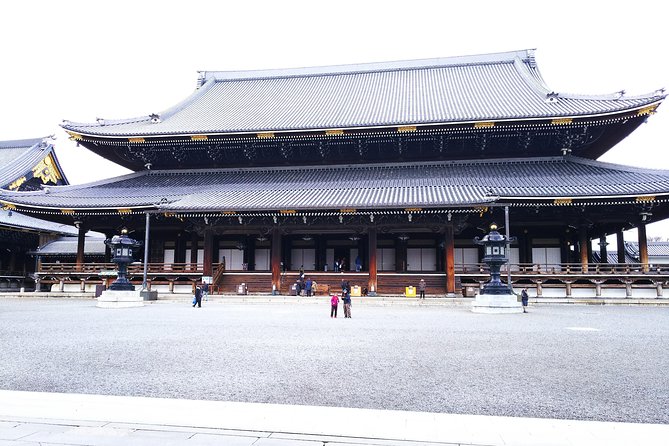
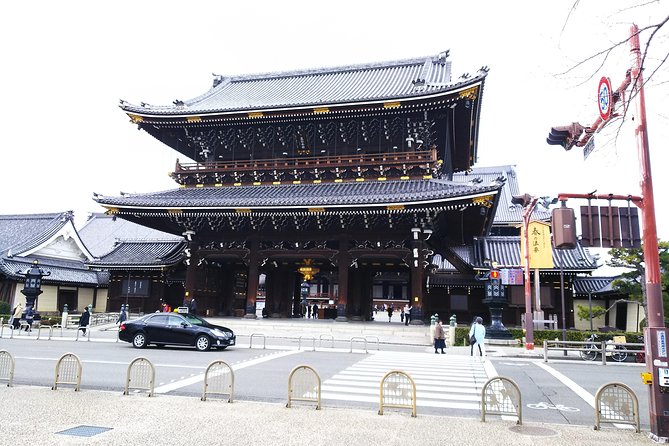
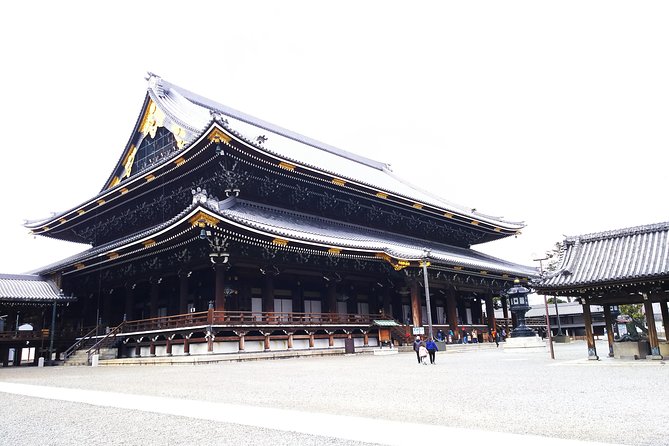
The day opens at Higashi Hongan-ji Temple, with about 30 minutes on site. This is a helpful first stop because it gives you a framework for what Buddhism looks like in everyday Japanese culture.
One reason this temple visit works well at the start is the scale of the belief behind it. Japan has many religions, and Buddhism is the biggest in terms of believers. This temple is tied to Shingon Otani, one of the major schools, with believers estimated around 8 million. Even if you do not know the differences between sects, you can still appreciate how a faith becomes part of public life through places like this.
In practical terms, this is a great time to orient yourself. A good guide can connect what you see here with later ideas about authority and community in Kyoto, so the rest of the day feels less random.
Nishiki Market: Kyoto’s kitchen, plus a smart place for snacks
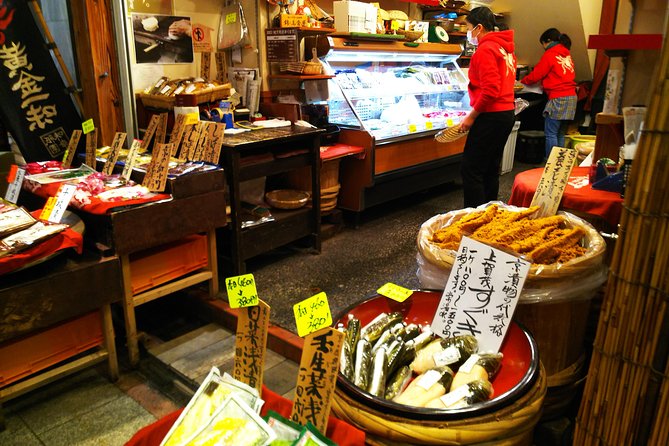
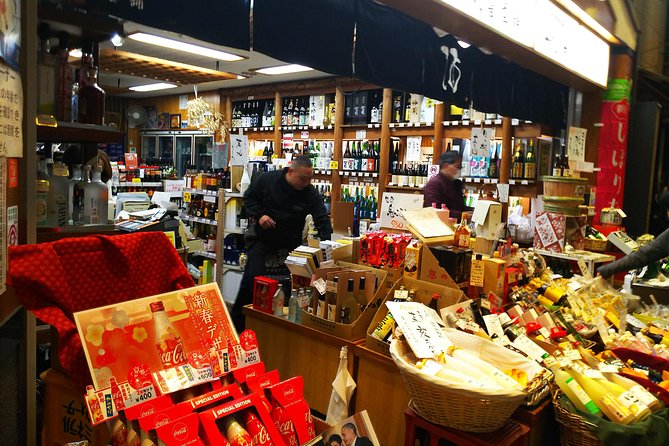
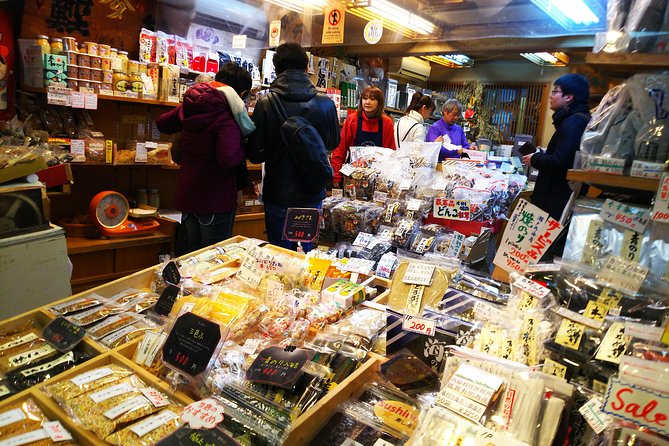
After the temple, you head to Nishiki Market, again about 30 minutes. This is the kind of stop that can either feel like tourist-only browsing or a real shortcut to Kyoto’s everyday tastes, depending on how you approach it.
Nishiki has a reputation as the kitchen of Kyoto, and there is even a local explanation about why Kyoto’s food tastes fresh, tied to water resources under the area. Whether or not you focus on the story, the market layout makes it easy to sample and compare flavors without planning a full food quest.
The value of a guided visit here is simple: you save time and you get direction. In the feedback for this route, guides like Fuji are specifically noted for making strong recommendations on what to eat in the market. That can turn 30 minutes into the kind of meal memory you remember for years.
More Walking Tours in Kyoto
- Kyoto Geisha Walking Tour: Gion District & Hidden Gems
★ 4.7 · 3,273 reviews - Kyoto: Gion Geisha District Walking Tour – Stories of Geisha
★ 4.7 · 2,187 reviews - Night Walk in Gion: Kyoto’s Geisha District
★ 4.5 · 2,003 reviews - Kyoto Gion Geisha District Walking Tour – The Stories of Geisha
★ 5.0 · 1,441 reviews
Nijo Castle: shogun power made visible through art
Next is Nijo Castle, with about 1 hour on site. This is a big historical swing. In 1603, the shogun’s base shifted toward Edo, what is now Tokyo, and Nijo Castle became the place the shogun stayed when visiting Kyoto.
So you are not just looking at a castle. You are looking at a political message. Inside, there are described as more than 1,000 impressive paintings, which signals how visual culture reinforced authority and status.
Budget note: Nijo Castle admission is not included. The cost listed is ¥1,300 per person. That is a normal temple or castle add-on in Japan, but it is important for value math. If you only compare the headline price, you can end up surprised later.
If you love architecture and the way buildings reflect hierarchy, this is the moment where the tour’s theme clicks into place.
Kyoto Imperial Palace: what to expect when it is not Versailles
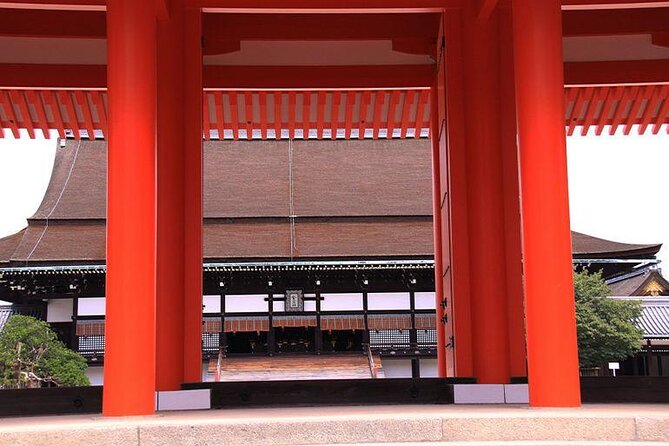
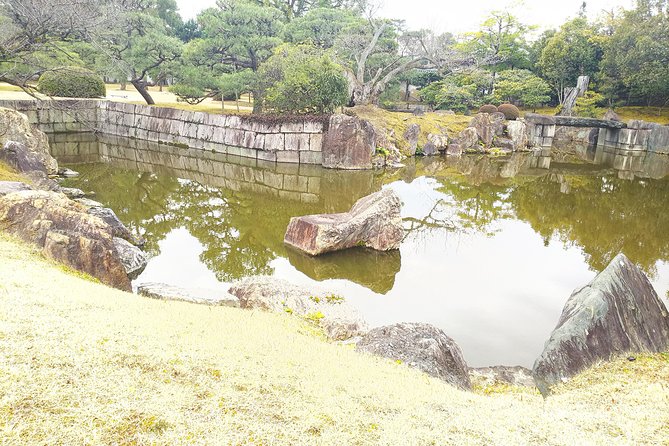
The final major site is the Kyoto Imperial Palace, with about 1 hour 15 minutes. Until the capital moved to Tokyo in 1868, the emperor’s family lived here, so this is where Kyoto’s imperial world was physically grounded.
What makes this stop so useful on a first Kyoto trip is contrast. Nijo Castle shows the shogun’s residence and power performance. The palace is different in mood and purpose. It is still historic and important, but the look is not meant to be a Western style palace interior.
One expectation to set early: if you want a European palace full of furniture and gold, you may feel disappointed. The payoff instead is in the setting and the sense of court space, plus the guide’s ability to translate what you see into how the imperial system operated day to day.
Admission note: Kyoto Imperial Palace is free on this route.
Guides like Naoko, Chie, and Fuji, and why their English matters
A tour is only as good as the person making the day make sense. This route gets strong praise for guides who speak very good English and handle questions well.
For example, Naoko is highlighted for fun facts and making the story land even for kids. Chie is praised for friendly, clear explanations and for keeping everyone moving so time gets used well. Fuji is noted for answering lots of questions and for smart food directions around Nishiki Market.
Why this matters for you: with Kyoto, you can stand in front of something old and still miss why it mattered. A good guide gives you a mental handle, so you can look at details on your own later. It also helps when you stumble into side questions, like how power worked between shogun and imperial lines, or why certain faiths leave visible marks on streets and buildings.
Price and value check: guide fare included, add-ons on top
The listed price is $111.03 per person, and that includes the guide fare. The items not included are important for a fair value judgment.
- Nijo Castle admission: ¥1,300 per person
- Public transportation fare: ¥1,000 per person
On top of that, two stops are free on this route: Higashi Hongan-ji Temple and Kyoto Imperial Palace. That helps keep overall costs reasonable, but you still need to budget for the castle and transit.
Another value angle: this tour includes group discounts and uses mobile tickets. You may appreciate that on a day when you are moving between areas and want less fuss. It is also described as private, meaning it is only your group participating.
If you are the kind of traveler who likes a structured day and wants to see big targets without spending hours planning, the pricing makes more sense than a cheaper, unguided approach where you pay in time.
Who should book this Kyoto Imperial Palace and Nijo Castle walking tour
This is a great match if you:
- Want a first-day orientation to Kyoto with major sites packed into one day
- Like history when it is explained in plain language
- Prefer having food and sightseeing decisions taken care of, especially at Nishiki Market
- Can handle moderate physical fitness and regular walking
You might not love it if you:
- Want slow, relaxed temple time with lots of sitting and wandering
- Expect the Imperial Palace to look like a flashy European royal interior
- Need frequent long breaks that are not built into a 7-hour plan
Should you book this tour?
If it is your first trip to Kyoto and you want the day to feel organized, this is an easy yes. The route is efficient, the guides are repeatedly praised for strong English and question answering, and you get a mix that many Kyoto one-day plans miss, temple plus market plus both kinds of power architecture.
Book it if you like practical structure and want to go home with more understanding than photos. Skip it if you crave total freedom and unlimited time at each site.
Newly listed around Kyoto
- Kyoto Samurai Discovery Samurai Sword Test Cutting Training★ 5.0 · 132 reviews
- Kyoto Sake Brewery Tour with Lunch★ 4.5 · 12 reviews
- Kyoto Sagano Insider: Rickshaw and Walking Tour★ 5.0 · 15 reviews
- Private Food & Sake Tour in Central Kyoto with Sake Sommelier★ 5.0 · 24 reviews
- Kyoto Rickshaw Tour★ 5.0 · 210 reviews
- Kyoto Ramen Tour★ 5.0 · 22 reviews
- Ramen Gyoza Onigiri Japanese Cooking Class in Kyoto★ 5.0 · 44 reviews
- Kyoto Portrait Tour with Kimono★ 5.0 · 48 reviews
Historic Castle Visits, compared.
Tokyo Castle & Imperial PalaceーShogun Walking Tour
Read our review →
Nijo-jo Castle and Ninomaru Palace Guided Tour
Read our review →
Ultimate Osaka Walking Tour: Castle, Dotonbori & Hidden Gems
Read our review →Tokyo Castle & Imperial PalaceーShogun Walking Tour
Read our review →
Imperial Palace East Garden and Edo Castle Walking Tour in Tokyo
Read our review →
Imperial Palace & Nijo Castle Guided Walking Tour
Read our review →
Japanesel Archery Experience HIROSHIMA CASTLE SHARAKU
Read our review →Browse the lists this tour appears in