
Review · HISTORIC CASTLE VISITS
Kyoto: Nijo-jo Castle and Ninomaru Palace Guided Tour
A tour through Nijo Castle clicks when you see power made visible. I especially love the way the Ninomaru Palace explains Tokugawa-era life and authority, and I like that the gardens give you a breather right after the serious symbolism. The main thing to consider is the palace interior can feel uncomfortably hot and you may run into rules like no photos and limited water access.
If you want a Kyoto stop that feels more like walking through a political headquarters than a museum, this one works fast. The walk is only about one hour, and it’s guided in English, so you will get context even if you are short on time or not steeped in Japanese history.
In This Review
- Key Points Worth Booking For
- Nijo-jo Castle, Kyoto’s Tokugawa Power Seat in 60 Minutes
- Meet at Higashi Ote-mon Gate, Then Get Oriented Fast
- Kara-mon Gate and the Art of Reading a Castle
- Entering Ninomaru-goten Palace, Where Rooms Explain Power
- The Restricted Access Factor, What Makes This Tour Feel Special
- Ninomaru Garden, Calm Walk and Symbolic Geometry
- What This Tour Teaches You About Japan’s Feudal-Era Design
- Price and Value, The Real Cost of Nijo-jo
- Timing, Heat, and How to Plan Your Day Around One Hour
- English-Only Guide, Earphones, and Tips for Families
- Who This Nijo Castle Tour Suits Best
- Should You Book This Nijo-jo Castle Guided Tour?
- FAQ
- How long is the Nijo-jo Castle and Ninomaru Palace guided tour?
- Is the tour conducted in English?
- What is included in the 60-minute guided portion?
- Do I need to pay admission fees separately?
- Where do I meet the guide?
- Are earphones provided?
- Is the tour suitable for families with children?
- FAQ
- When is the site closed for this tour?
- Can I cancel for a refund?
Key Points Worth Booking For
- Ninomaru Palace access that adds sections not usually available to regular visitors
- Feudal architecture made understandable, not just impressive
- A full, timed loop through the gates, palace, and Ninomaru Garden in about 60 minutes
- English live guide with fast pacing and clear explanations for the big “why” behind rooms and decoration
- Earphones for paid participants, helpful in a busy palace setting
- UNESCO-listed Nijo-jo Castle, built as the Kyoto residence of Tokugawa Ieyasu
Nijo-jo Castle, Kyoto’s Tokugawa Power Seat in 60 Minutes
Nijo-jo Castle is the kind of place where you can feel history in the design. It was built in 1603 as the Kyoto residence of Tokugawa Ieyasu, the first shogun of the Edo Period. Later, after the Tokugawa shogunate fell in 1867, the castle served as an imperial palace before being donated to Kyoto City and opened to the public as a historic site.
This matters for your visit because Nijo is not just a big complex. It is organized like a political machine. UNESCO recognized it as a World Heritage site in 1994, and the grounds are divided into distinct defensive circles: Honmaru (main defense), Ninomaru (secondary defense), and the gardens that wrap around both.
On this tour, you focus on the parts that best explain what the Tokugawa regime wanted to project. You will see gates, then move into the Ninomaru-goten (the shogun’s palace centerpiece), and finish with time in the Ninomaru Garden, where the mood shifts from control to calm.
More Castle Visits in Kyoto
- Kyoto: Imperial Palace & Nijo Castle Guided Walking Tour
★ 4.7 · 453 reviews - Kyoto Imperial Palace & Nijo Castle Guided Walking Tour – 3 Hours
★ 4.5 · 106 reviews - Kyoto: Nijo Castle and Kyoto Imperial Palace Guided Tour
★ 4.6 · 98 reviews
Meet at Higashi Ote-mon Gate, Then Get Oriented Fast
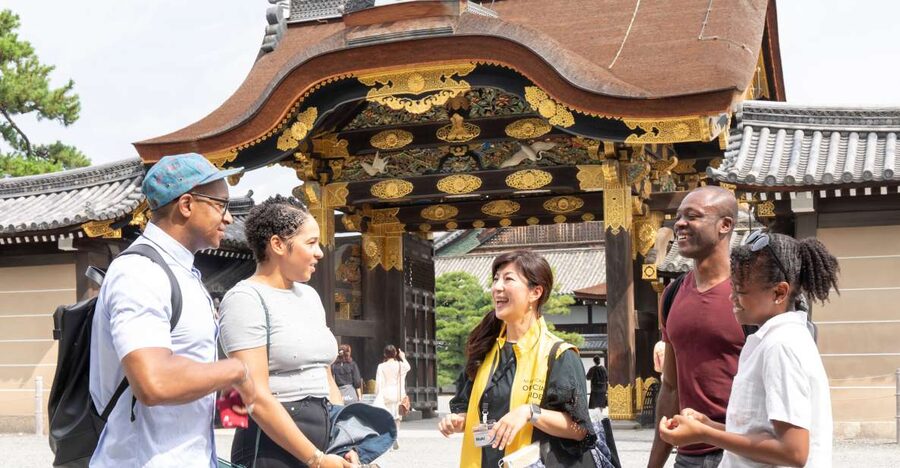
You start at the Nijo Castle Tour Ticket Booth. The meeting spot is inside the site, after entering the East Main Gate (Higashi Ote-mon). Gather at the reception area next to the General Reception, on the left side after you pass through the East Main Gate. When you arrive, notify staff at reception that you are there for the tour.
Why this matters: Nijo-jo Castle can be confusing if you show up and wander first. This tour gives you a route and a storyline. You will not waste time trying to guess which rooms or details are the big deal. Since the tour will not wait for late arrivals, I’d treat “well before start time” as a hard rule, not a suggestion.
The tour itself is 60 minutes, and the guide leads the group through key points you might otherwise miss. In many bookings, the guide also keeps people together carefully, even when it is crowded inside the palace.
Kara-mon Gate and the Art of Reading a Castle
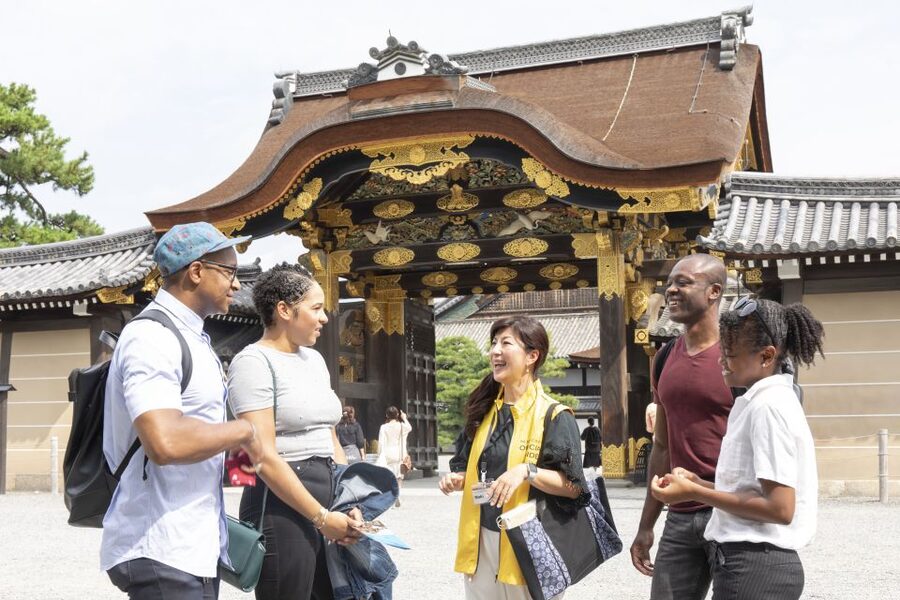
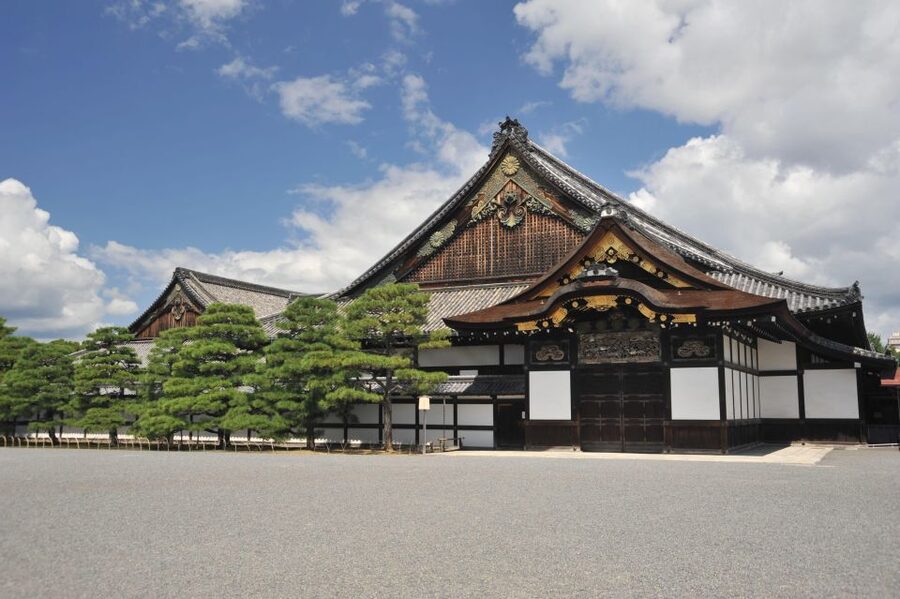
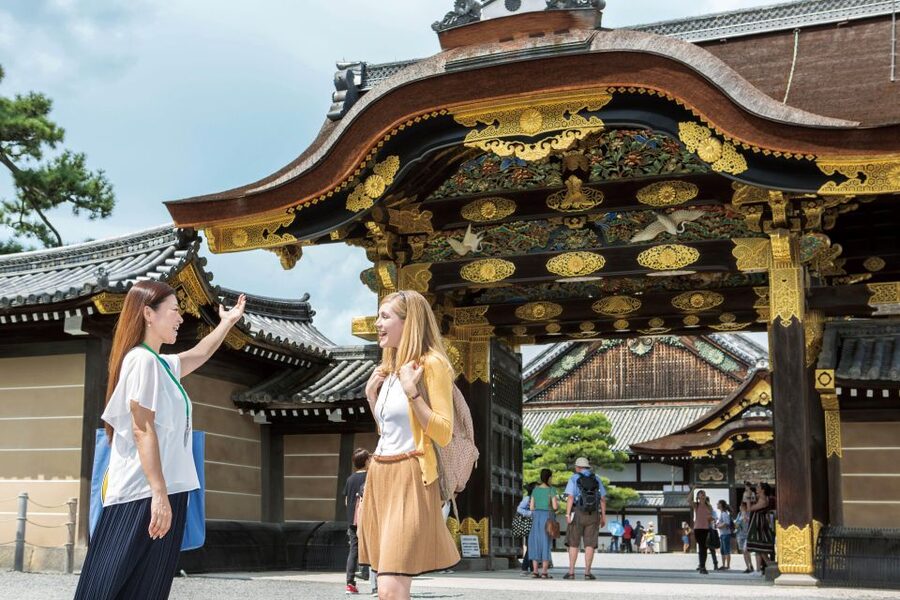
The tour takes you toward the Kara-mon Gate area (listed as Kara-mon Gate, and often described as the Karamon Gate). This is where the castle’s style starts talking back to you. Feudal Japanese architecture is not just about looking good. It is about signaling status, authority, and access.
As you move through, the guide’s job is to connect what you see to what it meant. You will get context for how Nijo functioned as a residence and administrative seat, not only a fortress. One of the best surprises here is that Nijo feels more like a place of court and politics than “military action.”
If you are the type who stops at carved panels, roof details, or decorative elements and wonders what you are actually looking at, this is exactly your sweet spot. Guides often point out symbolism in architecture and decoration, and that turns the visit from sight-seeing into “I get it” history.
Entering Ninomaru-goten Palace, Where Rooms Explain Power
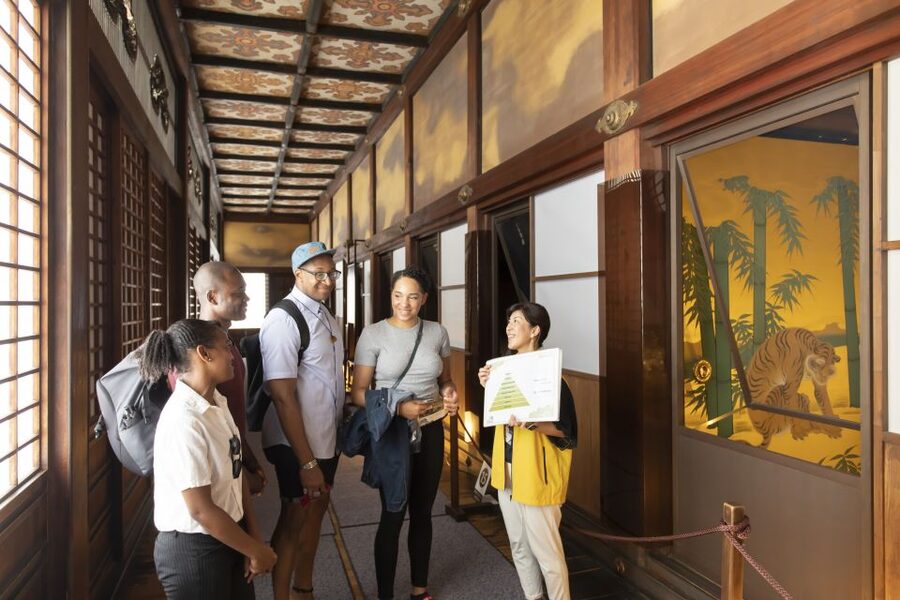
The real centerpiece is the Ninomaru-goten Palace. This is where the shogun’s residence and office functions come together in one place, and it remains intact today. It is also the part most visitors feel the most quickly, because the rooms are designed to influence the flow of people, attention, and behavior.
Inside, you can expect a guided walk through the palace’s key rooms and spaces. The best guides do two things at once:
1) They explain daily life and official duties inside the shogun’s quarters
2) They connect design features to political meaning, so you understand why certain areas exist the way they do
Many guests specifically praise how the guide clarifies what each room was for. Guides with names like Kingo, Kaoru, Ai, Ai y u (Ayu), and Kaori have been highlighted for explaining not only history, but also what the palace decoration and room functions were communicating. Even when the group is moving at a brisk pace, the explanations are typically paced so you can keep up.
Practical reality check: palace interiors can be restrictive. One helpful note from recent experiences is that there may be no water, no photos, and no AC inside. That is not meant to ruin your day, but it does affect how you plan. If you are visiting in summer, I’d go in expecting heat and rules.
Also, earphones are part of the experience for paid participants. That helps when the palace is busy and walls and echoes make natural listening harder.
A different sort of day in Japan:
- PERFECT KYOTO 1-Day Bus Tour
★ 5.0 · 13,518 reviews - Kyoto: Fushimi Inari, Kinkakuji, Bamboo Grove 1 Day Bus Tour
★ 4.8 · 4,316 reviews - Kyoto: Tea Ceremony in a Traditional Tea House in Kiyomizu
★ 4.9 · 3,519 reviews - Kyoto Geisha Walking Tour: Gion District & Hidden Gems
★ 4.7 · 3,273 reviews
The Restricted Access Factor, What Makes This Tour Feel Special
A big selling point here is that you are not just buying a guide. You are also getting access to areas that are normally not open to the general public. Several experiences describe the tour including extra spots for tour groups that regular visitors may not enter.
This is why the guided format is worth it even if you already plan to visit Nijo anyway. Walking into the right rooms with context is the difference between “beautiful castle” and “this is exactly how the Tokugawa system worked.”
If you are trying to see Nijo with the highest information-per-minute, this is it. You get more meaning out of fewer stops, and the guide handles the translation between what you see and what it meant in practice.
Ninomaru Garden, Calm Walk and Symbolic Geometry
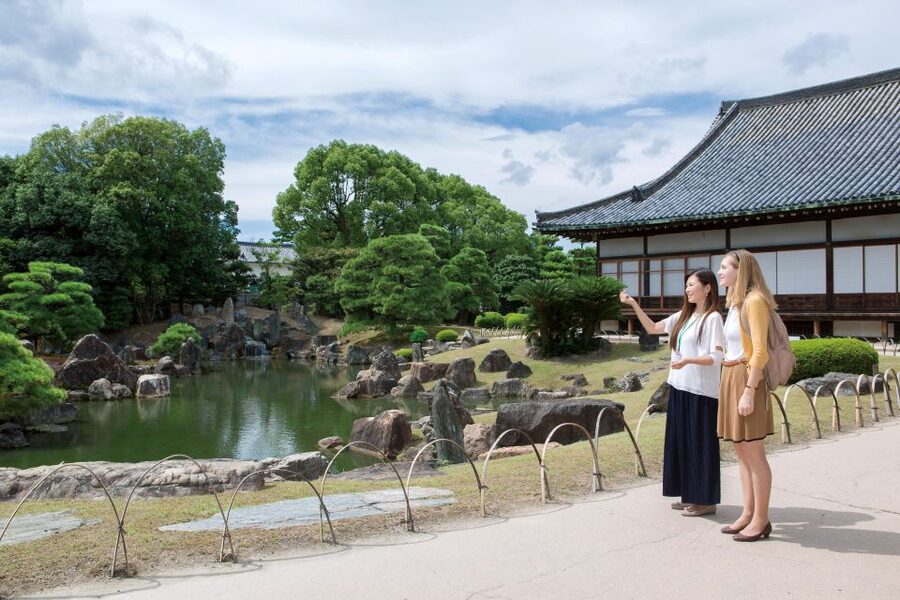
After the palace, the tour shifts into the Ninomaru Garden. This part often feels like a reset. It is also where you can see why Nijo includes gardens around both the Honmaru and Ninomaru areas.
The garden is not just decoration. In many Japanese castle designs, gardens support mood, movement, and the experience of the space. With the guide’s explanations, you are more likely to notice how sightlines and layout encourage specific pathways and views.
Practically, the garden is a nice segment because it gives you a break from indoor heat and restriction. It also makes the full experience feel complete: you get the political inside, then the atmosphere outside.
What This Tour Teaches You About Japan’s Feudal-Era Design
Even if you only remember a few things, I think the tour’s biggest value is that it teaches you how to read the building.
Here are the key takeaways that tend to stick:
- Nijo is about control, not only defense. The layout and access points tell you how power was managed.
- Gates and room sequences matter. You do not just enter a building, you move through layers that control who is where.
- Decoration has a job. Artwork and architectural details are tied to status and symbolism, not random ornament.
- The shogun’s space feels intentional. The preserved palace layout helps you understand what “residence plus office” really meant.
Guides often include stories about symbolism and how different areas were used. If you like the human side of history, this is a good way to go beyond names and dates. You start to connect the architecture to daily court life and political theater.
Price and Value, The Real Cost of Nijo-jo
The tour price is $16 per person for a 60-minute English guided experience. That is a strong value for a site as significant as Nijo-jo Castle, especially because the tour includes guided access to key areas tied to the shogun’s palace.
But here is the key detail: castle admission fees are not included. You have to pay the venue fee on site with cash. So your true total is tour price plus the entrance fee.
I like to think of this this way. The $16 is what buys you:
- the guide for an hour
- a focused route through gates and palace spaces
- extra access areas that make the visit feel less like a generic highlight circuit
If you would rather wander freely without structure, you might feel the tour cost is “extra.” If you want to understand Nijo fast and maximize what you get from every stop, this ticket makes sense.
Timing, Heat, and How to Plan Your Day Around One Hour
Because this is a one-hour tour, it fits well into a busy Kyoto schedule. That short duration also means you do not have to commit your whole day to a single site. You can pair it with other nearby experiences in Kyoto without feeling rushed, as long as you keep your arrival timing tight.
The bigger planning issue is comfort. Multiple experiences mention hot conditions and guide concern for guests during warm weather. Inside the palace, it can be especially uncomfortable, and there may be restrictions like no water and no photos.
So here is my practical advice:
- Bring a plan for sun and heat outside the palace
- Expect rules once you enter interior spaces
- Wear shoes you can move in comfortably for a timed route
If it is raining, bring a lightweight layer. The pace is usually steady, and you still want to enjoy the walk and garden section.
English-Only Guide, Earphones, and Tips for Families
This is an English-only live guided tour. The guide provides the full narration, and earphones are only provided to paid participants. If you need earphones for a child, plan on purchasing adult tickets for the child if that is required for earphone use.
Family note: each paid participant can bring one child aged 0 to 12 for free, as long as the child is accompanied by an adult. If you want more than one child in that range, additional children would need to buy adult tickets.
One other important operational note: you will not be able to join if you are not present when the tour begins. So for families, build in buffer time. It is better to arrive early, settle the group, and then relax than to scramble at the gate.
Who This Nijo Castle Tour Suits Best
This is a great fit if you:
- want the biggest meaning from the shogun-era spaces without spending hours inside
- like architecture and symbolism and want help connecting details to context
- are visiting Kyoto with a limited schedule and want a high-value stop
- prefer a clear route when you are in a complex site layout
It is less ideal if you:
- want pure free time with zero structure
- hate rules and restrictions inside historic buildings
- dislike listening to guided explanations for an hour
Should You Book This Nijo-jo Castle Guided Tour?
I would book it if your goal is to walk away with understanding, not just photos of pretty buildings. Nijo-jo Castle is already impressive on its own, but the Ninomaru Palace section really rewards a guide. The tour also adds the extra-access element to parts normally not open to everyone, which makes the short time feel earned.
If you are on a tight Kyoto schedule, the 60-minute format is a smart way to get the key parts in one pass. Just budget for the on-site cash admission fee, and be ready for interior restrictions and heat.
In short: for many visitors, this is the difference between seeing a castle and actually grasping how Tokugawa power presented itself in wood, paint, and space.
FAQ
How long is the Nijo-jo Castle and Ninomaru Palace guided tour?
The guided tour is 60 minutes.
Is the tour conducted in English?
Yes, the tour is conducted only in English, with a live English-speaking guide.
What is included in the 60-minute guided portion?
The included stops are Higashi Ote-mon Gate, Kara-mon Gate, Ninomaru-goten Palace, and Ninomaru Garden.
Do I need to pay admission fees separately?
Yes. Nijo-jo Castle admission fees are not included in this tour and must be paid on site with cash.
Where do I meet the guide?
Meet at the Nijo Castle Tour Ticket Booth. Enter through the East Main Gate and gather at the reception area next to the General Reception on the left side after entering.
Are earphones provided?
Earphones are provided only to paid participants.
Is the tour suitable for families with children?
Each paid participant can bring one child aged 0-12 for free, and the child must be accompanied by an adult. If you bring more than one child, additional children need to purchase adult tickets.
FAQ
When is the site closed for this tour?
Ninomaru Goten is closed on every Tuesday of July, August, December, and January, and it is closed from December 26 to January 3.
Can I cancel for a refund?
Yes, you can cancel up to 24 hours in advance for a full refund.
Newly listed around Kyoto
- Taste of Nishiki Market Walking Food Tour with Local guide★ 5.0 · 17 reviews
- Kyoto: Sushi Making Class with Sushi Chef★ 4.8 · 64 reviews
- Simple Plan with Maiko★ 4.4 · 10 reviews
- Shibori Furoshiki Course at Kyoto Shibori Museum★ 5.0 · 21 reviews
- Kyoto: City Secrets eBike Tour★ 4.9 · 196 reviews
- Sacred Pathways: Discover the Philosopher’s Path of Kyoto★ 4.9 · 20 reviews
- Private Tour to Monkey Park and Arashiyama Highlights★ 5.0 · 22 reviews
- Private Nara Tour from Osaka – Meet at Your Hotel★ 5.0 · 22 reviews
Historic Castle Visits, compared.
Tokyo Castle & Imperial PalaceーShogun Walking Tour
Read our review →
Ultimate Osaka Walking Tour: Castle, Dotonbori & Hidden Gems
Read our review →Tokyo Castle & Imperial PalaceーShogun Walking Tour
Read our review →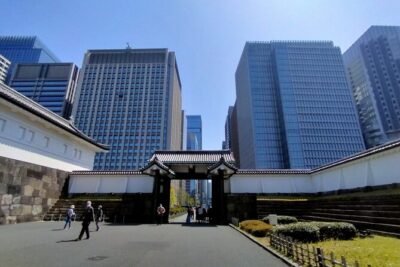
Imperial Palace East Garden and Edo Castle Walking Tour in Tokyo
Read our review →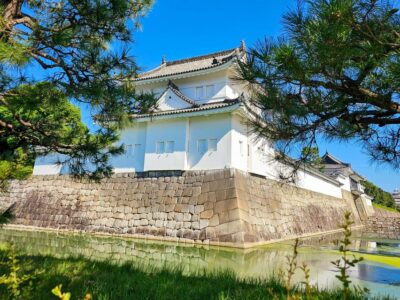
Imperial Palace & Nijo Castle Guided Walking Tour
Read our review →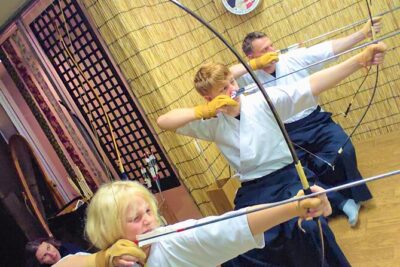
Japanesel Archery Experience HIROSHIMA CASTLE SHARAKU
Read our review →
Himeji Castle, Arima Onsen & Mt. Rokko Day Tour
Read our review →Browse the lists this tour appears in