Review · MIYAJIMA ISLAND TRIPS
Miyajima Half-day Trip Historical Walking Tour
Miyajima is spiritual, but planning can trip you up. On this half-day walking tour, I like the small group size (max six) that makes it easy to ask questions, and I like that lunch is built in with Hiroshima oysters and momiji dumplings. One consideration, the ferry fee to Miyajima is extra, and lunch has limits if you need gluten-free or must avoid specific allergens.
This is a 5.5-hour-style outing that strings together the big icons and a few “wait, that is really cool” stops. You start at Miyajimaguchi, ride the ferry to the island, go in close to the waterline views near the Ōtorii, then walk to Itsukushima Shrine, Daishoin Temple, Momijidani Park, Senjokaku, and the Miyajima Omotesando shopping street for snacks and souvenirs. You also get tour photos and a guide who helps you spot what to photograph and when.
In This Review
- Key things that make this Miyajima tour worth your time
- Miyajima’s spiritual setting, and why a walking plan helps
- Ferry ride views, then straight to the Ōtorii moment
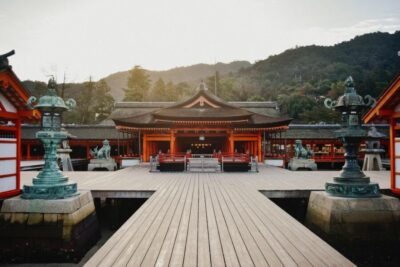
- Itsukushima Shrine: architecture you can actually notice up close
- Daishoin Temple: Buddhism explanations, plus steps that feel worth it
- Momijidani Park and Senjokaku: two stops for photos with context
- Miyajima Omotesando: where the snack break is part of the point
- Lunch with Hiroshima oysters and momiji dumplings: included value, with limits
- How the small group works on the ground
- Price and value check: what you get for $109.43
- What to pack, and how weather changes the experience
- One drawback to take seriously: the rare no-show risk
- Should you book this Miyajima Half-day Historical Walking Tour?
- FAQ
- How long is the Miyajima Half-day Historical Walking Tour?
- Is the ferry to Miyajima included in the price?
- What is included in the lunch?
- Are entrance fees included for temples and shrines?
- Can the tour accommodate gluten-free or allergy needs?
- Where do I meet the guide, and where does the tour end?
Key things that make this Miyajima tour worth your time
- Up to six people means the pace and questions stay human, not rushed
- Included Hiroshima lunch with oysters and momiji dumplings saves real energy
- Lots of short, meaningful stops keeps the walk varied instead of one long hike
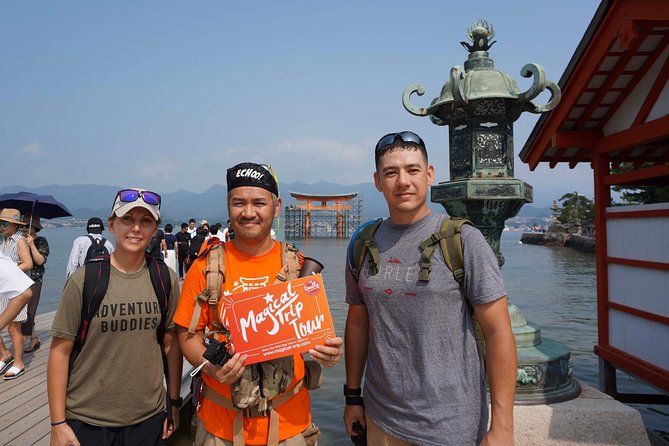
- Photos plus photo help helps you get beyond the usual postcards
- A guide-led route means less time figuring out where to go next
Miyajima’s spiritual setting, and why a walking plan helps
Miyajima is one of those places that hits you fast. The island feels quieter than most day trips, and the scenery keeps changing as you move. That matters because the star sights are not all in one tidy square. They are spread out, and the “best angle” can depend on tide and foot traffic.
The real value here is simple: you are not trying to stitch together a route while also reading signs and comparing maps. You follow your guide’s flow, which is especially helpful around the major holy sites where crowds can make you feel like you are herding yourself.
Another big plus is the tour structure. It is long enough to feel like you saw something substantial, but short enough that you can still enjoy Miyajima without burning your entire day. In that sense, this works as a smart add-on if you are already spending time in Hiroshima.
More History Tours in Hiroshima
- Hiroshima Historical Walking Tour – Why A-Bomb was Dropped
★ 4.8 · 893 reviews - Hiroshima Peace (Heiwa) Walking Tour at World Heritage Sites
★ 5.0 · 872 reviews - Hiroshima: History of Hiroshima Group Walking Tour
★ 4.8 · 266 reviews
Ferry ride views, then straight to the Ōtorii moment
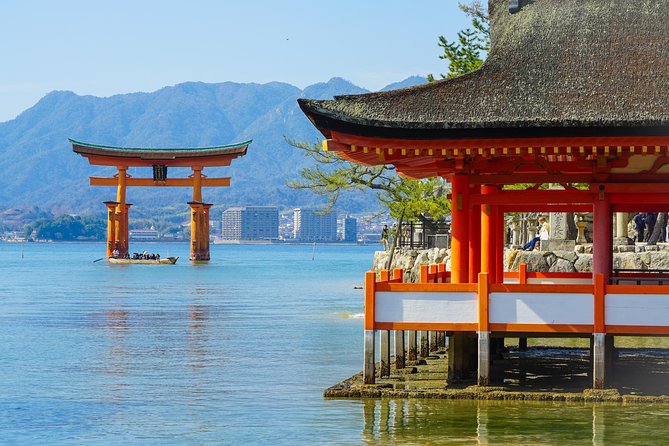
The tour starts with the ferry over from Miyajimaguchi. Even before you land on the island, you get big views of the Seto Inland Sea, plus the famous Ōtorii as a focal point. It is a classic first-impression move, and it helps you understand why this place is so photo-famous.
Once you arrive, the itinerary is set up to capitalize on proximity. You follow the coastal route with your guide toward the Ōtorii area, then continue onward to Itsukushima Shrine. If you are there at a time when the tide allows more access near the waterline, you may get a closer look than you would expect from a casual first visit. Low tide can change what you can see and how you frame the shot.
Practical note: this is a walking tour, so wear shoes you trust on uneven ground. Miyajima is not about slippers and snack runs. It is about steady footing.
Itsukushima Shrine: architecture you can actually notice up close
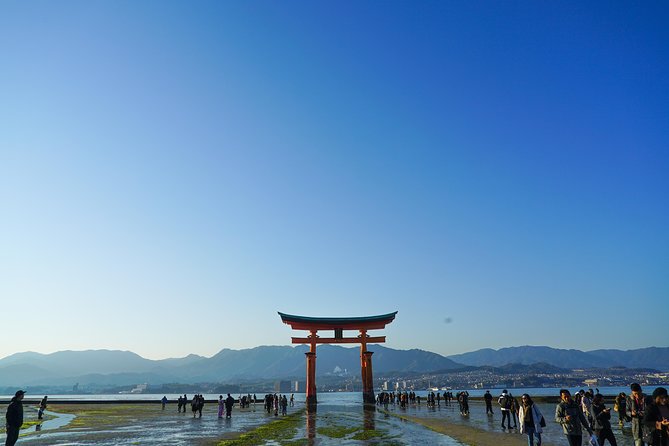
Itsukushima Shrine is the headline. The point is not just that it looks beautiful. It is that the design is made for the tides. The shrine complex you see today is connected to Heian period craftsmanship (794 to 1192), and it has a distinctive style that has held up despite salt air and water movement.
Walking along the approach gives you time to notice details instead of speed-scrolling through your photos. Your guide also helps you understand what you are looking at, so you are not stuck guessing which structures matter most and why.
There is also a direct “stand here, look there” element to this tour. Many guides teach you how to photograph the scene. That can mean timing your shots as you move, not just taking one quick snap and hoping for the best.
If you come on a damp day, you are not automatically out of luck. Multiple guides and tour-goers have had great experiences even when weather was less than perfect. Wet surfaces can make everything feel more dramatic and the walk more manageable if the heat is intense.
Daishoin Temple: Buddhism explanations, plus steps that feel worth it
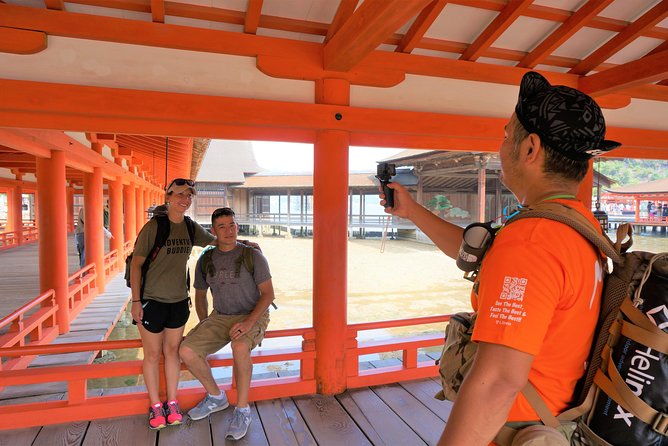
After the shrine-focused portion, the tour shifts to Daishoin Temple. This is where the day gains depth beyond the famous photo icons. Daishoin is the main temple of the Omuro school of Shingon Buddhism on Miyajima, and your guide explains Buddhism and the statues you pass.
One of the most common “yes, this is why” comments about Miyajima is how special the temple area feels once you climb in. Daishoin involves stairs and some uphill walking. It is short enough to be doable, but it is real. Bring a water bottle and go at a steady pace, especially in humid weather.
The payoff is that the temple setting gives you a different mood from the water views. Instead of the shrine foreground and ocean background, you get stone, paths, and a sense of religious life that feels grounded and lived-in.
More Walking Tours in Hiroshima
- Hiroshima City 4hr Private Walking Tour with Licensed Guide
★ 5.0 · 437 reviews - Hiroshima Walking Tour Why A Bomb was dropped to Hiroshima
★ 5.0 · 347 reviews - Hiroshima: Food and Culture Guided Walking Tour with Dinner
★ 4.9 · 212 reviews - Hiroshima: Peace Walking Tour of World Heritage Sites
★ 4.9 · 190 reviews
Momijidani Park and Senjokaku: two stops for photos with context
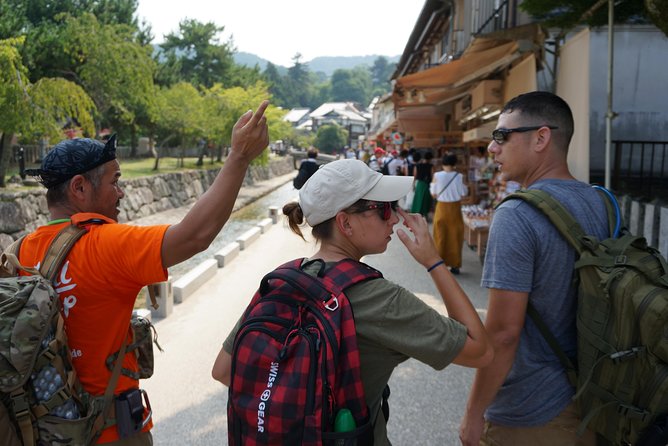
Momijidani Park is a quick photographic stop. You get time to take pictures without feeling like you are sprinting across the island. The park stop works well as a buffer between major religious sites, giving you a moment to reset.
Then the tour heads to Senjokaku. This place is commonly known as the main hall of Itsukushima Shrine’s Terminal Shrine, and it connects to Toyokuni Shrine as a shrine building on Itsukushima. Even with only about half an hour here, you get the “what is this and why does it matter” explanation that many independent visitors miss.
If you like structure, scale, and religious architecture, these stops help you see beyond just one postcard view. You get multiple perspectives of how the island’s spiritual sites are arranged, and you start seeing the logic of the walk.
Miyajima Omotesando: where the snack break is part of the point
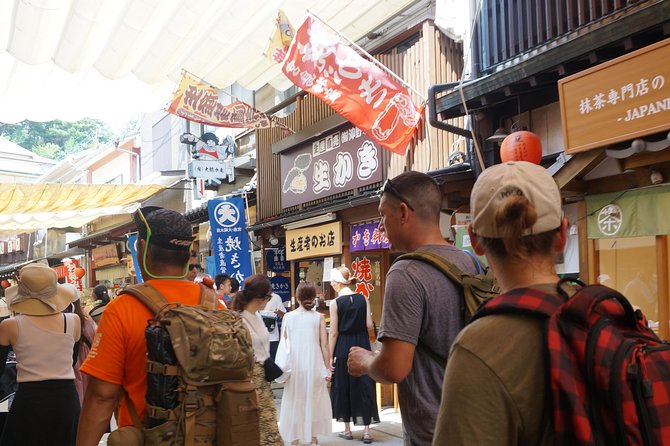
After temples and viewpoints, you end at the Miyajima Omotesando shopping street. This is the place for practical souvenir browsing and, more importantly, island food.
The tour is set up with lunch earlier, and Omotesando adds extra time for street food and treats. You will see grilled oyster options and other local delicacies. It is also a good moment to compare what you ordered at lunch with what you see here, so you can decide what you want to try or buy for later.
A detail I like about ending this way is that it feels like Miyajima life instead of only “historic stops.” You still get culture, but you also get the everyday energy: snack stalls, small shops, and casual browsing.
Also, expect deer. Miyajima is known for deer roaming around, and that can turn a normal photo moment into a fun surprise. Just keep an eye on where you step, because they are part of the scenery.
Lunch with Hiroshima oysters and momiji dumplings: included value, with limits
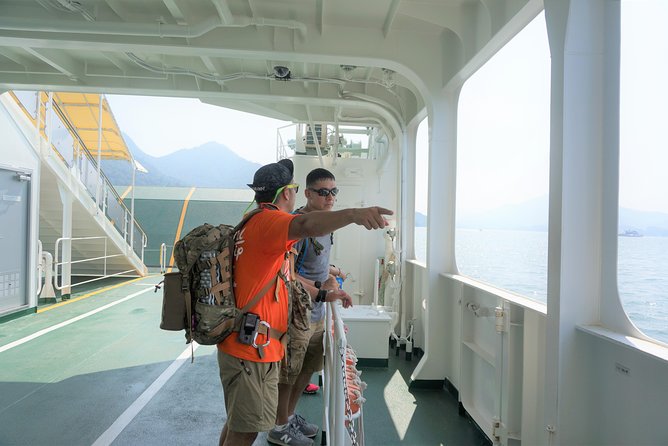
Lunch is one of the biggest value drivers in this tour. The included Hiroshima local meal features fresh or grilled oysters and momiji dumplings. You also get the convenience of not having to research where to eat or whether a place will fit your schedule.
That said, the tour is candid about dietary limits. Vegetarian and vegan options exist but are limited. Gluten-free lunch is not available. And allergy-free guarantees are not provided because the food is prepared in kitchens that are not operated by the tour provider. If you have dietary needs, you should communicate them at least a day before.
This is also one reason I think the guide-led lunch slot is useful. A guide can help you make choices that match what is available that day, rather than you getting stuck at a counter with limited options and a time crunch.
How the small group works on the ground
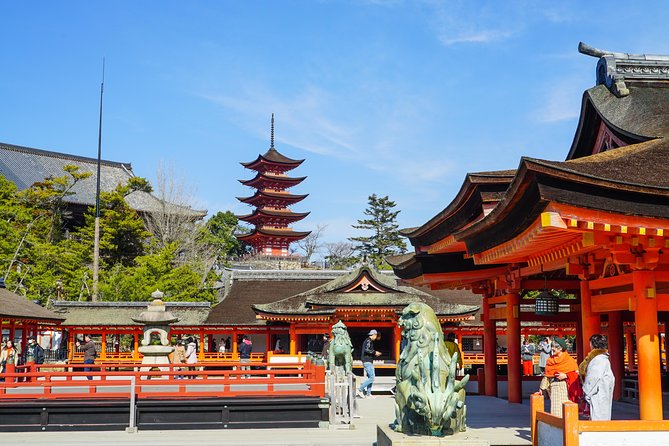
This is capped at six travelers, and you feel that difference. The pace stays flexible enough for photos, short questions, and regrouping. You are less likely to lose track of the plan, and your guide can adjust if the group needs a slower stair climb or extra time near a viewpoint.
Guide quality is a recurring theme in the experiences shared about this tour. Names that have shown up include Mariko, Hiro, Yuji, Kaori, Meri, Eri, Hika, and Shun. While you cannot choose a specific person in advance from the info provided here, you can expect a style that is personal and interactive, not just read-out-loud facts.
Another helpful touch: the tour includes tour photos. It is not just about getting good shots; it is about getting proof you hit the key places without juggling your camera, map, and the crowd.
Price and value check: what you get for $109.43
At $109.43 per person, you are paying for more than admission. You get a guide, entry fees to shrines, temples, and museum stops that are part of the walk, plus lunch, plus photo help. When you add those together, the price starts to look like a practical bundle.
The only cost you should budget separately is the ferry fee to Miyajima, 500 yen round-trip. That is not huge, but it is important because it can surprise you if you assume the ferry is included.
To decide if it is worth it for you, think about how you travel. If you like structuring a day with a local guide and you want to move efficiently between spiritual and historic sites, this price feels fair. If you are a super independent planner with strong map skills and you do not care about guide context, you might be able to DIY Miyajima cheaper. But you would be trading off time and meaning, and you might miss why certain structures matter.
What to pack, and how weather changes the experience
Miyajima is mostly outdoors, and Japan’s weather can be intense. Summer is described as very hot and humid, so bring water and wear a hat to prevent heat stroke. Even outside summer, your feet are still your main travel tool here, so pack for walking.
Also plan for extremes. The tour notes that winters can be cold and summers can be very hot. In rain, the tour still runs, and you will still see the sites. Rain can also make the ground slick, so traction matters.
If you are bringing camera gear, this is a good day for it. Multiple parts of the walk are built for photos: the coast views, shrine buildings, temple structures, and the end-of-day street scene.
One drawback to take seriously: the rare no-show risk
Most experiences with this tour are highly positive, but there is at least one serious negative report: a guide did not show up, leaving the person stranded at the meeting point. That is unusual, but it is real enough that you should treat it like any tour-day responsibility.
My practical advice is simple. Confirm your booking details, and be at the meeting point early enough to handle small delays. If the provider supports it in your specific situation, keep a way to message or call the day-of contact. It can turn a stressful situation into a solvable one.
Should you book this Miyajima Half-day Historical Walking Tour?
I would book this if you want Miyajima done in a way that feels logical and rewarding. The combination of iconic sights plus temple context plus an included oyster-and-momiji lunch is a strong mix, and the small group size helps a lot.
I would hesitate if you rely on gluten-free meals, need strict allergen guarantees, or dislike walking on steps. Also, if you are the type who hates any uncertainty, understand the ferry is extra and there is an extremely rare no-show risk, like with any booked service.
If you want Miyajima as more than a photo stop, this tour is set up to help you get the why behind the what. For a first visit, it is a smart, efficient way to leave with memories that actually make sense.
FAQ
How long is the Miyajima Half-day Historical Walking Tour?
The tour runs about 5 hours 30 minutes.
Is the ferry to Miyajima included in the price?
No. The ferry fee is an additional 500 yen round-trip.
What is included in the lunch?
Lunch is a Hiroshima local meal that includes oysters (fresh or grilled) and momiji dumplings.
Are entrance fees included for temples and shrines?
Yes. Entrance fees to the shrines, temples, and museum stops included on the tour are covered.
Can the tour accommodate gluten-free or allergy needs?
Gluten-free lunch is not available. Allergy-free guarantees are not provided, and vegetarian or vegan options are limited. You should inform the provider at least one day before the tour for any dietary requests or allergies.
Where do I meet the guide, and where does the tour end?
You meet at 1-chōme-3-26 Miyajimaguchi, Hatsukaichi, Hiroshima 739-0411, Japan. The tour ends back at the same meeting point.
More Historical Tours in Hiroshima
- Hiroshima: Miyajima Half-day Historical Walking Tour
★ 4.7 · 100 reviews - Hiroshima: History and Hidden Gems Tour
★ 4.9 · 81 reviews - Hiroshima: Miyajima Private Cultural Tour by Ferry
★ 4.9 · 72 reviews - Hiroshima History Tour : A-Bomb Dome, Peace Memorial & City
★ 5.0 · 43 reviews
More Miyajima Island Trips Around Hiroshima
- Peaceful Hiroshima & Miyajima UNESCO 1 Day Bus Tour
★ 5.0 · 5,309 reviews - Hiroshima: Hiroshima and Miyajima UNESCO Sites 1-Day Tour
★ 4.9 · 2,330 reviews - Hiroshima / Miyajima Full-day Private Tour with Government Licensed Guide
★ 5.0 · 1,298 reviews - From Hiroshima: Hiroshima & Miyajima 1 Day Tour with Lunch
★ 4.7 · 395 reviews
Newly listed around Hiroshima
- Hiroshima and Miyajima 1 Day Walking Tour★ 5.0 · 43 reviews
- Hiroshima and Miyajima 1 Day Cruise Tour★ 5.0 · 24 reviews
- Hiroshima & Miyajima: UNESCO A-Bomb Dome & Itsukushima with Local★ 5.0 · 25 reviews
- Hiroshima & Miyajima: Private Full-Day Tour with a Local Guide★ 5.0 · 39 reviews
- Hiroshima and Miyajima 1 Day Bus Tour★ 4.5 · 145 reviews
- Hiroshima 5k Running Tour of Hijiyama Park★ 5.0 · 7 reviews
- Hiroshima and Miyajima Bus Tour with Indian Lunch★ 5.0 · 10 reviews
- Hiroshima Peace Memorial and Atomic Bomb Dome Private Tour★ 5.0 · 37 reviews
Miyajima Island Trips, compared.
Peaceful Hiroshima & Miyajima UNESCO 1 Day Bus Tour
Read our review →
Hiroshima and Miyajima UNESCO Sites 1-Day Tour
Read our review →
Hiroshima / Miyajima Full-day Private Tour with Government Licensed Guide
Read our review →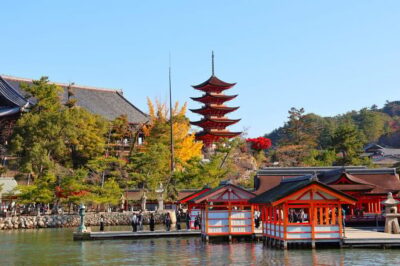
Osaka/Kyoto: Hiroshima Miyajima Bus Tour & Shinkansen Ticket
Read our review →
Hiroshima and Miyajima Day Trip with Itsukushima Shrine & Ferry
Read our review →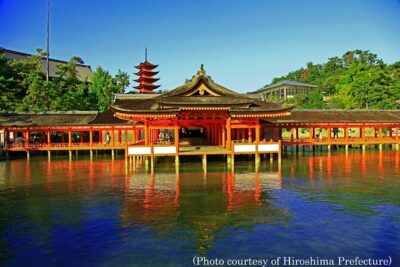
Full Day Hiroshima and Miyajima Bus Tour from Hiroshima
Read our review →