
Review · WALKING TOURS
Hiroshima Walking Tour Why A Bomb was dropped to Hiroshima
Nuclear history, on foot. This small-group Hiroshima walk connects the city’s landmarks to the story of why the bomb was dropped in 1945, with your guide explaining the background along the way. I like the small-group size and the way it feels personal, not crowded, and I especially like the focus on the Atomic Bomb Dome and Peace Memorial Park.
One thing to keep in mind: it is mostly an on-foot experience with short briefing moments between stops. If you wanted a museum-style, ultra-detailed lecture the whole way, you may find the pacing a bit more “walking and framing” than “deep academic seminar.”
The payoff is that you see Hiroshima in two time layers, pre-war places like Hiroshima Castle and Gokoku Shrine, then the solemn memorials right by the epicenter area. Even after the heavy parts, you still walk through modern Hiroshima, which makes the city’s peace message feel grounded in daily life.
In This Review
- Key highlights you will notice right away
- Meeting at Hiroshima Gokoku Shrine, then easing into the story
- Hiroshima Castle grounds: why Carp Castle belongs in a WWII walking route
- Hiroshima Green Arena: a modern pause in the middle of heavy history
- Orizuru Tower by Peace Memorial Park: the modern marker before the memorial wall
- Atomic Bomb Dome: the site that makes the lessons land
- Children’s Peace Monument: turning history into human scale
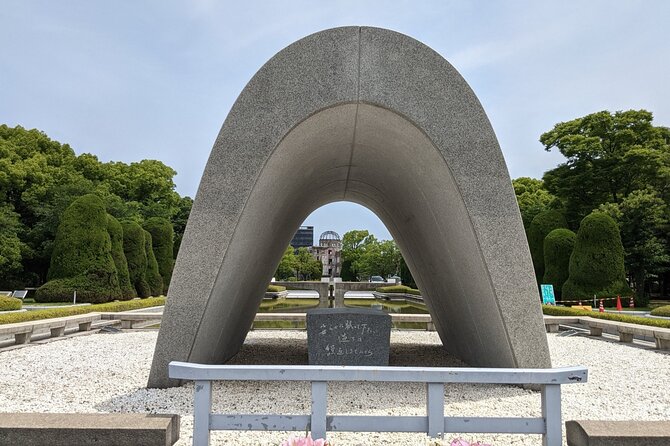
- Hiroshima Victims Memorial Cenotaph and the Peace Memorial Park core
- How the guide explains why the bomb was dropped
- Price and value: is $28 a fair deal?
- Who should book this Hiroshima walking tour
- Should you book it? My quick decision guide
- FAQ
- How long is the Hiroshima walking tour?
- Where does the tour start and end?
- What does the $28 price include?
- How big is the group?
- Which major memorial sites are part of the walk?
- Is bottled water provided?
- Can I cancel for a full refund?
Key highlights you will notice right away
- A small-group format with a maximum of 15 people, and often described as up to 12 guests
- Peace Park focus at the Atomic Bomb Dome, Children’s Peace Monument, and the Victims Memorial Cenotaph
- Fast connections between before-1945 landmarks and the memorial sites after 1945
- Meaningful pauses with a stop by Hiroshima Castle and a modern break near Orizuru Tower
- Strong guide storytelling using clear explanations and helpful visuals like photos and maps
Meeting at Hiroshima Gokoku Shrine, then easing into the story
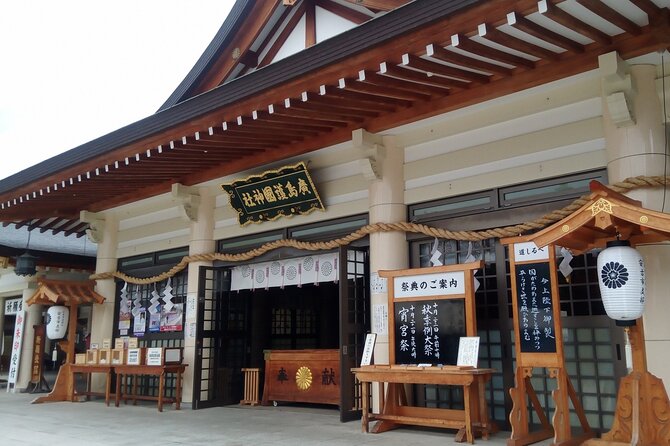
Your tour starts at Hiroshima Gokoku Shrine in Motomachi. The meeting address is 21-2 Motomachi, Naka Ward, Hiroshima, 730-0011, Japan. This first stop is a smart opener because it is calm and orderly, and it gives you a moment to shift from “tourist mode” to “think-mode.”
The shrine visit is free and only about 20 minutes, so you are not stuck in a long detour. What you get instead is a sense of how Hiroshima’s religious and civic life sits alongside the later WWII history you will be learning about. It also helps you get your bearings before the walk starts tightening around the Peace Memorial Park area.
Practical tip: this part can feel quiet in the way that makes you more aware of what comes next. If you want photos, do them early. Once you move toward the memorial sites, the mood changes fast.
More Walking Tours in Hiroshima
- Hiroshima Historical Walking Tour – Why A-Bomb was Dropped
★ 4.8 · 893 reviews - Hiroshima Peace (Heiwa) Walking Tour at World Heritage Sites
★ 5.0 · 872 reviews - Hiroshima City 4hr Private Walking Tour with Licensed Guide
★ 5.0 · 437 reviews
Hiroshima Castle grounds: why Carp Castle belongs in a WWII walking route
Next you head to Hiroshima Castle, also nicknamed Carp Castle. It is described as a historic landmark originally constructed in the 1590s, and it served as the home of the daimyō of the Hiroshima han (domain). Admission time here is free and about 20 minutes.
I like putting this stop early because it gives a “before 1945” anchor. The bombing story is often told as a single date, but your guide’s framing helps you understand Hiroshima as a living city with systems, leadership, and everyday rhythms. Seeing a major historical site near the start makes the contrast sharper when you reach the memorials.
One consideration: you will be spending time at the castle area, but you should not expect a full inside visit. The tour keeps moving, and the main goal stays on the WWII narrative and the Peace Park core.
Hiroshima Green Arena: a modern pause in the middle of heavy history
About halfway through, the itinerary includes Hiroshima Green Arena, also called the Hiroshima Prefectural Sports Center. Expect around 30 minutes here, and admission is listed as free.
This stop may look unrelated at first glance, but it serves a purpose. You get a breather where Hiroshima feels like Hiroshima right now, not only Hiroshima as a memorial. It is also a good stretch-and-breathe moment so you can handle what comes next.
What you should take from it: Hiroshima is not a theme park of tragedy. It is a city where people work, train, and attend events. That reality makes the peace message easier to believe.
Orizuru Tower by Peace Memorial Park: the modern marker before the memorial wall
Then you move toward the edge of the Peace Memorial Park zone, stopping at Orizuru Tower, a modern addition to the cityscape that opened in 2016. The tower is a 13-story building located right next to Hiroshima Peace Memorial Park.
Why this stop works: it creates a visual “bridge.” You are not walking straight from older history to the memorial’s solemnity. Instead, you have a contemporary landmark that helps you recalibrate your eyes and your pace before the tour turns fully ceremonial.
Keep your camera handy here, but be respectful. Near the memorials, the tour tone shifts from “photos first” to “read, reflect, then photograph if it feels right.”
A few more Hiroshima days to weigh up
- Miyajima Half-day Trip Historical Walking Tour
★ 5.0 · 284 reviews - Hiroshima: History of Hiroshima Group Walking Tour
★ 4.8 · 266 reviews - Hiroshima: Food and Culture Guided Walking Tour with Dinner
★ 4.9 · 212 reviews - Hiroshima: Peace Walking Tour of World Heritage Sites
★ 4.9 · 190 reviews
Atomic Bomb Dome: the site that makes the lessons land
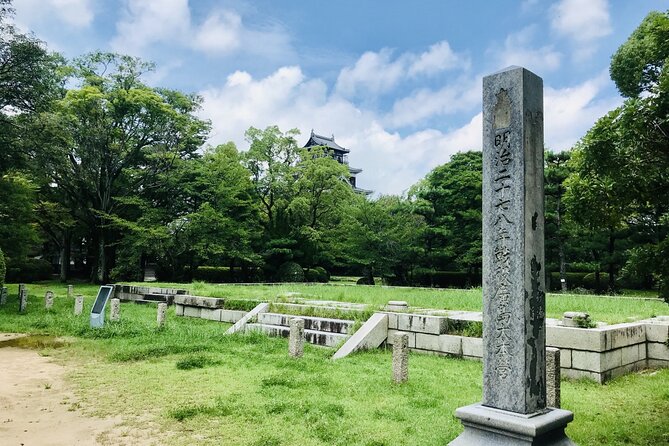
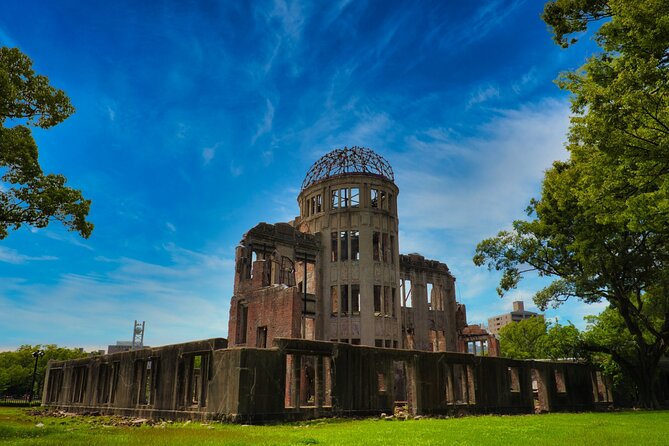
The highlight stop is the Atomic Bomb Dome. The tour description notes that it used to be the Hiroshima Prefectural Industrial Promotion Hall, and it sits near the blast’s epicenter. You get around 20 minutes here, and admission is free.
This is the moment when the tour’s storytelling stops being abstract. The dome is not just a landmark, it is a physical reminder of what happened in 1945. Your guide’s role matters a lot here, because you are learning both the lead-up to the bombing and what came afterward, not only the date itself.
I also like that the tour keeps the pace steady. The dome demands attention, so you are given time to look without being rushed into the next photo spot every 30 seconds. If you like asking questions, this is a great place to do it. Guides often explain details with maps and pictures, and that can make the cause-and-effect chain clearer.
Children’s Peace Monument: turning history into human scale
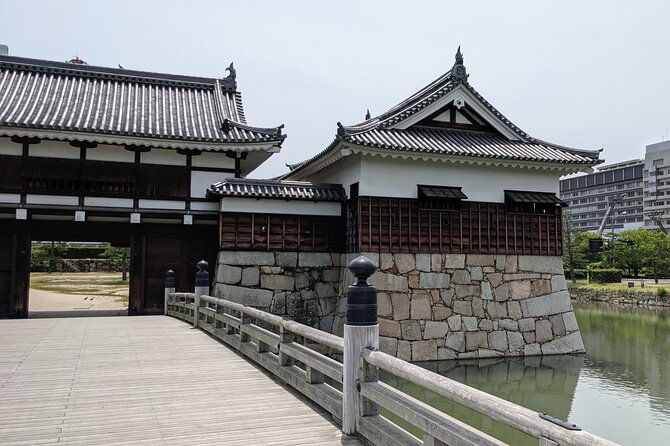
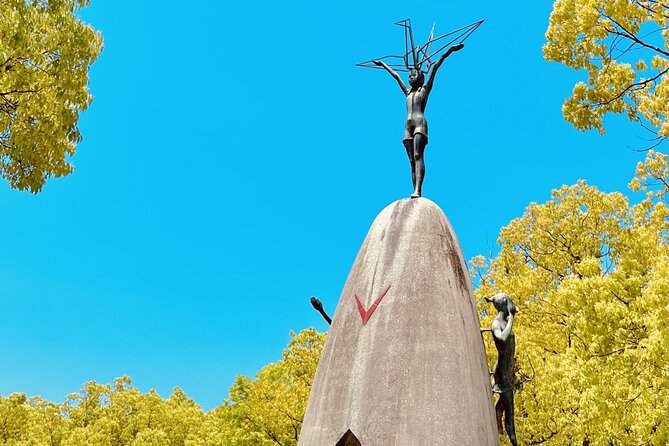
Next comes the Children’s Peace Monument, with about 10 minutes on site. This memorial commemorates Sadako Sasaki and the thousands of child victims of the atomic bombing, inspired by Sadako.
What hits hardest here is how the message is framed for the living, not only for the dead. When your guide explains the bombing’s lasting impact, this stop helps you understand that the consequences did not end when the flash did. They lingered through families and communities, and the city has kept that memory present with this child-focused dedication.
If you are traveling with kids, this stop often works well because it connects to a story, not only a timeline. The tower is quiet, but the meaning is loud.
Hiroshima Victims Memorial Cenotaph and the Peace Memorial Park core
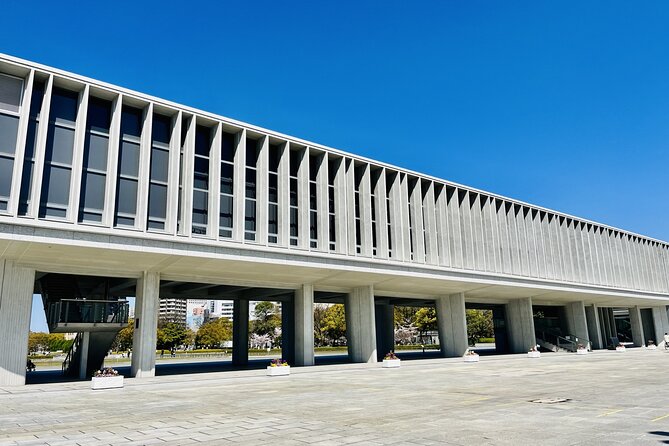
Your next and longest memorial stretch is the Hiroshima Victims Memorial Cenotaph at Peace Memorial Park, with about 30 minutes listed. This is dedicated to the memory of the victims of the atomic bomb dropped on Hiroshima on August 6, 1945 and is located near the epicenter area.
This is a reflective stop. The cenotaph sits at the center of a park made for remembrance, and your guide typically ties what you just saw to the broader narrative of aftermath, recovery, and Hiroshima’s commitment to peace and reconciliation.
Then the tour ends in front of the Peace Memorial Museum. That ending matters. Even if you do not go inside right away, you walk out with a clear map of what you have just learned, so the museum visit, if you choose it, becomes more focused.
Practical tip: if you are visiting other parts of Hiroshima after this tour, plan for a slower pace. Your head will still be on the last memorial stop, and that is normal.
How the guide explains why the bomb was dropped
The main promise here is learning more about the bombing of Hiroshima and the events leading up to it. Across the guide styles described, the common thread is clarity plus context. Many guides use visual aids like maps and pictures, and they also build in time for questions.
I like that the tour does not just point at sites and recite dates. You get framed explanations about the lead-up to the bombing, plus an understanding of the long tail of impact. One guide background example you may hear in the tour storytelling is a personal family connection, including being a grandchild of a bomb survivor. That kind of personal link is powerful because it is not only facts, it is lived memory shared through a local voice.
Also, the pacing is built for short attention spans. There are typically short briefing moments between walking segments, which helps you avoid information overload. If you learn best while walking and checking landmarks, this format will suit you.
Price and value: is $28 a fair deal?
At $28.00 per person, this is not a bargain price for Japan, but it does read as good value for what you get. You are paying for guided context, not for paid admissions, because many stops are listed as free. The experience also includes all fees and taxes, which removes one more bit of uncertainty.
The duration is about 2 hours 30 minutes, and it is structured to cover a lot of the Peace Park core without requiring a long day. The small-group size also helps. In a place as serious as this, smaller groups make the guide more able to manage questions and keep the tone respectful.
Two practical costs to remember: bottled water is not included, so bring your own. And because this is a walking tour, comfortable shoes matter more than you might expect.
Who should book this Hiroshima walking tour
This tour is a great fit if you are a first-time visitor who wants the key WWII sites and the “why” behind them, in a guided format you can finish in one afternoon or morning block.
It also works well for people who want a human-scale experience. The tour is short, not endless, and the guide’s explanations are designed to help you link events, decisions, and consequences without drowning you in jargon.
You might want to pair it with extra time at the Peace Memorial Museum if you crave more detail than what can fit into a walking loop. And if you expected an extremely deep, research-heavy focus the whole time, go in knowing it is guided sightseeing with context, not a full classroom course.
Should you book it? My quick decision guide
Yes, I think you should book this if you want a structured, respectful way to understand Hiroshima’s WWII story, while still getting to see both the memorial core and the city around it. The Atomic Bomb Dome plus Peace Park monuments are the heart of the experience, and the guide framing helps those stops make emotional and historical sense.
Skip or adjust your expectations if you are looking for an all-day, museum-level deep lecture and you do not plan to read or visit beyond the walking route. If you do plan to spend time at the Peace Memorial Museum afterward, this tour becomes an excellent setup for what you will see next.
FAQ
How long is the Hiroshima walking tour?
It runs about 2 hours 30 minutes (approx.).
Where does the tour start and end?
It starts at Hiroshima Gokoku Shrine, 21-2 Motomachi, Naka Ward, Hiroshima, 730-0011, Japan. The tour ends in front of the Hiroshima Peace Memorial Museum, 1-2 Nakajimachō, Naka Ward, Hiroshima, 730-0811, Japan.
What does the $28 price include?
The price is $28.00 per person and includes all fees and taxes.
How big is the group?
The tour is a small-group experience. The information lists a maximum of 15 travelers, and the tour description also mentions a maximum of 12 guests.
Which major memorial sites are part of the walk?
You will visit the Atomic Bomb Dome and multiple Peace Memorial Park sites, including the Children’s Peace Monument and the Hiroshima Victims Memorial Cenotaph. The tour also ends in front of the Peace Memorial Museum.
Is bottled water provided?
No. Bottled water is not included.
Can I cancel for a full refund?
Yes. You can cancel up to 24 hours in advance for a full refund. If you cancel less than 24 hours before the experience starts, the amount paid is not refunded.
Newly listed around Hiroshima
- Hiroshima and Miyajima 1 Day Walking Tour★ 5.0 · 43 reviews
- Hiroshima and Miyajima 1 Day Cruise Tour★ 5.0 · 24 reviews
- Hiroshima & Miyajima: UNESCO A-Bomb Dome & Itsukushima with Local★ 5.0 · 25 reviews
- Hiroshima & Miyajima: Private Full-Day Tour with a Local Guide★ 5.0 · 39 reviews
- Hiroshima 5k Running Tour of Hijiyama Park★ 5.0 · 7 reviews
- Hiroshima and Miyajima Bus Tour with Indian Lunch★ 5.0 · 10 reviews
- Hiroshima and Miyajima 1 Day Bus Tour★ 4.5 · 145 reviews
- Hiroshima Peace Memorial and Atomic Bomb Dome Private Tour★ 5.0 · 37 reviews
Walking Tours, compared.
Kyoto Geisha Walking Tour: Gion District & Hidden Gems
Read our review →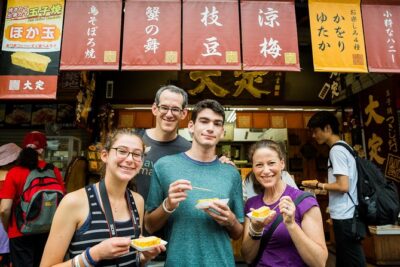
Tokyo Tsukiji Fish Market Food and Culture Walking Tour
Read our review →
Gion Geisha District Walking Tour – Stories of Geisha
Read our review →
Shinjuku Local Bar and Izakaya Guided Walking Tour
Read our review →
Asakusa Walking Tour with Sensoji Temple Visit
Read our review →
Kyoto Gion Geisha District Walking Tour – The Stories of Geisha
Read our review →Browse the lists this tour appears in