
Review · HISTORICAL TOURS
Hiroshima: History of Hiroshima Group Walking Tour
This walk changes how you picture Hiroshima. Starting at the Gates of Peace, you follow expert guides through Hiroshima Peace Memorial Park, where each stop links back to the atomic bombing with real human weight. The guides are local residents with Masters or PhDs in areas like history, anthropology, and peace studies.
I also like the pacing. You cover major monuments and a few quieter markers without feeling rushed, and you get built-in time for pauses and questions between places like Mother and Baby in the Storm and the Hiroshima National Peace Memorial Hall.
The only real caution is that this is emotionally intense, and it involves a fair amount of standing and walking, so bring stamina and plan for heavier moments.
In This Review
- Key things I’d watch for before you go
- Why this Hiroshima Peace Memorial Park walk hits harder than a self-guided stroll
- Meet at the Gates of Peace, then follow the story through the park
- Mother and Baby in the Storm, the emotional tone arrives fast
- Prayer Fountain and the cenotaph, remembrance you can feel in your feet
- Flame of Peace and the idea of continuity
- Hiroshima National Peace Memorial Hall entrance, what that ticket adds
- A breather in the middle, then the children’s memorials
- Atomic Bomb Memorial Burial Mound and the Korean Atomic Bomb Victims Cenotaph
- Bell of Peace, then the Atomic Bomb Dome as the signature ruin
- Hypocenter and the walk to the end point
- The guide quality is the real reason the tour works
- Practical tips so you can focus on meaning, not discomfort
- Price and value: what $35 buys you here
- Who should book this tour, and who might want a different pace
- Should you book this Hiroshima Peace Memorial Park walking tour?
- FAQ
- How long is the Hiroshima: History of Hiroshima Group Walking Tour?
- Where do we meet the guide?
- What is the price per person?
- Is the tour guided, and what language is it in?
- What’s included in the tour?
- Is the tour wheelchair accessible?
- What are the cancellation and payment options?
Key things I’d watch for before you go
- Academic-level guides with local, Hiroshima-based perspective
- A tight 2-hour route focused on the heart of the Peace Memorial Park
- Symbol-based stops explained in plain language, including monuments many people miss
- Entrance included for the Hiroshima National Peace Memorial Hall for Atomic Bomb Victims
- Time set aside for reflection and a breather in the middle of the walk
- A strong ending at the Hypocenter, with the Atomic Bomb Dome as the signature ruin
Why this Hiroshima Peace Memorial Park walk hits harder than a self-guided stroll
Hiroshima is one of those places where it’s easy to look, take photos, and still feel like you missed the point. This tour helps you do the opposite. You’re not just moving from sign to sign. You’re walking with a guide who explains what you’re seeing and why it matters, while connecting the park’s layout and symbols to testimony and survivor experiences.
I like that the tour doesn’t treat the bombing like a single, distant event. You hear how Hiroshima worked before August 1945, why it was targeted, what the day itself meant for people on the ground, and how the city rebuilt after. The story arc matters because it stops the trip from turning into a timeline you memorize. Instead, it becomes a place you understand.
More History Tours in Hiroshima
- Hiroshima Historical Walking Tour – Why A-Bomb was Dropped
★ 4.8 · 893 reviews - Hiroshima Peace (Heiwa) Walking Tour at World Heritage Sites
★ 5.0 · 872 reviews - Miyajima Half-day Trip Historical Walking Tour
★ 5.0 · 284 reviews
Meet at the Gates of Peace, then follow the story through the park
Your walk starts at the Gates of Peace, located next to the Italian restaurant Mario. This matters more than you’d think. Getting oriented at the right spot keeps you calm from minute one, especially because the sites you’ll visit are close enough to walk, but the experience is paced like a guided narrative.
Early on, your guide sets expectations about what Hiroshima was like before, during, and after the bombing. That framing changes how you read everything that comes next. When you later see memorials and statues, you’re not asking, What am I looking at? You’re asking, Who did this help, and what did it mean to them?
Mother and Baby in the Storm, the emotional tone arrives fast
Your first stop after the gates is Mother and Baby in the Storm, with a short guided visit. It’s a compact moment, but it’s also a powerful one. The guide uses the monument to talk about innocence, loss, and survival, and ties it to the experiences of atomic bomb victims.
Two things to do here:
- Let the guide finish their explanation before you start clicking photos.
- Keep your body relaxed, even if your mind is racing. Standing still for a few minutes is part of the process at this park.
Prayer Fountain and the cenotaph, remembrance you can feel in your feet
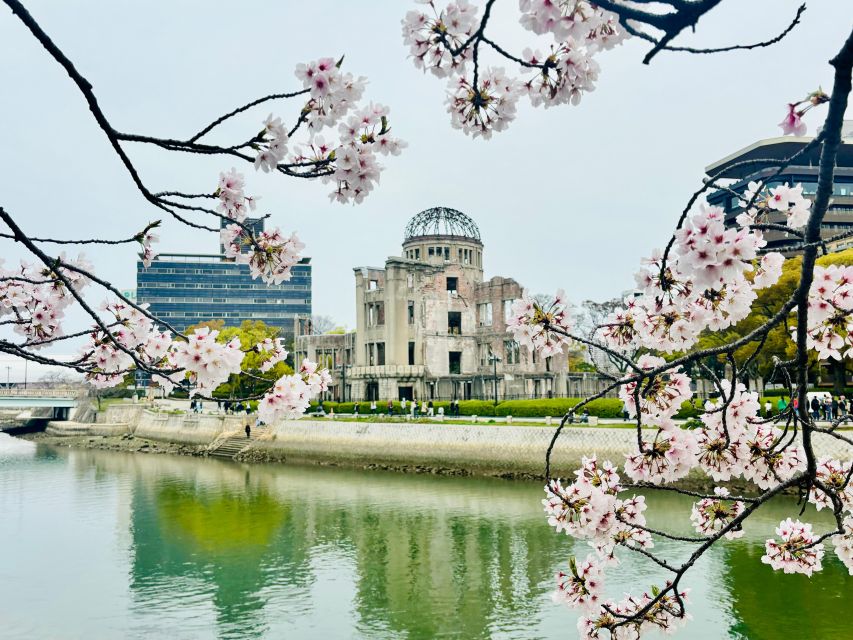
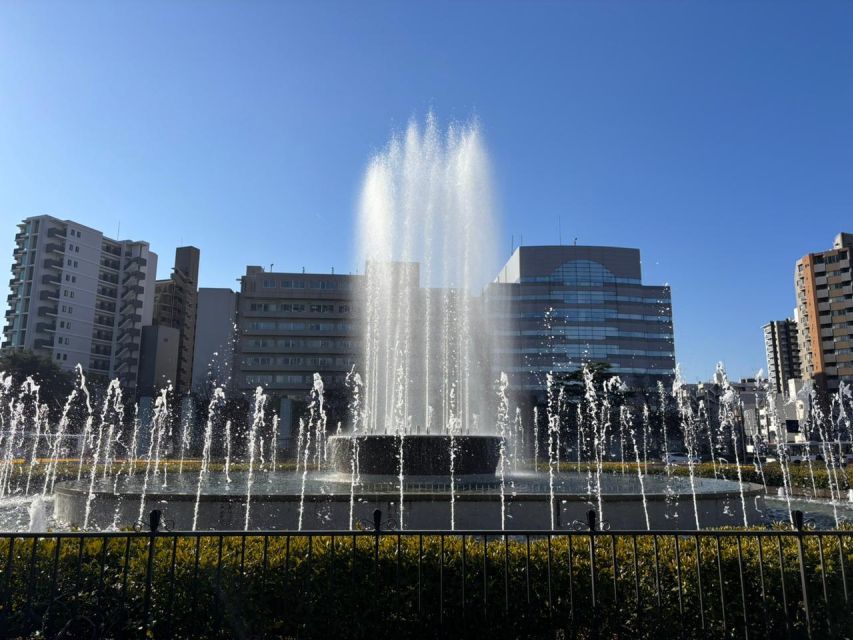
Next comes the Prayer Fountain, followed by the Hiroshima Victims Memorial Cenotaph. These stops are short, but they’re not filler. Your guide points out how the park is designed for reflection, not just sightseeing. You’ll also get scenic viewpoints along the way, which gives your eyes a job besides scanning faces and captions.
At the cenotaph, the guide’s job is to make the name of the monument mean something. It’s easy to walk past stone without processing it. A good guide makes it personal without getting sensational.
More Walking Tours in Hiroshima
- Hiroshima City 4hr Private Walking Tour with Licensed Guide
★ 5.0 · 437 reviews - Hiroshima Walking Tour Why A Bomb was dropped to Hiroshima
★ 5.0 · 347 reviews - Hiroshima: Food and Culture Guided Walking Tour with Dinner
★ 4.9 · 212 reviews - Hiroshima: Peace Walking Tour of World Heritage Sites
★ 4.9 · 190 reviews
Flame of Peace and the idea of continuity
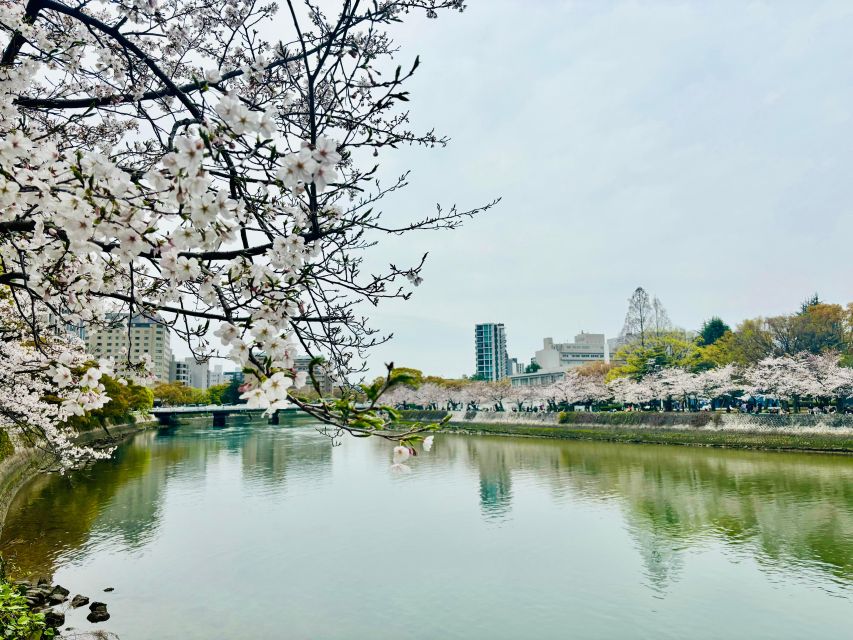
The Flame of Peace is another quick stop. Still, it’s one of those “small symbol, big message” moments. Your guide explains how Hiroshima’s memorial landscape keeps the focus on peace and remembrance, rather than revenge.
This is where you start to notice the tour’s respectful tone. Guides like Tomas, Camille, and Cva are praised for being sensitive while still answering tough questions in a steady, approachable way. Even when you get emotional, the tour keeps moving at a humane pace.
Hiroshima National Peace Memorial Hall entrance, what that ticket adds
One of the clearest value points is that admission to the Hiroshima National Peace Memorial Hall for Atomic Bomb Victims is included. The guided portion gives you context so the hall doesn’t feel like a maze of exhibits.
Expect a guided visit that links what you’re seeing in the hall to the broader themes you heard at the start. You’re basically getting a “read me this place” explanation before you see it on your own terms.
Time check: this stop is about 15 minutes in the flow. It’s enough to orient you and understand the purpose, without turning the tour into a long museum day.
A breather in the middle, then the children’s memorials
After the hall, you’ll get a free period of about 20 minutes. I like this structure. When the topic is heavy, you need space to step out of the guide’s voice for a bit. Use this time to:
- regroup and take a slower look at nearby pieces
- ask any last questions you’ve been holding back
- simply rest your feet
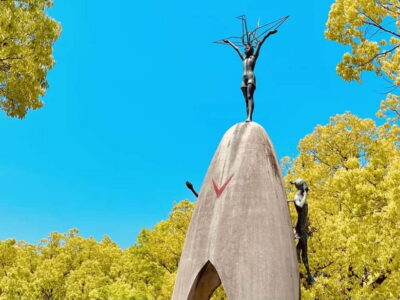
Then the route continues with the Children’s Peace Monument (including a photo stop). Kids are not an abstract theme here. Your guide connects the monument to the reality of what happened to children and to the idea of hope that survivors carried forward.
Atomic Bomb Memorial Burial Mound and the Korean Atomic Bomb Victims Cenotaph
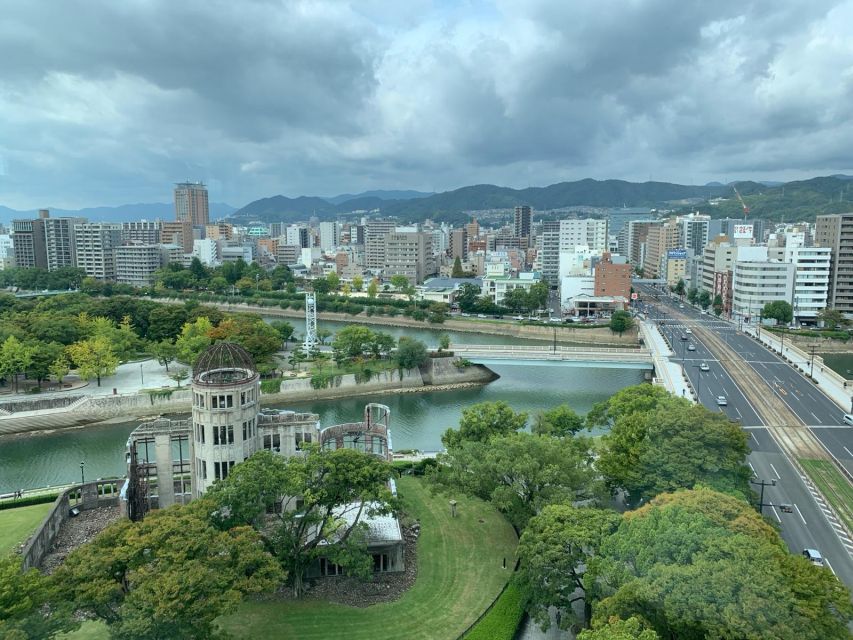
Two stops on the latter half broaden and deepen the story. First is the Atomic Bomb Memorial Burial Mound. Then you visit the Korean Atomic Bomb Victims Cenotaph.
These aren’t just “more things to see.” They matter because they widen the scope of remembrance. If you only focus on the famous landmarks, you can miss how the memorial park includes different groups who were affected.
A practical tip: pace yourself. These are moments where you’ll want a few seconds before absorbing the guide’s explanation. If you try to race ahead mentally, the meaning slips past.
Bell of Peace, then the Atomic Bomb Dome as the signature ruin
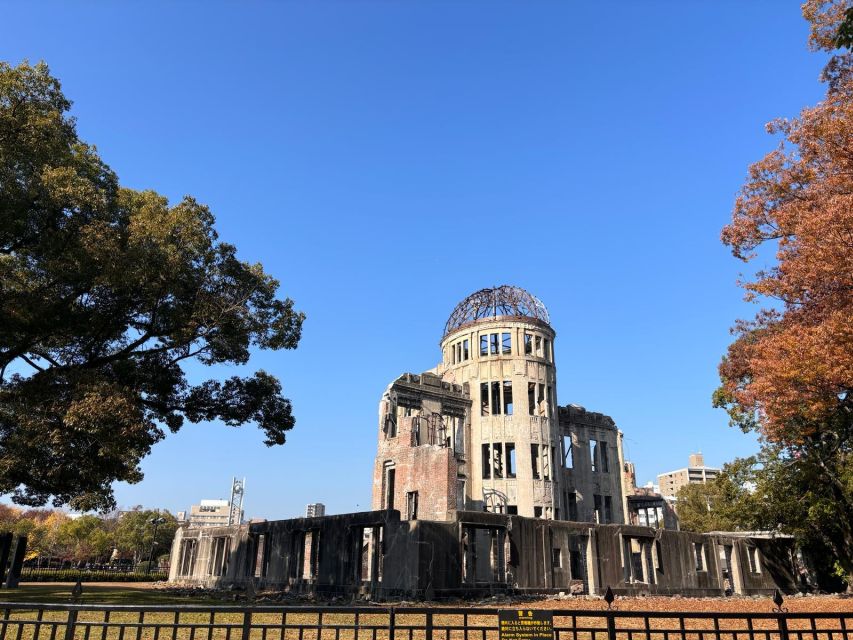
Next is the Bell of Peace for a photo stop and guided explanation. It functions like a pause button. You get a chance to shift from processing history to thinking about what remembrance is supposed to do today.
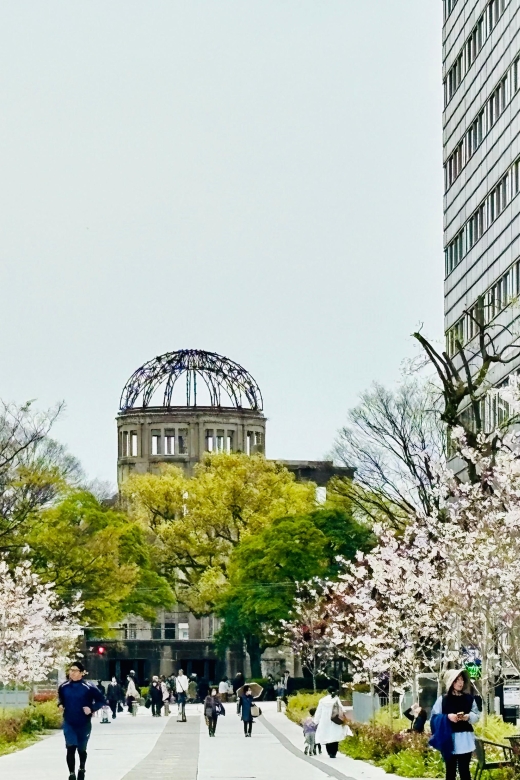
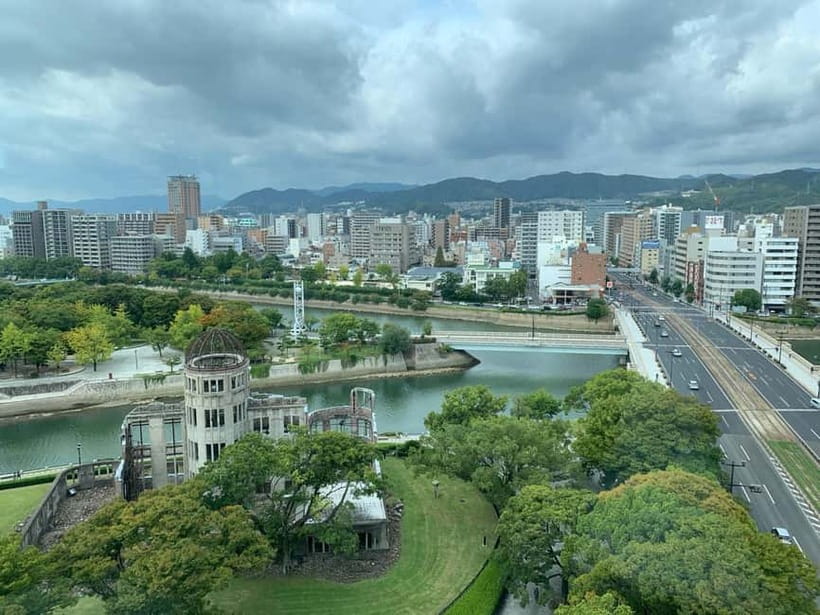
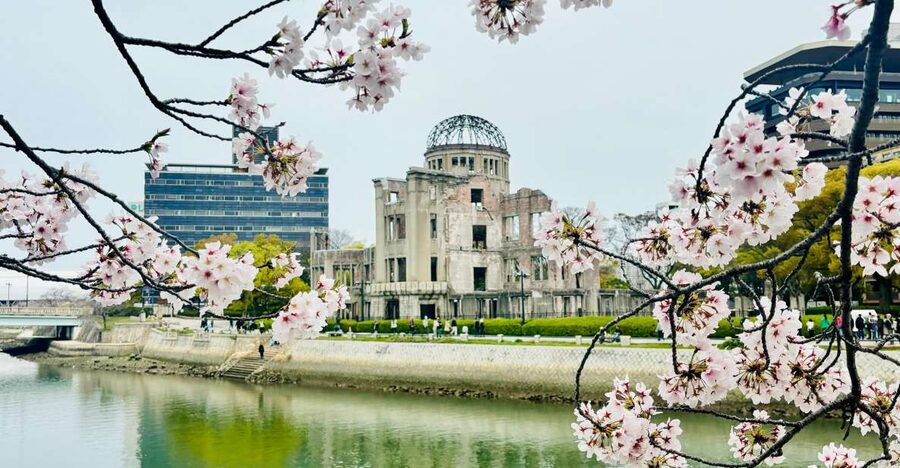
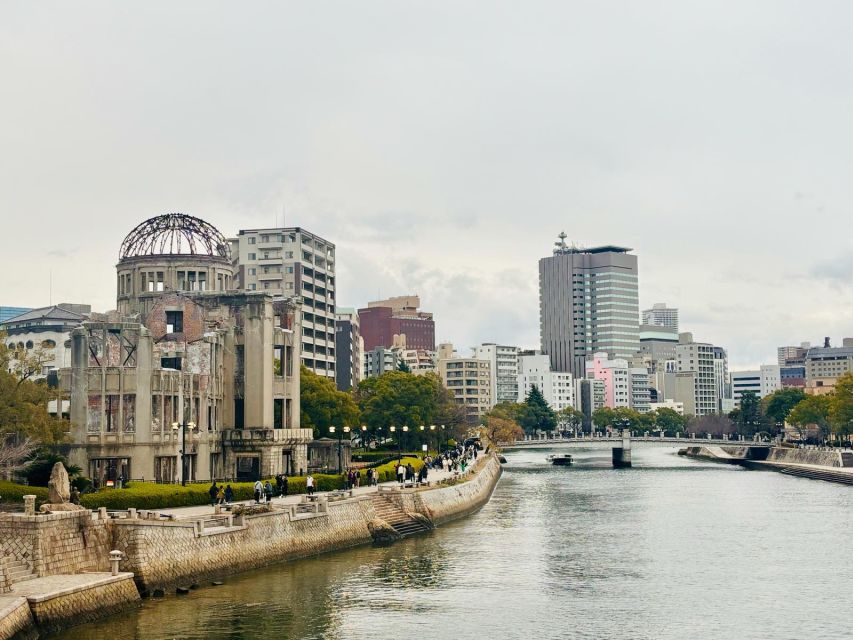
Then the tour’s visual centerpiece arrives: the Atomic Bomb Dome. You’ll spend about 15 minutes at this stop, with both photo time and guided sightseeing.
This is the structure many people picture when they hear Hiroshima, and your guide reinforces why it’s so important, including that it is the only structure left standing after the blast. Standing there with a guide matters because you don’t just see a ruin. You understand what survival looked like in a city that was otherwise transformed.
Hypocenter and the walk to the end point
The tour ends at the Hiroshima Atomic Bomb Hypocenter Monument, after a close look at the Hypocenter and related photo stop.
This part of the route is where the story becomes starkly specific. The guide ties the site back to the day in August 1945 and helps you connect the park’s symbols to the consequences for people who lived through it, and for the city that had to continue afterward.
If you’re the kind of traveler who likes to process slowly, hang onto the guide’s final remarks. This ending is meant to leave you with more than facts. It’s supposed to leave you with understanding.
The guide quality is the real reason the tour works
This is where the reviews and the tour design meet. The tour is led by English-speaking guides from diverse educational and cultural backgrounds, many with advanced degrees. That academic background helps the guide answer questions in a clear way, not a vague way.
But it’s the storytelling style that gets praised the most. Guides such as Tomas, Camille, and Cva are repeatedly described as passionate, compassionate, respectful, and able to explain the bombing and its aftermath without turning it into a performance. Some guides also share personal family connections, and that kind of lived perspective makes the monuments feel less like history and more like a direct human experience.
Another theme in the feedback: good pacing. You’re not shoved through. Guides keep enough structure to cover the big monuments, while still giving time for questions and for quiet reflection during the emotional parts.
And yes, you might notice moments of lightness too. Some guides add a touch of humor to keep the group steady, not numb. It’s a careful balance, and the best guides maintain it.
Practical tips so you can focus on meaning, not discomfort
Because it’s a walking tour, your comfort affects your attention. I recommend you:
- wear comfortable shoes, since you’ll be on your feet for the full 2 hours
- dress for weather, especially if you’re visiting in colder months or when it’s rainy
- bring a bottle of water if you tend to get dry quickly while walking, since the tour doesn’t mention refills
Also, mentally prepare for emotional spikes. This is normal. It doesn’t mean you’re doing it wrong. The park is built for remembrance, and the guide’s job is to help you face it with care.
Price and value: what $35 buys you here
At $35 per person for a 2-hour experience, the best value is not the walking itself. It’s the guided interpretation plus the included entrance to Hiroshima National Peace Memorial Hall for Atomic Bomb Victims.
If you were to visit on your own, you could still see the main monuments. But without a guide, the connections between symbols, layout, and testimony are harder to grasp. Here, you’re paying for someone to translate the park from a list of sights into a coherent story that explains what you’re looking at and why it was built.
I’d say this price is fair if you want context and you enjoy asking questions. If you prefer to read silently and move at your own speed with minimal guidance, you might feel like you’re paying for structure. But for most first-timers, the guide component is the point.
Who should book this tour, and who might want a different pace
This tour fits best if:
- it’s your first time in Hiroshima Peace Memorial Park
- you want a clear, chronological explanation of August 1945 and what followed
- you appreciate guides who can answer questions and link landmarks to survivor testimony
- you want a manageable 2-hour window instead of a full day
You might want a different style or pace if you:
- want a strictly self-guided museum plan
- don’t do well with emotionally heavy content
- need a very slow route with frequent seating breaks
Should you book this Hiroshima Peace Memorial Park walking tour?
If you want your Hiroshima visit to mean something beyond the iconic photos, I recommend booking it. The route is tight, the guide-led explanations make the monuments easier to understand, and the included hall entrance adds real value. Most importantly, the tone is respectful, and the storytelling helps you connect the physical memorial landscape to the human reality behind it.
FAQ
How long is the Hiroshima: History of Hiroshima Group Walking Tour?
The tour duration is 2 hours.
Where do we meet the guide?
Meet your guide in front of the Gates of Peace, located next to the Italian restaurant Mario.
What is the price per person?
The price is $35 per person.
Is the tour guided, and what language is it in?
Yes, it is a live guided tour in English.
What’s included in the tour?
The tour includes a guided tour, plus entrance to the Hiroshima National Peace Memorial Hall for Atomic Bomb Victims.
Is the tour wheelchair accessible?
Yes, the tour is wheelchair accessible.
What are the cancellation and payment options?
You can cancel up to 24 hours in advance for a full refund. There is also a reserve now & pay later option, so you can book without paying immediately.
More Historical Tours in Hiroshima
- Hiroshima: Miyajima Half-day Historical Walking Tour
★ 4.7 · 100 reviews - Hiroshima: History and Hidden Gems Tour
★ 4.9 · 81 reviews - Hiroshima: Miyajima Private Cultural Tour by Ferry
★ 4.9 · 72 reviews - Hiroshima History Tour : A-Bomb Dome, Peace Memorial & City
★ 5.0 · 43 reviews
Newly listed around Hiroshima
- Hiroshima and Miyajima 1 Day Walking Tour★ 5.0 · 43 reviews
- Hiroshima and Miyajima 1 Day Cruise Tour★ 5.0 · 24 reviews
- Hiroshima & Miyajima: UNESCO A-Bomb Dome & Itsukushima with Local★ 5.0 · 25 reviews
- Hiroshima & Miyajima: Private Full-Day Tour with a Local Guide★ 5.0 · 39 reviews
- Hiroshima 5k Running Tour of Hijiyama Park★ 5.0 · 7 reviews
- Hiroshima and Miyajima Bus Tour with Indian Lunch★ 5.0 · 10 reviews
- Hiroshima and Miyajima 1 Day Bus Tour★ 4.5 · 145 reviews
- Hiroshima History Tour : A-Bomb Dome, Peace Memorial & City★ 5.0 · 26 reviews
Historical Tours, compared.
World Heritage Shirakawa-go and Experience Tours from Kanazawa
Read our review →
World Heritage Kyoto & Nara Uji Authentic Matcha Experience
Read our review →
World Heritage Shirakawa-go Morning Guided Tour
Read our review →
Hiroshima Historical Walking Tour – Why A-Bomb was Dropped
Read our review →
Hiroshima Peace (Heiwa) Walking Tour at World Heritage Sites
Read our review →
Yanaka Walking Tour: Historic and Traditional District of Tokyo
Read our review →
Shinjuku Historical Walking Tour & Secret Backstreets
Read our review →Browse the lists this tour appears in