
Review · SOBA & UDON MAKING CLASSES
RAMEN Noodle Making Experience! Made from flour in 30min!
A big knife and fresh noodles, in 50 minutes. This is a hands-on ramen noodle class in Tokyo’s Kappabashi area, built around traditional slicing with no fancy machinery.
I especially like how the lesson stays practical and easy to follow, step by step, and how the final bowl lets you steer the experience with your chosen flavor and toppings.
My second favorite part is the setup: one instructor, one table per person, and a dedicated English application so you can actually keep up. The main consideration is that the experience requires wheat flour for the ramen option, and buckwheat allergies mean you cannot enter.
In This Review
- Key Highlights You Should Know
- Why Kappabashi Knife Town Matters For This Noodle Class
- Your 50 Minutes: The Simple Flow You Follow At Your Table
- The Traditional Slicing Method, With A Big Noodle Knife
- Knead, Roll, Cut: The Four Steps That Make Or Break Texture
- From Fresh Noodles To Your Bowl: Flavors, Vegan Option, Toppings
- Ramen Or 100% Buckwheat Soba: Choosing Without Wheat
- Price and Value: What $51.64 Buys You in Real Life
- Who Should Book (And Who Might Skip This)
- Should You Book SOBAGIRI-RAKUJYO?
- FAQ
- How long does the noodle making experience take?
- Where is the meeting point?
- Is a mobile ticket used?
- What is included after you make the noodles?
- Can I choose ramen flavors?
- Can the experience switch from ramen to soba?
- Are buckwheat allergies allowed?
- What is the group size limit?
- What is the cancellation policy?
Key Highlights You Should Know
- Kappabashi knife-town setting makes shopping nearby feel natural, not forced
- One person, one table so you are not just watching
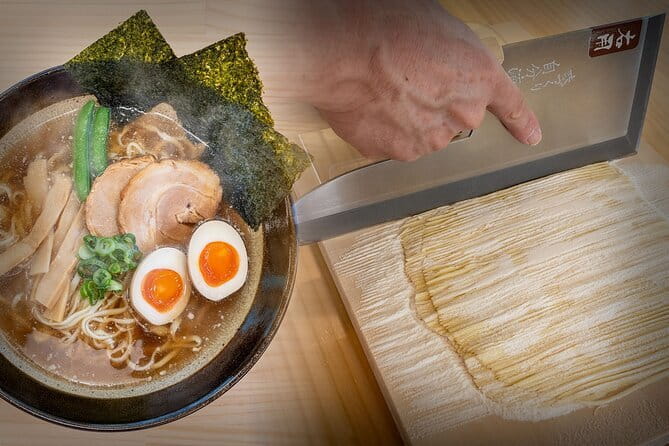
- Traditional noodle slicing technique using a purpose-designed large knife
- 4 clear steps (water, knead, roll, cut) guided for beginners
- Drink included, then staff boils and serves your noodles
- Six ramen flavors plus a vegan option, and you can switch to soba (100% buckwheat)
Why Kappabashi Knife Town Matters For This Noodle Class
Kappabashi is where Tokyo’s knife culture lives, and that context matters. You are not learning ramen in a generic studio kitchen. You are learning it in a place where sharp tools, clean prep, and careful technique are everyday thinking.
Here, the noodle-making experience is tied to a traditional approach: you slice thin noodles using the soba-soba slicing style that has been used since the Edo period. That is the big difference from the cheap version of cooking classes where you just assemble pre-made stuff. You are doing real work with your hands, and you can feel your progress as the dough becomes noodles.
I also like that this is designed to fit your trip rhythm. The store is in a prime spot for grabbing kitchen knives, tableware, and kitchenware after your class. If you treat this like your last big stop in Tokyo, you can shop while everything is still fresh in your mind, then tuck your purchases into your travel plans.
One more practical upside: the experience is near public transportation, so you are not forced into complicated transit just to try it. And it runs with a max group size (up to 15 travelers, and up to 16 participants at a time), which usually helps the instructor keep eyes on what people are doing.
More Ramen Trips in Tokyo
- Eat and Drink Like a Local: Tokyo Ueno Food Tour-Taverns&Ramen
★ 5.0 · 957 reviews - Ramen & Gyoza Cooking Class in Tokyo with Local Supermarket Visit
★ 5.0 · 823 reviews - Tokyo: Mount Fuji and Hakone Full Day Tour with Ramen Making
★ 4.5 · 476 reviews
Your 50 Minutes: The Simple Flow You Follow At Your Table
The timing is straightforward, and that is good. The class runs about 50 minutes, and it is structured so you can get from dough to noodles without wasting time.
You start with ramen noodle dough work using Japanese ramen flour. The guidance breaks the process into four steps:
1) add water
2) knead
3) roll
4) cut
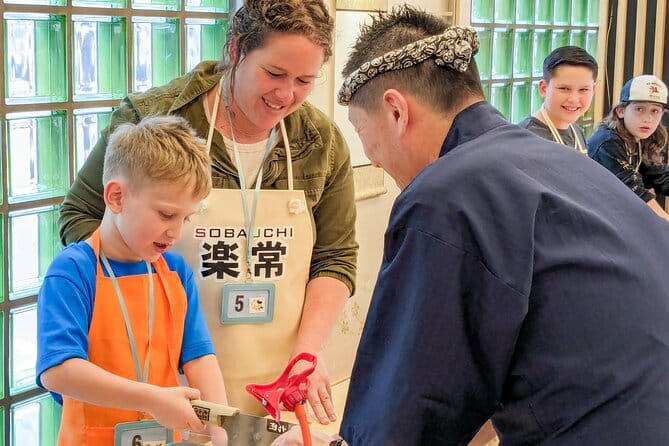
Each person uses one table for their own noodles, so you are not sharing a station or waiting for someone else to finish. That keeps the experience from turning into a photo-op. It becomes a real practice session where you can repeat the motions until they click.
Then comes the part you will appreciate more than you expect: once you finish making the noodles, the staff boils them and serves them to you. This means you focus on shaping and cutting, while they handle timing and boiling consistency.
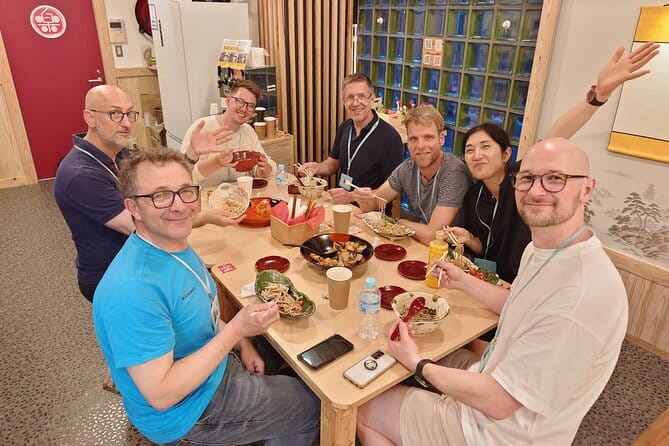
After you sit down, a drink is included, and you then do the fun part at your seat. You choose your noodle flavor and experience toppings right there with your bowl. So yes, you get the hands-on noodle pride, and you also get the payoff meal without extra kitchen labor.
If you are the kind of person who hates rushed group activities, this is a relief. It is designed to be doable for kids and adults, with a clear sequence you can follow.
The Traditional Slicing Method, With A Big Noodle Knife
Let’s talk about the blade, because that is where the wow is. This shop uses a large kitchen knife specially designed for noodle making. The point is thin slicing without relying on machines.
That sounds dramatic, but the real value is how it changes your understanding of noodles. You learn that ramen texture is not just about ingredients. It is about even thickness, consistent cutting, and how the dough responds when you apply control instead of speed.
The experience leans on that soba-soba slicing technique, rooted in Edo period traditions. You are basically borrowing a method that was built for repeatable results long before industrial tools existed. You will likely notice that the slicing has a rhythm. Once you get that rhythm, you stop thinking about the mechanics and start focusing on the noodle shapes you are producing.
There is also an “original systematic tool” involved in completing the traditional experience in about 30 minutes. That suggests the shop has engineered the process so you do not need a lifelong noodle apprenticeship to participate. You still feel the traditional approach, but you are not stuck in a slow, overly technical workflow.
One more practical note: this is not a hands-off demonstration. You are actively cutting your own noodles at your table. You will probably go home remembering the sensation of the knife meeting the dough, and that sticks better than watching someone else do it.
Knead, Roll, Cut: The Four Steps That Make Or Break Texture
The class gives you ramen flour and walks you through the dough process in a simple sequence. The best part is that the steps are broken down enough that a beginner can follow along without being embarrassed.
Here’s what the four steps really mean for you at the table:
Adding water
This is where dough consistency starts. Even if you do not fully understand dough science, you can feel what the instructor is aiming for. Too dry and it fights you. Too wet and it becomes sticky and hard to manage.
Kneading
Kneading is effort, but it is also where you see the dough become more cooperative. You are not just mixing. You are building structure so the dough can roll and cut cleanly.
Rolling
Rolling is where thickness matters. Since you will cut thin noodles, rolling evenly helps you get pieces that cook at similar rates. You do not need perfection, but you do need awareness.
Cutting
This is the moment you will probably replay later when you are eating. Cutting thin noodles with a knife requires control, not brute force. The instructor and the English application help you stay oriented so you are not guessing what comes next.
After you cut the noodles, the shop takes over boiling and serving. That is a smart design choice for a class. It protects your results, while still giving you full credit for the hard part.
Also, the overall flow is family-friendly and easy to follow. That shows in how the process is paced. You have time to learn the motions without feeling like you are falling behind.
A different sort of day in Japan:
- Mt Fuji and Hakone 1-Day Bus Tour Return by Bullet Train
★ 5.0 · 26,383 reviews - 1-Day Tokyo Bus Tour
★ 5.0 · 14,250 reviews - Tokyo: TOKYO SKYTREE® Admission ticket
★ 4.5 · 11,192 reviews - Tokyo: teamLab Planets TOKYO Digital Art Museum Entry Ticket
★ 4.6 · 9,779 reviews
From Fresh Noodles To Your Bowl: Flavors, Vegan Option, Toppings
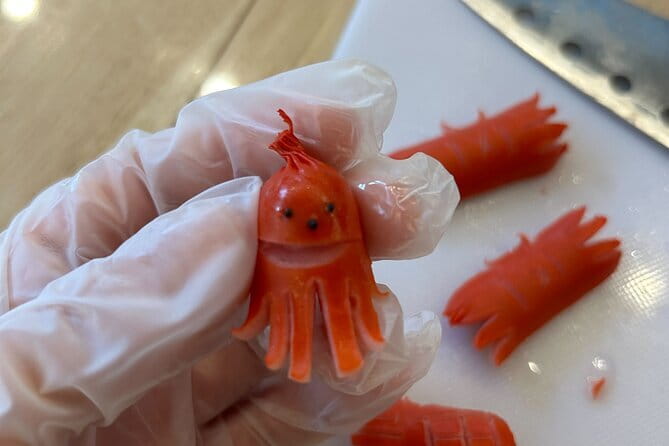
After the hands-on work, you finally get to eat, and it is not just plain noodles. This is where the experience turns into an enjoyable meal.
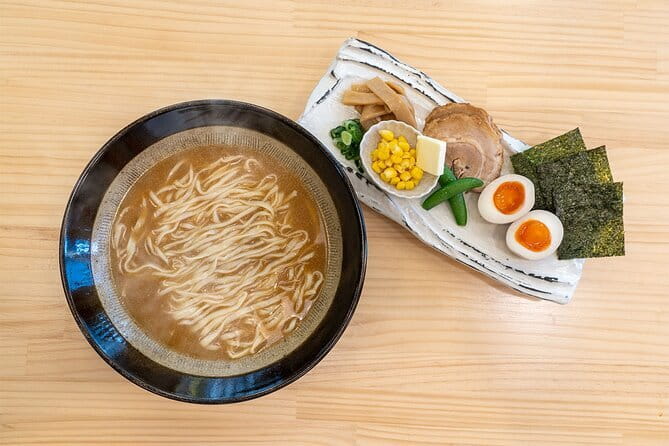
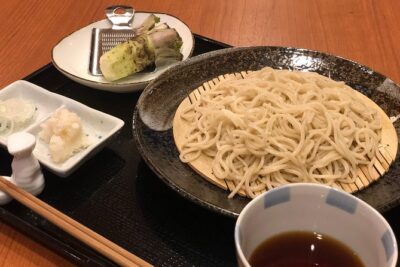
Staff boils your noodles and serves them to you. Then at your seat, you choose from six flavors, including soy sauce ramen and miso ramen, plus a vegan ramen option.
That flavor choice is one of the more practical upsides of doing a class like this. It helps you turn a skill lesson into a meal you actually want to eat. If you know your preferences, you can pick a bowl that fits. If you are curious, you can try something different without risking a bland outcome.
Toppings are also part of the experience at your seat. The class is set up so you get the full ramen moment, not just a small taste. The included drink also helps keep things relaxed while you wait for boiling and setup.
Based on the overall tone of the feedback people leave after, the taste is a key reason the class lands a high rating. The noodles people make and the way they end up in a bowl seems to deliver a satisfaction you do not get from typical “cook with ingredients” activities.
In other words, you learn, then you eat. That pairing is a big reason this works as a memorable Tokyo food stop.
Ramen Or 100% Buckwheat Soba: Choosing Without Wheat
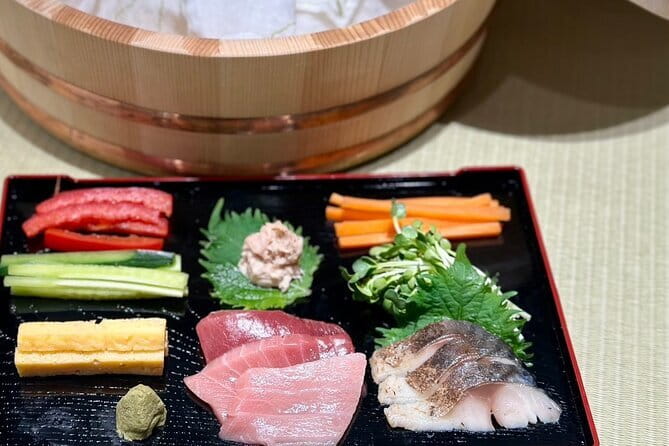
One smart feature is flexibility. The shop offers both ramen and soba. If someone in your group does not like wheat flour, you can switch to a soba noodle making experience using 100% buckwheat flour.
That matters because it means you are not forced into splitting your group or picking one “only one person can participate” option. It also broadens who can enjoy the class.
But there is an important boundary: buckwheat allergies are not allowed. That is a hard stop, and I respect it. If anyone in your group has a buckwheat allergy, do not try to skirt it. The class rules are clear for a reason.
If you are deciding between ramen and soba, consider this. Ramen noodle making follows the ramen flour path, while soba is buckwheat-based. Your experience will still be hands-on, but the dough behavior can be different. So it is worth choosing the option that matches your group’s comfort level and dietary needs.
Price and Value: What $51.64 Buys You in Real Life
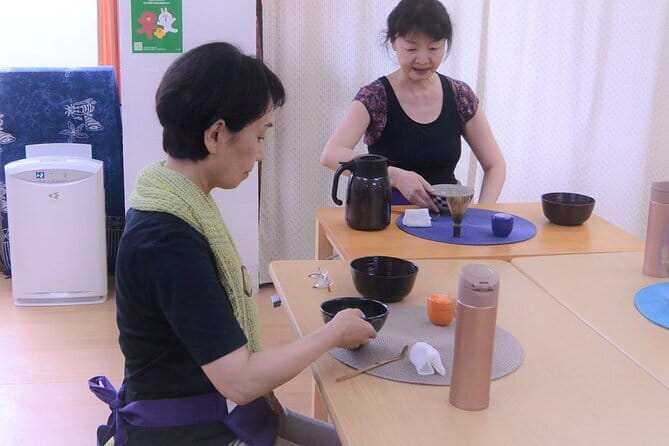
At $51.64 per person, this is not the cheapest food activity in Tokyo. But it is also not trying to be.
Here is what you are paying for, and why it feels fair:
- a real hands-on noodle workshop with guidance
- a one-table-per-person setup
- use of a noodle-making knife designed for slicing
- staff boiling and serving your finished noodles
- a drink included
- you get to choose from six flavors and experience toppings
If you compare this to a regular ramen meal, you are adding the labor and learning component. If you compare it to cooking classes that are mostly assembling store-bought items, you are paying for something more “you made this” and less “you heated that.”
There is also value in the location. You are in Kappabashi, so you can turn this into a two-part food plus kitchen-gear outing. That can make your overall day plan feel tighter and less wasteful.
A small detail that can affect cost for some groups: if you bring an interpreter who can speak Japanese, the shop offers a discount for the number of guides. That is not for everyone, but for organized groups it can help.
The booking window matters too. This kind of experience is commonly booked in advance, and planning ahead can save you from last-minute disappointment.
Who Should Book (And Who Might Skip This)
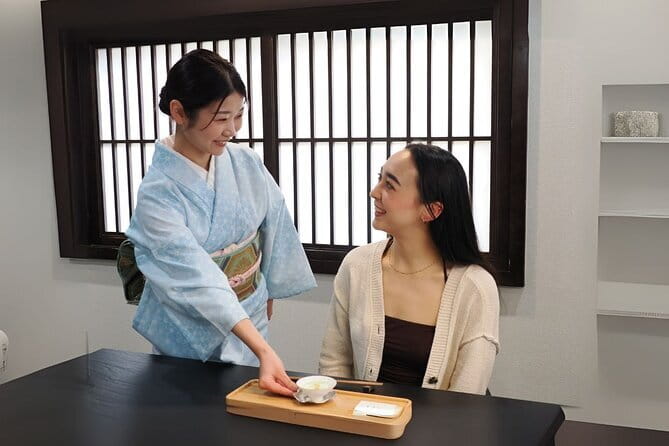
This class is a strong fit if you want something practical, not just a meal. You will like it if you enjoy food technique, like hands-on cooking, or want a family-friendly activity that still feels culturally specific.
It is also a good choice if you are the type who likes learning a method you can talk about. Noodles made with a traditional knife technique give you a story that is more interesting than a generic tasting.
It may be less ideal if:
- you have a strict allergy to wheat and do not want to do the soba option
- you have a buckwheat allergy (this blocks entry)
- you prefer a mostly observational experience rather than hands-on cutting
For families, the pacing and the fact that children can enjoy it matters. For couples, it is a fun shared skill and a satisfying meal outcome. For solo travelers, the one-table setup can feel surprisingly engaging, since you are not squeezed into a corner of a bigger group doing nothing.
Also, if you plan to shop in Kappabashi, I recommend timing this for the end of your trip. That is when you can best use the noodles experience as a theme for your kitchen browsing.
Should You Book SOBAGIRI-RAKUJYO?
My take: yes, book it if you want a ramen experience that is hands-on, guided, and meal-focused.
The most praised elements are easy to understand once you think about what makes a class worth your time. People get family-friendly fun, the process is easy to follow, and the noodles taste like a real result of the work you did. That combination is hard to fake. The meal is not an afterthought, and the technique is not just a performance.
If you fit the basics, you will likely leave happy, with noodles you made and an extra reason to explore Kappabashi. Just be honest about allergies. Buckwheat allergies block entry, and wheat preferences determine whether you do ramen or soba.
If you want, tell me your travel dates and group makeup (adults, kids, any allergies), and I can help you decide ramen versus soba and the best time of day to slot this into your Tokyo plan.
FAQ
How long does the noodle making experience take?
It lasts about 50 minutes (approximately).
Where is the meeting point?
SOBAGIRI 楽常Soba Ramen Studio, Japan, 111-0036 Tokyo, Taito City, Matsugaya, 3-chōme 112 松が谷センタービル 1F.
Is a mobile ticket used?
Yes, the experience uses a mobile ticket.
What is included after you make the noodles?
Staff boil the noodles and serve them. Once you are seated, a drink is included, and you can choose your preferred flavor and toppings at your seat.
Can I choose ramen flavors?
Yes. You can choose from six flavors, including soy sauce ramen, miso ramen, and vegan ramen.
Can the experience switch from ramen to soba?
Yes. The shop offers both ramen and soba. You can switch to a soba experience using 100% buckwheat flour.
Are buckwheat allergies allowed?
No. Those with buckwheat allergies are not allowed to enter the restaurant.
What is the group size limit?
The experience has a maximum of 15 travelers, and up to 16 people can participate at the same time.
What is the cancellation policy?
Free cancellation is available up to 24 hours before the experience starts for a full refund. Changes made less than 24 hours before the start time are not accepted.
Soba & Udon Making Classes Worth Comparing in Tokyo
- Experience Big soba knife Soba Making Class in Tokyo Kappabashi
★ 5.0 · 71 reviews - Japanese Cooking and Udon Making Class in Tokyo with Masako
★ 5.0 · 35 reviews - Made from flour in 30min! Ramen-noodle Making Experience!
★ 4.8 · 24 reviews - ///Soba Making Experience///Use The BIG Soba-Knife!!
★ 5.0 · 7 reviews
Newly listed around Tokyo
- Private Tokyo Food Tour – A Journey Through Time Through Food★ 5.0 · 36 reviews
- Private Tokyo Tour with Licensed Guide & Vehicle (Max 15 persons)★ 5.0 · 107 reviews
- Private Tokyo Custom Full-Day Tour by Chartered Vehicle★ 5.0 · 16 reviews
- Private Tokyo Custom Half-Day Tour by Chartered Vehicle★ 4.5 · 13 reviews
- Private Outstanding Nikko Tour with English Speaking Driver★ 4.0 · 11 reviews
- Private Sightseeing to Mt Fuji and Hakone with English Driver★ 5.0 · 51 reviews
- Private Snow Monkeys park Day Trip From Tokyo or Nagano★ 4.5 · 26 reviews
- 4 Day Tour – Mount. Fuji, Tokyo, Hakone, Kamakura and Yokohama★ 5.0 · 19 reviews
Soba & Udon Making Classes, compared.
Popular in SapporoExperience authentic hand-made soba at a real soba shop!
Read our review →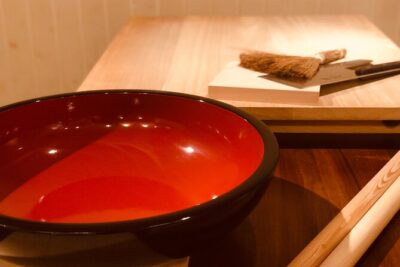
Mondo’s most popular plan! Experience making soba noodles and the king of Japanese cuisine, tempura, in Sapporo!
Read our review →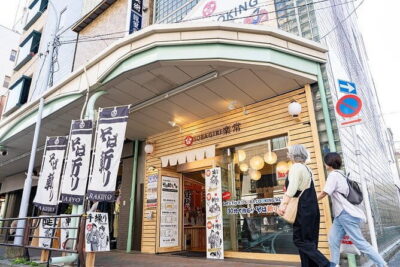
Experience Big soba knife Soba Making Class in Tokyo Kappabashi
Read our review →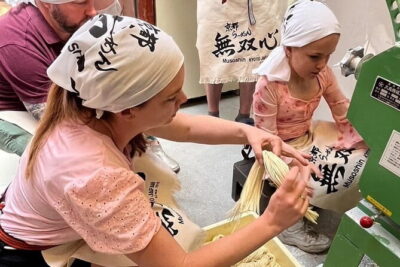
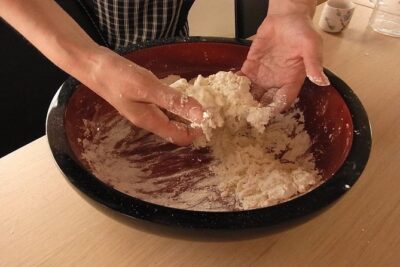
Japanese Cooking and Udon Making Class in Tokyo with Masako
Read our review →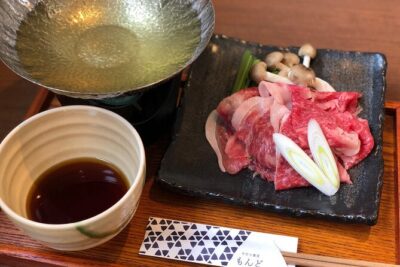
in Sapporo! Hand-made soba experience and shabu-shabu experience plan of Yezo deer meat (Gibier meat) from Hokkaido
Read our review →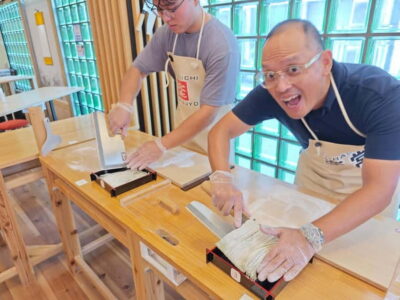
Made from flour in 30min! Ramen-noodle Making Experience!
Read our review →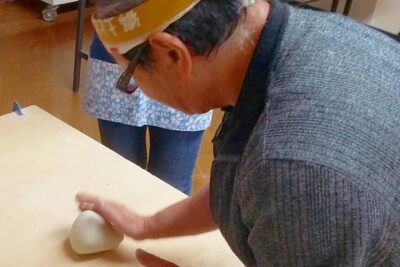
Browse the lists this tour appears in