
Review · LICENSED GUIDES & PRIVATE DRIVERS
Nara 6hr Private Tour with Government-Licensed Guide
Deer and temples with a real plan. This Nara private tour brings you together with a government-licensed guide at Nara Station and lets you pick 3 to 4 must-see stops in about 6 hours.
I love the customizable route, because you are not stuck with a rigid checklist. If you want, you can build a day around big Buddhist sites like Todai-ji and Horyu-ji, or add calmer choices like Isuien and Yoshikien gardens. I also love the way guides explain Shinto and Buddhism together in Nara, so the deer, shrines, and temples stop feeling random.
One consideration: this is a true walking day, with stairs and hills, and you pay for entrance tickets and meals on your own. Even if the deer look cute, in Nara Park they can be a little assertive when you have snacks.
In This Review
- Key takeaways before you go
- Why this Nara day feels different than a checklist tour
- Price and value: what you actually pay for at $155.86 per person
- Nara Station meet-up and how the walking tour plays in real life
- Todai-ji Temple: where the day starts to feel enormous
- Nara Park and Kasuga Taisha: deer first, then meaning
- Wakakusayama Hill: optional climb, big views
- Horyu-ji: a quieter, older kind of famous
- Kofuku-ji and the Nara story beyond one statue
- Yakushiji and Shin-Yakushiji: temple design you can feel
- The Nara National Museum: when you want depth in less walking
- Heijo Palace Site Historical Park: seeing the capital’s footprint
- Toshodaiji and the Chinese priest connection
- Isuien Garden and Yoshikien: your quiet reset between sacred stops
- Naramachi: the merchant district side of Nara
- How to choose your 3 to 4 stops without regretting it
- Practical tips to make the day feel easy
- Should you book this Nara private tour?
- FAQ
- How many sites do I choose during the 6-hour Nara tour?
- Where do I meet the guide?
- Are entrance fees included for temples and gardens?
- Is this tour mainly walking?
- Is lunch included?
- Is this a private tour or shared group experience?
- Can I cancel for a full refund?
Key takeaways before you go
- Meet at Nara Station and get moving right away on foot in a private group.
- Pick 3 to 4 sites from a prepared set of Nara highlights, so you control the balance of temples, shrines, gardens, and museum time.
- Expect both Shinto and Buddhist landmarks, with clear explanations so you understand what you are seeing.
- You will walk a lot, including steps at several temple areas and optional climbs like Wakakusayama.
- Tickets and lunch are on you, so plan your budget for temple/garden admissions and food stops.
Why this Nara day feels different than a checklist tour
Nara is not just old buildings. It is an old way of thinking, written into sacred spaces across the city. This tour works well because it does not force you through everything. You choose the parts that match your pace, your questions, and your curiosity.
I like that the guide starts with orientation right away, so you are not trying to figure out routes while also trying to read temple signs. When your guide explains why places matter, the famous stuff lands harder. Todai-ji becomes more than a giant bell and a big statue. Kasuga Taisha becomes more than lanterns and gates. The deer in Nara Park becomes part of the cultural setting, not just a photo opportunity.
And because it is private, you can ask the questions that pop into your head. Guides I have seen for this type of tour, like Junichi, Ken, Toshi, Yoshii, and Rie, often bring that extra layer: how Buddhism and Shinto coexist here, and how Nara connects to Japan’s start as a capital.
More Private Guides in Nara:
- Tokyo 6hr Private Tour with Government-Licensed Guide
★ 5.0 · 3,902 reviews - Kyoto Early Morning Tour with English-Speaking Guide
★ 5.0 · 1,427 reviews - Tokyo 4hr Private Tour with Government-Licensed Guide
★ 5.0 · 1,394 reviews
Price and value: what you actually pay for at $155.86 per person
At $155.86 per person for about 6 hours, you are paying for time with a licensed local English guide and a tailored route through central Nara. Entrance tickets and lunch are not included, so think of this as paying for the guiding and the flow, not for admissions.
That matters. If you were on your own, you could absolutely see Nara’s big sights. But you would still need to:
- figure out what to prioritize when crowds hit
- connect the visual details to the story behind them
- manage the walking so you do not lose the day to getting turned around
With a private guide, the value shows up in the pacing and explanations. Many guides build smart start and end points, help you move through the park areas efficiently, and share context that makes you look at the same objects longer (in a good way).
If you are traveling as a small group, it can feel even better, since the guide cost is shared and you still get personal attention. If you are solo, it is pricier, but you still get the benefit of someone handling the complicated bits.
Nara Station meet-up and how the walking tour plays in real life
The day begins by meeting your guide at Nara Station, or within a designated meet area. The tour is described as a walking experience, with pickup offered but pickup on foot, meaning you are not relying on a private vehicle included with the tour.
Here is what that means for you:
- You will spend much of the time on foot, including short climbs and stairs.
- Your best friend is comfortable shoes. No compromise.
- You will want a light daypack for water, a layer, and any small items you might need in temples and parks.
Also, weather is part of the deal in Nara. Reviews associated with this tour style mention cold, windy days and hot conditions too. Bring a layer you can take off and put back on without drama.
Todai-ji Temple: where the day starts to feel enormous
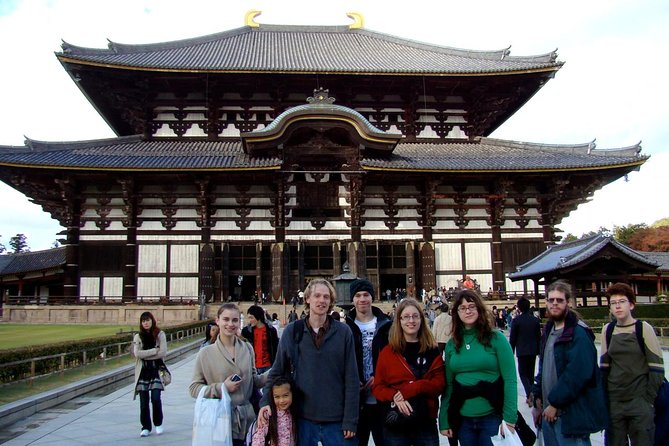
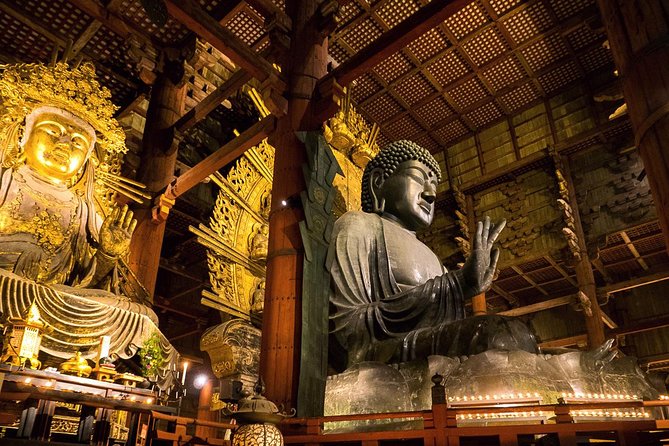
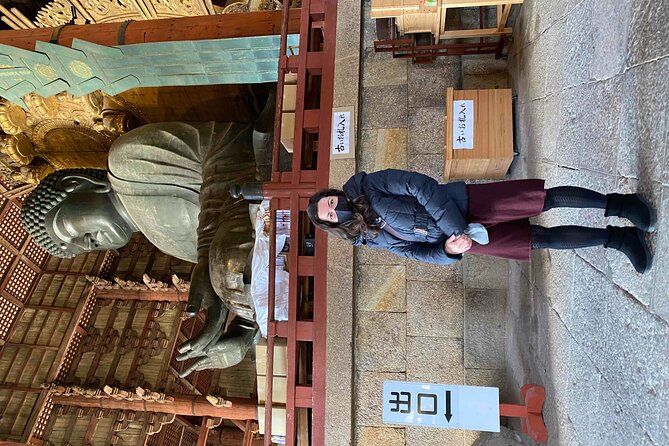
Todai-ji is one of Nara’s headline sights, and it sets the tone fast. The temple was constructed in 752, and it is famous for the Great Eastern Temple role it played as a major head temple. On a walking day, starting here is useful because it gives you a big historical anchor early, before the rest of the city becomes a blur of shrines and gates.
What you will like here:
- The scale. Even if you have seen photos, the space has weight.
- The chance to understand why this site mattered in ancient Japan.
- A strong launch point for conversations about Buddhist practice and cultural reach.
The main drawback is simple: Todai-ji is a popular stop, and it can be crowded. A guide who knows the best ways to move through the area makes that feel manageable, and it helps you focus on what is important instead of just standing in line.
A few more Nara days to weigh up
- World Heritage Kyoto & Nara Uji Authentic Matcha Experience
★ 5.0 · 1,573 reviews - Nara Half Day Trip Walking Tour (Private Option Available)
★ 5.0 · 937 reviews - Nara Early Morning Tour (Kyoto or Osaka Departure Available)
★ 5.0 · 676 reviews - Kyoto/Osaka: Kinkakuji, Bamboo Forest, and Nara Deer Park
★ 4.4 · 265 reviews
Nara Park and Kasuga Taisha: deer first, then meaning
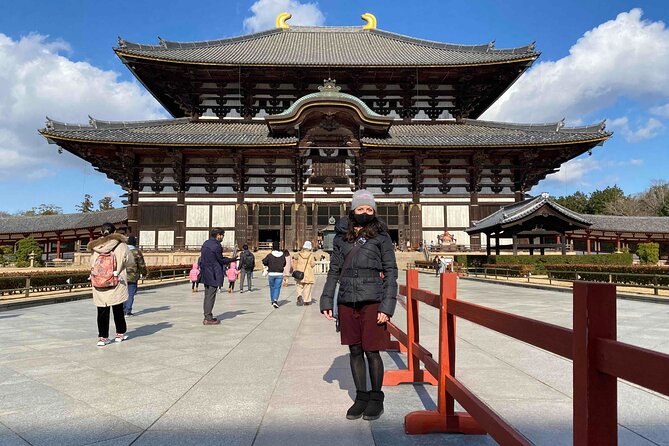
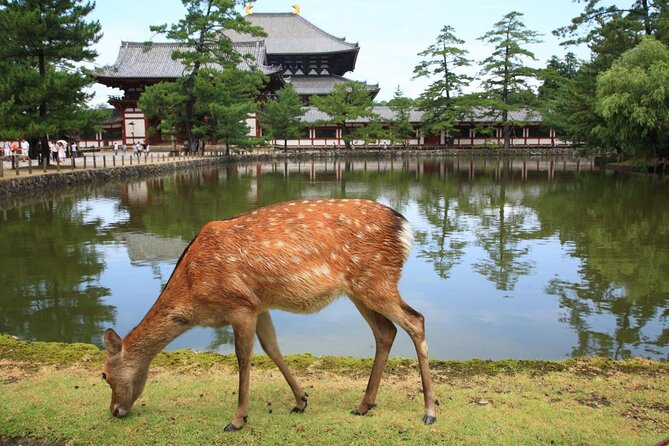
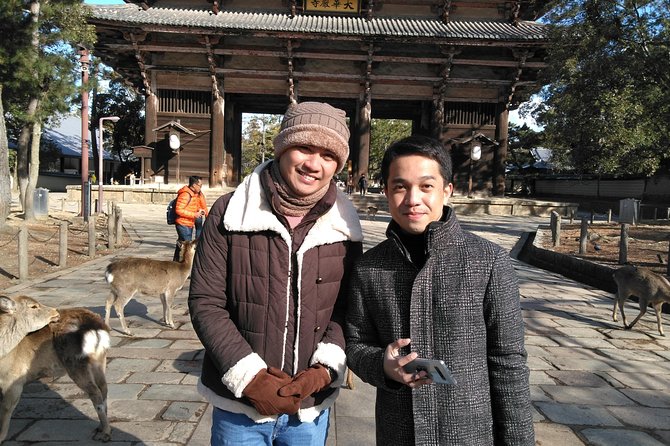
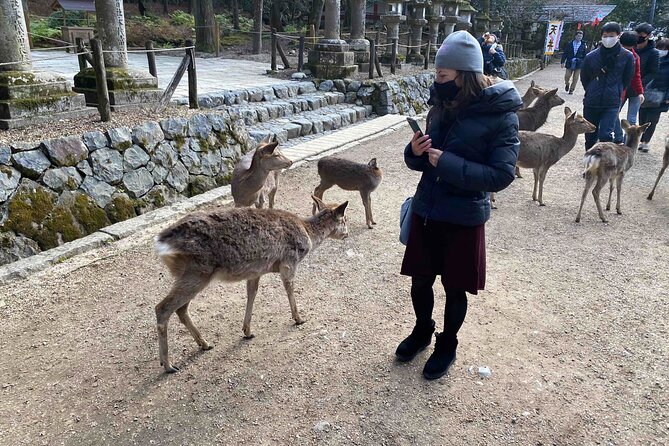
Nara Park is the open-air center of the story. It is a large park area established in 1880, and it is where several major Nara attractions cluster. Most of what makes Nara Park work is the living element, the deer. They are everywhere, and they are not shy. You will want to keep your snacks secure and move carefully around them.
Kasuga Taisha Shrine is Nara’s celebrated shrine, dedicated to the deity responsible for protecting the city. In practical terms, you will experience a lot of sacred atmosphere without needing a museum pass. You will also understand why this area feels like a protected world rather than a typical city park.
What makes this pair especially good:
- You get nature plus sacred architecture in one zone.
- You can shift between deer watching and quiet shrine focus.
- Your guide can explain why protection and religion are tied together here.
The only real consideration is managing time and your energy. This area is easy to get swept up in, so you will want to keep an eye on the rest of your selected stops so you do not run short later.
Wakakusayama Hill: optional climb, big views
Mount Wakakusayama rises behind Nara Park, with grass covering much of the hill and long views over Nar a area. This stop is short on paper, but it can be a workout in real life, especially if you are already walking earlier in the day.
If you choose this, pick it when you still have energy left. The best value is the perspective shift. You go from temple-level details to a larger sense of layout and distance.
The drawback is mostly physical. If your legs are already tired, you might prefer spending that time on gardens or museum space instead.
Horyu-ji: a quieter, older kind of famous
Horyu-ji is one of Japan’s oldest temples, founded in 607 by Prince Shotoku. It carries a sense of early Buddhism in Japan, and it is the kind of place where the age of the buildings changes how you look at every gate and hall.
This stop can be a great balance if you are also seeing Todai-ji. Todai-ji gives you scale. Horyu-ji often gives you the feeling of watching something survive across centuries.
What you should consider:
- It is another walking stop, so pair it with fewer nearby attractions if you are sensitive to steps.
- Admission can be an extra cost, since entry fees are not included.
Kofuku-ji and the Nara story beyond one statue
Kofuku-ji used to be the family temple of the Fujiwara clan, one of the most powerful aristocratic families during the Nara and Heian periods. This stop helps you zoom out from single landmark moments into the political and family side of Japan’s early history.
If you like when temples connect to the people who shaped the capital, Kofuku-ji is a smart selection. It also works well after Todai-ji, because it adds a second angle: not just religious importance, but cultural power.
The trade-off is time. Since you only select a few stops, you have to decide if you want more temples like this or if you prefer gardens and palace-site space.
Yakushiji and Shin-Yakushiji: temple design you can feel
Yakushiji was constructed in the late 7th century, connected to Emperor Tenmu and a recovery story tied to an imperial family situation. Yakushiji is known for a strictly symmetric layout, which is the kind of detail you only appreciate when you are standing in the space and your guide is pointing out the structure.
Shin-Yakushiji Temple is devoted to Yakushi Buddha, the patron of medicine in Japanese Buddhism. In a route like this, these two can be a strong thematic combo: illness, healing, and sacred medicine, expressed through temple design and religious focus.
The practical consideration: these are not just quick photo spots. If you want value, you should plan time for explanations and a slower look.
The Nara National Museum: when you want depth in less walking
If your legs are getting tired, the museum is a good pivot. The Nara National Museum focuses on Japanese Buddhist art. It was established in 1889 and it is based in the Nara Park area.
This is where you can catch details that outdoor spaces sometimes leave you guessing about. If you are the type who likes to understand how objects connect to practice, this stop is a strong choice, especially if you are skipping one of the more stair-heavy temples.
One caution: museum time is time. If your goal is maximum walking outdoors and maximum views, you might prefer gardens instead.
Heijo Palace Site Historical Park: seeing the capital’s footprint
Heijō Palace Site Historical Park is the capital-site setting. During most of the Nara period, Nara served as the capital of Japan and was known as Heijo-kyo. The palace layout is described as about one kilometer wide and one kilometer long, and the park helps you visualize that scale.
This stop is valuable because it changes your mental map. After spending time in shrines and temples, you get to think about how the city was planned.
The drawback is that it can feel less immediate if you want dramatic structures. It is more about historical geography and interpretation.
Toshodaiji and the Chinese priest connection
Toshodaiji was founded in 759 by Ganjin, a Chinese priest invited to Japan to train priests and improve Japanese Buddhism. This is one of the stops that helps you understand how foreign influence and local adaptation shaped early Japanese religious culture.
If you like the international threads behind Japanese history, this stop adds a layer. It also works nicely for people who enjoy explanations about training, practice, and how religious traditions travel.
As with other temple stops, remember admissions may be extra.
Isuien Garden and Yoshikien: your quiet reset between sacred stops
After several temples and shrines, gardens feel like a reward. Isuien uses a technique often called borrowed scenery, with elements like Todaiji’s Nandaimon Gate and Mount Wakakusayama in the view composition. It is the kind of place where your guide can point out design decisions that you would otherwise miss.
Yoshikien is another garden option, built on the site of a former priest area connected to Kofukuji and named after the nearby Yoshikigawa River. This is another gentle reset, especially if you started the day with a lot of crowd-facing stops.
The practical value of choosing gardens:
- You get a calmer pace for a short time.
- You still learn, but it is not only about buildings.
- It balances the walking day mentally.
The trade-off is that these gardens may not give you the same wow-factor as Todai-ji. If you want maximum iconic moments, pick one garden, not two.
Naramachi: the merchant district side of Nara
Naramachi is the former merchant district of Nara, where traditional residential buildings and warehouses are preserved and open to the public. This stop is free and it helps you see Nara as more than temples and shrine gates.
If you want a change of pace and a more human scale, Naramachi is a good choice. It also pairs well with lunch timing and snack stops. Some guides on this kind of tour also steer people toward quick local food options during the day, which can be a nice way to keep energy up.
The main consideration is that Naramachi is less dramatic. If you are temple-first, you might still enjoy it, but it will not replace a major landmark.
How to choose your 3 to 4 stops without regretting it
Because you are choosing only 3 to 4 sites, your selection matters. Here are a few ways to pick, based on what you like most:
- If you want the classic big Nara arc: Todai-ji, Nara Park, Kasuga Taisha, and either the museum or a garden. This gives you scale, deer, shrine meaning, and a calmer finish.
- If you love early Buddhism and temple age: Horyu-ji plus one or two temple stops like Yakushiji, Shin-Yakushiji, or Toshodaiji. Pair with Nara Park for context, since the city setting matters.
- If you want story beyond buildings: add Heijō Palace Site Historical Park, then choose one or two temples for emotional impact.
- If you want a softer, lower-stair day: choose Nara Park, Kasuga Taisha, Naramachi, and a garden like Isuien or Yoshikien. Skip Wakakusayama unless you feel good about the climb.
A tip that helps a lot: ask your guide for a recommendation based on what you care about most. Guides are often able to shape the day to match your interests, rather than forcing you to follow a fixed order.
Practical tips to make the day feel easy
Start simple and you will enjoy it more:
- Wear comfortable walking shoes with grip. Several stops involve stairs, and you will feel it later if your shoes are wrong.
- Bring a light layer. One day can be cold and windy, another day hot, and you do not want to guess.
- Use a small bag for snacks and water. In Nara Park, deer can get bold, so do not keep food exposed.
- Plan to pay for tickets and lunch. Entry fees and meals are at your own expense, so you want cash or a card ready for admissions.
One more tip: ask your guide questions. Many guides for this tour style are strong at answering how and why, not just listing facts. That is where the private part really pays off.
Should you book this Nara private tour?
Book it if you want a private, government-licensed guide and you like learning while walking, not after the fact. This tour is a smart fit if you care about how Buddhism and Shinto show up in real places, and if you want to choose your own mix of temples, shrines, gardens, and history without wasting energy on route planning.
Skip it or adjust expectations if you hate stairs, dislike long walking days, or you strongly prefer tickets and meals to be bundled into one price. Since entrance fees and lunch are separate, you need to budget for those extras.
If your goal is to leave Nara understanding more than the postcard highlights, this private 6-hour format is a great way to do it.
FAQ
How many sites do I choose during the 6-hour Nara tour?
You can select 3 to 4 sites from a prepared list of Nara highlights. Your guide helps shape the flow around your picks.
Where do I meet the guide?
You meet your guide at Nara Station and start exploring on foot in a designated meet area.
Are entrance fees included for temples and gardens?
No. Admission tickets are not included, and entry fees are at your own expense for the stops you choose.
Is this tour mainly walking?
Yes. This is a walking tour, and you should expect a lot of walking, including stairs at several temple areas.
Is lunch included?
No. Lunch and other personal expenses are not included, so meals are at your own expense.
Is this a private tour or shared group experience?
It is private. Only your group participates.
Can I cancel for a full refund?
Yes. You can cancel up to 24 hours in advance for a full refund. If you cancel less than 24 hours before the start time, the amount paid is not refunded.
Newly listed around Nara
- Todaiji Temple, Kasuga Shrine and Nara Park Guided Full Tour★ 5.0 · 13 reviews
- Nara:5 Type of Tea Tasting & Mindful Tea Ceremony★ 5.0 · 28 reviews
- Nara:Authentic Tea Ceremony(Max 5 ppl) -Master Matcha Making★ 5.0 · 119 reviews
- Nara: UNESCO Heritage Sites & Deer Park Tour with Pro guide★ 4.5 · 10 reviews
- Nara: Todai-ji y parque de Nara (Spanish Guide)★ 5.0 · 16 reviews
- Nara: Sake Tasting Tour at the Birthplace of Japanese Sake★ 4.9 · 8 reviews
- Nara: Private City Tour With A Local Guide★ 4.2 · 8 reviews
- Nara: Private Tour with Private Guide★ 4.8 · 66 reviews
Licensed Guides & Private Drivers, compared.
Tokyo 6hr Private Tour with Government-Licensed Guide
Read our review →
Kyoto Early Morning Tour with English-Speaking Guide
Read our review →
Tokyo 4hr Private Tour with Government-Licensed Guide
Read our review →
Kyoto 6hr Private Tour with Government-Licensed Guide
Read our review →
Hiroshima / Miyajima Full-day Private Tour with Government Licensed Guide
Read our review →Early Morning Tour with English-Speaking Guide
Read our review →
Tokyo Private Sightseeing Tour by Car- English speaking chauffeur
Read our review →
Mt Fuji Private Tour with English Speaking Driver
Read our review →Browse the lists this tour appears in