
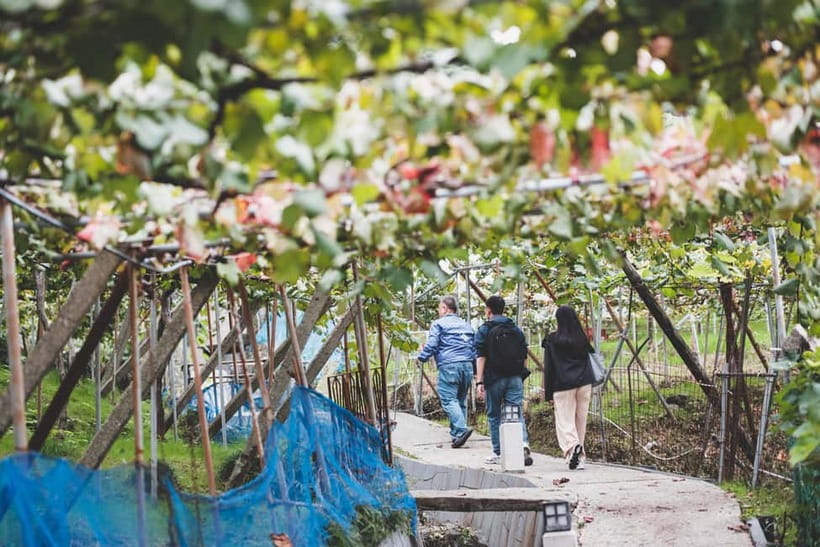
Review · WALKING TOURS
Osaka Winery Tour with Wine Tasting & Vineyard Walk
Japan’s oldest winery is a short train ride away.
I like that this tour keeps things practical, two hours, and still packs in real culture, not just pouring wine. You start at Katashimo Winery and move from a bar-style intro to the winery’s old aging cellar. For me, the big selling point is learning how Japanese wine is made and aged in a place with roots going back to 1914. The only drawback to consider is that it is tightly timed, so if you want unlimited tasting or long wandering stops, this may feel short.
I also like the way the guided part blends wine with streets, so you are not stuck indoors the whole time. Expect time walking areas with Edo-period wooden buildings and stops that help you read the town like a local, including a 1,000-year-old camphor tree and a shrine along the route. If you enjoy clear English and Japanese explanations, the guide’s Q and A style is a plus.
One more consideration: the tour includes tasting of three Japanese wines, plus small bites, and there is no mention of extra pour time being included. If you are a heavy drinker or you want to buy and compare multiple bottles during the tour, plan to treat this as a tasting-focused experience, not an all-you-can-drink party.
In This Review
- Key things I’d circle on your plan
- Why Katashimo Winery is the real star of this Osaka day
- Getting there: a 40-minute train break from Dotonbori and Namba
- Start at the direct shop: your orientation is part of the value
- The 100-year-old aging cellar tour, and why aging matters
- The historic town walk: Edo-period streets, old trees, and a shrine
- Tasting three Japanese wines, including G20-selected bottles
- Price and time: is $83 good value for two hours?
- Who should book this tour, and who might skip it
- Should you book this Osaka Winery Tour with Wine Tasting and Vineyard Walk?
- FAQ
- How long is the Osaka Winery Tour with wine tasting and vineyard walk?
- How much does the tour cost?
- What’s included in the tour ticket?
- How many wines will I taste?
- What languages is the live guide available in?
- Where do I meet for the tour?
- Is there free cancellation?
- How far is the winery from Osaka city?
Key things I’d circle on your plan
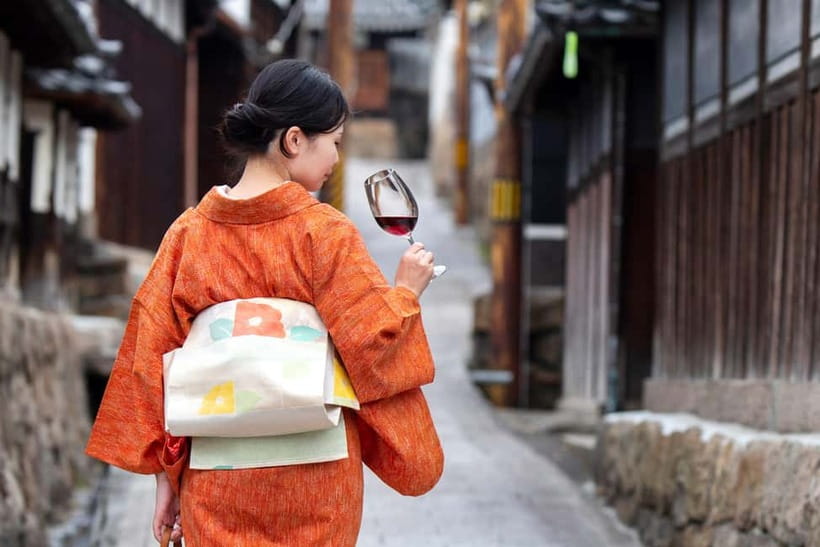
- Japan’s oldest western-region winery (founded in 1914), with a 100-year-old aging cellar
- A guided walking route through an old town feel, not just a parking-lot stroll
- Three premium wine tastings, including bottles selected for major international attention
- Cultural stops like an old camphor tree and a shrine as part of the walk
- Small bites paired with wine, so the tasting makes sense, not random
- English and Japanese live guide, which matters if you want real answers
Why Katashimo Winery is the real star of this Osaka day
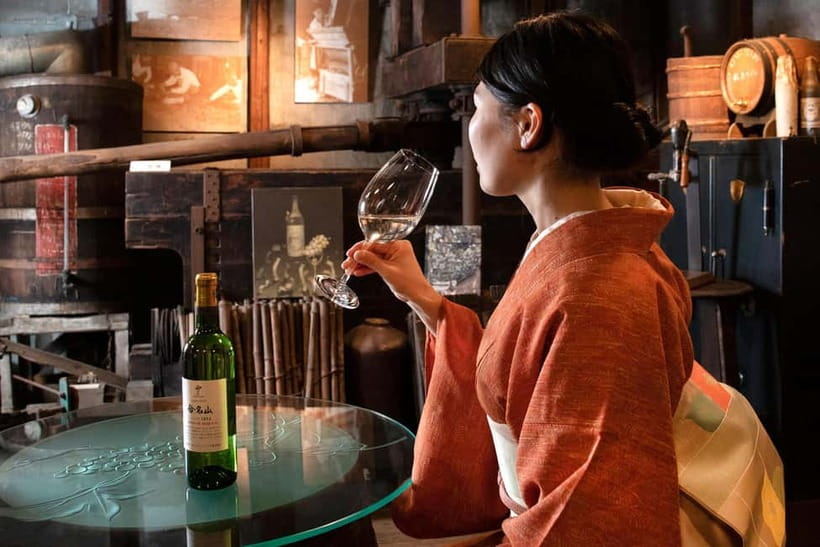
If you like wine, but you also like the human story behind it, this is the kind of tour that makes you slow down. Katashimo Winery, founded in 1914, is described as Japan’s oldest winery in western Japan, and the tour is built to make that age feel tangible. You are not just looking at a plaque. You are guided into spaces tied to how wine is stored and matured over long periods.
The tour also makes an important point: Japanese wine has its own logic. The tasting is not framed as a copy of European wine. Instead, you get help connecting style, aging, and local wine culture. That is what makes the tasting more than a “sip and move on” stop. Even if you only drink wine casually, a little context helps you notice differences in aroma and finish instead of just picking whatever tastes sweet.
I also appreciate that the experience does not feel like a museum tour that runs on autopilot. You get a mix of cellar time and town-walk time, so you can reset your brain between sips. For many people, that rhythm is the sweet spot.
More Food Tours in Osaka
- Osaka: Shinsekai Food Tour with 13-15 Dishes at 5 Eateries
★ 4.8 · 2,204 reviews - Osaka Food Tour: 13 Dishes at 5 Local Eateries
★ 5.0 · 2,149 reviews - Hungry Osaka Street Food Tour:15 Tastings & 3 Drinks with a Local
★ 5.0 · 1,727 reviews
Getting there: a 40-minute train break from Dotonbori and Namba
This tour is designed as a quick change of scenery from central Osaka. You are looking at a trip of about 40 minutes from Osaka City by train to reach the Katashimo area. That matters because you do not need a half-day commute just to see something specific.
Think of it as a low-friction detour. Instead of burning your morning in traffic or spending a full day on logistics, you can do a tight two-hour experience and still keep the rest of your day for food, shopping, or another neighborhood walk. The meeting point is right by the winery, at カタシモワイナリー 直売所, so once you arrive, your time is mostly spent on the experience.
Practical tip: wear comfortable shoes. Even though the duration is short, you are walking through historic streets and winery area paths. Old town streets often mean uneven surfaces and steps, and you will enjoy the tour more if your feet are happy.
Start at the direct shop: your orientation is part of the value
You meet in front of Katashimo Winery’s direct sales shop (直売所). That is a smart choice because you are already in the working part of the place, not outside a gate. From there, your first chunk is about one hour focused on food and wine tasting at the Katashimo Wine Food area.
This early time slot is not filler. It sets your frame of reference before the deeper tour. You start at a bar-style intro point, then you move toward the older cellar segment. That order helps you understand what you are seeing later. If you tasted something first, then listen to how the aging cellar works, the explanations land better.
Another value point: the tour includes wine museum tickets along with the guided experience. So you are not paying for “maybe you’ll get a quick look.” You get ticket access tied to the winery story, which is part of why the whole thing works in just two hours.
The 100-year-old aging cellar tour, and why aging matters
One of the most memorable parts is the winery tour focused on the 100-year-old aging cellar, described as a designated cultural heritage site. This is where the tour feels most grounded in craft. Wine aging is slow work, and the physical environment does a lot of the heavy lifting.
When you get guided into an aging cellar like this, you learn more than trivia. You start to understand why winemaking is not only about grapes on harvest day. Aging is about time, temperature stability, and space. In a place this old, those concepts stop being abstract.
The guide’s role is key here. You are guided from the bar-style start into the cellar experience, which means you are not left guessing what you should look for. I also like that the tasting is connected to this section, so the cellar is not just a photo stop. You are meant to connect environment with flavor development.
If you are the type who enjoys learning how something works, this part will click. If you mostly want a scenic stroll, it can still be worth it, because the cellar gives you a reason to pay attention while you taste.
More Walking Tours in Osaka
- Osaka: Hotspots & Hidden Gems Walking Tour Private or Group
★ 4.9 · 1,300 reviews - Osaka Backstreet Nightlife & Street Food Walking Tour
★ 5.0 · 1,011 reviews - Osaka Local Foodie Walking Tour in Dotonbori and Shinsekai
★ 5.0 · 985 reviews - Osaka Bar Hopping Night Walking Tour in Namba (3 bars, 6 tastes)
★ 5.0 · 958 reviews
The historic town walk: Edo-period streets, old trees, and a shrine
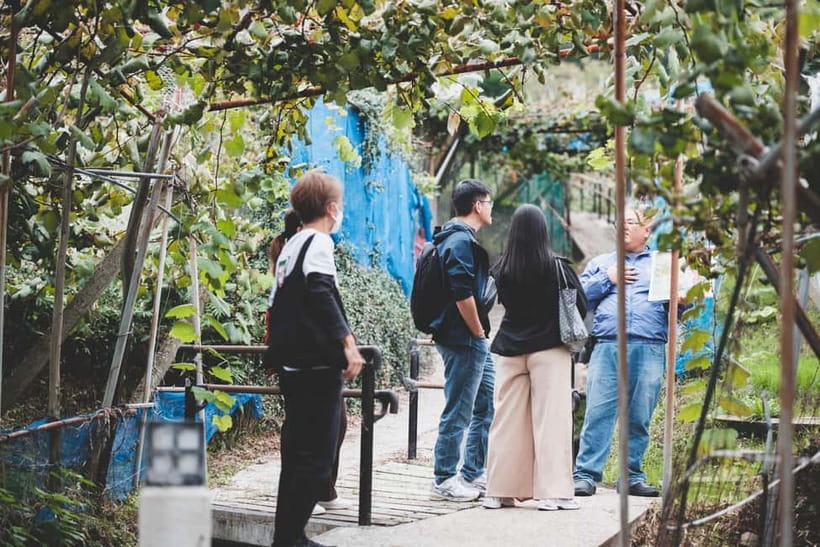
After the tasting block, you shift into a guided walking tour that takes you through the kind of old Osaka you do not see when you only stick to Dotonbori and Namba. The route includes Edo-period wooden buildings, plus time to see a 1,000-year-old camphor tree. That old-tree stop is exactly the kind of “how can this be here?” moment that makes a short tour feel more meaningful.
You also pass a shrine as part of the route. That detail matters for two reasons. First, it helps you understand that this area is not just a winery set. It is a living town with religious and cultural rhythms. Second, it breaks up the walk visually and emotionally, so you do not feel like you are circling only vineyards and tasting rooms.
This is also the part where your guide’s storytelling style can make or break the experience. The tour is aimed at cultural storytellers, meaning you get context for what you are seeing. In practice, that translates into a walk where you are learning the “why” behind the scenery, not just hearing dates.
One more practical note: because the walk is part of a short, timed tour, the pace can feel steady. If you like slow photography breaks every 30 seconds, plan to save a few extra moments after the tour for wandering around the area on your own.
Tasting three Japanese wines, including G20-selected bottles
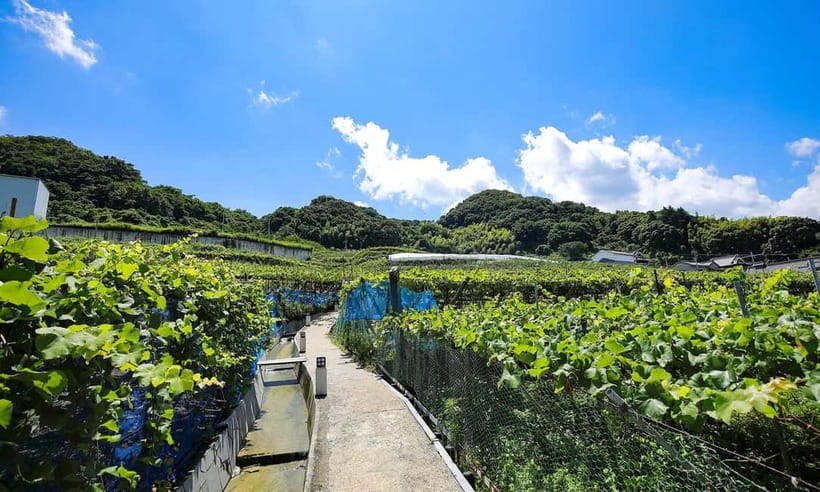
The tasting portion is the centerpiece: you sample three different kinds of Japanese wine, with small bites provided alongside. The tour specifically highlights wines described as G20 Summit-selected bottles. Even if you have never heard of G20 selection programs, the practical takeaway is that these are wines with an international-facing reputation, not random house labels.
The way this is structured matters. Three wines in two hours is enough to compare. It is also a good ratio for people who are new to Japanese wine. You can pick up basic differences in sweetness, acidity, and aroma, without the experience turning into “I can’t tell anything apart anymore.”
You do not need to be a connoisseur to enjoy it. The value is in the guidance. A good guide helps you notice what to look for, like how a wine changes as it warms slightly in the glass. If you usually drink wine without thinking, this tour nudges you into tasting with attention.
Also, the small bites matter. Japanese wine often shines with food pairing because of how acidity and flavor balance work with savory snacks. The bites give you a reference point so you understand why each wine might make more sense with certain flavors.
Price and time: is $83 good value for two hours?
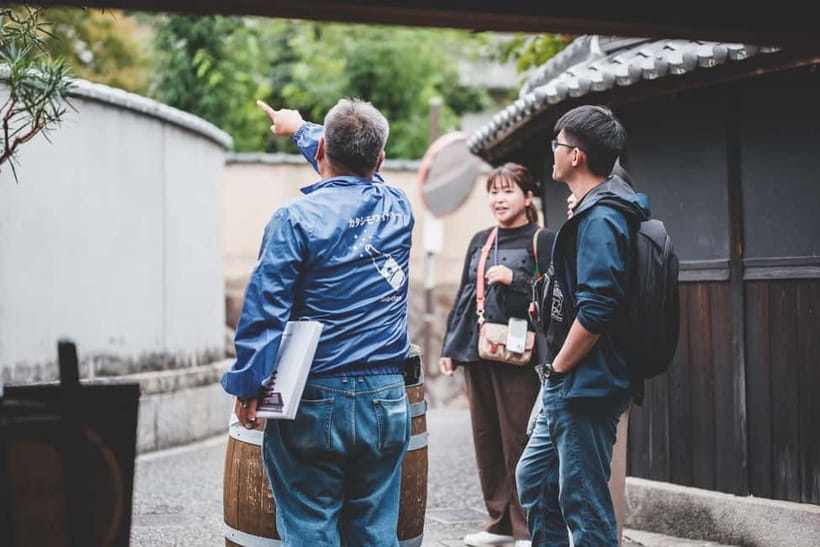
At $83 per person for a two-hour experience, you are paying for more than three drinks. You are paying for a guided cellar tour, walking guidance through a historic town, and included admission elements like wine museum tickets. You also get small bites, which is not something you should ignore when comparing value.
A quick way to think about it: if you only wanted wine tastings, you would likely spend money on tastings at a shop anyway. Here, that tasting is bundled with timed access to the aging cellar and structured cultural storytelling. That is where the cost becomes easier to justify.
The short duration is part of the value too. Two hours means you can fit this into a day without sacrificing an entire morning. If you are staying in Osaka and you want a meaningful detour, this is a clean option.
That said, if you are the sort of traveler who loves long winery stays, vineyard lunches, and extended comparisons, this may feel focused. It is designed for efficient sightseeing and tasting, not a slow, lazy winery vacation.
Who should book this tour, and who might skip it
I think this fits best if you want:
- Japanese wine with context, not just sips
- A blend of winery culture and old-town walking
- A short day trip style plan that does not eat your whole schedule
- A guide-led experience in English or Japanese, especially if you like asking questions
It might be less ideal if:
- You want additional tastings beyond the set three, since extra pours are not indicated as included
- You prefer long, unstructured time at one location over moving from tasting to walk to cellar
It also works well as a “first winery” tour in Japan. You learn the basics, you taste a small range, and you see the town elements that make the winery part of local life.
Should you book this Osaka Winery Tour with Wine Tasting and Vineyard Walk?
Yes, if you like experiences that teach you something while still being fun. This is the type of tour where the old aging cellar, the guided town walk, and the structured three-wine tasting all support each other. You end up with more than souvenirs and photos. You leave with a clearer sense of how wine culture fits into western Japan.
If you book, go with comfortable shoes and a curious mindset. Ask questions during the tasting segment so the cellar explanations have something to connect to. And if you are planning to buy bottles, treat the tour as your discovery stage, then do any deeper shopping on your own after you have a couple of comparisons in your head.
If you are short on time but want a real taste of Japanese winery culture, this two-hour plan is a strong value.
FAQ
How long is the Osaka Winery Tour with wine tasting and vineyard walk?
The tour lasts 2 hours.
How much does the tour cost?
The price is $83 per person.
What’s included in the tour ticket?
You get wine tasting of 3 different kinds of Japanese wine, small bites with wine, a professional guide, and wine museum tickets.
How many wines will I taste?
You taste three premium Japanese wines during the tour.
What languages is the live guide available in?
The guide is available in English and Japanese.
Where do I meet for the tour?
Meet up is in front of Katashimo winery (カタシモワイナリー 直売所).
Is there free cancellation?
Yes. You can cancel up to 24 hours in advance for a full refund.
How far is the winery from Osaka city?
The winery is described as a 40-minute train ride from Osaka city.
More Wine Tours in Osaka
- Seasonal Japanese Culture Osaka Paint and Wine Experience
★ 5.0 · 12 reviews - Paint and wine experience: Shibuya enjoying seasonal Japanese culture
★ 5.0 · 12 reviews - Wine Experience at a Host Club
★ 5.0 · 6 reviews
More Food & Drink in Osaka
- Hungry Osaka Street Food Tour: 15 Dishes & 3 Drinks
★ 4.9 · 694 reviews - Kuromon Market Food Walking Tour in Osaka (6 stops, 6 tastes)
★ 5.0 · 550 reviews - Absolute Osaka Food Tour
★ 5.0 · 309 reviews - Osaka: Traditional Mochi Pounding Experience with Tasting
★ 4.9 · 306 reviews
Newly listed around Osaka
- (Ticket Included) Explore Osaka Castle & Museum of History★ 4.8 · 21 reviews
- Hidden Osaka – Yukaku Red Light Tour & Culinary Adventure★ 4.8 · 96 reviews
- Osaka: Walking Tour and Top Highlights★ 4.8 · 104 reviews
- Same Day OK! Osaka: Local Food, Izakaya & Local Bites Tour!★ 4.8 · 17 reviews
- Osaka: Private Ceramic Painting Workshop★ 5.0 · 13 reviews
- Eat Like a Local in Osaka – Private Custom Street Food Tour★ 4.3 · 33 reviews
- Pickleball in Osaka & Kyoto with Locals!★ 4.6 · 64 reviews
- Osaka:SUMO BEATS SHOWCASE: Taiko Drum and Wagyu burger!★ 4.2 · 37 reviews
Walking Tours, compared.
Kyoto Geisha Walking Tour: Gion District & Hidden Gems
Read our review →
Tokyo Tsukiji Fish Market Food and Culture Walking Tour
Read our review →
Gion Geisha District Walking Tour – Stories of Geisha
Read our review →
Shinjuku Local Bar and Izakaya Guided Walking Tour
Read our review →

Asakusa Walking Tour with Sensoji Temple Visit
Read our review →
Kyoto Gion Geisha District Walking Tour – The Stories of Geisha
Read our review →Browse the lists this tour appears in