
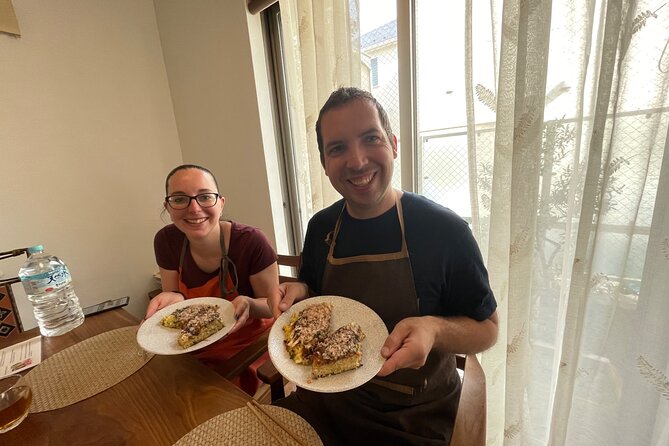
Review · JAPANESE COOKING WORKSHOPS
Small-Group Osaka-Style Okonomiyaki Cooking Class
If you like food lessons that feel personal, this one fits. This Osaka-style okonomiyaki class keeps things small, homestay-like, and hands-on, so you are not watching from the sidelines. You get to choose fillings, learn the batter and flipping technique for a fluffy result, and you also get guidance on substitutes for ingredients you might not find back home.
Two things I really liked: the close, practical attention to making okonomiyaki with the right texture, and the way the instructor explains staples like dashi and sauce so you understand what to do, not just what to copy. One consideration: the whole experience is about two hours, so it is not a slow, multi-iteration cooking day. You will learn fast, cook once, and then you practice at home.
In This Review
- Key highlights at a glance
- A small-group Osaka-style setup in Asagaya, Tokyo
- How the class builds flavor: dashi, sauce, and smart substitutes
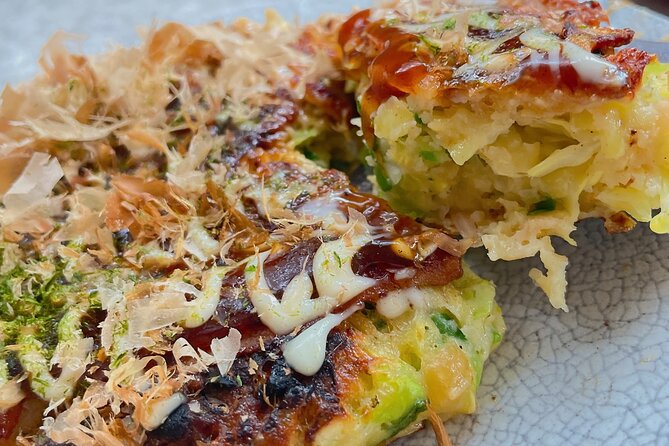
- Fluffy okonomiyaki technique you can repeat at home
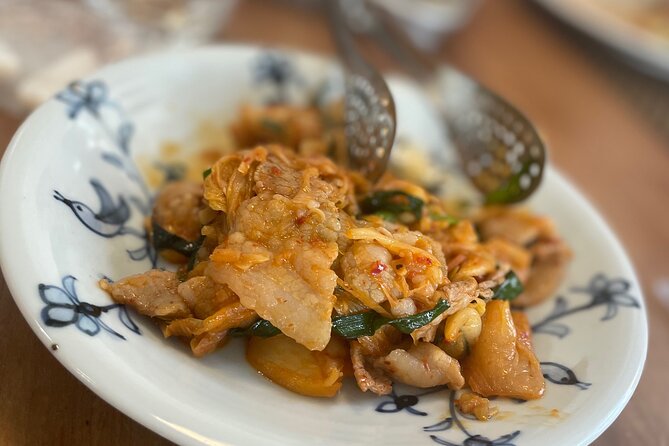
- The “while yours cooks” bonus meal: pork and kimuchi
- Picking your fillings, toppings, and eating style without stress
- English-friendly, patient coaching from Eri
- Price and value: is $150 worth two hours?
- Who this class is perfect for, and who should skip it
- Should you book the Small-Group Osaka-style Okonomiyaki class?
Key highlights at a glance
- Small-group limit of 5 means you can actually ask questions while you cook
- Homestay-like setting at a local home, not a tourist studio
- Fluffy okonomiyaki technique with tips plus ingredient substitution guidance
- Choose your own fillings and toppings, with vegetarian and vegan options
- While you wait, you also learn stir-fried pork and kimuchi to round out the meal
A small-group Osaka-style setup in Asagaya, Tokyo
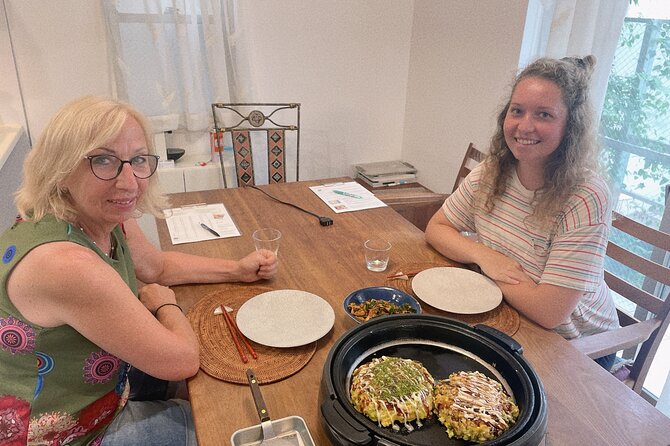
This class is based in Tokyo, but it is designed with the feel of a neighbor cooking with you. The group is capped at five people, which matters more than you might think. With a small group, the instructor can watch what you are doing, correct small mistakes early, and explain why one step changes the texture.
The experience starts at NewDaysJapan, Asagaya (Suginami City, Asagayakita, 3-chōme, JR Asagaya Station, 2F outside the ticket gate on the concourse). The activity ends back at the same meeting point. In practice, this makes it easier to fit into your day because you are not hopping around different neighborhoods just to find the next step.
And yes, you are cooking in a local home. The description is clear about it being homestay-like rather than studio-like, which is a big part of the charm. You get a calmer, more everyday atmosphere than you would in a staged kitchen built for tourists.
If you are the type who likes learning with a person, not a screen, this format will appeal. If you prefer quiet, minimal interaction, you might still enjoy it, but you should know the instructor is friendly and talks with foreign visitors.
More Cooking Classes in Tokyo
- Ramen & Gyoza Cooking Class in Tokyo with Local Supermarket Visit
★ 5.0 · 823 reviews - Tokyo: Easy Ramen Cooking Experience in Kabukicho, Shinjuku
★ 4.6 · 321 reviews - Ramen and Sushi Cooking Class with Sake Pairing Set in Tokyo
★ 5.0 · 291 reviews
How the class builds flavor: dashi, sauce, and smart substitutes
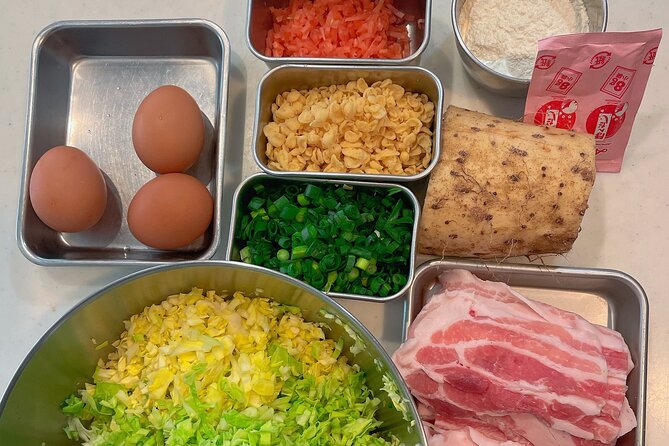
Before you start turning batter into a flip-ready pancake, you get taught the ingredients that make Japanese cooking taste like Japanese cooking. The focus is on dashi, sauce, and other essentials, and the goal is simple: you should understand the components enough to re-create them later.
What I like about this approach is that it is not just about assembling ingredients. The class explicitly explains substitutes so you can make it delicious even after your trip. That is practical travel wisdom. In Japan, it is easy to find the exact version of an ingredient. Elsewhere, it can be a scavenger hunt. Here, you get a plan for when you cannot find the same products.
The class also treats customization as normal. You can choose what to fill your okonomiyaki with, and the instructor supports ingredient swaps based on what you want and what you can eat. Vegetarian and vegan options are available, and adjustments can be made for other dietary restrictions too.
A good food lesson should answer this question: Why does this step matter? Here, the instruction connects flavor and texture. You learn what the ingredients are doing, which helps you stop feeling like you are copying a recipe and start feeling like you can cook.
One more nice touch: the instructor speaks English good enough for questions. That matters because substitution is where people often get stuck. If you can ask follow-ups while you cook, you are more likely to leave with something that actually works.
Fluffy okonomiyaki technique you can repeat at home
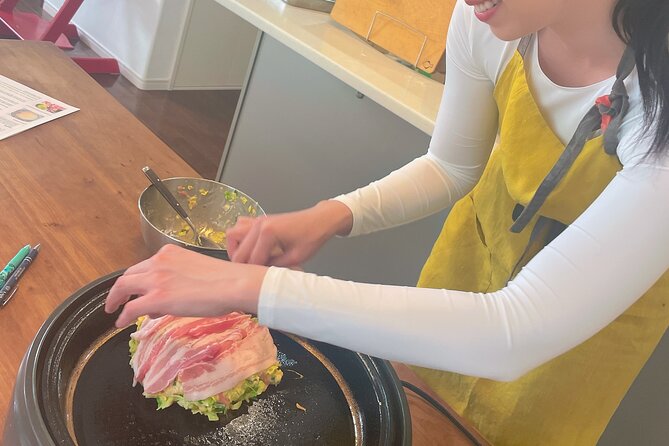
Okonomiyaki is famous for two things: it can be comforting, and it can be tricky to get right. In this class, you are taught specifically how to make it fluffy, which is the difference between a pancake that feels airy and one that feels dense.
The lesson centers on several hands-on moments:
You learn batter basics and mixing ideas for better texture.
You layer ingredients rather than just tossing everything together.
You get tips for flipping after it is cooked.
You finish with toppings you choose.
That flipping step is where beginners usually panic, and it is also where the class is most valuable. With an instructor watching you, you are not guessing. The class includes lots of tips, and the emphasis is on fluffy and tasty, not just presentable.
If you have cooked okonomiyaki at home before and it sometimes turned out heavier than you expected, you may recognize why a few small technique issues can throw off the result. One of the standout review takeaways was that the instructor corrected small things people were doing wrong when they tried later at home. That is what makes a class like this worth paying for. You are buying course correction, not just cooking time.
Also, the experience is tailored to how you want to eat. You can choose fillings and toppings, with support for vegetarian and vegan preferences. So you are not stuck making one version that fits nobody’s needs.
Finally, there is something charming about the ritual part of the meal. You start by saying Itadakimasu, then enjoy what you cooked. It sounds small, but it adds meaning. You are not just learning technique, you are eating as part of the culture.
The “while yours cooks” bonus meal: pork and kimuchi
Cooking okonomiyaki takes attention, but it also includes waiting time. Instead of leaving you idle, the class uses that time well. While your okonomiyaki is being cooked, you make stir-fried pork and kimuchi.
This is a smart inclusion for your experience, and not just because it fills the plate. It broadens what you take home from the class. You learn a second set of flavor-building techniques, so your meal is more than one item. It also makes the two-hour timeline feel full, even if you are new to the process.
If you are interested in how Japanese meals balance tastes, this second dish slot helps. Okonomiyaki is your main skill, but pork and kimuchi give you savory and tangy contrast. It also means you leave with more than one recipe in your mind.
If you are vegetarian or vegan, the class notes dietary adjustments are possible. The exact adaptations are not spelled out in detail, but the lesson framework clearly includes options.
More Cooking Workshops in Tokyo
- Tokyo: Wagyu and 7 Japanese Dishes Cooking Class
★ 4.9 · 273 reviews - Tokyo Washoku 4-hour Cooking Class: From Market to Table
★ 5.0 · 253 reviews - Tokyo Cute Bento Cooking Class – Make a Kawaii Character Lunchbox
★ 5.0 · 126 reviews - Tokyo: Tsukiji Market Walking Tour & Sushi Cooking Class
★ 4.6 · 122 reviews
Picking your fillings, toppings, and eating style without stress
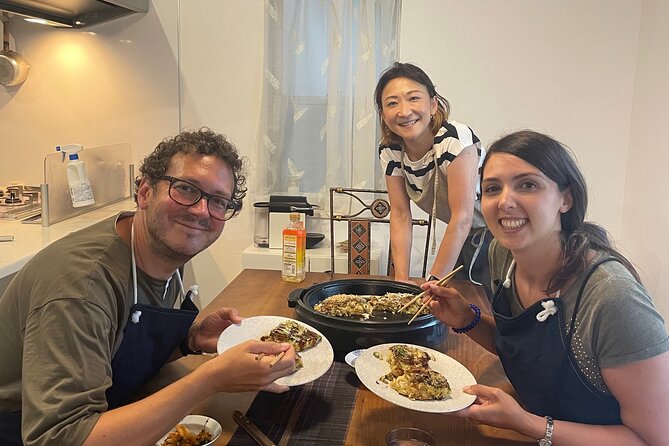
A big part of the fun is that you are not stuck with a single predefined okonomiyaki. The class is built around choice. You can fill it with what you like, and you get support as you build it.
That choice matters because okonomiyaki is flexible. The class highlights that ingredients can be varied, and you can enjoy it as you like. When you are allowed to decide, you are more likely to cook something you genuinely want to eat later.
This is also why the substitute lesson is important. Even if you choose different fillings, you still need a workable plan for the core ingredients like dashi and sauce. The class teaches those, which means your custom version stays grounded in the flavors that make okonomiyaki work.
In a small group, customization also means you can ask questions about your specific ingredient ideas. You can be practical. If you know what you usually can find in your country, you can tailor the swaps while the class is still fresh.
And if you want a vegetarian or vegan version, the class explicitly states these options are available and adjustments can be made. That means you should not have to feel like you are taking a consolation route. You can still build and flip and top like everyone else.
English-friendly, patient coaching from Eri
The instructor is comfortable speaking English well enough to handle questions, and that becomes a major value point during hands-on cooking. When you cook, you do not just need directions. You need troubleshooting, and you need it fast.
In past experiences with this teacher, one consistent theme is that she is warm and attentive. People noted that Eri drove a short distance from Asagaya Station to her house, and she also handled pick-up and drop-off because the home is a bit further away from the station. That kind of local-calm logistics helps you focus on cooking, not searching.
Another standout detail: one participant described that the class helped them spot a couple of things they were doing incorrectly when they later tried to make okonomiyaki back home. That is exactly the type of coaching you want from a lesson. You are not just learning the recipe. You are learning the technique.
There was also mention of an additional second recipe as a bonus. The class might not always promise extras, but it signals that the instructor cares about leaving you with more than one way to cook. If you like having options for practice at home, that is a good sign.
And there is a cultural tone to the class too. The instructor welcomes conversation with foreign visitors. If you enjoy asking about everyday life in Japan alongside food, this is the kind of cooking lesson where that can happen.
Price and value: is $150 worth two hours?
At $150 per person, this is not a budget street snack workshop. But it also is not a mass-produced cooking show. The value comes from a few concrete things you get for your money.
First, the group is limited to five. That translates into real-time coaching when you are mixing, layering, flipping, and topping. In cooking classes, the difference between 5 people and 15 is night and day, because someone can actually watch what you do.
Second, the class teaches technique for fluffy okonomiyaki plus substitution strategies. Many classes teach a single recipe. This one aims to give you a system: how flavor components work and what to swap when you cannot source ingredients.
Third, you get a full meal experience, not just one dish. Okonomiyaki is the centerpiece, and while it cooks, you make stir-fried pork and kimuchi. You leave having eaten what you made, with a bit of variety that makes the class feel like a proper meal.
If you are the kind of traveler who wants to leave with practical skills you can use 2 weeks later, this price starts to make sense. If you just want to eat okonomiyaki and take photos, you will probably find cheaper options in Tokyo. This class is for people who want to learn.
Who this class is perfect for, and who should skip it
This experience is especially suited for you if:
You want a hands-on Tokyo cooking class with a small group.
You want to make okonomiyaki with confidence, especially achieving a fluffy texture.
You care about ingredient substitutions and dietary options like vegetarian or vegan.
You enjoy talking with your host in English and learning the daily-life feel of cooking at a local home.
It may be less ideal if:
You strongly prefer large-group activities with lots of social energy.
You want a long cooking session with multiple rounds of the same dish.
You only want a quick meal and do not care about learning the technique.
One more practical note: this class is a good fit for people who plan a day with extra time around Asagaya Station. The meeting point is specific, and it is helpful to arrive with a calm buffer so you can start on time.
Should you book the Small-Group Osaka-style Okonomiyaki class?
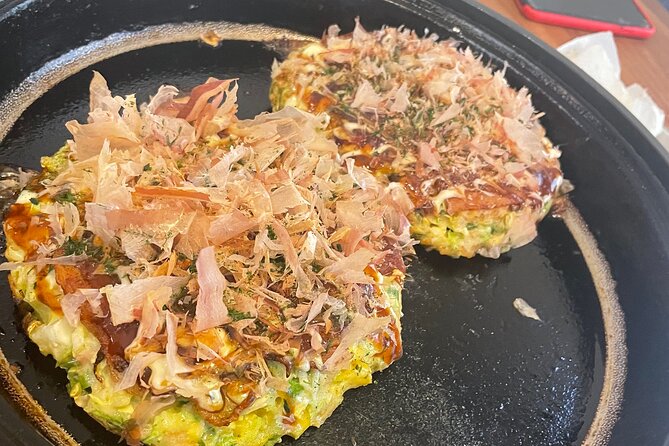
Book it if you want a true small-group cooking lesson that teaches technique, not just steps. The homestay-like setting, the focus on fluffy okonomiyaki, and the ingredient substitution guidance are the reasons it feels worth it. Add in the second dish made while your okonomiyaki cooks, and you get a well-rounded meal with real take-home value.
If you are flexible on fillings and excited to flip and build your own version, you will probably leave happy. If your goal is to learn Japanese cooking you can repeat, this is a strong choice for a couple of hours in Tokyo.
Newly listed around Tokyo
- Private Tokyo Food Tour – A Journey Through Time Through Food★ 5.0 · 36 reviews
- Private Tokyo Tour with Licensed Guide & Vehicle (Max 15 persons)★ 5.0 · 107 reviews
- Private Tokyo Custom Full-Day Tour by Chartered Vehicle★ 5.0 · 16 reviews
- Private Tokyo Custom Half-Day Tour by Chartered Vehicle★ 4.5 · 13 reviews
- Private Sightseeing to Mt Fuji and Hakone with English Driver★ 5.0 · 51 reviews
- Private Snow Monkeys park Day Trip From Tokyo or Nagano★ 4.5 · 26 reviews
- Private Outstanding Nikko Tour with English Speaking Driver★ 4.0 · 11 reviews
- 4 Day Tour – Mount. Fuji, Tokyo, Hakone, Kamakura and Yokohama★ 5.0 · 19 reviews
Japanese Cooking Workshops, compared.
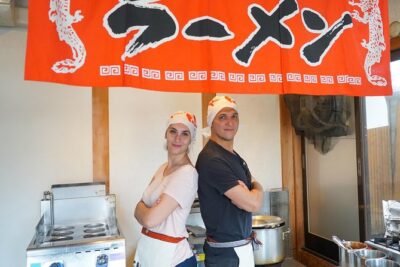
Ramen Cooking Class at Ramen Factory in Kyoto
Read our review →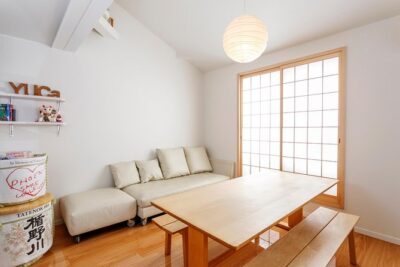
Ramen & Gyoza Cooking Class in Tokyo with Local Supermarket Visit
Read our review →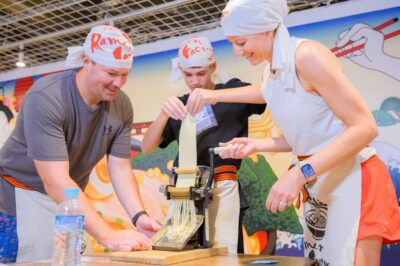
Ramen Cooking Class at a Ramen Factory with Souvenir
Read our review →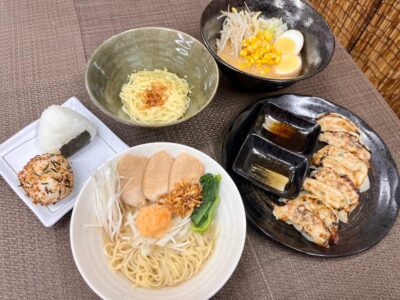
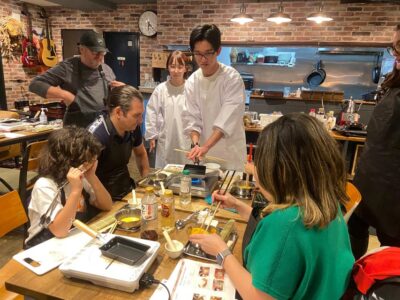
Japanese Washoku Bento Small Group Cooking Class
Read our review →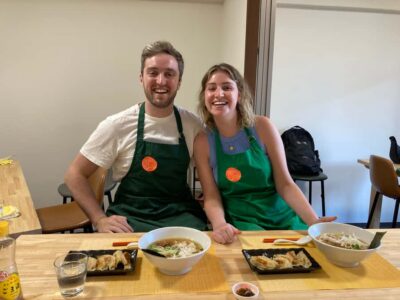
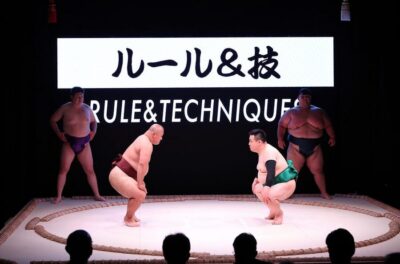
Sumo Stage Show with Bento or Snack + Fight & Photo
Read our review →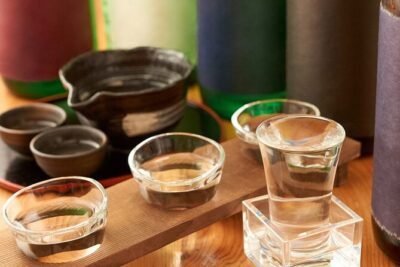
Ramen and Sushi Cooking Class with Sake Pairing Set in Tokyo
Read our review →Browse the lists this tour appears in