
Review · SUSHI COOKING WORKSHOPS
Sushi Class in Osaka Dotonbori
Osaka sushi can feel like magic. This class turns it into something you can actually do, hands-on, with small group instruction and three distinct styles of sushi-making. I especially like that ingredients are prepped for you and you get clear coaching at each step, but the main tradeoff is that the room is inside a building, so you will want to arrive a few minutes early to avoid stress.
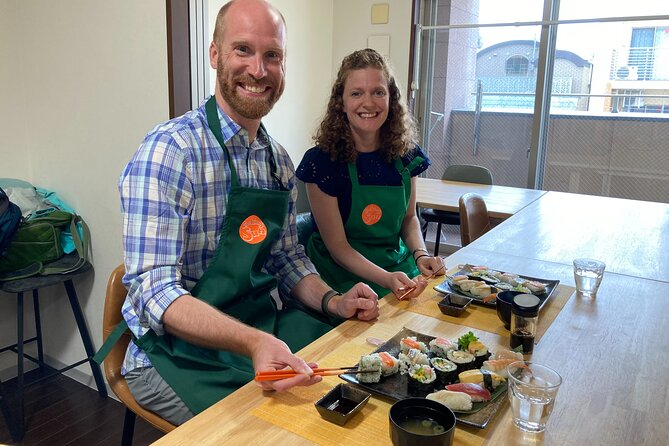
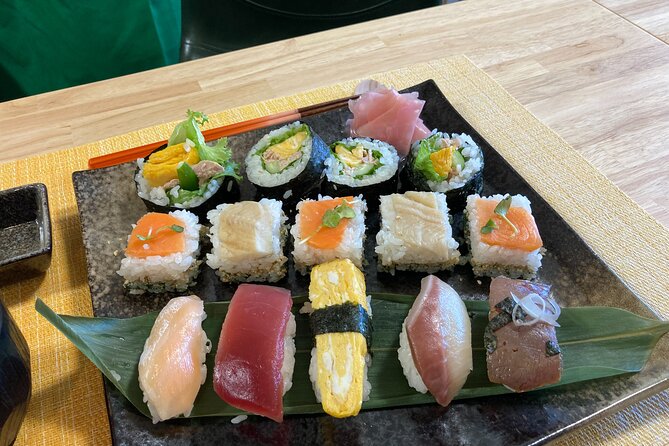
You start in the morning and leave with a full belly. In about 3 hours, you will build and eat a salad roll, nigiri, and Kansai-style oshizushi (pressed or box sushi), with miso soup included. You can request vegetarian and gluten-free variations when you book, which makes it easier to fit real food preferences into a cooking class.
In This Review
- Key highlights worth marking on your Osaka map
- Room 807, Dotonbori Energy, and a 9:30am start you can plan around
- A small class where someone actually corrects your technique
- Three sushi types in one class: salad roll, nigiri, and Kansai oshizushi
- Salad roll: a nori roll with a tamagoyaki core
- Nigiri: vinegared rice topped, bite-sized, and classic
- Oshizushi (pressed sushi): square box sushi from Kansai
- What you gain beyond the meal: sushi technique you can reuse
- Value check: does $71.16 feel worth it?
- Vegetarian and gluten-free options that are requested upfront
- Who should book this sushi class in Dotonbori
- Not sure? Here is the quick decision guide
- FAQ
- How long is the sushi class?
- What time does the class start?
- Where is the meeting point?
- How big is the group?
- What sushi types will I make?
- Is there an apron and are ingredients prepared?
- Can the class accommodate vegetarians?
- Is a gluten-free option available?
- Do I get to eat the sushi I make?
- What is the cancellation policy?
Key highlights worth marking on your Osaka map

- Up to 8 people, so the teacher can actually watch your hands, not just talk at you.
- You make three sushi styles, including oshi-zushi pressed box sushi from Kansai.
- Apron + ingredients are ready, so you spend time learning technique, not hunting supplies.
- Step-by-step support for beginners, with teachers willing to slow down and answer questions.
- Vegetarian and gluten-free options are available if you request them in advance.
- You eat what you make, finished with miso soup as part of the meal.
Room 807, Dotonbori Energy, and a 9:30am start you can plan around
This experience is based in Osaka, right in the Dotonbori area. Your meeting time is 9:30am, and the class runs about 3 hours. You will also use a mobile ticket, which is handy when you are juggling train schedules and trying to get photos before lunch.
Finding the exact spot is the one piece of logistics you should take seriously. The instructions are specific: when you arrive at Masters Residence Dotonbori I, your room is Room 807. You press 807 and the 呼出 (call) button so staff can open the door. Google Maps can sometimes point you to a building nearby rather than the exact one, so I recommend leaving a bit of buffer time, even if you think you know where you are going.
From a value perspective, this matters because the class is short. If you arrive rushed, you start behind. If you arrive calm, you get to enjoy the real point of the morning, learning sushi technique without the scramble.
More Sushi Workshops in Osaka
- Sushi Making Osaka! Popular Sushi Class in Japan!
★ 5.0 · 500 reviews - Osaka Sushi Making Experience
★ 5.0 · 400 reviews - Osaka: Roll and Authentic Sushi Making Class in Dotonbori
★ 4.9 · 239 reviews
A small class where someone actually corrects your technique
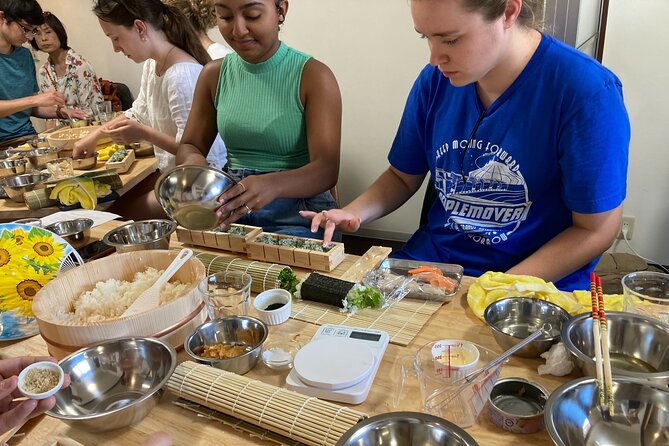
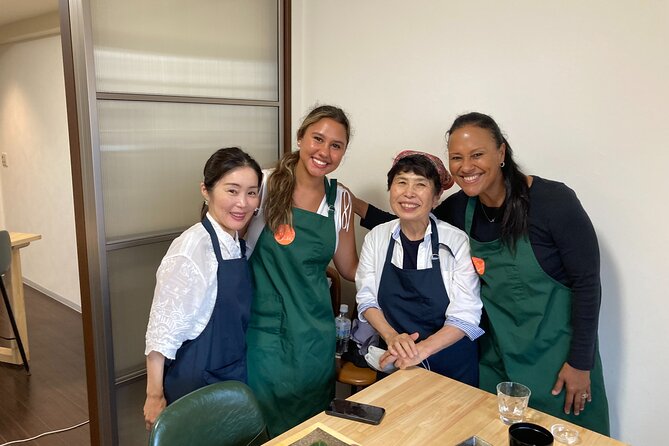
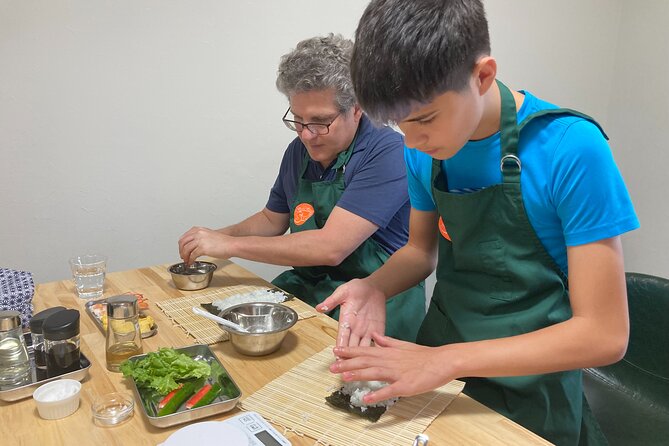
The biggest reason this works is the teaching format: a maximum of 8 travelers. That small size shows up in how the class feels. The instructors can move around, show what to do, and then help you fix small issues as you go.
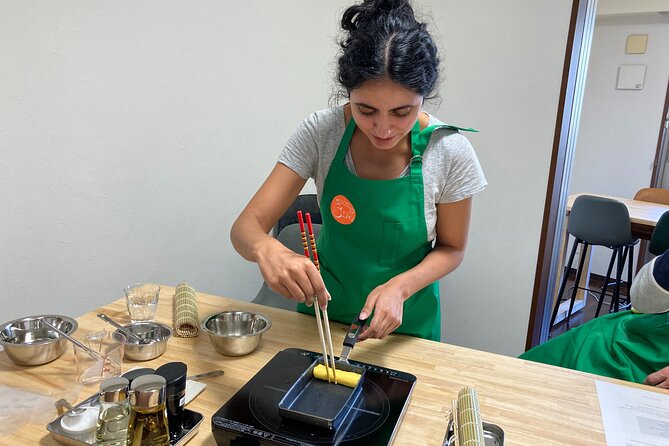
This is not just about watching a demo. You are actively assembling the sushi, with teachers guiding each step. Several reviews mention patient, slow explanations and an open-door style for questions, and that matches what you want in a beginner-friendly cooking class. If you have tried to learn sushi before, you know the frustration of getting the rice and the toppings wrong. Here, you get coaching instead of trial-and-error.
I also like that ingredients are prepared for you and you are given an apron. That keeps the focus where it should be: on the steps you are learning, like how to portion vinegared rice and how to build each sushi style cleanly.
And yes, the teachers can accommodate vegetarians. That means you are not forced into a bland workaround. You will still make the same three sushi types, just adjusted with the option you requested.
Three sushi types in one class: salad roll, nigiri, and Kansai oshizushi
You will make three kinds of authentic Japanese sushi during the workshop. The pacing is designed so you are not just doing one thing for hours. You learn different techniques, and that variety is a big part of why the class feels rewarding.
Salad roll: a nori roll with a tamagoyaki core
First up is the salad roll, a kind of sushi roll built with a mix of flavors and textures. The ingredients you work with include crab-flavored kamaboko, lettuce, cucumber, avocado, and tuna mixed with mayonnaise. You roll it with nori, and the core includes tamagoyaki, the Japanese rolled omelet.
This is a great choice for beginners because you can see the structure forming as you roll. You will also understand why tamagoyaki matters here: it adds a soft, slightly sweet element and makes the roll slice neatly.
A different sort of day in Japan:
- Osaka Go Karting Tour with Funny Costume
★ 5.0 · 2,658 reviews - Osaka Castle: Museum and Tower Entry Ticket
★ 4.5 · 2,380 reviews - Osaka: Shinsekai Food Tour with 13-15 Dishes at 5 Eateries
★ 4.8 · 2,204 reviews - Osaka Food Tour: 13 Dishes at 5 Local Eateries
★ 5.0 · 2,149 reviews
Nigiri: vinegared rice topped, bite-sized, and classic
Next is nigiri-zushi. Nigiri is one of Japan’s representative sushi styles: vinegared rice topped with ingredients such as fish, shellfish, and omelet. In practical terms, this is where you learn portion control and a gentle hand. You need enough firmness for the rice to hold together, but not so much pressure that it turns dense.
If you have only ever eaten nigiri and thought it looked too precise, this is your chance to understand how it is built. Teachers can show the right technique for placing toppings so they sit properly on the rice.
Oshizushi (pressed sushi): square box sushi from Kansai
Finally, you make oshi-zushi, also called pressed sushi. This is especially “Osaka-Kansai” in spirit because it is traditional in the region. The method is classic: you fill a square wooden frame with sushi rice and toppings, then press the rice so it adheres to the toppings. The result is a square finished product.
In Osaka, it is still popular and sometimes referred to as box sushi. One practical detail: the finished piece is square, and you cut it into pieces just before eating. That timing helps it stay tidy and makes the eating part feel more like a proper sushi service.
If you want one technique to take home, make it this one. Pressed sushi teaches structure. You learn how to build a shape that holds, rather than relying only on rolling or delicate topping placement.
What you gain beyond the meal: sushi technique you can reuse
It is easy to think of a cooking class as just a fun way to eat. This one does that, but it also gives you usable technique.
Here are the skills that are most transferable after you leave:
- How sushi rice behaves when you handle it and shape it into portions, rather than treating it as just a blob.
- How toppings sit on rice in nigiri, including the idea of balancing placement with gentle handling.
- How a pressed sushi frame changes the result, because oshizushi is about building layers into a form first, then cutting.
The class also builds an understanding of what makes these styles different. Salad roll shows how sushi can be more playful and assembled like a roll. Nigiri shows the minimalist idea of rice plus topping. Oshizushi shows a regional technique rooted in Kansai traditions.
And because the class ends with you eating your own sushi plus miso soup, the learning sticks. You taste immediately what you just made, so you can connect technique to outcome right away.
Value check: does $71.16 feel worth it?
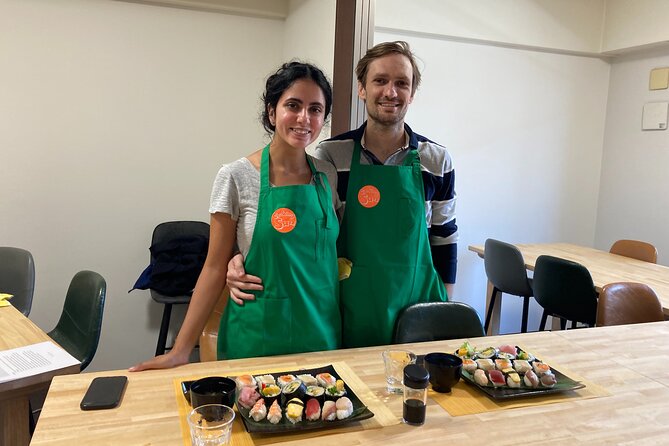
At $71.16 per person, this class sits in the “worth it if you like hands-on food learning” category. You are not just paying for access to a kitchen counter. You are paying for multiple things bundled into one 3-hour experience:
- Instruction for three different sushi types
- Ingredients prepared for your session (so you are not shopping beforehand)
- Tools and setup like the apron and the working method for each sushi style
- The meal component, since you eat what you make and it comes with miso soup
If you are thinking of this purely as food, it is basically lunch plus a guided cooking session. If you are thinking of it as a skill builder, it is a chance to go home with techniques you can try again.
One more value point is the small group size. In many bigger classes, you end up copying a process while the teacher mostly keeps things moving. Here, you have more chance to get corrections when something is off, and that makes the outcome better, not just more entertaining.
Vegetarian and gluten-free options that are requested upfront
Good sushi class planning means you should not have to improvise at the last minute. This one explicitly offers options:
- Vegetarian option is available, with eggs or no eggs (you request this when booking)
- Gluten-free option is also available (requested when booking)
That matters because sushi can be tricky with hidden ingredients. Knowing the options are available lets you focus on learning and eating, not on translating menus or hoping the kitchen figures it out. If you have dietary needs, request your preference early so you do not show up hoping for flexibility.
Who should book this sushi class in Dotonbori
This is a strong fit if:
- You want a beginner-friendly way to learn sushi without needing prior knife skills or advanced cooking experience.
- You like instruction you can ask questions about, not just a one-way lecture.
- You want to leave Osaka with something practical, a skill set you can repeat at home.
It can also work for families, since reviews note the class can accommodate people participating at the table, even with younger companions joining in.
You might think twice if:
- You expect this to cover more than sushi. This class is focused on three sushi types plus miso soup. If ramen and gyoza are your priority, you would likely need a separate experience for those.
- You dislike small-room meeting points. The room is inside a building, so you need to follow the Room 807 and 呼出 instructions carefully.
Not sure? Here is the quick decision guide
Book it if you want hands-on sushi technique in a small group setting, and you are excited to make more than one style. The fact that you make salad roll, nigiri, and Kansai oshizushi in a single morning is the big win. You also get to eat what you make with miso soup, so it feels like a complete meal, not just a demo.
Skip it or look for another option if you only want to watch cooking and do not care about shaping rice, pressing box sushi, or assembling nigiri. This class is built for people who like to do.
And if you do book, give yourself a little extra time to find Room 807. Once you are inside, the rest is straightforward, and the experience is all about learning and eating well.
FAQ
How long is the sushi class?
The class lasts about 3 hours.
What time does the class start?
The start time is 9:30am.
Where is the meeting point?
You meet at Cooking Sun in Osaka, Chuo Ward, Shimanouchi, and you will be in Room 807. The instructions say to press 807 and the 呼出 call button so staff can open the door.
How big is the group?
This activity has a maximum of 8 travelers, so it stays small.
What sushi types will I make?
You will make three types: a salad roll, nigiri, and oshi-zushi (pressed sushi).
Is there an apron and are ingredients prepared?
Yes. You are provided an apron, and ingredients are prepared for you.
Can the class accommodate vegetarians?
Yes. A vegetarian option is available, with eggs or no eggs, and you should request it when booking.
Is a gluten-free option available?
Yes. A gluten-free option is available if you request it when booking.
Do I get to eat the sushi I make?
Yes. At the end, you enjoy the sushi you made, along with miso soup.
What is the cancellation policy?
You can cancel for free up to 24 hours in advance for a full refund. If you cancel less than 24 hours before the start time, the amount paid is not refunded.
Newly listed around Osaka
- Traditional Japanese Music show & Experience Tour in Osaka★ 5.0 · 25 reviews
- Meet Locals experience Fun Chat Drink Osaka International Party★ 5.0 · 61 reviews
- Sushi and Japnese foods cooking class in Osaka★ 5.0 · 51 reviews
- Sharpen Japanese Knives in Osaka★ 5.0 · 10 reviews
- Kyoto Day Trip from Osaka Port – Private Shore Excursion★ 5.0 · 13 reviews
- Guided Photography Tour in Osaka: Capturing Memories★ 4.5 · 20 reviews
- Nara, Todaiji Temple & Kuroshio Market Day BUS Tour from Osaka★ 3.5 · 18 reviews
- Retro Osaka Street Food Tour: Shinsekai★ 4.5 · 77 reviews
Sushi Cooking Workshops, compared.
Sushi Making Tokyo Roll and Authentic Japanese Sushi Class
Read our review →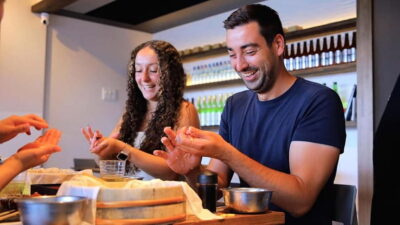
Roll and Authentic Sushi Making Class in Asakusa
Read our review →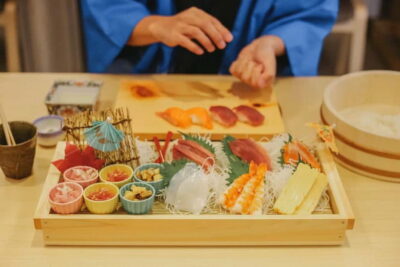
Sushi Making Class in a Happi Coat near a Famous Spot
Read our review →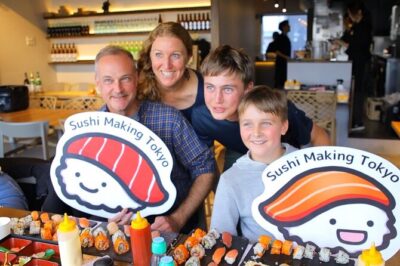
Sushi Making Tokyo! Popular Maki Sushi & Japanese Sushi(+Recipe!)
Read our review →
Tokyo Sushi Making Class in Tsukiji with Professional Chef
Read our review →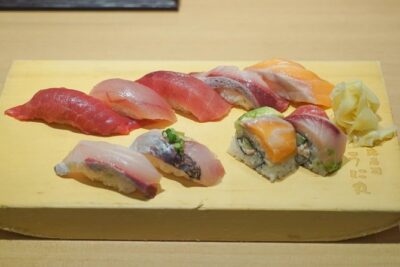
Tokyo Night Foodie Tour in Shinjuku – Seasonal Sushi, Wagyu Beef
Read our review →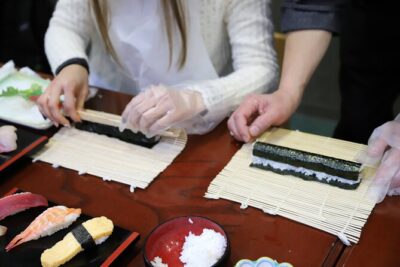
Tsukiji Fish Market Guided Tour and Sushi Making with Pro Chef
Read our review →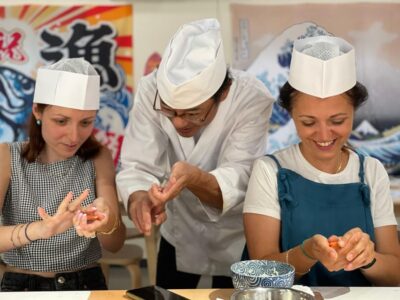
Tsukiji Fish Market Sushi Making Class with Pro Chef
Read our review →Browse the lists this tour appears in