
Review · SELF-GUIDED TOURS
Tokyo: Open Top Panoramic Sightseeing Bus with Audio Guide
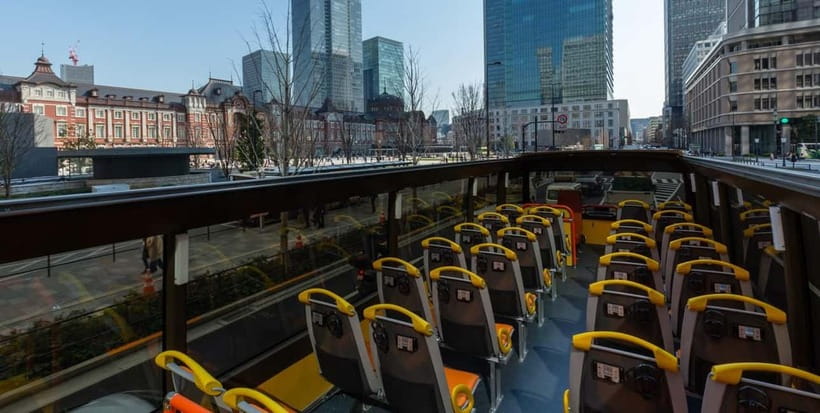
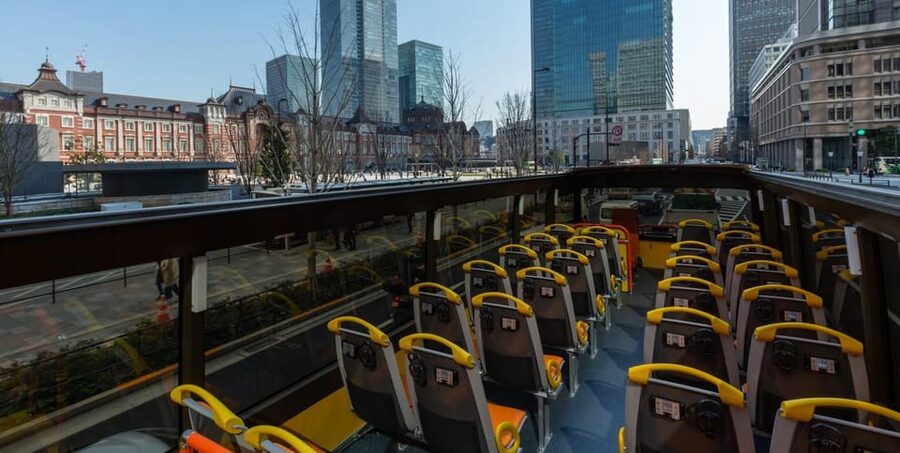
Tokyo looks different from an open-top bus. I love the wide, street-level views from the open-top bus, and the GPS audio guide that feeds you location-based stories in your language as you ride. It is an easy way to get your bearings fast, even if Tokyo feels a bit like a giant puzzle on day one.
The one catch is weather control, because if it rains the open-top may close, and you will feel that right away. Still, even in a less-perfect sky, you keep seeing the key sights, and the ride stays relaxed.
In This Review
- Key highlights to look for before you board
- Why a 70-minute open-top bus works so well in Tokyo
- Getting on board: Tokyo VIP Lounge, check-in, and what to expect
- Bay Course vs City Course: pick the mood you want
- Bay Course stop-by-stop: Rainbow Bridge, Odaiba, and the Tokyo Tower moment
- City Course stop-by-stop: Imperial Palace area, Roppongi skyline, and Ginza at speed
- The GPS audio guide: how it keeps you oriented without effort
- Comfort and weather: open-top fun, with real-life tradeoffs
- What rules you should follow once you’re on the bus
- Is it worth $11 for a Tokyo sightseeing bus?
- Who should book this bus tour, and who should skip it
- Should you book this Tokyo open-top bus tour?
Key highlights to look for before you board
- GPS audio that switches with your location, so you are not stuck waiting for announcements
- Two different 70-minute routes so you can pick Bay views or a classic city sweep
- Rainbow Bridge in the Bay Course, including a stop at the bridge’s 1st and 2nd levels
- Open-air photo angles at landmarks like Tokyo Tower, Ginza, Odaiba, and Roppongi
- Organized meeting point experience with staff help at Tokyo Station-area VIP Lounge
Why a 70-minute open-top bus works so well in Tokyo
Tokyo is big, and the subway can be brilliant, but it is also time consuming when you are new. A bus loop helps you cover a lot of ground with minimal planning. You sit, look, listen, and you start connecting names you have seen online to real places outside your window.
This ride is built around that simple promise. You get a 70-minute tour with an automatic GPS-enabled audio guide, so the information comes as the bus moves. That matters, because Tokyo street names and landmark timing can be tricky. Here, the audio is designed to follow where you are instead of forcing you to guess when to pay attention.
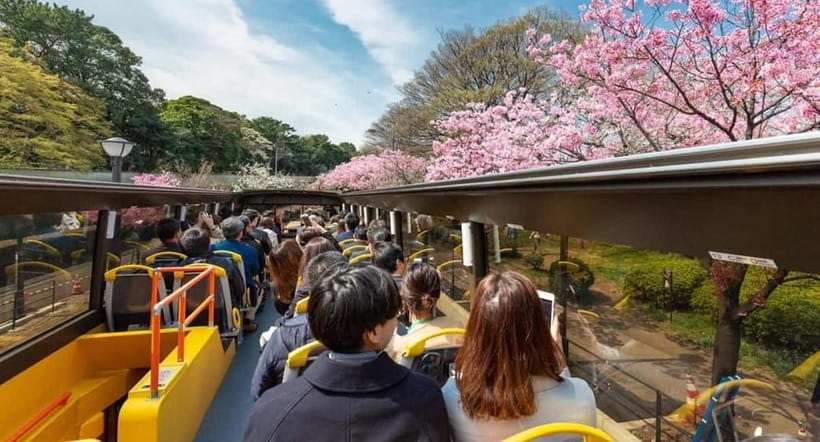
And yes, the open-top part is the fun factor. Even if you do not chase photos all day, you feel the city differently from above curb level. You spot skyline shapes, bridge angles, and neighborhood patterns you simply do not catch while walking at normal speed.
A few more Tokyo days to weigh up
- Mt Fuji and Hakone 1-Day Bus Tour Return by Bullet Train
★ 5.0 · 26,383 reviews - 1-Day Tokyo Bus Tour
★ 5.0 · 14,250 reviews - Tokyo: TOKYO SKYTREE® Admission ticket
★ 4.5 · 11,192 reviews
Getting on board: Tokyo VIP Lounge, check-in, and what to expect
Your meeting point is Tokyo VIP Lounge on the 2nd and 3rd floors of the building. There is a FamilyMart on the ground floor, and it is about a 5-minute walk from Tokyo Station’s Yaesu North Exit.
Plan to check in 20 to 40 minutes early. The tour departs promptly, so the “we will wait for you” mindset does not apply here. If you show up late, you may miss the departure even if you contacted someone.
One practical note that can trip people up: the meeting point is a paid facility. Open-top bus customers can use the facilities free of charge starting 40 minutes before departure. Outside that window, you may need to pay the facility fee. It is also a shared space with other general visitors, so keep it orderly when you are lining up or waiting.
In plain terms: get there early, use the provided maps, and then just focus on boarding. You will save yourself stress.
Bay Course vs City Course: pick the mood you want
You effectively have two choices, and they are not just “different stops.” They feel like two different Tokyo days.
Bay Course is the classic “water and icons” route. You get Tokyo Bay views, the Rainbow Bridge experience, and a stronger dose of the modern waterfront side of town. It is the route I would pick if you want big visual payoff quickly.
City Course is more of a “first-time greatest hits” tour. You pass through central areas tied to Tokyo’s core landmarks, then sweep toward Tokyo Midtown, Roppongi, Tokyo Tower, and Ginza.
Both routes last 70 minutes and come with the GPS audio guide, so the main difference is what you want your eyes to fall on: bridge and bay angles, or skyline and city-center icons.
Bay Course stop-by-stop: Rainbow Bridge, Odaiba, and the Tokyo Tower moment
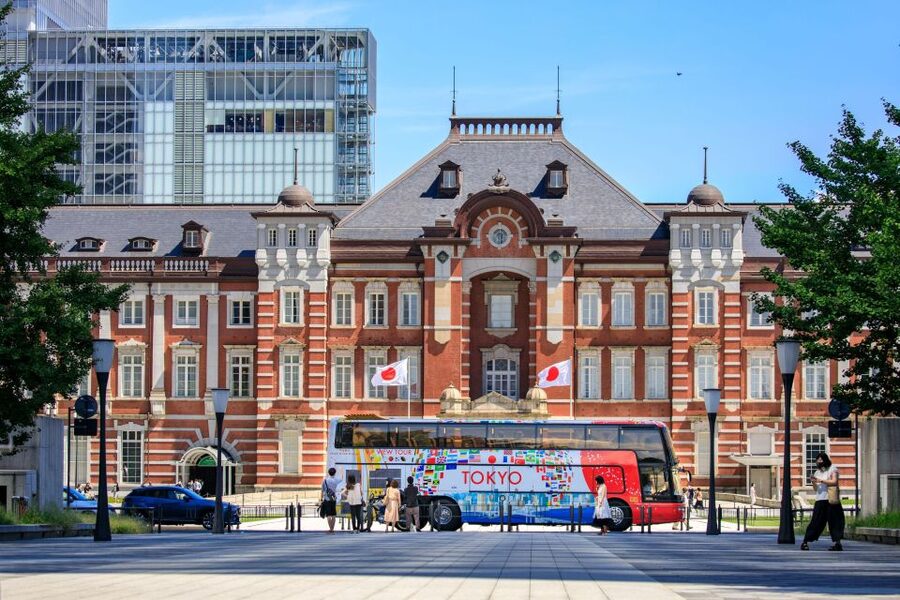
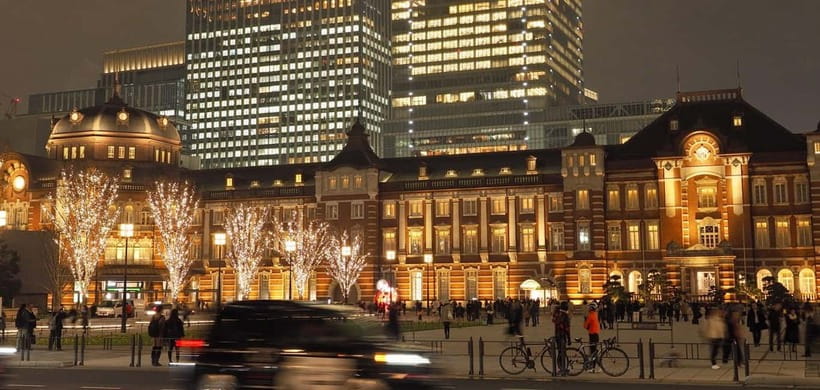
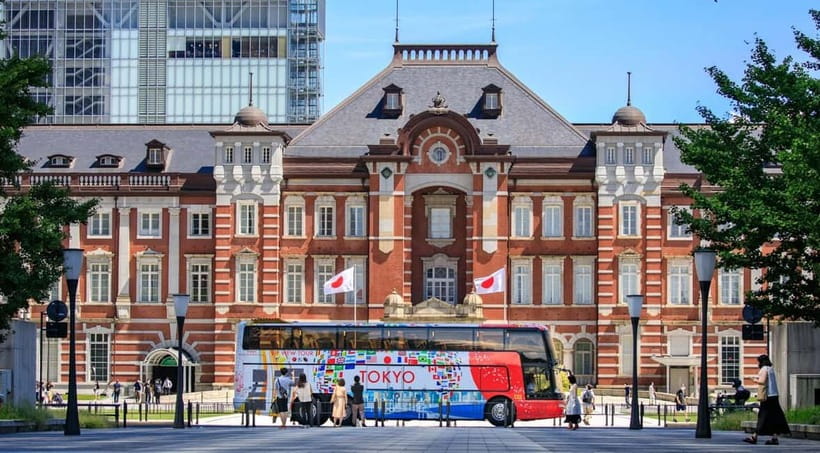
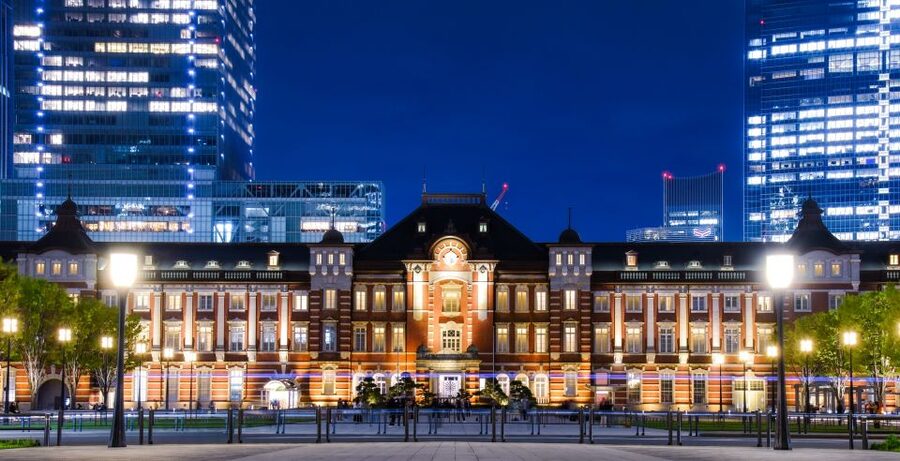
On the Bay Course, you start at Tokyo Station Red Brick Station Building, then head through Marunouchi. This opening stretch is useful because it gives you a clean “Tokyo center” baseline before the tour swings toward the bay.
Next up is Zojoji Temple, a familiar stop on many Tokyo routes. From the bus, it is a chance to see how old and new sit side by side in this city, without you having to thread through crowded lanes.
Then comes Tokyo Tower. Even if you have seen it a hundred times in photos, you will still feel that scale from the road. It is one of those landmarks where the bus angle helps, because you get a view that includes the surrounding city blocks.
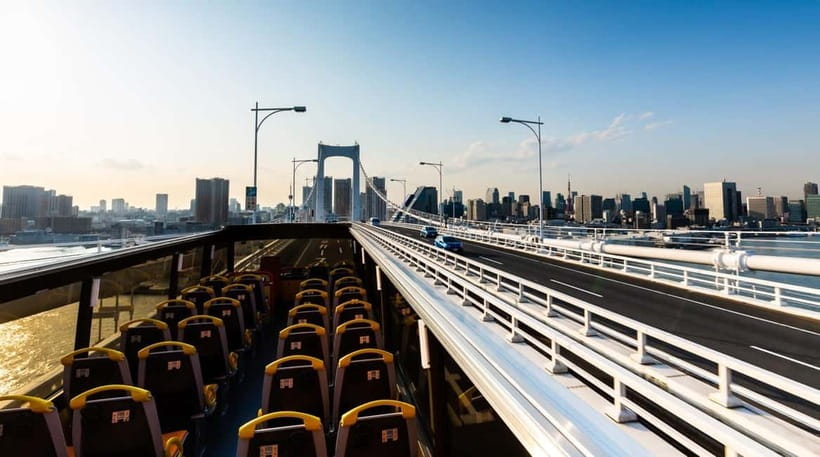
The highlight segment for many people is Rainbow Bridge. You visit Shibaura Rainbow Bridge (1st Level), then later Rainbow Bridge (2nd Level). That two-part approach matters. You see the bridge from more than one angle, and it helps you understand the structure instead of just spotting it for a second.
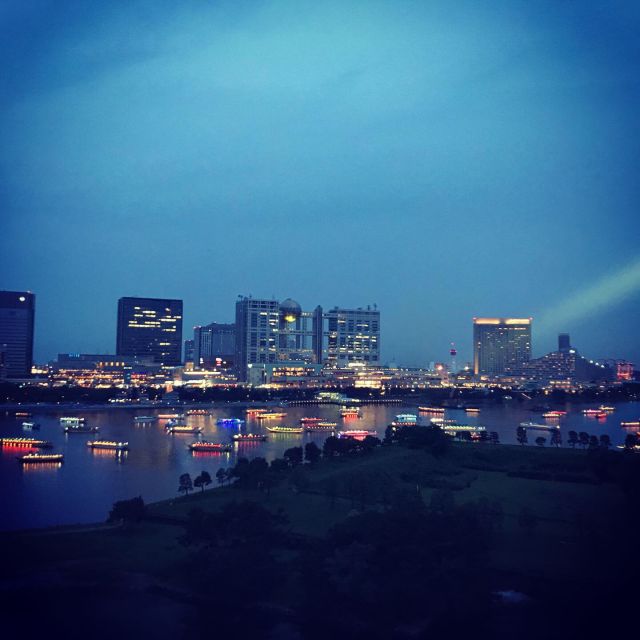
After that, you pass Fuji TV Building, then Statue of Liberty. That stop is a good clue that Odaiba is not “just buildings.” It has themed, slightly quirky spots you may want to explore later if the area piques your interest.
You then reach Odaiba Seaside Park, where you can soak in waterfront views. Finally, you circle back through Shiodome and end in Ginza.
Two practical tips for this route:
- If you want to take photos, keep your phone accessible during the Rainbow Bridge parts, because those sections tend to feel like the big “wow” stretch.
- If the day is cold, bay wind can make it feel colder than expected, since you are closer to open water.
A different sort of day in Japan:
- Tokyo: teamLab Planets TOKYO Digital Art Museum Entry Ticket
★ 4.6 · 9,779 reviews - Mt Fuji & Hakone Cruise, Drum Show Bullet Train 1 Day from Tokyo
★ 4.0 · 7,413 reviews - Tokyo: Sumo Show Experience with Chicken Hot Pot and a Photo
★ 4.8 · 6,678 reviews - Tokyo: Shinjuku Food Tour (13 Dishes at 4 Local Eateries)
★ 5.0 · 6,603 reviews
City Course stop-by-stop: Imperial Palace area, Roppongi skyline, and Ginza at speed
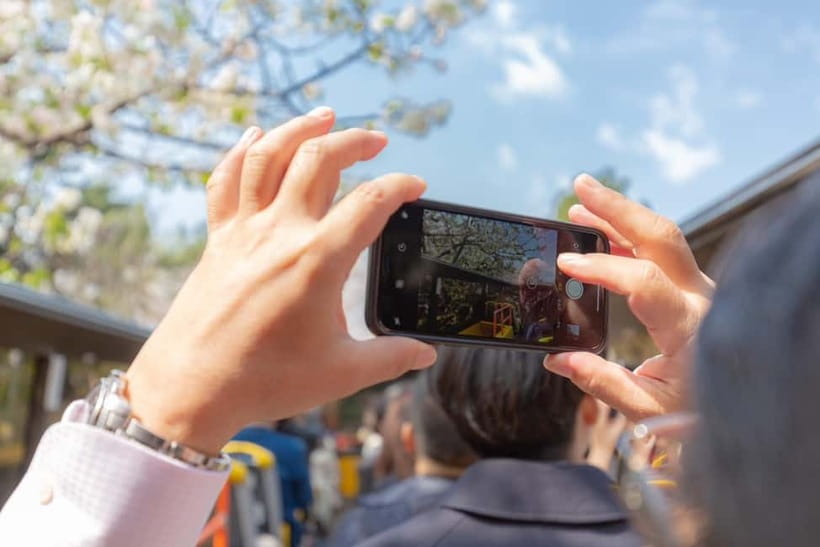
The City Course starts the same way, at the Tokyo Station Red Brick Station Building, then moves into Marunouchi. That overlap is helpful if you are comparing routes later, because it gives you a common reference point.
After Marunouchi, you go to Chidorigafuchi, known for its role in the broader Imperial area atmosphere. From the bus you will not get the same walking experience, but you do get context for where the city’s historic core sits.
Next is Akasaka State Guest House, followed by Meiji Jingu Gaien. This is a nice pairing because it shifts your view from government-focused architecture to a more spacious, scenic-feeling area.
Then you pass Tokyo Midtown and head into Roppongi. This is where the bus route starts feeling more like skyline viewing. Roppongi’s mix of tall buildings and city energy shows up quickly, and it is one of the reasons this route is popular for “limited time” days.
You then reach Tokyo Tower again, giving you a second chance at that iconic look depending on which route you chose.
After that you go to Hibiya, then end up at Ginza. Ginza is a fitting finale because it is easy to continue your day walking or shopping right after the ride ends. Even if you do not buy anything, the streets around Ginza make a good next stop for food or a coffee break.
One caution: because this route is more city-dense, it can feel like you are moving through layers of Tokyo quickly. That is not bad, but it means you should pick your priorities for photos and listening. Do not try to film everything.
The GPS audio guide: how it keeps you oriented without effort
The heart of this experience is the GPS-enabled audio guide system. It automatically delivers sightseeing information based on the bus’s location, and it runs in multiple languages including Japanese, English, Chinese, French, Korean, Vietnamese, and Thai.
You do not have to push buttons at the right moment. The system tracks the bus and updates the content as the route changes. That is exactly what you want on a bus, because you are looking out the windows most of the time.
Now, one small equipment detail. Headphones are optional and cost 100 yen. The headphone jack supports 3.5mm mini plugs, so if you bring your own, make sure you have the right style. If you do not use headphones, you may hear the audio through the bus system, which can be affected by open-air noise.
A couple of review-based realities are worth mentioning as practical expectations:
- The audio can include background music between segments, and that can make the voice feel harder to catch for some people. If you are sensitive to that, headphones are more likely to help.
- In at least some cases, you might also hear a Japanese live commentary through a loudspeaker, which can compete with the audio guide. If that happens, headphones are again your best fix.
Comfort and weather: open-top fun, with real-life tradeoffs
This is an open-top bus, so comfort is a “manage the conditions” situation. One review noted limited knee space, which is common on some sightseeing buses. You will likely be fine for 70 minutes, but if you are tall or sensitive to tight seating, it is worth keeping in mind.
Weather is the bigger variable. The tour operates rain or shine, but cancellations happen only in extreme weather like typhoons. If it rains, the open top may be closed. That change affects the experience in two ways:
- You lose some of the fresh-air and photo angles.
- You may hear more road noise than usual, which can make clear audio harder to catch without headphones.
So I suggest dressing for Tokyo’s real weather, not the forecast optimism. Bring a compact rain layer if you have one, even though umbrellas are not allowed on the bus. Also, avoid strong-smelling snacks since food is not allowed in the vehicle.
What rules you should follow once you’re on the bus
These are straightforward, but they matter because they affect everyone’s comfort:
- No smoking
- No selfie sticks
- No food in the vehicle
- No umbrellas
If you keep those in mind, boarding and riding is smooth. Also, remember that the experience is designed around staying seated and listening, so try not to block sightlines when you are adjusting gear.
Is it worth $11 for a Tokyo sightseeing bus?
For about $11 per person (with the 70-minute duration), this is priced like a “high coverage” activity rather than a guided museum-level experience. That actually makes sense for Tokyo. You are paying for transportation, a loop route, and a GPS guide system that reduces your work.
Where you get value:
- You cover multiple major landmarks in one sitting, especially Tokyo Tower, Ginza, and Rainbow Bridge depending on your route.
- You get multilingual audio without needing to constantly interpret transit or stop-and-go confusion.
- The ride is designed to be relaxed, so you can use it as your first-day orientation.
Where the value is limited:
- You are not doing deep dives into any single neighborhood.
- If you are expecting a private, highly interactive commentary, note that a live guide is not included (you get staff assistance, plus the audio system).
In other words, it is great for getting oriented and seeing the big icons quickly. It is not the best choice if you want detailed, hands-on storytelling at each stop.
Who should book this bus tour, and who should skip it
I think this tour fits best if you:
- Are visiting Tokyo for the first time and want quick context
- Have limited time and want a lot of landmarks without transit stress
- Like open-air views and want a fun, easy overview day
You might consider skipping or adding a different type of tour if you:
- Want a quiet ride with no competing sound elements, since music and announcements can affect the audio
- Are very sensitive to tight seating
- Need full open-top access regardless of rain, since the roof can close during rainy conditions
If you are the type who enjoys doing one “big overview” activity early, this works well as that anchor.
Should you book this Tokyo open-top bus tour?
Yes, I would book it if your goal is simple and practical: cover Tokyo’s main icons in 70 minutes, using a GPS audio guide that does the timing work for you. The two routes are also a nice perk, because you can choose the day’s mood, Bay Course for bridge and waterfront scenes, or City Course for central landmarks and Ginza.
But go in with the right expectations. You are buying views plus orientation, not a slow, detailed walking tour. If you bring headphones, dress for the weather, and arrive with a little patience at the meeting point, you will get a lot out of it for the price.
Newly listed around Tokyo
- Tokyo private transfer for Yokohama Port★ 4.5 · 63 reviews
- Luxury Kimono Photoshoot at Ginza Tokyo★ 5.0 · 7 reviews
- Tokyo Allstar Food Tour★ 4.5 · 206 reviews
- Tokyo Art Aquarium Museum E-Ticket with optional Tokyo Metro Pass★ 5.0 · 17 reviews
- Tokyo: Best Ginza Food Tour at 3 Local Eateries★ 5.0 · 83 reviews
- Private One Day Nikko Tour with Bilingual driver★ 3.5 · 11 reviews
- PRIVATE tour in 180SX to Daikoku+++++★ 5.0 · 6 reviews
- Kabuki Talk★ 5.0 · 10 reviews
Self-Guided Tours, compared.
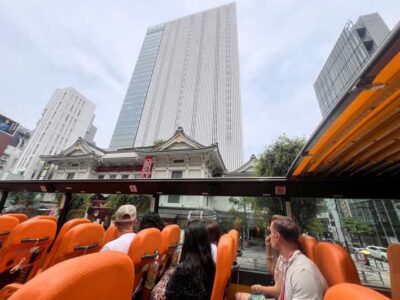
60min Panoramic Open Top Bus Tour with Audio Guide
Read our review →
Akihabara: Self-Guided Tour with a special brochure
Read our review →
One Day Private Customized Self-Guided Tour in Kyoto
Read our review →
Fushimi Inari Shrine: Explore the 1,000 Torii Gates on an audio walking tour
Read our review →
Hakone: Self Guided Trip to Mt. Fuji // Made by Local Guides
Read our review →Browse the lists this tour appears in