
Review · HISTORICAL TOURS
Osaka Food Quest: Self-Guided Culinary & History Adventure
Dotonbori gets a puzzle twist. This self-guided Osaka food quest lets you use your smartphone to solve 10 puzzles while you walk through key spots tied to local food and everyday history, from Ebisu Bridge to Kuromon Market. I especially like the flexibility to pause and resume whenever you want, and the way the story clues nudge you toward actual food culture like takoyaki and horumon. The main drawback is simple, you are relying on your phone, so if the app feels slow or your connection is weak, plan to keep moving and use your fallback instincts to stay on track.
You also do not get a physical guide. That can be a plus if you like exploring on your own, but it means the whole experience runs on mobile prompts and your walking pace, for about 1 hour on paper.
If you like Osaka food as a theme, this is a low-cost way to cover a lot of ground, and it ends in a different neighborhood, which helps you turn a short outing into a real route.
In This Review
- Key things I’d highlight before you go
- Entering the Osaka Food Quest Route From Dotonbori
- Ebisu Bridge to Konamon Museum: Where Clues Meet Osaka Street Energy
- Showa Taishu Horumon Dotonbori and Hozenji Temple: Food With a Spiritual Backdrop
- National Bunraku Theater: Understanding Osaka Through Theater Beats
- Kuromon Market and Namba Yasaka Shrine: The Finish Line for Food Culture
- Timing That Actually Works: From 1 Hour Listed to a Better Real Plan
- Price and Value at $7.85: What You Pay For, What You Buy
- Smartphone and Data Tips If the App Feels Slow
- Should You Book This Osaka Food Quest?
- FAQ
- How long is the Osaka Food Quest?
- What do I need to start the quest?
- How many puzzles are included?
- Where does the quest start and end?
- Do I get a physical tour guide?
- Is the tour private?
- What is the cancellation policy?
Key things I’d highlight before you go
- 10 puzzle challenges that guide your walk, not just sightseeing.
- Smartphone-only experience, with a mobile access code and no physical guide.
- Food and history mix built around recognizable Osaka stops like Dotonbori and Kuromon Market.
- Pause and resume anytime, useful for snack breaks and photo stops.
- Self-paced timing, with feedback suggesting many people go faster than the ideal.
- Small mobile footprint, with the quest file size stated as 2.5MB.
Entering the Osaka Food Quest Route From Dotonbori
This starts in Dotonbori, at 1 Chome-6 Dotonbori, Chuo Ward, and ends at 2-chōme-9-19 Motomachi, Naniwa Ward. That end point matters, because you are not walking a neat loop and returning to the same corner. You are building a one-way route through the city’s food heartbeat.
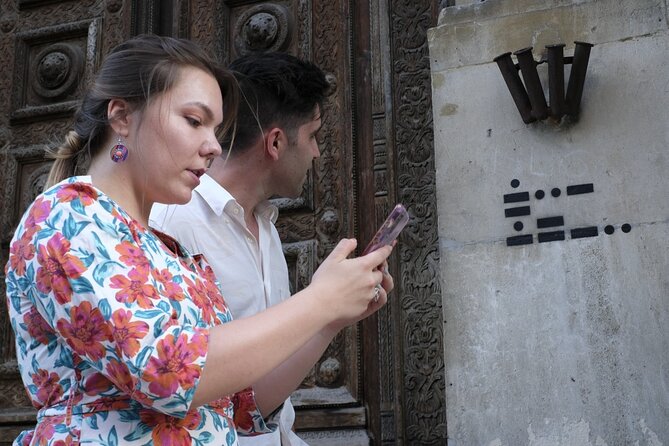
You’ll use a mobile access code and work through 10 puzzle-based challenges on your smartphone. The experience is listed as private, meaning only your group participates, but it is still self-guided, so you are really the captain here.
Price is $7.85 per person, which is the first clue to what the tour is: you are paying for the quest structure and storytelling, not for transport, a professional guide, or included meals. If you enjoy short, focused activities you can fit around your day, that’s a pretty good match.
The opening hours show 12:00 AM to 11:59 PM, so you can slot this in when Osaka feels right for you. Most days work, but I’d still aim for daylight or early evening if you want the streets, signage, and food stalls to do their full job.
More Food Tours in Osaka
- Osaka: Shinsekai Food Tour with 13-15 Dishes at 5 Eateries
★ 4.8 · 2,204 reviews - Osaka Food Tour: 13 Dishes at 5 Local Eateries
★ 5.0 · 2,149 reviews - Hungry Osaka Street Food Tour:15 Tastings & 3 Drinks with a Local
★ 5.0 · 1,727 reviews
Ebisu Bridge to Konamon Museum: Where Clues Meet Osaka Street Energy
Your first major story stop is Ebisu Bridge. It connects shopping streets, linking Shinsaibashi-suji to Ebisubashi-suji. But the Osaka twist is the legendary curse tied to the Hanshin Tigers baseball team, with the bridge named as the spot connected to that lore. This is a good opener because it trains you to look around, not just follow a line on a map.
The quest challenges you to look around to find answers before you move forward. That simple design is smart. It slows you down enough to notice details you’d otherwise miss, like how these streets knit together and how Osaka’s entertainment and shopping culture overlap.
Then you head to Konamon Museum, described as a place where you can eat, learn, and make takoyaki, Osaka’s soul food. Even if you do not plan to take part in any making session, the value here is the theme. Takoyaki is not a random snack in this route, it’s a cultural marker. The quest nudges you to connect ingredients and habits to the city that made it.
Practical tip: budget a little patience here. Takoyaki attracts lines. If you want a slow stroll pace, start this section earlier rather than later so your puzzle time does not turn into a late sprint.
Showa Taishu Horumon Dotonbori and Hozenji Temple: Food With a Spiritual Backdrop
One of the standout ideas of this quest is that it does not treat food as a separate attraction. It puts food next to temple and theater landmarks, which is very Osaka.
You’ll visit Showa Taishu Horumon Dotonbori, a horumon restaurant specialized in beef offal. Horumon is a classic Kansai food direction, and this stop is basically the quest’s way of saying, try the local courage, not only the safe bets. You may smell grills and see diners focused on the table, which makes the history clues feel less abstract.
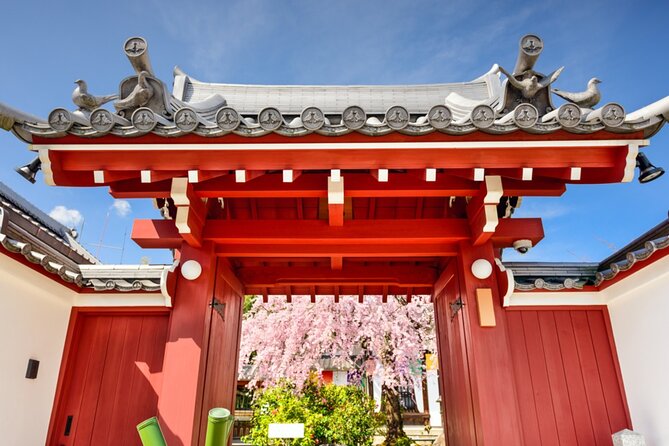
Immediately after, you reach Hozenji Temple, built in 1637, dedicated to Fudo Myoo, one of Buddhism’s five guardians. In the 1600s, the Namba area around Dotonbori was a center for entertainment, with kabuki and bunraku performances running through the district. That link between theater energy and street life is the sort of context you usually only get from longer tours, but here it’s attached to the walking path.
Hozenji also works as a breathing point in the quest. You get a pause from food storefronts and a chance to look at how Osaka’s public rituals fit next to everyday eating. And because the challenge is still puzzle-driven, you’re encouraged to pay attention to the temple details instead of just passing through.
National Bunraku Theater: Understanding Osaka Through Theater Beats
Next up is the National Bunraku Theater, established in 1984 as the home of Bunraku in the Kansai region. The main hall holds 753 seats, and there is also a small hall with 159 seats.
Why include a theater stop in a food quest? Because Bunraku is part of the same cultural machinery that makes Dotonbori what it is. When a city builds a reputation around performance and public life, food moves with it. Osaka street culture is not only about what you eat, it’s also about how people gather, watch, and socialize.
Here the quest again pushes you to look around to find answers tied to the story. The theater is also described as hosting other traditional dance performances and drama, which broadens the context beyond just one art form.
If you plan to see any shows later in your trip, this stop helps you connect the dots. Even if you do not buy tickets, it gives you a cultural baseline you can use while you’re wandering.
More History Tours in Osaka
- Osaka: Castle History Walking Tour / Castle Tower Admission
★ 4.9 · 230 reviews - Osaka Castle & Samurai History Walking Tour
★ 5.0 · 22 reviews - (Ticket Included) Explore Osaka Castle & Museum of History
★ 4.8 · 21 reviews - Osaka: 3-hour Osaka Castle & Historical Museum Guided Tour
★ 4.9 · 21 reviews
Kuromon Market and Namba Yasaka Shrine: The Finish Line for Food Culture
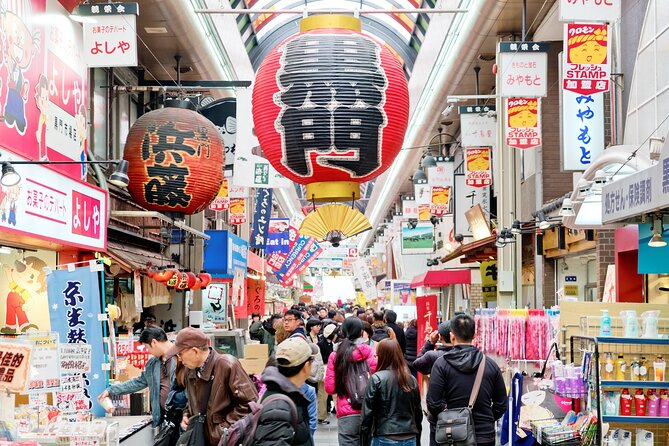
Then you hit Kuromon Market, the “black gate” market. It began as a fish market around 1822 and became an official market in 1902. The name is linked to the black gate of Enmyo Temple, which stood in the area until 1912, marking the end of the Meiji period.
This is where the quest feels most practical. The market is the place where you can put food on your route in a real, tangible way, because you’ll likely see stalls designed for eating right then. The quest is still about puzzles and story, but Kuromon is your natural reward zone.
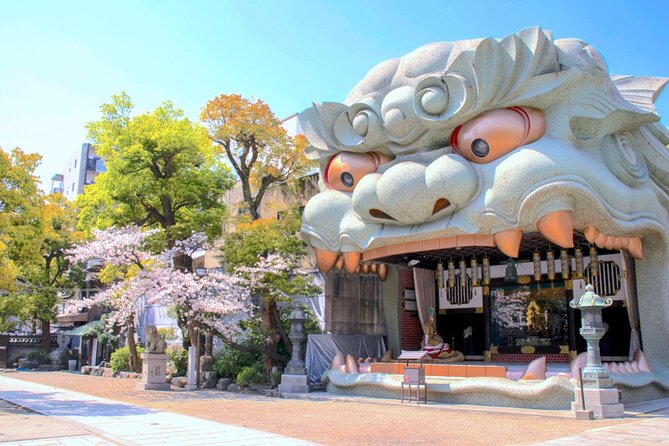
After the market, you finish at Namba Yasaka Shrine. The shrine is described as having been commissioned by Emperor Hanzei in honor of his father, Emperor Nintoku. It originally was in what’s now Kawachi Matsubara City, and later moved to its current location after Hideyoshi Toyotomi began construction of Osaka Castle.
That move story matters because it shows how Osaka grew by reshaping space. Food culture, street culture, and religious sites all shifted as the city re-organized itself.
If you want to end the quest with a calm final moment, take it here. Shrine grounds are a natural place to slow down after the energy of Dotonbori and the market.
Timing That Actually Works: From 1 Hour Listed to a Better Real Plan
The duration is listed as about 1 hour. That’s enough time if you treat this like a pure quest run and you do not linger.
But based on how the route is set up, I’d plan differently. A faster run can happen, but if you want to read clues carefully, stop for photos, and taste a few of the food temptations you’ll see, you’ll be happier with closer to 2 to 3 hours.
Because the experience explicitly lets you pause and resume anytime, you do not need a rigid schedule. If you’re in a snack line, pause. If you want to step aside and check something, pause. If your phone battery is dipping, slow down and keep your next steps simple.
I’d also build in a tiny buffer at the start. Dotonbori signage and street flow can be chaotic. You want your head clear when the first puzzle asks you to look around and find answers.
Price and Value at $7.85: What You Pay For, What You Buy
At $7.85 per person, you’re paying for a structured, self-guided experience with 10 puzzle challenges and a storyline focused on Osaka food and history. You also get a mobile ticket access code, and you can pause and resume.
What you are not getting is a professional, on-the-ground guide. So you should treat this as a blend of digital scavenger hunt plus themed walking. The moment you expect included meals, you may feel shorted.
Still, this is good value for the right style of traveler. If you like walking routes where you control the pace and you want your phone to do the work of explaining, this is a fair trade. The stops are well chosen for food curiosity, and you can decide which snack is worth your money in the moment.
Also, the route includes well-known areas like Dotonbori and Kuromon Market, so even if you skip a food purchase, the walking itself is part of the fun.
Smartphone and Data Tips If the App Feels Slow
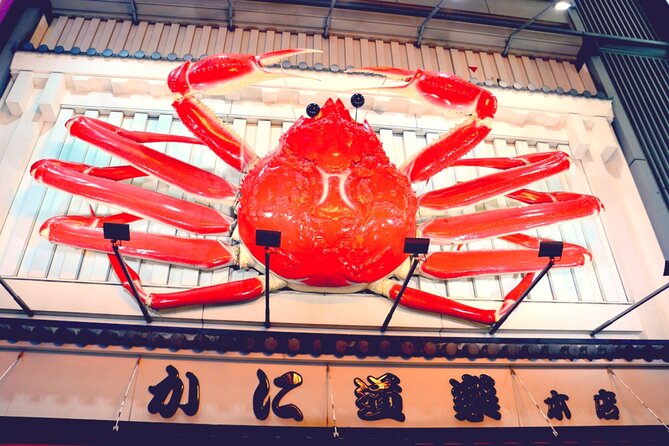
One of the real-world concerns is app performance. I’ve seen this pattern with phone-based quests: when the app feels slow, people get frustrated and stop moving.
Here’s what you can do to reduce risk:
- Start with a charged phone and a power bank if you have one. You’ll be outdoors and moving.
- If the app seems stuck, wait briefly, then continue walking with the next stop area in mind. The quest is still about the route and look-around clues.
- If you worry about data use, note that the quest file size is stated as 2.5MB, so big data spikes are more likely caused by other apps running at the same time.
If you’ve got shaky mobile service that day, keep your plan flexible. You do not need GPS perfection to enjoy a walking route, as long as you stay calm and keep your eyes on the street landmarks.
Should You Book This Osaka Food Quest?
Book it if you want a low-cost, self-paced Osaka outing that mixes food and city stories as you walk. It’s especially a good fit for couples, families, and solo travelers who like interactive activities and do not mind using a smartphone instead of a guide.
Skip it if you strongly prefer a human storyteller, or if you know you get irritated when tech runs slowly. Also, if you’re in a strict one-hour window with zero room for detours, aim for a fast run or choose a shorter snack-focused plan, because pacing does matter here.
If you’re the kind of traveler who enjoys figuring things out on the sidewalk, Osaka rewards that. This quest gives you a structured reason to look up, read, and wander through Dotonbori with purpose.
FAQ
How long is the Osaka Food Quest?
It’s listed as about 1 hour. In practice, you may want extra time if you plan to read puzzles carefully and add snack breaks.
What do I need to start the quest?
You’ll need a smartphone and your mobile access code from the booking. The experience uses mobile to deliver the puzzles and storyline.
How many puzzles are included?
The quest includes 10 puzzle-based challenges.
Where does the quest start and end?
It starts at 1 Chome-6 Dotonbori, Chuo Ward, Osaka and ends at 2-chōme-9-19 Motomachi, Naniwa Ward, Osaka.
Do I get a physical tour guide?
No. It’s a self-guided activity, and you navigate with the mobile quest on your own.
Is the tour private?
Yes. It’s listed as private, so only your group participates.
What is the cancellation policy?
You can cancel for a full refund if you cancel at least 24 hours before the experience’s start time. If you cancel less than 24 hours before, it is not refunded.
More Historical Tours in Osaka
- Osaka: Kyoto & Nara & Uji Historical and Scenic One-Day Tour
★ 4.7 · 21 reviews - Osaka: Osaka Castle 3 hours Historical Walking Tour
★ 4.6 · 14 reviews - Osaka Private Pop Culture Tour: Historic Tenma to Dotonbori
★ 4.5 · 13 reviews - Osaka: Kyoto & Uji Historical Sites and Scenic Delights Tour
★ 4.7 · 13 reviews
More Food & Drink in Osaka
- Osaka Backstreet Nightlife & Street Food Walking Tour
★ 5.0 · 1,011 reviews - Hungry Osaka Street Food Tour: 15 Dishes & 3 Drinks
★ 4.9 · 694 reviews - Kuromon Market Food Walking Tour in Osaka (6 stops, 6 tastes)
★ 5.0 · 550 reviews - Absolute Osaka Food Tour
★ 5.0 · 309 reviews
Newly listed around Osaka
- 2 Hours of Bar Hopping in Osaka Style★ 5.0 · 22 reviews
- Same-Day Osaka Food Crawl with local food and Hidden gems★ 5.0 · 114 reviews
- Osaka Authentic Local Izakaya Hopping Experience: Food & Drinks★ 5.0 · 99 reviews
- Well-balanced BENTO (lunch box) Cooking Class★ 5.0 · 35 reviews
- Anime Cosplay Photshoot-50 Digital Photos Provided★ 5.0 · 8 reviews
- OSAKA:Feel the Power! Learn Taiko Drum from Professionals★ 5.0 · 28 reviews
- Three Types of Ramen Cooking Class in Osaka★ 5.0 · 119 reviews
- Urban Canvas: Osaka Street Art Bike Tour★ 5.0 · 47 reviews
Historical Tours, compared.
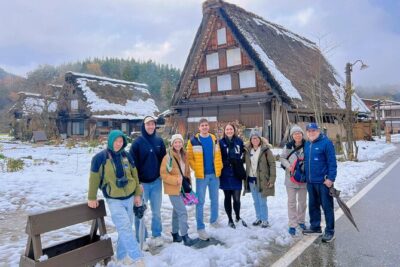
World Heritage Shirakawa-go and Experience Tours from Kanazawa
Read our review →
World Heritage Kyoto & Nara Uji Authentic Matcha Experience
Read our review →
World Heritage Shirakawa-go Morning Guided Tour
Read our review →
Hiroshima Historical Walking Tour – Why A-Bomb was Dropped
Read our review →
Hiroshima Peace (Heiwa) Walking Tour at World Heritage Sites
Read our review →
Yanaka Walking Tour: Historic and Traditional District of Tokyo
Read our review →
Shinjuku Historical Walking Tour & Secret Backstreets
Read our review →Browse the lists this tour appears in