
Review · SHRINE & TEMPLE VISITS
Fushimi Inari Shrine: Explore the 1,000 Torii Gates on an audio walking tour
Fushimi Inari moves at its own speed. This self-guided audio walking tour turns the famous torii maze into a story about Shinto life, fox symbolism, and small rituals. I like two things most: you can go at your pace without getting swept up, and the stops explain what you are actually looking at, not just where to stand for a photo. One drawback to plan for is simple, you must download the app content before you arrive so you are not stuck when signal gets spotty near the shrine.
You’ll cover about 45 minutes to 1 hour, starting by the fox statue near Inari Station and ending deeper in the complex near a pond by Kumataka Shrine. The route is easy to do on your own, and it’s set up as a private activity for your group using the VoiceMap app on your phone (smartphone and headphones are on you).
In This Review
- Key Highlights That Make This Tour Worth It
- Starting at the Fox Statue by Inari Station, Then Getting Your Bearings Fast
- Learning Shrine Meaning Before You Hit the Senbon Torii
- The Hand Water Moment, Small Ritual, Big Understanding
- Main Hall Pause, Then Wabi-sabi Lessons You Can Actually Use
- The Senbon Torii Walk: 1,000 Torii Gates, One Pace at a Time
- Heavy-Light Stone Wish and the Fox Symbol Trail
- Okusha Shrine and the Root-up Pine Tree, Toward a Calmer Finish
- VoiceMap App, Offline Audio, and the One Step You Must Not Skip
- Price and Value: Why $5.99 Can Feel Like a Bargain
- Who This Tour Fits Best in Kyoto
- Should You Book This 1,000 Torii Audio Tour?
- FAQ
- How long is the Fushimi Inari audio walking tour?
- How much does the tour cost?
- Is the tour audio available offline?
- Where do I start the tour?
- Where does the tour end?
- Do I need tickets or entrance fees included?
- Do I need my own smartphone and headphones?
- Is this tour in English?
- What is the posted opening time for the shrine area?
Key Highlights That Make This Tour Worth It

- 1,000 torii gates on an easy route, with guidance so you do not feel lost
- Fox statues explained so the details actually make sense as you walk
- Ritual stops like Hand Water, which helps you understand the shrine beyond views
- A guided look at Wabi-sabi, so you notice the quiet beauty you might skip
- Okusha shrine and the Root-up Pine Tree, adding meaning to the deeper turns
- Offline audio and maps, so you can keep walking even with weak phone reception
Starting at the Fox Statue by Inari Station, Then Getting Your Bearings Fast
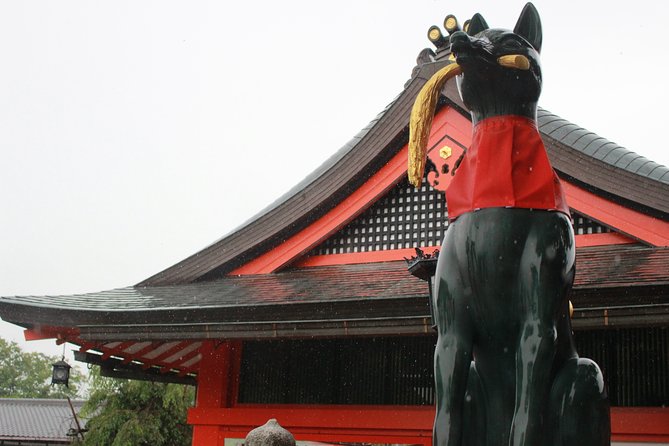
The tour begins at a very practical landmark: the fox statue at the entrance area of Fushimi Inari Taisha, opposite Inari Station. That matters because Fushimi Inari can feel like you are dropping into a crowd of orange gates and people. Starting at a clear point helps you begin smoothly, without wasting time hunting for the next “step.”
Right away, you get oriented for what the shrine is. The first listening segment is basically your orientation course: what this place is, why it draws people in, and what the foxes you see everywhere are connected to. You do not have to understand Shinto to enjoy it. You just have to pay attention to the cues the audio gives you as you walk.
If you like to travel with a plan but still move freely, this is a good fit. You can pause, go slower when the stairs feel steep, and spend an extra minute reading a sign or watching a ritual without feeling like you are holding up a group.
More Shrine & Temple Visits in Kyoto
- Kyoto: Fushimi Inari, Kinkakuji, Bamboo Grove 1 Day Bus Tour
★ 4.8 · 4,316 reviews - Kyoto: Tea Ceremony Ju-An at Jotokuji Temple
★ 4.9 · 3,207 reviews - Fushimi Inari Hidden Hiking Tour (Private Option Available)
★ 5.0 · 1,750 reviews
Learning Shrine Meaning Before You Hit the Senbon Torii
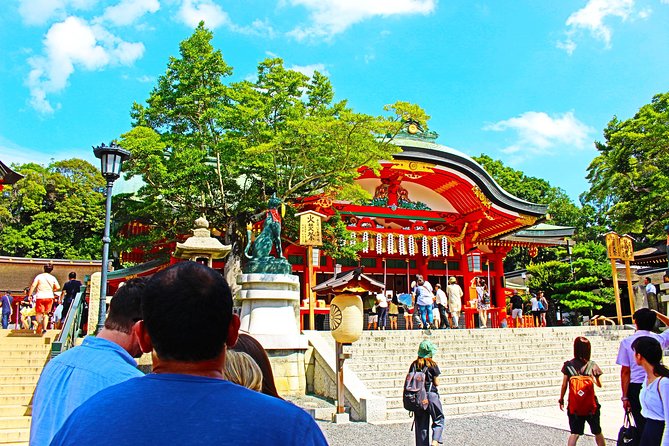
Most people reach the gates and only absorb the surface: red, crowded, dramatic. This tour nudges you to do something smarter first. Early on, you start learning about the significance of shrines in general and why worship here is more than sightseeing.
At the second stop, the audio focuses on the shrine as a living place of belief and practice. That framing changes how you experience everything that comes next. When you understand that the route is not just a photo set, you stop treating every turn as a “where is the best view” problem and start noticing the rhythm of worship and architecture.
This is also where the fox presence starts to feel more intentional. You will see fox statues dotted around the shrine area, and the audio helps you link them to the larger spiritual story instead of treating them like decorative street art.
The Hand Water Moment, Small Ritual, Big Understanding
One of the most useful stops is the one that talks about Hand Water, which you encounter early in the flow of the grounds. Even if you have seen people do ritual washing in other places, the tour gives you the why behind the motions. That makes a short stop feel important instead of random.
This is a good place to slow down. The audio guides you to notice how people move through the shrine space. You might see visitors repeating the same steps as part of preparation, and the listening track helps you understand that these actions are part of respect, not performance.
Practical tip: if you want a calm moment, consider listening through this section off to the side for a minute. It is not about blocking anyone. It just helps you hear the audio while still giving space to the ritual.
Main Hall Pause, Then Wabi-sabi Lessons You Can Actually Use
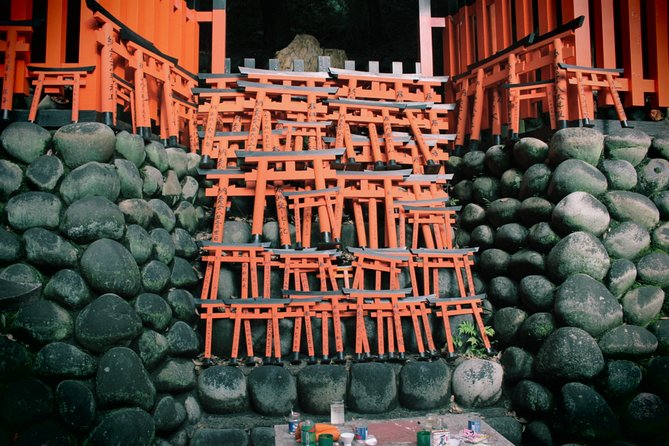
You get a short stop at the main hall, which is exactly the right length. In Fushimi Inari, you can easily burn time by lingering too long at the busiest viewpoint. This tour gives you a pause for context, then pushes you back toward the main walk.
After that, the audio shifts to Wabi-sabi. That word can sound abstract until you see how it fits a place like this. Here, it is less about romanticizing age and more about learning how to look closely at ordinary details. Cracks in stone. Weathered surfaces. The way light falls in a shaded corridor. These are the cues you start noticing once the audio trains your attention.
I like Wabi-sabi as a concept here because it helps you appreciate the shrine even when the gates are crowded. When you cannot get a perfect “clean” photo, you can still have a rich experience by noticing the texture of the place.
More Walking Tours in Kyoto
- Kyoto Geisha Walking Tour: Gion District & Hidden Gems
★ 4.7 · 3,273 reviews - Kyoto: Gion Geisha District Walking Tour – Stories of Geisha
★ 4.7 · 2,187 reviews - Night Walk in Gion: Kyoto’s Geisha District
★ 4.5 · 2,003 reviews - Kyoto Gion Geisha District Walking Tour – The Stories of Geisha
★ 5.0 · 1,441 reviews
The Senbon Torii Walk: 1,000 Torii Gates, One Pace at a Time
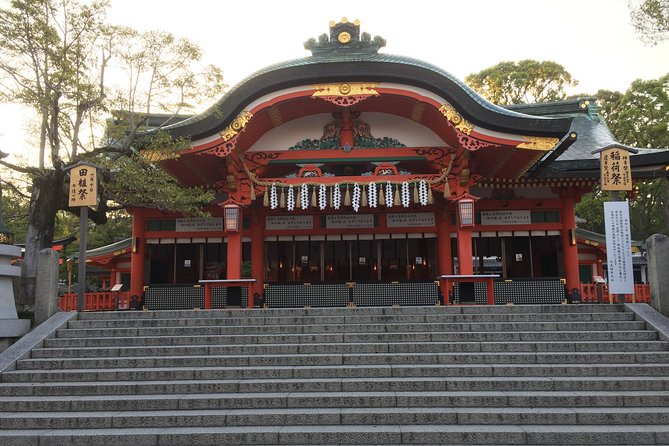
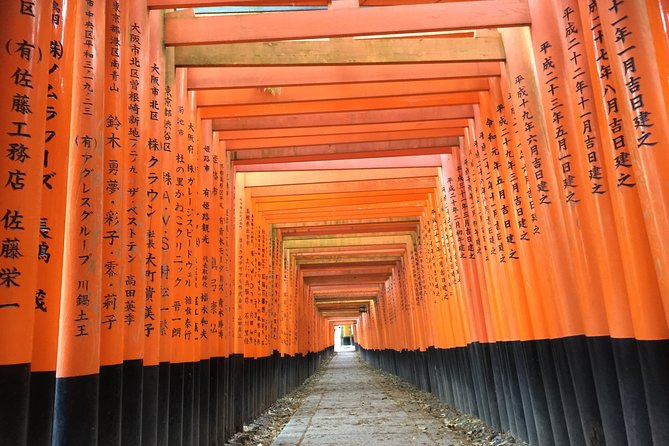
Now for the part everyone comes for: walking through the Senbon Torii, the line of 1,000 bright red torii gates. The tour guides you through this stretch, and it is one of the best uses of an audio format in Kyoto. When you have headphones on, you can take a steady pace and stop when you want to, instead of rushing to keep up.
You will move through the Senbon Torii with listening prompts that help you keep track of what you are looking at. The route includes more than one segment through the gates, which is helpful because the Senbon Torii area can feel endless. Breaking it into smaller guided sections makes the walk feel manageable.
Photo tip without the fuss: you do not need to fight for every angle. If you want more breathing room, keep walking a bit after the first big viewpoint. The gates create depth, and the best “wow” moments come when you experience the corridor, not just the screenshot.
This is where the self-guided strength really shows. The tour keeps you moving, but it does not yank you forward. That matters in Fushimi Inari, where the crowd density can change by the minute.
Heavy-Light Stone Wish and the Fox Symbol Trail
The tour description highlights a stop about the Heavy-Light Stone, where you can make a wish. Even if you are not into fortune customs, this is worth paying attention to because it gives you a concrete action tied to the shrine’s traditions.
You also keep seeing fox statues along the way. The difference with this tour is that the audio makes those statues part of a thread rather than background clutter. You start to notice patterns, placement, and symbolism as you walk deeper into the complex.
Think of it this way: Fushimi Inari is famous for gates, but it is powered by meaning. When the audio connects the visual details to belief and ritual, you end up feeling like you understand what you are seeing, even if you do not speak Japanese.
Okusha Shrine and the Root-up Pine Tree, Toward a Calmer Finish
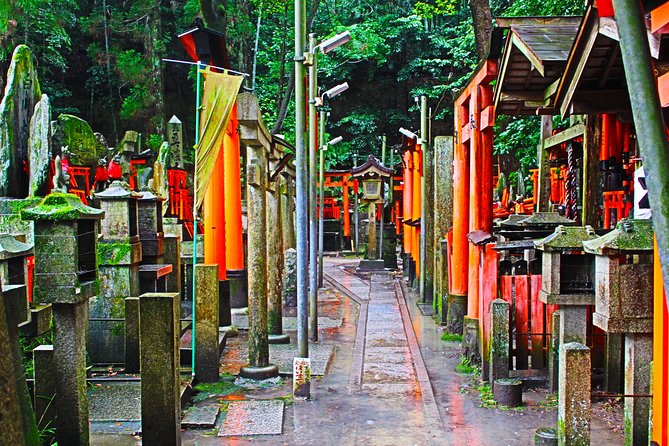
As the route moves beyond the most photographed corridor, the audio shifts to deeper areas, including the Okusha shrine and a brief stop by the Root-up Pine Tree.
These parts matter because they remind you that Fushimi Inari is not only the famous gate path. Once you hear what these stops represent, the walk feels less like a theme park line and more like a pilgrimage route with destinations.
Okusha shrine listening helps you understand the idea of going further, even when the crowds thin. The Root-up Pine Tree stop adds a different kind of fascination, one tied to a specific natural feature with meaning in the shrine setting.
Then the tour ends at a pond deep in the shrine’s complex, near Kumataka Shrine. Ending like this is a nice payoff. It gives you a quieter moment to catch your breath before you head back toward the entrance area.
VoiceMap App, Offline Audio, and the One Step You Must Not Skip

This tour includes lifetime access to the audio in English via the VoiceMap app, with offline access to audio, maps, and geodata. That is a big value point in Kyoto, because phone signal can be inconsistent when you are moving through busy areas and narrow paths.
Here is the one move that will save your day: download everything before you reach the shrine. I cannot stress that enough. If the audio is not available offline and you are mid-walk, you lose the benefit of the guidance.
Once you are downloaded, the experience is simple: open the app, follow the audio prompts, and treat the route like your own walking itinerary. You do not need to pause to read complicated directions. The audio is your map, your commentary, and your pace-setter.
Also, remember what is not included. The tour does not supply a smartphone or headphones. Bring your own, and pack a fully charged phone.
Price and Value: Why $5.99 Can Feel Like a Bargain
The price is $5.99 per person, and for that you get: English audio, a VoiceMap app setup on your phone, offline access, and lifetime access to the tour. The value comes from how much friction it removes.
Without audio guidance, Fushimi Inari can turn into a “follow the crowd” experience. With audio, you get stops that turn the scenery into understanding: fox symbolism, Hand Water, a Wabi-sabi lesson, the Heavy-Light Stone, and the deeper shrine features like Okusha.
Duration also helps value. At 45 minutes to 1 hour, this fits cleanly into a Kyoto day. You can do it as a first activity to set your mood for the city, or as a later calm walk when you want something meaningful without a long time commitment.
If you have done other Kyoto sights with guided groups, you will probably appreciate the control here. You choose your pace, not the schedule.
Who This Tour Fits Best in Kyoto
This is ideal if you want Fushimi Inari to be more than a busy photo stop. If you like meaning, rituals, and symbolism, the audio structure will give you something to hold onto while you walk.
It is also a strong choice if you:
- Want a short activity that does not swallow your whole morning or afternoon
- Prefer self-guided travel, where you can stop and start without guilt
- Are returning to Fushimi Inari and want a different angle on the same route
Most travelers can participate, and because it is private for your group, it can work well for pairs or small families who want quieter pacing. Since the meeting point is by public transit, you can fit it into almost any Kyoto itinerary.
Should You Book This 1,000 Torii Audio Tour?
I think you should book this if you want the gates plus context, and you plan to prepare your phone properly. The offline feature plus lifetime access makes it low-risk, and the structure of short stops keeps you engaged without turning the walk into a lecture.
Skip it only if you are the type who prefers total silence while sightseeing, or if you know you will not download offline content in advance. This tour’s whole advantage depends on having the audio ready when you are among the gates.
If you do book, arrive with one mindset: you are walking through a sacred route, not just a red corridor. The audio helps you do that, and the result is a calmer, more satisfying experience at Kyoto’s most famous shrine.
FAQ
How long is the Fushimi Inari audio walking tour?
The tour takes about 45 minutes to 1 hour.
How much does the tour cost?
It costs $5.99 per person.
Is the tour audio available offline?
Yes. It includes offline access to the audio, maps, and geodata through the VoiceMap app.
Where do I start the tour?
You start at the fox statue at the entrance to Fushimi Inari Taisha Shrine, opposite Inari Station.
Where does the tour end?
The tour ends at Kumataka Shrine, near a pond deep in the shrine’s complex.
Do I need tickets or entrance fees included?
No. Tickets or entrance fees to museums or other attractions en route are not included, and the tour itself is not described as requiring those.
Do I need my own smartphone and headphones?
Yes. A smartphone and headphones are not included.
Is this tour in English?
Yes. The tour is available in English.
What is the posted opening time for the shrine area?
The provided opening hours list is Monday to Sunday, 12:00 AM to 11:59 PM (shown for the period 06/03/2020 to 02/07/2027).
Newly listed around Kyoto
- Taste of Nishiki Market Walking Food Tour with Local guide★ 5.0 · 17 reviews
- Kyoto: Sushi Making Class with Sushi Chef★ 4.8 · 64 reviews
- Simple Plan with Maiko★ 4.4 · 10 reviews
- Shibori Furoshiki Course at Kyoto Shibori Museum★ 5.0 · 21 reviews
- Kyoto: City Secrets eBike Tour★ 4.9 · 196 reviews
- Sacred Pathways: Discover the Philosopher’s Path of Kyoto★ 4.9 · 20 reviews
- Private Tour to Monkey Park and Arashiyama Highlights★ 5.0 · 22 reviews
- Private Nara Tour from Osaka – Meet at Your Hotel★ 5.0 · 22 reviews
Shrine & Temple Visits, compared.

Fushimi Inari, Kinkakuji, Bamboo Grove 1 Day Bus Tour
Read our review →

Meiji Shrine, Asakusa, Skytree Bus Tour and Cruise
Read our review →
Fushimi Inari Hidden Hiking Tour (Private Option Available)
Read our review →
Osaka/Kyoto:Kinkakuji,Arashiyama,FushimiInariShrine,NaraPark
Read our review →
Asakusa Walking Tour with Sensoji Temple Visit
Read our review →
Nikko: Kegon Falls, Lake Chuzenji & Toshogu Temple
Read our review →
Kamakura & Enoshima Day Trip including Temple Tickets
Read our review →Browse the lists this tour appears in