
Review · SELF-GUIDED TOURS
Tokyo: 60min Panoramic Open Top Bus Tour with Audio Guide
Tokyo, from up high and in motion. That is the whole idea of this open-top bus ride. I especially like the way the route strings together big-photo landmarks, and I like that you get GPS automated guidance in eight languages so the scenery makes sense fast. One thing to plan around: it is not a hop-on, hop-off style tour, so you stay seated for the full loop.
The route has that rare mix of classic and waterfront Tokyo, with views past the National Diet Building, Tokyo Tower, and the Tokyo Bay area. I also appreciate the “keep it simple” comfort factor for a one-hour outing. The main consideration is weather, since the roof may close in rain and the tour can cancel in bad conditions.
In This Review
- Key Things That Make This Bus Tour Worth Your Hour
- Finding Hato Bus Tokyo Office (Tokyo Station) Without Stress
- One Hour On An Open-Top Double-Decker, The Real Point Of The Tour
- GPS Automated Audio In 8 Languages, And How To Use It Properly
- The Route From Hibiya Park To Ginza: What Each View Teaches You
- Hibiya Park: A Green Breather Inside Central Tokyo
- National Diet Building: Parliament Power, Seen From The Road
- Toranomon: Where Business Tokyo Meets The Classic Skyline
- Tokyo Tower: The Stop You Want To See From More Than One Angle
- Rainbow Bridge, Tokyo: Bay Air And A Big-Scale View
- Odaiba: Entertainment And Waterfront Energy, Without Walking
- Toyosu: A Practical Glimpse At A Changing Tokyo Sector
- Tsukiji Outer Market: Famous Food Area, From The Viewline
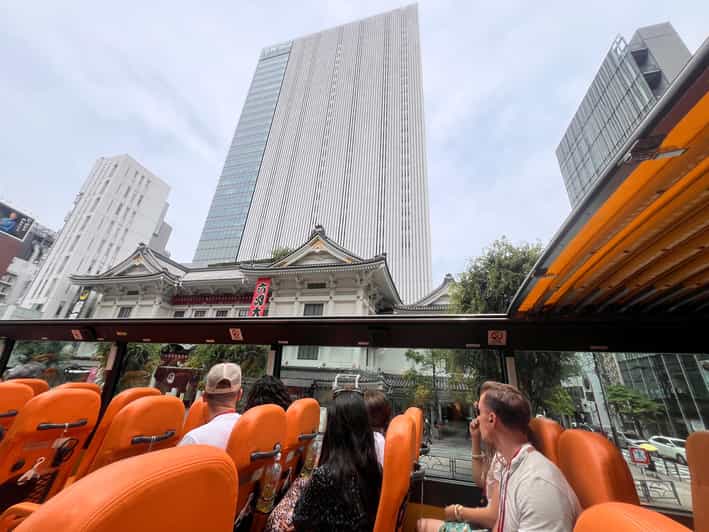
- Kabuki-za: The Theater Landmark That Signals Tokyo’s Arts Scene
- Ginza: The Big Name District You Can Feel Immediately
- Value For $14: What You Get, What You Do Not
- Who This Tour Fits Best (And Who Might Want Something Else)
- Small Practical Tips That Make The Ride Better
- Should You Book This Tokyo Panoramic Open-Top Bus Tour?
- FAQ
- How long is the Tokyo panoramic open-top bus tour?
- Where does the tour start and end?
- Is this hop-on, hop-off?
- What landmarks does the bus pass by?
- What languages are included in the audio guide?
- Do I need a smartphone and earphones?
- Is food allowed on the bus?
- What happens in rain?
- Is free cancellation available?
Key Things That Make This Bus Tour Worth Your Hour
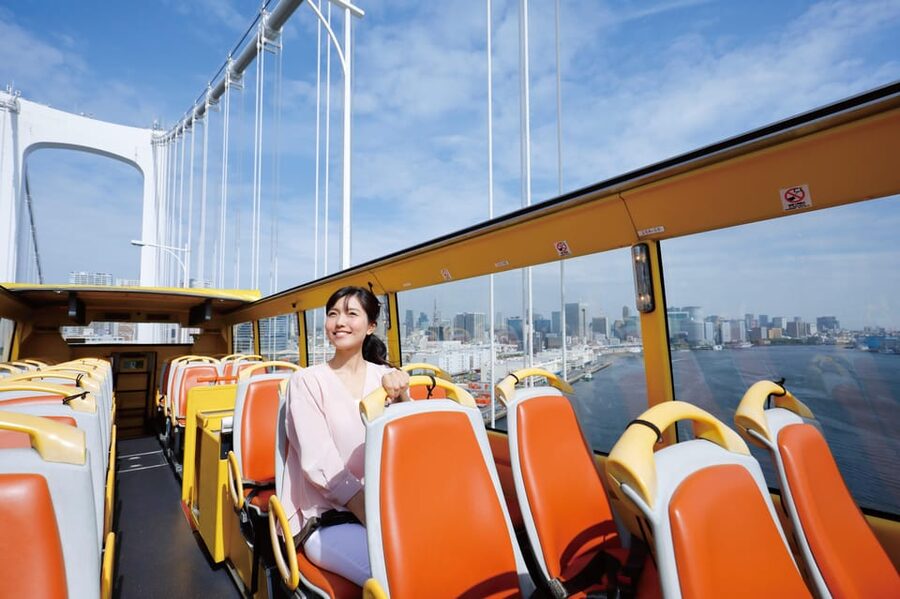
- Open-top double-decker views with uninterrupted sightlines for photos and skyline spotting
- GPS automated audio in 8 languages, including English, French, Spanish, Thai, and more
- A tight, logical Tokyo Station to Tokyo Station loop, starting and ending at the Hato Bus stop
- The route hits major icons in sequence, from Tokyo Tower to Rainbow Bridge and Odaiba
- It is not hop-on, hop-off, so it is best for people who want a fast orientation drive
Finding Hato Bus Tokyo Office (Tokyo Station) Without Stress
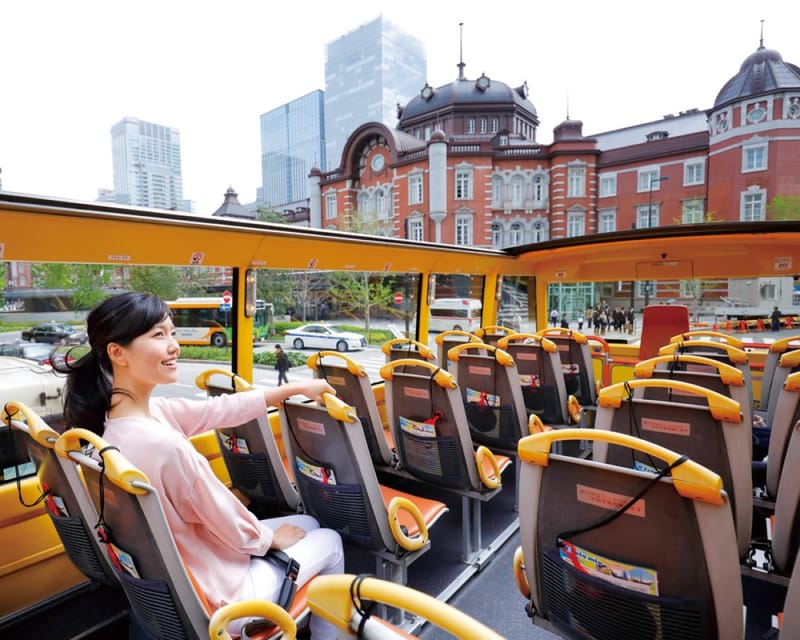
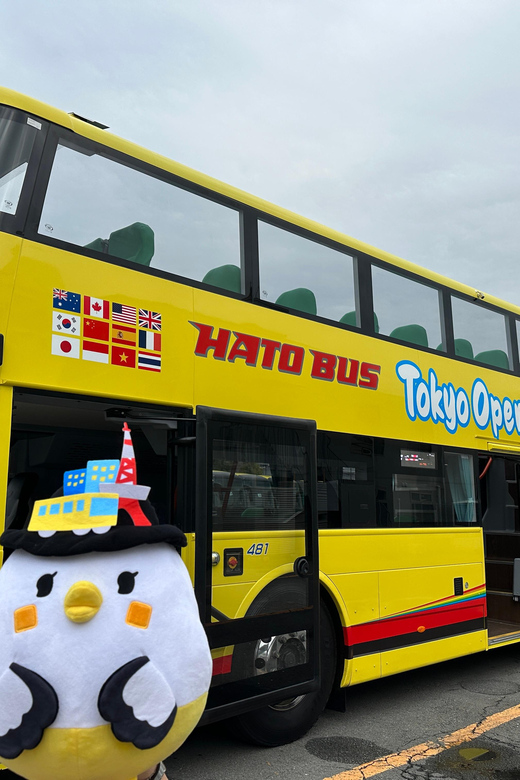
This tour starts at the Hato Bus Tokyo office near JR Tokyo Station, close to the Marunouchi South Exit. When you exit there, turn left and walk straight about two minutes. You will see the yellow bus stop, and that is your easiest confirmation that you are in the right place.
I like meeting at Tokyo Station because it is a hub. Even if you are juggling subway lines, you are usually only one connection away from Marunouchi. Also, starting from a central rail point means you do not need hotel pickup and you can plan your day with less uncertainty.
Bring a little buffer time. Tokyo Station can be a maze when you are in a hurry, and you want to board calmly so you can settle in and hear the audio guide when it kicks in.
A few more Tokyo days to weigh up
- Mt Fuji and Hakone 1-Day Bus Tour Return by Bullet Train
★ 5.0 · 26,383 reviews - 1-Day Tokyo Bus Tour
★ 5.0 · 14,250 reviews - Tokyo: TOKYO SKYTREE® Admission ticket
★ 4.5 · 11,192 reviews
One Hour On An Open-Top Double-Decker, The Real Point Of The Tour
The whole value here is the perspective. You are riding a double-decker open-top bus, which means you get a higher angle than you would from most street viewpoints. Even better, this is described as an uninterrupted-view experience, not a short “see one place” stop.
It is also a practical length. At one hour, you are not committing your whole day to a single transport plan, and you still get enough time to see a run of major districts. For first-time visitors, that matters because Tokyo can feel overwhelming when you only have a map and a vague sense of where the landmarks are.
Comfort is part of the appeal. One verified booking noted the tour was comfortable, which matches what you want from a city-view ride. You get to sit while Tokyo slides past outside the windows, then your feet are free for whatever you do next.
One important tradeoff: since it is not hop-on, hop-off, you cannot jump out for a specific photo, snack, or quick walk. If you love wandering between sights, this is better as an orientation and view experience, not a “replacement for exploring on foot.”
GPS Automated Audio In 8 Languages, And How To Use It Properly
This tour uses GPS automated guidance in eight languages. The audio guide languages listed are English, Chinese, Korean, Spanish, French, Thai, Indonesian, and Vietnamese. You also have a Japanese-speaking live tour guide on board, which is helpful if you want instructions or clarification while the bus moves.
You will need your own tech setup. The important details you should take seriously:
- Bring a smartphone you can use in Japan
- Bring your own earphones
- GPS devices and earphones are not provided for rental
One small but real tip: test your earphones before you board. If your audio cuts out, it is not the bus’s fault. Also, the system is described as provided free of charge, but there are no refunds for technical issues or malfunctioning earphones. So you want your gear working right away.
If you can follow directions on your phone quickly, the GPS audio adds a lot. You stop guessing what you are seeing and you start recognizing the city’s “big themes,” like parliamentary power, communications landmarks, and the shift from downtown to bay views.
The Route From Hibiya Park To Ginza: What Each View Teaches You
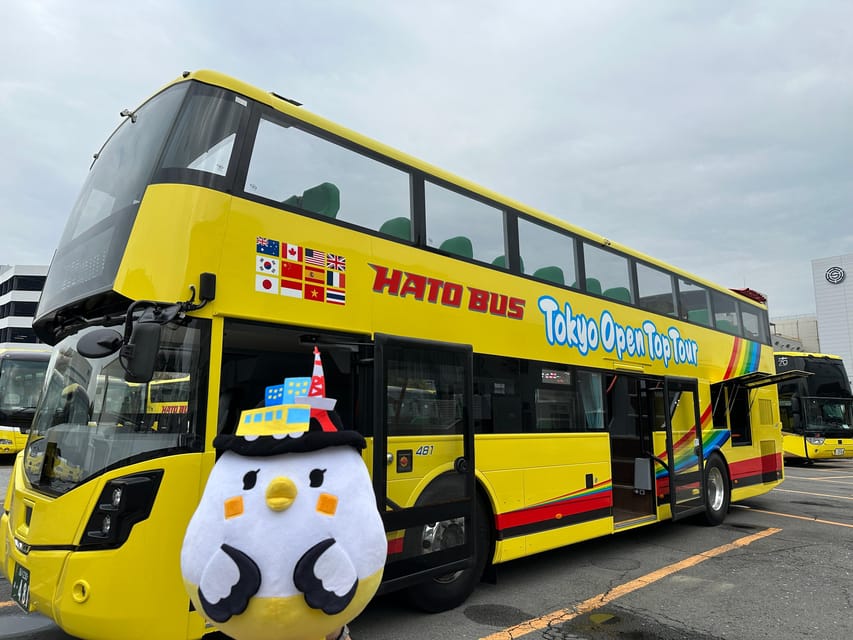
This is a drive-by route, so think of each landmark as a “chapter title” for the city, not a guided walking tour. The stops are described as pass-by points, and the bus returns to the Hato Bus Tokyo office at the end.
A different sort of day in Japan:
- Tokyo: teamLab Planets TOKYO Digital Art Museum Entry Ticket
★ 4.6 · 9,779 reviews - Mt Fuji & Hakone Cruise, Drum Show Bullet Train 1 Day from Tokyo
★ 4.0 · 7,413 reviews - Tokyo: Sumo Show Experience with Chicken Hot Pot and a Photo
★ 4.8 · 6,678 reviews - Tokyo: Shinjuku Food Tour (13 Dishes at 4 Local Eateries)
★ 5.0 · 6,603 reviews
Hibiya Park: A Green Breather Inside Central Tokyo
You pass by Hibiya Park, which acts like a signpost for how Tokyo builds calm space right next to major streets. Even from the road, the park area is a reminder that the city is not only concrete and crowds. It is a nice mental reset early in the loop.
If you are arriving around Tokyo Station, this first segment helps you get oriented. You start to recognize the “downtown layout” feeling, and you settle into the ride before the landmarks get bigger.
National Diet Building: Parliament Power, Seen From The Road
Next is the National Diet Building. This is one of Tokyo’s key civic landmarks, and passing it by bus is a fast way to anchor your mental map. From street level you might miss the full scale, but from an elevated deck you get a clearer sense of the building’s presence.
The audio guide timing matters here. When you understand what the landmark is, you notice details you would otherwise rush past. That is the real benefit of GPS guidance, it teaches while you watch.
Toranomon: Where Business Tokyo Meets The Classic Skyline
Then you pass through Toranomon. This area is known for office towers and business energy, which is exactly why it makes sense in the route. It is Tokyo’s “workday” side, sliding by between government and iconic photos.
If you are trying to learn Tokyo in a short amount of time, these in-between segments help. They show you how the city transitions instead of bouncing only between famous monuments.
Tokyo Tower: The Stop You Want To See From More Than One Angle
Passing Tokyo Tower is the highlight moment for many people, and the tour clearly leans into that. One verified booking called out seeing the tower from different angles, and that is the big advantage of a double-decker ride.
From street level, you often pick one viewpoint and hope for the right sightline. From this route, the bus movement gives you new angles as you go. It is a simple idea, and it works.
It also helps that the audio guidance supports what you are viewing, so you are not just taking pictures. You are building familiarity with one of Tokyo’s most recognizable icons.
Rainbow Bridge, Tokyo: Bay Air And A Big-Scale View
Then you pass Rainbow Bridge, Tokyo, and the description specifically mentions feeling Tokyo’s breeze. That waterfront stretch is exactly where Tokyo feels different. You get more open sky, more sense of distance, and a view that connects the city to water.
Even if you have seen photos of Rainbow Bridge, the scale can feel different when it is part of a moving city panorama. This is the part of the loop that feels like a “Tokyo wide screen” moment.
Odaiba: Entertainment And Waterfront Energy, Without Walking
You continue to Odaiba. This is where Tokyo’s modern waterfront vibe comes through, and you get a look at how bay areas function as a second center of the city.
Because you are on an open-top bus, the ride is good for people who want views without committing to a long walk. If you plan to explore Odaiba later by yourself, this pass-by is a useful preview.
Toyosu: A Practical Glimpse At A Changing Tokyo Sector
Next is Toyosu. The tour does not frame it as a major stop for getting out, but passing through it is still useful. It shows how Tokyo keeps evolving, district by district, even when you are sticking to one-hour sightseeing.
It is the kind of segment that helps you feel less like you are only seeing postcard Tokyo. You are also seeing the city’s working and changing sides.
Tsukiji Outer Market: Famous Food Area, From The Viewline
You pass Tsukiji Outer Market. Even without stopping, this is a meaningful landmark because it is tied to Tokyo’s food culture. From the bus, you can clock where the area sits in the broader city grid.
If you plan to eat later, this pass-by helps you understand where to aim. If you are skipping it, it still gives you a reference point so your Tokyo map makes more sense.
Kabuki-za: The Theater Landmark That Signals Tokyo’s Arts Scene
Then you pass Kabuki-za. This is a cultural landmark, and the bus route gives you a quick visual tie-in to the arts side of Tokyo. It is not a show ticket, but it is a helpful marker that Tokyo’s identity is not only shopping and business.
If you like theater and performance, this is one of those “I recognize this later” moments. Seeing it from the road is often enough to remember the location and plan a return if you want.
Ginza: The Big Name District You Can Feel Immediately
Finally, you reach Ginza. Ginza is famous enough that you do not need a long explanation, and passing through helps you connect Tokyo’s landmark zones with its retail energy.
This ending matters because it sets you up well for what comes next. After the tour, you are back near a central area, so you can pivot to shopping, street food nearby (if your plan allows), or a neighborhood stroll.
Value For $14: What You Get, What You Do Not
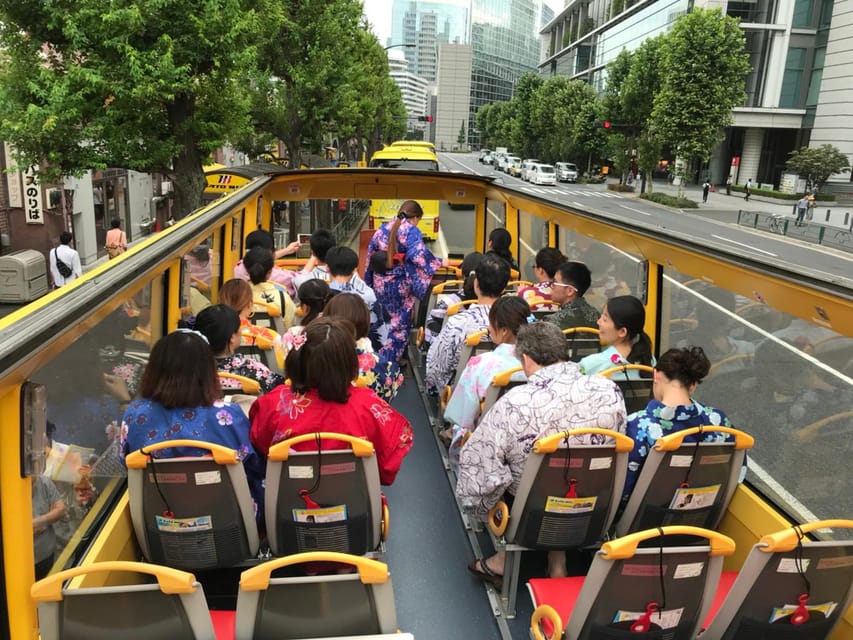
At $14 per person, this is priced like a practical add-on rather than a premium “only-in-this-moment” attraction. The value comes from combining two big things:
- a one-hour ride that covers many top landmarks in sequence
- a double-decker open-top perspective plus an audio guide setup
What you do not get is time to explore each stop on foot. Because it is not hop-on, hop-off, you should think of the tour as a fast orientation circuit. If your goal is to stroll through Tsukiji Outer Market, linger at Tokyo Tower, or shop in Ginza for hours, you will need additional time before or after the bus ride.
Also, eating is not allowed on the bus, but drinks in plastic bottles are permitted. That is a small rule, but it affects comfort. If you are prone to snacking during rides, plan snacks off the bus.
Still, for travelers who want skyline views without spending a lot, the equation is pretty clear. You buy time, and you buy perspective. For many visitors, that is the hardest part of early sightseeing.
Who This Tour Fits Best (And Who Might Want Something Else)

This bus tour works best if you want a guided-feeling overview without the effort of navigating multiple viewpoints by train. You should strongly consider it if:
- you are short on time and want a compact landmark route
- you prefer staying seated while you learn from the audio guidance
- you want open-top city views without a long walking plan
It is also a reasonable choice for groups who disagree on what to do, because you are all seeing the same landmarks from the same vantage point.
You might consider a different style of tour if you need to get off and roam at each major stop. Since this is not hop-on, hop-off, the schedule is not built for detours.
For families, there is a helpful note: children under 6 years old without a seat can join for free (one child per adult). That can make the hour feel more manageable for parents, as long as the child can handle the ride.
Small Practical Tips That Make The Ride Better
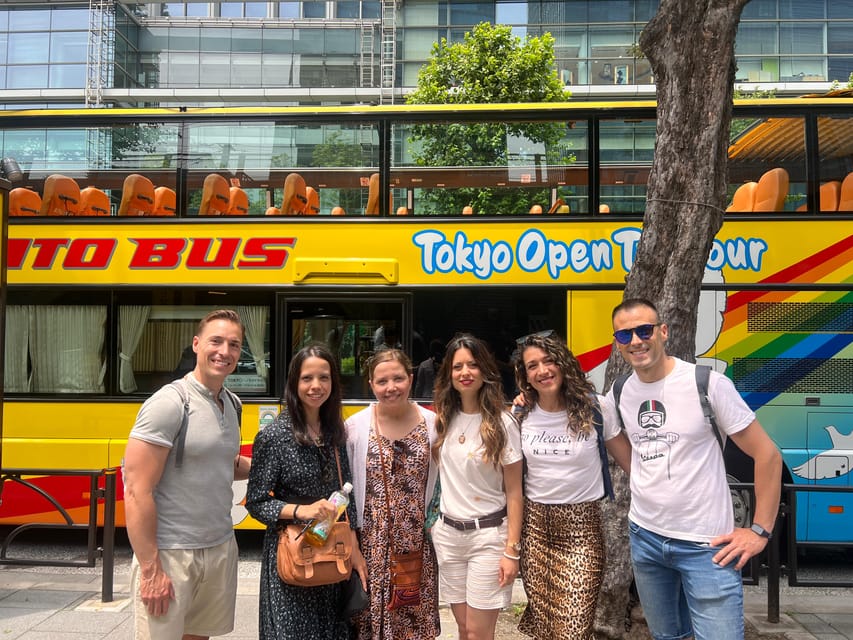
A few details can make your experience smoother:
- Bring earphones and a smartphone that works in Japan. Do not assume equipment is provided.
- Aim to be seated where you can get clear lines of sight. Since it is an open-top bus, you generally want to avoid positions where people block your view.
- Expect a “see and recognize” pace, not a “spend an hour at each site” pace. The tour is designed for coverage.
- If you are sensitive to weather, plan a backup day or be flexible. The roof may close in rain, and the tour can cancel in bad weather.
This is one of those tours where your mindset helps. Go in thinking you will capture angles and landmarks in motion, then you will feel satisfied instead of frustrated.
Should You Book This Tokyo Panoramic Open-Top Bus Tour?
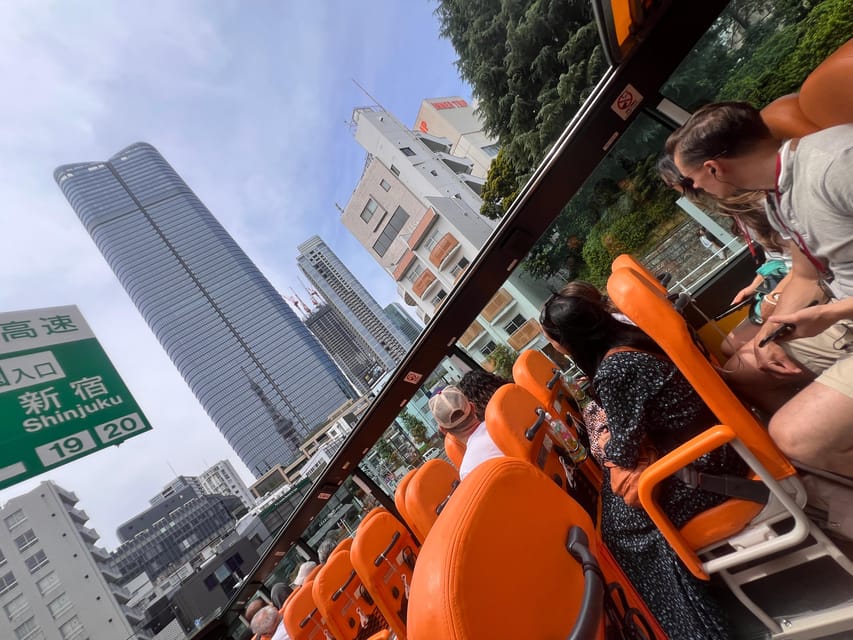
If you want a simple, affordable way to get landmark views in about an hour, I think this is an easy yes. Open-top double-decker sightseeing plus GPS audio in 8 languages gives you a guided sense of place without extra planning. The route also hits the kind of Tokyo mix you want early on, from government landmarks and Tokyo Tower to the Tokyo Bay areas and Ginza.
Book it especially if your day needs a “reset” activity: you can do it early to learn the city, or do it later to connect neighborhoods you explored on foot.
Skip it if you hate being stuck on a fixed route, because you cannot get off to linger. And if your schedule is fragile and weather is unpredictable, choose your day thoughtfully, since rain can mean roof closure or cancellation.
If you match the tour to your style, this one-hour ride can leave you with a clearer Tokyo map in your head, plus a handful of skyline photos you will actually keep.
FAQ

How long is the Tokyo panoramic open-top bus tour?
It lasts 1 hour.
Where does the tour start and end?
It starts and ends at the Hato Bus stop at Tokyo Station.
Is this hop-on, hop-off?
No. It is not a hop-on, hop-off service. You stay on the bus for the full loop.
What landmarks does the bus pass by?
The bus passes by Hibiya Park, the National Diet Building, Toranomon, Tokyo Tower, Rainbow Bridge, Odaiba, Toyosu, Tsukiji Outer Market, Kabuki-za, and Ginza.
What languages are included in the audio guide?
The audio guide is available in Chinese, English, French, Indonesian, Korean, Spanish, Thai, and Vietnamese.
Do I need a smartphone and earphones?
Yes. You should bring a smartphone that can be used in Japan and your own earphones. GPS devices and earphones are not provided for rental.
Is food allowed on the bus?
Eating is not allowed on the bus. Drinks in plastic bottles are permitted.
What happens in rain?
The bus roof may be closed in case of rain, and the tour may be canceled due to bad weather or heavy rain.
Is free cancellation available?
Yes. You can cancel up to 24 hours in advance for a full refund.
Newly listed around Tokyo
- Tokyo private transfer for Yokohama Port★ 4.5 · 63 reviews
- Luxury Kimono Photoshoot at Ginza Tokyo★ 5.0 · 7 reviews
- Tokyo Allstar Food Tour★ 4.5 · 206 reviews
- Tokyo Art Aquarium Museum E-Ticket with optional Tokyo Metro Pass★ 5.0 · 17 reviews
- Tokyo: Best Ginza Food Tour at 3 Local Eateries★ 5.0 · 83 reviews
- Private One Day Nikko Tour with Bilingual driver★ 3.5 · 11 reviews
- PRIVATE tour in 180SX to Daikoku+++++★ 5.0 · 6 reviews
- Kabuki Talk★ 5.0 · 10 reviews
Self-Guided Tours, compared.
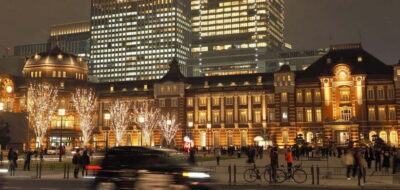
Open Top Panoramic Sightseeing Bus with Audio Guide
Read our review →
Akihabara: Self-Guided Tour with a special brochure
Read our review →
One Day Private Customized Self-Guided Tour in Kyoto
Read our review →
Fushimi Inari Shrine: Explore the 1,000 Torii Gates on an audio walking tour
Read our review →
Hakone: Self Guided Trip to Mt. Fuji // Made by Local Guides
Read our review →Browse the lists this tour appears in