
Review · SAMURAI SWORD & NINJA TRAINING
Tokyo Samurai Experience: Kyudo (Archery) and Swordsmanship
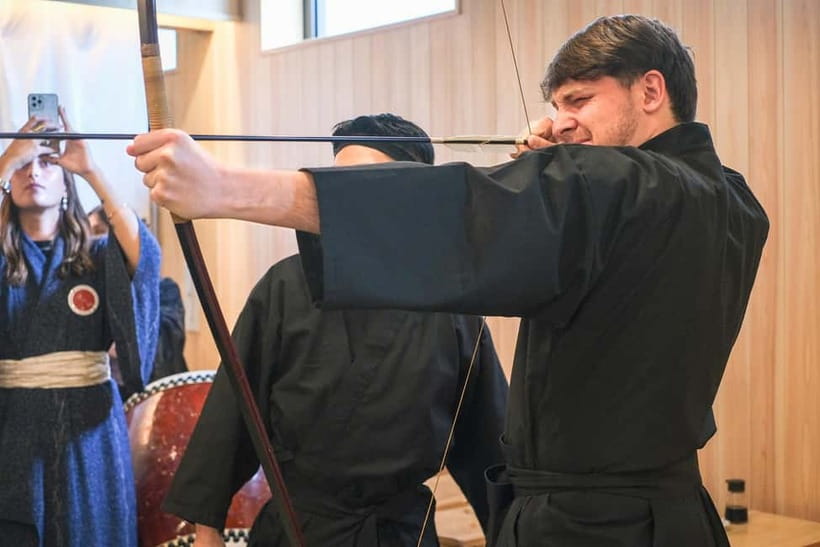
Turning into a samurai takes less than an hour. You start in hijama style hakama and then learn kyudo and katana basics in a hands-on session that feels surprisingly different from anything Western sports teach you. I also like that you get guided training plus photo help, so you leave with more than just a few awkward attempts.
One thing to keep in mind: this is beginner-friendly and time is short. You will learn foundational form and key poses, but you are not walking out as a master archer or swordsman after just 60 minutes.
In This Review
- Key Highlights You Should Care About
- Asakusa Meet-Up, Heiwa Building, and How Not to Get Lost
- Hakama Outfit Change: More Than a Costume
- The Samurai Rank Mini-Game: History You Can Actually Use
- Kyudo Archery: Why Japanese Form Feels Different
- Katana Basics in Asakusa: Pose, Grip, and Control
- Photos, Japanese Snacks, and Coaching That Speaks Your Level
- Price and Value: Is $96 Worth It?
- Who Should Book This Samurai Experience in Tokyo?
- Should You Book Kyudo and Swordsmanship in Asakusa?
- FAQ
- Where is the meeting point for this experience?
- How long does the Tokyo Samurai Experience last?
- Do I need any prior experience with archery or swordsmanship?
- What is included in the experience?
- What should I bring and wear?
- Are there any restrictions during the activity?
- Is the activity family-friendly, and is it wheelchair accessible?
Key Highlights You Should Care About
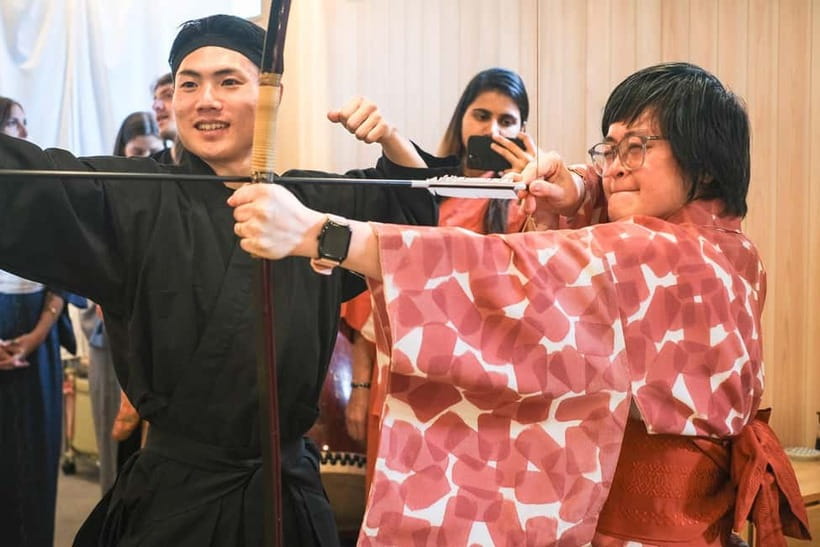
- Hakama outfit for photos with a range of heights and sizes
- Kyudo archery using a traditional Japanese bow, taught step-by-step
- Katana basics focused on the pose and the correct way to hold a single-edged sword
- Samurai rank mini-game that makes the philosophy and history feel usable
- English-first coaching from bilingual staff, plus lots of picture support
- Japanese snacks included, so you are not training on an empty stomach
Asakusa Meet-Up, Heiwa Building, and How Not to Get Lost
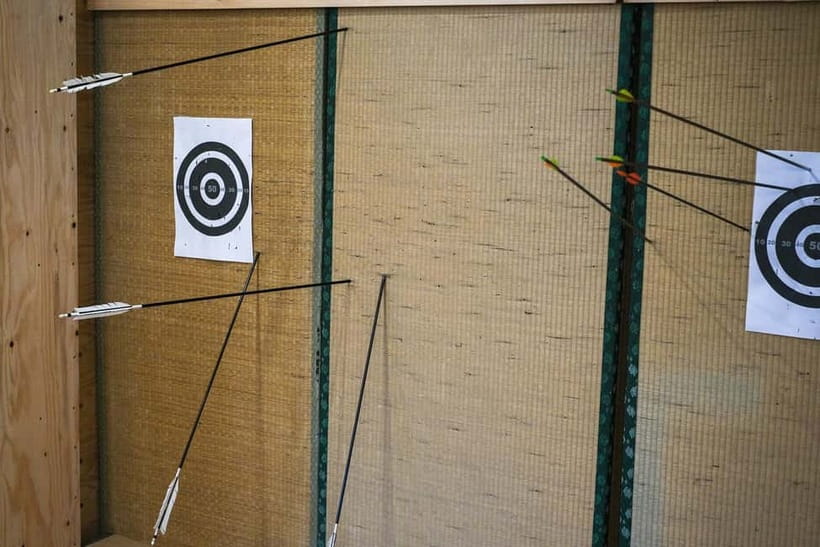
This experience runs in Asakusa, and the meeting point is inside the Heiwa Building in Taito-ku. You will take an elevator up to the 5th floor, then follow staff directions from there. The good news is that the location is straightforward if you show up a bit early.
You should arrive about 10 minutes before the start time. In a one-hour activity, that little buffer matters. It gives you time to settle in, get your comfy shoes on correctly, and avoid the stress of rushing when you are about to wear a traditional outfit and stand in set positions for photos.
Practical tip: wear clothes that are comfortable and that you can move in. The session includes posture work, bow handling, and sword pose practice, so stiff outfits and slippery soles are the wrong combo.
More Craft Workshops in Tokyo
- Chopstick Making Workshop in Ginza
★ 4.8 · 1,366 reviews - Tokyo: Samurai Sword & Archery Class from Samurai Descendant
★ 5.0 · 603 reviews - Tokyo: Shinjuku Chopstick Making Class
★ 4.9 · 440 reviews
Hakama Outfit Change: More Than a Costume
The first real moment is changing into a samurai-style hakama outfit. This part is not just for looks. It sets the tone for the whole hour and helps you practice controlled movement, which is a huge part of how traditional martial arts are taught.
They provide a hakama-set and they have options for different body types, so you are not stuck with one size that fits only one person. Once you are dressed, staff help you into the right look and help you get ready for photos. Several people call out that the photo and video results are strong, which makes sense because the staff are actively guiding you on how to pose.
What I like here is the difference between dressing up and actually training. You are not just wearing a uniform for a quick snapshot. You are also getting ready to stand, hold, and aim in a way that matches the role you are playing.
If you care about photos (and who doesn’t), this is the best part to lean into. Ask for extra angles and take a deep breath before you move into your pose. The more relaxed you are, the easier it is to get the posture right.
The Samurai Rank Mini-Game: History You Can Actually Use
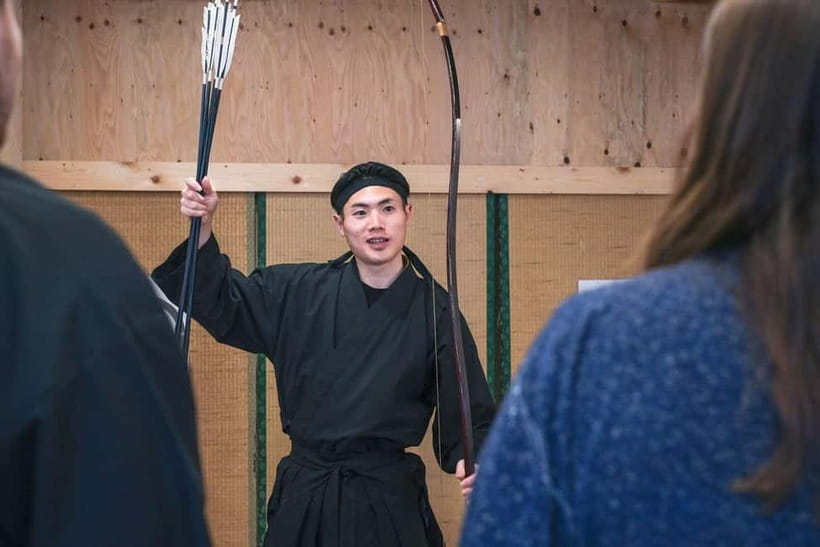
Before you start aiming or holding a katana, there is a short introduction to samurai traditions and philosophy. Then you jump into a fun mini-game that determines your samurai rank.
This sounds like entertainment, but it plays a real teaching role. The rules nudge you to pay attention, remember key ideas, and connect the training to a cultural context instead of treating it like two random props. If you are new to Japanese martial arts, this kind of warm-up is smart. It lowers the intimidation factor and gets you thinking in terms of discipline, form, and intention.
Even better, you will not be left to feel bad if you do not win the game. The approach is basically, okay, now you start training for real. That tone matters when you have kids, first-timers, or adults who do not want pressure.
Kyudo Archery: Why Japanese Form Feels Different
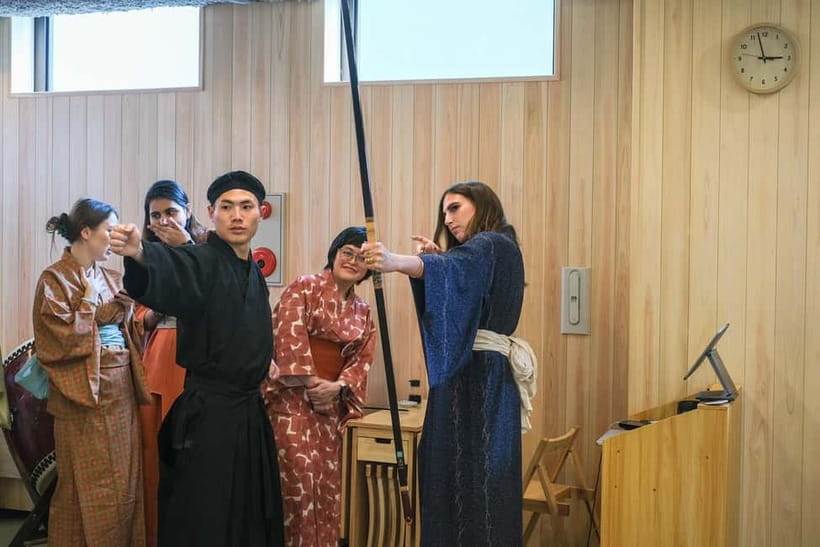
Kyudo is archery in the Japanese martial arts tradition, and it is taught in a way that differs from what most people expect if they have only tried Western target archery. The session uses a traditional Japanese bow, and you compete with friends for a position linked to leadership in samurai culture.
The core focus is form and technique, not raw power. You will learn the Japanese approach to how you hold and draw, how you line up your body, and how you move through the shot sequence. In kyudo, your posture and calm control are part of the “aim,” not just your arm strength. That is why it can feel unusual at first, but also why it can click quickly when someone explains it clearly.
Bilingual staff keep things simple, and that is a big advantage if your English is basic. You get directions that connect directly to what you are doing in the moment.
I also like that this is a competition element without turning into a stress festival. You are playing, but you are also learning. If you want a fun way to compare your progress with friends, it works.
One more note: bring your attention. Kyudo rewards consistency. If you do better one round, do not chase it with a rushed shot. Your best results usually come from repeating the same clean stance and draw.
More Samurai & Ninja Sessions in Tokyo
- Tokyo: Samurai Restaurant Show Ticket with 2 Drinks
★ 4.5 · 1,307 reviews - Tokyo: Samurai Ninja Museum Guided tour and Experience
★ 4.6 · 1,010 reviews - Ninja+Kabuki Tokyo
★ 4.5 · 512 reviews - Skip the lines Basic Ticket at SAMURAI NINJA MUSEUM TOKYO
★ 5.0 · 470 reviews
Katana Basics in Asakusa: Pose, Grip, and Control
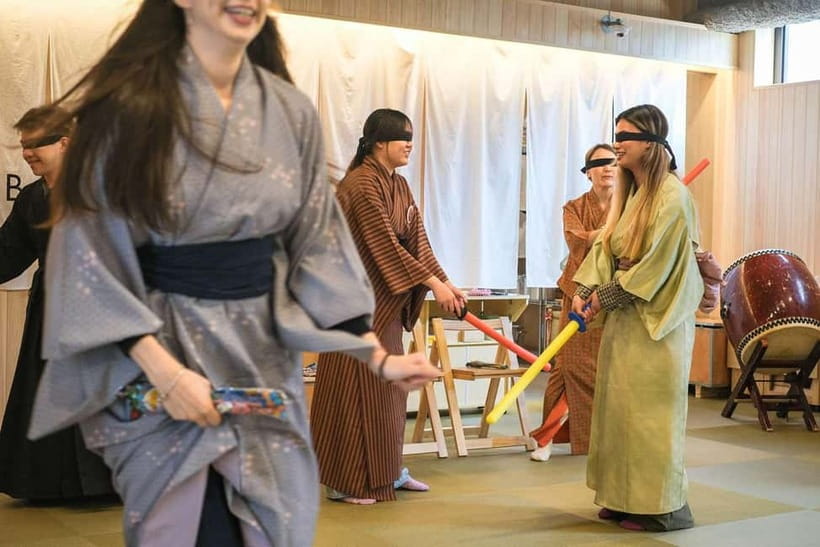
After kyudo, you shift to swordsmanship. You will practice the way of holding a single-edged sword (katana), and you learn the pose you need to look like the strongest samurai.
This part is often where people worry they will feel clumsy. But the instruction is described as patient and step-by-step, with coaches actively helping you get the grip and body position right. Coaches named Coach Mori and instructor Joe come up in feedback as friendly and especially patient, which is exactly what beginners need.
The practical goal is not flashy moves. It is correct fundamentals:
- how you position your body for the pose
- how you hold the katana properly
- how you present yourself so your posture looks confident in photos and training
Even if you have zero prior experience, that is the whole point. You are learning what the right posture looks like, and you are building muscle memory through repetition.
Tip for your body: take a second after staff reposition you. Most people are fine after the first adjustment, but if you move instantly, you can undo what they just corrected. Breathe, reset your stance, then continue.
And yes, you will take a lot of pictures. Staff help with that, so the pose part is not only for training. It is also for capturing the moment when you look like you belong in a samurai scene.
Photos, Japanese Snacks, and Coaching That Speaks Your Level
In a lot of activities like this, photos are an afterthought. Here, they treat it like part of the experience. Staff help you take lots of pictures, and the results are described as great, including photos and videos.
That matters because traditional outfits and martial arts poses look good on camera only if you are positioned correctly. When an instructor helps you angle your body and hold the props safely and properly, you get better-looking shots and you learn faster at the same time.
Then there are the Japanese snacks included. This is more useful than it sounds. After changing clothes and doing posture work, a quick snack keeps your energy steady. It also helps if you are doing this early in your day and have not found food yet.
Finally, the coaching is designed for English speakers. Staff are bilingual and adapt their explanations to your English level. People also mention that staff give tips on other experiences and shopping. That is a practical bonus, especially if you are using Asakusa as your first neighborhood stop.
Price and Value: Is $96 Worth It?
At $96 per person for a 1-hour session, you are paying for more than gear. You are paying for instruction, traditional props (bow and katana), a provided outfit, snacks, and the staff support that makes the experience smooth and photo-friendly.
So what does that translate to for you?
You get:
- structured beginner instruction in two different traditional arts in one go
- hands-on practice with real props, not just watching a demo
- outfit change support and lots of photo help
- English-friendly guidance from bilingual staff
If you value “try it once with coaching” and you want a memorable cultural activity that fits into a tight schedule, this price starts to make sense. If you are looking for an all-day deep training course or serious progression toward advanced technique, then $96 for one hour will feel short. But that is not what this is trying to be.
For most visitors, this is strong value because it packs multiple pieces of the samurai theme into one guided session without requiring any prior experience.
Who Should Book This Samurai Experience in Tokyo?
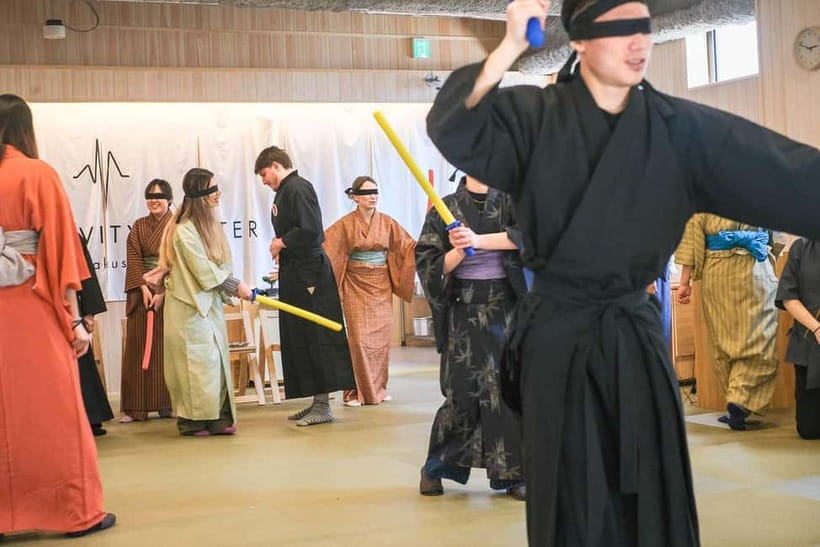
This experience is a great fit if you want:
- a hands-on cultural activity in Asakusa
- beginner-friendly instruction with clear guidance
- a chance to wear traditional hakama and get photos that look like you planned them
- a fun way to learn basic kyudo and katana pose fundamentals in a short time
It also seems like a strong choice for kids and young adults, since feedback mentions it being recommended for that age group and emphasizes friendly coaching.
If you are someone who gets frustrated by activities that move too fast, you might appreciate the patient style described by instructors. If you are very athletic and already trained, you might find it basic, but even then, it can be a good cultural comparison because kyudo form is genuinely different from how Western archery is usually taught.
Should You Book Kyudo and Swordsmanship in Asakusa?
I think you should book it if you like structured fun, easy explanations, and memorable photos. This is the kind of activity that turns a tourist day into a story you can share, because you learn real posture and technique, not just a costume routine.
I would also recommend it if you want an intro to samurai culture that is playful and beginner-ready, with staff who help you every step of the way. Just go in expecting fundamentals and enjoy the process. The goal is to feel like a warrior for an hour, then leave with better form, better photos, and a clearer idea of how kyudo and katana basics are taught.
FAQ
Where is the meeting point for this experience?
It meets in Tokyo, Taito-ku, Asakusa, at 2 Chome 6-11 Heiwa Building. Take the elevator to the 5th floor.
How long does the Tokyo Samurai Experience last?
The duration is 1 hour.
Do I need any prior experience with archery or swordsmanship?
No prior experience is necessary.
What is included in the experience?
You get use of a traditional Japanese bow and katana, a traditional clothes outfit, Japanese snacks, and bilingual staff support.
What should I bring and wear?
Wear comfortable shoes and comfortable clothes.
Are there any restrictions during the activity?
Alcohol and drugs are not allowed.
Is the activity family-friendly, and is it wheelchair accessible?
Yes, it is family-friendly. It is also wheelchair accessible. The staff provide instruction in English.
Newly listed around Tokyo
- Tokyo: Sumo Morning Practice Tour in Ryogoku and Photo Shoot★ 4.7 · 47 reviews
- Tokyo Sumo Morning Practice: Witness the Life of a Wrestler★ 4.8 · 56 reviews
- Tokyo Sumo Morning Practice: Viewing & Exclusive Interaction★ 4.9 · 74 reviews
- Tokyo: Sumo Morning Practice with journalists. Not fake show★ 4.9 · 121 reviews
- Tokyo: Morning Sumo Practice Viewing★ 4.8 · 136 reviews
- Tokyo: Sumo Morning Practice Viewing Tour at a Real Stable★ 4.9 · 32 reviews
- Tokyo:Stroll in Old traditional culture towns~Yanaka & Nezu★ 4.9 · 186 reviews
- Tokyo: Snow Monkey Park and Zenkoji Temple Private Day Tour★ 4.7 · 127 reviews
Samurai Sword & Ninja Training, compared.
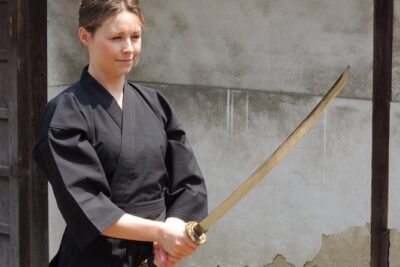
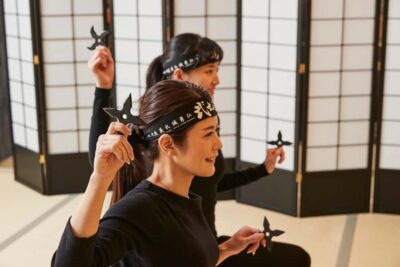
Samurai Ninja Museum Guided tour and Experience
Read our review →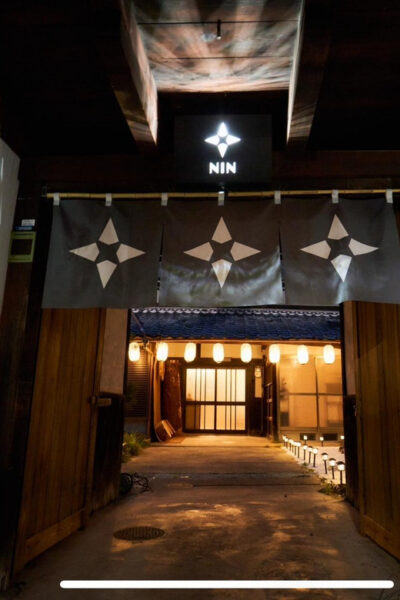
Kendo and Samurai Experience with Uniform and Gear
Read our review →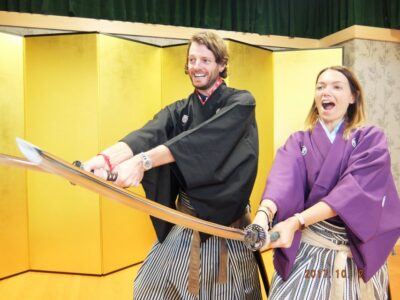
Samurai Sword Class by Experts in Traditional Arts
Read our review →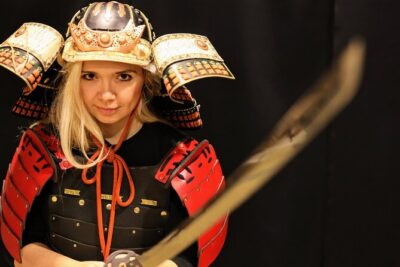
Skip the lines Basic Ticket at SAMURAI NINJA MUSEUM KYOTO
Read our review →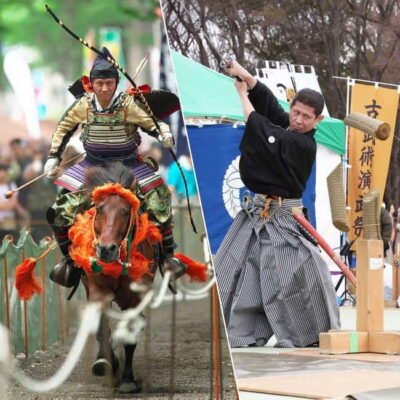
Samurai Sword & Archery Class from Samurai Descendant
Read our review →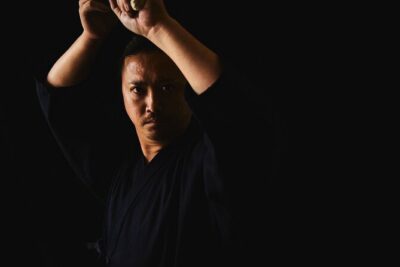
Browse the lists this tour appears in