
Review · JAPANESE CRAFT WORKSHOPS
Tokyo:Calligraphy &Make your original folding fan in Asakusa
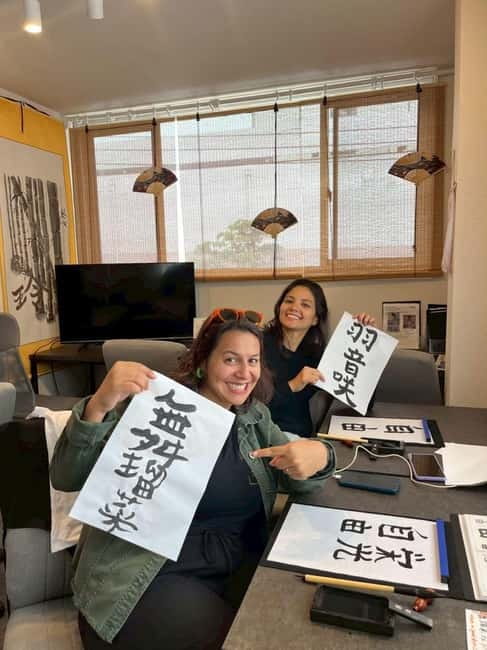
Ink, calm, and a fan in Asakusa. This hands-on Tokyo workshop is interesting because you learn how Japanese calligraphy works, then apply it to a souvenir you can actually use at home. I love the posture coaching and the chance to practice until you feel finished, not rushed. One thing to consider: your clothes can get ink on them, even if aprons are provided.
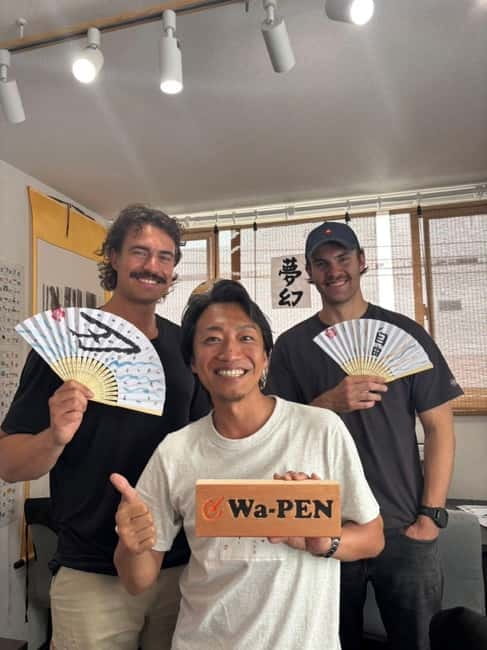
You’ll work with a real instructor (often Mana, in English), learn the history behind Japanese calligraphy, and get practical instruction on brush pressure, ink amount, and stroke control. You start by melting traditional solid ink sticks with water, then practicing basic techniques with guide paper for about 30 minutes on thin paper.
The full session runs about 30 to 90 minutes, depending on how long you practice and which option you choose. If you pick a Henna tattoo option, the calligraphy experience is not included, so double-check what you’re booking.
In This Review
- Key things I found most compelling
- Why Asakusa Works So Well for Calligraphy
- What You Learn: Hiragana Mind, Kanji Strokes, and Proper Brush Control
- From Ink Stick to Brush: The Workshop Flow That Keeps It Relaxing
- Your 30 Minutes of Practice: Thin Paper, Guide Lines, and a Final Design
- Green Tea and the Postcard to Yourself
- Making Your Original Folding Fan in Asakusa
- Price and Value: What $16 Buys You (and What It Might Not)
- What to Bring, What to Wear, and How to Avoid Small Frustrations
- Who This Workshop Is Best For (and Who Should Rethink It)
- Should You Book This Calligraphy and Folding Fan Workshop?
- FAQ
- How much does the Tokyo calligraphy and folding fan experience cost?
- How long is the workshop?
- Where does the workshop meet?
- Is the instructor fluent in English?
- What should I wear?
- Are pets allowed?
- Is this experience wheelchair accessible?
- What does the experience include?
- If I choose the Henna Tattoo option, do I still do calligraphy?
- Is food or drink allowed during the session?
- What is the cancellation policy?
Key things I found most compelling
- Posture and attitude first, so your strokes start improving right away
- Ink melting and brush technique, including using the fude brush and the right ink amount
- Eight practice techniques with guide paper before you choose your final design
- Green tea plus a postcard, turning the skill into a memory you can keep
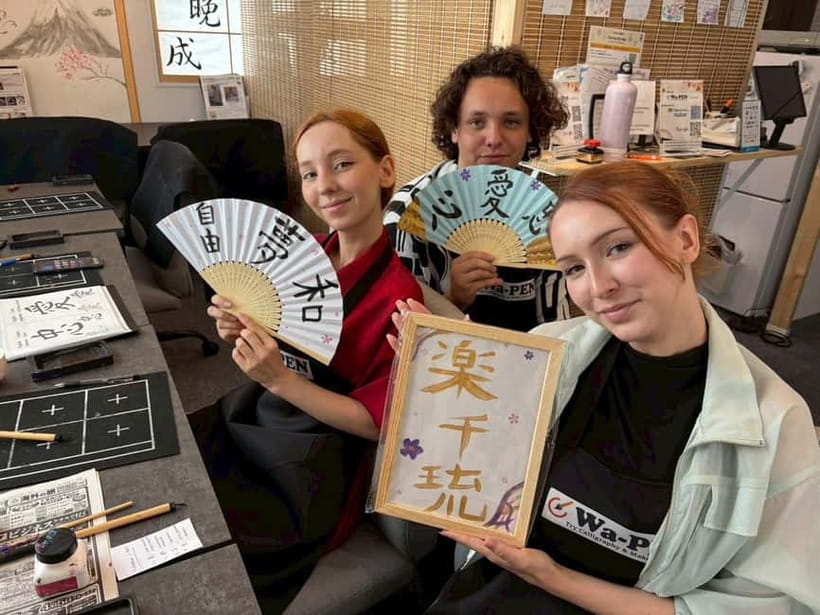
- An original folding fan you take home as a personal souvenir
- English instruction with patient, encouraging guidance
Why Asakusa Works So Well for Calligraphy
Asakusa is the kind of Tokyo neighborhood where craft still feels close to daily life. That matters for this workshop, because calligraphy is not about speed or performance. It’s about rhythm, control, and small choices you can feel in your hand.
This class also fits naturally into a sightseeing day. You get something hands-on without needing long travel time across the city, and you end with a take-home item that doesn’t require you to hunt for packaging or shipping. Even better, the pace is often described as relaxing and close to meditative, which makes the experience a nice break from crowds and constant walking.
Just plan your clothing accordingly. Ink stains are the biggest real-world issue here, and the workshop clearly expects you to wear something comfortable that can handle a little mess.
More Craft Workshops in Tokyo
- Chopstick Making Workshop in Ginza
★ 4.8 · 1,366 reviews - Tokyo: Samurai Sword & Archery Class from Samurai Descendant
★ 5.0 · 603 reviews - Tokyo: Shinjuku Chopstick Making Class
★ 4.9 · 440 reviews
What You Learn: Hiragana Mind, Kanji Strokes, and Proper Brush Control
The workshop isn’t just, Put brush to paper and copy a sample. You start with context, learning the history of Japanese calligraphy and discovering the mind behind hiragana as well as how calligraphy fits modern life.
Then you move into the practical stuff that actually changes your results:
- Correct posture and attitude for writing with a brush
- How to use a fude (Japanese calligraphy brush)
- How much ink to use, so your strokes look intentional rather than blotchy
- Training on multiple stroke techniques, typically around eight basics, supported by guide paper
If you’ve ever tried calligraphy at home, you’ll probably notice you can copy shapes but still get frustrated. Here, the instruction focuses on the mechanics you control: hand position, angle, pressure, and ink flow. That is what turns a “pretty idea” into something you can build toward in one sitting.
And yes, many people come away especially proud when they can write characters tied to meaning, not just decoration. The class experience is designed so you can choose writing that feels personal.
From Ink Stick to Brush: The Workshop Flow That Keeps It Relaxing
One of the most satisfying parts of the session is starting with the ink itself. You use water to melt traditional solid ink sticks, instead of opening a ready-to-use bottle. That step slows you down in a good way. You feel the material become working ink, which makes everything after it feel more connected.
After the ink is ready, the instructor demonstrates how to hold the brush and how to approach strokes with a steady posture. Then you practice basic techniques using guide paper. Guide paper is important. It gives you enough structure to learn without forcing you into perfect, pressurized copying.
This is also where you’ll notice why the experience feels meditative. You’re not trying to memorize an entire alphabet at once. You’re repeating short movements and learning to correct gently. If you want more time, the class is set up so you can practice until you’re satisfied.
The only caution is mess control. Even with aprons ready, ink handling means you should expect a small learning curve and keep spare napkins or wet wipes in your head as a plan, not a guarantee.
Your 30 Minutes of Practice: Thin Paper, Guide Lines, and a Final Design
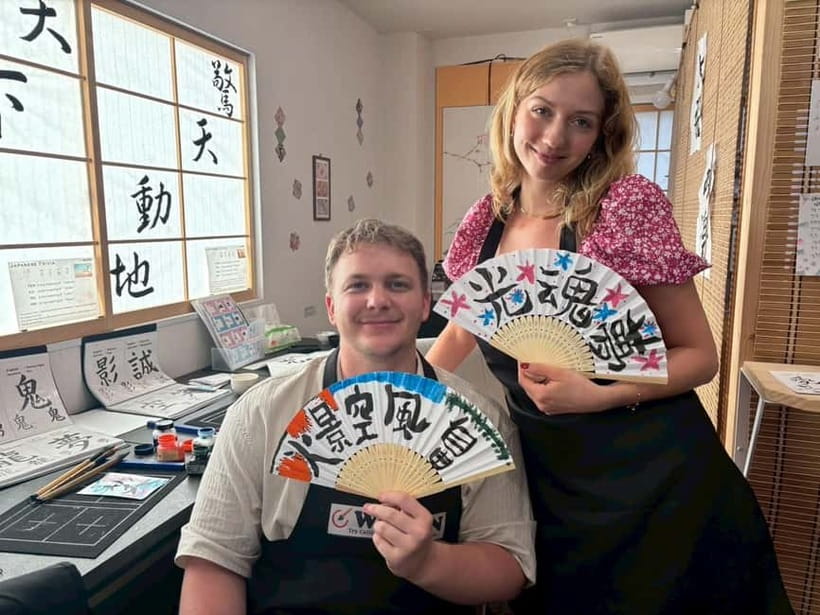
After technique practice, you write on thin paper for about 30 minutes. That’s a big deal because thin paper behaves differently than thick sheets. The ink spreads more easily, and the result depends on pressure and stroke speed.
You’ll also choose your final design from a sample book, or you can work with the instructor to order or finalize what you want. That choice helps the workshop avoid the common “cookie-cutter souvenir” problem. You’re not just making a random decoration. You’re selecting something you’ll recognize as yours.
The instructor’s support tends to be patient and encouraging, with clear English explanations. People often highlight the ability to go at your own pace, with time to keep practicing before you commit to the final version. That flexibility makes the workshop work for beginners and also for people who want to get better fast.
Practical reality check: you might feel nervous at first, especially if you think you’re not an artistic person. The method here is designed to remove that pressure. You start with techniques and structure, then only later build toward a final piece.
A different sort of day in Japan:
- Mt Fuji and Hakone 1-Day Bus Tour Return by Bullet Train
★ 5.0 · 26,383 reviews - 1-Day Tokyo Bus Tour
★ 5.0 · 14,250 reviews - Tokyo: TOKYO SKYTREE® Admission ticket
★ 4.5 · 11,192 reviews - Tokyo: teamLab Planets TOKYO Digital Art Museum Entry Ticket
★ 4.6 · 9,779 reviews
Green Tea and the Postcard to Yourself
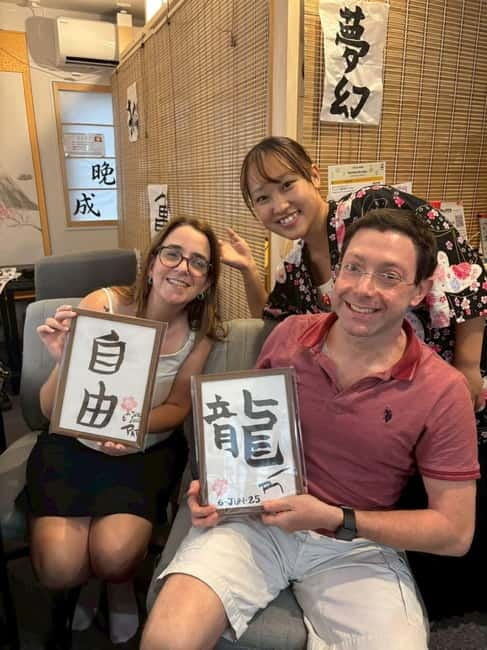
The workshop includes a cup of green tea, and it’s a real reset point. This is where the experience shifts from skill-building into reflection.
You also write a postcard for yourself, meant to capture your emotions and what the calligraphy experience meant after you get home. That’s a clever touch because it forces you to translate the moment into words while it’s still fresh.
Even if you don’t think you’re the postcard type, I like this part because it turns a creative activity into a memory you can actually revisit. You’re not only transporting paper and a fan. You’re also saving the feeling behind the strokes.
If you’re traveling with a partner or family member, the postcard can be a fun solo moment inside the class, giving you something to write privately while others continue practicing.
Making Your Original Folding Fan in Asakusa
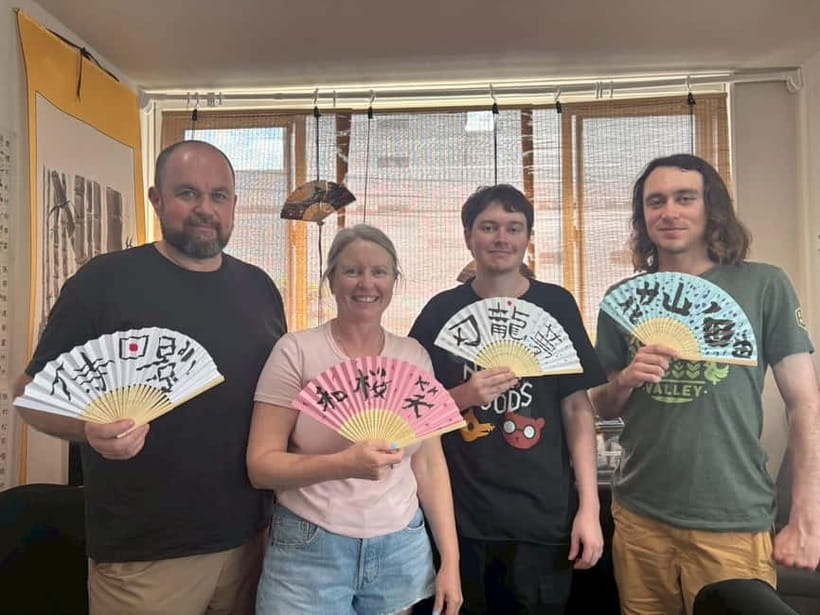
The folding fan is the satisfying finale. You use your calligraphy as the design element, then take the fan home as a one-of-a-kind souvenir.
Why the fan matters: it’s both practical and symbolic. Fans belong in everyday Japanese life, and using your own written characters makes the item feel personal, not like a mass-produced shop purchase. It’s also easier to pack than many framed souvenirs, and it gives you a chance to show off your work in a way that feels natural.
The workshop’s structure supports this ending. You practice techniques, choose or finalize a design, then apply what you practiced immediately. That keeps you from feeling like you did all the work just to watch someone else finish the craft.
If you like useful souvenirs, you’ll probably prefer this to paper-only keepsakes. If you’re purely chasing Instagram-perfect décor, it still delivers, but the value is more in the process and personal meaning.
Price and Value: What $16 Buys You (and What It Might Not)
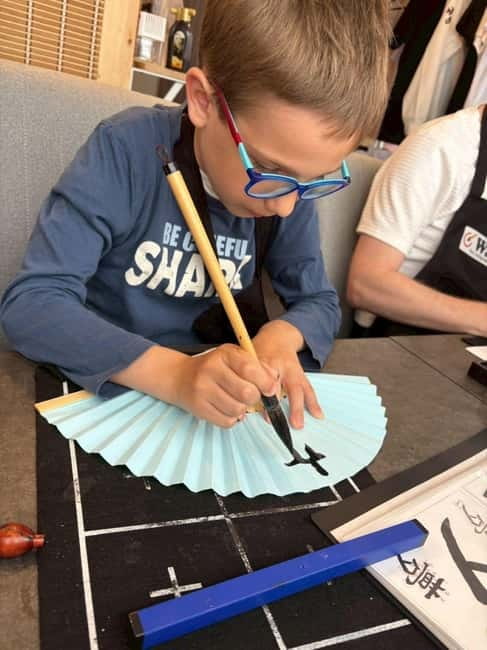
At $16 per person, the value is strong for two reasons.
First, you’re paying for instructor-led, step-by-step guidance, including posture coaching and technique practice. Brush calligraphy isn’t complicated because it’s secret. It’s complicated because small mechanics matter. This class teaches those mechanics in a way you can apply right away.
Second, you’re paying for materials and structured practice time, plus the included souvenir experience. In this workshop, the take-home items are part of the core experience: your calligraphy work and your original folding fan, along with the postcard activity.
What the price is not doing is covering add-ons you might want. The data is clear that the workshop does not include printing your calligraphy design to a T-shirt, and there’s a clothing fee if you choose printing from the shop. If that matters to you, plan for extra spend.
Also note the important option tradeoff: if you choose a Henna tattoo option, the calligraphy experience is not included. So if your main goal is the brush, ink, posture, and fan, make sure you’re booking the correct option.
What to Bring, What to Wear, and How to Avoid Small Frustrations
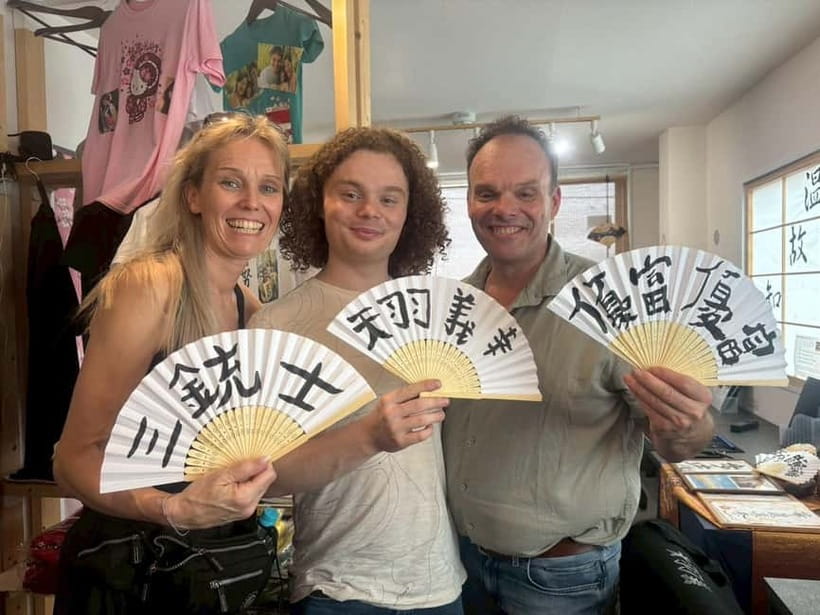
You only have one clear rule: wear comfortable clothes that can get a bit dirty from ink. The workshop says aprons are ready, which helps, but ink still finds ways to be dramatic.
A smart packing mindset:
- Wear sleeves and fabric you don’t mind spotting
- Plan for a quick wipe-down after class
- Keep a small towel or wipes handy if you’re the kind of person who hates feeling sticky
Also pay attention to food and drink rules. The session does not allow food and drinks during the class, so don’t plan to snack while you write. (You’ll have green tea as part of the experience, but no extra food.)
If you’re wondering about logistics, the meeting point is in the Asakusa area, and you can use the coordinates provided: 35.7162239, 139.7922354.
Two more practical notes:
- Pets are not allowed, but assistance dogs are allowed
- This experience is not suitable for wheelchair users
Who This Workshop Is Best For (and Who Should Rethink It)
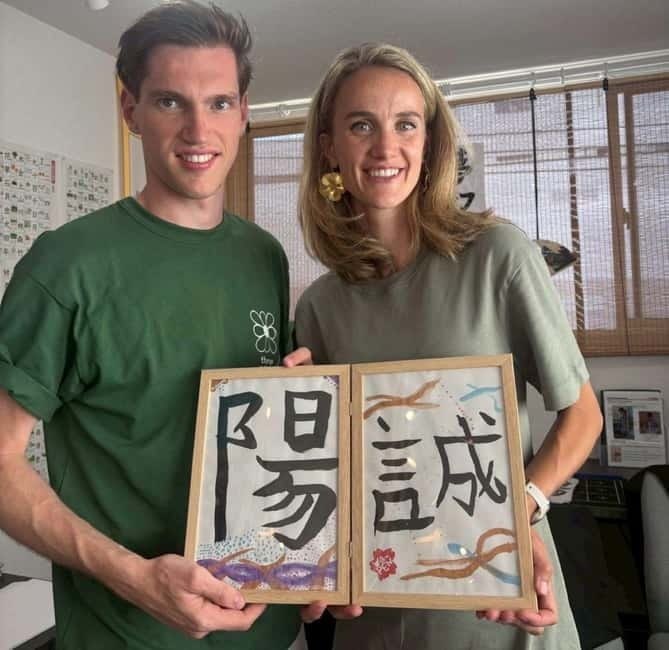
This workshop is a great fit if you want:
- A creative activity that feels calm, not chaotic
- A meaningful souvenir that’s tied to you, not just the location
- Clear step-by-step instruction in English
- Time for practice, not a rushed demo
It’s also a nice fit for older travelers. The pace and encouragement can make it feel manageable, and the structure helps people who haven’t done art before.
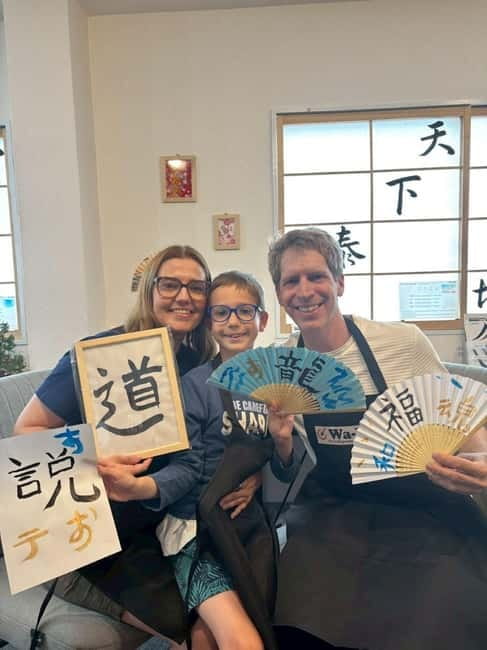
If you’re traveling with kids, this can work too, since the workshop is taught in a guided way and supports beginners. Just expect ink mess and use clothing that can handle it.
The main reasons to rethink booking are physical accessibility needs (not wheelchair friendly) and if you’re booking an option that removes the calligraphy portion. If calligraphy is your reason for being there, avoid mixing in options that replace it.
Should You Book This Calligraphy and Folding Fan Workshop?
I’d book it if you want a hands-on Tokyo experience that leaves you with something you actually made, plus a calm story you can retell later. The combination of posture and technique coaching, a full practice period on thin paper, and then a personal folding fan is a strong package for the price.
Book it especially if your travel style includes slow moments, creative skills, or you like meaningful souvenirs that go beyond shopping. This is the kind of class where you feel progress while you’re doing it, and the postcard gives you a built-in way to remember the emotional side.
Skip it if you need wheelchair access, if ink stains are a hard no for you, or if you are accidentally selecting an option where the calligraphy part is excluded. If you book the right option, though, you’re very likely to end with a souvenir that feels quietly special, and a creative reset that makes the rest of Tokyo feel easier.
FAQ
How much does the Tokyo calligraphy and folding fan experience cost?
The price is $16 per person.
How long is the workshop?
The duration is 30 to 90 minutes, depending on availability and the pace you choose during practice.
Where does the workshop meet?
The meeting point is in Asakusa, with coordinates 35.7162239, 139.7922354. The exact meeting point may vary depending on the option booked.
Is the instructor fluent in English?
Yes, the instructor provides instruction in English.
What should I wear?
Wear comfortable clothes that you do not mind getting slightly dirty from ink. The workshop says aprons are available.
Are pets allowed?
Pets are not allowed. Assistance dogs are allowed.
Is this experience wheelchair accessible?
No, it is not suitable for wheelchair users.
What does the experience include?
It includes learning Japanese calligraphy history, posture and attitude for calligraphy, traditional ink melting, brush usage and techniques, practice with guide paper, custom design practice, writing a postcard, and making an original folding fan. Green tea is included as well.
If I choose the Henna Tattoo option, do I still do calligraphy?
No. If you select the Henna Tattoo options, the calligraphy experience is not included.
Is food or drink allowed during the session?
No food and drinks are allowed during the session.
What is the cancellation policy?
Free cancellation is available up to 24 hours in advance for a full refund.
Newly listed around Tokyo
- Tokyo private transfer for Yokohama Port★ 4.5 · 63 reviews
- Luxury Kimono Photoshoot at Ginza Tokyo★ 5.0 · 7 reviews
- Tokyo Allstar Food Tour★ 4.5 · 206 reviews
- Tokyo Art Aquarium Museum E-Ticket with optional Tokyo Metro Pass★ 5.0 · 17 reviews
- Tokyo: Best Ginza Food Tour at 3 Local Eateries★ 5.0 · 83 reviews
- Private One Day Nikko Tour with Bilingual driver★ 3.5 · 11 reviews
- PRIVATE tour in 180SX to Daikoku+++++★ 5.0 · 6 reviews
- Kabuki Talk★ 5.0 · 10 reviews
Japanese Craft Workshops, compared.
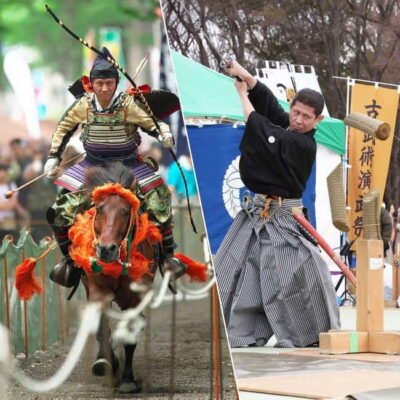
Samurai Sword & Archery Class from Samurai Descendant
Read our review →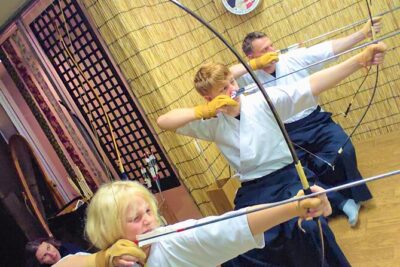
Japanesel Archery Experience HIROSHIMA CASTLE SHARAKU
Read our review →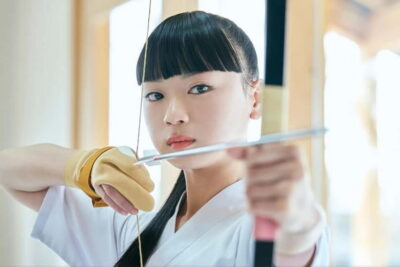
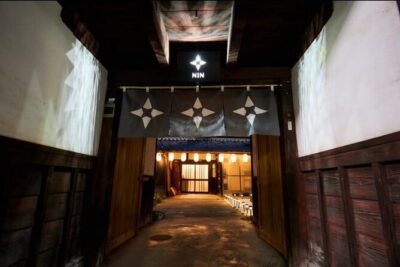
Authentic knife making experience at a blacksmith in Kyoto
Read our review →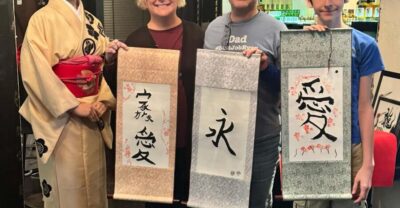
Browse the lists this tour appears in