
Review · HISTORICAL TOURS
Asakusa: 3.5-hour Big-picture History Walk
Japan’s past comes into focus fast. This 3.5-hour Asakusa walk turns famous landmarks into a clear big-picture story of how Japan changed, without losing the neighborhood feel. I really like how the guide connects isolation and reopening to what you see on the street, and I also like the way the walk builds understanding of two religions in daily life through places that sit side by side.
One thing to plan for: this is a moderate-walking route, and the tour is listed as not suitable for people with mobility impairments. If that’s you, contact the provider, but be realistic about the physical pace for a 210-minute walk.
In This Review
- Key takeaways before you go
- Why This Asakusa Walk Explains Japan’s Whole Story
- Pier to the Culture Center, getting your bearings the smart way
- Kaminarimon, Nakamise, Hōzōmon, and Sensō-ji in one flowing story
- Asakusa Shrine and the Yōgō-dō Pavilion, where two traditions overlap
- Mokubakan and Hoppy Street, sacred space next to entertainment history
- Should you book this Asakusa big-picture history walk?
- FAQ
- Is this tour in English?
- How long is the Asakusa history walk?
- What is the price per person?
- How big is the group?
- Where do I meet the guide?
- Is hotel pickup or drop-off included?
- What is included in the tour price?
- What should I bring?
- Does the tour run in bad weather?
- Is it suitable for children and families?
Key takeaways before you go
- The guide teaches the why at every stop, so you leave with a mental map, not just photos.
- Isolation, reopening, and the Netherlands connection are explained in an accessible way that links to global history.
- Shrine and temple life overlap in the neighborhood, showing how two traditions can share worshipers.
- East-West parallels show up in surprising details, including the role of dragons on both sides of the world.
- Sacred meets secular nearby, with entertainment history and old-school street vibes that add context to the temple area.
- Small group, up to 8 people, plus headsets for clearer guide audio for groups of 3 or more.
Why This Asakusa Walk Explains Japan’s Whole Story
Asakusa is easy to think of as a postcard. This tour treats it like a textbook you can walk through.
The big win is the way the guide builds cause-and-effect. You do not just hear dates. You learn what Japan chose, what it feared, and what it sent out to the world when it finally reopened. That theme shows up again and again: the long period of isolation, the dramatic shift to opening, and then the global ripple effects that followed.
You also get religion in a practical form. Instead of sorting beliefs into boxes, the walk shows how two major faith streams can coexist, share worshipers, and shape everyday rhythms. That matters, because in Japan you often see temple and shrine life next to each other. Here, you get the reasons behind that closeness, not just the fact that it exists.
Then there is the global angle. The tour looks at how Japanese art influenced the world, especially how 19th-century Japanese art affected French Impressionist painters. It also zooms in on the Netherlands as Japan’s chosen trading partner during isolation. If that connection usually feels like trivia to you, the tour makes it feel relevant.
And because this is Asakusa, you also see the neighborhood’s dual nature. Sacred space is right next to entertainment history, old lanes, and the kind of working-class energy you only catch when you walk off the main axis.
More History Tours in Tokyo
- Tokyo: Imperial Palace Japanese History Walking Tour
★ 4.9 · 987 reviews - Yanaka Walking Tour: Historic and Traditional District of Tokyo
★ 5.0 · 530 reviews - Tokyo: Shinjuku Historical Walking Tour & Secret Backstreets
★ 5.0 · 530 reviews
Pier to the Culture Center, getting your bearings the smart way
The tour starts near Asakusa’s core transit zone, at 2-chōme-20-6 Kaminarimon, then it moves to the Tokyo Cruise Asakusa Pier for a short guided segment. Even though that stop is brief, it sets the stage. You start thinking about the area as a river-linked neighborhood, not just a cluster of temples.
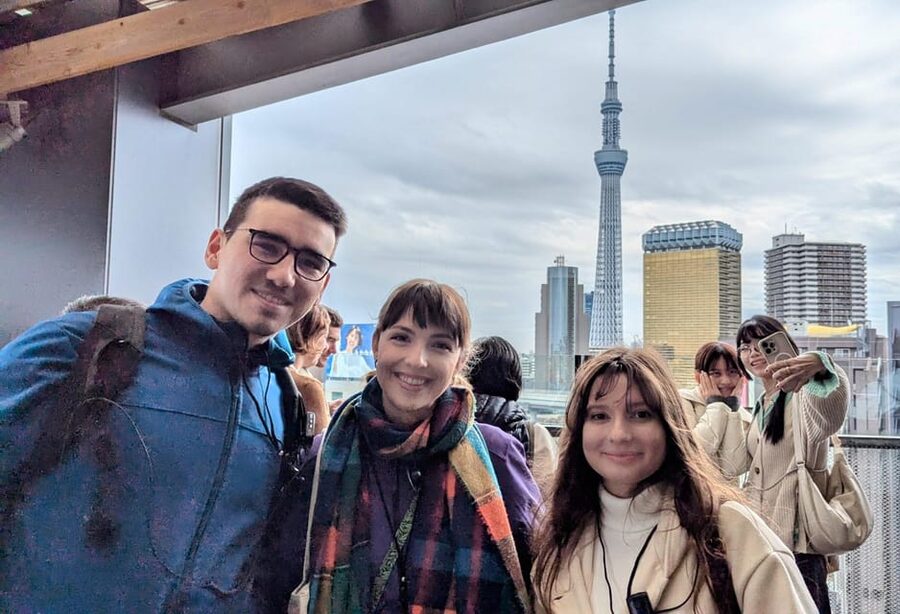
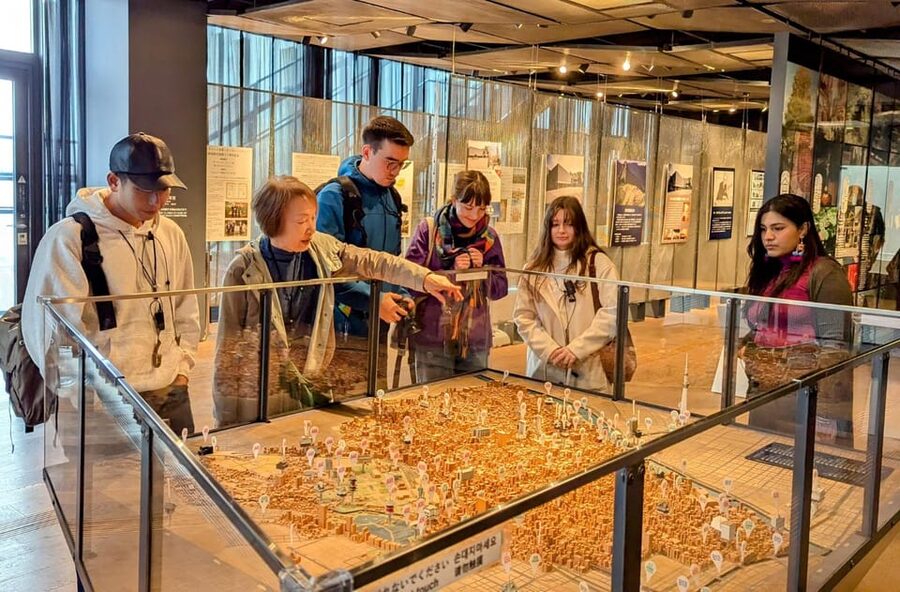
Next comes a longer stop at the Asakusa Culture Tourist Information Center. This is where the story starts getting structured. In plain terms, it is a place to get oriented, and guides often use that setting to connect physical landmarks to bigger themes. One review highlighted getting a view from the rooftop area of a contemporary information building, which shows you how old and new coexist in this district.
This is also a useful place if you learn best when a guide gives you context up front. You get time to absorb how Japan’s isolation and reopening connects to what you will see later around Kaminarimon and Sensō-ji.
What I like about this pacing is that it reduces confusion later. When you hit the gates and the temple grounds, you already know what you’re trying to understand.
Kaminarimon, Nakamise, Hōzōmon, and Sensō-ji in one flowing story
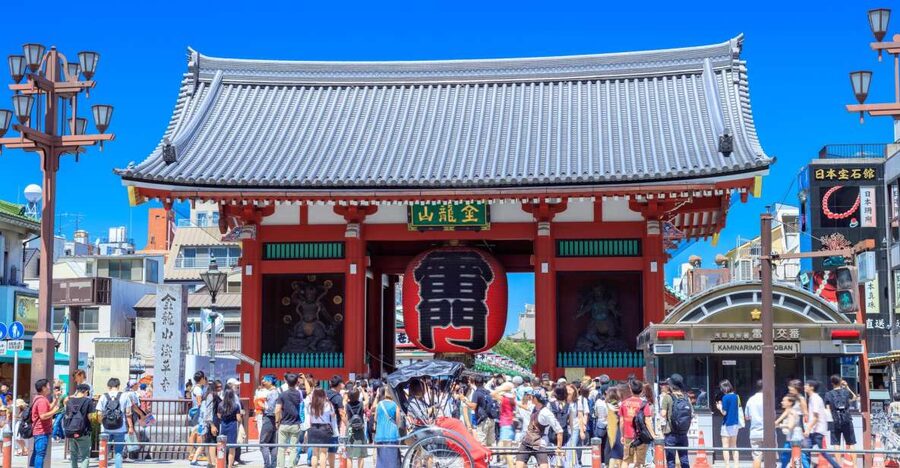
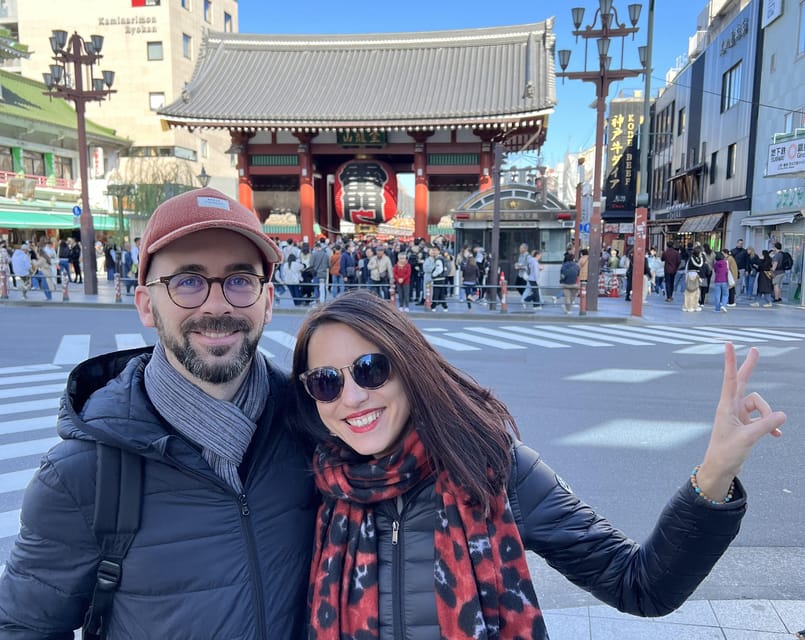
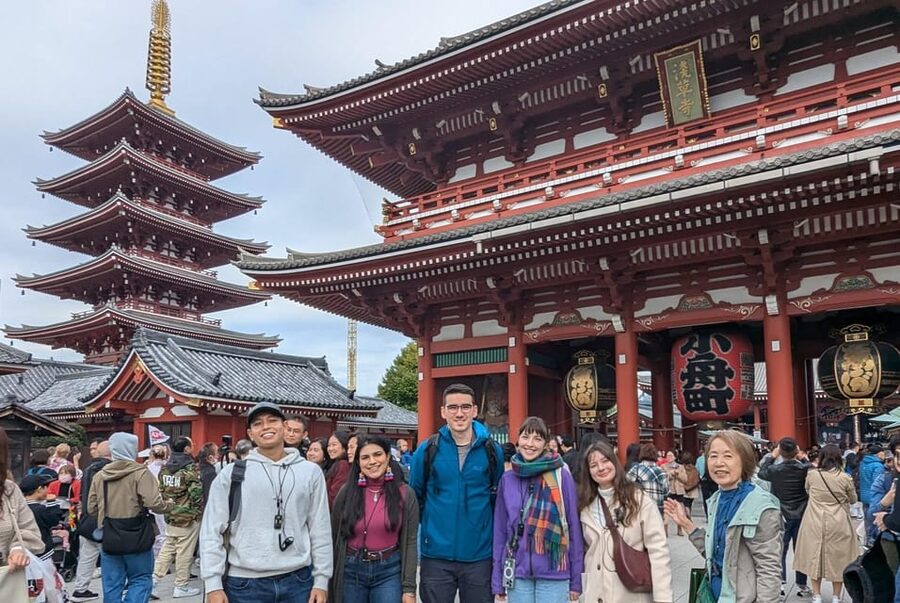
Kaminarimon is the moment when Asakusa becomes real. It is an entry point, literally and emotionally. In this tour, the guide uses it to launch the historical framing, not just to point out architecture.
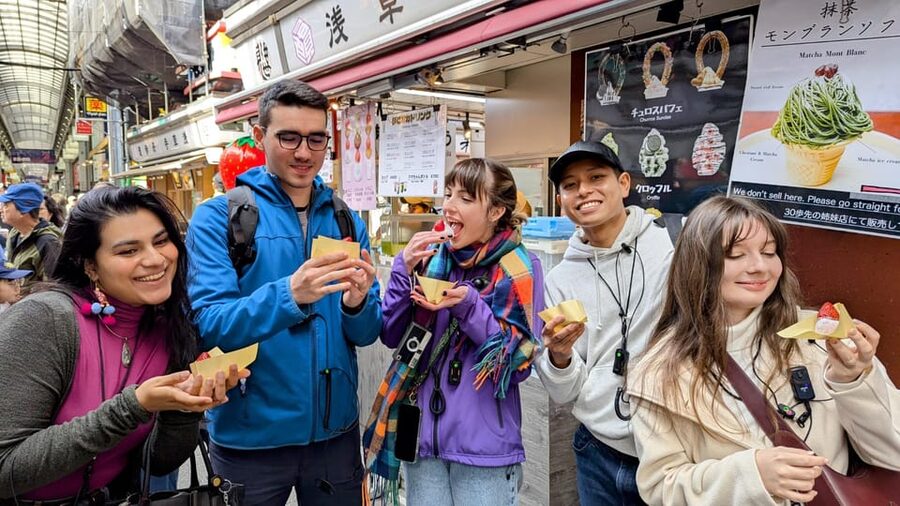
Then you head into Nakamise Shopping Street. This is where the tour turns sensory. You get the street-life side of the neighborhood, and you do not have to treat shopping as the main event. The tour includes a selection of freshly made Japanese traditional snacks and sweets, and you get built-in breaks, so it feels like a walk with stops, not a sprint.
After that, the route brings you through Hōzōmon Gate and into Sensō-ji Temple for a longer guided visit. This is the anchor stop, and it is where the sacred part of Asakusa becomes clear.
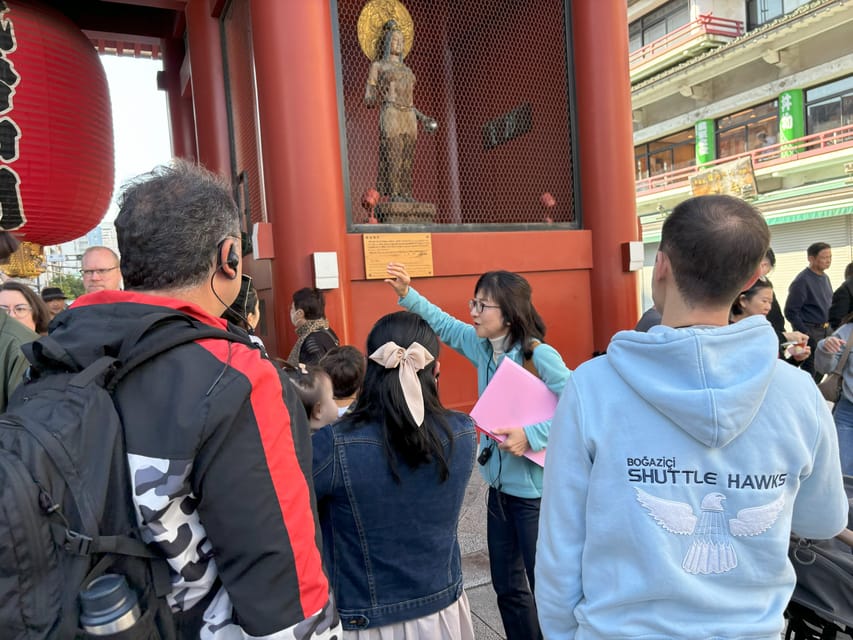
The guide’s approach here is what makes this walk different from a typical temple walk. You learn why certain elements matter, and you get explanations tied to larger themes, like Japan’s shifts in identity over time and how beliefs show up in physical spaces.
The best part is the linking. For example, the tour includes discussion of the sign symbolizing Japan’s transition from isolation to opening, and it connects those ideas to the era that shaped what visitors see today. If you like history but hate when it feels like a lecture, this is the right format.
A practical consideration: temple-area streets can feel crowded, and you will be moving steadily through gates and lanes. If you get tired easily, prioritize slow moments for photos and snacks, since the guidance tempo stays consistent.
Asakusa Shrine and the Yōgō-dō Pavilion, where two traditions overlap
One of the most useful things this tour does is treat religion as a lived system, not a debate.
After Sensō-ji, you visit Asakusa Shrine. This stop is key for the tour’s central idea: Japan’s two religions, which often share worshipers and coexist peacefully. The guide explains how they complement each other in people’s daily lives, so you stop thinking of faith as separate worlds. Instead, you see why temple and shrine life can feel intertwined in one neighborhood.
Then you visit the Yōgō-dō Pavilion. This smaller stop helps you connect the dots. The tour keeps the focus on how beliefs show up in spaces and routines, which is exactly what you want when you are trying to understand Japan quickly.
If you are the kind of traveler who asks, So what does this actually mean for people, this is where you get an answer you can use the moment you leave. You can look at a shrine sign or a temple setting and understand the purpose without needing a crash course in terminology.
More Walking Tours in Tokyo
- Tokyo Tsukiji Fish Market Food and Culture Walking Tour
★ 5.0 · 3,184 reviews - Tokyo: Shinjuku Local Bar and Izakaya Guided Walking Tour
★ 4.9 · 1,794 reviews - Tokyo: Tsukiji Fish Market Food and Walking tour
★ 5.0 · 1,724 reviews - Tokyo: Asakusa Walking Tour with Sensoji Temple Visit
★ 4.8 · 1,583 reviews
Mokubakan and Hoppy Street, sacred space next to entertainment history
This part of the walk is where Asakusa stops being only spiritual and becomes unmistakably human.
As you move to the Asakusa Nishi-sandō Shopping Street, you get a quieter, more nostalgic rhythm. The tour frames this as a chance to feel time travel. Think of it like stepping into an old movie set, but with real daily life happening around you.
From there, Asakusa Mokubakan adds a cultural layer. In the area near Sensō-ji, the tour highlights that the space right next to the temple used to be a major entertainment area long before other Tokyo districts became the headline performers. That timing matters. It helps you understand why Asakusa still has an older texture to its street culture.
Then comes Hoppy Street, where the tour leans hard into the sacred-meets-secular theme. This lane is known for old-style Japanese pubs, and the guide connects the vibe to postwar working-class vigor and resilience. In other words, this is not just about bars. It is about what communities did to keep moving, and how that energy shaped the neighborhood’s character.
You also hear about early 20th-century entertainment around here, including cinemas and vaudeville theaters and performance halls. Even if you do not visit a specific show, you come away with a sense of what kind of town Asakusa used to be at night, and how that history still influences what you smell, hear, and see.
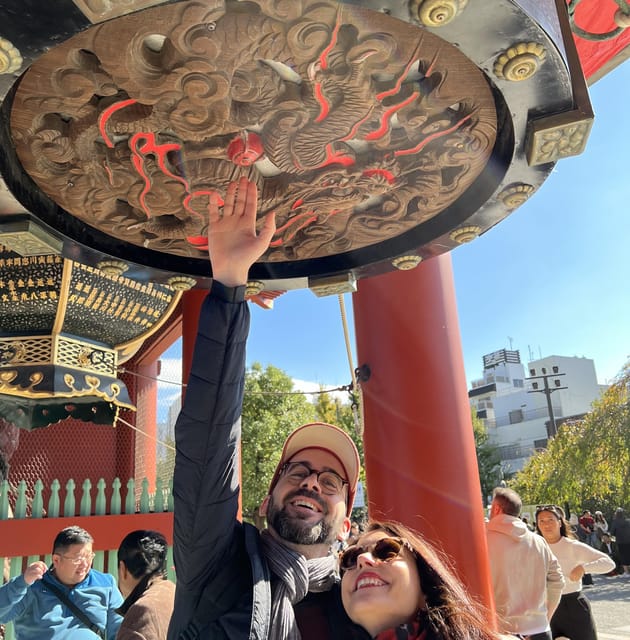
And yes, the East-West theme shows up here too, including cultural parallels. One review pointed to the tour’s discussion of dragons, including contrast and similarity in the roles they play across the world. That kind of detail is fun, but it also trains you to notice how ideas travel.
Should you book this Asakusa big-picture history walk?
Book it if you want to understand Japan fast, and you enjoy a guide who turns landmarks into explanations you can actually remember. This walk is strongest for people who like history with a human scale, and who want to connect Japanese culture to the wider world, including the reopening period and Japanese art’s impact on French Impressionist painters.
I’d skip it or reconsider if you need step-free access or have mobility limitations. The tour also involves a moderate amount of walking across multiple sites, so comfort matters.
FAQ
Is this tour in English?
Yes. The tour is guided in English, and English audio is included.
How long is the Asakusa history walk?
It runs for 210 minutes, or about 3.5 hours.
What is the price per person?
The price is $88 per person.
How big is the group?
The group is limited to 8 participants. For groups of 3 or more, headsets are included so you can hear the guide clearly.
Where do I meet the guide?
Meet in front of a Burger King restaurant next to Exit 4 of Asakusa subway station on the Ginza line (G19). Step outside when you reach Exit 4.
Is hotel pickup or drop-off included?
No. Hotel pickup and drop-off are not included.
What is included in the tour price?
You get an English-speaking certified guide, headsets (for groups of 3 or more), and a selection of freshly made Japanese traditional snacks and sweets.
What should I bring?
Bring comfortable shoes and water. Bottled water is recommended, and vending machines are available.
Does the tour run in bad weather?
Yes. It operates in all weather conditions, so dress appropriately.
Is it suitable for children and families?
Families are welcome. Children younger than 6 may join without charge. The tour is recommended for adults due to its historical focus.
More Historical Tours in Tokyo
- Mt. Fuji Heritage Tour: Traditional Villages, Lakes & Shrine
★ 4.5 · 509 reviews - From Tokyo: Nikko World Heritage Site Private Full-Day Trip
★ 4.9 · 243 reviews - Tokyo: The Best of Izakaya in Shinjuku Food & Cultural Tour
★ 4.9 · 221 reviews - Tokyo: Nikko World Heritage Private Day Trip Hotel Pick-up
★ 4.8 · 145 reviews
Newly listed around Tokyo
- Tokyo private transfer for Yokohama Port★ 4.5 · 63 reviews
- Luxury Kimono Photoshoot at Ginza Tokyo★ 5.0 · 7 reviews
- Tokyo Allstar Food Tour★ 4.5 · 206 reviews
- Tokyo Art Aquarium Museum E-Ticket with optional Tokyo Metro Pass★ 5.0 · 17 reviews
- Tokyo: Best Ginza Food Tour at 3 Local Eateries★ 5.0 · 83 reviews
- Private One Day Nikko Tour with Bilingual driver★ 3.5 · 11 reviews
- Kabuki Talk★ 5.0 · 10 reviews
- Japanese Whisky Tasting Experience at Local Bar in Tokyo★ 5.0 · 59 reviews
Historical Tours, compared.
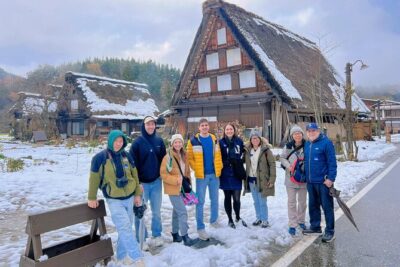
World Heritage Shirakawa-go and Experience Tours from Kanazawa
Read our review →
World Heritage Kyoto & Nara Uji Authentic Matcha Experience
Read our review →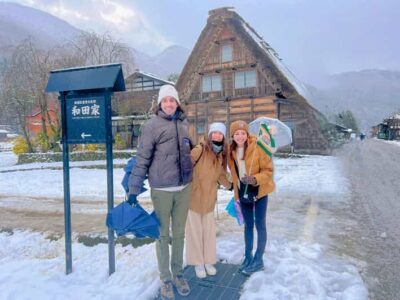
World Heritage Shirakawa-go Morning Guided Tour
Read our review →
Hiroshima Historical Walking Tour – Why A-Bomb was Dropped
Read our review →
Hiroshima Peace (Heiwa) Walking Tour at World Heritage Sites
Read our review →
Yanaka Walking Tour: Historic and Traditional District of Tokyo
Read our review →
Shinjuku Historical Walking Tour & Secret Backstreets
Read our review →Browse the lists this tour appears in