
Review · HISTORICAL TOURS
Asakusa: A Big-picture History Walk to Know Japan
A short walk that teaches Japan’s big story. This Asakusa tour is interesting because it uses each landmark as a stepping stone, so the whole country starts to make sense, not just the photos. I especially love how the guide explains Buddhism and Shinto in a way you can actually picture.
Two things I like a lot: first, the tour connects local sights to bigger turning points, from the Edo period’s isolation to Japan reopening. Second, it ties Japanese art to the West, including how ukiyo-e woodblock prints helped reshape European painting ideas. One drawback to consider, it is a moderate walking tour and it is not suitable for people with mobility impairments.
In This Review
- Key highlights you will feel right away
- Why this Asakusa walk is built for your big-picture brain
- Tokyo Cruise Asakusa Pier: isolation and opening told from the river
- Asakusa Culture Tourist Information Center: your Buddhism and Shinto starting kit
- Kaminarimon Gate: the dragon lesson and the gate you think you know
- Nakamise Shopping Street: Buddhist symbols, trade, and ukiyo-e’s surprise travel
- Hozomon Gate: the 1,000-year mindset connection
- Senso-ji Temple: prayer differences, medieval parallels, and a human-scale experience
- Asakusa Shrine: the one-ground coexistence you do not see elsewhere
- Price and value for a focused 2-hour history walk
- What you need to plan for on the day
- Who this tour suits best
- Should you book this Asakusa big-picture history walk?
- FAQ
- How long is the Asakusa big-picture history walk?
- What is the price per person?
- Where do I meet the guide?
- What is included in the tour price?
- Is the tour offered in English?
- Does the tour run in bad weather?
- What is the cancellation policy?
- Is it suitable for kids or people with mobility issues?
Key highlights you will feel right away
- Sumida River start, where isolation and opening to the world are explained with clear historical links
- A religion primer early on, so Senso-ji and Asakusa Shrine land with meaning
- Kaminarimon and its dragon contrast, Japanese and Western dragons are not the same role
- Nakamise symbols plus ukiyo-e, including how Buddhist imagery and woodblock art traveled to Europe
- A 1,000-year coexistence lesson at the end, Shinto shrine and Buddhist temple sharing space
Why this Asakusa walk is built for your big-picture brain
Asakusa can feel like a feast for the eyes, gates, incense, shops, lanterns. The problem is most sightseeing stays stuck in the moment. This tour is different because it forces the timeline to click into place.
You start with a big question: How did Japan go from a tightly closed feudal world to the modern country you recognize today? The guide keeps answering that question as you move, using what you see as proof. So when you reach places that look similar to Europe at first glance, you also learn why the similarities show up in the first place.
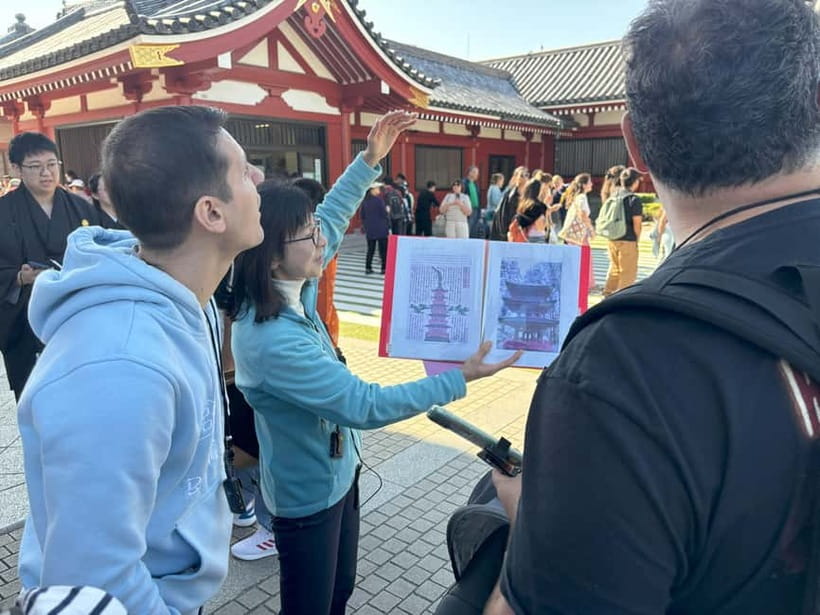
Two other details help you get more out of it. One is the visual and practical explanations. If you learn better when concepts are shown, you will likely appreciate the way guides bring examples, like prints, to clarify what you are hearing. Another is the tone. Guides such as Choco, Sachi, Amy, Yasu, Yoko, and Kay are repeatedly praised for being engaging and for answering questions as you go. That matters because Asakusa is not just one temple. It is a neighborhood where religion, commerce, and history overlap.
More History Tours in Tokyo
- Tokyo: Imperial Palace Japanese History Walking Tour
★ 4.9 · 987 reviews - Tokyo: Shinjuku Historical Walking Tour & Secret Backstreets
★ 5.0 · 530 reviews - Yanaka Walking Tour: Historic and Traditional District of Tokyo
★ 5.0 · 530 reviews
Tokyo Cruise Asakusa Pier: isolation and opening told from the river
You begin at the Sumida River area, the perfect place for this theme. Rivers make history feel physical. Standing near the water, you get a guided explanation of Japan’s isolation period under the Edo shogunate, and why Japan allowed limited trade, specifically mentioning the Netherlands.
Then the tour moves into the “how did the world change” story. The guide connects the arrival of Admiral Perry to Japan reopening, and you start to see how that past echoes in modern Tokyo. You even get a comparison point involving Odaiba’s former gun batteries and a Statue of Liberty replica facing toward the Pacific. It is a clever way to connect “old decisions” to “modern symbols” without turning it into a lecture.
What I like about starting here is that it gives you a context map before you step into the spiritual core of Asakusa. You are not just learning dates. You are learning cause and effect.
Asakusa Culture Tourist Information Center: your Buddhism and Shinto starting kit
Before you hit the famous gates and the temple grounds, the tour sets you up with a clear introduction to Japan’s two major religions: Buddhism and Shinto.
This stop matters more than it sounds. If you arrive at Senso-ji or Asakusa Shrine with only vague ideas like “they both pray,” you will miss the fine points. The guide builds a mental framework so you can notice differences in approach and meaning as you walk. The tour later returns to this theme at the gates, at Senso-ji, and finally at the end point where the religions share space.
If you like learning in an orderly way, this early primer is a win. It also explains why people can live with these beliefs side by side without making it a contradiction. That theme becomes one of the tour’s biggest payoffs by the final stop.
Kaminarimon Gate: the dragon lesson and the gate you think you know
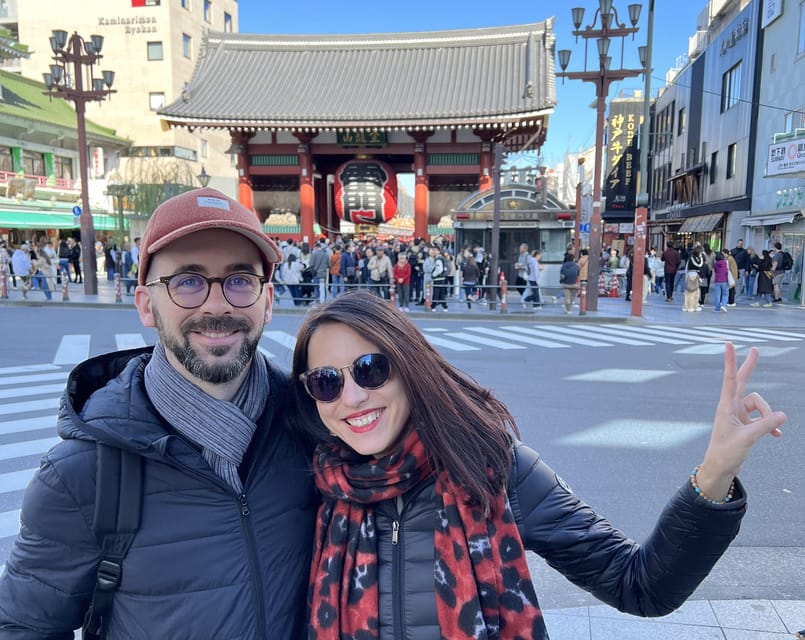
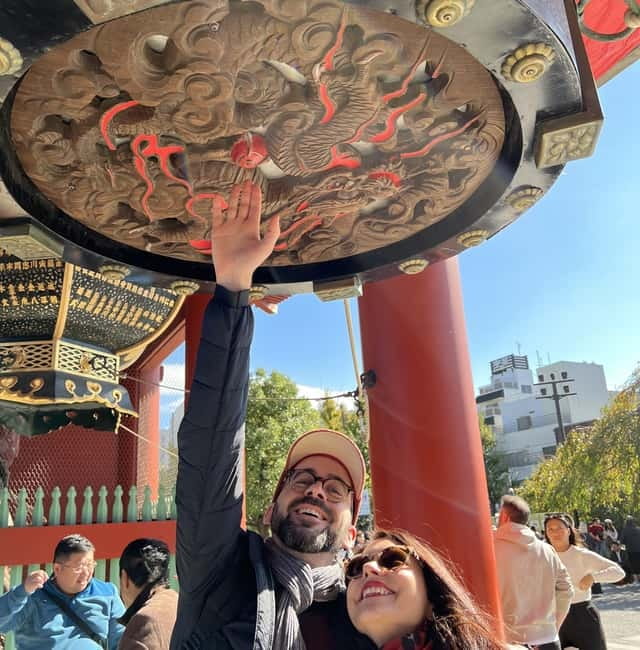
Kaminarimon, the Thunder Gate, is the classic Asakusa image. Here, the tour does not just tell you what the gate is. It uses the gate to teach something cultural and visual.
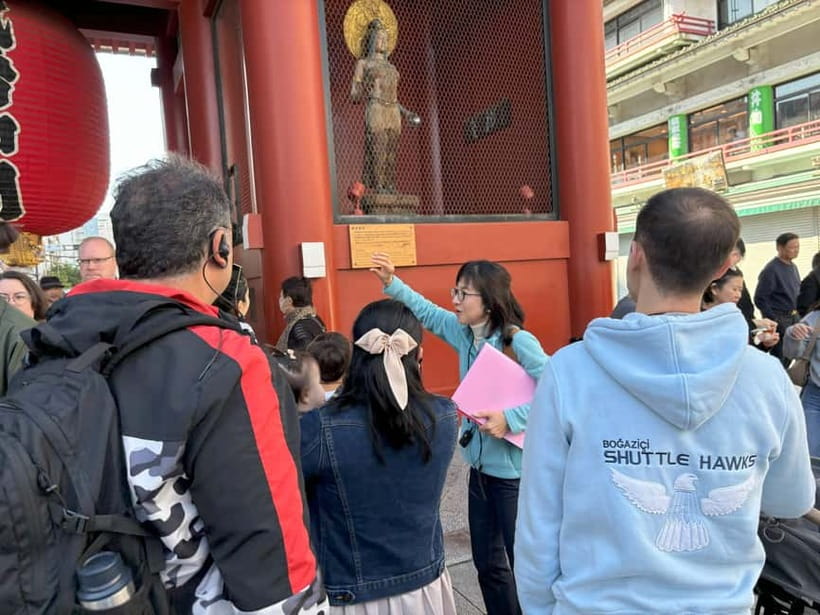
You get an explanation of the famous lantern and symbolism, and then a standout comparison: Japanese dragons and Western dragons do not play the same role. This is a small moment, but it trains your eye for how symbols work in different cultures. Once you learn the “role” idea, you will start noticing it elsewhere, even in places that look familiar.
Then the tour shifts from big symbolism to everyday meaning. That swing is part of what makes this experience feel efficient. You get one concept, then you walk into the street where daily life and old beliefs meet.
More Walking Tours in Tokyo
- Tokyo Tsukiji Fish Market Food and Culture Walking Tour
★ 5.0 · 3,184 reviews - Tokyo: Shinjuku Local Bar and Izakaya Guided Walking Tour
★ 4.9 · 1,794 reviews - Tokyo: Tsukiji Fish Market Food and Walking tour
★ 5.0 · 1,724 reviews - Tokyo: Asakusa Walking Tour with Sensoji Temple Visit
★ 4.8 · 1,583 reviews
Nakamise Shopping Street: Buddhist symbols, trade, and ukiyo-e’s surprise travel
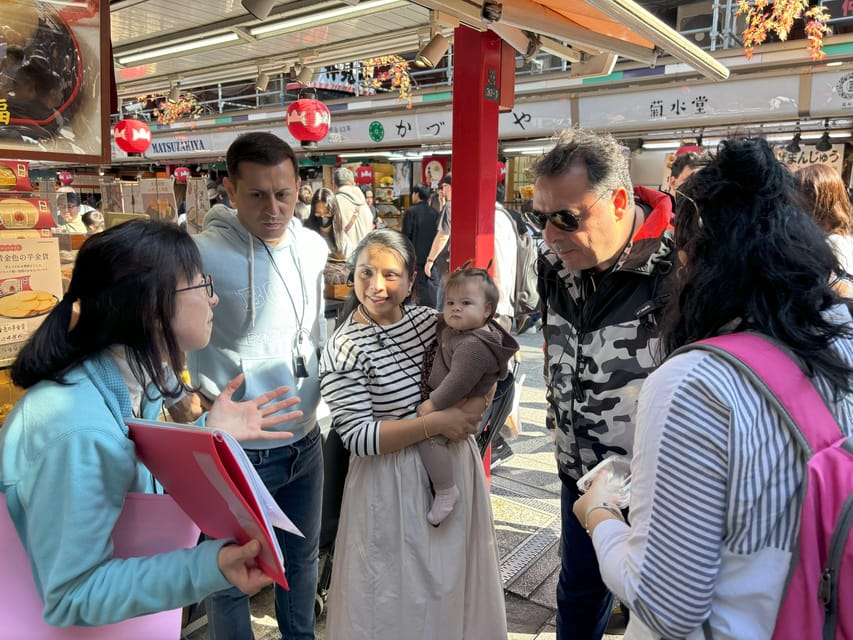
Nakamise Shopping Street is where Asakusa turns into a living corridor. The tour gives you a way to watch it instead of just pass through it.
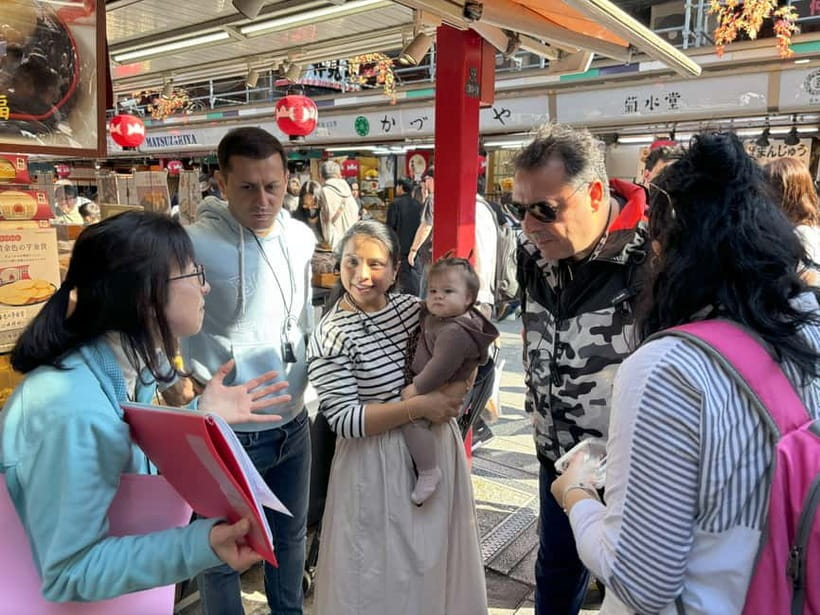
You learn about Buddhist symbols you might notice while shopping, including the vajra, also referred to with the term tokko. The guide also points out a different kind of connection: how Japanese art changed Western art.
The big story here centers on ukiyo-e woodblock prints. You are taught that these prints unexpectedly reached Europe and influenced European Impressionist painters. That is a real “wait, what?” moment, because most people associate European art influence as one-way. This tour flips the direction and shows the exchange as historical fact, not just a modern creative trend.
Practical upside: if you want snacks or small gifts, Nakamise is the place to do it. The guide’s explanations help you choose thoughtfully, especially if you care about what something represents, not only how it looks.
A small caution: Nakamise is busy in many time windows, so bring patience and good walking shoes. The tour pace is not extreme, but it is still a steady stroll for about a half hour.
Hozomon Gate: the 1,000-year mindset connection
At Hozomon Gate, the tour makes one of its boldest claims in a way that is meant to be understood, not memorized. The guide points out that people in Japan and the West shared remarkably similar ways of thinking about the world around 1,000 years ago.
This is not about saying everyone believed the same things. It is more about comparing how people framed ideas, how symbols and practices fit into daily life, and how society organized meaning. When your guide ties this back to what you see at the gate, it stops feeling like trivia.
I like this stop because it encourages mental flexibility. It also sets you up for Senso-ji by showing you that you can compare cultures without flattening them.
Senso-ji Temple: prayer differences, medieval parallels, and a human-scale experience
Senso-ji is Japan’s oldest Buddhist temple, and the guide treats it like a classroom where you can walk between concepts.
You get a comparison between medieval Japan and Europe, but again, it is tied to real elements you can look at. You also learn the practical difference in how prayer works across traditions. The tour explains how prayer differs in Buddhism versus Shinto, which helps you understand why you might see actions that look similar on the surface but carry different meaning.
One extra practical note comes from guide feedback that has shown up repeatedly: guides often steer you toward the temple area’s customs, including the kind of fortune activity you can find near the entrance. If you plan to do it, do it respectfully and do it after the guide explains what you are looking at. That way it becomes part of the learning instead of a random ritual.
Senso-ji can feel overwhelming if you rush. The guide’s job is to help you slow your eyes down and connect features to explanations.
Asakusa Shrine: the one-ground coexistence you do not see elsewhere
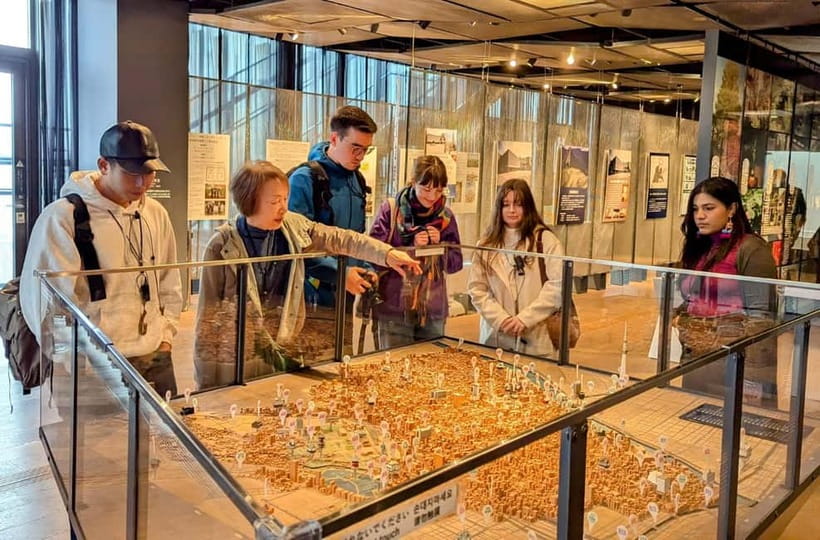
The tour ends at a place that surprises many visitors: a Shinto shrine and Buddhist temple sharing the same grounds. The guide explains how worshippers and history overlap peacefully for over a millennium.
This is the tour’s final theme landing with weight. Earlier you learned the basics of Buddhism and Shinto. You saw symbolic comparisons at gates and art connections across continents. Now you watch the idea of coexistence made visible in architecture and shared space.
The guide also helps you understand how to behave respectfully in mixed spaces. That matters because it is easy to feel confused when you are not sure which tradition you are stepping into. With a clear explanation, you can focus on observing calmly, taking photos where appropriate, and following cues without overthinking it.
This ending works best if you want more than Instagram shots. It gives you a mental model for how multiple traditions can live side by side in the same neighborhood for centuries.
Price and value for a focused 2-hour history walk
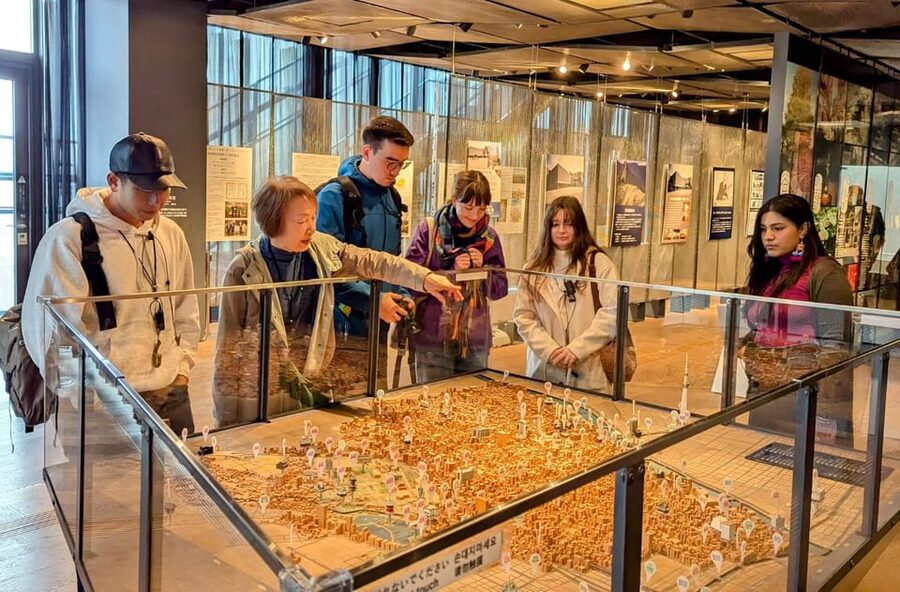
At $58 per person for a 2-hour guided walk, you are paying for structure and interpretation. You are not paying for transportation or a long day tour.
For your money, you get a certified guide, a walking tour, and headsets for groups of 3 or more, which helps if the street noise is loud. You also get traditional snack tastings. That snack part sounds small, but it is often the difference between a tour that feels like pure talking and one that gives you a lived neighborhood moment.
The value is strongest if you enjoy learning while walking and you want context fast. If you are the type who loves drifting slowly through temples on your own, you might feel you could cover some of this area alone. But the big-ticket difference here is the “why” behind what you see, from Edo isolation to ukiyo-e’s influence on European painters.
What you need to plan for on the day
This tour is a moderate-walking experience, and comfortable shoes matter. You also want water and weather-appropriate clothing, since it runs rain or shine.
Timing is another real-world factor. You are looking at about 2 hours total, so it is not designed to stretch into a full shopping spree or a long sit-down in a cafe. Nakamise is where you can naturally grab something on the way, and the guide’s snack tastings help fill that gap.
Also, check group size. Headsets are included for groups of 3 or more, which can improve how well you catch the guide. One small downside shows up in at least one write-up, where the ear pieces sometimes made the guide harder to understand due to echo. If that bothers you, standing closer to the guide at key moments can help.
If your travel dates line up with big neighborhood events, you may get extra energy. One guide was noted as flexible during Sanja Matsuri, including the mikoshi parade. If you can travel during festival season, you will likely get even more atmosphere and emotion out of the sights.
Who this tour suits best
This experience fits you if you want:
- Big-picture clarity without reading a book first
- Clear comparisons between Buddhism and Shinto
- The “Japan influenced the West” story, not just the reverse
- A walk that keeps you moving but still explains what matters
It may not fit as well if you:
- Need very slow pacing, since it is a moderate walk
- Use a wheelchair or have mobility impairments, since it is not suitable for that
- Want a free-form, unstructured wandering day
Should you book this Asakusa big-picture history walk?
Yes, if your goal is understanding fast. This is one of those tours that turns Asakusa from scenery into a coherent story, starting from the Sumida River isolation and reopening frame and ending with the 1,000-year coexistence lesson you cannot really get from photos alone.
If you are on the fence, I would book it if you like guided interpretation and you want the global connections spelled out in plain language, especially the ukiyo-e to Europe thread and the religion comparison. Skip it if you would rather spend your time quietly taking in the temples without structured explanations, or if walking distance will be a problem for you.
FAQ
How long is the Asakusa big-picture history walk?
The tour lasts about 2 hours.
What is the price per person?
The price is $58 per person.
Where do I meet the guide?
Meet in front of a Burger King restaurant next to Exit 4 of Asakusa subway station (G19) on the Ginza line. Step outside when you reach Exit 4.
What is included in the tour price?
Included are a certified guide, a walking tour, headsets to hear the guide clearly for groups of 3 or more, and traditional snack tastings.
Is the tour offered in English?
Yes. The live tour guide is English, and an English audio guide is included.
Does the tour run in bad weather?
Yes. It operates rain or shine.
What is the cancellation policy?
You can cancel up to 24 hours in advance for a full refund.
Is it suitable for kids or people with mobility issues?
Children younger than 6 may join for free, and the tour is recommended for adults due to the historical focus. It is not suitable for people with mobility impairments, and you should contact the supplier in advance if you have concerns.
More Historical Tours in Tokyo
- Mt. Fuji Heritage Tour: Traditional Villages, Lakes & Shrine
★ 4.5 · 509 reviews - From Tokyo: Nikko World Heritage Site Private Full-Day Trip
★ 4.9 · 243 reviews - Tokyo: The Best of Izakaya in Shinjuku Food & Cultural Tour
★ 4.9 · 221 reviews - Tokyo: Nikko World Heritage Private Day Trip Hotel Pick-up
★ 4.8 · 145 reviews
Newly listed around Tokyo
- Tokyo private transfer for Yokohama Port★ 4.5 · 63 reviews
- Luxury Kimono Photoshoot at Ginza Tokyo★ 5.0 · 7 reviews
- Tokyo Allstar Food Tour★ 4.5 · 206 reviews
- Tokyo Art Aquarium Museum E-Ticket with optional Tokyo Metro Pass★ 5.0 · 17 reviews
- Tokyo: Best Ginza Food Tour at 3 Local Eateries★ 5.0 · 83 reviews
- Private One Day Nikko Tour with Bilingual driver★ 3.5 · 11 reviews
- PRIVATE tour in 180SX to Daikoku+++++★ 5.0 · 6 reviews
- Kabuki Talk★ 5.0 · 10 reviews
Historical Tours, compared.
World Heritage Shirakawa-go and Experience Tours from Kanazawa
Read our review →
World Heritage Kyoto & Nara Uji Authentic Matcha Experience
Read our review →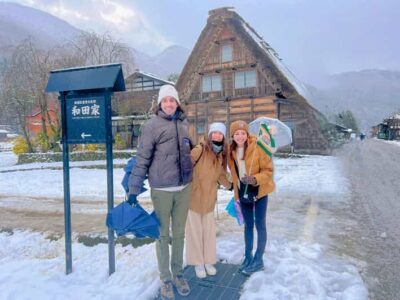
World Heritage Shirakawa-go Morning Guided Tour
Read our review →
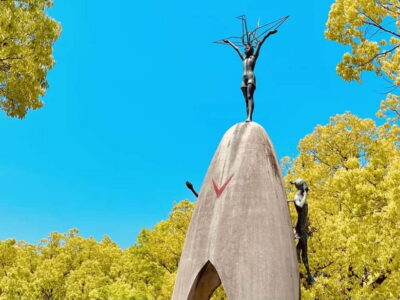
Hiroshima Historical Walking Tour – Why A-Bomb was Dropped
Read our review →
Hiroshima Peace (Heiwa) Walking Tour at World Heritage Sites
Read our review →
Yanaka Walking Tour: Historic and Traditional District of Tokyo
Read our review →
Shinjuku Historical Walking Tour & Secret Backstreets
Read our review →Browse the lists this tour appears in