
Review · TRADITIONAL MUSIC & DANCE SHOWS
From Kyoto: Japanese Drum Taiko Workshop in Osaka
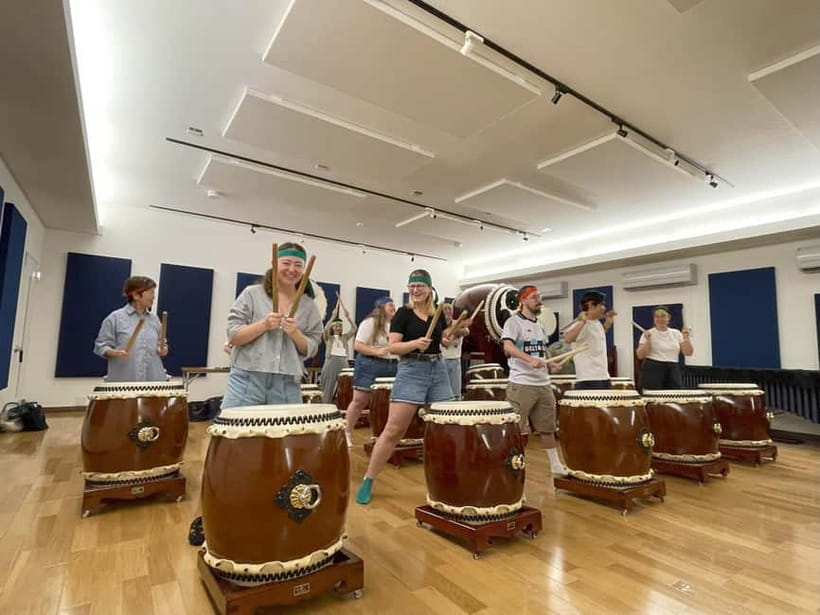
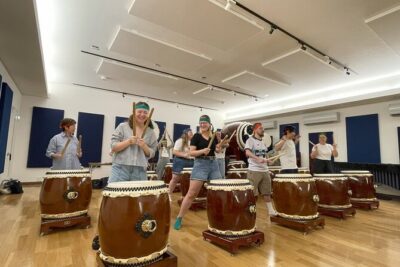
You will hit your first taiko beat in Osaka. This taiko workshop takes you from Kyoto Station to a studio in northern Osaka for history lessons, calligraphy, and a full practice-to-finale drumming session led by guide Michiko and instructor Yusuke. I love how the pro performance is followed by clear, step-by-step teaching, so even if you have never drummed you still end up playing as a group. I also love the cultural extras, like writing wishes on a Hachimaki (traditional headband) and finishing with a traditional costume photo. The one drawback to plan for is timing, because the group runs on a fixed train schedule and late arrivals can miss the start.
The format is built for real participation, not just watching, with a small group capped at 15. You’ll spend about 150 minutes total, including train and short car rides, so it feels like a focused afternoon rather than a half-day slog. If you’re traveling with a flexible pace in Kyoto, this is a great way to experience Osaka without losing your day.
In This Review
- Taiko From Kyoto, What Makes This Workshop Different
- Key Things You Will Notice Right Away
- Kyoto Station Meeting: How to Find the Right Spot Fast
- The Short Transfer to Northern Osaka (Train + Studio Car)
- First Lesson: Taiko’s Place in Japanese Life
- Hachimaki Calligraphy: A Small Cultural Activity With Big Meaning
- Watching the Pros: The Demonstration That Sets Your Expectations
- Instructor-Led Basics: Movements, Techniques, Then Real Drumming
- Group Finale: How the Song Comes Together
- The Costume Photo Moment: Happi and Hachimaki
- Price and Value: What $112 Gets You
- Who Should Book This Taiko Workshop
- Practical Tips So Your Day Runs Smoothly
- Should You Book This Taiko Workshop?
- FAQ
- Where is the meeting point in Kyoto?
- How long does the workshop take?
- What language is the workshop offered in?
- How many people are in the group?
- What is included in the price?
- Can children participate?
- Is single-participant booking always available?
- What should I do if I’m late?
- Are taxis recommended from Kyoto?
Taiko From Kyoto, What Makes This Workshop Different
This is one of those experiences where you get the context, then you get your hands on the drum. You start with a brief explanation of taiko’s role in Japanese life, then move into activities that connect the sound to everyday culture.
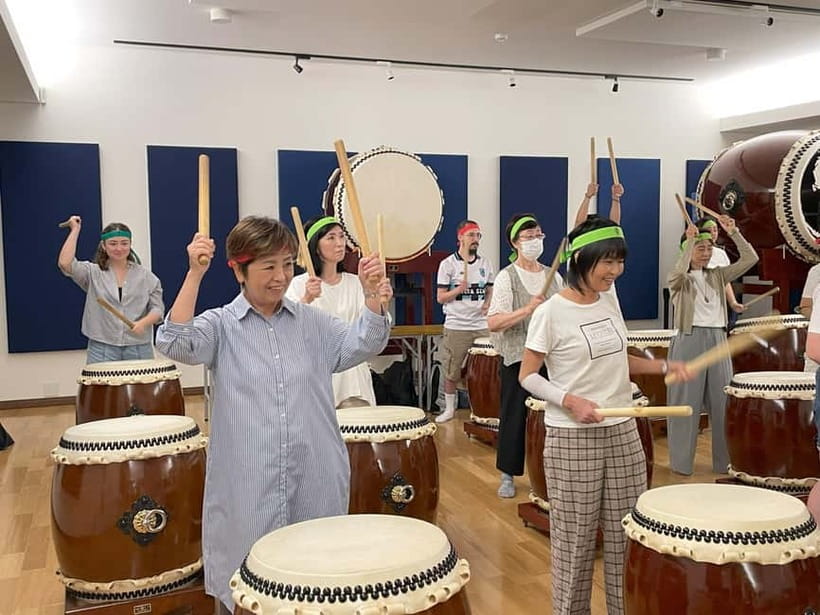
The workshop also takes you beyond “strike the drum and leave.” You write your wishes on a Hachimaki using a simple calligraphy-style activity, watch a powerful taiko performance, then learn basic movements and techniques before playing a simple piece together.
And yes, you do get the fun ending: a commemorative photo in traditional costume, including a Happi and Hachimaki.
Key Things You Will Notice Right Away
- A small group (up to 15) so you get hands-on attention
- English instruction with a guide and a dedicated taiko instructor
- You’ll learn taiko culture first, not just the rhythm
- A pro taiko demonstration, then teaching that matches what you just saw
- Group finale drumming, so you finish with a shared moment
- Traditional costume photo with a Happi and Hachimaki
Compare these Traditional Music and Dance shows in Kyoto:
- TAIKO, Japanese Drum Experience from Kyoto
★ 5.0 · 86 reviews - Traditional Japanese Music show & Experience Tour in Kyoto
★ 5.0 · 57 reviews - Kyoto: Taiko Drum Workshop
★ 4.3 · 10 reviews
Kyoto Station Meeting: How to Find the Right Spot Fast
Meet at the Central Ticket Gate of JR Kyoto Station, on the north side of the station grounds. The meeting point is at ground level, where you can spot Kyoto Tower nearby.
Important practical detail: use the Central Exit area, and do not aim for the Shinkansen Central Ticket Gate. If you’re coming by JR, you’ll exit through the Central Exit side. If you’re using the subway, exit through Central 1 Ticket Gate, then take Exit 6 to the ground level and walk along the Kyoto Station building until the central ticket gate area.
Go early, at least 15 minutes before the scheduled start. The schedule is fixed, and the group cannot wait for late arrivals, plus you cannot join after the start time.
The Short Transfer to Northern Osaka (Train + Studio Car)
From Kyoto Station, you take a quick JR train ride to Takatsuki Station, then you move by the studio’s private car to the venue. The train segment is about 12 minutes, and the car ride is also short, typically described as only a few minutes.
This is a big part of the value. You get out of the tourist shuffle, but you still keep the day efficient. And because the logistics are handled for you, you’re not stuck figuring out transfers while your group rhythm is waiting.
Also, taxis from Kyoto are not recommended, because travel time can be long and the cost can be high.
First Lesson: Taiko’s Place in Japanese Life
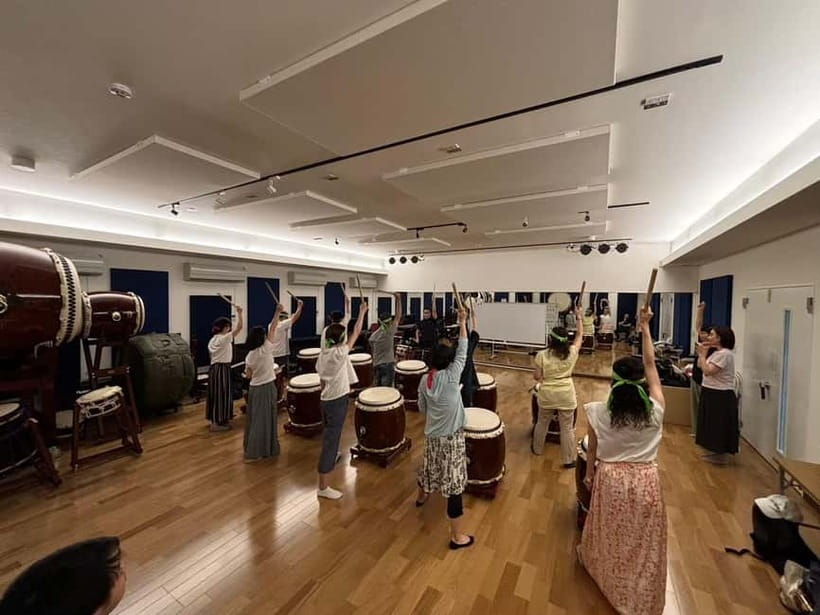
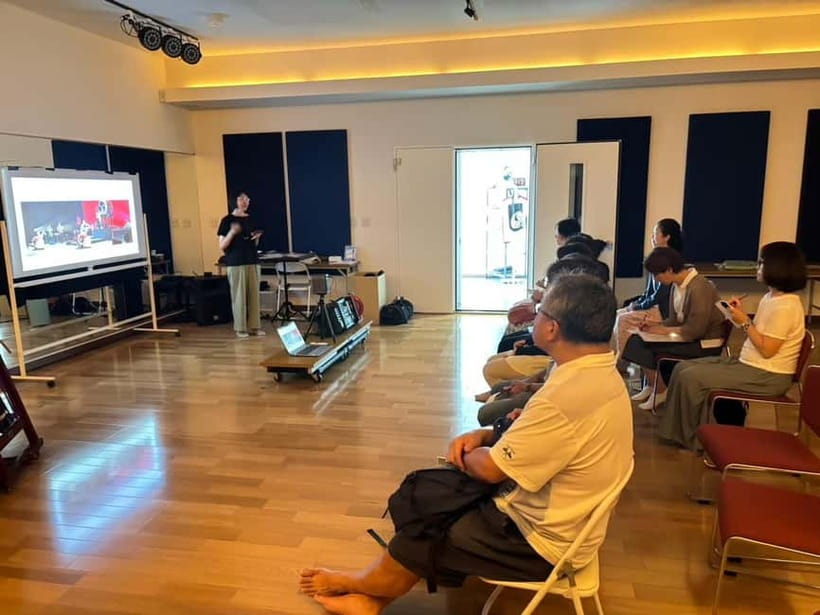
Before you drum, you’ll get a brief explanation of taiko’s history and why it matters in Japanese culture. This matters more than you might think.
Taiko is not only about speed or loud sound. The way you hold your body, aim your strikes, and work with tempo all connect to the cultural role of taiko in Japanese life. The workshop sets you up to understand what you’re about to do, which makes the later drumming feel purposeful instead of random.
Even if you only catch a few key points, the “why” makes the “how” easier to remember.
A few more Kyoto days to weigh up
- PERFECT KYOTO 1-Day Bus Tour
★ 5.0 · 13,518 reviews - Kyoto: Fushimi Inari, Kinkakuji, Bamboo Grove 1 Day Bus Tour
★ 4.8 · 4,316 reviews - Kyoto: Tea Ceremony in a Traditional Tea House in Kiyomizu
★ 4.9 · 3,519 reviews - Kyoto Geisha Walking Tour: Gion District & Hidden Gems
★ 4.7 · 3,273 reviews
Hachimaki Calligraphy: A Small Cultural Activity With Big Meaning
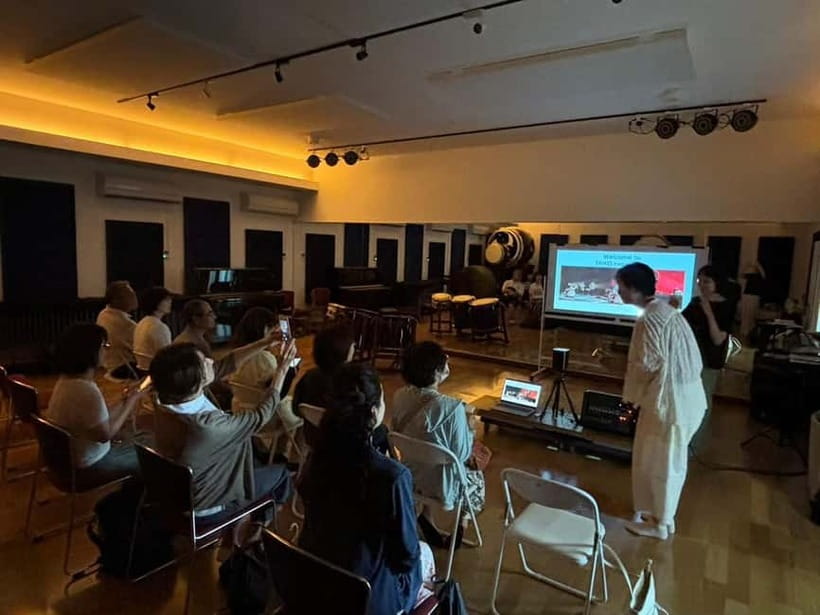
Next comes a short calligraphy activity where you write your wishes on a Hachimaki. This is a simple but memorable touch.
You’re not just handed a souvenir headband. You personalize it, then wear it as part of your taiko experience. That creates an emotional anchor, especially because you’ll also use the Hachimaki again in the finale photo portion of the day.
For first-timers, this is also a smart pacing move. It breaks up the energy between the history talk and the later drumming intensity, so you arrive at the performance phase ready to learn.
Watching the Pros: The Demonstration That Sets Your Expectations
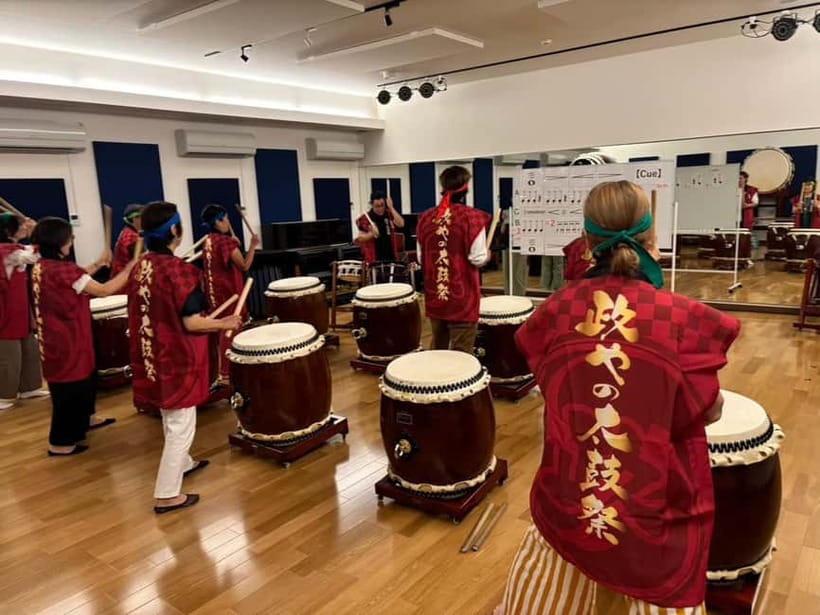
After the culture portion and the Hachimaki activity, you watch an amazing taiko performance by a professional player. This demonstration gives your brain the sound picture you’ll need for the lesson.
What I like about this sequence is that it prevents a common beginner problem: practicing without having a clear target. Once you’ve seen what the rhythms feel like when done well, you can copy the instructor’s movements with more confidence.
You’ll see powerful drumming techniques in action, and it also gives you a sense of timing and volume that’s hard to learn from description alone.
Instructor-Led Basics: Movements, Techniques, Then Real Drumming
Then comes the main training time. A friendly instructor teaches you the basic movements and techniques of taiko drumming.
You’ll learn the physical side first, like how to position your body and how to execute the strikes cleanly. After that, the workshop shifts into playing a simple piece of music.
This is where the small group format matters. With a max of 15 participants, the instructor can help you correct what you’re doing and keep everyone progressing. It’s also why the day feels like a “learn and play” workshop, not just a one-off show.
And based on the experience style, it’s normal if the rhythms feel tricky at first. The goal is to make the piece learnable step-by-step so you can actually finish playing together.
Group Finale: How the Song Comes Together
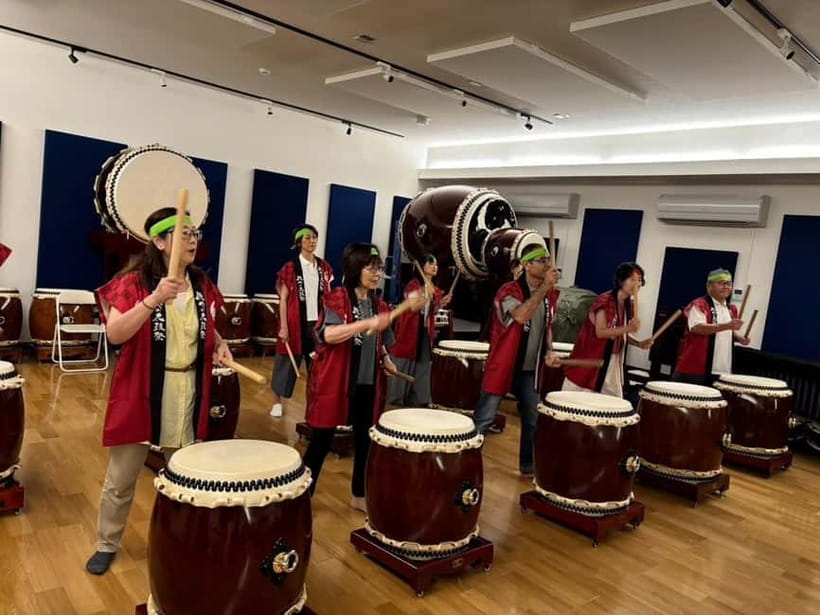
Near the end, you play a simple piece of music with your fellow participants. This group finale is the “proof of learning” moment.
The nice part is that the workshop is designed so non drummers can participate. Even when it’s challenging, the structure breaks down the music and builds toward the full ensemble sound.
If you’re worried you’ll slow the group down, don’t be. The experience includes instruction for beginners, and the group finale is part of the design.
The Costume Photo Moment: Happi and Hachimaki
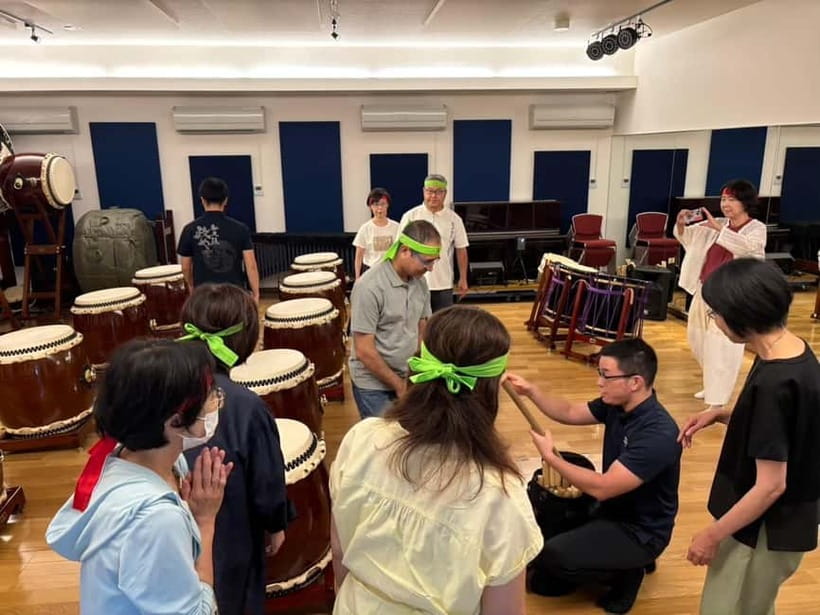
To wrap up, you get a commemorative photo in traditional Japanese costume, including a Happi and Hachimaki.
This is not just a random photo op. It’s the final step that turns the experience into something you can remember, because the outfit connects back to what you did earlier. You wrote the Hachimaki, you wore it during the session, then you see it all tied together for a photo.
It’s also a fun way to collect a meaningful memory without needing extra planning.
Price and Value: What $112 Gets You
At $112 per person, you’re paying for more than drum time. You’re buying a structured cultural workshop that includes:
- A professional taiko performance
- Guided history explanation
- Instruction from a dedicated taiko instructor
- A calligraphy activity
- Your Hachimaki
- JR one-way ticket to Takatsuki Station
- Studio private car transfers to and from the venue
- A commemorative traditional costume photo
The value improves if you think of it as a half-day lesson plus a guided cultural experience, not just an activity. You’re also getting English support and small group teaching, which is often the hardest part to replicate on your own.
If your goal in Kansai is to learn something hands-on rather than only see landmarks, this price is easier to justify.
Who Should Book This Taiko Workshop
This workshop is a strong match if you want:
- A hands-on Japanese cultural experience with real participation
- Something fun and energetic that still includes context
- A small-group format with English help
It’s also a good option for families who have children old enough to participate, because it’s interactive and not only based on listening.
It is not suitable for children under 7.
Practical Tips So Your Day Runs Smoothly
Here’s how to make the workshop feel effortless, even though you’re traveling between cities.
- Arrive 15 minutes early at JR Kyoto Station. The group cannot wait for late arrivals.
- Double-check you are at the north side, Central Ticket Gate area, by Kyoto Tower.
- Plan to stay in the area after the workshop, because the total duration is about 2.5 to 3 hours including travel.
- If you’re traveling solo, note that some days do not allow single-participant bookings. On those days, you may need to book and pay for two participants.
- Avoid relying on a taxi from Kyoto. The provided plan uses JR and the studio car for a reason.
Should You Book This Taiko Workshop?
Book it if you want a short, structured experience where you learn taiko rhythms and leave with a costume photo and a real group finale under your belt. The combination of history briefing, pro demonstration, and step-by-step instruction is exactly what makes it work for beginners.
Skip it if timing discipline makes you nervous. This is not a “we can wait” style activity, so you’ll need to be at the meeting point on time and ready to move with the group.
If you’re the kind of traveler who likes learning by doing, this taiko workshop is a very efficient, fun way to experience Japanese culture across the Kyoto to Osaka connection.
FAQ
Where is the meeting point in Kyoto?
You meet at the Central Ticket Gate of JR Kyoto Station, on the north side where you can see Kyoto Tower. Your guide will be holding a sign for the taiko experience. Use the Central Exit side (not the Shinkansen Central Ticket Gate).
How long does the workshop take?
The experience runs for 150 minutes. The total time including travel is about 2.5 to 3 hours, so plan for time afterward.
What language is the workshop offered in?
The live tour guide and instruction are offered in English.
How many people are in the group?
The group is limited to a small size, with a maximum of 15 participants.
What is included in the price?
It includes the taiko drumming experience with an English guide and taiko instructor, a Hachimaki headband, JR one-way ticket to Takatsuki Station, and car transfers to and from the studio and Takatsuki Station. A commemorative photo in traditional costume is also part of the experience.
Can children participate?
Children under 7 cannot participate.
Is single-participant booking always available?
Some days do not allow single-participant bookings. If that happens for your date, you may need to book and pay for two participants.
What should I do if I’m late?
You must arrive 15 minutes early. The group cannot wait for late arrivals, and you cannot join after the start time.
Are taxis recommended from Kyoto?
Taxis from Kyoto are not recommended because the travel time can be long and the cost can be high. The plan uses JR to Takatsuki Station and then the studio car.
Newly listed around Kyoto
- Kyoto:Family-Friendly Kimono & Yukata Experience at WARGO★ 5.0 · 147 reviews
- Traditional Japanese Music show & Experience Tour in Kyoto★ 5.0 · 57 reviews
- Traditional Japanese Washi Papermaking- Kyoto morning★ 5.0 · 77 reviews
- The Kyoto VIP Experience!★ 5.0 · 20 reviews
- Tour in Kyoto with a Goverment Certified Tour Guide★ 3.5 · 117 reviews
- Kyoto: Golden Pavilion, Nijo Castle, Nishiki Market. Private★ 5.0 · 16 reviews
- A Unique Antique Kimono and Tea ceremony Experience in English★ 5.0 · 109 reviews
- TREASURES of Kyoto: Fushimi Inari, Kiyomizu Temple, and more!★ 5.0 · 20 reviews
Traditional Music & Dance Shows, compared.



OSAKA NIGHT FUSION Japanese Taiko Kabuki Samurai Dance Show
Read our review →
KABUKI Show at Kabukiza Theatre Admission Ticket
Read our review →
KABUKI, BUNRAKU, etc. presented by National Theatre
Read our review →
Browse the lists this tour appears in