Review · MORNING
Traditional Japanese Washi Papermaking- Kyoto morning
Handmade paper beats souvenir shopping. I love starting from raw materials and ending with a real sheet of washi paper you decorated. In Kyoto, this means you are not just watching craft magic, you are making it with seasonal pressed botanicals.
I also like the small, calm pace led by Hiro and Junko, with instruction in Japanese and English. The only drawback is timing, the standard session is about 60 minutes, and making more means paying for an additional unlimited hour.
In This Review
- Key things to know before you go
- A Kyoto morning craft break in a traditional Japanese house
- Finding 345 Sanjōchō: easy walk from Kyoto stations
- Stop inside 紙TO和: what the workshop feels like
- From raw materials to your own washi sheet
- Designing with cherry blossoms, maple leaves, and paper cut-outs
- Choosing postcards, table mat, lampshade, or tapestry panel
- How the instructor support works when you have questions
- Drying time videos: learning while you wait
- Optional second hour for unlimited papermaking
- What you bring home, and how to carry it
- Price and value: is $33.03 a good deal?
- Who this Kyoto washi class is best for
- Should you book this washi papermaking class in Kyoto?
- FAQ
- Where is the meeting point for the washi papermaking class?
- How long is the class?
- Can I make more paper than the standard 1 hour?
- What language do the instructors speak?
- What kinds of items can I make?
- What materials are used for the designs?
- Is transportation to and from the workshop included?
- How many people are in the group?
- Is this activity suitable for children?
- What is the cancellation policy?
Key things to know before you go
- Small-group workshop with a maximum of 4 travelers, so you get hands-on help
- Seasonal botanicals like cherry blossoms and maple leaves, plus paper cut-outs for design
- Bilingual instruction in Japanese and English, making the steps easy to follow
- Choose your finished item such as postcards, a table mat, a wraparound lampshade, or a tapestry panel
- Educational videos during drying time, so you learn the process and context while you wait
- Optional second hour for unlimited papermaking if you want more gifts
A Kyoto morning craft break in a traditional Japanese house
This is one of those Kyoto activities that feels like a reset button. Instead of hopping between crowds and temple lines, you sit down in a traditional Japanese-style house and make something slow, tactile, and genuinely Japanese.
What makes it special is that it is not a decorate-only craft. You learn how washi paper is made from raw materials, then you design your own layout using seasonal pressed flowers and leaves. The result is a handmade souvenir that looks like art, not like a mass-produced bookmark.
If you like calm, hands-on learning, you are going to enjoy the overall mood. People describe it as relaxing, and that matches what the format supports: small group size, step-by-step guidance, and time to see the whole process through.
A few more Kyoto days to weigh up
- PERFECT KYOTO 1-Day Bus Tour
★ 5.0 · 13,518 reviews - Kyoto: Fushimi Inari, Kinkakuji, Bamboo Grove 1 Day Bus Tour
★ 4.8 · 4,316 reviews - Kyoto: Tea Ceremony in a Traditional Tea House in Kiyomizu
★ 4.9 · 3,519 reviews
Finding 345 Sanjōchō: easy walk from Kyoto stations
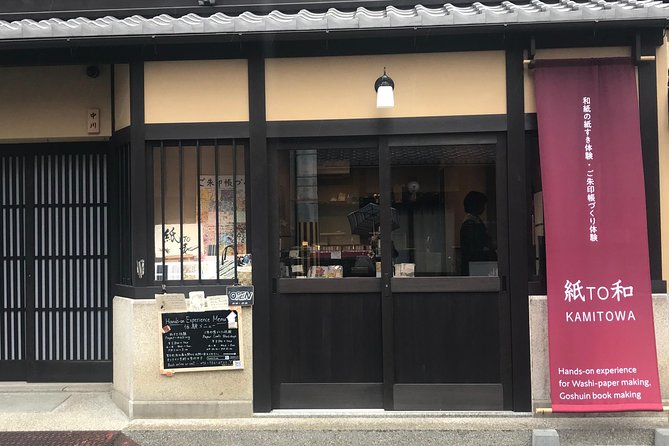
The class starts at 345 Sanjōchō in Nakagyo Ward. You meet back there at the end, so you do not need a complicated after-class route.
Getting there is straightforward. It is about a 9-minute walk from the #24 exit of Shijo Station on the Karasuma Line, or around the same distance from Karasuma Station on the Hankyu Line. If you are near Karasuma Oike Station, it is roughly a 6-minute walk from the #6 exit on the Karasuma Line.
This matters because timing is everything in Kyoto. A short walk lets you plan this for your morning, then move on to lunch and sightseeing without stressing about transit.
Stop inside 紙TO和: what the workshop feels like
Once you arrive, you go through introductions and then jump into the papermaking steps with your instructor. The setting is small and traditional, and that keeps the experience personal. A maximum of 4 travelers means you are not squeezed into a big group and rushed.
Instructors are bilingual, so you can follow along without guessing. You also get support while you work, which is key because washi is a craft where small steps matter.
If you are the type who likes doing the thing, not just learning facts, this workshop setup is built for you. It is also a good rainy-day option since you are indoors for the whole session.
From raw materials to your own washi sheet
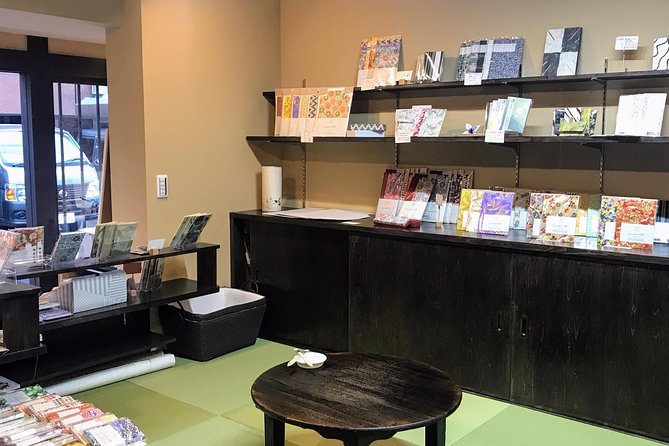
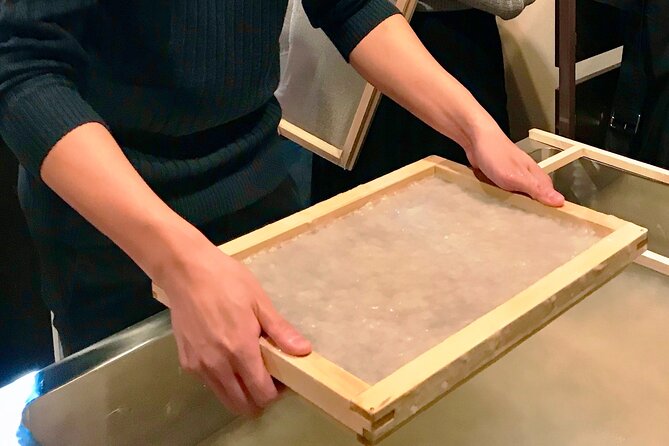
The core of the experience is making traditional washi paper from raw materials. You get guided through the process, and you make a finished sheet (or sheets) that becomes the base for your design.
The class is designed to move in a paced sequence, even though traditional papermaking involves many steps. You will feel how each action affects the paper, then you get to see the work come together by the end.
A practical plus: part of the process includes downtime while paper dries. Instead of sending you off to browse or wait in boredom, the workshop uses that time to teach you. People specifically mention an educational video that explains the process and history, so you understand what you just did instead of leaving with only a souvenir.
A different sort of day in Japan:
- Kyoto Geisha Walking Tour: Gion District & Hidden Gems
★ 4.7 · 3,273 reviews - Kyoto: Tea Ceremony Ju-An at Jotokuji Temple
★ 4.9 · 3,207 reviews - Kyoto: 45-Minute Tea Ceremony Lesson Experience
★ 4.3 · 2,378 reviews - Kyoto: Gion Geisha District Walking Tour – Stories of Geisha
★ 4.7 · 2,187 reviews
Designing with cherry blossoms, maple leaves, and paper cut-outs
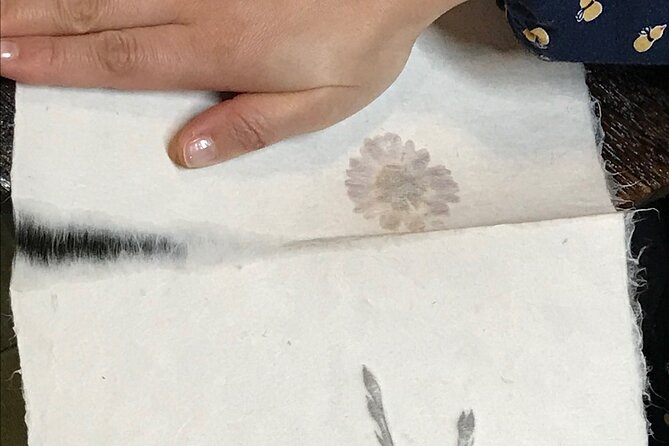
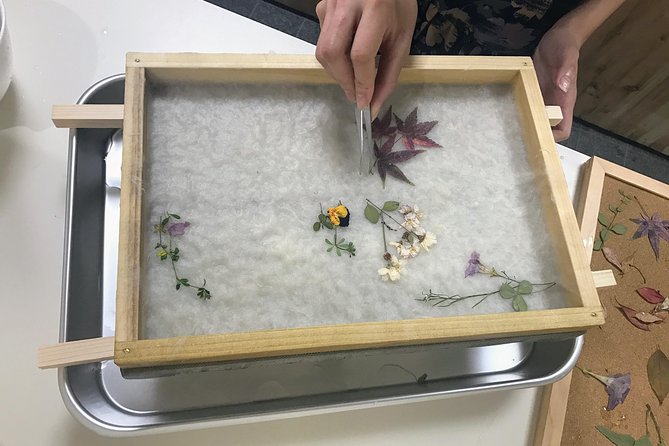
This is where the experience turns from craft lesson into personal art project. You choose what you want to make, then you design it using seasonal pressed flowers and leaves, plus paper cut-outs.
Options include:
- a set of postcards
- a table mat
- a wraparound lampshade
- a tapestry panel
You might find that the exact included set depends on what you pick. One common note is that the class cost covers a basic set of postcards, and other formats or extras can cost more. So if you have your heart set on a lampshade, plan for that possibility in your budget.
I like this approach because it gives you creative freedom without asking you to invent materials. The botanicals are already chosen and seasonal, so you spend your energy arranging the look you want.
Choosing postcards, table mat, lampshade, or tapestry panel
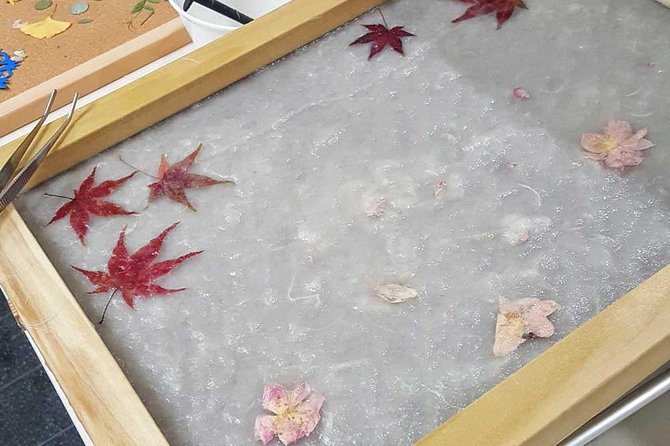
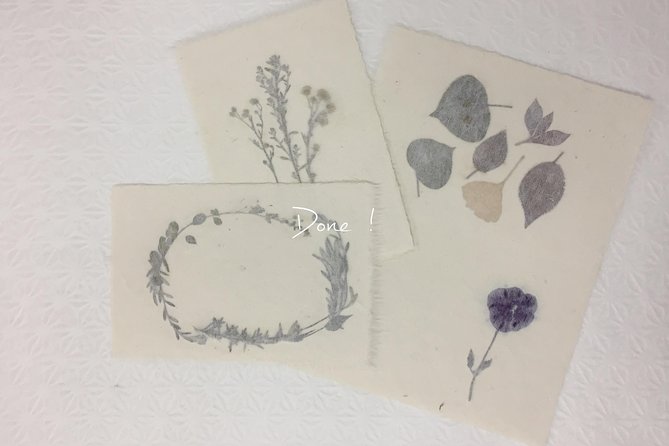
The workshop lets you go beyond making a simple sheet of paper. Instead, you design a functional or giftable item, which helps you walk away with something you can use immediately or give right away.
Here is how each option tends to fit different travel styles:
- Postcards are easiest to take home and share. If you are traveling with less luggage space, this is often the low-stress choice.
- A table mat gives you a daily-use keepsake. It is also a good pick if you want something a little more decorative than a set of cards.
- A wraparound lampshade turns the paper into a dramatic object. Some people choose this as an extra, so check your preferred project choice carefully when you book.
- A tapestry panel is for the visual-art mood, something you can frame or display like a small wall piece.
Because instruction is hands-on, you are not stuck with a one-size template. You can design within the options provided, and your finished piece reflects that effort.
How the instructor support works when you have questions
Bilingual instruction in Japanese and English is a real quality-of-life upgrade here. It reduces the awkward moment of nodding while you quietly misunderstand a step. With Hiro and Junko running the class, people often highlight how gentle and patient the support feels.
The small group format helps too. With a maximum of 4 travelers, it is easier for the instructors to check on your progress. That is especially important in papermaking, where a missed step can affect the final look of the paper.
If you want a workshop where you do not feel behind, this one is set up for that. You get time to work through each stage instead of being rushed at the first sign of confusion.
Drying time videos: learning while you wait
You will have a part of the session where you cannot fully control the timeline, because drying takes time. The workshop uses that window well.
People mention short informational videos during drying time. That is smart, because it turns what could be idle waiting into a learning moment. You understand the why behind the process, which also makes your final souvenir feel more meaningful when you pack it up.
If you like crafts that come with context, you are going to appreciate this. It is not just hands on, it is hands on plus an explanation of what you are seeing and why it matters.
Optional second hour for unlimited papermaking
The standard class is about 1 hour. If you want to make more gifts, there is an add-on option for an additional hour of unlimited paper making, with the cost covered by your expense.
This option is worth considering if:
- you are traveling with family or friends and want multiple handmade items
- you are the type who enjoys the process and could easily keep working once you get the hang of it
- you want more chances to try different designs, pressed flowers, and layouts
The main trade-off is simple: you pay more for more output. If you only need one great keepsake and you have a packed schedule, the standard hour is usually enough.
What you bring home, and how to carry it
At the end of the class, you take home a unique handmade souvenir made from your own washi paper. Since you also design items like postcards or a lamp form, it is not just a flat sheet you have to figure out later.
Packaging also sounds handled well. People specifically mention that finished products are packaged properly, which helps when you are traveling and juggling trains, planes, and day bags.
Still, handle with care. Even with good packaging, it is smart to plan space in your luggage or daypack for your item. One practical tip from the experience is that you may need to carry your final piece yourself if you do not arrange a different handoff.
Price and value: is $33.03 a good deal?
At about $33.03 per person, this workshop is priced like a focused cultural class, not a big guided tour with transit included. You do pay for instruction, materials used for papermaking, and the finished souvenir you create, while transportation to and from the workshop is on you.
Here is why it can still feel like strong value:
- You get bilingual teaching in a small group, which usually means more individual attention than bigger studios.
- The class results in a take-home item, not just a lesson or demonstration.
- You learn a traditional technique and use seasonal botanicals, so the souvenir looks special and personal.
The main value question for you is how you compare it to other Kyoto experiences. If you are deciding between another guided walking tour and a hands-on craft, this usually wins when you want a souvenir with meaning. If you only want photos and quick browsing, then it may feel too slow. But if you want something you can hold and use, it is a great use of a morning.
Who this Kyoto washi class is best for
This is a good fit for almost anyone who enjoys making things with their hands. Most people can participate, and the class is designed to be approachable.
It is especially good if you:
- want a break from Kyoto sightseeing crowds
- like traditional crafts and want to understand the process
- travel as a couple, with older kids, or with friends who want a shared creative activity
- are visiting during rainy weather since it is fully indoors
It is also a solid choice if you want a calm morning. People describe it as a peaceful respite, and the pacing plus small group size support that vibe.
Should you book this washi papermaking class in Kyoto?
If you want a Kyoto souvenir that looks like art and comes from your own hands, I think this is an easy yes. The combination of traditional papermaking from raw materials, bilingual guidance from Hiro and Junko, and a finished item like postcards or a lampshade makes the hour feel worth it.
Book it if you have space for a take-home piece and you like doing a craft, even if you are not an expert. Skip it only if you are short on time or you prefer fast sightseeing over slow, creative learning.
Either way, plan your morning around the walk to 345 Sanjōchō, bring a little curiosity about old techniques, and you will leave with something you can actually show for your Kyoto day.
FAQ
Where is the meeting point for the washi papermaking class?
You meet at 345 Sanjōchō, Nakagyo Ward, Kyoto, 604-8205, Japan.
How long is the class?
The experience is about 1 hour.
Can I make more paper than the standard 1 hour?
Yes. You can add an additional hour of unlimited paper making, with the additional cost covered by your expense.
What language do the instructors speak?
The instructors are bilingual and speak Japanese and English.
What kinds of items can I make?
You make traditional washi paper and then design a set of postcards, a table mat, a wraparound lampshade, or a tapestry panel.
What materials are used for the designs?
You use seasonal pressed flowers and leaves, including cherry blossoms and maple leaves, plus paper cut-outs.
Is transportation to and from the workshop included?
No. Transportation to and from the workshop is not included.
How many people are in the group?
The class has a maximum of 4 travelers.
Is this activity suitable for children?
Children must be accompanied by an adult.
What is the cancellation policy?
Free cancellation is available. You can cancel up to 24 hours in advance for a full refund, and cancellations within 24 hours of the start time are not refundable.
Newly listed around Kyoto
- Kyoto:Family-Friendly Kimono & Yukata Experience at WARGO★ 5.0 · 147 reviews
- Traditional Japanese Music show & Experience Tour in Kyoto★ 5.0 · 57 reviews
- The Kyoto VIP Experience!★ 5.0 · 20 reviews
- Tour in Kyoto with a Goverment Certified Tour Guide★ 3.5 · 117 reviews
- Kyoto: Golden Pavilion, Nijo Castle, Nishiki Market. Private★ 5.0 · 16 reviews
- TREASURES of Kyoto: Fushimi Inari, Kiyomizu Temple, and more!★ 5.0 · 20 reviews
- Tea ceremony and kimono experience at Kyoto, Tondaya★ 4.0 · 90 reviews
- A Unique Antique Kimono and Tea ceremony Experience in English★ 5.0 · 109 reviews
Morning, compared.

Kyoto Early Morning Tour with English-Speaking Guide
Read our review →Early Morning Tour with English-Speaking Guide
Read our review →
World Heritage Shirakawa-go Morning Guided Tour
Read our review →
Nara Early Morning Tour (Kyoto or Osaka Departure Available)
Read our review →

Hiroshima in a Nutshell: Morning Bike Adventure
Read our review →