Review · GUIDED
Tour in Kyoto with a Goverment Certified Tour Guide
Kyoto in a single day. That is the pitch, and it mostly works if you like walking, temples, and quick local context. This tour strings together some of the city’s best known sights with a guide who focuses on stories, street-level finds, and how to move through crowds intelligently.
I especially like how the route is built around the big emotional hits, from Fushimi Inari to the hill views at Kiyomizu-dera. I also like that you are not stuck staring at buildings, because the guide is set up to connect what you see to the myths and daily culture of Kyoto.
My main caution is timing and organization. A chunk of the feedback points to late starts, unclear meeting instructions, or the day turning less private than expected, so you will want to double-check details before you head out.
In This Review
- Key things to know before you go
- A 6 to 8 hour Kyoto route that hits big sights without getting lost
- Fushimi Inari and Kiyomizu-dera: the route’s best mood setters
- Nijo Castle adds history, but admission and time are on you
- Gion strolling and Nishiki Market: the best chance for real Kyoto flavor
- Golden Pavilion and Silver Pavilion: when ticket costs show up
- Arashiyama bamboo and Tenryu-ji: nature, Zen, and a little patience
- Pickup, mobile tickets, and the meeting point reality check
- What the guide experience tends to feel like, from real names in feedback
- Price and value: what you’re really paying for
- Who this tour suits best, and who should rethink it
- My booking checklist before you meet your guide
- Should you book Mystical Kyoto Quest with Konnichiwa-japan?
- FAQ
- How long is the Kyoto tour?
- What is included in the price?
- What admission fees should I expect to pay?
- Does the tour include pickup?
- If I travel solo, will it still be private?
- What is the cancellation cutoff for a full refund?
- What happens if the tour does not meet the minimum number of travelers?
Key things to know before you go
- Government certified guiding: you get a real guide, not a walking audio app.
- A tight, classic route: major Kyoto sites plus market time, designed for a limited day.
- Mixed “included” costs: some temple admissions are free, some are not, so budget a bit extra.
- Private in theory, group size can shift: solo travelers may be combined depending on demand.
- Crowds are part of the package: you will spend time managing people, not just sightseeing.
- Meeting point clarity matters: several issues in feedback center on where and when to meet.
A 6 to 8 hour Kyoto route that hits big sights without getting lost
At $110 per person for roughly 6 to 8 hours, the value depends on one thing: what you want from the day. If your goal is to see Kyoto’s top icons plus a food-and-neighborhood stop, the guide can save you time deciding what to prioritize and how to sequence it.
What makes this tour appealing is the blend of “wow factor” landmarks and local texture. You get the shrine-photogenic drama, the temple views, and then a change of pace with walking through places like Gion and Nishiki Market where daily life is on display.
The practical tradeoff is that you are moving. Even when admission is free at certain stops, the line-wait and crowd flow can eat minutes. If you want slow, long pauses in every building, you might feel rushed.
A few more Kyoto days to weigh up
- PERFECT KYOTO 1-Day Bus Tour
★ 5.0 · 13,518 reviews - Kyoto: Fushimi Inari, Kinkakuji, Bamboo Grove 1 Day Bus Tour
★ 4.8 · 4,316 reviews - Kyoto: Tea Ceremony in a Traditional Tea House in Kiyomizu
★ 4.9 · 3,519 reviews
Fushimi Inari and Kiyomizu-dera: the route’s best mood setters
Your first big moment is Fushimi Inari-taisha Shrine, famous for the thousand-plus torii gates winding along the hillside. This is the kind of place where the photos look unreal, but the real win is the rhythm: walking, turning, and seeing the shrine complex expand as you climb.
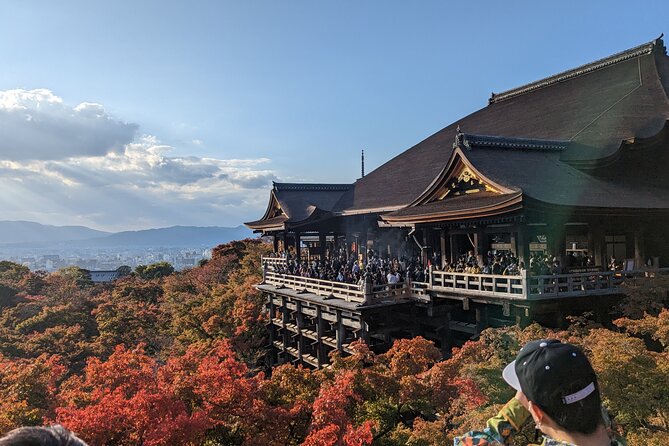
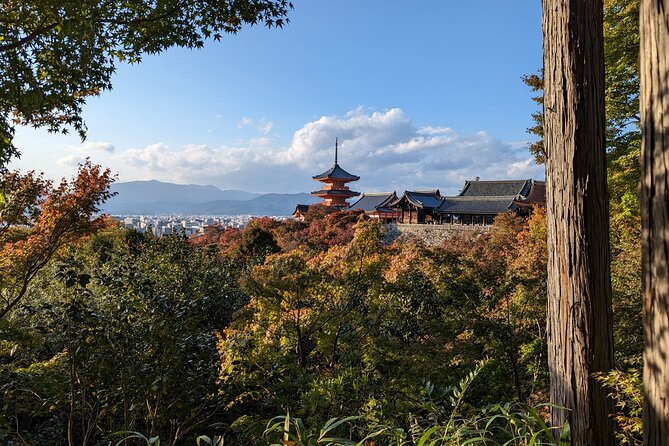
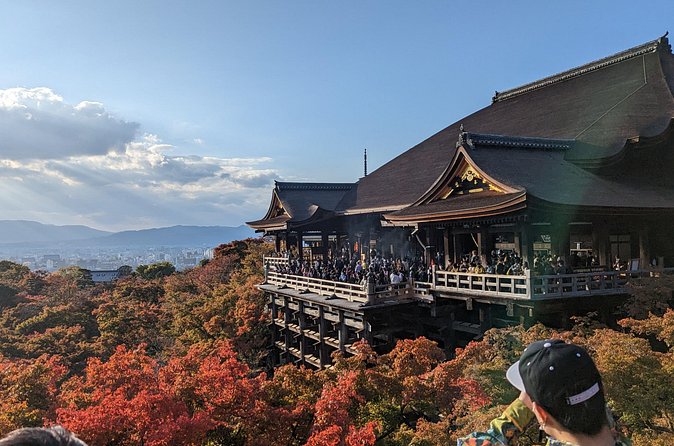
Next comes Kiyomizu-dera, perched on a hillside in the Higashiyama area. This stop is iconic for a reason. You get a temple experience that pairs spiritual atmosphere with that classic Kyoto viewpoint feeling, especially when you can step back and take in the architecture and the surrounding district layout.
Two real-world tips I recommend here:
- Wear shoes you can handle on sloped, uneven stone. You will do more walking than you think.
- Start mentally ready for crowds. Even with a guide, the flow of people sets the pace.
Nijo Castle adds history, but admission and time are on you
Nijo Castle is a strong choice for balance because it is less “mythic gates” and more power and politics. It is also a nice contrast after shrine and temple stops, since castle design and layout tell a different kind of story.
The big drawback is cost and planning. Nijo Castle admission is not included, so you should expect to pay your entry fee on the day. Also, castles can take longer than you expect if you get pulled into details around halls and defenses.
If you are short on attention for museums and royal architecture, this is the one stop you can mentally treat as optional depth. You still get the main idea quickly, then you can shift your energy to the neighborhoods afterward.
Gion strolling and Nishiki Market: the best chance for real Kyoto flavor
Gion is where Kyoto starts to feel like a living neighborhood. This district is known for traditional streetscapes and the preserved visual culture that people associate with geisha districts. Even if you are not focused on formal performances, a guided walk here helps you notice the details you would otherwise miss.
Then you pivot into Nishiki Market, which is essentially Kyoto’s “food streets” in a compact form. This is a great place to get snacks, see local ingredients, and understand what people actually buy and eat day to day.
A couple practical notes:
- Go in hungry, but pace yourself. Market browsing plus walking can turn into an accidental full meal by stop two.
- If you have dietary restrictions, bring them up early to your guide. The route includes a market stop, so choices matter.
This pairing works well because it changes the emotional tone. You go from temple and history mode to city-life mode.
A different sort of day in Japan:
- Kyoto Geisha Walking Tour: Gion District & Hidden Gems
★ 4.7 · 3,273 reviews - Kyoto: Tea Ceremony Ju-An at Jotokuji Temple
★ 4.9 · 3,207 reviews - Kyoto: 45-Minute Tea Ceremony Lesson Experience
★ 4.3 · 2,378 reviews - Kyoto: Gion Geisha District Walking Tour – Stories of Geisha
★ 4.7 · 2,187 reviews
Golden Pavilion and Silver Pavilion: when ticket costs show up
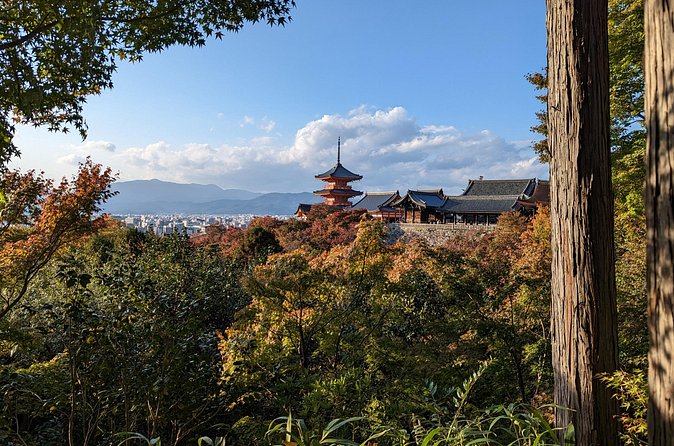
Kinkakuji, the Golden Pavilion, is one of those places that can feel over-photographed until you stand there and see it in person. The structure is striking, and it gives you a natural centerpiece for conversation. Even if you have seen images before, the scale and the way the building sits within its setting make it worth the stop.
Then you hit Ginkakuji, the Silver Pavilion. Here the experience is different. It is less about shiny surfaces and more about mood, ceremony-like stillness, and Zen-influenced design choices.
One important value detail: Ginkakuji admission is not included, and the tour lists it at $8 per person. That is not a deal breaker, but it is a “budget it now so it does not surprise you” cost.
If you care about timing, this is also a common crowd bottleneck. Try to stay flexible with photo time. The guide can help you choose where to pause so you are not stuck in the most congested angles.
Arashiyama bamboo and Tenryu-ji: nature, Zen, and a little patience
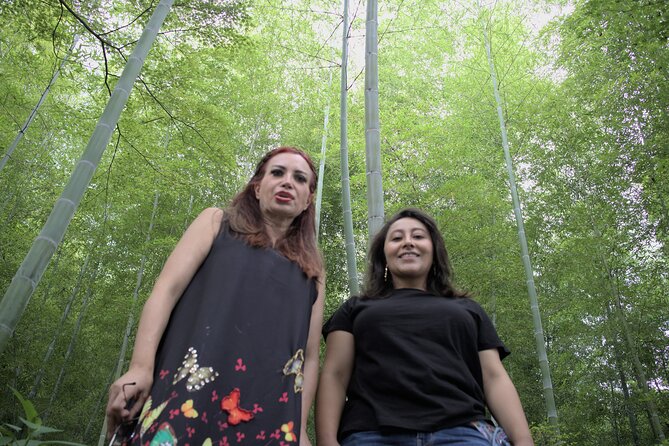
Arashiyama is the tour’s nature reset. The bamboo forest area is famous for a reason: it is visually dramatic and it changes your pace from urban walking to something calmer. Even when you cannot fully escape the crowds, the setting still does the job of slowing your brain down.
Right after bamboo, you visit Tenryu-ji, a Zen temple and a UNESCO World Heritage Site. This is where the day gets a bit more contemplative. You get that “Zen garden logic” feeling, where the views and pathways do storytelling without relying on loud signage.
A practical consideration based on how Arashiyama is often experienced: you might find extra viewpoints and short offshoots offered depending on time. Some guides may extend the experience around the mountain and viewpoints in the broader Arashiyama area. I would treat any extra like that as a bonus, not a promise, because your schedule still depends on crowd timing and how quickly your group moves.
If you are prone to overheating, Arashiyama under the sun can feel intense. One review specifically called out a very hot day, and that is consistent with Kyoto summer conditions. Hat, water, and breaks help.
Pickup, mobile tickets, and the meeting point reality check
This tour advertises pickup offered and a mobile ticket, which should make life easier. But the most important takeaway from the feedback is this: meeting instructions can make or break the day.
Several negative reports focus on no-shows, late arrivals, and meeting confusion. Even when the guide is good, you can lose your entire morning if you are standing in the wrong place at the wrong time. So I strongly recommend you treat the meeting spot like a flight gate. Get the exact location, confirm it shortly before you leave, and plan to arrive early.
There is also a privacy nuance. The experience is described as private, only your group. But there is an explicit note that if you are traveling as a solo traveler or couple, you might be asked to join another solo or couple. Reviews also mention private tours becoming larger groups. That mismatch is usually about demand and logistics, not about the guide personally, but you should still know it can happen.
One more cost detail that matters for value math: the tour lists transportation fees of guide (5 to 8 USD) as not included. It is small, but it is still a “read the fine print” item you should set aside.
If you want the day to feel smooth, your best move is simple: be ready with your phone, your confirmation, and a clear message plan so you can quickly reach the operator if anything looks off.
What the guide experience tends to feel like, from real names in feedback
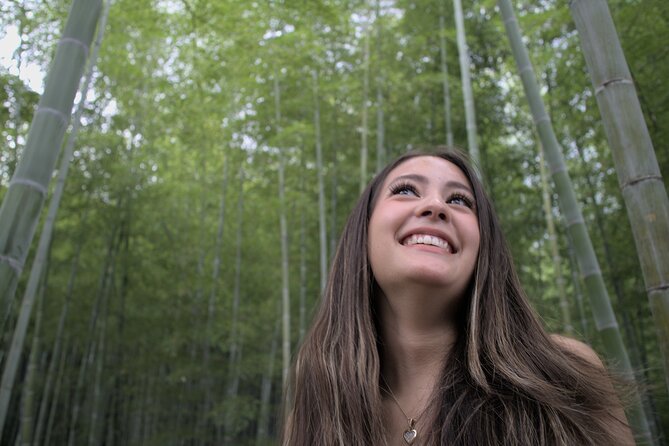
When the tour works well, the guide is the whole story. Names that come up in feedback include Andrea and Roberto (sometimes also written as Robert). Reviews highlight guides who are patient, adapt to your pace, and explain what you are seeing in plain terms.
A recurring praise theme is learning that does not feel academic. Guides tend to connect the sites to the cultural context people actually care about, like how Kyoto’s traditions developed and what certain symbols mean. You also may hear entertaining storytelling around legends and local mystique, which can turn a “walk through a shrine” day into something more memorable.
On the other hand, the worst reviews are not about the sightseeing. They are about service failures like no-shows and late starts. So the guide quality seems capable, but the operator reliability can vary. I would book this tour with the mindset that you are buying guided time, not guaranteed perfection.
Price and value: what you’re really paying for
Let’s talk value, because $110 is not just “cheap sightseeing.” For that price, you are paying for:
- a government certified guide
- a pre-planned route across big-name Kyoto stops
- pickup offered and a mobile ticket
- flexibility to customize depending on time and expectations (as described)
You are not paying for:
- food and drinks
- some admissions (with Ginkakuji at $8 per person stated, and other stops marked not included)
- the guide transportation fee (5 to 8 USD)
- any extra shopping or personal expenses
So the best way to judge value is to match it to your style. If you want someone to optimize your sequence, keep you oriented, and explain the “why” behind each place, this can be a strong use of money. If you mainly want to stroll at your own pace and you already know the key sights, you may question the cost once you add up admission and the realities of crowds.
Who this tour suits best, and who should rethink it
This tour fits best if you:
- have one day in Kyoto and want the major highlights without planning every step
- enjoy guided context, not just photo stops
- want a mix of temples and a market district
- can handle a steady walking day (plus stairs and slopes)
You might reconsider if you:
- get stressed by tight schedules or sudden route changes
- rely on very strict timing for mobility reasons or medical needs, unless you confirm support in advance
- strongly prefer staying in a small group with no chance of joining others
If you want the best experience, pick your priorities early. Decide what must-not-miss stop is for you. Then use the guide time to get context, not to rush every building to completion.
My booking checklist before you meet your guide
Based on the issues people reported, I treat this as a “check, confirm, and show up early” tour.
Do this:
- Confirm the meeting point the day before and again before you leave.
- Take a screenshot of your mobile ticket and confirmation.
- Arrive a little early, not on time.
- Have a backup plan for how you will reach the next point if the first start slips.
And one more practical approach: if the guide is delayed, do not wait forever. Use the operator contact method listed in your booking and then make a smart call. Your day is still Kyoto, and you do not want a single failure to ruin all your temple time.
Should you book Mystical Kyoto Quest with Konnichiwa-japan?
Book it if you want a guided, structured Kyoto day that covers major shrines, a castle stop, Gion, a market, and Arashiyama in about half a day. The guide-focused nature of the experience can make the sights feel connected, and the route is efficient for first-time visitors.
Don’t book it blindly if you need absolute reliability at the exact start time or if you are highly sensitive to schedule slippage and group-size changes. The positive guide feedback is real, but so are the negative service reports.
If you do book, book with your eyes open, confirm meeting details, and plan for crowds. When it clicks, you end the day with the kind of Kyoto memories that last longer than a single photo.
FAQ
How long is the Kyoto tour?
The tour runs about 6 to 8 hours.
What is included in the price?
You get the guide. The tour also offers customization depending on your expectations and time available, and it uses a mobile ticket. Pickup is offered.
What admission fees should I expect to pay?
Some admissions are not included. Ginkakuji Temple costs $8 per person. Nijo Castle and Tenryu-ji are listed as not included as well, so you should plan to pay those on the day.
Does the tour include pickup?
Yes, pickup is offered, and the tour notes that it is near public transportation.
If I travel solo, will it still be private?
The experience is described as private, but there is a note that solo or couple travelers might be asked to join another couple or solo traveler.
What is the cancellation cutoff for a full refund?
You can cancel up to 24 hours in advance for a full refund. If you cancel less than 24 hours before the start time, the amount you paid is not refunded.
What happens if the tour does not meet the minimum number of travelers?
If the tour is canceled because the minimum number of travelers is not met, you should be offered a different date or a full refund.
Newly listed around Kyoto
- Kyoto:Family-Friendly Kimono & Yukata Experience at WARGO★ 5.0 · 147 reviews
- Traditional Japanese Music show & Experience Tour in Kyoto★ 5.0 · 57 reviews
- Traditional Japanese Washi Papermaking- Kyoto morning★ 5.0 · 77 reviews
- The Kyoto VIP Experience!★ 5.0 · 20 reviews
- Kyoto: Golden Pavilion, Nijo Castle, Nishiki Market. Private★ 5.0 · 16 reviews
- TREASURES of Kyoto: Fushimi Inari, Kiyomizu Temple, and more!★ 5.0 · 20 reviews
- Tea ceremony and kimono experience at Kyoto, Tondaya★ 4.0 · 90 reviews
- A Unique Antique Kimono and Tea ceremony Experience in English★ 5.0 · 109 reviews
Guided, compared.
Tokyo 6hr Private Tour with Government-Licensed Guide
Read our review →
Shinjuku Local Bar and Izakaya Guided Walking Tour
Read our review →
Private City Highlights Tour with Local Guide
Read our review →
Kyoto Early Morning Tour with English-Speaking Guide
Read our review →
Tokyo 4hr Private Tour with Government-Licensed Guide
Read our review →
Kyoto 6hr Private Tour with Government-Licensed Guide
Read our review →