
Review · JAPANESE CRAFT WORKSHOPS
Kyoto: Calligraphy class at Buddhist temple in city center
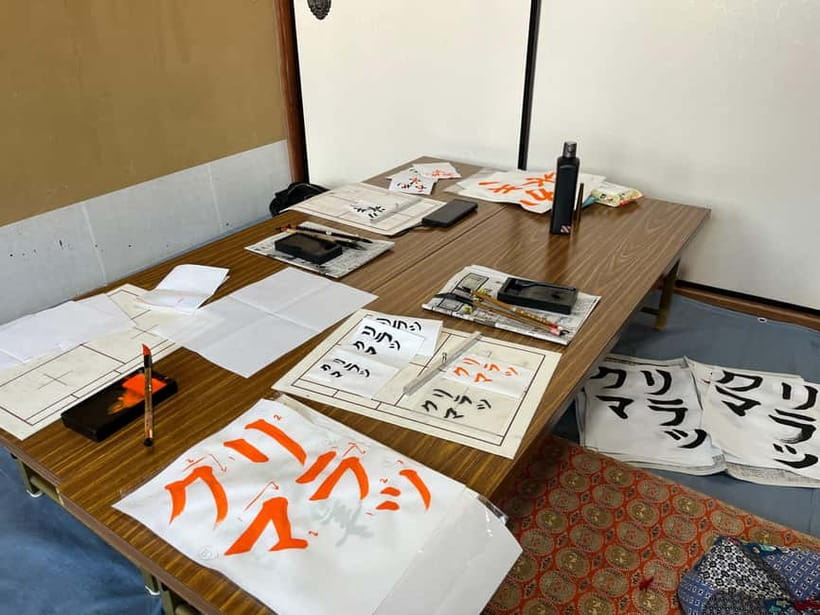
Ink and a temple in Kyoto center. A small group calligraphy class inside a Buddhist temple washitsu gives you hands-on practice of shodo, plus a souvenir that feels personal, not packaged. You also get friendly, multi-language help from hosts like Jose and translators who keep everything moving.
I like the calm, focused setup on tatami and the fact that you create real artwork you can frame or display at home. The one drawback is practical: most seating is on the floor, so if kneeling and sitting low bothers you, plan around it since desks are limited.
In This Review
- Key points to know before you write
- First impressions inside Seigan-ji’s tatami room
- Meeting point at Seigan-ji: the red lantern rule
- What you learn in 70 minutes of shodo
- Choosing your Kanji: the part that makes it feel like omiyage
- Tools, ink, and brush control that actually clicks
- The tatami seating reality, zabuton pillows, and comfort
- What you take home: artwork, keychain, and photo help
- Price and value of $55 for a real skill, not a quick demo
- Who should book this Kyoto calligraphy workshop
- Should you book it or skip it
- FAQ
- How long is the Kyoto calligraphy class?
- What is the price and what’s included?
- Where do I meet for the workshop?
- Do I pick my own Kanji or word?
- Is food or drinks included?
- Is the workshop wheelchair accessible?
- What seating should I expect since it’s in a tatami room?
Key points to know before you write
- Find your word first: you choose the Kanji or character you want, and it makes the final piece feel like yours
- Skill built step by step: basic lines come before your final character, so beginners have a path to success
- Temple atmosphere, city-center convenience: you’re in Kyoto with a historic temple setting, not out in the hills
- Materials are included: washI, brush, ink, and the support paper are part of the experience
- You take more than a page: you leave with your finished work and a small character keychain
- Small group attention: limited to 6 participants, so you get feedback while you practice
First impressions inside Seigan-ji’s tatami room
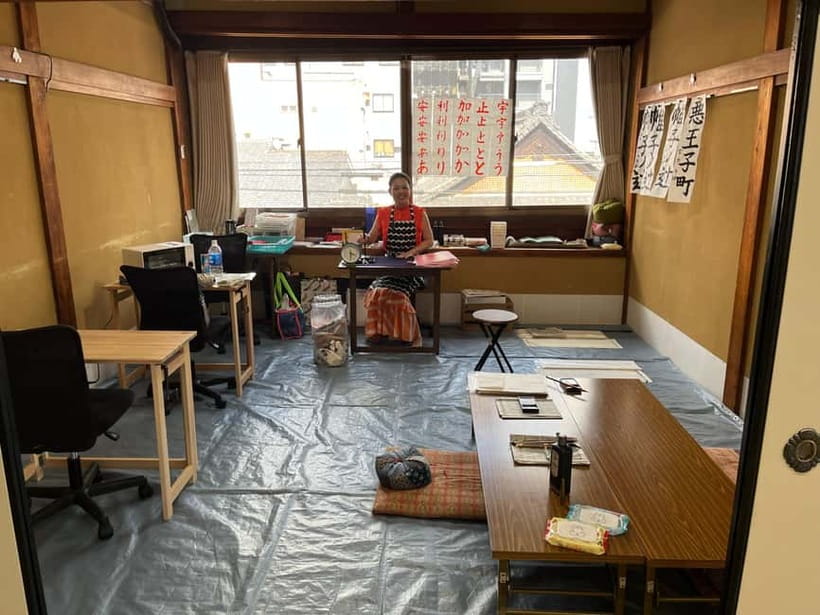
The workshop experience starts with a simple but smart idea: you’re not watching a performance, you’re learning a skill in a quiet temple room. The setting is a traditional washitsu with tatami flooring, and that changes the mood. Your body slows down a bit as you sit lower, hold the brush more carefully, and focus on each stroke.
The temple part matters because calligraphy in Japan is not just an art class. It’s tied to school learning, to daily habits, and to how people think about character form and balance. Here, you get that connection without needing any background. You show up, pick your character, and follow a guided progression that makes sense.
Also, the class is built for a small group, limited to 6. That’s a big deal for beginners. When you’re trying to control ink flow and brush angles, you want corrections early, not later when your work is already dry.
More Craft Workshops in Kyoto
- Authentic knife making experience at a blacksmith in Kyoto
★ 4.8 · 350 reviews - 1-Hour Japanese Archery Experience in Kyoto
★ 5.0 · 176 reviews - Kyoto: Japanese Archery Workshop with Experienced Instructor
★ 4.9 · 132 reviews
Meeting point at Seigan-ji: the red lantern rule
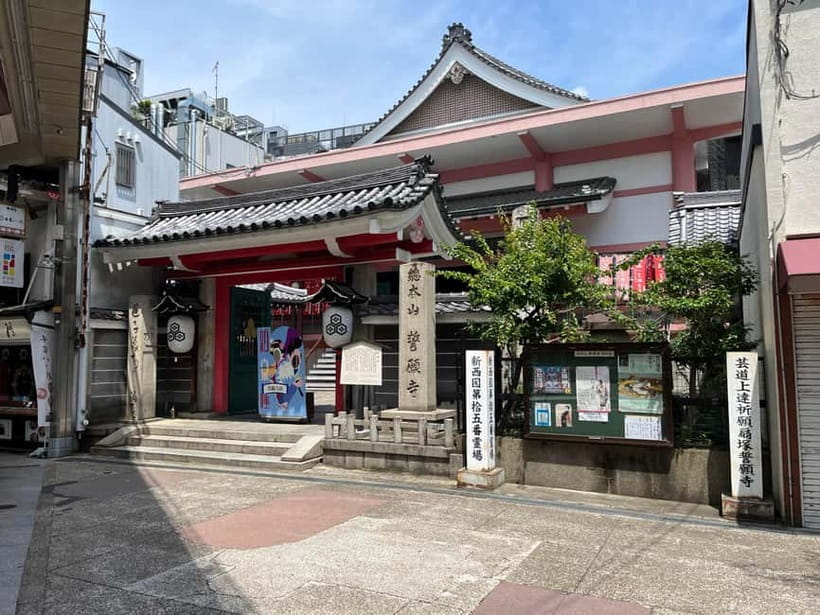
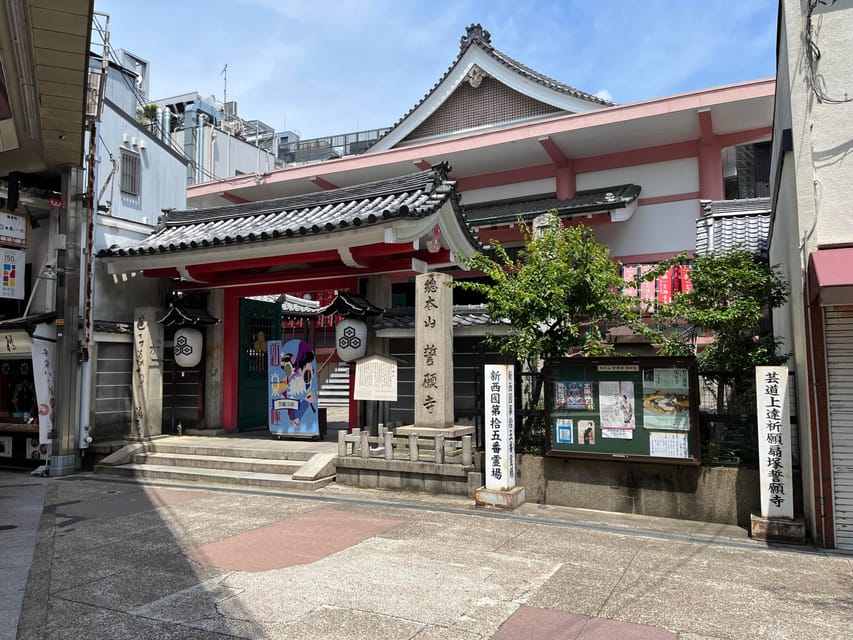
Logistics are where good workshops rise or fall, and this one handles it clearly. You meet in front of Seigan-ji Temple in the Shinkyogoku shopping street. Look for the person holding a red lantern on a stick under the roofed street.
Two practical notes that keep you from wasting time:
- Do not go up the stairs to enter the temple on your own.
- Do not ask monks or staff if you’re in the right place. Just wait at the front and watch for the host with the red lantern.
In real life, this saves you from the awkward shuffle of trying to find a group inside a place that still has its normal rhythm. If you arrive early, you can slow down, look around the shopping street area, then wait calmly for your lantern.
Once you’re inside, the pacing feels smooth. You’ll be introduced to the teacher and the translator(s), then you’ll move into choosing your Kanji.
What you learn in 70 minutes of shodo
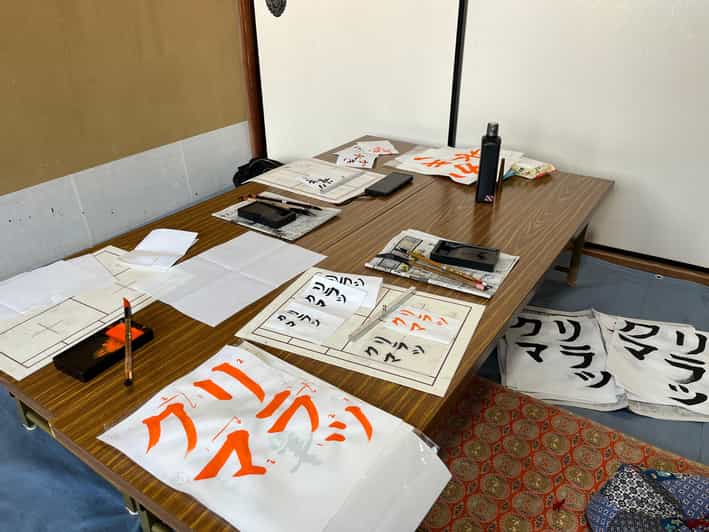
The workshop runs about 70 minutes, and it’s structured like a short training session, not a long demo. You start with basics, then you apply them immediately to your own final character.
Here’s how the flow feels in practice:
- Introduction of the teacher and translator(s), so you always know what’s happening next
- Select your Kanji or word from options, or pick one you brought in mind
- Tool lesson covering how to use the brush and ink properly
- Practice basic lines to learn stroke direction and spacing
- Practice your chosen character with guidance as you go
- Create your complete artwork on a shikishi (the special square board)
- Take home your work and a small souvenir keychain
This pacing is what makes the class feel fair for beginners. Instead of asking you to master a complex character on the first try, you build control first. Then you get feedback while your strokes are still adjustable.
The teacher involved is an experienced calligrapher, and the translator helps keep things clear in your language. In the reviews, hosts like Jose show up as friendly guides, and teachers such as Imai Sensei are described as patient and focused on technique.
Choosing your Kanji: the part that makes it feel like omiyage
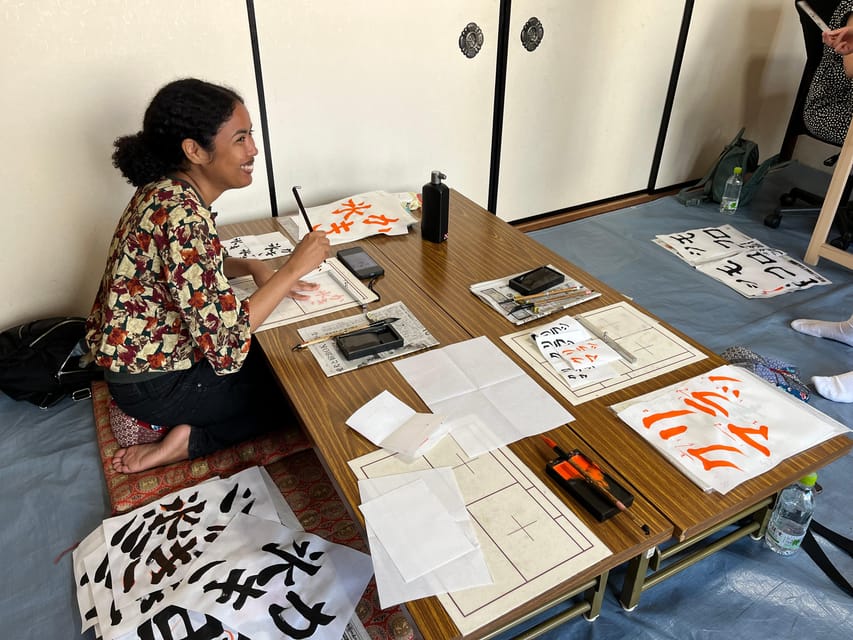
One of the best parts is that you don’t end up with a generic souvenir. You decide what you’re writing. You can choose the character (or Kanji) you want, and the workshop also provides examples so you can select something approachable.
That matters more than it sounds. If you pick a character with meaning to you, the finished shodo becomes a small personal memento. The word itself becomes your omiyage, not just the paper it’s written on.
Practical tip: don’t overthink it, but do come prepared with a couple of options. You’ll get examples during the class, but you’ll get better guidance if your choice is already in your head. One review notes that preparation helps because the teacher can demonstrate the strokes you’ll need for your chosen character.
Also note the comfort reality: practicing too much can tire your arm, and your final look suffers when you rush the last strokes. The workshop is timed for a clean finish, so take the teacher’s pacing cues seriously.
More Shrine & Temple Visits in Kyoto
- Kyoto: Fushimi Inari, Kinkakuji, Bamboo Grove 1 Day Bus Tour
★ 4.8 · 4,316 reviews - Kyoto: Tea Ceremony Ju-An at Jotokuji Temple
★ 4.9 · 3,207 reviews - Fushimi Inari Hidden Hiking Tour (Private Option Available)
★ 5.0 · 1,750 reviews - Osaka/Kyoto:Kinkakuji,Arashiyama,FushimiInariShrine,NaraPark
★ 4.1 · 1,596 reviews
Tools, ink, and brush control that actually clicks
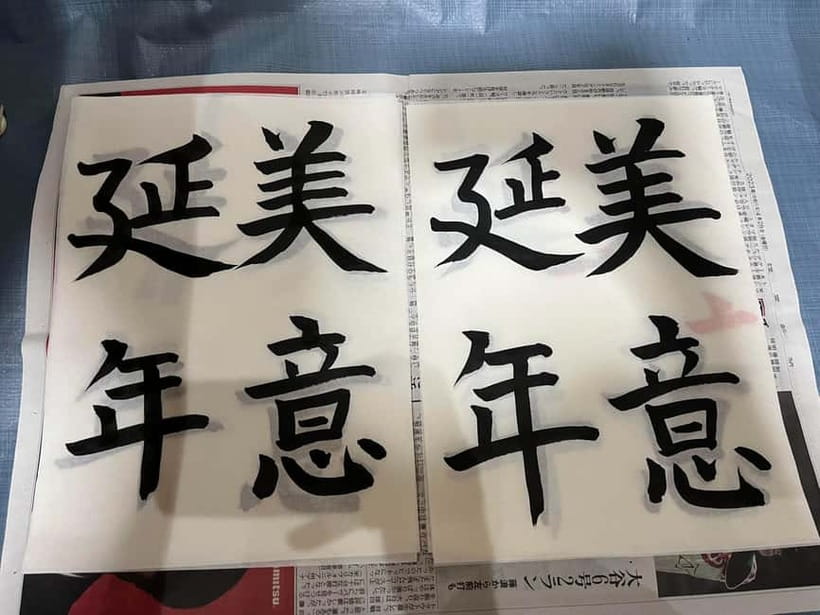
Calligraphy has a reputation for being “hard,” but what’s hard is usually the first few steps: brush angle, pressure, and how to end a stroke cleanly.
This class breaks those issues into small wins. You start with tool basics, then you copy basic lines before moving to your full character. That sequence is key. When you jump straight to the final Kanji, you’re guessing. When you do it after practice lines, you’re learning a repeatable pattern.
You’ll use everything needed for a proper piece, including washi, brush, ink, and the supporting materials used for writing and blotting. You also work with a shikishi board for the final layout. By the time you start your character, you’re not just scribbling, you’re building a structured stroke plan.
And yes, the ink can be messy in the fun way. That’s part of why it feels more real than a sticker souvenir. Once you’re in the rhythm, you’ll notice how small changes in pressure and direction make your letters look more confident.
The tatami seating reality, zabuton pillows, and comfort
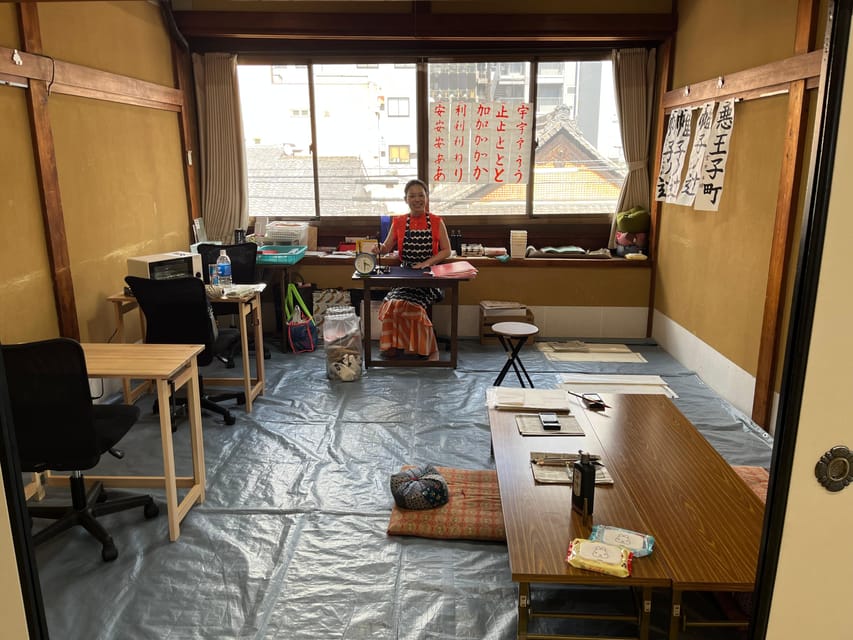
This is a short class, but it’s still a seated-on-the-floor workshop. Most people sit on the tatami floor using a zabuton (floor pillow), and there are some desks available, but limited.
If your legs stiffen up easily, arrive with a plan:
- Consider wearing pants or flexible clothing.
- Take your time shifting after instructions.
- If you need a desk, mention it early so there’s less scrambling later.
One drawback to note plainly: if sitting low is a deal-breaker for you, this could turn into an uncomfortable workout instead of a relaxed cultural experience.
The good news is that the class is designed for calm focus. It’s not a silent ceremony, but it tends to be quiet because everyone is concentrating on writing.
What you take home: artwork, keychain, and photo help
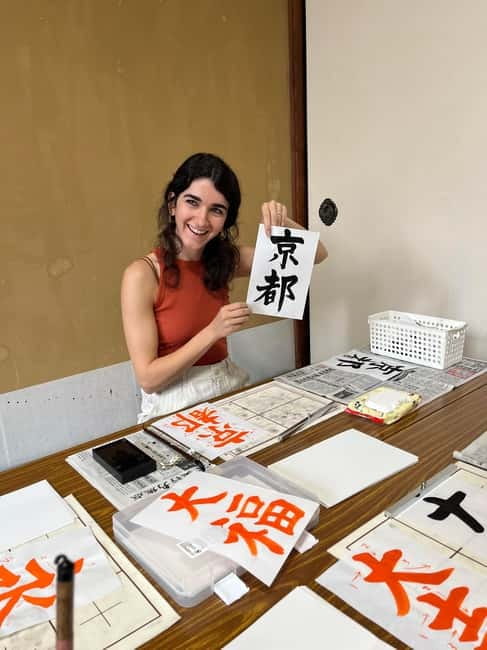
The final product is the obvious highlight. You write your character on a shikishi, and you take that finished piece home. You’ll likely want to display it somewhere visible, because it’s one of the few souvenirs you can hold and remember with pride.
You also receive an omiyage in the form of a keychain made with your chosen character. It’s small, but it reinforces the personal choice you made at the start.
In addition, the hosts may take photos for you. Reviews mention Jose taking lots of pictures, which is useful because you’ll be focused on the ink and might not have time to document everything yourself.
If you want a deeper souvenir, this workshop also encourages the idea of continuing at home. One review mentions doing a calligraphy kit the next day in Kyoto, which suggests the class can spark a real interest.
Price and value of $55 for a real skill, not a quick demo
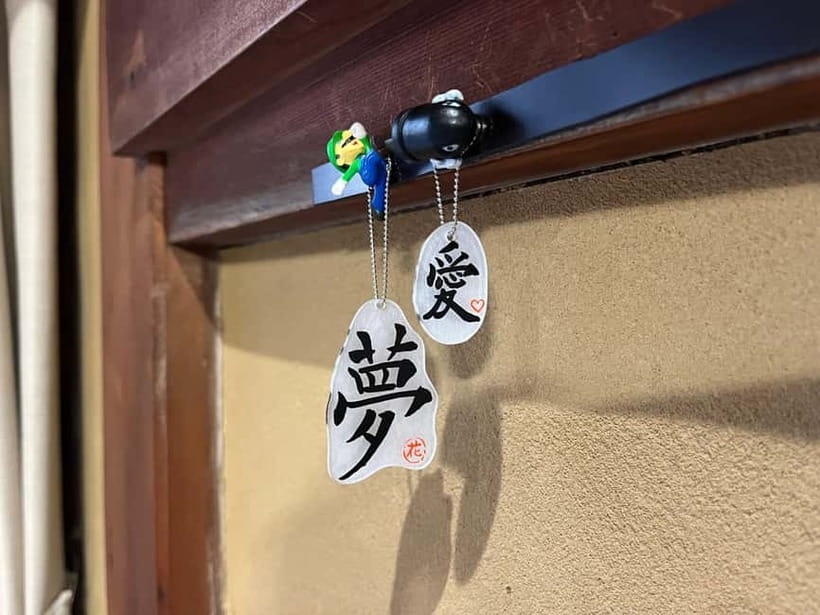
At around $55 per person for roughly 70 minutes, the value depends on one question: are you buying a memory, or are you buying a skill you can show?
Here, you get both. You leave with:
- included materials (brush, ink, washi, and tools needed to make your piece)
- your finished calligraphy artwork
- a character keychain souvenir
- structured instruction and translation support
Because it’s limited to 6 participants, the teacher can correct your strokes, and the translator can keep the instructions flowing. That personal feedback matters. It’s the difference between getting a pretty-but-random outcome and getting a piece that looks like you learned something.
If your Kyoto plan is packed with temples and shopping, this class is a nice counterbalance. You get to sit down, slow your mind, and still walk away with something tangible.
Who should book this Kyoto calligraphy workshop
This is a great fit if you want:
- a cultural activity you can do without prior knowledge
- a small group setting with feedback
- a take-home piece that feels personal, based on your own character choice
- a calm setting in a city-center temple area
It also works well for people who like step-by-step instruction. The class starts with basics, then builds to your final artwork. Reviews repeatedly mention that the teacher and translator pair work smoothly.
Two common fit concerns:
- If you strongly dislike sitting on tatami, you may find the floor seating a strain since desks are limited.
- If you need a fully visual-friendly format, the workshop data lists it as not suitable for visually impaired people.
Also, if you’re traveling with kids, the data specifies minimum age categories. So check ages carefully before you book.
Should you book it or skip it
Book it if you want a Kyoto souvenir you’ll actually use and display, and you like learning a traditional craft with patient instruction. The temple location plus the hands-on technique makes it feel real, not like a rushed tourist stop.
Skip it if sitting on the floor is a deal-breaker for you, because the washitsu setup is central to how the class runs. Also skip if you need strict accessibility supports beyond what’s described.
If you can handle the comfort piece and you’re open to practicing your strokes for a short time, this is one of the most rewarding ways to connect with Japanese calligraphy in a single afternoon.
FAQ
How long is the Kyoto calligraphy class?
The class lasts about 70 minutes.
What is the price and what’s included?
The price is listed at $55 per person, and the experience includes materials such as washi, brush, ink, and other tools, plus explanations and practice guidance. You also take home your finished artwork and a souvenir keychain with your character.
Where do I meet for the workshop?
Meet in front of Seigan-ji Temple in the Shinkyogoku shopping street. Look for the person holding a red lantern on a stick under the roofed street. Do not go up the stairs to enter and wait for the host.
Do I pick my own Kanji or word?
Yes. You select the Kanji or word you want to write. There are also examples provided if you want ideas.
Is food or drinks included?
No. Food and drinks are not included. You can buy drinks from vending machines outside the temple.
Is the workshop wheelchair accessible?
Yes, it is listed as wheelchair accessible.
What seating should I expect since it’s in a tatami room?
Most seating is on the floor with a zabuton (floor pillow). Some desks are available but limited, so plan around floor seating.
Newly listed around Kyoto
- Taste of Nishiki Market Walking Food Tour with Local guide★ 5.0 · 17 reviews
- Kyoto: Sushi Making Class with Sushi Chef★ 4.8 · 64 reviews
- Simple Plan with Maiko★ 4.4 · 10 reviews
- Shibori Furoshiki Course at Kyoto Shibori Museum★ 5.0 · 21 reviews
- Kyoto: City Secrets eBike Tour★ 4.9 · 196 reviews
- Sacred Pathways: Discover the Philosopher’s Path of Kyoto★ 4.9 · 20 reviews
- Private Tour to Monkey Park and Arashiyama Highlights★ 5.0 · 22 reviews
- Private Nara Tour from Osaka – Meet at Your Hotel★ 5.0 · 22 reviews
Japanese Craft Workshops, compared.
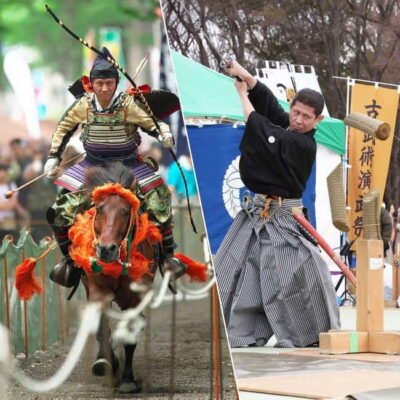
Samurai Sword & Archery Class from Samurai Descendant
Read our review →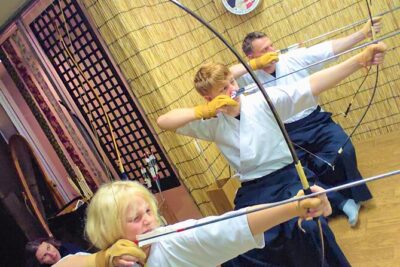
Japanesel Archery Experience HIROSHIMA CASTLE SHARAKU
Read our review →
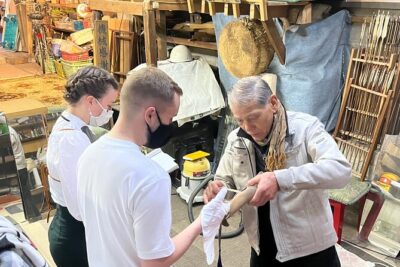
Authentic knife making experience at a blacksmith in Kyoto
Read our review →
Browse the lists this tour appears in