Review · MATCHA & TEA CEREMONY SESSIONS
An Amazing set of Cultural experience: Kimono, Tea Ceremony and Calligraphy
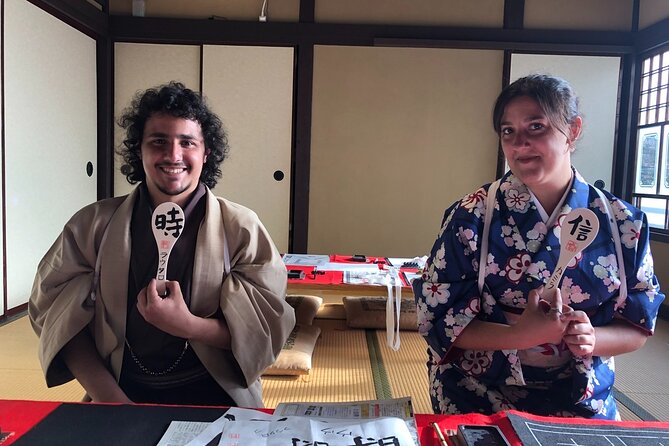
Three arts, one serene Miyajima session. You’ll try on a kimono and get styled with the right accessories, and you’ll actually whisk your own matcha before writing simple characters in a calligraphy practice. The only real catch is that it runs tight, about 1.5 hours, so it is not the time to wander freely on your own.
I love that the setting is the Tokujuji area on Miyajima, not some random studio corner. It is also a small group setup, with a maximum of 8 people, which keeps the pace friendly and the instructions clear. You will meet at Okeiko Japan Miyajima, then the walk toward the temple area is short, about 5 minutes from the Miyajima ferry port.
The format is designed for flexibility too, with both morning and afternoon start times. You will get a mobile ticket, and you return to the same meeting point to wrap up.
In This Review
- Key things you will remember
- Miyajima’s Tokujuji setting: where the arts make sense
- Kimono dressing and photo time: more than a costume change
- Matcha tea ceremony: whisking your own, not just watching
- Calligraphy practice: writing kanji and your own name
- Timing, group size, and what to expect on the ground
- Price and value: what you are really paying for
- Who should book this kimono, tea, and calligraphy session?
- Should you book it?
- FAQ
- Where do I meet for the experience?
- How long does the tour last?
- What activities are included?
- Is the activity offered at different times of day?
- Is there a group size limit?
- Is there a minimum age to participate?
- What kind of ticket do I get?
- Is public transportation nearby?
- What is the cancellation policy?
Key things you will remember
- Tokujuji Zen temple visit on Miyajima gives the activities real context, not just a photo stop
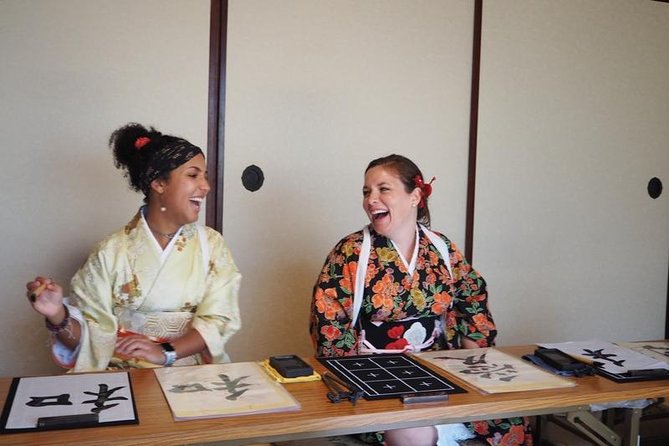
- Kimono dressing plus photo help means you look the part without figuring it out yourself
- Hands-on matcha making focuses on the tea ceremony basics, not just watching
- Calligraphy practice with kanji and names helps you leave with something personal
- Small group size (max 8) keeps time for questions and patient guidance
- A short walk from the ferry area makes the logistics simple once you are on Miyajima
Miyajima’s Tokujuji setting: where the arts make sense
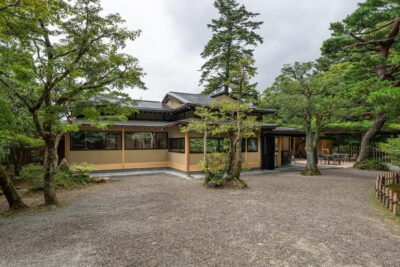
This is one of those experiences where the location actually improves the lesson. You start on Miyajima, and the program leads you into the Tokujuji temple area on the island. That matters, because the kimono, tea, and brushwork all come from Japanese traditions that were built around daily ritual and calm spaces.
The walk is straightforward. You meet at Okeiko Japan Miyajima (741-1 Miyajimachō, Hatsukaichi, Hiroshima), and the temple area is about a 5-minute walk from the Miyajima ferry port. If you are already planning to explore Miyajima anyway, it is a smart way to turn travel time into something meaningful.
The pacing also feels realistic for a day with other sights. The total duration is listed at about 1 hour 30 minutes (and the temple-adjacent portion is described as around 2 hours), so treat it as a shorter, focused cultural block. You’ll get a full taste of each activity without spending half the day tied up.
More Craft Workshops in Hiroshima
- Japanesel Archery Experience HIROSHIMA CASTLE SHARAKU
★ 5.0 · 387 reviews - Hiroshima: Traditional Japanese Archery Experience
★ 4.8 · 351 reviews - Cultural Activities :Kimono, tea ceremony, Calligraphy and Amulet
★ 5.0 · 44 reviews
Kimono dressing and photo time: more than a costume change
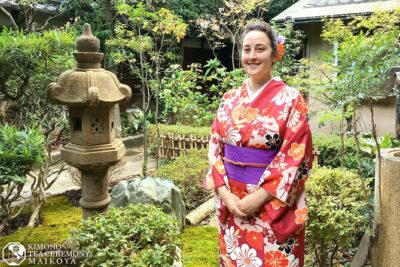
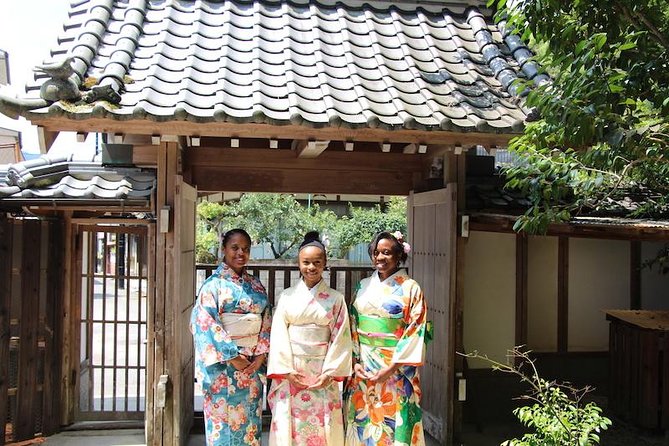
The kimono part is a highlight for a reason. You do not just put on a robe and pose. You get help choosing your kimono style and size, plus guidance on key pieces like the obi and other accessories. That attention to fit is huge, especially if you are worried about comfort or getting the wrap correct.
Several details make this feel more authentic than a quick photo setup. The staff help you get dressed step by step, and they also bring along props like socks and extra accessories (including a flower accessory) so your look feels complete. If you care about photos, this is the right kind of tour, because they take pictures throughout the session rather than only at the beginning.
The photo strategy is practical. You are moving through different parts of the day, changing into a kimono and then switching into tea and calligraphy settings. By capturing moments along the way, you end up with a set of images that actually reflect what you did, not just one stage-managed shot.
One small consideration: kimono can feel warm depending on the season, and the session is scheduled for either morning or afternoon. If you are visiting in hot weather, plan to drink water before you arrive and wear comfortable inner layers under whatever they suggest. Also, keep your expectations realistic: this is a guided cultural workshop, not a long, unguided photo walk.
Matcha tea ceremony: whisking your own, not just watching
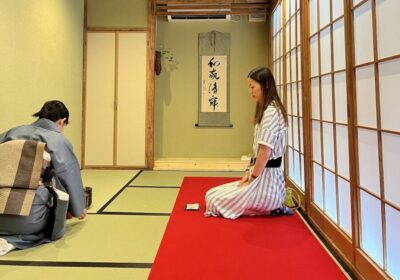
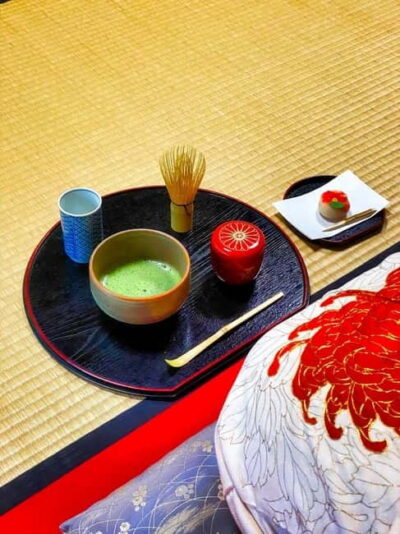
Tea here is not a lecture. You watch the ceremony first, then you do it. The program includes a tea ceremony performance, and you make your own matcha after learning the basic mannerisms.
That hands-on step is what makes the experience stick. You learn how to handle the utensils and follow the flow of the ceremony, then you whisk your own tea so you can feel the difference between easy-looking ritual and real technique. Even the simple act of whisking can take practice, and that is part of the fun.
You also get a chance to see what the ceremony looks like in real form. The tea bowls used in the session are described as coming from local artisans and are called out as beautiful. That detail matters because Japanese craft is not just “made somewhere,” it is made with a specific kind of care that you can actually notice in the bowl, the shape, and the finish.
The best value of the tea ceremony component is that it gives you a framework you can reuse later. Once you understand the steps and the reason for them, your future cups of matcha make more sense. You also get a sense of how the ceremony can feel both serious and relaxed, depending on the pace of the host.
If you worry about not knowing anything beforehand, do not. The explanations are described as clear, including in English. You are not expected to already know the “correct” way. The staff guide you through what to do and what to pay attention to.
Calligraphy practice: writing kanji and your own name
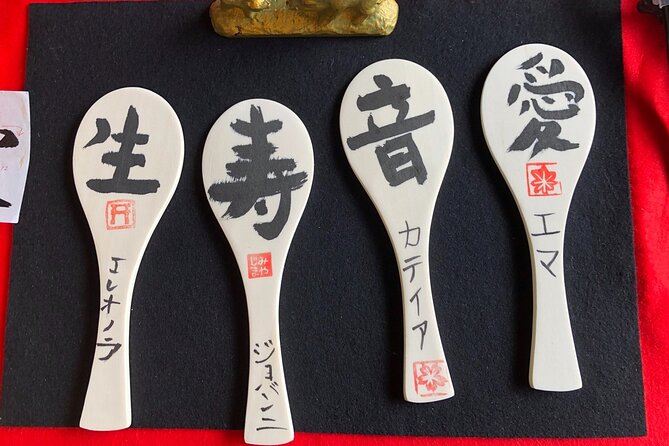
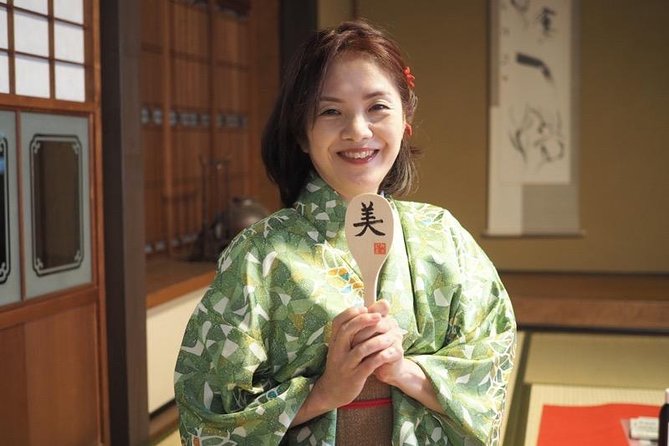
Next comes calligraphy, and it is not just copy-the-letter practice. The session includes a calligraphy room where you practice kanji and also write your name. That personal touch changes calligraphy from a classroom exercise into something you can take home emotionally.
Calligraphy looks simple from a distance. In practice, it is controlled, and that is why it feels rewarding. Your first strokes can come out different than expected, and the staff guidance helps you understand how to shape lines without overthinking every single movement.
Even better, you get to do something you recognize. Writing your name is a built-in milestone, so you end up with a tangible memory of your visit, not just a theoretical lesson. If you are the kind of person who likes crafts you can actually use later, this is the part that scratches that itch.
There is also mention of a souvenir element tied to the workshop. Wooden spoons used during the session are described as being wrapped beautifully, which gives the whole day a “take-home” feel without making you buy extra stuff you do not need.
More Tea Ceremonies in Hiroshima
- Hiroshima Local guided Hiking Tour&Open-air Tea Ceremony
★ 5.0 · 213 reviews - Kimono and Tea Ceremony in Miyajima
★ 5.0 · 73 reviews - Hiroshima: Morning Hiking Tour with Open-air Tea Ceremony
★ 4.8 · 58 reviews - Home Made Onigiri and Matcha Cooking Class in Hiroshima
★ 5.0 · 11 reviews
Timing, group size, and what to expect on the ground
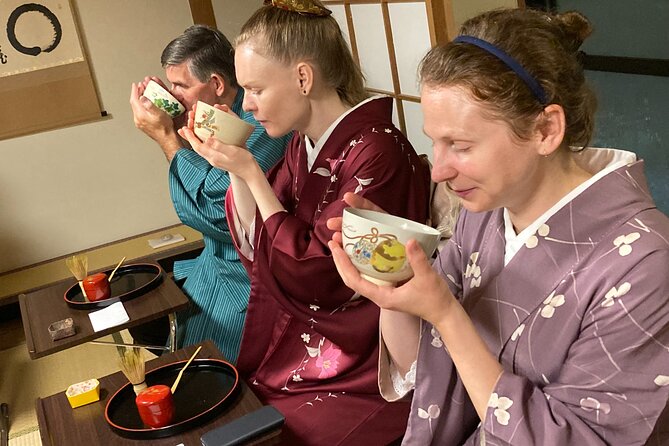
This is a short, structured experience. You start at the meeting point, walk toward the temple area, then return back to the same spot to end. That loop is convenient if you are trying to fit Miyajima sights into a tight Hiroshima day.
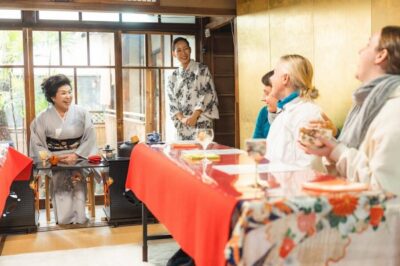
The group size is capped at 8 travelers, which is one of the reasons the experience is consistently described as friendly and low-stress. In a small group, staff can adjust how they help you get dressed and how they explain the tea and calligraphy steps. It also means you are more likely to get attention with photos, including multiple shots rather than only a single attempt.
Start times are offered in both morning and afternoon, which is useful if you are trying to line up your ferry schedule. Once you are on Miyajima, it is only a short walk to the meeting point from the ferry area.
One practical thing I recommend: plan your outfit and shoe choice. You will likely be in kimono sandals or similar footwear after you dress up, and you will spend some time moving around temple gardens. Wear something easy to remove and put back on. Also, consider bringing a small bag for your personal items so you can focus on the session rather than juggling your daypack.
Price and value: what you are really paying for
At $132.14 per person, this sits in the “worth it if you love culture” range, not the “budget side trip” category. But the value comes from stacking multiple hands-on activities into one short block, all tied to the Miyajima temple setting.
You are getting:
- Kimono styling and accessory help, not just a costume rental
- A guided tea ceremony with matcha making
- A calligraphy session that includes personal writing (your name)
- Staff-led photos throughout, which is a real convenience on Miyajima
The small group size also matters for value. It is not a mass class where you do one activity and then disappear. With a maximum of 8, you tend to get more guidance time, and that reduces the frustration factor when you are doing things you have never tried before.
So if you are comparing options, look less at the dollar amount and more at how much of the day is hands-on and guided. If you just want a scenic temple visit, this is more than you need. But if you want a structured, memorable cultural day with real skills, it is fairly priced for what you get.
Who should book this kimono, tea, and calligraphy session?
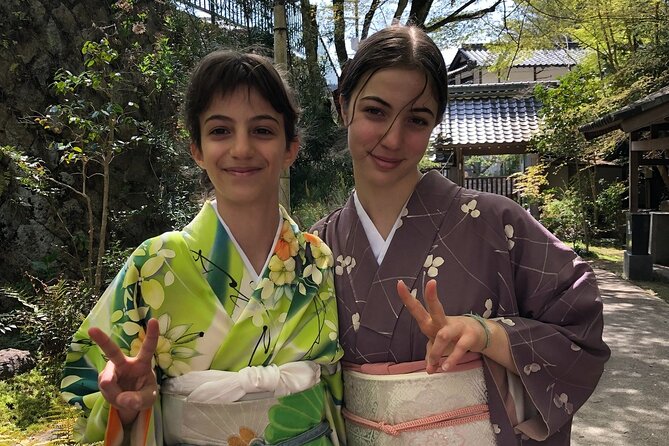
This fits best if you want a cultural activity that is:
- hands-on (matcha and calligraphy are not passive)
- photo-friendly (kimono dressing and ongoing photos)
- small-group (max 8 keeps it personal)
- anchored in a real temple setting (Tokujuji on Miyajima)
It also works well if you are traveling with someone who thinks arts and crafts might be boring. The kimono part is visual, the tea part is interactive, and the calligraphy part feels surprisingly doable once you get guidance. Even people who did not expect to enjoy it often end up having fun, especially because the staff keep the atmosphere relaxed.
If you are visiting Hiroshima and want more than one style of cultural moment, this is a great add-on. Miyajima is a major sightseeing area, and this turns part of your time there into a skill-building experience you can talk about for years.
Should you book it?
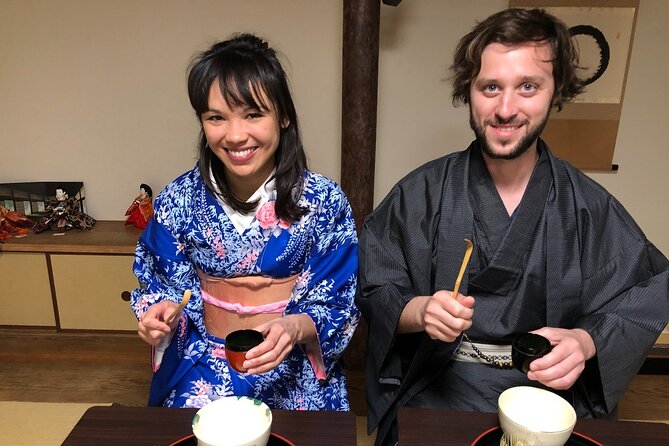
Yes, I would book it if you want a short, guided cultural day on Miyajima where you actually do the activities, not just observe. The strongest reasons to choose it are the kimono styling with real help, the hands-on matcha whisking, and the calligraphy practice that includes your name.
You should skip it (or adjust your expectations) if your ideal day is mostly unstructured wandering. Because the session is tight, you may not have time for extra temple browsing beyond what the program covers. Also, if you hate dress-up, this may feel like more effort than reward.
If you like learning while you play, and you want photos that look like the day was lived, this one is a very solid choice.
FAQ
Where do I meet for the experience?
You meet at Okeiko Japan Miyajima at 741-1 Miyajimachō, Hatsukaichi, Hiroshima 739-0588, Japan. The activity ends back at the meeting point.
How long does the tour last?
The duration is about 1 hour 30 minutes (approx.).
What activities are included?
You will do three main activities: kimono try-on and dressing, a tea ceremony with making matcha, and calligraphy practice.
Is the activity offered at different times of day?
Yes, there are morning and afternoon start times for more flexibility.
Is there a group size limit?
Yes. The maximum group size is 8 travelers.
Is there a minimum age to participate?
The minimum age is 6.
What kind of ticket do I get?
You will receive a mobile ticket.
Is public transportation nearby?
Yes, it is near public transportation.
What is the cancellation policy?
You can cancel for free up to 24 hours in advance of the experience start time for a full refund. If you cancel less than 24 hours before, the amount you paid will not be refunded.
More Kimono Rentals in Hiroshima
- Kimono and Calligraphy Experience in Miyajima
★ 5.0 · 16 reviews - Kimono Tea Ceremony at Kyoto Maikoya, NISHIKI
★ 5.0 · 911 reviews - Kyoto: Kimono Rental with Hairstyling and Accessories
★ 4.8 · 653 reviews - Kimono Tea Ceremony at Tokyo, Asakusa Maikoya
★ 5.0 · 638 reviews
Newly listed around Hiroshima
- Hiroshima and Miyajima 1 Day Cruise Tour★ 5.0 · 24 reviews
- Hiroshima and Miyajima 1 Day Walking Tour★ 5.0 · 43 reviews
- Hiroshima & Miyajima: UNESCO A-Bomb Dome & Itsukushima with Local★ 5.0 · 25 reviews
- Hiroshima & Miyajima: Private Full-Day Tour with a Local Guide★ 5.0 · 39 reviews
- Hiroshima 5k Running Tour of Hijiyama Park★ 5.0 · 7 reviews
- Hiroshima and Miyajima Bus Tour with Indian Lunch★ 5.0 · 10 reviews
- Hiroshima and Miyajima 1 Day Bus Tour★ 4.5 · 145 reviews
- Hiroshima Peace Memorial and Atomic Bomb Dome Private Tour★ 5.0 · 37 reviews
Matcha & Tea Ceremony Sessions, compared.
Tea Ceremony in a Traditional Tea House in Kiyomizu
Read our review →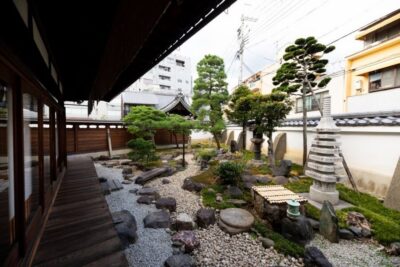
World Heritage Kyoto & Nara Uji Authentic Matcha Experience
Read our review →