
Review · LICENSED GUIDES & PRIVATE DRIVERS
Kyoto Food & Culture 6hr Private Tour with Licensed Guide
Food planning gets easier fast in Kyoto. This 6-hour private Kyoto food and culture tour helps you focus on the right streets, the right bites, and the meaning behind what you see.
I really like the way the route mixes practical eating time with cultural context. I also like that the tour is led by a licensed guide, and one recent guide, Lily, was praised for explaining tradition, religion, and how different parts of daily life connect, in a way that worked for both kids and adults.
One thing to watch is cost stacking. Lunch, temple entrance fees (for many stops), and the price of food and drinks are not included, and a couple of options add travel time beyond central Kyoto, like Byodoin in Uji.
In This Review
- Key highlights you will actually feel on the street
- A private, food-first route through Kyoto’s big-name streets
- Nishiki Market: your snack map on Kyoto’s Kitchen street
- Gion lanes and Pontocho dining alley, guided so you stay oriented
- Kitaza sweets in a renovated kabuki theater building
- Temple choices that match your pace: quick stops and longer guided visits
- Kennin-ji Temple, a short but meaningful pause
- Tenryuji Temple in Arashiyama, for Zen context
- Kiyomizu-dera, a longer guided temple stop option
- Sanjusangendo Temple, famous for 1,001 Kannon statues
- Big culture stops if you want more than snacks: Uji, Imperial Palace, Nijo Castle
- Byodoin in Uji, Phoenix Hall and extra travel time
- Kyoto Imperial Palace, a former residence after Tokyo moved the capital
- Nijo Castle, Tokugawa residence and UNESCO status
- Fushimi Inari-taisha in a short window, and why a guide helps
- Price and value: what $153.11 per person buys you in Kyoto
- Logistics that matter on a half-day plan
- Who should book this Kyoto Food and Culture private tour
- Should you book it?
- FAQ
- How long is the Kyoto Food & Culture private tour?
- Is pickup included?
- What sites are included in the route?
- Is Nishiki Market admission free?
- Are temple entrance fees included?
- Is lunch included?
- Do I receive a mobile ticket?
- Is free cancellation available?
Key highlights you will actually feel on the street
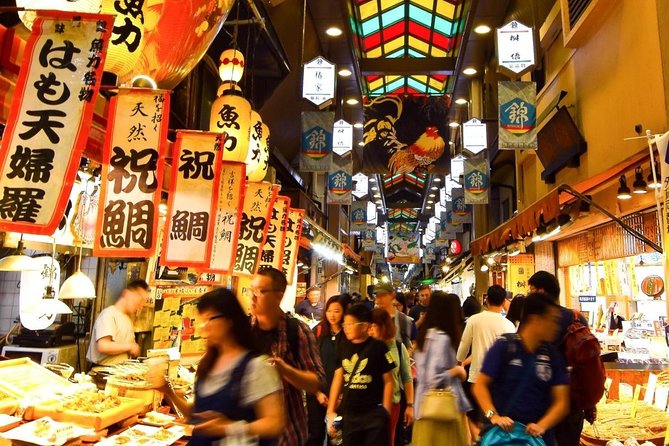
- Nishiki Market, 130+ shops: you get guided snack shopping on Kyoto’s Kitchen food street (and it is free to enter).
- Gion and Pontocho, without the maze stress: you walk with a guide so you can spend time looking, not wandering.
- Kyoto sweets at a former kabuki theater space: a short stop for traditional sweets in a beautifully renovated building.
- Temple time that matches your interests: you can mix short viewpoints with deeper guided visits depending on your picks.
- A private, customizable route: you choose 3 to 4 sites from the options, instead of being locked into a rigid group plan.
A private, food-first route through Kyoto’s big-name streets
Kyoto can be a lot, especially when you are trying to do food and sights at the same time. This is set up for you to get guidance, not just a checklist. It is a private tour with a licensed local guide, and that matters because you can ask questions as you go, change direction based on what looks best, and keep the pace comfortable.
The tour is also built around several “you have to see this” areas, including Nishiki Market, Gion, and Pontocho. Then you can customize from the wider set of sites, choosing what fits your energy and your appetite. Pickup is offered, so you can start without spending your whole morning figuring out trains and meeting points.
Value-wise, you are paying for time with a real guide plus the structure of a 6-hour route. The good part is that some key segments are free to enter, so your money goes toward the experience, not just admissions.
More Food Tours in Kyoto
- Kyoto Night Foodie Tour in Gion (9+ dishes + 6 Sake tastings)
★ 5.0 · 1,762 reviews - 3-Hour Kyoto Insider Sake Brewery Tour with Tastings & Pairings
★ 5.0 · 917 reviews - Arashiyama Bamboo, Temple, Monkeys, or Secret Sake Brewery
★ 4.8 · 886 reviews
Nishiki Market: your snack map on Kyoto’s Kitchen street
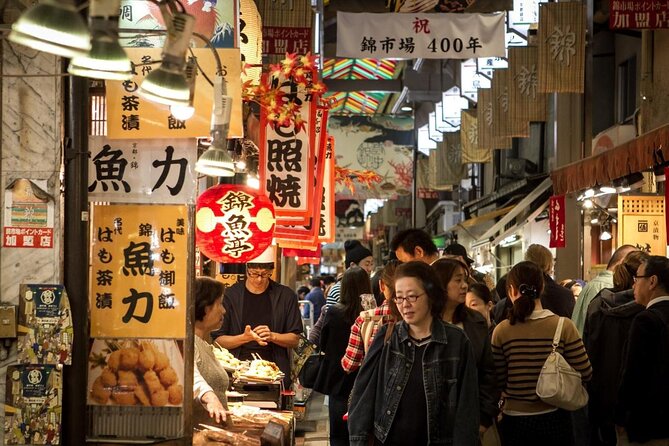
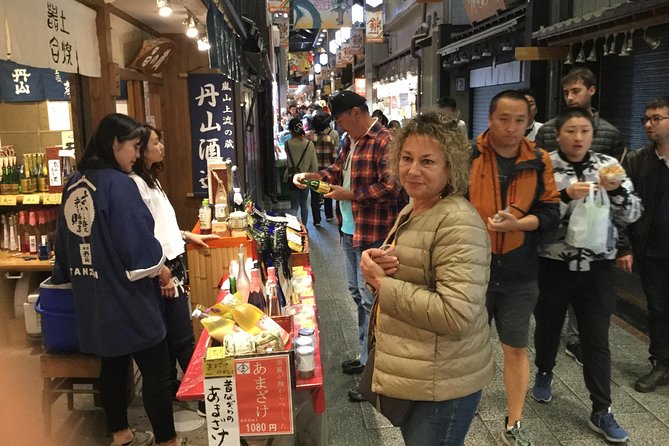
Nishiki Market is a narrow, five-block shopping street with more than one hundred shops and restaurants. It is often called Kyoto’s Kitchen for a reason: it is one of the easiest places to sample Kyoto-style food without planning a full restaurant day.
On this tour, Nishiki Market is a focused stop, about 30 minutes, and admission is free. That time window is perfect if you treat it like snack scouting. You can taste small items, compare what different stalls offer, and use your guide’s local sense to avoid the traps of buying something just because the display looks dramatic.
Here is how I’d use a market stop like this:
- Have your guide point out a couple of things that are “Kyoto-specific,” not just generic Japanese snacks.
- Taste first, buy second, so you do not end up carrying something you do not love.
- Ask what is good to eat right away versus what works better as a takeaway.
Because the guide route is private, you can linger at the most interesting counters. You are not stuck at the front of a long line while the rest of the group rushes ahead.
Gion lanes and Pontocho dining alley, guided so you stay oriented
Gion is where many first-timers feel the most lost. The alleys are narrow, the streets look similar, and the “where am I supposed to turn?” feeling is real. This tour gives you about 1 hour in Gion, which is enough time to slow down, notice details, and let the guide handle the turns.
The payoff is not just photos. It is learning the etiquette and cultural logic of what you are seeing. In a praised review, Lily was singled out for explaining how traditions and everyday life connect, and that kind of context is exactly what helps you enjoy Gion more than a quick walk-by.
Then you shift to Pontocho, about 30 minutes. Pontocho is an atmospheric dining alley that runs between Shijo-dori and Sanjo-dori, one block west of the Kamogawa River. Even if you are not ordering a full meal, this is a great place to understand Kyoto dining patterns, street layout, and the “why people eat here” vibe.
Practical note: this area is very photo-friendly, but it is also a real place where people dine. Your guide can help you keep your movement smooth, especially if you are stepping around restaurant entrances.
Kitaza sweets in a renovated kabuki theater building
Kyoto sweets are a world of their own, and this stop gives you a short, sweet win without turning the tour into a sugar marathon. The tour includes a stop at the Site of Kitaza, about 15 minutes, where you can try original Kyoto sweets.
What makes it more interesting than a random dessert shop is the setting. The building has been renovated from a kabuki theater, so you are eating in a space with its own cultural story. This is one of those stops that feels small on the schedule but memorable in the mind.
If you want a quick taste that connects food to Kyoto culture, this is the kind of moment that fits. It is also low-commitment, which helps if you are picking only 3 to 4 sites and want at least one “eat and relax” stop.
More Private Guides in Kyoto
- Kyoto Early Morning Tour with English-Speaking Guide
★ 5.0 · 1,427 reviews - Kyoto 6hr Private Tour with Government-Licensed Guide
★ 5.0 · 1,369 reviews - Kyoto: Early Morning Tour with English-Speaking Guide
★ 4.9 · 1,128 reviews - Kyoto 4hr Private Tour with Government-Licensed Guide
★ 5.0 · 629 reviews
Temple choices that match your pace: quick stops and longer guided visits
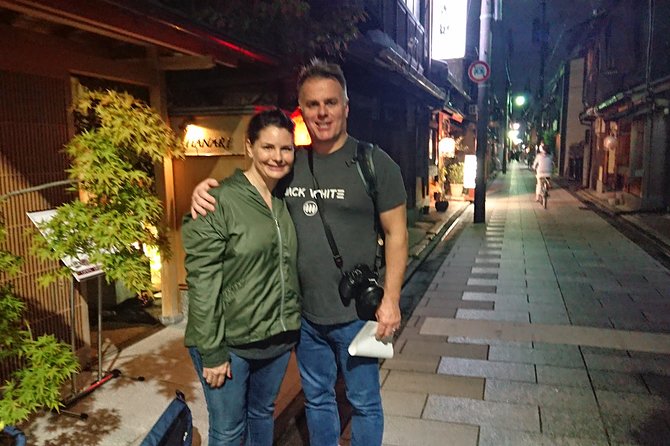
Temples in Kyoto can be intense if you try to do too many. This tour gives you options, and the best part is that your guide can steer you toward what makes sense for your group.
Kennin-ji Temple, a short but meaningful pause
Kennin-ji is near Hanamikoji and Shijo streets, and the grounds are pleasant to walk. The stop time listed is short, about 1 minute, and admission is not included. Even with a brief stop, the guide can help you notice the feel of the place, including the karesansui style dry rock-and-sand garden concept mentioned in the temple description.
If you like a quick “set the mood” stop between busier streets, Kennin-ji can work well inside a half-day food and culture plan.
Tenryuji Temple in Arashiyama, for Zen context
Tenryuji is one of the important Zen temples in Kyoto’s Arashiyama district, and it is registered as a world heritage site. The listed stop time is about 1 minute, and admission is not included.
Tenryuji can be easy to skip if you are tired or focused on eating. But if you want cultural grounding, a quick visit plus your guide’s explanations can make it feel less like checking a box.
Kiyomizu-dera, a longer guided temple stop option
Kiyomizu-dera is one of Kyoto’s most popular temples, and the tour listing notes a guided visit that runs about 1 hour. Admission is not included for you. This is the stop to pick if you want more than walking, more than a glance.
The value of a guide at Kiyomizu-dera is in knowing what to pay attention to, what traditions connect to what you are seeing, and how to manage crowds so the experience stays enjoyable.
Sanjusangendo Temple, famous for 1,001 Kannon statues
Sanjusangendo (Rengeo-in) is famous for having 1,001 statues of Kannon, the goddess of mercy. The listing shows a brief stop, about 1 minute, and admission is not included.
Even a short stop can be worthwhile here because the place is so specific. If you want one quick “wow” moment that is easy to understand, Sanjusangendo is a strong choice.
Big culture stops if you want more than snacks: Uji, Imperial Palace, Nijo Castle
If you are the type who likes temples and palace spaces as much as food streets, this is where the tour can grow beyond the classic center-of-Kyoto loop. A couple of these options come with longer travel or bigger walking, so choose based on your group’s energy.
Byodoin in Uji, Phoenix Hall and extra travel time
Byodoin is known for the Phoenix Hall, a National Treasure of Japan and a UNESCO World Heritage Site. The listing warns that extra travel time is expected because it is located in Uji city, outside central Kyoto. The listed stop time is about 30 minutes, and admission is not included.
This is a smart option if you want one “major site” that feels special and official. Just understand you are trading more direct food time for a destination that requires travel.
Kyoto Imperial Palace, a former residence after Tokyo moved the capital
Kyoto Imperial Palace used to be the residence of Japan’s Imperial Family until 1868, when the emperor and capital moved from Kyoto to Tokyo. The stop time is about 30 minutes, and admission is not included.
This kind of stop helps you understand how Kyoto’s role shifted over time. Even if you do not love palace architecture, your guide can help connect the political and cultural context to what you see.
Nijo Castle, Tokugawa residence and UNESCO status
Nijo Castle, a UNESCO World Heritage Site, was built in 1603 as the Kyoto residence of Tokugawa Ieyasu, the first shogun of the Edo Period. The stop time is about 30 minutes, and admission is not included.
If your group likes architecture and eras, this can feel like the “grown-up” culture stop. It can also be a good counterbalance if you pick Nishiki Market, Gion, and Pontocho and want at least one structured historical site.
Fushimi Inari-taisha in a short window, and why a guide helps
Fushimi Inari-taisha is famous enough that it can get overwhelming fast. The tour includes a short visit of about 15 minutes, and admission is free for this stop.
One line in the tour description talks about seeing parts that are described as off-limits to ordinary tourists after the tour. Even if you do not know what that means in practice, it signals that the guide is helping you experience more than a standard, crowded route.
In a short window, what matters is your choices: where you pause, what angles you look for, and what you learn so the rows of torii feel like more than a photo background. This is exactly where a licensed guide can turn confusion into understanding.
Price and value: what $153.11 per person buys you in Kyoto
At $153.11 per person for about 6 hours, this tour is in the range where you should think, “Am I getting a real guide experience, or just transportation and a list?” The structure suggests you are getting the first one.
You get:
- A licensed local guide
- A private format
- A route that can be customized to 3 to 4 sites
- Pickup offered
- A mobile ticket
- Group discounts (available)
But you also need to budget correctly. The tour listing says lunch is not included, and entrance fees are not included for you. Food and drinks are also on you, along with transportation fee (for both you and the guide). Some listed stops are free to enter, like Nishiki Market and Gion segments, but temples marked as not included can add costs.
So how do you judge value?
- If you pick stops with a lot of meaning and you actually eat several small items, your food spending can stay reasonable and you will feel like the guide saved you time.
- If you want multiple ticketed temples and you add taxis or trains beyond what pickup covers, plan for extra spend.
- If you travel with family or a mixed-age group, a private guide is often worth it because you can match pace and attention.
One more practical thought: the fact that you can customize helps. You can choose more free-access areas and keep paid entrances limited, or you can go all-in on the big UNESCO-level stops if that is your priority.
Logistics that matter on a half-day plan
Kyoto walking is real. Even when time per stop looks short, you still have to factor in moving between places. This tour is about 6 hours, and it includes both street time and temple time, so comfortable shoes matter.
Also pay attention to food breaks. Lunch is not included for you, so I suggest treating Nishiki and the Gion-Pontocho sections as snack time, then planning where you will eat after. Your guide can help you decide what kind of meal is most logical based on where you are at the end of the tour.
One more small but useful detail: service animals are allowed, and the experience is near public transportation. That helps if you want a flexible day plan around it.
Who should book this Kyoto Food and Culture private tour
This tour is a good fit if you:
- Want food street tips plus cultural explanations, not just sites.
- Feel uneasy navigating Gion and want someone to handle the turns.
- Like a plan that can adapt. You only lock into a few selected stops.
- Are traveling as a group with different interests, kids included. One review specifically praised Lily for explaining things in an educational way for young and old.
It might be less ideal if you want a long, deep temple day with lots of paid entrances and no snack emphasis. The tour is built for balance, and that means you are trading some depth for variety across food streets and major sights.
Should you book it?
I think you should book this tour if you want a guided Kyoto day that combines food scouting and cultural meaning, especially through Nishiki Market, Gion, and Pontocho. The private format and licensed guide are the real strengths here. It is not just walking, it is choosing the right bites and understanding what you are looking at.
Book it with the right expectations: plan for food costs, temple entrances when you choose those stops, and possibly extra transportation. If you do that, the price starts to feel fair because you are buying time, guidance, and a route that you can shape around your group.
FAQ
How long is the Kyoto Food & Culture private tour?
The tour duration is about 6 hours.
Is pickup included?
Pickup is offered.
What sites are included in the route?
The tour showcases Nishiki Market, Gion, and Pontocho, and the route can be customized to include 3 to 4 sites from the available options.
Is Nishiki Market admission free?
Yes. Nishiki Market is listed with admission ticket free.
Are temple entrance fees included?
No. Entrance fees for you are not included. Several temple stops are marked as admission not included.
Is lunch included?
No. Lunch is not included for yourself or your guide.
Do I receive a mobile ticket?
Yes, a mobile ticket is included.
Is free cancellation available?
Yes. You can cancel up to 24 hours in advance for a full refund.
More Food & Drink in Kyoto
- Kyoto: Insider Sake Brewery Tour with Sake and Food Pairing
★ 5.0 · 704 reviews - Kyoto Sake Brewery & Tasting Walking Tour
★ 5.0 · 623 reviews - Kyoto Nishiki Market Food and Culture Walking Tour
★ 5.0 · 412 reviews - 1.5-Hour Kyoto Insider Sake Experience with 7 Tastings & Pairings
★ 5.0 · 297 reviews
Newly listed around Kyoto
- Kyoto Samurai Discovery Samurai Sword Test Cutting Training★ 5.0 · 132 reviews
- Kyoto Sake Brewery Tour with Lunch★ 4.5 · 12 reviews
- Kyoto Sagano Insider: Rickshaw and Walking Tour★ 5.0 · 15 reviews
- Private Food & Sake Tour in Central Kyoto with Sake Sommelier★ 5.0 · 24 reviews
- Ramen Gyoza Onigiri Japanese Cooking Class in Kyoto★ 5.0 · 44 reviews
- Kyoto Rickshaw Tour★ 5.0 · 210 reviews
- Kyoto Ramen Tour★ 5.0 · 22 reviews
- Kyoto Portrait Tour with Kimono★ 5.0 · 48 reviews
Licensed Guides & Private Drivers, compared.
Tokyo 6hr Private Tour with Government-Licensed Guide
Read our review →
Kyoto Early Morning Tour with English-Speaking Guide
Read our review →
Tokyo 4hr Private Tour with Government-Licensed Guide
Read our review →
Kyoto 6hr Private Tour with Government-Licensed Guide
Read our review →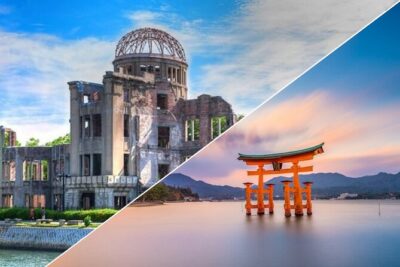
Hiroshima / Miyajima Full-day Private Tour with Government Licensed Guide
Read our review →Early Morning Tour with English-Speaking Guide
Read our review →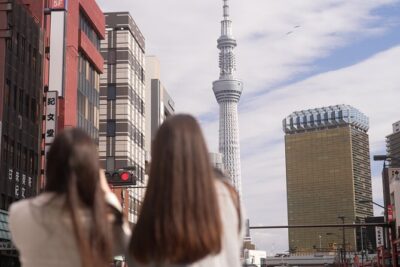
Tokyo Private Sightseeing Tour by Car- English speaking chauffeur
Read our review →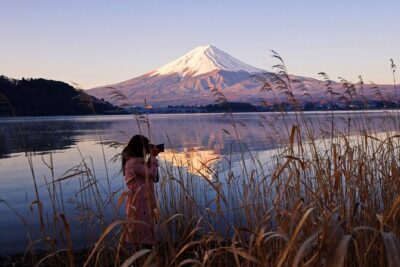
Mt Fuji Private Tour with English Speaking Driver
Read our review →Browse the lists this tour appears in