
Review · GEISHA DISTRICT WALKS
Kyoto Geisha District Walking Tour in Gion
Gion feels like a film set at walking speed. This Kyoto Geisha District Walking Tour in Gion mixes guided street time, Shinto stops, and classic photo angles, with a chance to spot geiko or maiko along the way.
I especially like the small group size (max 10), which makes the walk feel personal instead of rushed. I also love that you get live commentary that connects what you are seeing at Yasaka Shrine, the shrines, and Gion’s lanes to geisha district customs and traditions.
One consideration: it is a walking tour with some stairs, so it is not suitable for people who need help with stairs. Also, geisha sightings are never guaranteed, even though you may catch one if timing is right.
In This Review
- Key highlights worth showing up for
- Gion in two hours, and why small-group time matters
- Your route: from Yasaka Shrine to Hanamikoji Street
- Stop 1: Yasaka Shrine (about 40 minutes)
- Stop 2: Gion (about 20 minutes)
- Stop 3: Tatsumi Daimyojin Shrine (about 5 minutes)
- Stop 4: Tatsumi Bridge (about 10 minutes)
- Stop 4 (water stop): Gion Shirakawa (Shirakawa Canal) (time not specified)
- Stop 5: Gion (the other side of the district, about 20 minutes)
- Stop 6: Hanamikoji Street (about 10 minutes)
- A note on Gion Corner (included as a stop in the route)
- What the guide actually adds: geisha culture plus Shinto context
- Photo timing tips, including lantern light and canal scenes
- Price and value: what $29.85 really buys you
- Meeting point and how the walk usually feels
- Who should book this, and who should skip it
- Should you book the Kyoto Geisha District walking tour in Gion?
- FAQ
- How long is the Kyoto Geisha District Walking Tour in Gion?
- How much does the tour cost?
- Is the group size small?
- Do I need to print anything, or do they use a mobile ticket?
- Are the shrine and street stops free to enter?
- Is the tour affected by bad weather?
- Where do I meet, and where does it end?
- Can I cancel for a full refund?
- Is this tour suitable for people with limited mobility?
- If I book the kimono plan, what happens before and after the tour?
Key highlights worth showing up for
- Max 10 people keeps the group moving and the guide easy to hear
- Yasaka Shrine plus Gion street photo stops give you both atmosphere and landmarks
- Shinto context helps you make sense of the shrines you pass, not just snap photos
- Lantern-and-water scenes around the canal and bridges are made for great pictures
- Short shrine breaks mean you get variety without long museum-style downtime
- Free admission at the stops helps the value math
Gion in two hours, and why small-group time matters
Kyoto can overwhelm you fast. Streets twist, alleys look similar, and you can end up walking in circles just trying to find the next famous corner. This tour’s biggest “value” is simple: a guide gets you from spot to spot so your two hours are spent seeing Gion, not figuring out Gion.
The max 10 traveler limit is also a big deal here. You can ask questions, you can pause for photos without holding up a huge crowd, and the guide can adjust when the group is moving slower or faster. Several guides listed for this experience, including Takuma, Yuko, Tom, Yuji, Hide, Eric, Harry, and Yoko, are praised for staying on track and making the walk feel easy to follow.
There is also a practical bonus: this is a rain-or-shine tour. Kyoto weather can change quickly. Having the plan already built around walking Gion lanes means you are not just trapped waiting for the sky to cooperate.
More Walking Tours in Kyoto
- Kyoto Geisha Walking Tour: Gion District & Hidden Gems
★ 4.7 · 3,273 reviews - Kyoto: Gion Geisha District Walking Tour – Stories of Geisha
★ 4.7 · 2,187 reviews - Night Walk in Gion: Kyoto’s Geisha District
★ 4.5 · 2,003 reviews
Your route: from Yasaka Shrine to Hanamikoji Street
This walk is designed like a gentle loop through the Gion area, with short stops that add meaning. Most admissions at the listed sites are free, so you are paying mainly for the guide’s storytelling and the time saved.
Stop 1: Yasaka Shrine (about 40 minutes)
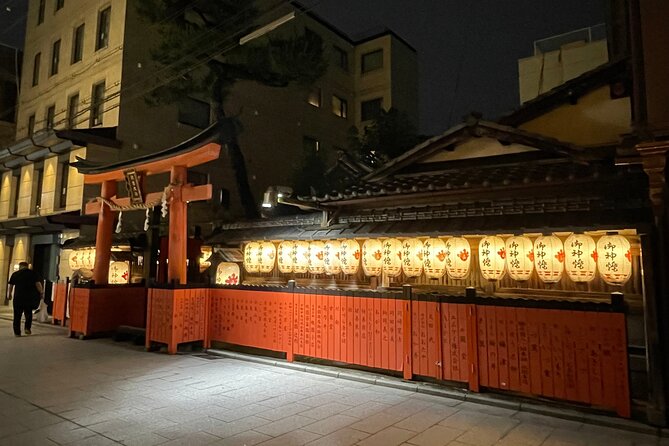
Yasaka Shrine is one of Gion’s most recognizable landmarks, and it is a great place to start because it sets the tone. Expect classic shrine visuals like the architecture and lantern atmosphere, plus a calmer mood around the grounds. The time at this first stop is longer than the rest, and that makes sense, because you need a little grounding before you move into the narrower Gion streets.
Why it works: starting here gives your brain a reference point, so later streets and waterways feel like part of the same district story.
Possible drawback: if you are craving street walking right away, this is the most stationary part of the tour.
Stop 2: Gion (about 20 minutes)
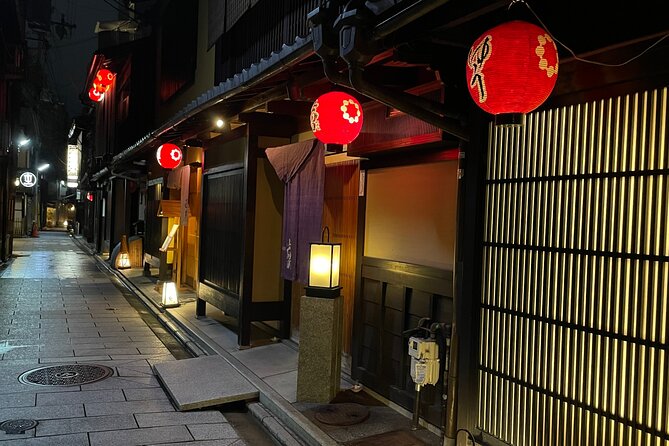
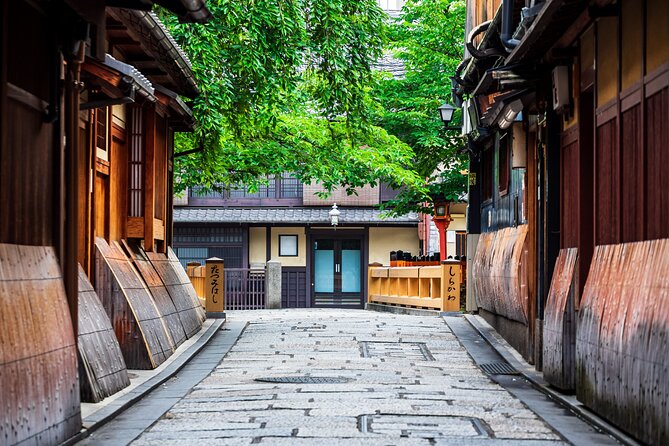
Right after the shrine, the tour moves you into the heart of Gion. Gion is known for traditional wooden houses and narrow lanes, and the vibe changes as you go. The tour description points out the visual shift when the sun drops and the paper lanterns begin to dim, which is the kind of timing that makes this area feel extra atmospheric.
Photo note: narrow streets plus lantern light tend to produce better “Kyoto looks” than broad main roads.
Compare these Geisha District walks in Kyoto:
- Best of Kyoto: Gion, Geisha, Pagodas & Cobblestones
★ 4.9 · 2,058 reviews - Kyoto Night Foodie Tour in Gion (9+ dishes + 6 Sake tastings)
★ 5.0 · 1,762 reviews - Kyoto Gion Geisha District Walking Tour – The Stories of Geisha
★ 5.0 · 1,441 reviews - Kyoto: Gion Magical Night Walking Tour with Geisha Insights
★ 4.9 · 1,286 reviews
Stop 3: Tatsumi Daimyojin Shrine (about 5 minutes)
This is a quick hit, but it matters. Tatsumi Daimyojin is dedicated to protection, good fortune, and safety, especially for travelers. It dates back to the Heian period (794 to 1185), so even a short stop connects you to the older rhythm beneath Gion’s modern image.
Why it works: you get a different spiritual angle than Yasaka Shrine without losing momentum.
Stop 4: Tatsumi Bridge (about 10 minutes)
Tatsumi Bridge is the kind of small Gion corner that feels like stepping into a movie scene. Around it, you get traditional machiya houses, and the whole area reads like a quiet snapshot inside the district.
Why it works: this stop adds variety, since it is not just “look at a building,” it is “look at a postcard-like composition” you can actually walk through.
Stop 4 (water stop): Gion Shirakawa (Shirakawa Canal) (time not specified)
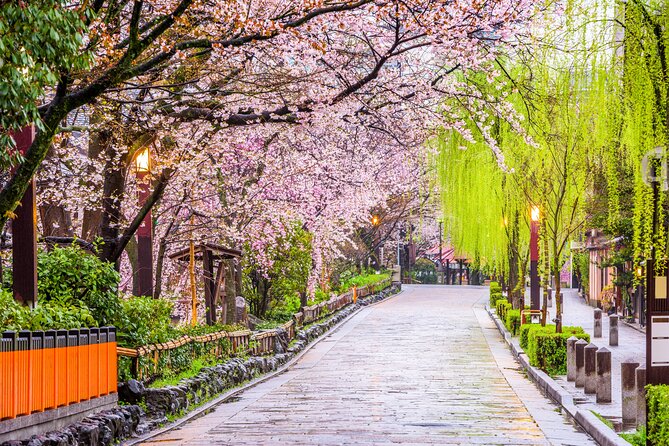
The Shirakawa Canal area is described as tranquil and picturesque, lined with well-preserved machiya houses and weeping cherry trees. Even if you are not there during cherry blossom season, the canal side still tends to feel like a calmer pocket inside a lively city.
Photo note: bridges, water reflections, and the lined architecture create a classic Kyoto angle.
Stop 5: Gion (the other side of the district, about 20 minutes)
After the canal, you get another chunk of Gion. This is helpful because it means you are not just looping through one narrow lane. You are getting multiple sections of the district character, still within a short total time.
Why it works: it reduces the chance you will feel like you saw only one small pocket of Gion.
Stop 6: Hanamikoji Street (about 10 minutes)
Hanamikoji Street is Gion’s main street vibe, lined with traditional machiya houses and tea houses, plus shops and restaurants. It is where you go to see the district at its most iconic street-level.
Why it works: it is a high-recognition finale for the visual style, so you leave with real “I saw Gion” clarity.
A note on Gion Corner (included as a stop in the route)
The route also lists Gion Corner, described as a cultural venue showcasing traditional art performances. That makes this stop more about cultural context than quiet scenery. If you like understanding the arts side of Kyoto, it is a good fit.
Possible drawback: if you only want outdoor wandering, any venue stop can feel slightly less free-form.
What the guide actually adds: geisha culture plus Shinto context
This is not a history lecture in a classroom. The point is to help you read the district as you walk. The tour description emphasizes commentary that explains stories about geisha culture and traditions, plus insight connected to Shinto religion through the shrine stops.
That pairing is smart for a first-timer. Gion is often marketed through one lens, the geisha district, but the district’s atmosphere is also shaped by the shrines and the everyday spiritual rhythms you see in shrine spaces.
From what has been praised with different guides, I like that the tour tends to connect names and customs to places. People note explanations that cover Shinto religion, geisha history and customs, and even how geishas live and work. That kind of “where it fits” framing helps the streets feel less like scenery and more like a living system.
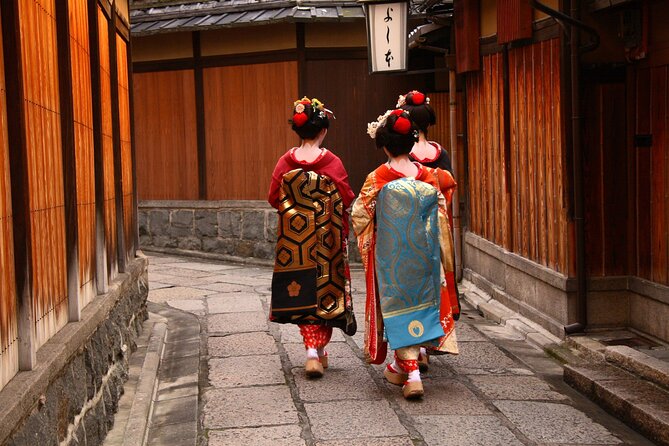
And if you are hoping for a sighting, the guidance is honest: if you are lucky, you may have a chance to spot a geiko or maiko during the walk. Some people have even reported seeing multiple geiko or maiko in a single tour window, including guides named Takuma and others. That is not something you can plan, but it is encouraging if you have your eyes open.
Photo timing tips, including lantern light and canal scenes
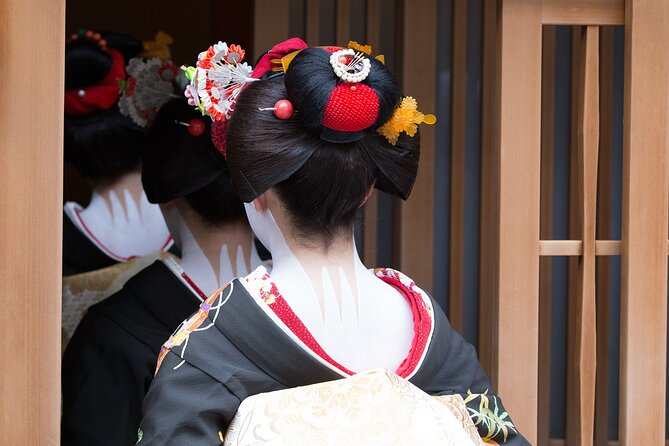
This tour is built for photos, but it is not just “pose here.” You get photo-ready variety across the route:
- Yasaka Shrine lantern atmosphere
- Gion narrow streets that can look especially cinematic as daylight shifts
- Tatsumi Bridge for a tucked-away, storybook feel
- Gion Shirakawa canal for water-side composition
A practical note from the experience format: the guide can help you move at the right pace so you are not sprinting between scenes. Several guides are described as good at timing and taking people to the right place at the right moment, which matters in Gion where popular spots can get crowded quickly.
Also, if you really want photos, wear shoes that can handle uneven, old-street surfaces. The tour explicitly recommends comfortable walking shoes for this reason.
Price and value: what $29.85 really buys you
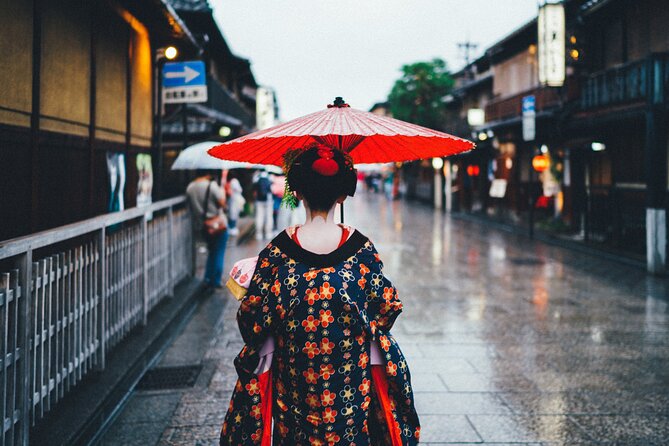
At $29.85 per person, this tour is priced like an affordable, focused “Kyoto orientation walk.” You are not paying for attractions with big ticket prices, and the listed stops include free admission. So your money is mostly funding:
- a guide with commentary
- a route that saves you time
- a small-group format capped at 10
- time in several key Gion and shrine locations in roughly two hours
What you should know is what is not included. The tour does not include hotel pickup or drop-off, and it also does not list transportation or extra food and drink. If you are trying to build a full day plan, budget separately for those pieces.
In plain terms: this is a solid deal if you want a guided walk that hits the “greatest hits” without spending half your trip navigating.
Meeting point and how the walk usually feels
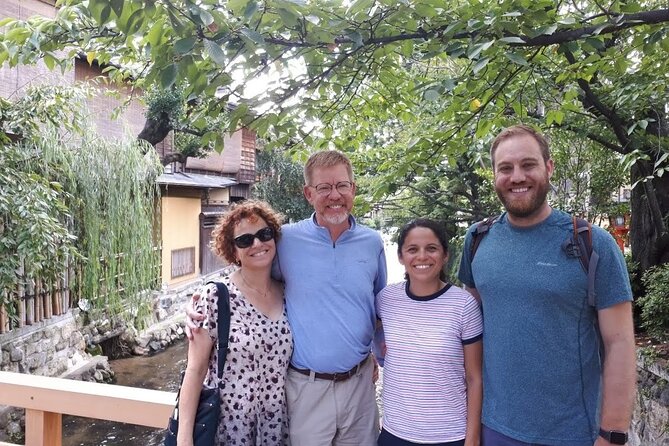
The meeting point and end point are both at Gion Kōbu Kaburenjō, 570-2 Gionmachi Minamigawa, Higashiyama Ward, Kyoto 605-0074. A guide helps you with getting back from there, which is helpful because that part of Kyoto is not always easy to “find your way back from” on your own when you are tired.
Because the tour is capped at 10 and runs as a guided walk, the overall feel is usually relaxed but purposeful. One theme in the experience feedback is that the walk makes Gion feel alive, not just watched. Guides like Tom and Yoko are specifically praised for making the district come alive with history and humor, while guides like Hide are noted for taking people through quieter back streets as a break from the busiest areas.
One small logistical consideration: the route includes a convenience store stop described as helping people with a restroom break, and there are said to be no public facilities available in that area. So if you think you might need it, plan to use that opportunity.
Who should book this, and who should skip it
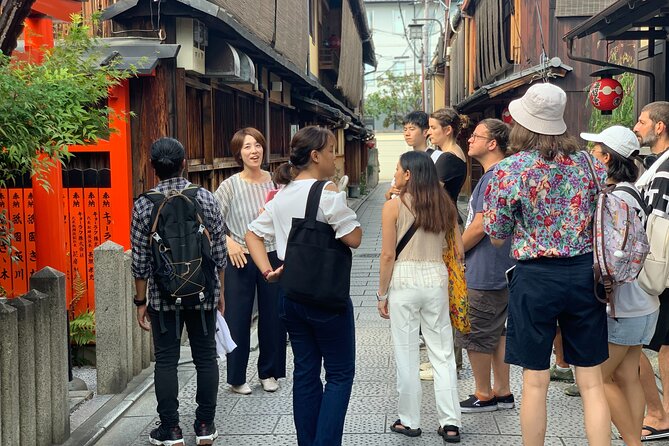
This tour is a good fit if you:
- want a fast, meaningful introduction to Gion
- like short stops rather than long museum time
- prefer a small group where you can ask questions
- are okay with a walking pace through shrine areas and narrow streets
It is also often a good family option. People have done it with kids around 10 to 13 years old and praised how the guide kept the experience enjoyable.
I would skip it if you:
- need a fully step-free route. The tour is explicitly not suitable for people who have trouble going up and down stairs.
- want long, deep indoor explanations. This is built around outdoor walking and short shrine and street segments.
Should you book the Kyoto Geisha District walking tour in Gion?
I think you should book it if you want a time-efficient, guide-led way to see major Gion sights while learning how Shinto shrines and geisha district culture connect in the same space. The small-group cap, free admission at the stops, and the photo-friendly route make the $29.85 feel fair, not inflated.
Do not expect a guaranteed geiko or maiko sighting, but you can absolutely get lucky. If you choose an evening slot, you are also lining up with the lantern light timing that the tour description calls out.
If stairs or mobility is a concern, or if you dislike structured walking routes, look for a different style of Kyoto experience.
FAQ
How long is the Kyoto Geisha District Walking Tour in Gion?
The tour runs for about 2 hours.
How much does the tour cost?
The price is listed as $29.85 per person.
Is the group size small?
Yes. The tour has a maximum of 10 travelers.
Do I need to print anything, or do they use a mobile ticket?
You receive a mobile ticket.
Are the shrine and street stops free to enter?
The listed stops include free admission.
Is the tour affected by bad weather?
The tour runs rain or shine.
Where do I meet, and where does it end?
You meet at Gion Kōbu Kaburenjō, 570-2 Gionmachi Minamigawa, Higashiyama Ward, Kyoto 605-0074, and the tour ends at the same place.
Can I cancel for a full refund?
Yes. You can cancel up to 24 hours in advance for a full refund. Canceling within 24 hours does not refund the amount paid.
Is this tour suitable for people with limited mobility?
It is not suitable for people with disability due to stairs on a walking route.
If I book the kimono plan, what happens before and after the tour?
After changing into kimono, you go to the Japan Kanji Museum & Library by yourself, about a 5 minute walk away. After the tour, you must return the kimono by 5:30pm.
Newly listed around Kyoto
- Taste of Nishiki Market Walking Food Tour with Local guide★ 5.0 · 17 reviews
- Kyoto: Sushi Making Class with Sushi Chef★ 4.8 · 64 reviews
- Simple Plan with Maiko★ 4.4 · 10 reviews
- Shibori Furoshiki Course at Kyoto Shibori Museum★ 5.0 · 21 reviews
- Kyoto: City Secrets eBike Tour★ 4.9 · 196 reviews
- Sacred Pathways: Discover the Philosopher’s Path of Kyoto★ 4.9 · 20 reviews
- Private Tour to Monkey Park and Arashiyama Highlights★ 5.0 · 22 reviews
- Private Nara Tour from Osaka – Meet at Your Hotel★ 5.0 · 22 reviews
Geisha District Walks, compared.
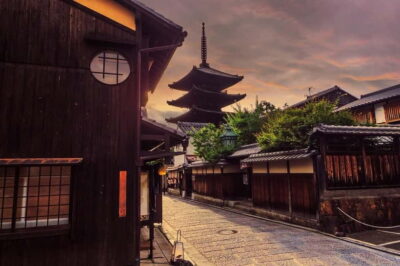
Kyoto Geisha Walking Tour: Gion District & Hidden Gems
Read our review →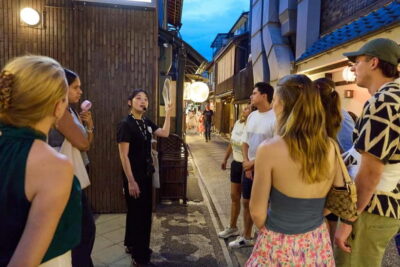
Gion Geisha District Walking Tour – Stories of Geisha
Read our review →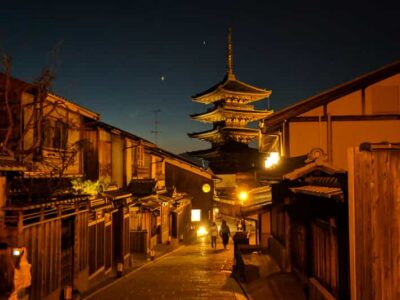
Best of Kyoto: Gion, Geisha, Pagodas & Cobblestones
Read our review →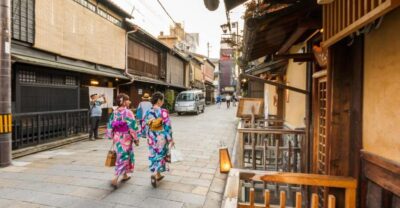

Kyoto Night Foodie Tour in Gion (9+ dishes + 6 Sake tastings)
Read our review →
Kyoto Gion Geisha District Walking Tour – The Stories of Geisha
Read our review →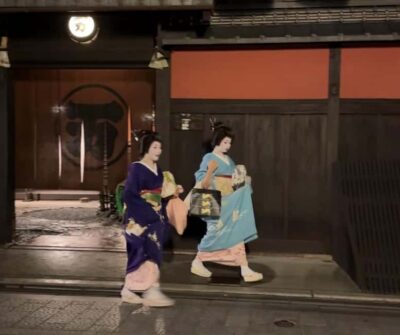
Gion Magical Night Walking Tour with Geisha Insights
Read our review →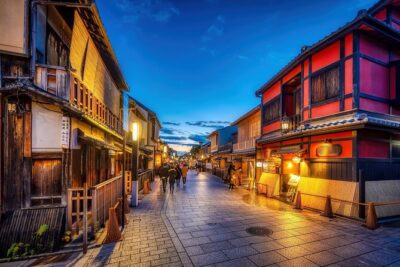
Kyoto Gion Night Walk & Geisha District Guided Tour
Read our review →Browse the lists this tour appears in