
Review · GEISHA DISTRICT WALKS
Kyoto: Gion Geisha District Walking Tour and Hidden Gems
Lantern-lit Kyoto can feel personal fast. This 3-hour walking tour takes you through Gion and along quieter lanes where the city’s past and daily life show up side by side. You’ll learn about geisha culture and Kyoto’s religious traditions while visiting classic sights and small spots most people miss.
I especially like two things. First, the guides seem to bring the history down to street level, with crisp explanations and story-driven context. Guides such as Ben and Jay (on past departures) are the kind who can answer practical questions while keeping the walk moving. Second, you’re not stuck only at the postcard places. You’ll track down small shrines, calm backstreets, and preserved streets that make Kyoto feel lived-in rather than staged.
One consideration: plan for a lot of steps. This is not an easy stroll, and it’s not a great fit if your fitness level is low or you want minimal walking.
In This Review
- Key highlights you’ll actually notice on the walk
- Why this Gion walk works better than a basic sightseeing loop
- Price and logistics: is $25 a fair deal for 3 hours?
- Meeting at Ben’s Cookies Kyoto Shijo, then the guide takes over
- Gion Tatsumi Bridge: a classic scene with purpose
- Chion-in: religious tradition you can see in real space
- Maruyama Park: where the story shifts toward everyday Kyoto
- Hōkan-ji Temple and the Higashiyama stone-stair rhythm
- Hidden shrines and backstreets: the part you’ll remember
- Steps, shoes, and how to keep your day enjoyable
- Who this tour fits best, and who should skip it
- Finish at Kiyomizu-dera Niomon Gate: the day closes with impact
- Should you book this Kyoto Gion Geisha District walking tour?
- FAQ
- How long is the Kyoto Gion Geisha District walking tour?
- Where do I meet the guide?
- Where does the tour end?
- What’s included in the price?
- Is the tour offered in English?
- What should I bring, and what should I avoid?
- Is the tour suitable for everyone?
Key highlights you’ll actually notice on the walk
- Geisha and maiko training explained in a way that connects to what you see on the street
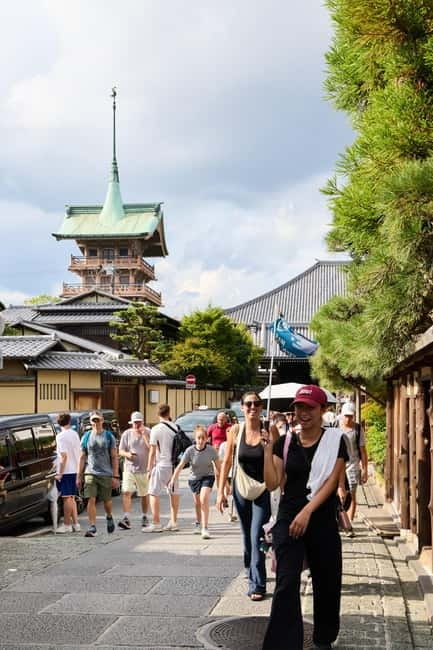
- Hidden shrines and quiet backstreets that sit between the better-known sights
- Temples and parks at the right moments, so you get rhythm, not just nonstop photos
- English live guiding with room for questions
- A finish at Kiyomizu-dera Niomon Gate, so the day feels like it keeps unfolding
Why this Gion walk works better than a basic sightseeing loop

Kyoto’s most famous neighborhoods can feel crowded, and that’s where this tour earns its keep. The focus isn’t just on where to stand for pictures. It’s on what you’re looking at and why it matters, from everyday routines to older belief systems that still shape the city.
In plain terms, you walk, you pause, and you learn. Your guide points out details you’d easily miss if you were wandering alone, like where small shrine spaces fit into the townscape, or how certain street forms relate to community life. The result is that Gion doesn’t just look traditional. It starts to make sense.
More Walking Tours in Kyoto
- Kyoto Geisha Walking Tour: Gion District & Hidden Gems
★ 4.7 · 3,273 reviews - Kyoto: Gion Geisha District Walking Tour – Stories of Geisha
★ 4.7 · 2,187 reviews - Night Walk in Gion: Kyoto’s Geisha District
★ 4.5 · 2,003 reviews
Price and logistics: is $25 a fair deal for 3 hours?
At $25 per person for a 3-hour English guided walk, this is the kind of cost that feels reasonable if you value context. You’re not paying for a museum ticket or a big add-on. You’re paying for someone to guide your route through a complex neighborhood and explain what you’re seeing along the way.
The “value” part is how much ground you cover relative to the time. You’ll move from the Gion area toward Kiyomizu-dera, hitting major stops plus smaller lanes in between. If you’re trying to get oriented in your first Kyoto day, this pricing model makes sense.
The only real tradeoff is stamina. Because there are many steps, you should treat it like an active half-day plan, not a casual walk where you stop whenever you want without consequences.
Meeting at Ben’s Cookies Kyoto Shijo, then the guide takes over
Your tour starts at Ben’s Cookies Kyoto Shijo, and the guide will be holding a sign in front of the shop. That’s a helpful detail. It cuts down the usual Kyoto stress of finding the meeting point while you’re juggling trains, streets, and confusing signage.
From the first moments, the walk is about orientation. You’ll get an early sense of where you are in Higashiyama’s larger story, and what kind of Kyoto details to watch for as you move through Gion. This is also where you can ask broad questions about day-to-day Japan and history, since your guide is set up to answer both.
Gion Tatsumi Bridge: a classic scene with purpose
Your next stop is Gion Tatsumi Bridge. This is a good early anchor point because it helps set the mood for the rest of the day. Bridges and river-adjacent routes are often where a neighborhood’s identity becomes visible, and this one does that quickly.
In a short visit, your guide connects the surrounding look of the area to the broader culture you’ll keep hearing about. Expect explanations that tie to geisha traditions and how Kyoto’s city life has changed over time. It’s not just “look at the bridge.” It’s “here’s what makes this area distinct.”
Practical note: plan for steady walking and photo stops. You’ll likely want to capture the alley feel, but keep moving enough that you don’t fall behind.
Compare these Geisha District walks in Kyoto:
- Best of Kyoto: Gion, Geisha, Pagodas & Cobblestones
★ 4.9 · 2,058 reviews - Kyoto Night Foodie Tour in Gion (9+ dishes + 6 Sake tastings)
★ 5.0 · 1,762 reviews - Kyoto Gion Geisha District Walking Tour – The Stories of Geisha
★ 5.0 · 1,441 reviews - Kyoto: Gion Magical Night Walking Tour with Geisha Insights
★ 4.9 · 1,286 reviews
Chion-in: religious tradition you can see in real space
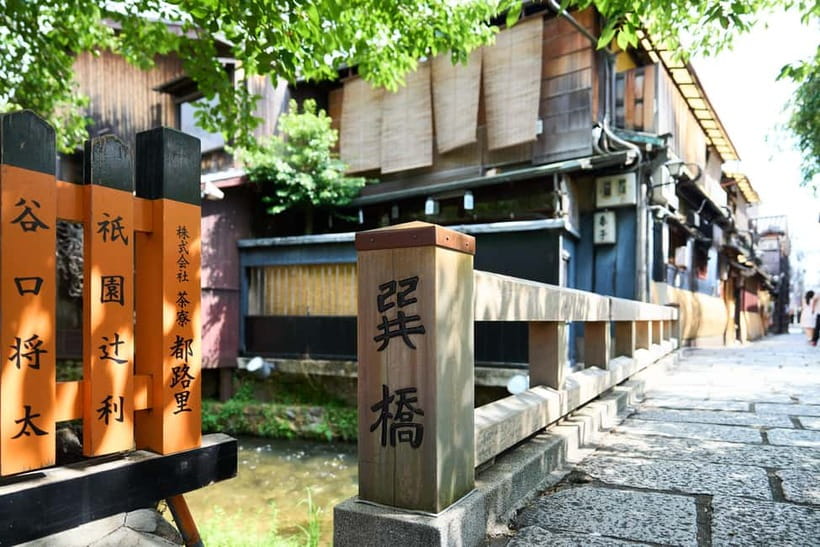
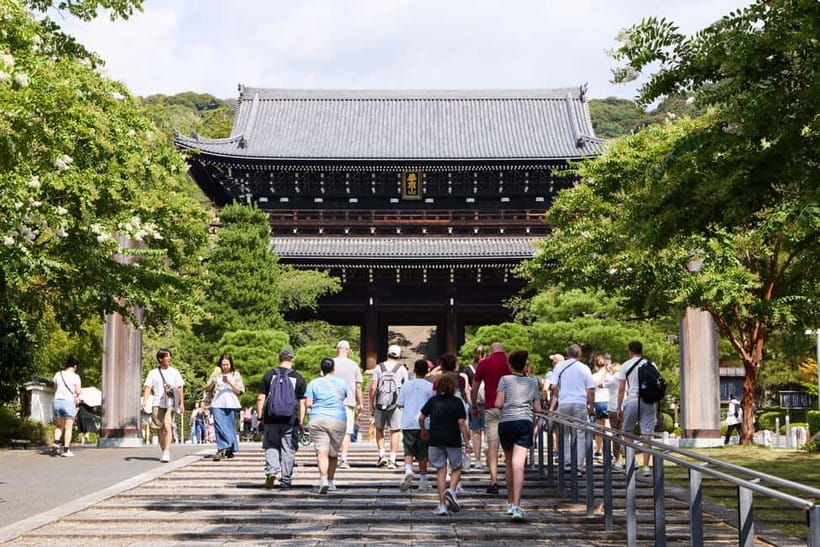
Then you head to Chion-in. This stop matters because it adds Kyoto religion and architecture to the mix. If all you know about Kyoto is shrines and sightseeing streets, Chion-in gives you a stronger sense of how faith and community space overlap.
Your guide spends time here explaining traditions and helping you connect what you see to Kyoto’s past and present. Even if you’re not a “temple details” person, this kind of framing tends to make the visit feel less like decoration and more like living structure.
Drawback to consider: you’ll still be moving, so it helps to wear shoes that can handle a mix of paved surfaces and step-heavy moments.
Maruyama Park: where the story shifts toward everyday Kyoto
Next up is Maruyama Park. Parks in Kyoto can feel surprisingly social. They’re not only scenic backdrops, they’re places where people pass through, meet, and slow down.
Here, your guide’s storytelling supports the tour’s bigger theme: how Kyoto evolved from imperial capital into the cultural center it is today. You’ll get a sense of how public space, tradition, and modern life coexist.
This stop is also a nice mental breather. After temple energy, park time helps reset your eyes before the route gets more step-heavy.
Hōkan-ji Temple and the Higashiyama stone-stair rhythm
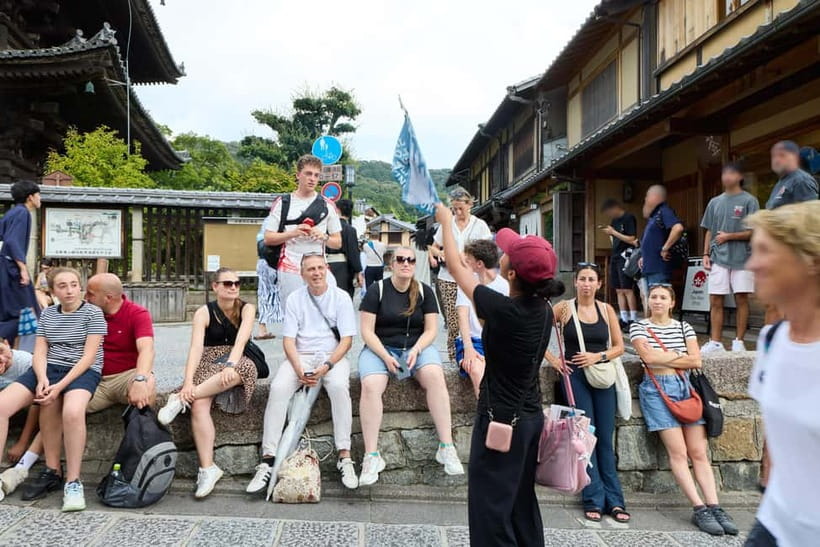
You’ll visit Hōkan-ji Temple, then start moving into the streets that many visitors associate with old Kyoto charm. Hōkan-ji is shorter on the schedule, but it still adds variety, so the tour doesn’t feel like one long stretch of the same type of scene.
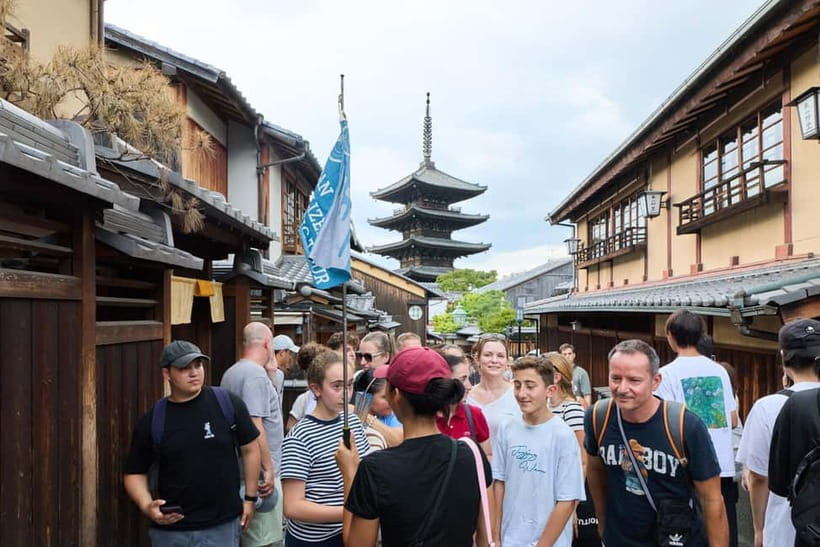
After that, you hit Ninen Zaka Path and Sannenzaka. These are famous for a reason. The stone path experience is tactile, and it makes Kyoto feel like a place with weight, not just a photo feed. Expect preserved street character and plenty of spots where you can pause for lantern-lit, wooden-townhouse visuals.
The downside is the physical one. These areas are known for stairs and uneven step rhythm, so keep your pace conservative. If you rush, you’ll be thinking about your footing more than the sights.
Hidden shrines and backstreets: the part you’ll remember
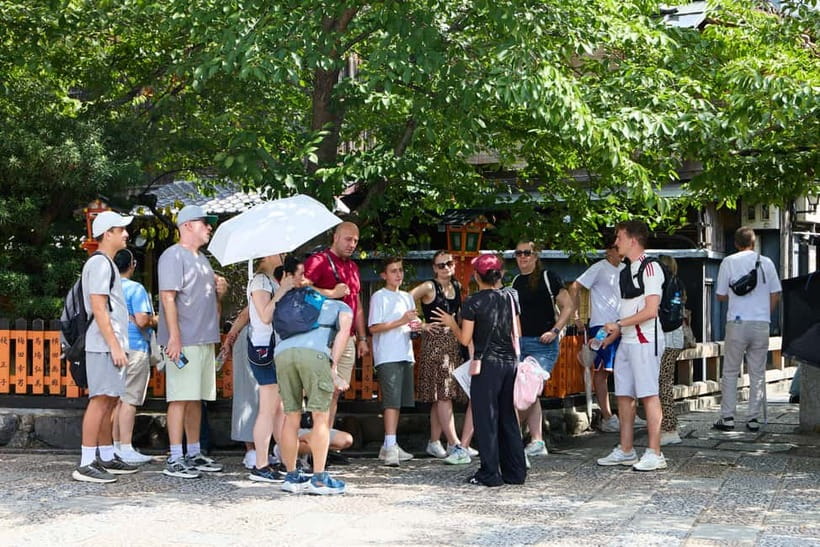
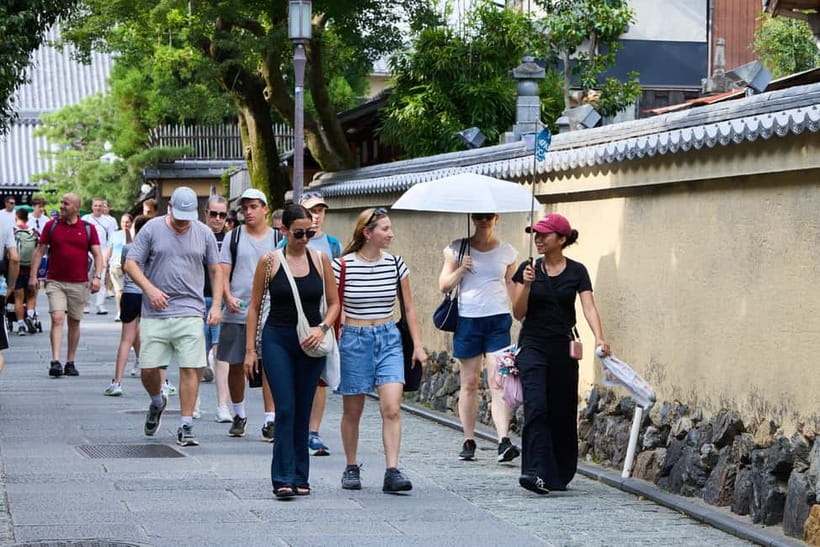
This is where the tour earns its “hidden gems” promise. Between the well-known stops, you’ll look for small shrines tucked between buildings and quiet backstreet routes that most people skip when they only chase the big-name icons.
Your guide also helps you understand the human side of geisha culture. You’ll learn about how maiko and geisha train and work, and you’ll hear how those traditions relate to daily life in Kyoto rather than existing only as a performance myth.
One of my favorite parts of walking tours like this is that the explanations happen at the exact moment you’re seeing the relevant scene. When the guide points out a detail, it clicks immediately because your eyes are already on the location.
Photo tip: aim for small frames. Kyoto’s charm often sits in narrow corridors, doorways, and the gaps between buildings. These lanes give you more “real street” shots than wide-angle views.
Steps, shoes, and how to keep your day enjoyable
The tour has a lot of steps, and it’s not listed as suitable for people with low fitness. That matters because Kyoto walking can sneak up on you, even when the route looks short on a map.
Here’s how I’d plan:
- Wear shoes you can trust on stone steps.
- Bring water (you’re told to do this, and you’ll be grateful).
- Expect a steady pace with pauses, not a slow meander where you can stop for long breaks.
One encouraging point from past experiences is that guides tend to give time to rest when possible. Still, the baseline is active walking. If your legs are not ready, the tour can feel harder than you expected.
If you’re traveling with mixed ages, it helps to set expectations. The route is still understandable and engaging, but the steps decide how enjoyable it is day to day.
Who this tour fits best, and who should skip it
This tour is a strong match if you:
- Want geisha culture and Kyoto traditions explained while walking
- Prefer guided insights over doing everything solo
- Enjoy seeing quieter lanes and small shrines, not just the big targets
- Like a route that connects different zones, ending at a major landmark
It’s less ideal if you:
- Have a low fitness level or struggle with step-heavy routes
- Want a low-effort “sit down often” day
- Are counting on long pauses away from walking
Finish at Kiyomizu-dera Niomon Gate: the day closes with impact
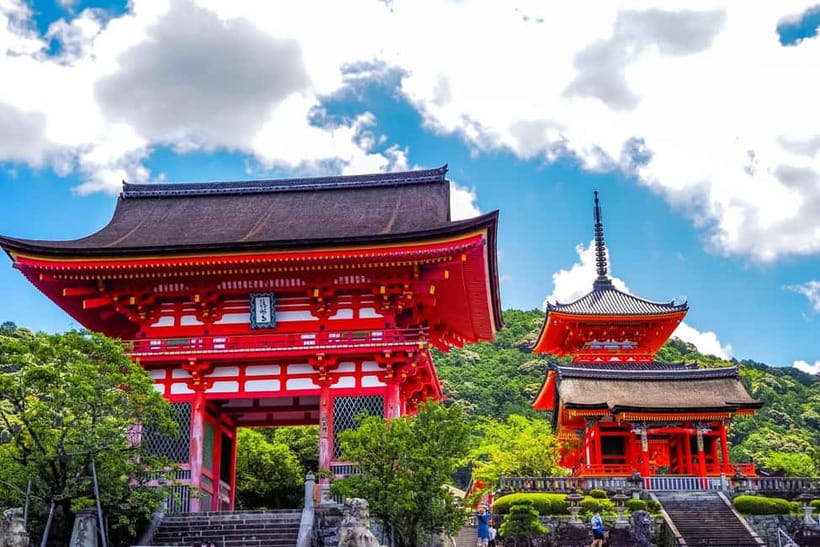
The walk ends at Kiyomizu-dera Niomon Gate. That matters because it gives you a satisfying finale rather than ending back near where you started.
Finishing at a major site also helps you plan the rest of your day. Even if you’re not staying for long, you’ll have a clear, iconic endpoint and an easy sense of direction for transit afterward.
It also makes the whole day feel cohesive. You didn’t just see Gion. You walked from Gion’s story toward one of Kyoto’s best-known temple experiences.
Should you book this Kyoto Gion Geisha District walking tour?
Book it if you want a guided walk that focuses on meaning, not only scenery. The $25 price for a 3-hour English tour is solid value when you factor in how much context you get about geisha culture, Kyoto’s religious traditions, and the city’s evolution.
Skip or think twice if your legs are a concern. The steps are a real part of the experience, not a minor detail.
If you do book, I’d go in with the right mindset: you’re walking streets that are part of real Kyoto life. That makes the stories land better, and it’s usually where the best memories come from.
FAQ
How long is the Kyoto Gion Geisha District walking tour?
The tour lasts 3 hours.
Where do I meet the guide?
Meet at Ben’s Cookies Kyoto Shijo. The guide will be holding a sign in front of the shop.
Where does the tour end?
The tour ends at Kiyomizu-dera Niomon Gate.
What’s included in the price?
The guided tour is included.
Is the tour offered in English?
Yes, it’s a live English tour guide.
What should I bring, and what should I avoid?
Bring water. Alcohol and drugs are not allowed.
Is the tour suitable for everyone?
It has a lot of steps and is not suitable for people with low level of fitness.
Newly listed around Kyoto
- Taste of Nishiki Market Walking Food Tour with Local guide★ 5.0 · 17 reviews
- Kyoto: Sushi Making Class with Sushi Chef★ 4.8 · 64 reviews
- Simple Plan with Maiko★ 4.4 · 10 reviews
- Shibori Furoshiki Course at Kyoto Shibori Museum★ 5.0 · 21 reviews
- Kyoto: City Secrets eBike Tour★ 4.9 · 196 reviews
- Sacred Pathways: Discover the Philosopher’s Path of Kyoto★ 4.9 · 20 reviews
- Private Tour to Monkey Park and Arashiyama Highlights★ 5.0 · 22 reviews
- Private Nara Tour from Osaka – Meet at Your Hotel★ 5.0 · 22 reviews
Geisha District Walks, compared.

Kyoto Geisha Walking Tour: Gion District & Hidden Gems
Read our review →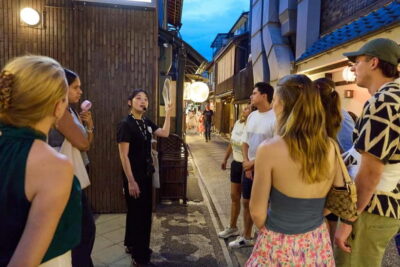
Gion Geisha District Walking Tour – Stories of Geisha
Read our review →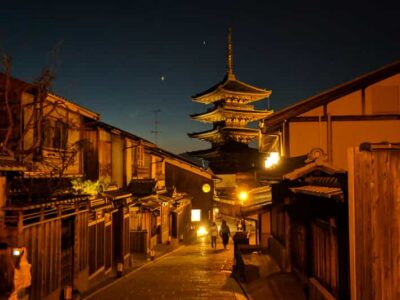
Best of Kyoto: Gion, Geisha, Pagodas & Cobblestones
Read our review →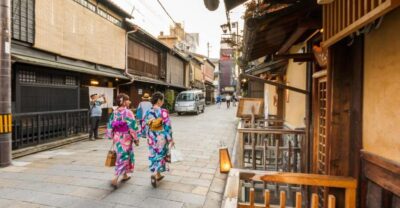
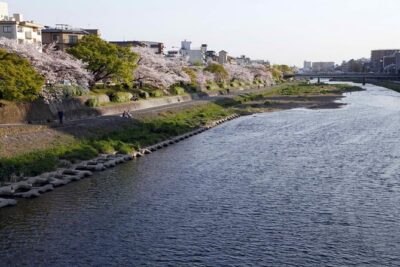
Kyoto Night Foodie Tour in Gion (9+ dishes + 6 Sake tastings)
Read our review →
Kyoto Gion Geisha District Walking Tour – The Stories of Geisha
Read our review →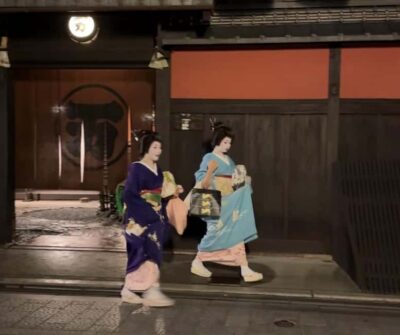
Gion Magical Night Walking Tour with Geisha Insights
Read our review →
Kyoto Gion Night Walk & Geisha District Guided Tour
Read our review →Browse the lists this tour appears in