
Review · GEISHA DISTRICT WALKS
Kyoto: Meet the Geisha Maiko with Gion Walking Tour
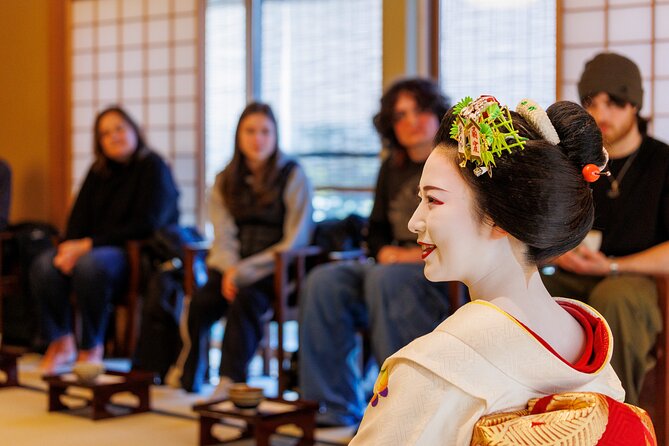
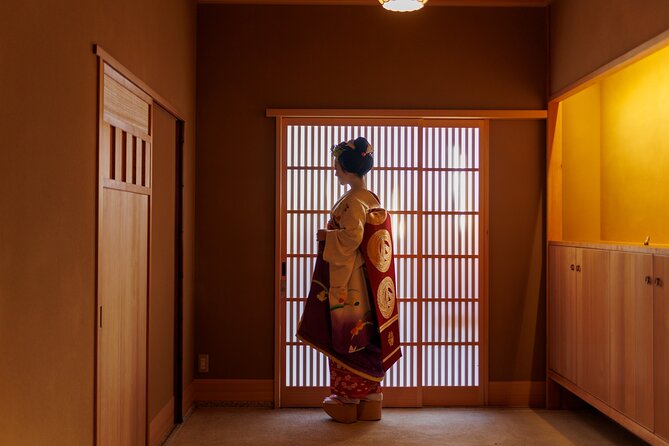
Geisha life can feel close, not staged. This Kyoto Gion experience pairs a guided walk with a private ochaya meeting, where you see a maiko performance and hear firsthand stories from a maiko and a former geiko.
I love how the tour gives you both context and access. You start by walking Gion streets like Hanamikoji and stopping at spots tied to the district, then you move into an intimate private venue for a live performance plus a long conversation and Q&A. One drawback to plan for: you’re entering a private house on the 2nd floor with stairs, and you must wear socks at the venue, with extra care needed on rainy days.
In This Review
- Key highlights worth marking on your map
- Kyoto Gion after the crowds, in a private ochaya
- Walking Gion with purpose, not just photo stops
- The ochaya moment: maiko performance plus a real Q&A
- Stories from the maiko, the former geiko, and the venue owner
- Kimono option, meeting points, and what to do right before the walk
- Photos and video rules: how to get great shots without breaking the rules
- Price and time: what $106 buys you in real terms
- Who this Kyoto maiko experience fits best
- My call: should you book this Gion maiko encounter?
- FAQ
- How long is the Kyoto Gion walking tour and maiko meeting?
- What is included in the experience?
- Where does the tour start?
- If I choose the kimono rental option, where do I go after changing?
- Do I need to bring socks?
- Can I take photos and record video?
- Does the tour run in bad weather?
- What if the tour runs longer than expected?
- Is this tour suitable for children or wheelchair users?
Key highlights worth marking on your map
- Private ochaya access to meet a maiko (apprentice geisha) and a former geiko in a rare setting
- Live maiko dance performance plus a Q&A that goes beyond simple sightseeing
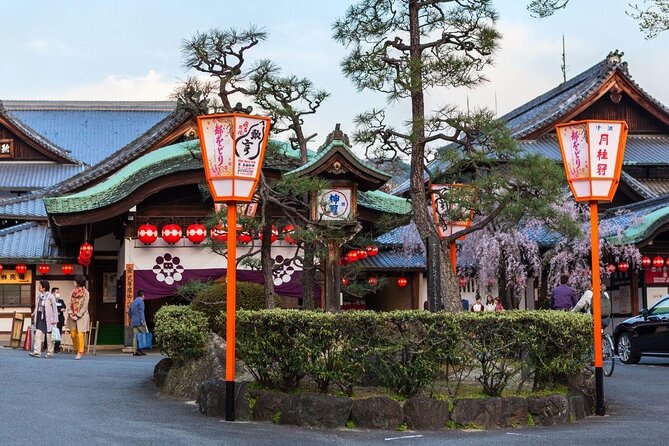
- Gion streets, on foot, with guided stops around key lanes like Hanamikoji and Miyagawasuji
- Conversation with real insiders, including a venue owner, for practical cultural insights
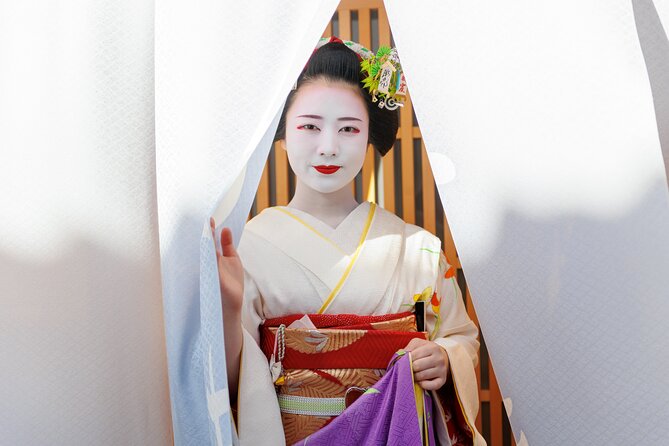
- Photo session with the maiko, with clear rules on what you can record and share
Kyoto Gion after the crowds, in a private ochaya
If you’ve seen photos of Kyoto’s geisha district, you already know the aesthetic. What’s different here is the access. Instead of just looking from the sidewalk, you get guided context in Gion, then step into a private tea-house style venue, an ochaya, where a maiko and a former geiko share their world directly with you.
I like that the experience balances performance with conversation. The dance is beautiful, but the real value is what comes after, when questions get answered and stories get shared in plain language. You also get a local guide who helps you make sense of what you’re seeing, turning the pretty streets into something you understand, not just something you pass.
The setting matters too. This is described as an exclusive private house and venue. That means the atmosphere stays calm and personal. It’s also why the rules are strict. You’ll want to arrive ready for a short, formal moment inside someone’s traditional space, not a casual walk-in show.
One more thought before you book: this isn’t built for kids or anyone who needs step-free access. The performance is on the 2nd floor with stairs, and the activity is listed as not suitable for wheelchair users and people with mobility impairments.
More Walking Tours in Kyoto
- Kyoto Geisha Walking Tour: Gion District & Hidden Gems
★ 4.7 · 3,273 reviews - Kyoto: Gion Geisha District Walking Tour – Stories of Geisha
★ 4.7 · 2,187 reviews - Night Walk in Gion: Kyoto’s Geisha District
★ 4.5 · 2,003 reviews
Walking Gion with purpose, not just photo stops
The experience starts with a guided walk through Gion, built to give you context before you ever reach the ochaya. The route includes several classic, recognizable areas, but the key is how the guide frames them, so you notice details you’d otherwise miss.
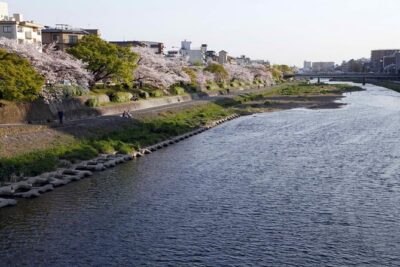
You’ll begin near one of the two starting points, then your walk includes the Shirakawa Canal. This is a favorite Kyoto scene for a reason, and in a short visit like this you’ll get a guided look that helps you place it in the rhythms of the district.
Next comes a quick stop at Tatsumi-jinja Shrine. The time is brief, but short shrine visits work well on tours like this because they add cultural grounding without eating your whole afternoon. Then you move to Hanamikoji Street, one of the most famous lanes in Gion. You don’t just get told it exists. You get walked through what you’re actually looking at and why it matters to the district’s identity.
There’s also a stop at Gion Corner, followed by a photo stop and guided sightseeing at Kenninji Temple (around 15 minutes). That’s long enough to frame what you see, but short enough to keep your schedule moving toward the main event.
Finally, you spend time at Miyagawasuji, including a photo stop and then about 1.5 hours of visiting time, with the tour ending there. For me, this is a smart way to end: you go from learning and meeting, to simply letting the streets sink in while you have a bit more freedom with your camera and your pace.
Practical takeaway: wear comfortable shoes and keep your phone handy. The route has multiple short guided segments and photo opportunities, but not every stop is a long hangout. If you like structured walks, this will feel satisfying. If you want totally free time, you might feel the pace is guided, not loose.
The ochaya moment: maiko performance plus a real Q&A
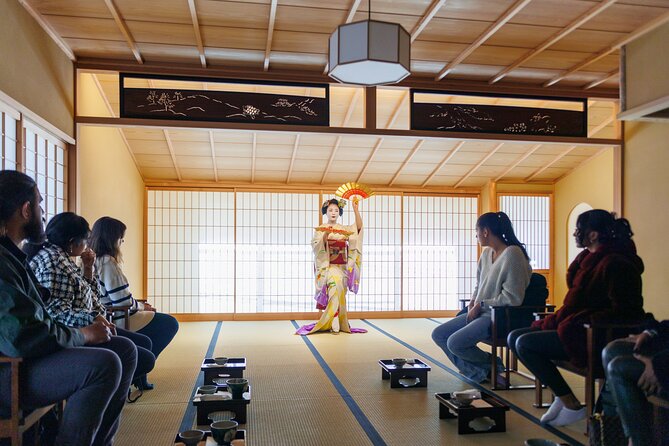
This is the heart of the tour: your meeting experience in a private ochaya with a maiko and a former geiko. You’ll be there for about 90 minutes, and within that window you see a live performance, typically 1 to 2 dances, followed by conversation and Q&A.
The performance is described as happening on the 2nd floor of the private house, and you can only access it via stairs. That affects everything: shoes, socks, timing, and your ability to move quickly and carefully when you arrive.
The socks rule is non-negotiable. You must wear socks at the performance venue. The tour also asks you to bring socks. That’s not just a formality. Traditional venues often manage footwear and cleanliness differently, and in rain you get extra restrictions, too.
Photography rules also shape the whole vibe. You’re allowed to take photos and record video only during the performance and the photo session. If you plan to post online, there’s a further constraint: you need direct permission from the maiko beforehand to upload photos. Video upload is not allowed.
What you get beyond the dance is the part that most people remember. You’ll have a personal conversation, plus Q&A, with both the maiko and the venue owner, and the former geiko shares candid stories too. Based on the way the guides translate and interpret, this is not treated like a scripted greeting. It’s positioned as an exchange, so questions actually matter.
And the setting encourages you to slow down. You’re not chasing the next photo angle. You’re watching a small, deliberate performance, then speaking, listening, and asking for clarifications about training, traditions, and daily life in Kyoto’s geisha world.
Stories from the maiko, the former geiko, and the venue owner
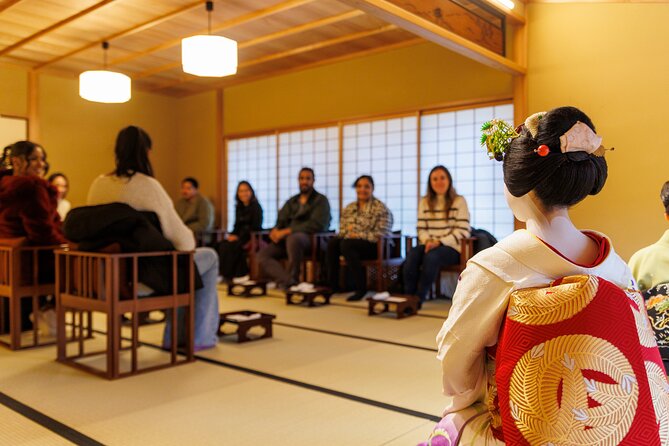
The best cultural encounters feel specific. This one leans into real detail. You meet a maiko, then you also hear from a former geiko, plus the tea house owner. That combination matters, because it gives you multiple viewpoints on the same culture.
A maiko’s answers tend to focus on training and tradition, like what the apprenticeship means and what daily discipline looks like. A former geiko can add the angle of having lived the role, then stepping into a different phase of life. And a venue owner brings the practical side, how these traditions function in real spaces, with real schedules and real expectations.
I also like that this experience isn’t limited to a single lecture. There’s Q&A built in, so you can ask follow-up questions rather than absorbing facts you won’t use. When you care about etiquette, you’ll get more clarity here than from a basic overview. When you care about what’s modern versus traditional, the discussion has room for that.
One small note from how the tour is described: the performance is only part of the overall time. People who expect a long dance show might feel the rest of the experience is more conversation-heavy. If you’re the type who loves asking questions and learning the context behind the art, that’s a plus. If you just want a stage performance, the tradeoff may feel less exciting.
Compare these Geisha District walks in Kyoto:
- Best of Kyoto: Gion, Geisha, Pagodas & Cobblestones
★ 4.9 · 2,058 reviews - Kyoto Night Foodie Tour in Gion (9+ dishes + 6 Sake tastings)
★ 5.0 · 1,762 reviews - Kyoto Gion Geisha District Walking Tour – The Stories of Geisha
★ 5.0 · 1,441 reviews - Kyoto: Gion Magical Night Walking Tour with Geisha Insights
★ 4.9 · 1,286 reviews
Kimono option, meeting points, and what to do right before the walk
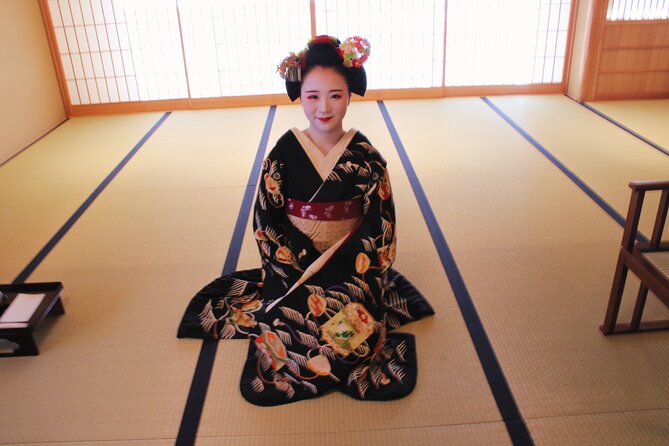
You have two starting options. Meeting points can vary depending on what you book. One option is at the Izumo-no-Okuni statue (出雲阿国像). Another option is near the wargo Kyoto Kimono Rental Gionshijo Store.
If you choose the kimono rental option, the instructions are clear: after changing into kimono, you should go by yourself to the Izumo-no-Okuni statue, about a 3-minute walk away. Your guide will be waiting there.
This matters because it turns a potentially confusing transition into a simple checklist moment. You don’t want to be late or wandering while everyone else is waiting. Plan to give yourself a small buffer after the change.
Also, think about weather. The tour runs rain or shine, and on rainy days the venue has restrictions: no wet clothes and no wet socks are allowed at the performance space. During the walking portion, you’re advised to use an umbrella.
A practical approach I’d use: dress for walking, but treat the venue socks and clothing rules like a mini challenge. If it’s raining, keep your socks as dry as you can, and avoid wearing anything that will drip straight onto your socks. This isn’t about fussiness. It’s about keeping the venue rules comfortable for everyone.
Photos and video rules: how to get great shots without breaking the rules
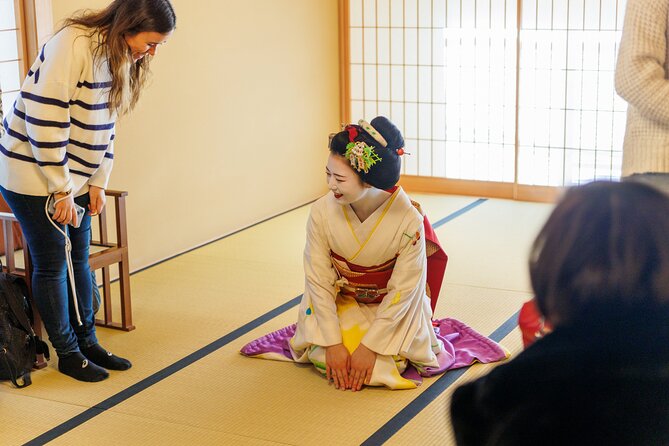
If you care about photography, this tour is built for it, but with boundaries. You’re allowed to take photos and video only during two windows: the performance and the photo session with the maiko.
That means you should plan to shoot your walking photos at the times you’re stopping around the district, but not expect free recording inside the ochaya outside those permitted moments. If you try to capture everything, you’ll likely end up stressed instead of enjoying the moment.
The posting rules are also important. You can upload photos of the maiko online only with direct permission from the maiko beforehand. Video upload is not allowed.
So here’s how I’d handle it: take your best photos during the allowed photo session, then ask what permission process looks like for posting. The tour setup suggests you’ll have a clear moment for that, since permission is explicitly mentioned.
Also keep in mind you’ll be sharing a small space during the performance segment. That’s part of what makes it special. Move slowly, focus on respectful framing, and let the main action fill your memory even if you capture a few photos too.
Price and time: what $106 buys you in real terms
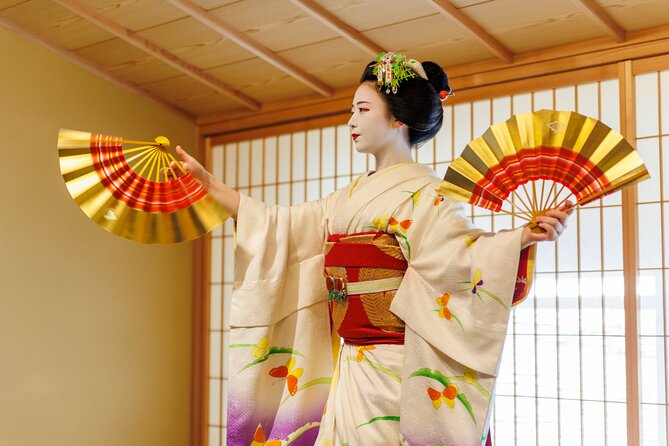
At $106 per person for 3 to 5 hours, this is not a budget add-on. You’re paying for three things that are hard to replicate on your own:
1) Private access to an ochaya setting, where you can meet a maiko and a former geiko
2) A structured, guided walk through Gion that adds meaning to what you see
3) Guided conversation time, including Q&A, not just a short handshake-and-go moment
Value comes from the combo, not from one component. If you only cared about the walking portion, you could do Gion on your own with a guidebook. If you only cared about the performance, you might find public shows, but the data here points to this being more exclusive and dialogue-based. You’re paying for the “living tradition” aspect, where you ask questions and receive answers in context.
The time window is realistic. Three to five hours is enough to cover the walking segment, transition to the venue, then spend meaningful time inside. Just remember the tour can run a bit longer depending on the day. If you’re tight on train schedules, build in buffer time.
Who this Kyoto maiko experience fits best
This tour suits you if you want to understand Kyoto’s geisha world in a respectful, structured way. You’ll likely enjoy it most if you:
- Like guided storytelling, not just wandering
- Enjoy Q&A and learning etiquette and tradition details
- Want a small-group experience in a private setting
It may not fit you if:
- You need step-free access (it’s on the 2nd floor with stairs)
- You’re bringing a child under 10 (not suitable)
- You need wheelchair access or have mobility impairments (listed as not suitable)
- You mainly want a long public stage performance, since the overall time includes extensive conversation
And if you’re the type who gets annoyed by strict rules about phones and socks, take that seriously up front. This tour requires socks and has clear photo and video limitations.
My call: should you book this Gion maiko encounter?
Yes, if your goal is cultural understanding through access. This isn’t just a dance moment. It’s a guided walk that sets the stage, then an ochaya meeting that gives you direct answers from a maiko, a former geiko, and the venue owner.
Book it especially if you’re curious about how the traditions actually work on ordinary days, not only how they look in photos. And if you’re flexible and prepared for small venue rules like socks and stairs, you’ll get a smoother, calmer experience.
Hold off if you need wheelchair-friendly access or you prefer completely casual, no-rules sightseeing. In this case, the strict format is part of what makes the encounter possible in the first place.
FAQ
How long is the Kyoto Gion walking tour and maiko meeting?
The activity lasts about 3 to 5 hours.
What is included in the experience?
You get a local guide, a Gion walking tour (about 70 to 80 minutes), a meeting maiko experience (about 90 minutes), a live performance by a maiko and a former geiko (typically 1 to 2 dances), a conversation and Q&A with a maiko and the venue owner, and a photo session with the maiko.
Where does the tour start?
Meeting point may vary depending on the option booked. It can be at the Izumo-no-Okuni statue, or at the wargo Kyoto Kimono Rental-Gionshijo Store.
If I choose the kimono rental option, where do I go after changing?
After changing into kimono, you should go on your own to the Izumo-no-Okuni statue, about a 3-minute walk from the rental store. Your guide will be waiting there.
Do I need to bring socks?
Yes. You MUST wear socks at the performance venue, and the tour advises you to bring socks.
Can I take photos and record video?
Photography and video recording are allowed only during the performance and during the photo session. If you want to upload photos of the maiko online, you must obtain direct permission from the maiko beforehand. You cannot upload any video on the internet.
Does the tour run in bad weather?
The tour takes place rain or shine. On rainy days, no wet clothes and no wet socks are allowed at the venue, so you should use an umbrella during the walk.
What if the tour runs longer than expected?
The tour may be a bit longer than expected depending on the day.
Is this tour suitable for children or wheelchair users?
No. It is not suitable for children under 10, people with mobility impairments, or wheelchair users.
Newly listed around Kyoto
- Taste of Nishiki Market Walking Food Tour with Local guide★ 5.0 · 17 reviews
- Kyoto: Sushi Making Class with Sushi Chef★ 4.8 · 64 reviews
- Simple Plan with Maiko★ 4.4 · 10 reviews
- Shibori Furoshiki Course at Kyoto Shibori Museum★ 5.0 · 21 reviews
- Kyoto: City Secrets eBike Tour★ 4.9 · 196 reviews
- Sacred Pathways: Discover the Philosopher’s Path of Kyoto★ 4.9 · 20 reviews
- Private Tour to Monkey Park and Arashiyama Highlights★ 5.0 · 22 reviews
- Private Nara Tour from Osaka – Meet at Your Hotel★ 5.0 · 22 reviews
Geisha District Walks, compared.

Kyoto Geisha Walking Tour: Gion District & Hidden Gems
Read our review →
Gion Geisha District Walking Tour – Stories of Geisha
Read our review →
Best of Kyoto: Gion, Geisha, Pagodas & Cobblestones
Read our review →
Kyoto Night Foodie Tour in Gion (9+ dishes + 6 Sake tastings)
Read our review →
Kyoto Gion Geisha District Walking Tour – The Stories of Geisha
Read our review →
Gion Magical Night Walking Tour with Geisha Insights
Read our review →
Kyoto Gion Night Walk & Geisha District Guided Tour
Read our review →Browse the lists this tour appears in