
Review · FISH MARKET WALKS
Kyoto Nishiki Market Tour
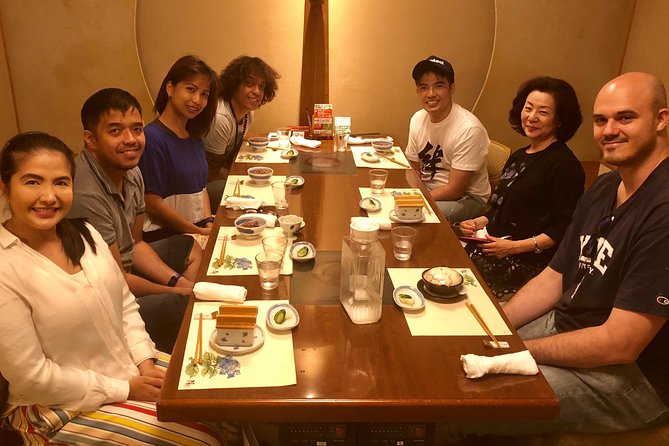
Nishiki Market is food overload, in the best way. This guided Kyoto Nishiki Market Tour turns a crowded, narrow market into a clear tasting plan, and I really like that you hit family-owned shops where the guide explains what you are eating. The main downside is simple: Nishiki can be loud and packed, so it can get tough to hear your group at peak times.
You also eat more than you expect from a typical market stroll. Expect tastings that go from yuuba tofu and tsukemono to macha, dashi, tamagoyaki, and fresh seafood, plus Japanese tea and a seasonal lunch. If you prefer calm, wide sidewalks and silence, this is not that kind of experience.
The price, at $221 per person, can feel steep until you add up what is included. You get guided navigation, tastings along the way, Japanese tea, and a lunch, for a walk that runs a little over three hours starting at 10:00 am in central Kyoto and ending near Karasuma Station.
In This Review
- Key Things That Make This Tour Worth Your Time
- Nishiki Market, called the Kitchen of Kyoto, and why a guide matters
- What you eat on this Kyoto Nishiki Market route
- The flavor story behind Kyoto staples, from harvest to preservation
- Walking logistics: start near 376 Naramonochō and end near Karasuma
- Stop-by-stop route: what each landmark adds to the day
- Lunch, Japanese tea, and how to pace your appetite
- Dietary fit and drinks: what you should know ahead of time
- Pricing and value: is $221 fair for a Kyoto food tour?
- Who should book this Nishiki Market Tour, and who should skip
- Should you book this Kyoto Nishiki Market Tour?
- FAQ
- FAQ
- How long is the Kyoto Nishiki Market Tour?
- Where does the tour start and what time is it?
- What is the price per person?
- What is included in the tour price?
- How many food stops or vendors are included?
- Is the tour suitable for vegetarians or pescatarians?
- What is the minimum age for drinking?
Key Things That Make This Tour Worth Your Time
- A small group max of 10 keeps the walk manageable in tight streets.
- Tastings included as part of a structured route through Nishiki.
- Farm-to-plate explanations for Kyoto staples like dashi and tamagoyaki.
- Japanese tea plus a seasonal lunch means you are not rationing snacks.
- Vegetarian-friendly and pescatarian options are listed as available.
- Family-run shops, some with centuries of history give you real local context, not generic food facts.
Nishiki Market, called the Kitchen of Kyoto, and why a guide matters
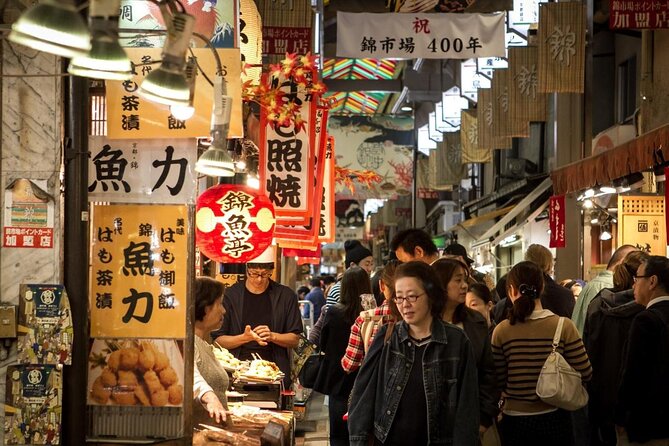
Nishiki Food Market is the kind of place where your senses get hit in about five seconds. Lots of stalls, lots of smells, lots of people, and more little sample cups than you can comfortably track on your own. That is exactly why I like this kind of tour format. You are not just wandering, you are following someone who knows how to move through the crowds and which shops actually make sense to stop at.
This tour is built around Nishiki as a living food hub, not a theme park. The guide helps you understand what makes Kyoto cooking distinct, and the tastings are tied to that story. You get the chance to learn how ingredients make the jump from harvest to shop shelf, including how foods are handled for preservation and sale.
One small but important practical point: this is a walking tour. You should come with good walking shoes and a willingness to stand and taste in compact spaces. Nishiki is narrow, and even with a guide, you will feel the crowd energy.
More Market Tours in Kyoto
- Nishiki Market Brunch Walking Tour (7 Tastings + Brunch)
★ 5.0 · 1,355 reviews - Kyoto Nishiki Market Food and Culture Walking Tour
★ 5.0 · 412 reviews - Kyoto: Nishiki Market Tea Ceremony with Koto Performance
★ 4.8 · 294 reviews
What you eat on this Kyoto Nishiki Market route
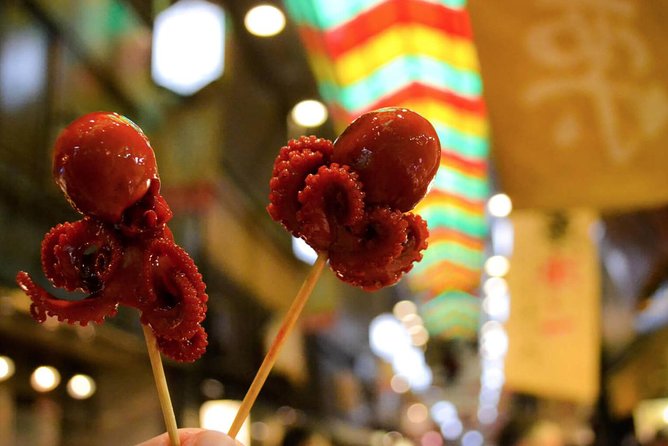
This is a true food tour, not a “look and buy” stroll. The experience includes tastings at 10 market vendors and also describes visiting 12 family-owned shops, including longtime sellers. The difference between those numbers can happen when vendors are grouped by what the itinerary calls a stop, but either way you should plan for a lot of small samples.
Here is the kind of food you can expect to taste:
- Sashimi-style seafood described as especially smooth
- Tofu, including yuuba (tofu made using mountain water, in the way this tour explains it)
- Macha tea flavors
- Dashi, Kyoto’s foundational soup stock concept
- Tamagoyaki (Japanese rolled omelet)
- Fresh seafood
- Tsukemono, Kyoto pickles from the surrounding mountains
- Sake straight from the tap is mentioned as part of the tasting lineup
Even if you are not a “try everything” person, you will likely find at least a few bites that match your tastes. If you are more cautious with raw seafood, you can use the guide to steer you toward what feels safe and enjoyable for your palate, and you will at least get the Kyoto staples like pickles, tofu preparations, and cooked items.
The flavor story behind Kyoto staples, from harvest to preservation
What makes this tour more than just eating is how the guide explains the “why” behind the foods. The tour is explicit about learning the process from harvest to sale, and it also mentions “at the market to preservation.” That matters because many Kyoto foods are defined by method and ingredient quality, not just sauce and spice.
So instead of tasting a piece of tamagoyaki and moving on, you get context. You learn how ingredients become the final dish, how tofu becomes yuuba, and how pickled vegetables like tsukemono fit into the broader idea of seasonal eating. You also learn what makes Kyoto cuisine feel different compared to other parts of Japan, especially when it comes to how flavors are built around dashi and carefully balanced seasonings.
This is also where your questions come in. The guide is there to answer questions about Nishiki, Kyoto, and the specific Kyoto foods you taste. If you enjoy food explanations, this is one of the biggest reasons to choose a guided option over self-guided shopping.
Walking logistics: start near 376 Naramonochō and end near Karasuma
The tour meets at 376 Naramonochō, Shimogyo Ward, Kyoto, with a start time of 10:00 am. It then runs for about 3 hours 5 minutes on foot, and ends in the Karasuma area near Karasuma Station.
Why does this matter? Because Kyoto mornings can feel fast, and Nishiki crowds ramp up. A 10:00 am start gives you time to start before things get fully gridlocked, though it can still be busy. Bring patience for stop-and-go walking and for brief standing time at tasting spots.
Also note that hotel pickup and drop-off are not included. You will want to plan your own transit to the meeting point and your own way back after the tour ends. The good news is that the meeting area is described as near public transportation, which helps.
The tour has a maximum group size of 10 travelers, which keeps the walk from turning into a stampede. In a market this narrow, smaller groups make a real difference in comfort and pacing.
More Market Walks in Kyoto
- Kimono Tea Ceremony at Kyoto Maikoya, NISHIKI
★ 5.0 · 911 reviews - Kyoto: Nishiki Market Brunch Walking Tour-7 Tastings+Brunch
★ 4.8 · 197 reviews - Kyoto: Local Food Tasting Tour at the Nishiki Market
★ 4.7 · 135 reviews - Kimono Tea Ceremony Experience at Kyoto Oritzuruya, Nishiki
★ 5.0 · 116 reviews
Stop-by-stop route: what each landmark adds to the day
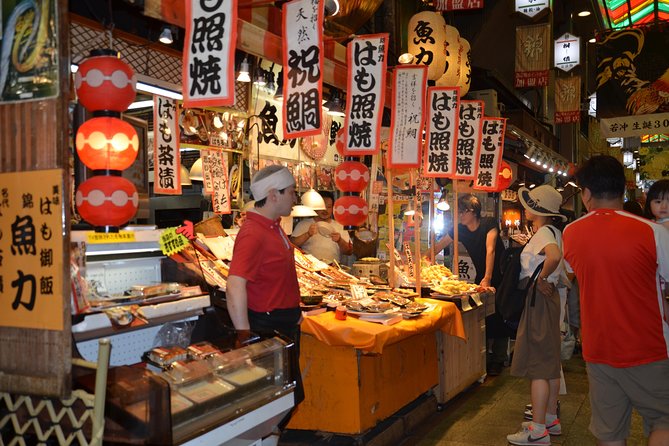
Even though the “core” is Nishiki food, the tour is not only about stalls. It includes nearby sights that help you place the market in Kyoto’s wider geography and rhythm.
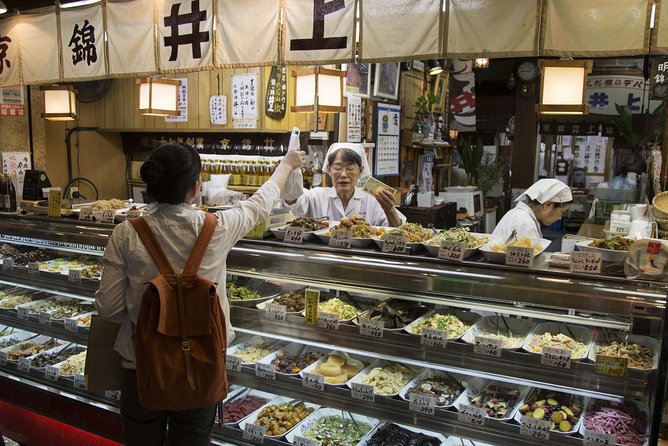
The tour begins at a store meeting point, then moves into the Nishiki shopping district. This is where you do the bulk of your tasting and conversation. The guide helps you explore regional specialties and seasonal items, and you get to sample from family-run shops that sell prepared foods and ingredients.
From there, the route continues past key Kyoto spots mentioned as part of the walk:
- Nishiki Tenmangu Shrine: A calm pause in the middle of the food focus, giving you a sense of place beyond the market stalls.
- Rokkakudo Temple: Another landmark that adds a little cultural texture while you are still in easy walking territory.
- Fushimi Inari Taisha: This is included on the route list, so you should expect the day to go beyond Nishiki proper and into a broader Kyoto sighting feel.
The tour also lists Umenohana as an ending point, and it concludes around Karasuma Station. You should expect a smooth transition from eating to sightseeing, then back to an easy transit hub for your next stop.
Lunch, Japanese tea, and how to pace your appetite
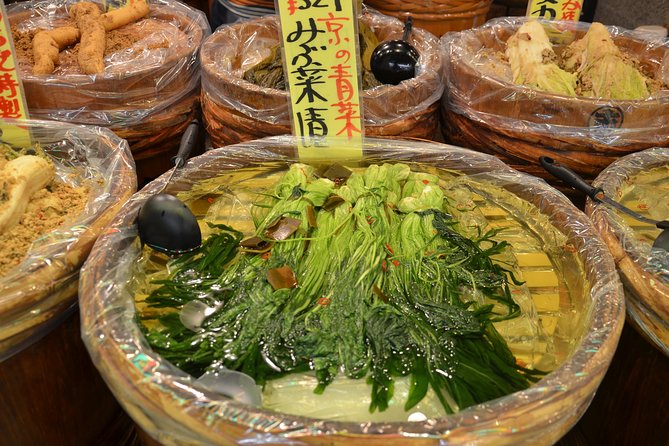
One of the practical wins here is that Japanese tea is included, and seasonal and regional lunch is included. That means you are not scrambling for a meal later, and you do not have to guess how hungry you will be after the tastings.
Come with an empty stomach. That is not just advice for dramatic effect. When you are offered multiple small tastings, the difference between enjoying the day and feeling overfull can be one or two hours of pre-planning.
Also, if you are traveling with someone who has a slower pace, the guided structure helps. The tour experience is described as having guides who can pace groups, including families and older participants. With a small max group size, you are more likely to get that kind of supportive pacing than in larger tours that try to move everyone on a fixed schedule.
Dietary fit and drinks: what you should know ahead of time
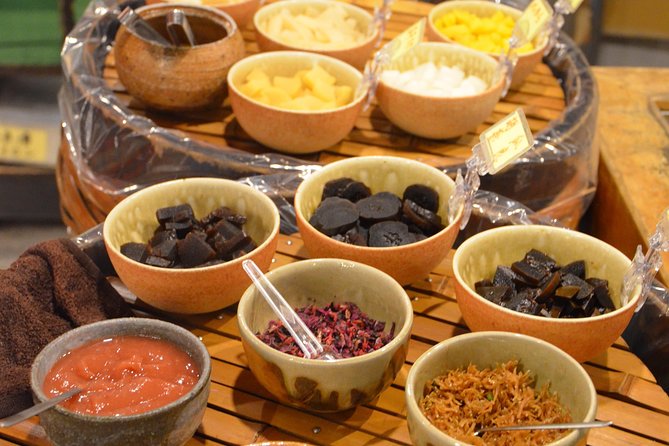
This tour is listed as vegetarian friendly and also pescatarian. That is a big deal in a market full of seafood and dashi-based foods, because it signals you are not forced into a “no options” situation. Still, since the specific items at each stall are not listed for every dietary preference, it is smart to let the guide know what you can eat before you start sampling.
Alcohol is part of the food lineup. The tour lists minimum drinking age is 21, so if you are under that age, you should expect to skip alcohol-related tastings. If you are of age, know that the market pace makes drinks secondary to sampling bites.
Pricing and value: is $221 fair for a Kyoto food tour?
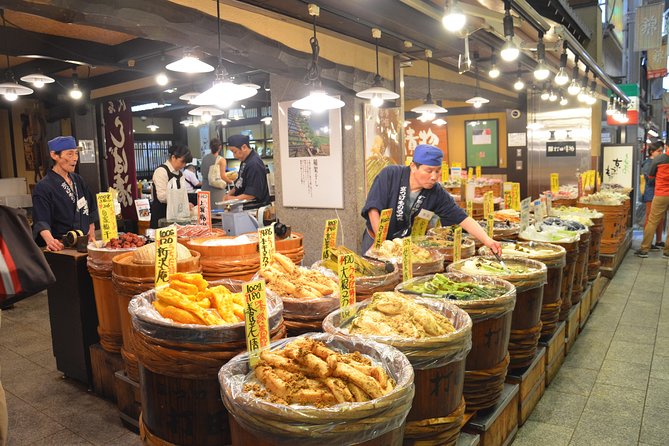
At $221 per person, this is not a budget market snack. But value is about what is included and what you are buying with that money.
You are getting:
- guided navigation through Nishiki’s dense, loud streets
- tastings included along the way (10 vendor tastings, with 12 shop stops described)
- Japanese tea included
- seasonal and regional lunch included
- a guide who can explain Kyoto foods, and answer questions
If you tried to do it yourself, you might spend money anyway on snacks, then still miss the food context and the smarter route through crowded lanes. This tour also helps reduce the “what should I try?” problem. You show up with an appetite, follow the plan, and leave with a better sense of what makes Kyoto cuisine feel distinct.
So yes, it is pricey for a market. But compared to piecing together tastings and a proper meal on your own without local guidance, it can feel like a fair trade, especially if you genuinely enjoy learning about food.
Who should book this Nishiki Market Tour, and who should skip
This works best if you want:
- a food-first experience with structured tastings
- help navigating a crowded market without spending the whole time asking which stall is worth it
- explanations of Kyoto staples like dashi, tofu preparations, tamagoyaki, and tsukemono
- the convenience of tea plus lunch included
You might skip it if you prefer:
- silent, slow strolling where you pick only a few snacks at your own pace
- a market experience without any guided structure or planned sightseeing stops
It is also a good fit for many group types because the tour is family-friendly and limited to 10 travelers, which often keeps it more relaxed than big-group tours.
Should you book this Kyoto Nishiki Market Tour?
If you are excited by the idea of eating your way through Nishiki while learning what makes Kyoto food different, I think this is a strong booking. You get the most important ingredients of a great market tour: tastings included, a guide who can explain the food, and a real sit-down meal at the end of the sampling.
If you hate crowds or need quiet, you might find the market environment stressful. But if you can handle noise and standing for a bit, the small group size and guided pacing make it much easier.
FAQ
FAQ
How long is the Kyoto Nishiki Market Tour?
It runs for about 3 hours and 5 minutes.
Where does the tour start and what time is it?
The tour starts at 376 Naramonochō, Shimogyo Ward, Kyoto, and the start time is 10:00 am.
What is the price per person?
The price is listed as $221.00 per person.
What is included in the tour price?
Food tastings are included, along with Japanese tea. The tour also includes a seasonal and regional lunch.
How many food stops or vendors are included?
The tour includes visits to 10 market vendors for tastings, and it also describes visiting 12 family-owned shops.
Is the tour suitable for vegetarians or pescatarians?
Yes. The tour is listed as vegetarian friendly and pescatarian.
What is the minimum age for drinking?
The minimum drinking age is 21 years.
More Markets in Kyoto
- Kyoto Nishiki Market & Depachika: 2-hours Food Tour with a Local
★ 4.5 · 23 reviews - Kyoto: Nishiki Market Food Tour
★ 4.9 · 21 reviews - Kyoto: Enjoy Sushi & Market Tour! Best for Family & Couple!
★ 4.8 · 20 reviews - Taste of Nishiki Market Walking Food Tour with Local guide
★ 5.0 · 17 reviews
More Shopping Tours in Kyoto
- Kyoto: Nishiki Market and Depachika Food Tour with a Local
★ 4.7 · 76 reviews - Kyoto: Nishiki Market Tour with a Local Foodie & 3 Tastings
★ 4.6 · 47 reviews - Nishiki Market Food Tour with Cooking Class
★ 4.9 · 42 reviews - Golden Pavilion, Nijo Castle, & Nishiki Market Half day tour
★ 5.0 · 29 reviews
Newly listed around Kyoto
- Kyoto Samurai Discovery Samurai Sword Test Cutting Training★ 5.0 · 132 reviews
- Kyoto Sake Brewery Tour with Lunch★ 4.5 · 12 reviews
- Kyoto Sagano Insider: Rickshaw and Walking Tour★ 5.0 · 15 reviews
- Private Food & Sake Tour in Central Kyoto with Sake Sommelier★ 5.0 · 24 reviews
- Kyoto Ramen Tour★ 5.0 · 22 reviews
- Ramen Gyoza Onigiri Japanese Cooking Class in Kyoto★ 5.0 · 44 reviews
- Kyoto Rickshaw Tour★ 5.0 · 210 reviews
- Kyoto Portrait Tour with Kimono★ 5.0 · 48 reviews
Fish Market Walks, compared.
Tokyo Tsukiji Fish Market Food and Culture Walking Tour
Read our review →
Nishiki Market Brunch Walking Tour (7 Tastings + Brunch)
Read our review →
Tokyo Sushi Making Class in Tsukiji with Professional Chef
Read our review →
Tsukiji Fish Market Guided Tour and Sushi Making with Pro Chef
Read our review →Tsukiji Fish Market Food and Culture Walking Tour
Read our review →Browse the lists this tour appears in