
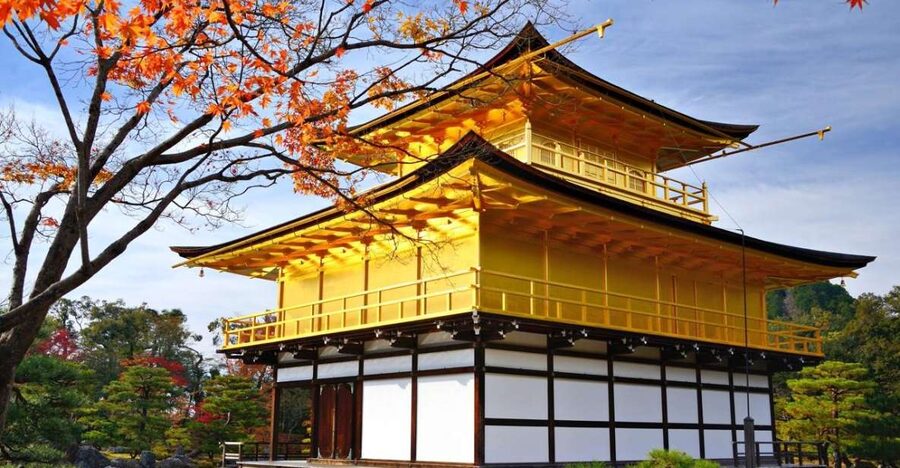
Review · FISH MARKET WALKS
Golden Pavilion, Nijo Castle, & Nishiki Market Half day tour
Gold reflections and shogun stories, in four hours. This half-day private tour strings together Kinkaku-ji and Nijo Castle with clear Edo-period explanations, delivered with an iPad, and you get lots of chances to ask questions and get photos. The main consideration is that it still means a temple-focused morning with public bus and train plus walking, so it is not the best match if you need wheelchair access or limited mobility.
I especially like that the guide is Kyoto City Certified Tourist Guide Roberto, and the explanations are built to help you carry the story with you for the rest of your Kyoto days. You also get practical guidance for what you are seeing, not just where to stand for pictures, and you can ask for recommendations after the tour wraps.
You will run from 8:30 am to 12:30 pm and end at Nishiki Market, so lunch is up to you right after the history hits. The tour operates rain or shine, so wear shoes you can walk in comfortably.
In This Review
- Key points to know before you go
- Kinkaku-ji Golden Pavilion: what to notice beyond the postcard
- Nijo Castle: Edo politics, samurai control, and the chirping floors
- Nishiki Market at tour end: Kyoto Kitchen lunch with your own choices
- The 8:30 am to 12:30 flow from Kyoto Station, with timed transit
- Price and value: what your $90 covers and the on-site entrance fees
- Temple photos, walking pace, and practical boundaries you should plan for
- Should you book this Golden Pavilion, Nijo Castle, Nishiki Market half-day tour?
- FAQ
- Where is the meeting point for the tour?
- What time does the half-day tour run?
- What is included in the price?
- Are entrance fees included for the attractions?
- What languages are available for the tour?
- Is this tour private or shared with strangers?
- Is the tour suitable if I use a wheelchair or need stroller access?
Key points to know before you go
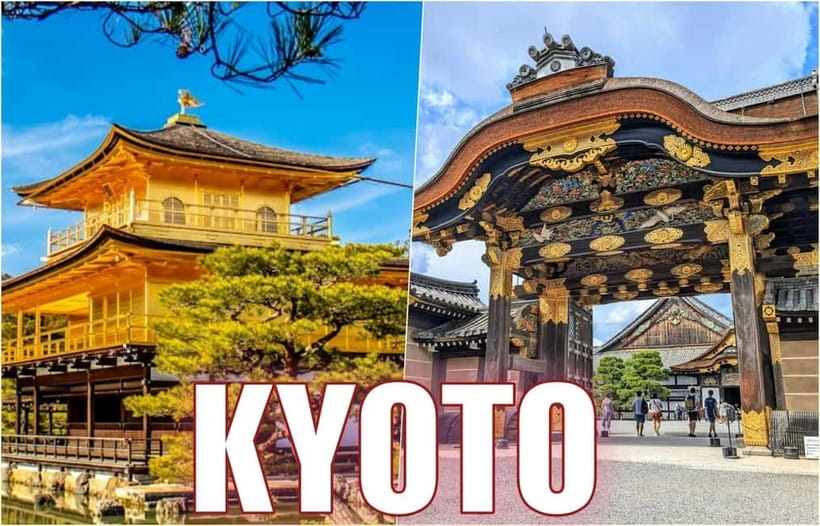
- Kyoto City Certified Guide Roberto + iPad visuals: Explanations come with images on an iPad made for this tour style.
- Kinkaku-ji gold leaf explained, not just admired: You learn why real gold leaf was used and how it changes the look of the temple.
- Nijo Castle nightingale floors: You hear the idea behind those chirping boards as an early security system concept.
- Edo Period, shogun, samurai connections: The day ties political power, samurai influence, and the shift toward modernization.
- Private group, photo-friendly pace: You can request as many pictures as you want.
- Stops end at Nishiki Market for lunch choice: You get origins of the market, then you pick what to eat from many options.
Kinkaku-ji Golden Pavilion: what to notice beyond the postcard
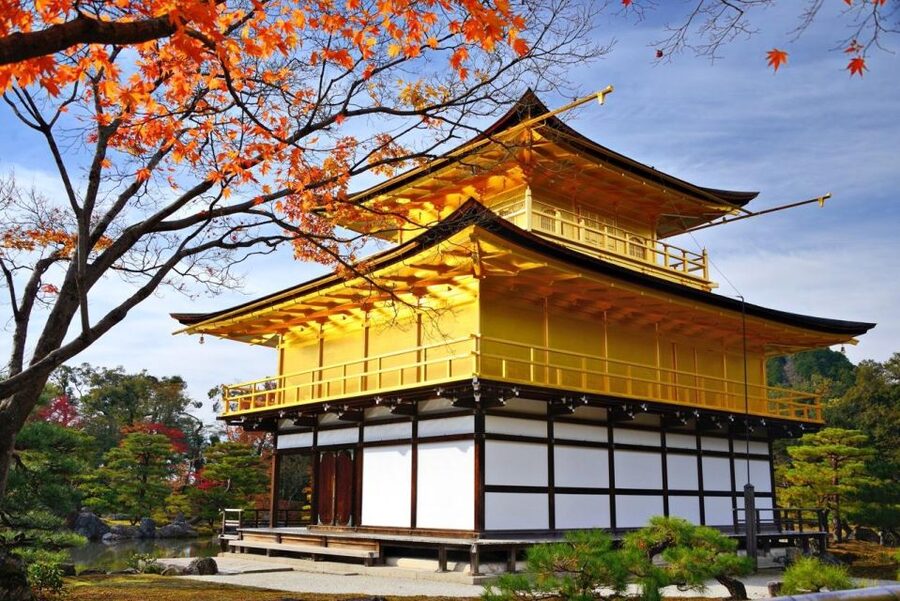
Kinkaku-ji, also called the Golden Pavilion, is a Zen Buddhist temple in northern Kyoto and one of Japan’s best-known sights. The tour makes the building easier to read. You are not only looking at a famous photo, you learn what you are seeing.
A key detail is that the pavilion was originally built as a villa for Ashikaga Yoshimitsu, a revered shogun from the 14th century. That matters, because it frames the Golden Pavilion as more than decorative architecture. It is tied to status, power, and the way elites expressed devotion through their spaces.
The distinctive look comes from gold leaf. According to the tour, the top two floors are covered with gold leaf, and the reflective effect is part of the experience, especially with the surrounding pond reflection. You will also get the straight-to-the-point explanation of why gold leaf was used: to signal wealth and authority, and to show devotion at the same time. Once you know that, the shimmering surface feels intentional, not random.
Practical tip: inside temple areas, there are places where photography is not allowed. This tour still gives you time to enjoy the views, but you should expect that some parts will be more “look, then listen” than “shoot everything.”
More Castle Visits in Kyoto
- Kyoto: Nijo-jo Castle and Ninomaru Palace Guided Tour
★ 4.7 · 1,020 reviews - Kyoto: Imperial Palace & Nijo Castle Guided Walking Tour
★ 4.7 · 453 reviews - Kyoto Imperial Palace & Nijo Castle Guided Walking Tour – 3 Hours
★ 4.5 · 106 reviews
Nijo Castle: Edo politics, samurai control, and the chirping floors
After Kinkaku-ji, the story shifts from one famous patron to the political machine of the Edo Period. Nijo Castle is another UNESCO World Cultural Heritage site, and it is famous for Edo period architecture and its intricate woodwork.
What I like about this stop is the political thread. You will learn about struggles between samurai, feudal lords, and the control of the shogun, described as the powerful military dictator. The guide also connects the end of the samurai era to the beginnings of Japan’s modernization. That can be a lot to fit into a short morning, but it helps your brain organize Kyoto’s layers instead of treating each building like a stand-alone postcard.
Then there is the famous feature that makes Nijo Castle feel alive: the nightingale floors. The boards chirp when you walk on them, and the tour explains it as an ingenious early security system idea. Even if you have heard of nightingale floors before, hearing the purpose behind them changes how you move through the rooms. You start noticing how design and control were built into everyday circulation.
Architectural lovers will appreciate that the experience is not just walking through one hallway to one photo spot. The tour points out the Edo period feel through design details, including the look and craftsmanship of the wooden structures. It is a good contrast to the gold-leaf spectacle of Kinkaku-ji.
Entrance note: Nijo Castle has an entrance fee listed separately, 1,300 yen (about US$8.15). That is normal for UNESCO sites, but it is worth budgeting so you do not get surprised mid-morning.
Nishiki Market at tour end: Kyoto Kitchen lunch with your own choices
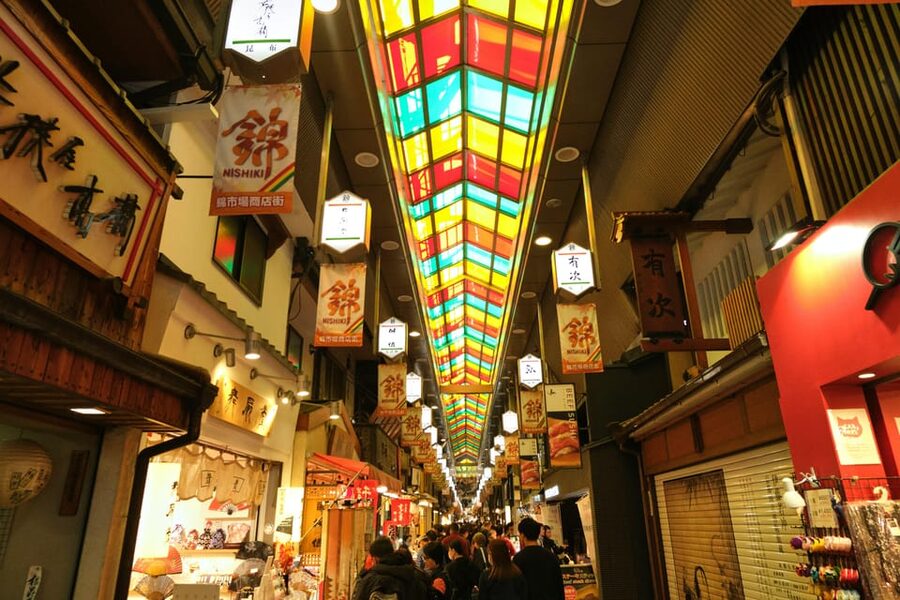
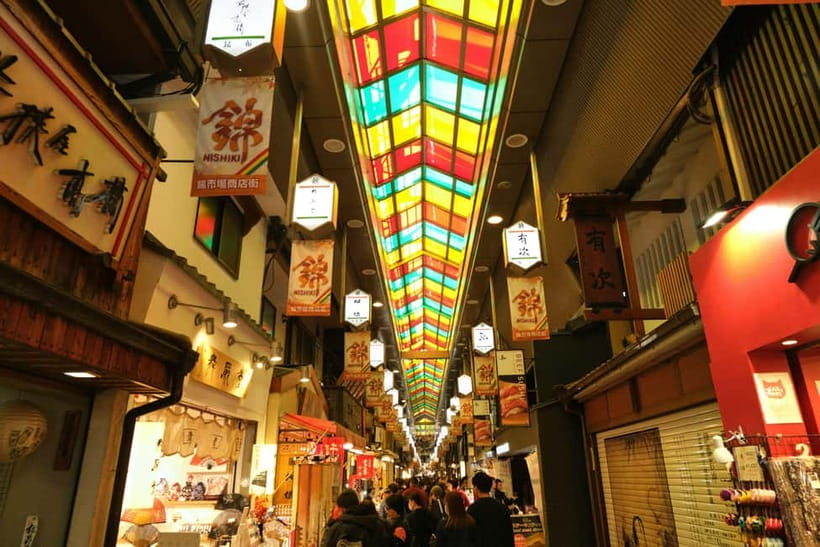
The tour finishes at the entrance of Nishiki Market, which the guide describes as Kyoto’s Kitchen. This is where the morning history turns into food reality.
Nishiki Market is located on a narrow shopping street about five blocks long, with over one hundred shops and restaurants. The tour gives you a short background on where the market comes from, then you are free to choose lunch among hundreds of food and kitchen-related options. The kinds of things you can find include fresh seafood and produce, plus knives and cookware.
What makes this ending work well is that you get a context shift. Your brain has spent the morning on Zen, shoguns, and samurai-era power structures. Now you can slow down, wander, and pick food that matches your mood and energy level.
Photography note from temple parts still applies, but Nishiki Market is the kind of place where you can relax and enjoy the street scene. The flow also helps if you do not want a strict lunch reservation. You can snack lightly, build your own meal, and keep exploring after 12:30.
The 8:30 am to 12:30 flow from Kyoto Station, with timed transit
This is built as a half-day morning route, designed for people who want big Kyoto hits without losing the whole day. You start at 7-Eleven Heart-In at JR Kyoto Station, Central Entrance. The meeting point guidance is specific: use the Kyoto Tower side Exit, and the guide holds an iPad plus a red card that says RBRT.
The timing is tight but not chaotic. From Kyoto Station, the plan includes about 35 minutes by bus/coach, then subway rides of about 20 minutes and 15 minutes between stops. You will also have short walking stretches, including around 10 minutes to reach the market entrance area.
Why this matters for you: getting from area to area in Kyoto can eat up time if you are winging it. A structured morning route helps you avoid the “what bus is this?” stress. It also keeps your day flexible, since you are done by lunch.
Group size is private, so you are not stuck waiting while a big group shuffles forward. You can also request photos, and the guide can take as many pictures of you as you wish, which is a small thing that pays off when you want more than a single quick snapshot.
The tour takes place rain or shine. So if Kyoto weather is doing its thing, you are still moving through the day, just with the comfort factor of good shoes.
More Market Tours in Kyoto
- Nishiki Market Brunch Walking Tour (7 Tastings + Brunch)
★ 5.0 · 1,355 reviews - Kyoto Nishiki Market Food and Culture Walking Tour
★ 5.0 · 412 reviews - Kyoto: Nishiki Market Tea Ceremony with Koto Performance
★ 4.8 · 294 reviews - Kyoto: Nishiki Market Brunch Walking Tour-7 Tastings+Brunch
★ 4.8 · 197 reviews
Price and value: what your $90 covers and the on-site entrance fees
The price is $90 per person for a 4-hour half-day experience. What you get for that money is the big-picture value: a Kyoto City Certified Tourist Guide, iPad explanation support, and a route that stacks three major stops into one morning.
It also sounds small, but it is a practical perk: you do not have to pay the guide’s entrance fees and transportation. That means the tour price is focused on interpretation and guiding, while the temple entrance fees for you are listed separately.
Those separate fees are:
- Nijo Castle entrance: 1,300 yen (about US$8.15)
- Golden Pavilion entrance: 500 yen (about US$3.10)
So you should plan on adding roughly the equivalent of a little over US$11 in entrance costs for the two paid sites, on top of the $90 tour price. For many first-time Kyoto visitors, that is a reasonable bundle: you are paying for guided context at two UNESCO sites and then getting a market ending that helps you choose lunch fast.
Value also comes from the teaching style. The guide uses explanations with images on the iPad, and the overall theme is Edo Period history, with the shogun and samurai world explained in a way that connects the two major castles/temples you visit.
A couple of added touches have shown up in past experiences, like a short film wrap-up, and the guide may create a video for your trip. Those are not what you should count on as a guarantee, but they match the overall approach: make the history feel stickier.
Temple photos, walking pace, and practical boundaries you should plan for
This is a walking tour using public transit, so your body has to cooperate a bit. The tour does not climb mountains or include very long stair sections, but it is still not a sit-and-sightseeing-only plan.
The tour is not suitable for:
- Pregnant women
- People with back problems
- Wheelchair users
- People prone to seasickness
- People with low level of fitness
Also, baby strollers are not allowed, and you should avoid bringing luggage or large bags. If you travel with a big carry setup, plan to keep it small or store it before you go to the meeting point.
Photography rules matter most inside temples. The tour notes that there are areas where taking pictures is forbidden. If you care about photos, treat that as a heads-up to adjust expectations and focus on what you can capture outside the restricted zones.
What to bring is simple: comfortable shoes. That one line is doing a lot of work here.
Should you book this Golden Pavilion, Nijo Castle, Nishiki Market half-day tour?
Book it if you want a smart Kyoto morning that mixes iconic sights with the political story underneath. I think it is especially worth it for first-time visitors who want help connecting Edo-era power struggles, the shogun world, and samurai-era change, without spending your whole day commuting and guessing your way between neighborhoods.
Skip it if you need wheelchair access, if walking causes pain for you, or if you prefer a slower tour with fewer transfers. The route uses bus and train, it runs rain or shine, and it is not a “light stroll” style plan.
If your goal is to see Kinkaku-ji, understand why Nijo Castle mattered, and finish with real lunch choices at Nishiki Market, this morning format is a strong fit. It is a compact itinerary that tries to leave you with something lasting: a clearer sense of how Kyoto’s showpiece sites connect to Japan’s bigger story.
FAQ
Where is the meeting point for the tour?
You meet in front of the door of 7-Eleven Heart-In at JR Kyoto Station, Building 1F, using the Kyoto Tower side Exit. The guide holds an iPad and a red card with the words RBRT.
What time does the half-day tour run?
The tour runs from 8:30 am to 12:30 pm, for about 4 hours.
What is included in the price?
Included are a Kyoto City official certified guide, explanations with images on an iPad, and photo support where the guide can take as many pictures of you as you wish.
Are entrance fees included for the attractions?
No. You pay separately for Nijo Castle (1,300 yen, about US$8.15) and Golden Pavilion (500 yen, about US$3.10).
What languages are available for the tour?
The tour is offered in English and Spanish.
Is this tour private or shared with strangers?
It is a private group.
Is the tour suitable if I use a wheelchair or need stroller access?
No. Wheelchair users are listed as not suitable, and baby strollers are not allowed.
If you want, tell me your travel dates and your walking comfort level, and I will help you decide whether this morning plan fits better than a more relaxed Kyoto day.
More Shopping Tours in Kyoto
- Nishiki Market Food Tour with Cooking Class
★ 4.9 · 42 reviews - Kyoto: Nishiki Market Food Tour
★ 4.9 · 21 reviews - Kyoto: Enjoy Sushi & Market Tour! Best for Family & Couple!
★ 4.8 · 20 reviews - Taste of Nishiki Market Walking Food Tour with Local guide
★ 5.0 · 17 reviews
More Market Walks in Kyoto
- Kimono Tea Ceremony at Kyoto Maikoya, NISHIKI
★ 5.0 · 911 reviews - Kyoto: Local Food Tasting Tour at the Nishiki Market
★ 4.7 · 135 reviews - Kyoto: Nishiki Market and Depachika Food Tour with a Local
★ 4.7 · 76 reviews - Kyoto: Nishiki Market Tour with a Local Foodie & 3 Tastings
★ 4.6 · 47 reviews
Newly listed around Kyoto
- Taste of Nishiki Market Walking Food Tour with Local guide★ 5.0 · 17 reviews
- Kyoto: Sushi Making Class with Sushi Chef★ 4.8 · 64 reviews
- Simple Plan with Maiko★ 4.4 · 10 reviews
- Shibori Furoshiki Course at Kyoto Shibori Museum★ 5.0 · 21 reviews
- Kyoto: City Secrets eBike Tour★ 4.9 · 196 reviews
- Sacred Pathways: Discover the Philosopher’s Path of Kyoto★ 4.9 · 20 reviews
- Private Tour to Monkey Park and Arashiyama Highlights★ 5.0 · 22 reviews
- Private Nara Tour from Osaka – Meet at Your Hotel★ 5.0 · 22 reviews
Fish Market Walks, compared.
Tokyo Tsukiji Fish Market Food and Culture Walking Tour
Read our review →
Nishiki Market Brunch Walking Tour (7 Tastings + Brunch)
Read our review →
Tokyo Sushi Making Class in Tsukiji with Professional Chef
Read our review →
Tsukiji Fish Market Guided Tour and Sushi Making with Pro Chef
Read our review →